
Beijing is not a pleasant place to be in mid-July, though during my recent trip to the Chinese capital the present author had little time to enjoy the scenery or suffer the weather. Most of the time was spent talking with Chinese scholars interested in matters of North Korea and Chinese policy toward this peculiar place.
Due to obvious reasons, it might not be a good idea to go into excessive detail or name names: After all, North Korea is a sensitive issue, especially in China, and frank talk is only possible when confidentiality is respected. Nonetheless, it will not do any harm to share a few interesting things that I noticed while in Beijing recently – and sorry if you, esteemed reader, consider the following remarks somewhat vague.
To start with, few would deny that Sino-North Korean relations are in rather bad shape nowadays. It is an open secret that the current generation of Chinese leaders, including Xi Jinping himself, has little in the way of sentimental attachment to the North Korean government. It has not helped that in the last few years the North Korean government has initiated some policies that are clearly aimed at distancing itself from China.
…few would deny that Sino-North Korean relations are in rather bad shape nowadays
Chinese scholars and officials have clearly noticed the thinly veiled attacks on China published in the media during the Jang Song Thaek affair. There is also little illusion about the reasons beyond recent outbursts of North Korean diplomatic activity directed at Russia and Japan. It is well understood that North Korean diplomats are looking for a counterweight to excessive Chinese influence and such attempts at diplomatic hedging are not welcomed by people interested in North Korea in China.
Of course, we should keep in mind that North Korean studies remain a rather divided area in China. There are some specialists in China who are genuine supporters of North Korea’s cause. Some of these people belong to an older generation of specialists who once studied in the North as students, while some others merely see North Korea as a useful strategic buffer against the bullying United States. There are also experts who see North Korea as a troublesome anachronism, a fossil from a Maoist-Leninist past that most Chinese wish to forget about. However, even such people, often with close connection to South Korea, still tend to appreciate the strategic advantages presented by North Korea to China.
The trip largely confirmed my earlier assumptions about attitudes to North Korea among concerned parties in China. It is true that North Korea long since has ceased to enjoy popularity in China, but it has become much more unpopular of late. However, policy is not driven by emotion; rather it is a domain by cold-minded calculations. China may be willing to be involved in the handing of a serious crisis on the Korean Peninsula, should it erupt. Indeed it is likely that the Chinese have preparations in place to deal with such an eventuality. This does not mean, however, that China wishes to increase the likelihood of such a crisis by bringing excessive economic pressure to bear on North Korea. It prefers the status quo, and with good reason.
PLAN FOR THE END
Therefore, we should expect that, in spite of their own uneasy feelings, and contrary to the hopes of optimistic U.S. policy planners, China will continue to provide North Korea with a modicum of support. It wants North Korea to remain stable and the policies that Beijing has pursued to achieve this goal are unlikely to change in the immediate term.
At the same time, Beijing may be more prepared nowadays to take some mild countermeasures aimed at curtailing the speed of nuclear weapons development in the North. Some scholars believe that the recent decision to cancel a planned nuclear test in April by Pyongyang was taken after China signaled its strong disapproval and hinted that should such a test go ahead Beijing might consider seriously cutting bilateral aid to North Korea. Whether this really was the reason why the test was cancelled is not entirely clear, since there are a variety of opinions about the issue. Nonetheless, it seems that nowadays China is prepared to countenance a slightly harsher approach to North Korea’s misbehavior. Of course, in this it helps that China remains the sole significant trade partner and aid donor to North Korea, so it has some leverage.
…behind closed doors Chinese experts clearly admit that their government considers the possibility of North Korea’s collapse
The question remains, though, what if, at some point at the future, status quo maintenance becomes impossible and North Korea becomes unstable? What if a serious internal crisis erupts in North Korea? While open discussion of such issues is impossible, behind closed doors Chinese experts clearly admit that their government considers the possibility of North Korea’s collapse. It seems that such considerations have become more serious of late not least because hopes of North Korean reforms in imitation of Chinese precedents are fading in China.
If a crisis were to erupt, my Chinese interlocutors emphasized that China will strive for a mutually acceptable compromise premised upon a multilateral agreement that will probably involve the UN in some form. Regardless of their own personal points of view, many of my academic contacts stressed that China is unlikely to accept unilateral action by South Korean or American forces, or a joint action by both, in case of a regime implosion in North Korea. Some of them even said that such an operation will trigger a similar response from China, which is also likely to dispatch forces to a crisis stricken North Korea.
A U.S.-South Korean intervention will be seen in Beijing as direct threat to Chinese national interests and security, and will be treated accordingly
What this all means is this: There is a near consensus that should North Korea enter into a terminal crisis, a U.S.-South Korean intervention will be seen in Beijing as direct threat to Chinese national interests and security, and will be treated accordingly. At the same time though, multilateral actions are unlikely to trigger any serious response.
In essence, the mood in Beijing has changed to a certain extent, but such changes have thus far produced little impact on actual policy – and are not likely to, at least for the time being. Like it or not, China needs stability on its borders. It is therefore unlikely to take potentially drastic actions that could put such stability under threat for dubious political gain.
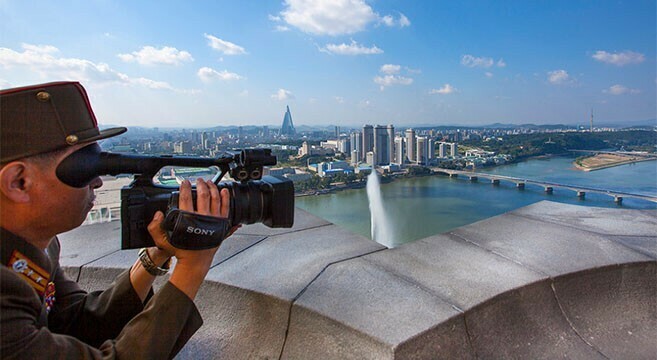
Main picture: Eric Lafforgue
Join the influential community of members who rely on NK News original news and in-depth reporting.
Subscribe to read the remaining 1112 words of this article.
EXISTING MEMBER?


');
newWindow.document.write('
');
newWindow.document.write('