
  Analysis South Korean firm repeatedly tied to North Korea-linked ship-to-ship transfersROK company implicated in encounters with DPRK-flagged and UNSC-designated vessels 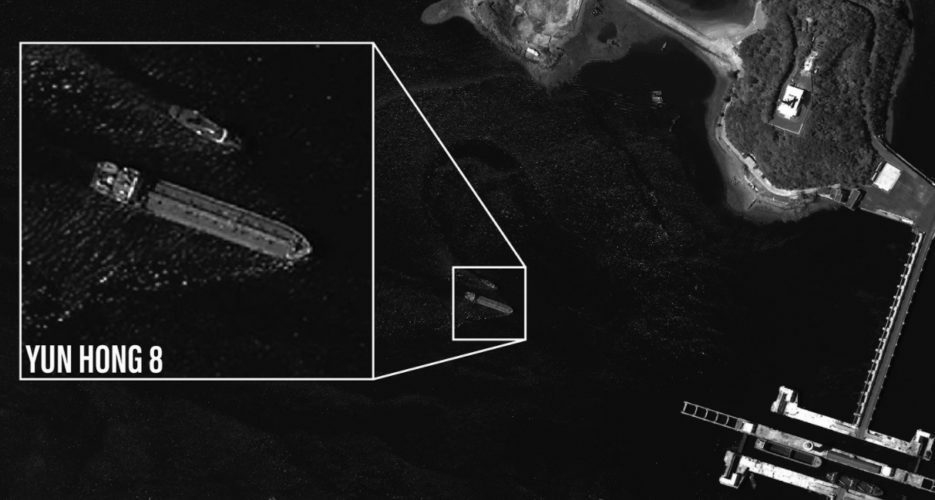 A South Korean company appears to have transferred fuel on several occasions to tankers that later continued sailing to North Korea, a joint investigation by NK Pro and RUSI’s Project Sandstone has revealed. The Busan-based SM Maritime, whose tankers – the LOI HOPE and JEY HOPE – are at the center of the incidents of concern, insist they broke no sanctions and deny any wrongdoing. But since 2018, vessels managed by the company have been observed on the high seas adjacent to a UN Security Council-sanctioned DPRK-flagged tanker, a second UNSC-designated, but foreign-flagged oil tanker, and connected to a Chinese-flagged tanker linked to North Korea. All of them travelled to North Korea after meeting with the SM Maritime-managed vessels, raising repeated concerns among the international community about South Korean ships being used in indirect ship-to-ship (STS) transfers of fuel to the DPRK. The Japanese government warned about one such incident in 2018, the UN Panel of Experts (PoE) detailed a further four in 2019, and the UK-based Royal United Services Institute (RUSI) gained evidence of a meeting between the company’s vessel and a ship linked to the DPRK in 2019. UN Security Council Resolution (UNSC) 2375 prohibits STS transfers to DPRK-flagged vessels, while UNSC 2397 prohibits the “indirect supply, sale or transfer” of both crude oil and refined petroleum products” by “flag vessels…whether or not originating in their territories.” In response to inquiries on the issue, South Korea’s Ministry of Foreign Affairs (MOFA) told NK Pro that Seoul “is fully implementing the UNSC resolutions against the DPRK in close cooperation with the UN and the international community.” RISKY BUSINESS On May 15, 2018, Japanese defence minister Onodera told the press that a South Korean-flagged vessel had been spotted in suspicious circumstances on May 3 of that year. Tokyo had shared the information with South Korea’s MOFA, because they “could not exclude a possibility that they conducted ship-to-ship transfers banned by a UNSCR,” a spokesperson from Japan’s foreign ministry told NK Pro. Instead of first going to the UNSC with the evidence, Katsu Furukawa – a former member of the UN PoE – said “the Japanese MOFA decided to consult the ROK first and asked them to investigate the incident, because ROK was a friendly partner for Japan.” Ten days after the encounter, when details of the incident were leaked via Japan’s Sankei Shimbun newspaper, South Korea said that “the results of our investigation show that there was no ship-to-ship transfer of oil (to the North).” A South Korean MOFA spokesperson told NK Pro in April: “Based on collected evidence such as measurements of the volume of loaded oil upon departure and arrival, it was confirmed that there was no ship-to-ship transfer of oil to a DPRK vessel,” they said. “This means that no violation of UN sanctions has occurred.” However, two days after the ROK first commented publicly about its investigation results in May 2018, Japanese defence minister Onodera said: “I don’t think it’s normal to berth on the high seas.” Furukawa, the former PoE member, concurred. Regardless of what may have been transferred between the two ships, he said, UN sanctions would have been breached. “Paragraph 11 of UNSCR 2375 is very explicit: ‘ship to ship transfers to or from DPRK flagged vessels of any goods or items’ has been prohibited. Therefore, in principle, even a transfer of water to (a) DPRK vessel is prohibited without the approval of the UNSC 1718 Committee.” While neither the Japanese or South Korean governments revealed the names of the vessel at the time, Furukawa told the Chosun Ilbo in June 2019 that the ROK-flagged ship involved in the incident was named the “JEY HOPE”. The ROK MOFA confirmed the “Jey Hope case in May 2018” in an emailed correspondence to NK Pro on April 10. The DPRK-flagged vessel was allegedly the NAM SAN 8, Furukawa said – which had been sanctioned by the UNSC in March 2018. A Russian-language Kommersant article corroborated that claim through separate sourcing. Owned by IMT Incorporation and managed by SM Maritime – two Busan-based companies sharing the same address and phone number – the JEY HOPE is an 8,981 deadweight tonnage (DWT) oil and chemical tanker. And it’s here the connection to STS transfer events in 2019 stems, because open-source indicators show that the JEY HOPE’s sister ship – LOI HOPE – was at the heart of multiple incidents of concern that year. “SUPPLIER VESSEL-A” In April 2020, a report by the PoE stated that a South Korean shipping company was involved in the supply chain of at least four deliveries of fuel to the North Korean port of Nampho between June and August of 2019. One of the firm’s ships, which the report only identified as “supplier vessel-A”, was photographed conducting an alleged STS transfer with the Chinese-flagged YUN HONG 8 on 31 August 2019. 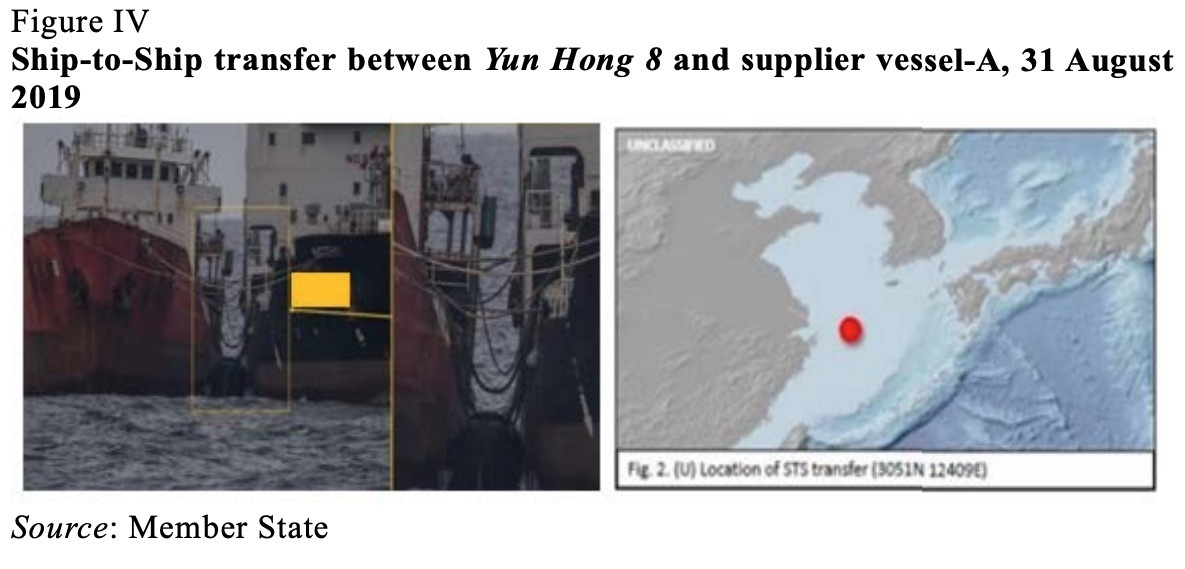 Fuel transfers involving “supplier vessel-A” and the YUN HONG 8 were something the PoE said also took place “on at least three other occasions through ship-to-ship transfers” in June and August 2019. Notably, three of those transfers “took place within days” of the YUN HONG 8’s recorded port calls to Nampho, DPRK, with a total of 4,731 metric tons of “marine gasoil” transferred from the South Korean-flagged vessel across the four meetings. The London-based think-tank RUSI, which was also tracking the two vessels, spotted the YUN HONG 8 arriving in Nampho on 2 July, 2019, five days after a transfer with “supplier vessel-A”. At January 2020 prices, before a massive COVID-19-linked decline, the four combined transfers would have been valued at more than three million dollars, price data at Ship and Bunker indicates.  THE LOI HOPE The so-called South Korea-flagged “Vessel-A” was photographed engaging in an STS transfer at coordinates 30.51°N, 124.09°E on August 31, 2019 in the East China Sea, the PoE report shows. But despite its identity being obscured, the details are an exact visual match to ROK-flagged tanker LOI HOPE (IMO 9478080), comparative analysis confirmed. 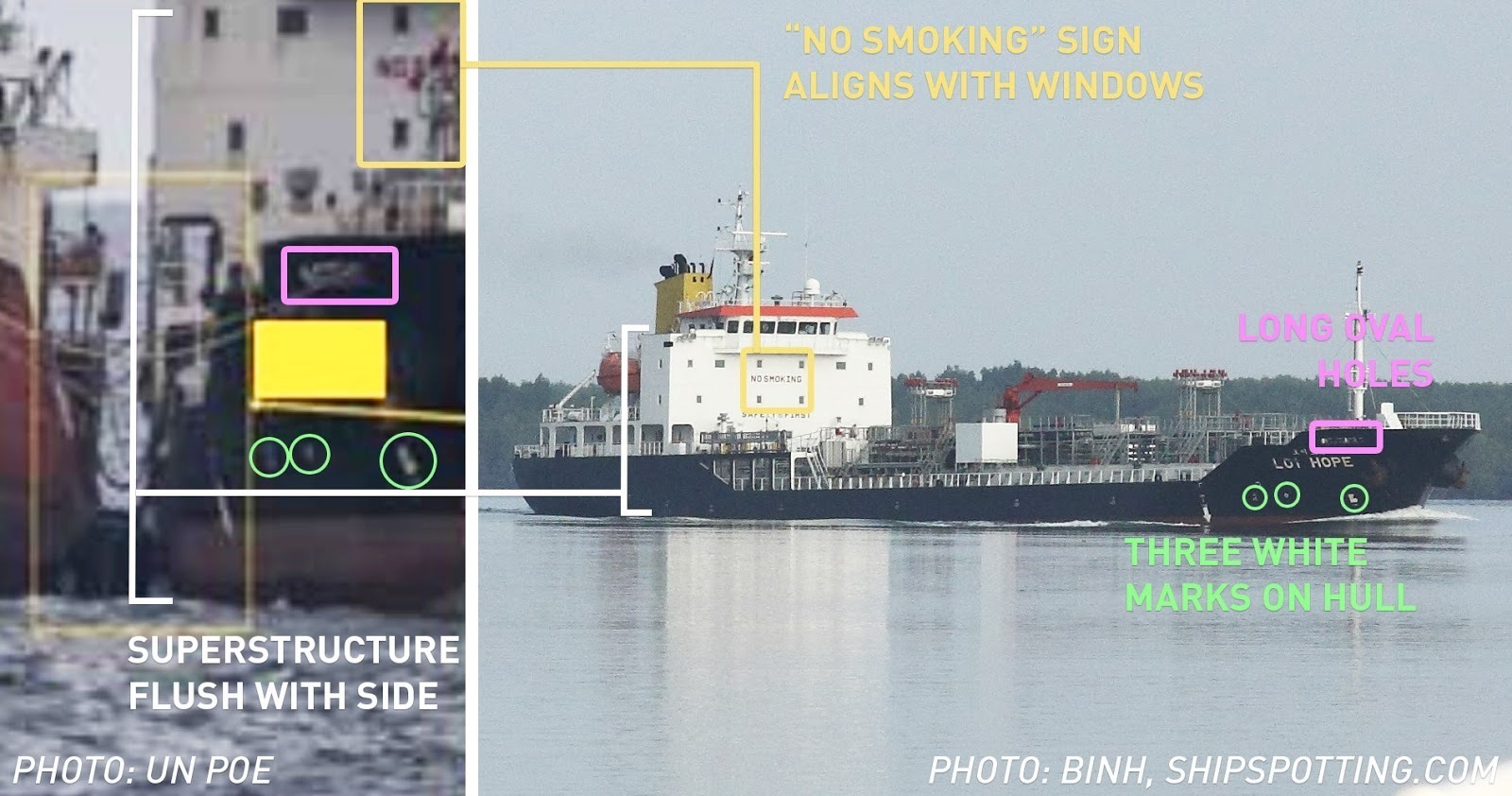 Analysis of Automatic Identification System (AIS) data shows that prior to the photo being taken, the LOI HOPE last broadcast its location on August 28, 2019 – approximately 192 km south of the August 31 incident. It only came back online after a “dark voyage” of almost six days, on September 3, 2019, some 410 kilometers south of where it had been last spotted, data from the Windward ship tracking platform shows. During this period, when no AIS location data could be observed on four leading maritime tracking platforms, the PoE’s photograph of “Vessel-A” engaging in the STS transfer with YUN HONG 8 was taken. Asked about the evidence, a spokesperson from SM Maritime implied that the LOI HOPE was involved with the four 2019 STS transfers mentioned by the PoE, but said it did not breach sanctions or intended any wrong-doing. “YUN HONG 8 was not on the UN and OFAC sanction list, which is what we check in advance to prevent Resolution breaches, according to our company manual,” a spokesperson said. SM Maritime also stressed that it fully cooperated with the UN and relevant South Korean authorities, noting that during communications the UN “did not mention Security Council resolution breaches by our company vessel.” It noted that “after our company became aware that YUN HONG 8 is a vessel that delivers oil to North Korea, as an appropriate measure of caution, [we] quickly ordered all vessels owned by our company to stop oil transfers with YUN HONG 8.” The PoE report included a receipt submitted by the company as evidence of its claim that the eventual transfer to North Korea was unintended. The receipt states that the YUN HONG 8 purported to intend to use the fuel for “discharging to fishing boats in Shandong, China.” Furthermore, the PoE showed SM Maritime received an affidavit stating the YUN HONG 8 would not transfer fuel “directly or indirectly … to any nation, vessel, entity or destination prohibited by the united antions [sic]…” 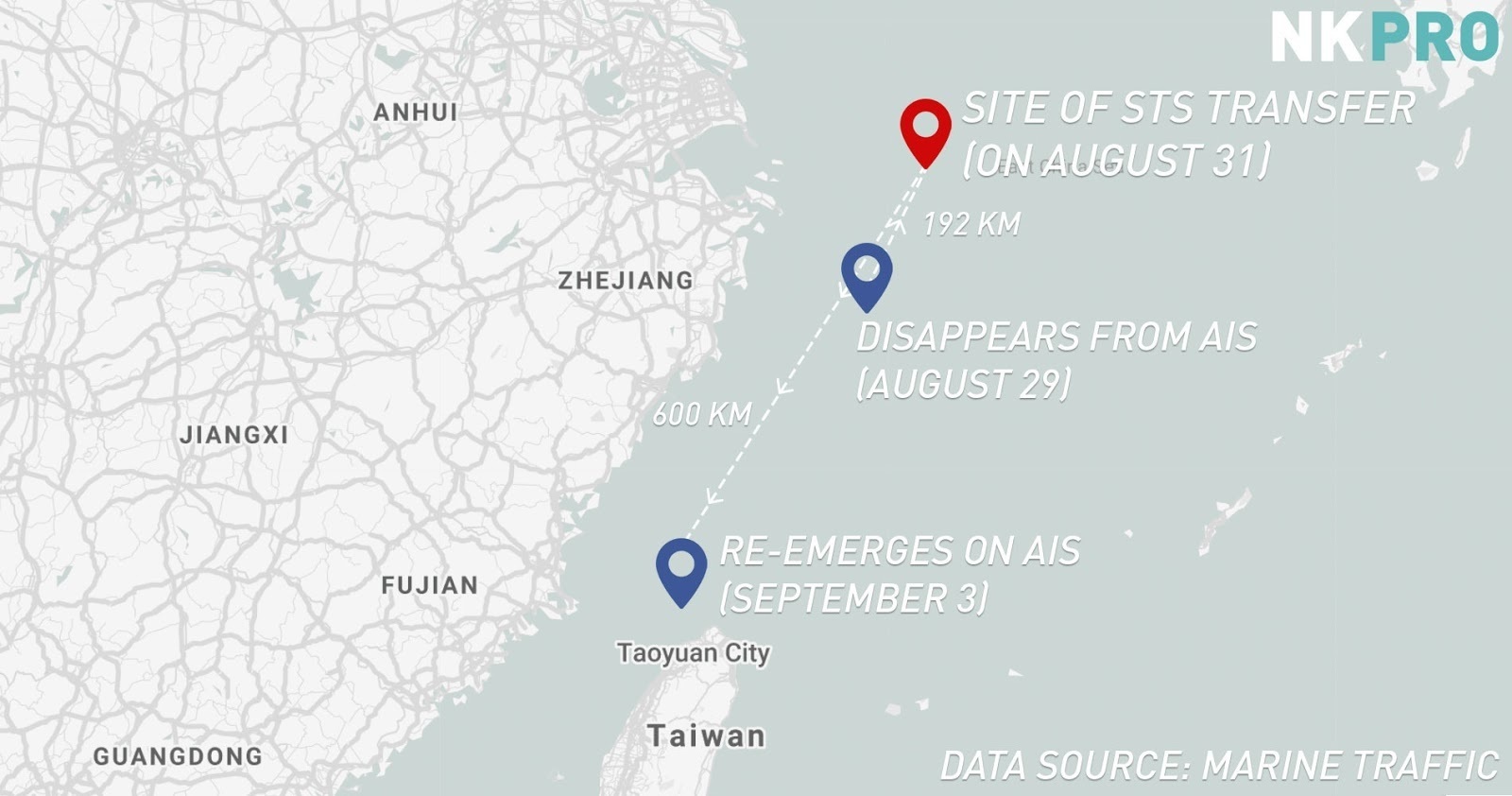 GOING REPEATEDLY DARK Despite being involved in multiple cases with vessels owned by or linked to North Korea, the PoE report does not accuse the South Korean owners of “supplier vessel-A” of any sanctions-breaches or wrongdoing. The report also says that its managers cooperated closely, submitting documentation and evidence of due diligence, including pledges, receipts and photographs of flow meters. However, location data analyzed by NK Pro illustrates that the LOI HOPE engaged in so-called “dark voyages” – where AIS location data disappears for a period of time – during the exact periods of time surrounding all four alleged STS incidents in 2019.
Source: MarineTraffic Vessels of the size of the LOI HOPE are typically obliged to keep broadcasting their location at all times, the International Maritime Organization (IMO) rules say. As a result, it’s unusual for a tanker as large as the LOI HOPE to repeatedly disappear from commercial tracking platforms like Marine Traffic, Windward, Polestar and IHS Markit. Besides turning an AIS transponder off, or deliberately obstructing its capability to broadcast normally, signals can sometimes be temporarily lost due to technological issues, such as a vessel operating in a crowded waterway. However, other ships were present in the same area during those periods, AIS data on the separate platforms shows. “If other vessels sailing in the same area and same time do not experience the same issue, claims of low receiver coverage as an explanation for AIS gaps warrant closer scrutiny,” said Lucas Kuo, a senior analyst with the Washington, D.C. based C4ADS think tank. For specialists like him, disappearing from AIS “sets a pattern of suspicious behavior” because so-called “dark voyages” are often used to hide illegal activity. “If you don’t have AIS on for a legitimate STS transfer, that puts your vessel in a high-risk category,” Kuo said. “There’s an incentive for operators to keep AIS on.” The LOI HOPE repeatedly disappeared from AIS tracking services, often for multiple days at a time, at the very times it was alleged by the PoE to be discharging fuel to the YUN HONG 8. At the same time, the Chinese flagged-YUN HONG 8 did not broadcast any location data on AIS after 15 February 2019 – another major issue of concern, given how long it has now been offline. 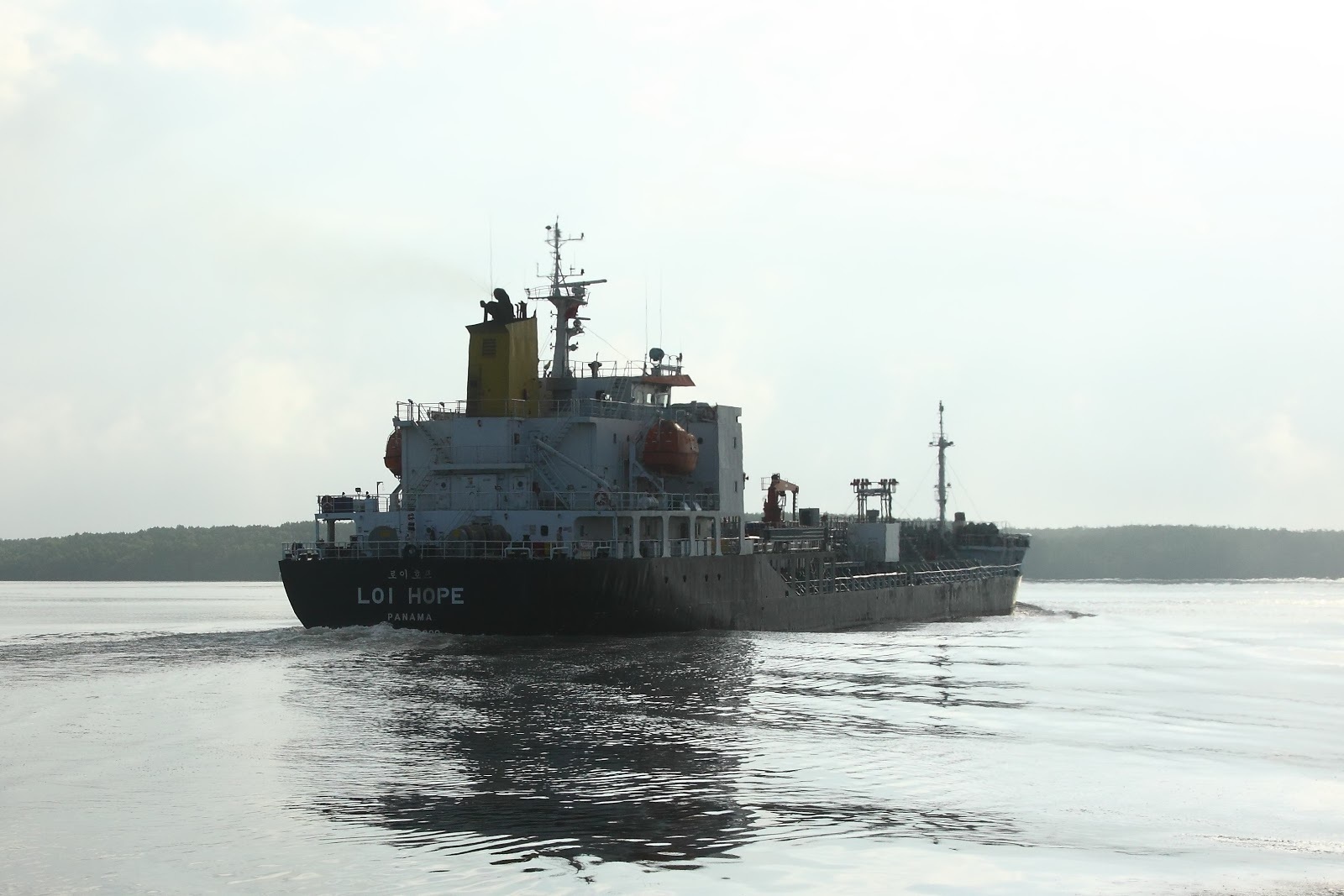 ALWAYS-ON, BUT GONE When asked to explain the absence of AIS data during the periods of STS transfers with the YUN HONG 8, its owners said the vessel transmitted its location without interruption. “The vessel LOI HOPE has never stopped the operation of AIS, and this can be checked from the AIS ON/OFF log,” SM Maritime said. As evidence, several low-resolution photos of a JRC-brand JHS-182 AIS transponder were provided to NK Pro. Purportedly taken on December 2, 2019, the photos are annotated as showing the unit to have been in non-stop operation since November 1, 2018 – well before any of the alleged at-sea transfers took place with the YUN HONG 8. While it is unlikely that the LOI HOPE would have dropped off multiple AIS tracking systems on dates surrounding the alleged four cases of at-sea transfers if the AIS transponder was turned on, there is a reason for vessels to disappear temporarily while engaging in at-sea fuel transfers: safety. Tankers like the LOI HOPE are required to change their AIS transponders from default 12.5W broadcasting to low-power 1W mode during legitimate ship-to-ship fuel transfers or “bunkering” operations, to avoid current induction and accidental electrocution of the crew. This 1W mode cannot be detected by regular ground-based AIS receivers, but is detectable by nearby vessels to help avoid collision. SM Maritime said this was why their vessels could have been temporarily offline. “Our vessels mostly use ‘anchoring’ when [1] on standby for STS, [2] during STS,” they said, periods of time when “the vessel does not have speed (and is) … automatically shifted from 12W and operated at 1W”. During such times “the AIS receiving office on land may not be able to track the antenna radio wave smoothly,” they explained. However, tankers engaging in legitimate STS transfers have no reason to cut AIS transmissions in this way for more than a few hours, says maritime expert Neil Watts of Compliance and Capacity Skills International (CCSI), also a former member of the UN’s PoE. “If the AIS was on and it was transiting at a steady speed, in proximity of other vessels (whose AIS are operational), it’s really doubtful the vessel’s AIS records would reflect it as “off” for a significant period of time.” Furthermore, a notable gap exists between SM Maritime’s description of events and the manner in which its JRC-brand STS transponder is designed to work. While SM Maritime said its vessel remained in 1W mode for extended periods of time, during which the LOI HOPE sometimes moved hundreds of kilometers while invisible to AIS receivers, the JHS-182 operating manual says that’s impossible. “Transponder operation switches back automatically from 1W operation to normal power operation when the ship has moved more than 0.25 NM from the position where the 1W operation started,” the manual explains. Despite repeated questions, SM Maritime were unable to provide NK Pro with an explanation for the discrepancy. THE NEW REGENT Evidence analysed for this report also shows an encounter of concern between the LOI HOPE and the NEW REGENT on June 30, 2019, a vessel previously photographed conducting a prohibited STS oil transfer with a DPRK tanker and sanctioned by the UNSC in October 2018. Nevertheless, it continued at-sea transfers and direct deliveries of fuel to the DPRK, being mentioned by the PoE again in March and August 2019, as well as April 2020. Evidence gathered by Project Sandstone shows the LOI HOPE engaged in an extended at-sea meeting with the NEW REGENT in June 2019, while the vessel was broadcasting on a false AIS identity. 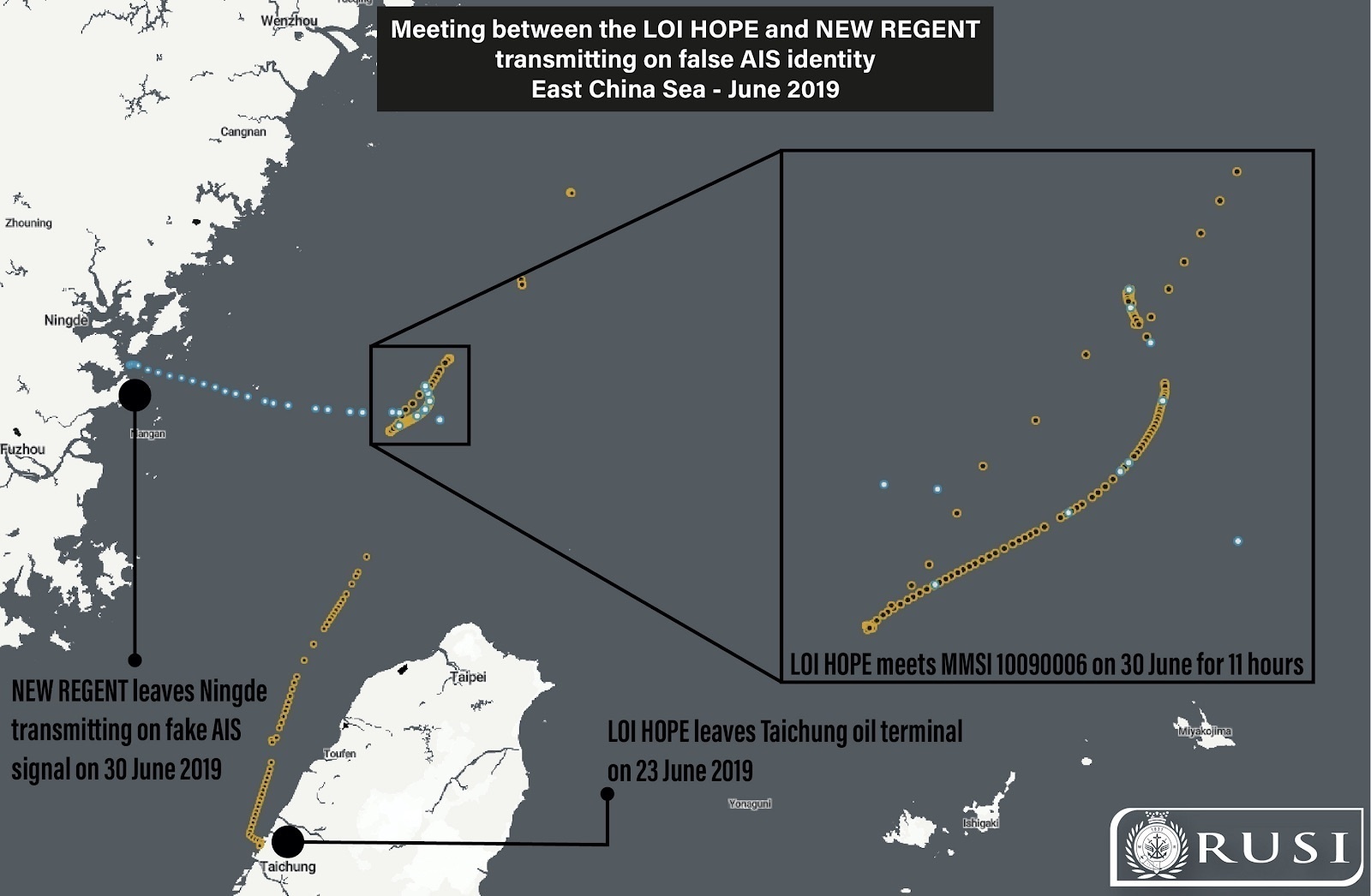 AIS data and associated satellite imagery provide evidence the LOI HOPE met with the NEW REGENT for approximately 11 hours, with data broadcast indicative of two ships being tied together while moving at a low speed – properties characteristic of oil tankers conducting an STS transfer. At the time of the incident, the NEW REGENT was transmitting on an unregistered Maritime Mobile Service Identity (MMSI) number (10090006), possibly in an attempt to avoid detection. 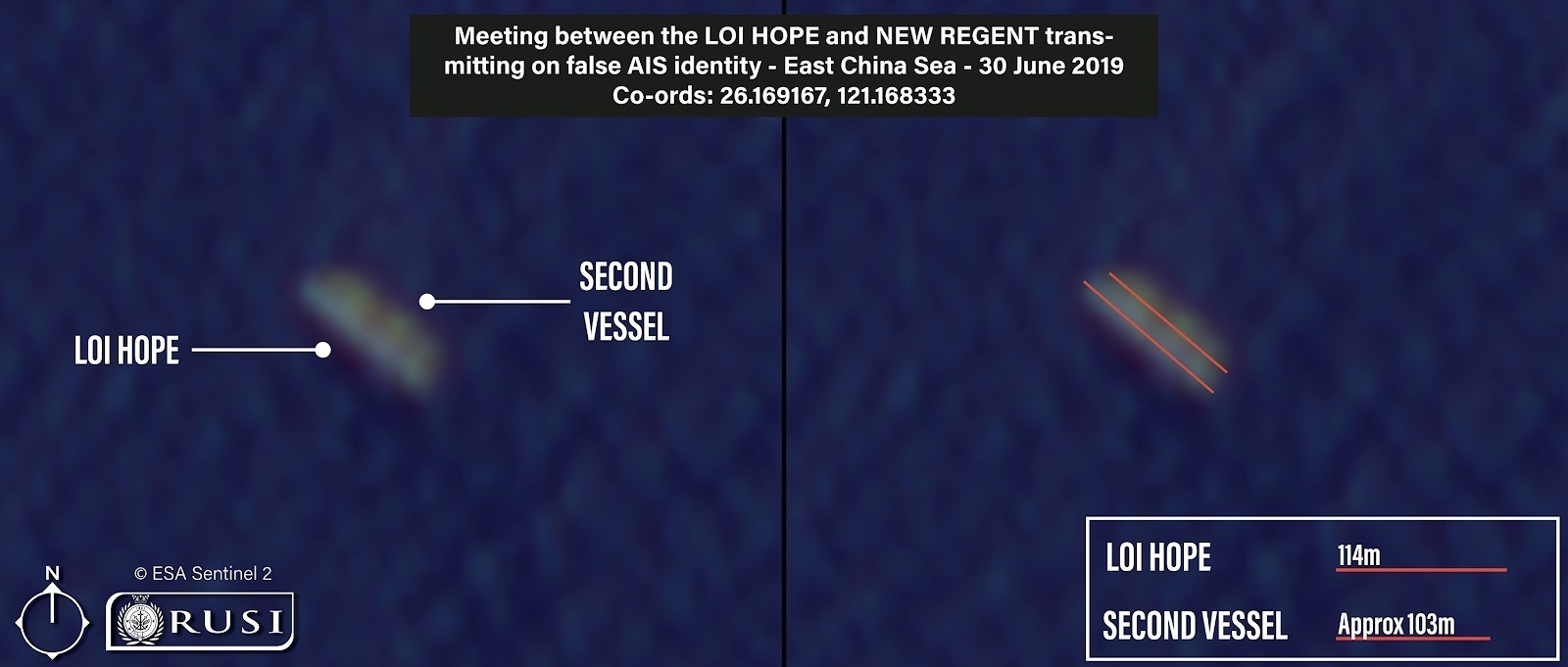 After meeting the South Korean-flagged LOI HOPE on June 30, satellite imagery obtained and analyzed for this report shows the NEW REGENT went to North Korea, offloading at the Nampho oil terminal on 14 July 2019. 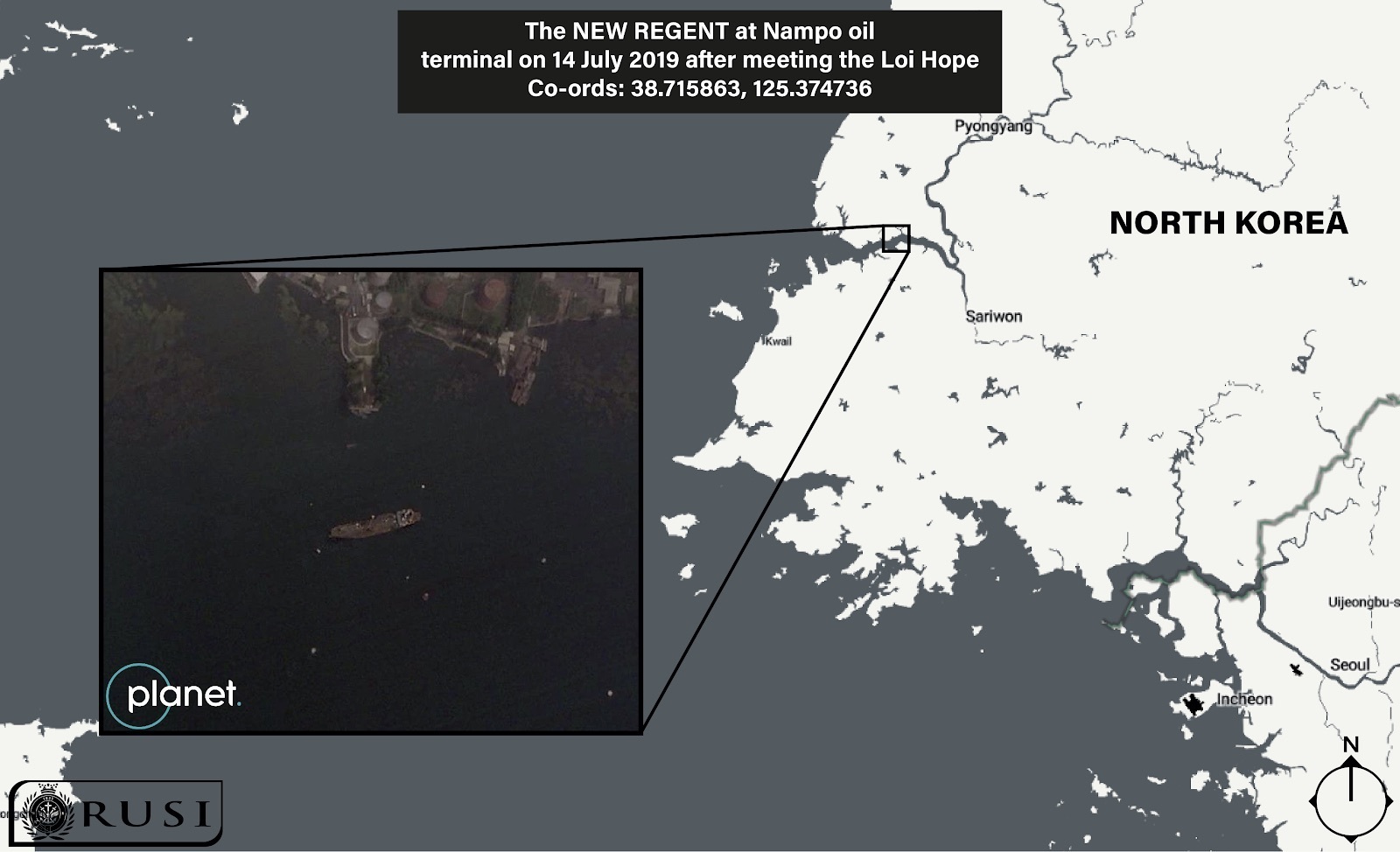 SM Maritime say the vessel they met with during the encounter was called the HANG YU 11, and claimed no STS transfer operation took place. “We [made contact with the vessel] HANGYU 11, and in the process, we canceled the STS work due to problems and procedures of the counterpart vessel,” they said. In particular, there were issues with the “Vessel document / Nationality certificate / Sailor identification, etc”, the company explained. As evidence, SM Maritime provided a photo to RUSI which the company said shows the vessel met by the LOI HOPE. Though the hull’s name reads “HANG YU 11” and is painted in a different color-scheme to older photos of the NEW REGENT, comparative analysis of the photo by RUSI shows it is a perfect match. 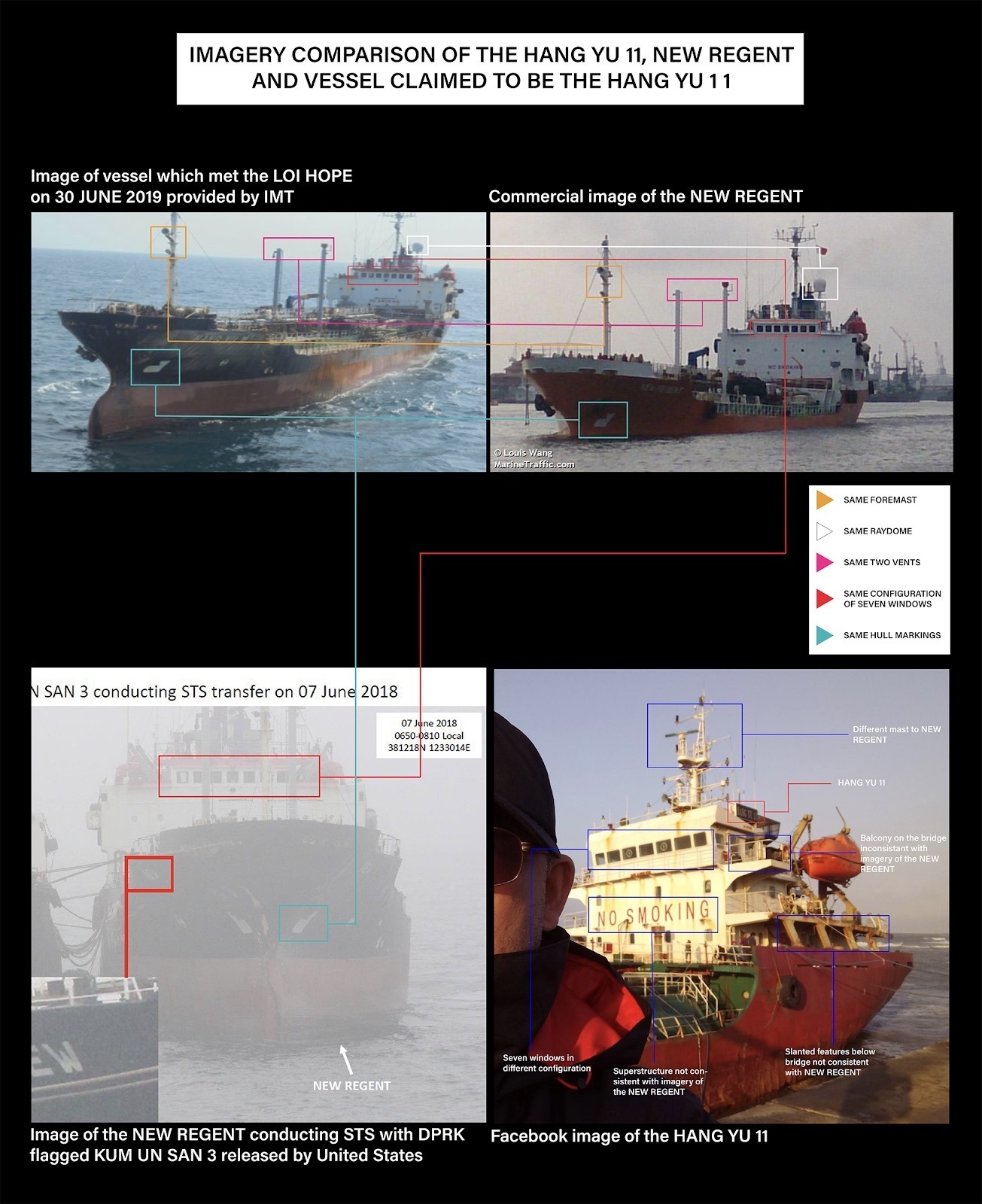 Project Sandstone was also able to confirm with satellite imagery and AIS location data captured on subsequent dates that the oil tanker the LOI HOPE met during this encounter was an exact size match of the NEW REGENT. 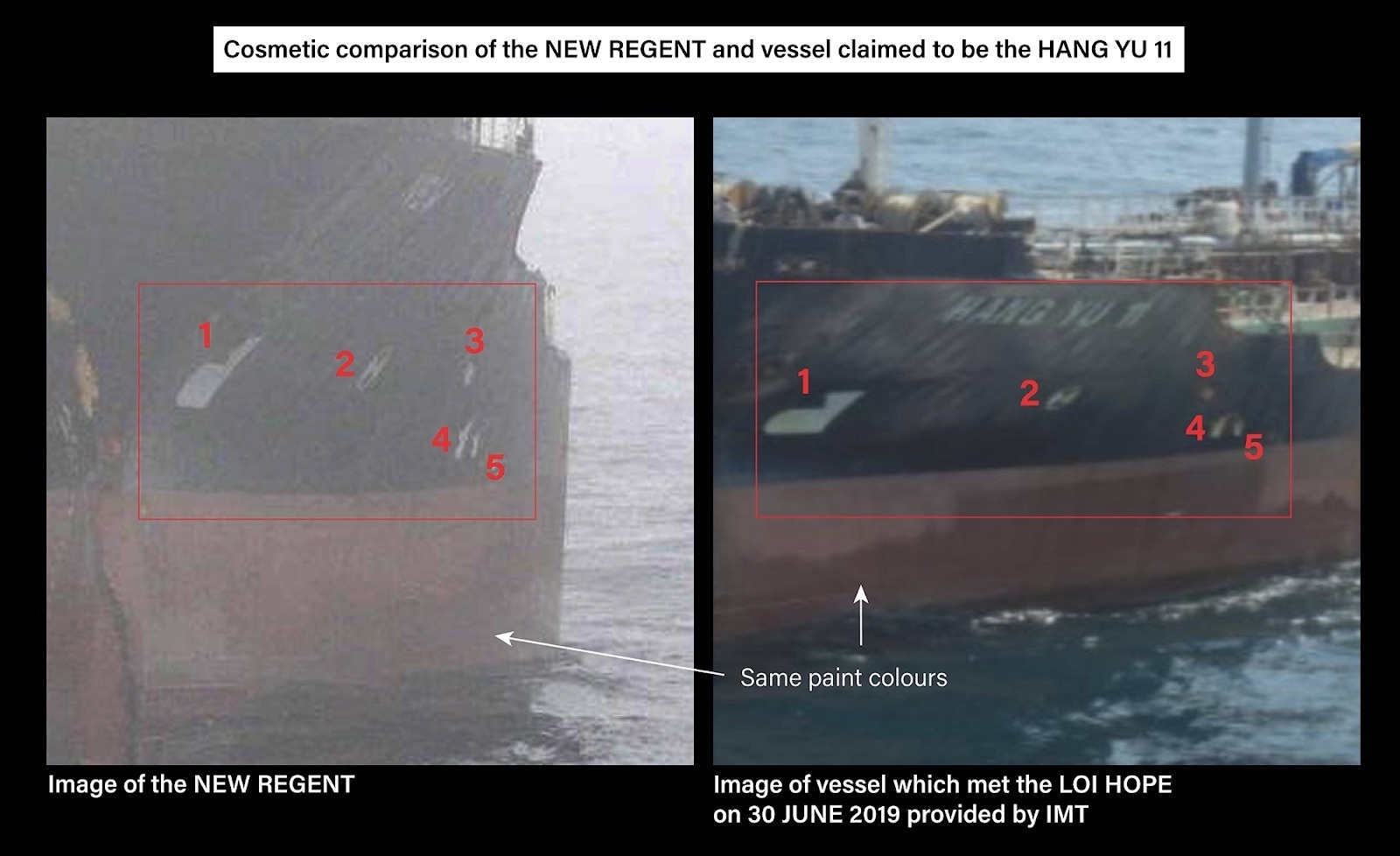 When asked for a response on the evidence found by RUSI, South Korea’s foreign ministry referred NK Pro back to prior statements relating to the YUN HONG 8. “If any UN-prohibited activities are found in the future, the ROK government will conduct a thorough investigation and take all necessary measures,” one of those comments said. 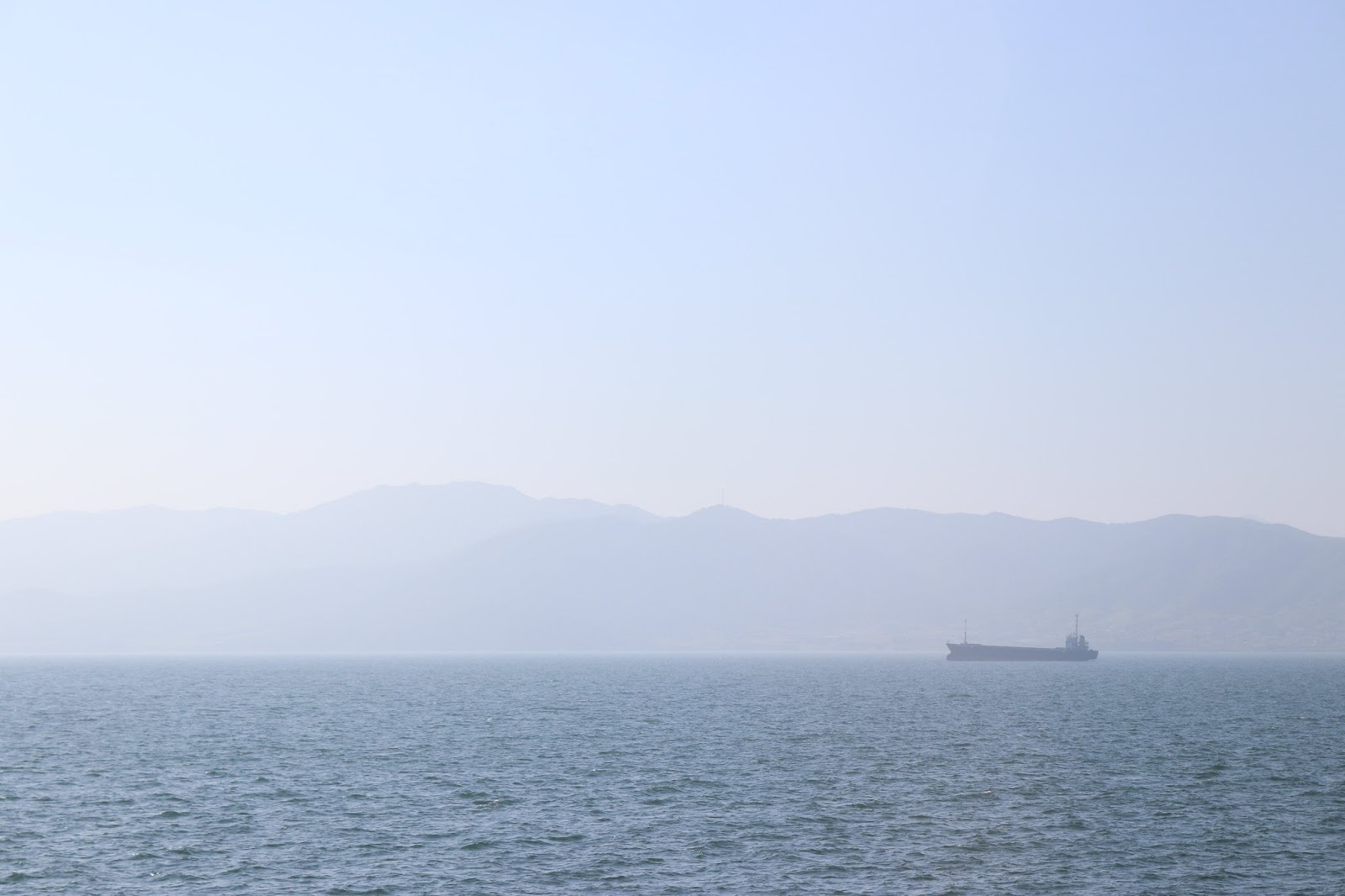 WHY NO NAME? While the PoE revealed the name of an Indian-flagged vessel implicated in another set of STS transfers with the YUN HONG 8, including the name of the company which chartered it, it did not identify the LOI HOPE or its managers, SM Maritime. Some observers said this was notable. John Everard, the UK’s former coordinator of the PoE, said that if a member state or a company submitted a heavily redacted document, the panel “would comment on this in the report.” As a result, he said it was “probably the PoE itself” which blacked out key parts of SM Maritime’s documentation. Given the other intelligence obtained by the Japanese government and RUSI, the question, then, is why? “I suspect that you have come across a row between the U.S. and ROK,” said Everard. “At a guess – and this really is only a guess – the U.S. caught the Loi Hope up to no good (note the reference to the U.S. monitoring vessel in footnote 81), and the ROK government is horribly embarrassed.” South Korea would not confirm or deny that the LOI HOPE was a focus of the PoE’s 2019 inquiries surrounding the YUN HONG 8. “(UN investigators) take an extremely prudent, cautious approach towards naming specific individuals, entities and vessels since, when it is not based on solid legal basis and evidence, such naming may incur serious consequences or damages,” the South Korean MOFA spokesperson told NK Pro. It is therefore “noticeable that the names of the ROK vessel and its ship-owner are not specified” by the PoE. “Without clear and convincing evidence of a violation of UNSCRs, the ROK government cannot confirm sensitive private information such as the names of the ROK vessel and its ship-owner,” they added. SM Maritime also warned NK Pro against revealing its identity: “If our company receives economic, social damage through, such as, our company vessel name being made public through an article based on uncertain information not based on facts, we hope you bear in mind that we plan to make the individuals who wrote the article, and your esteemed company, take all criminal and civil legal responsibility such as defamation and indemnification for damage,” the company said. The U.S. State Department refrained from commenting on the story. For its part, the Department of Treasury said: “We take allegations of sanctionable conduct seriously but we do not comment on applicability of sanctions in individual circumstances.” What happens next then depends on ongoing inquiries, it appears. “Investigations continue,” the PoE report said about the so-called “supplier vessel-A.” Edited by Nils Weisensee and Oliver Hotham © Korea Risk Group. All rights reserved. |

October 25, 2026Oct 25, 2026

The ultimate resources for professionals working on North Korea
 SHARE
SHARE COPY LINK
 X
X MASTODON