  Analysis North Korea expands factories making anti-tank missiles Russia reportedly wantsMajor construction also underway on new underground facilities near weapons plants that could be used for storage 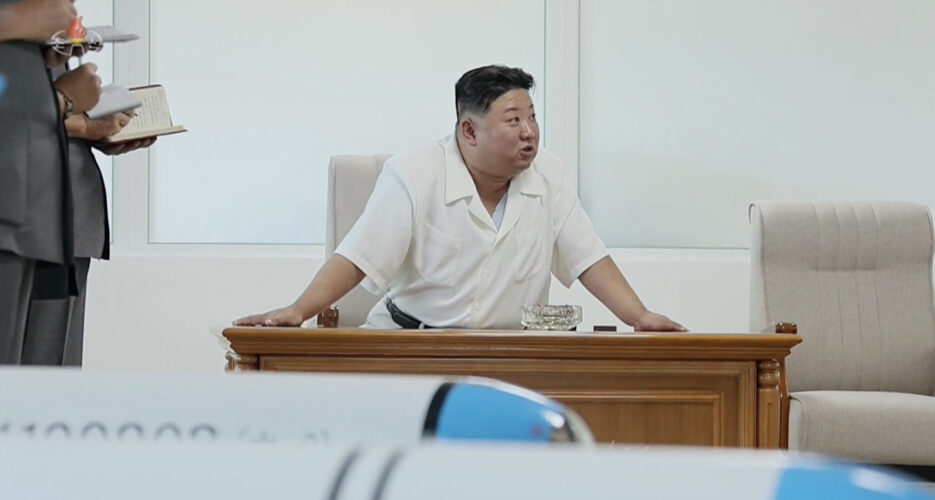 Editor’s note: This article is the second in a two-part series on North Korean weapons factory upgrades. The first part can be found here. North Korea appears to be ramping up efforts to produce anti-tank missiles, according to NK Pro analysis of satellite imagery, upgrading multiple factories suspected of manufacturing the weapons likely of interest to Russia amid their growing arms trade. The expansion of the two facilities in the northwest comes as the DPRK has also started construction at a factory producing rifles reportedly modeled after Russian products, while new extensive underground facilities are being built near other weapons plants, potentially for arms storage. The findings emphasize leader Kim Jong Un’s priority on developing close-range combat systems in addition to the more prominently promoted long-range nuclear weapons.
ANTI-TANK MISSILES FOR RUSSIA? Sinuiju Measuring Instrument Factory (신의주측정계기공장) NK Pro analysis of satellite imagery shows a new project is underway to increase production capabilities at the missile-producing Sinuiju Measuring Instrument Factory near the Chinese border, despite the construction of a large new complex there just six years ago. This is where Kim Jong Un inspected modernized production lines for new North Korean non-line of sight (NLOS) anti-tank guided missiles (ATGMs) last September, according to Jeffrey Lewis and John Ford from the New Tools Team at the Middlebury Institute of International Studies’ James Martin Center. Planet Labs imagery shows three large buildings were demolished in the second half of May and that the basic structure of a 1-acre (0.4-hectare) building and two other buildings had already been built by July 14. 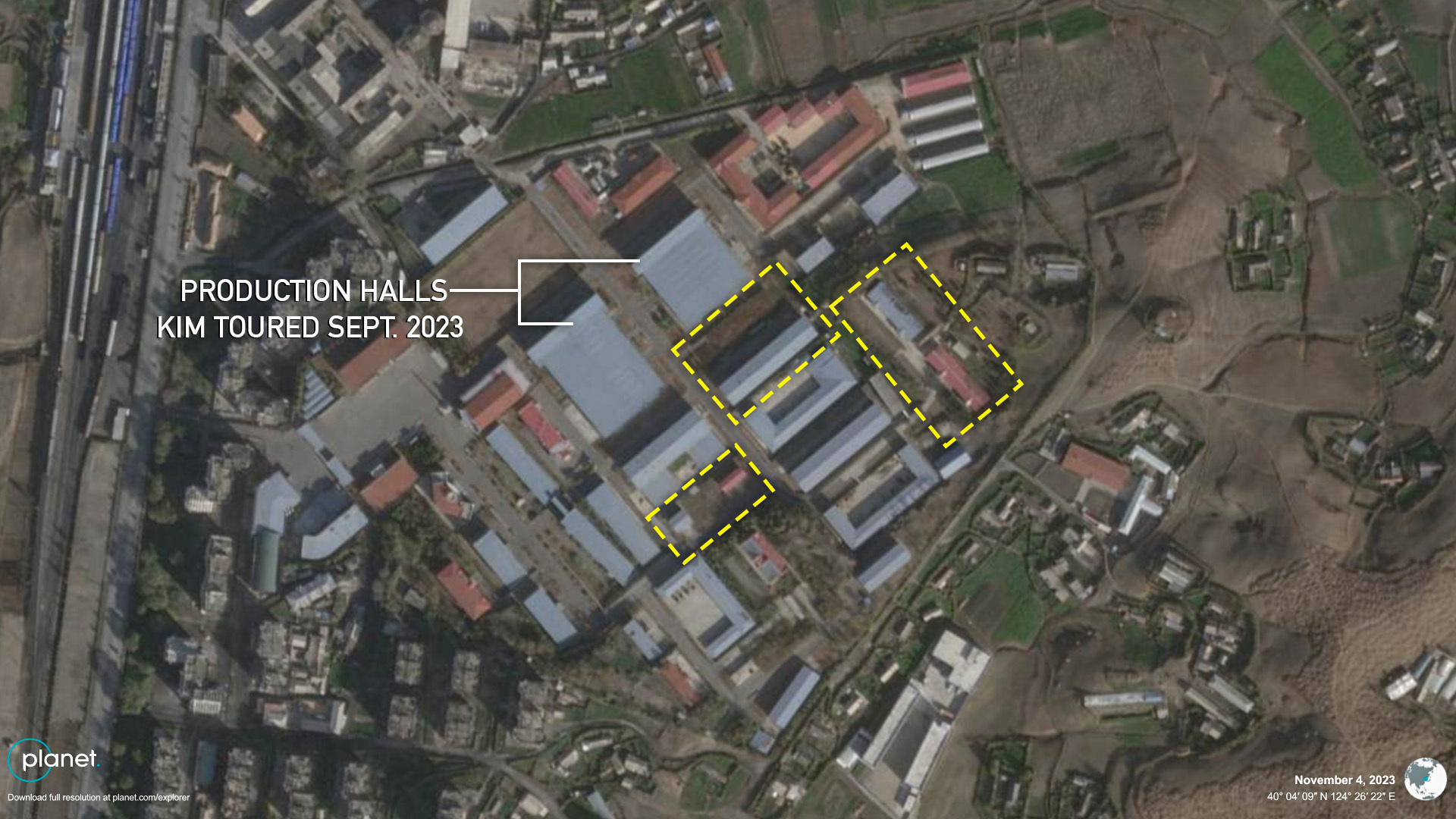
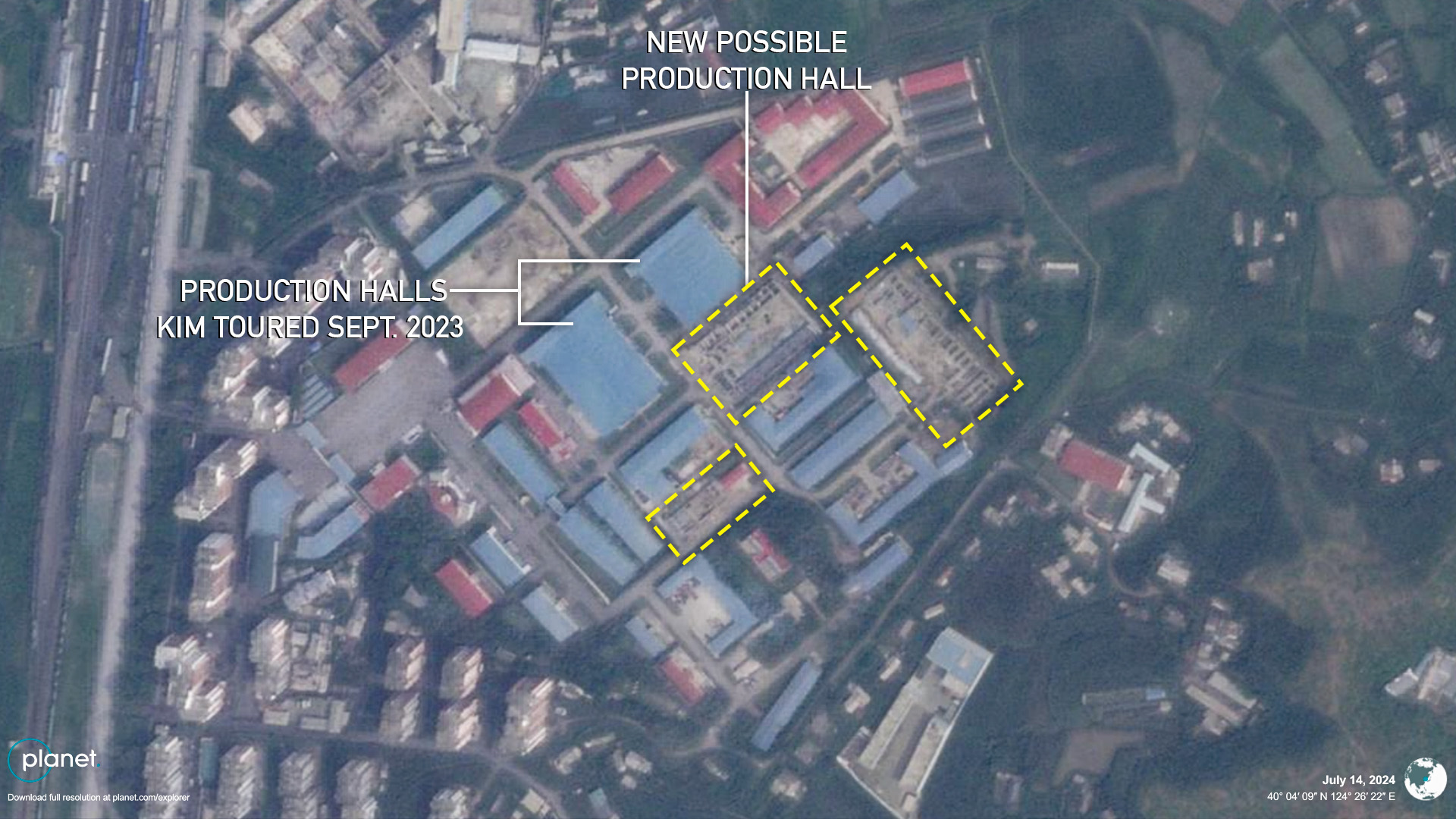
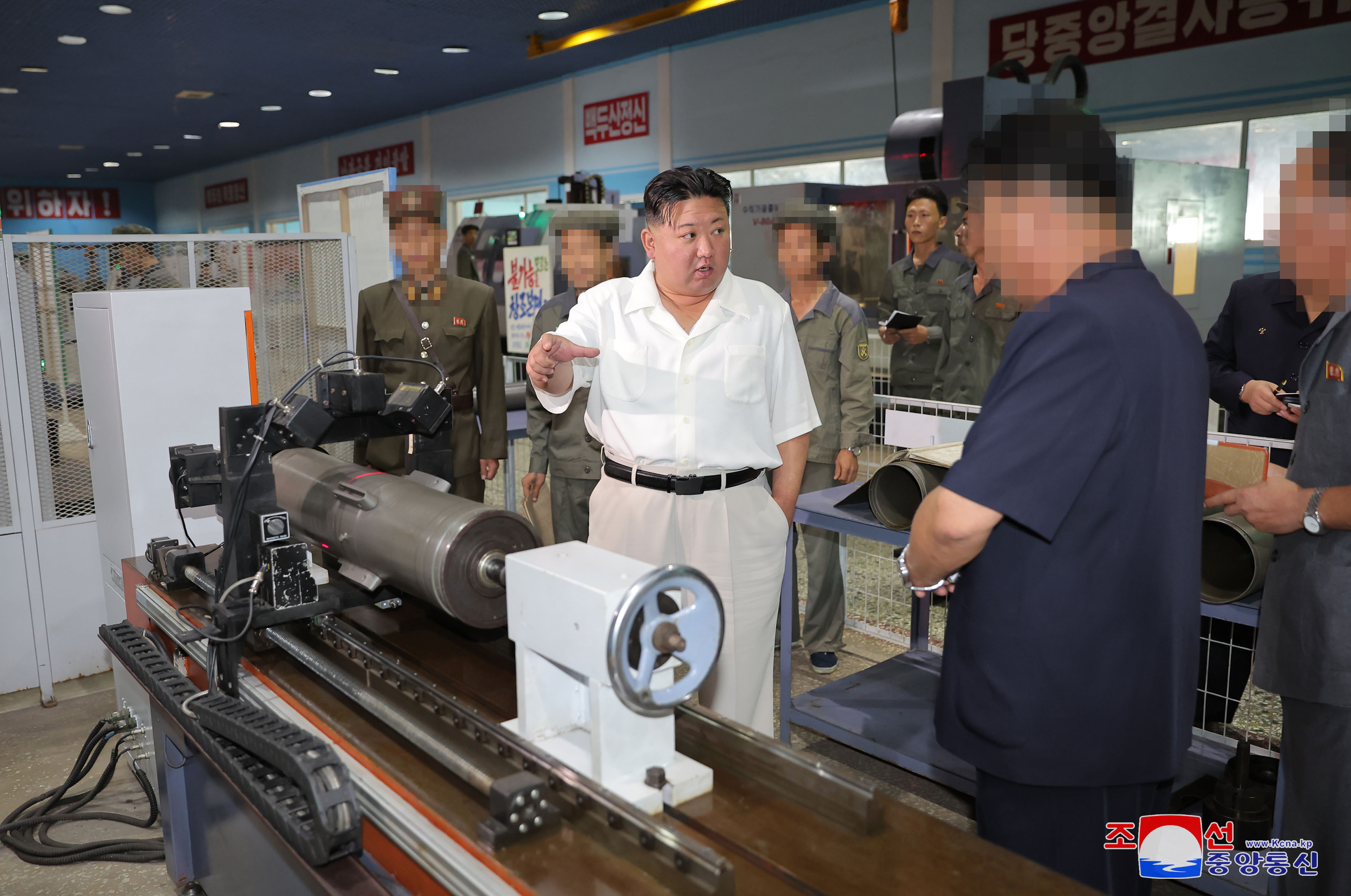 The larger structure appears similar in size to the two existing production halls, where Kim was seen inspecting NLOS ATGM parts being sculpted by advanced computer numerically controlled (CNC) machines. It is being built on top of where a basketball and volleyball court once stood. Just after Russian cargo ships first started picking up military supplies from North Korea last summer, the New York Times reported that Moscow was seeking “artillery shells and antitank missiles” to support its invasion of Ukraine, and in exchange, would provide Pyongyang with “advanced technology for satellites and nuclear-powered submarines.” Overwhelming evidence has emerged of Russia using artillery rockets and even advanced short range ballistic missiles (SRBMs) in attacks on Ukraine in the time since, but none yet related to DPRK-made ATGMs. Joost Oliemans, co-author of “The Armed Forces of North Korea,” told NK Pro that “the NLOS would be by far the most attractive to Russia” of North Korea’s ATGM offerings. Tianran Xu, an analyst with Open Nuclear Network, said “Russia would be in need of ATGMs” but that acquiring new versions like the NLOS would require training. He told NK Pro “It could be likely that [Russia’s] ATGM stocks are also running low, but definitely shells are higher priorities. The daily use of shells has slowed down, and they are even using apparently sub-quality North Korean shells.” If Russia is found to be using additional DPRK weapons, this could put pressure on ROK President Yoon Suk-yeol to once again consider sending lethal weapons to Ukraine, as his administration has warned. Moscow could then follow through with threats to punish Seoul and expand its military aid to North Korea. Taegwan Glass Factory (대관유리공장) Another factory in North Phyongan Province, the Taegwan Glass Factory, has been said to be producing ATGMs at least since a Burmese military delegation visited and made this claim in 2008. Now, Planet Labs imagery shows new roofing has been installed since early June on a line of old above-ground production halls that previously appeared defunct. The renovation project appeared to start in mid-2021 but stalled until recently. 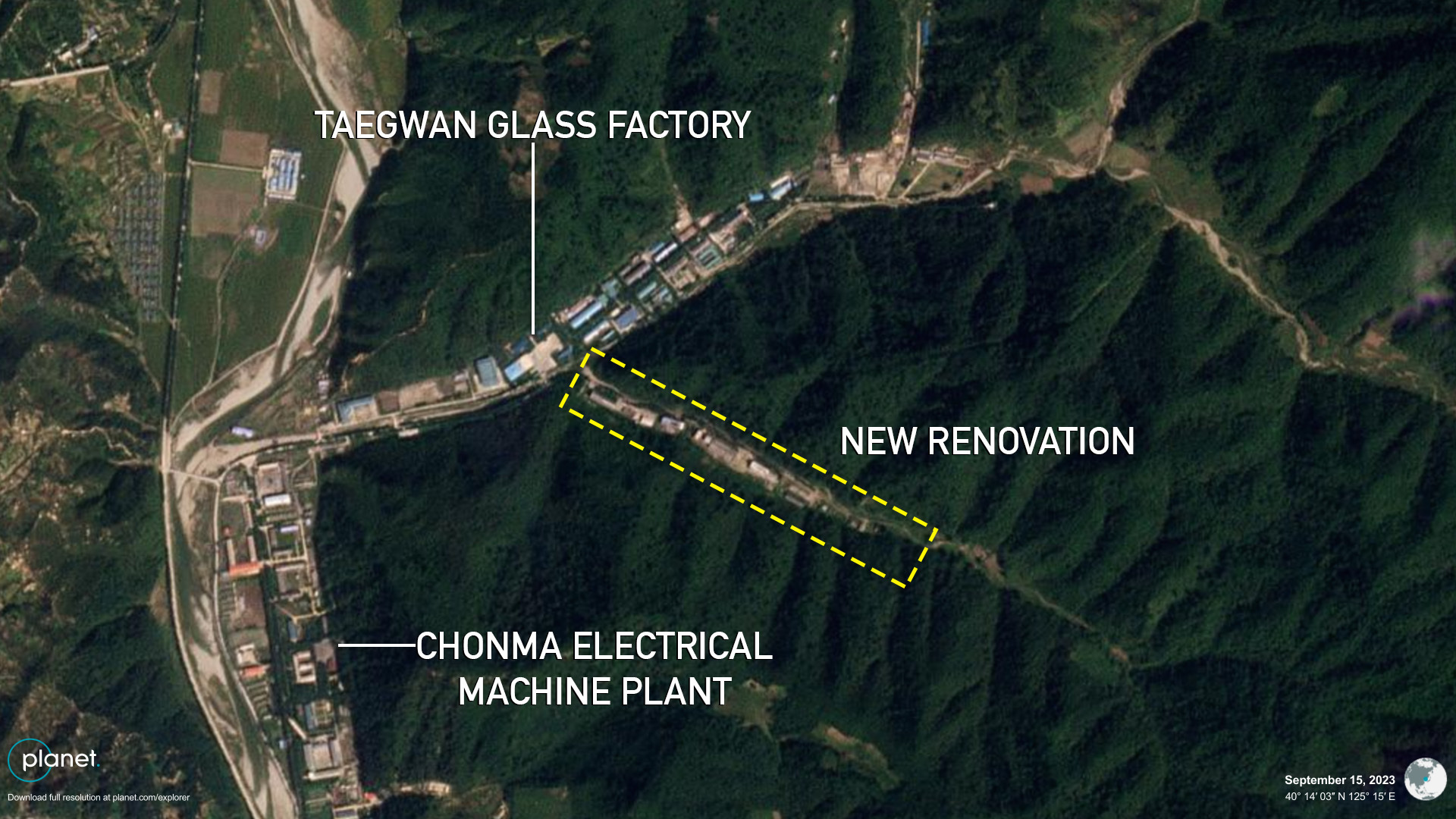
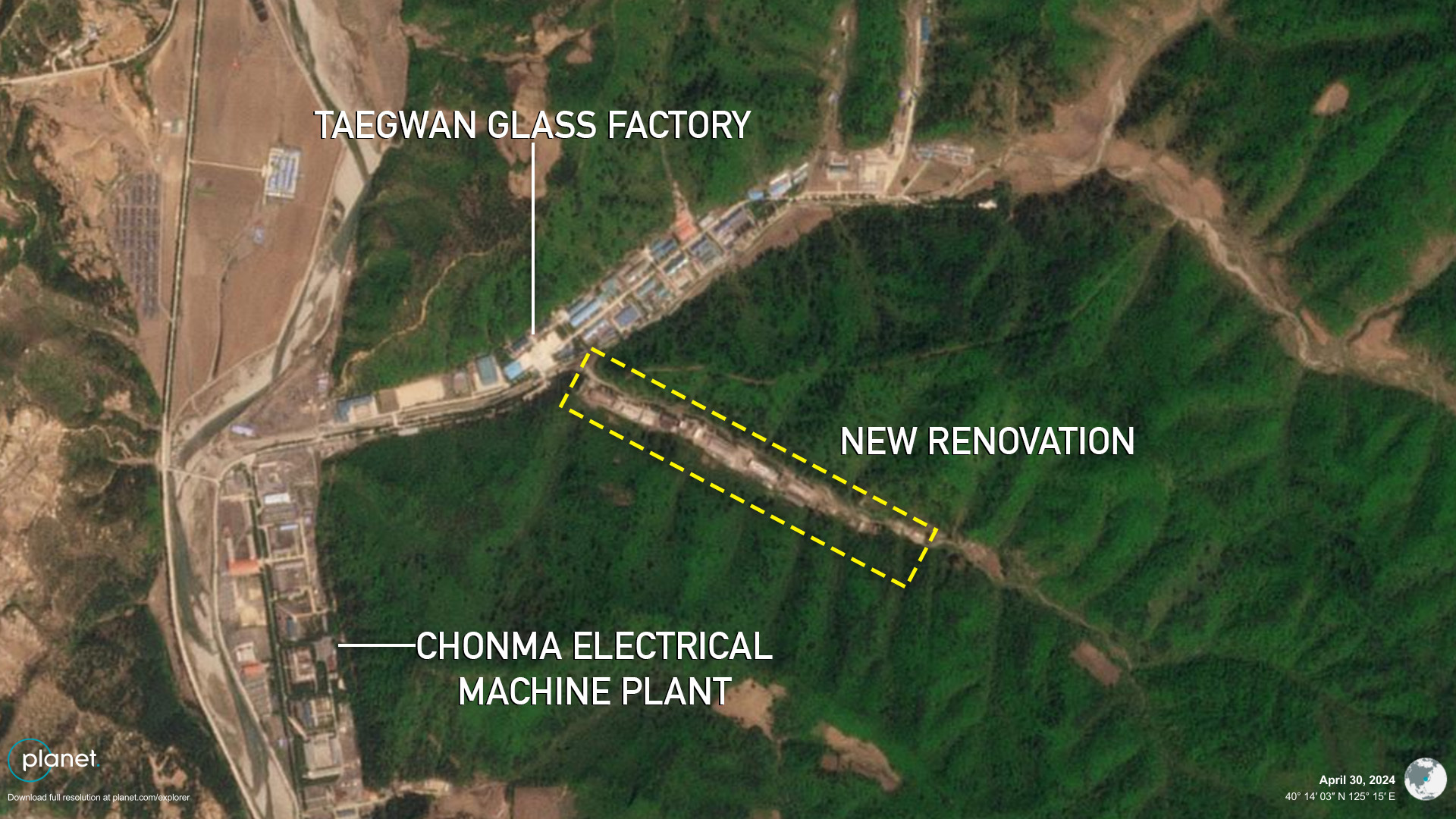
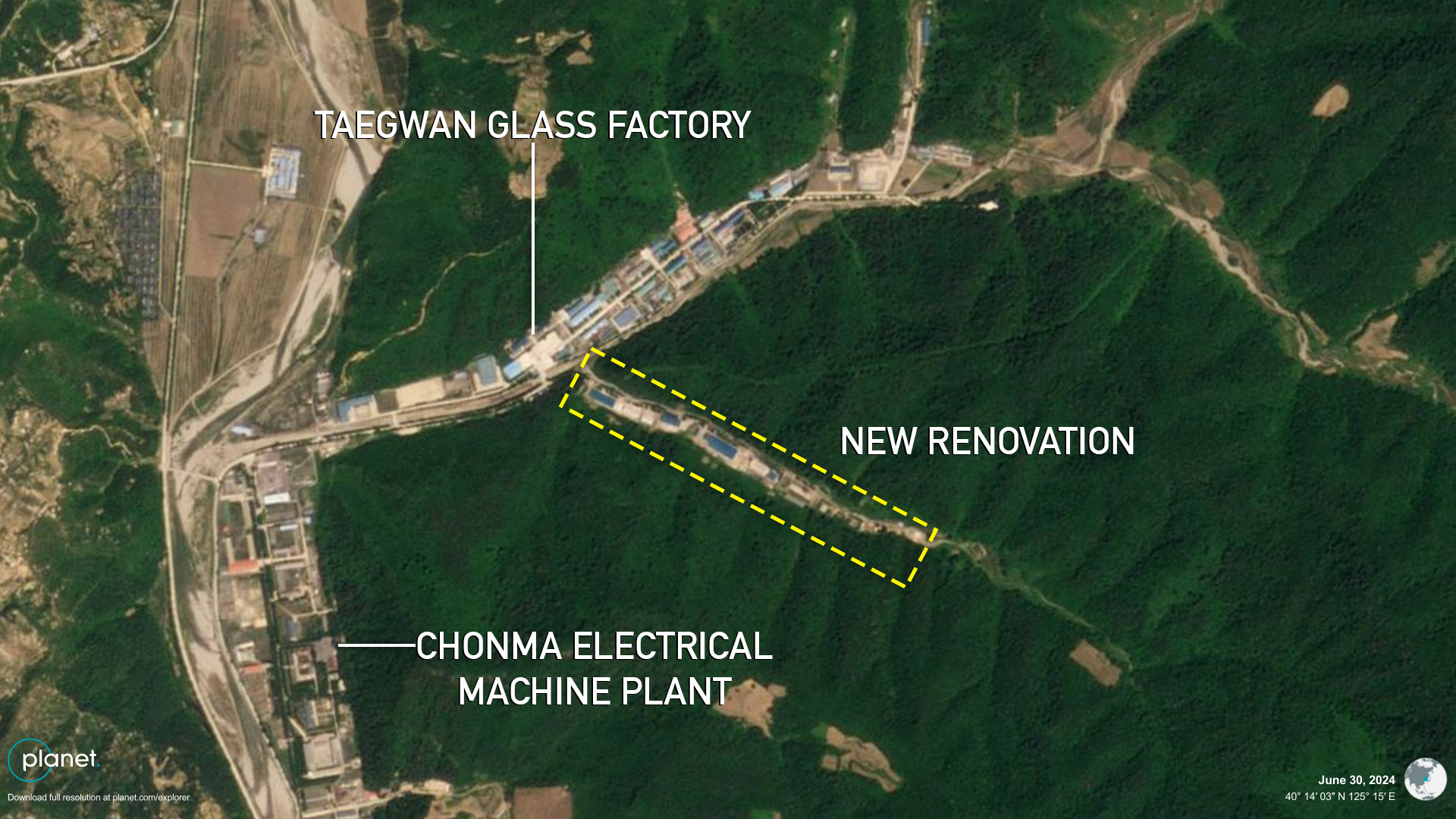
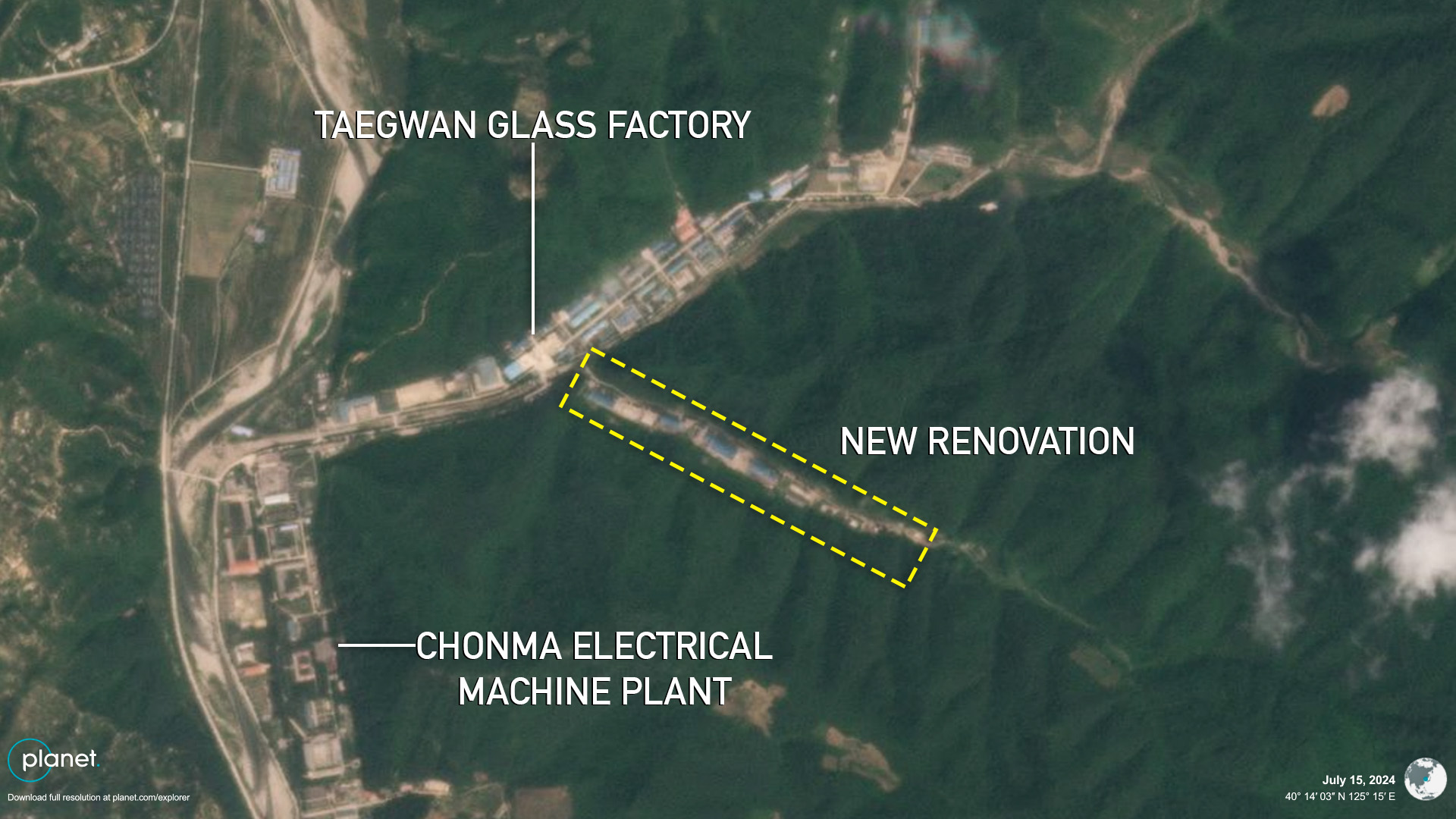
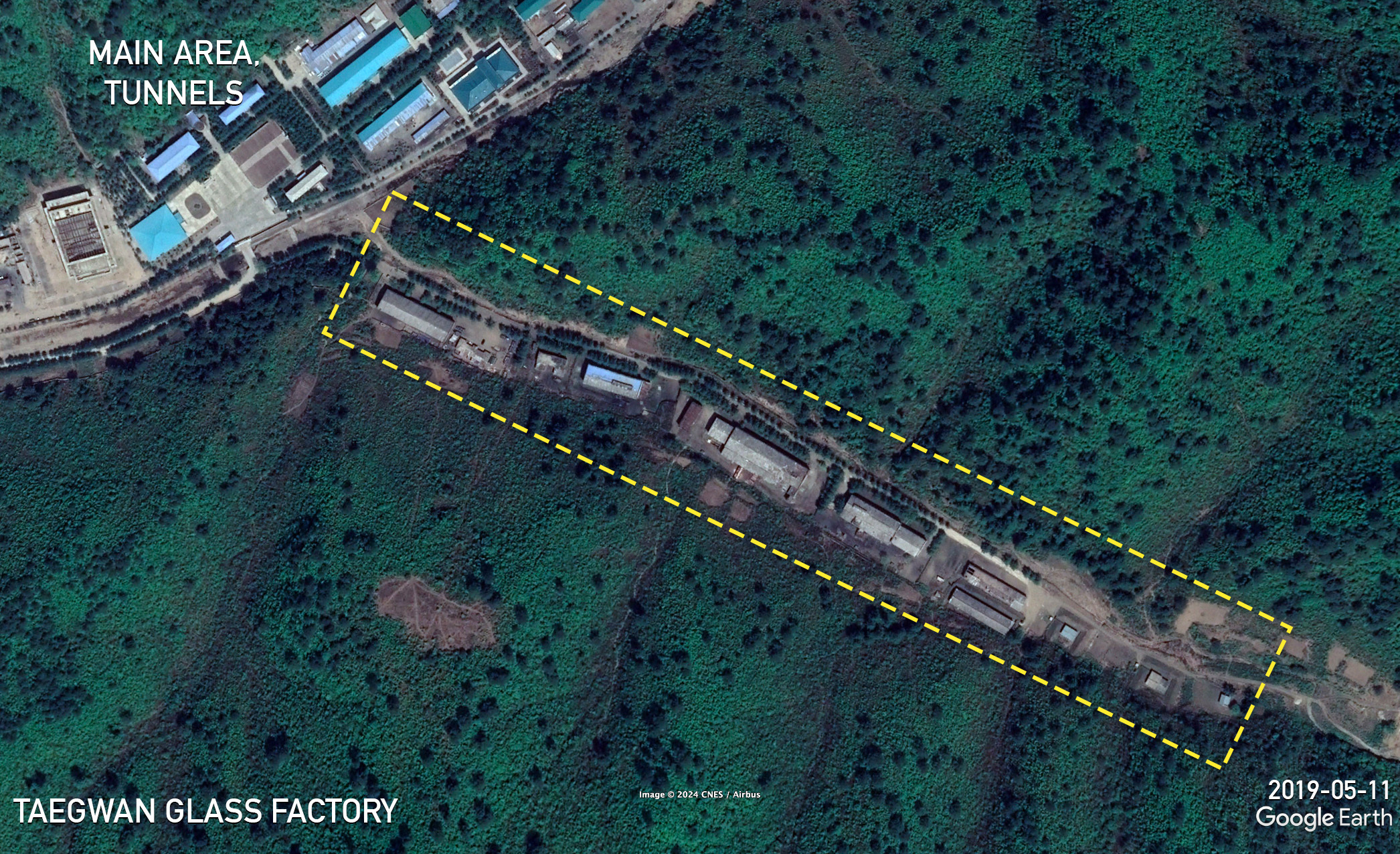
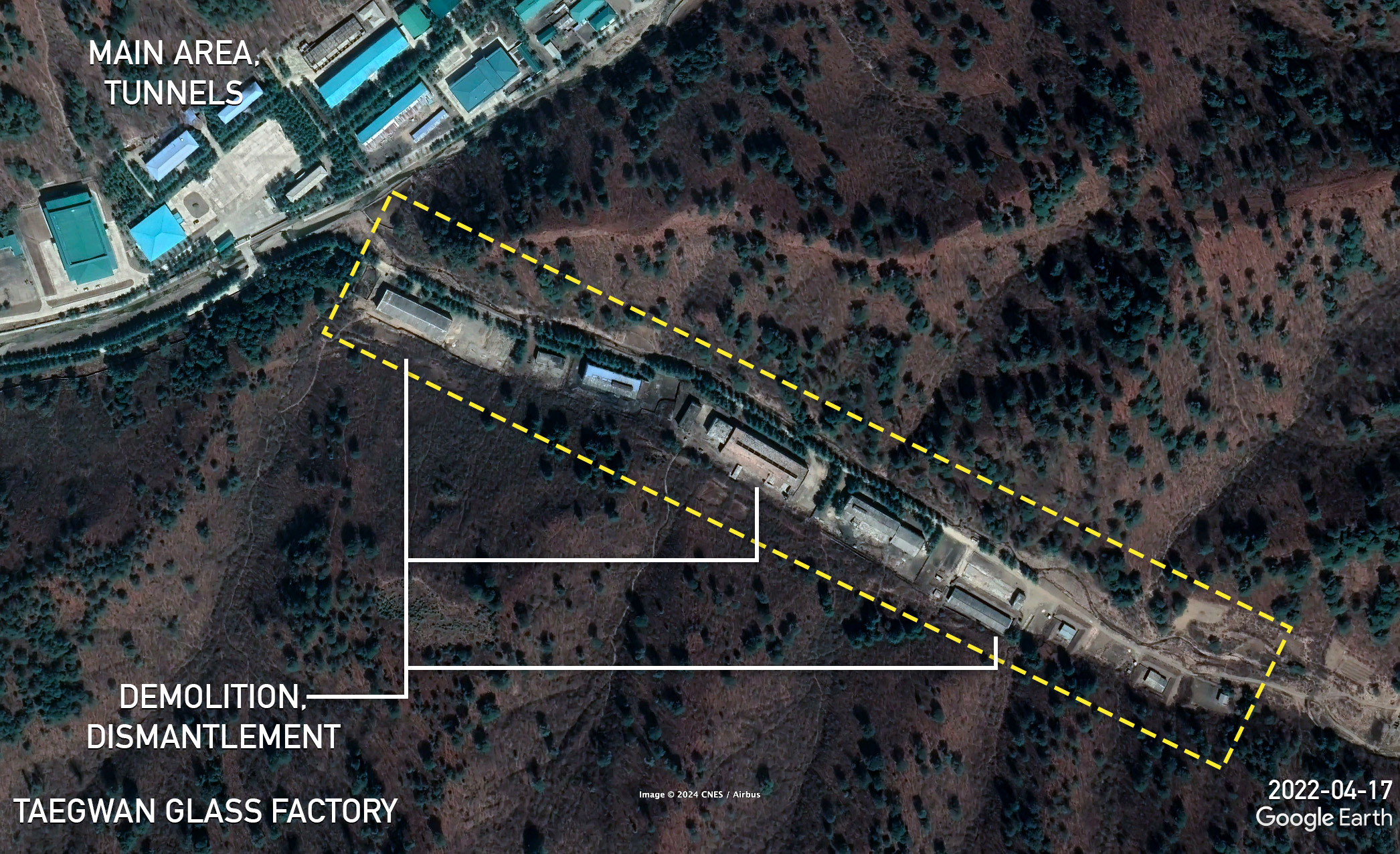
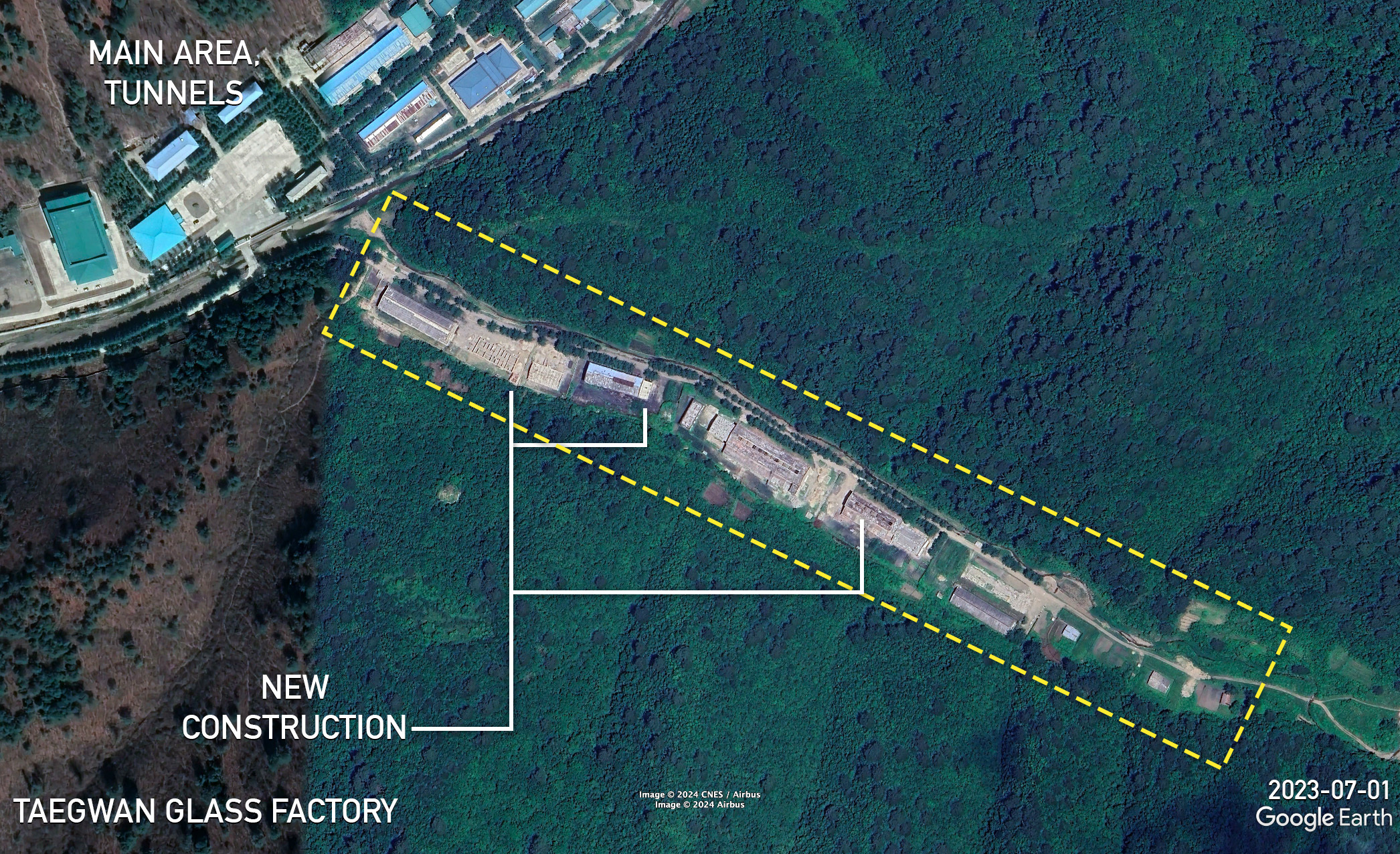
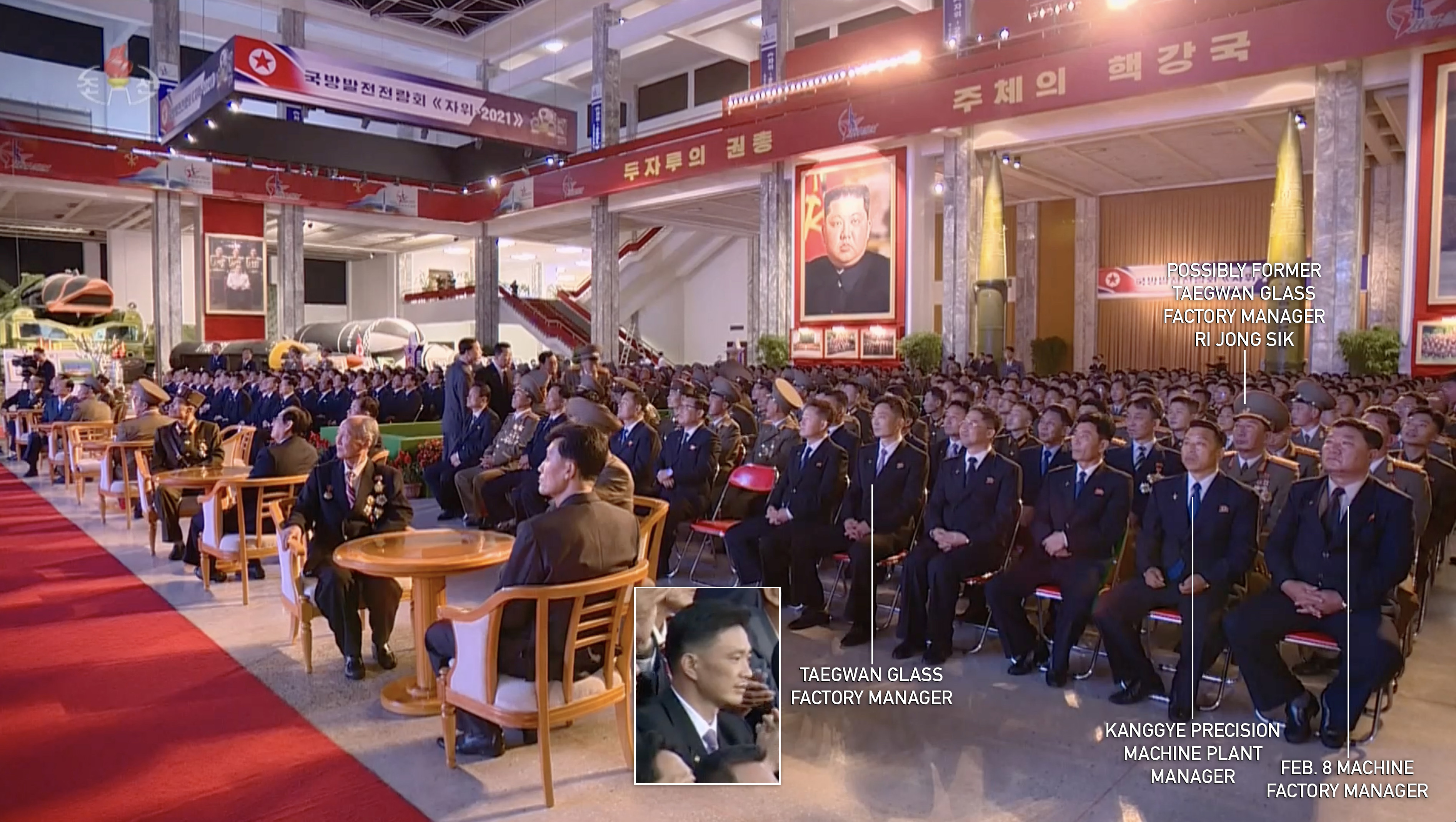
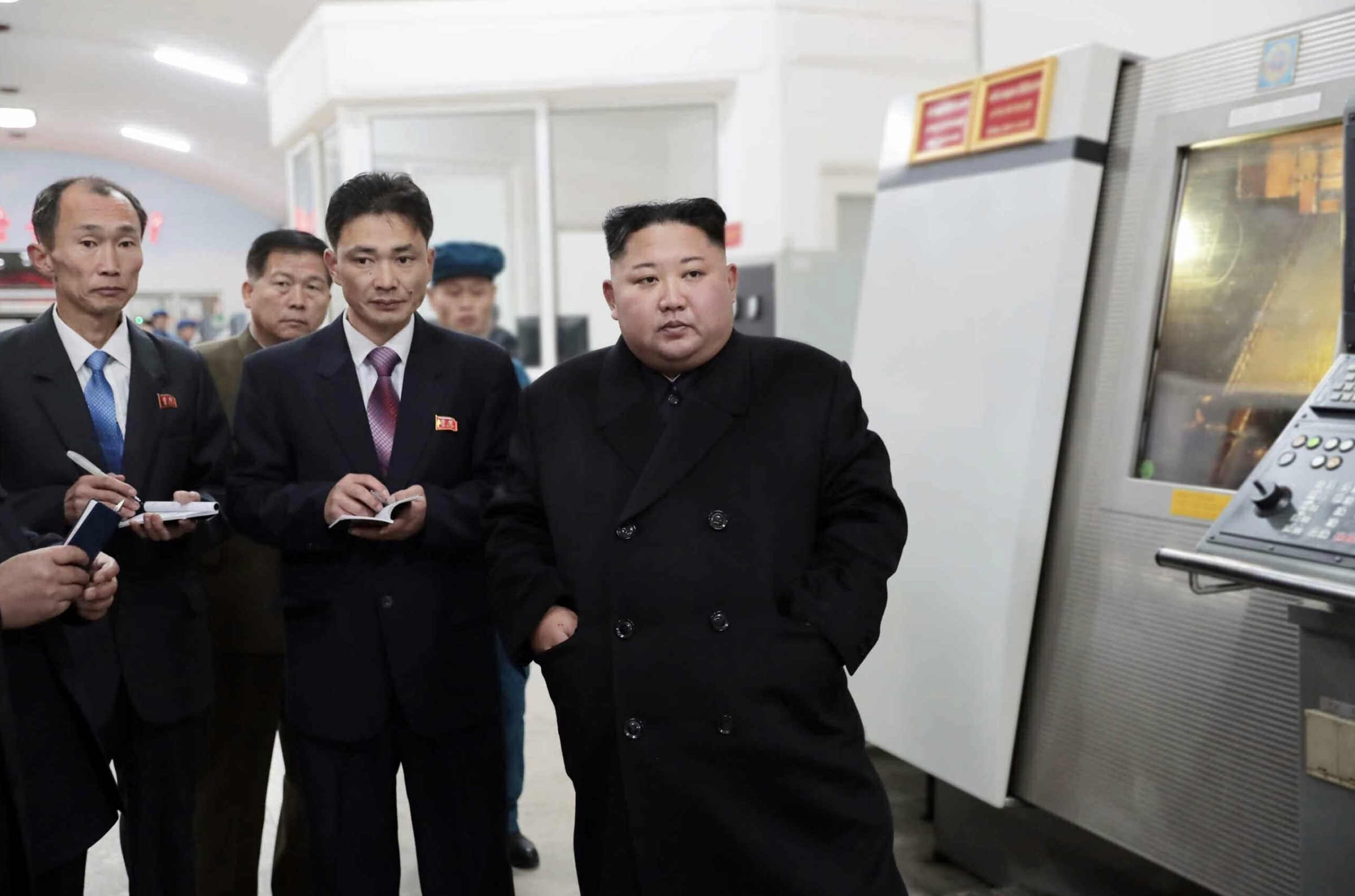
Though the extent of the project remains unknown, it could involve acquiring new equipment and expanding production capabilities. It is unclear if the factory’s underground tunnel production lines have been included in the renovations. Kim Jong Un last publicly visited the factory in Nov. 2018, while the factory’s managers appeared as recently as Oct. 2021 in the front row of a major weapons exhibition — indicating Taegwan’s ongoing importance in munitions production. The previous manager, Ri Jong Sik, appeared to be promoted to a more central weapons development role and was seen with Kim at various weapons tests, as well as his inspection of a new ballistic missile submarine in July 2019. Meanwhile, a new “light electrical appliance factory” built rapidly in the last year in Songgan, Jagang Province may also produce ATGMs or other missiles, which if confirmed, would further point to a higher priority on ATGM production. NEW UNDERGROUND FACILITIES NEAR ARMS PLANTS Songgan Extensive new underground facilities that could be used in weapons production or storage appear to be under construction adjacent to two major weapons factories, including the new Songgan factory. NK Pro analysis of Planet Labs satellite imagery shows steady tunnel excavation inside an existing secure valley on the west side of Mount Soksa (속사산), possibly a military base, since June 2023. The project started over the winter of 2021-22 with the construction of two tunnel entrances and support buildings. Since last June, rock spoil piles have appeared along an excavated path stretching 400 meters (1,300 feet) west of the first tunnel entrance built in early 2022, showing digging is ongoing. 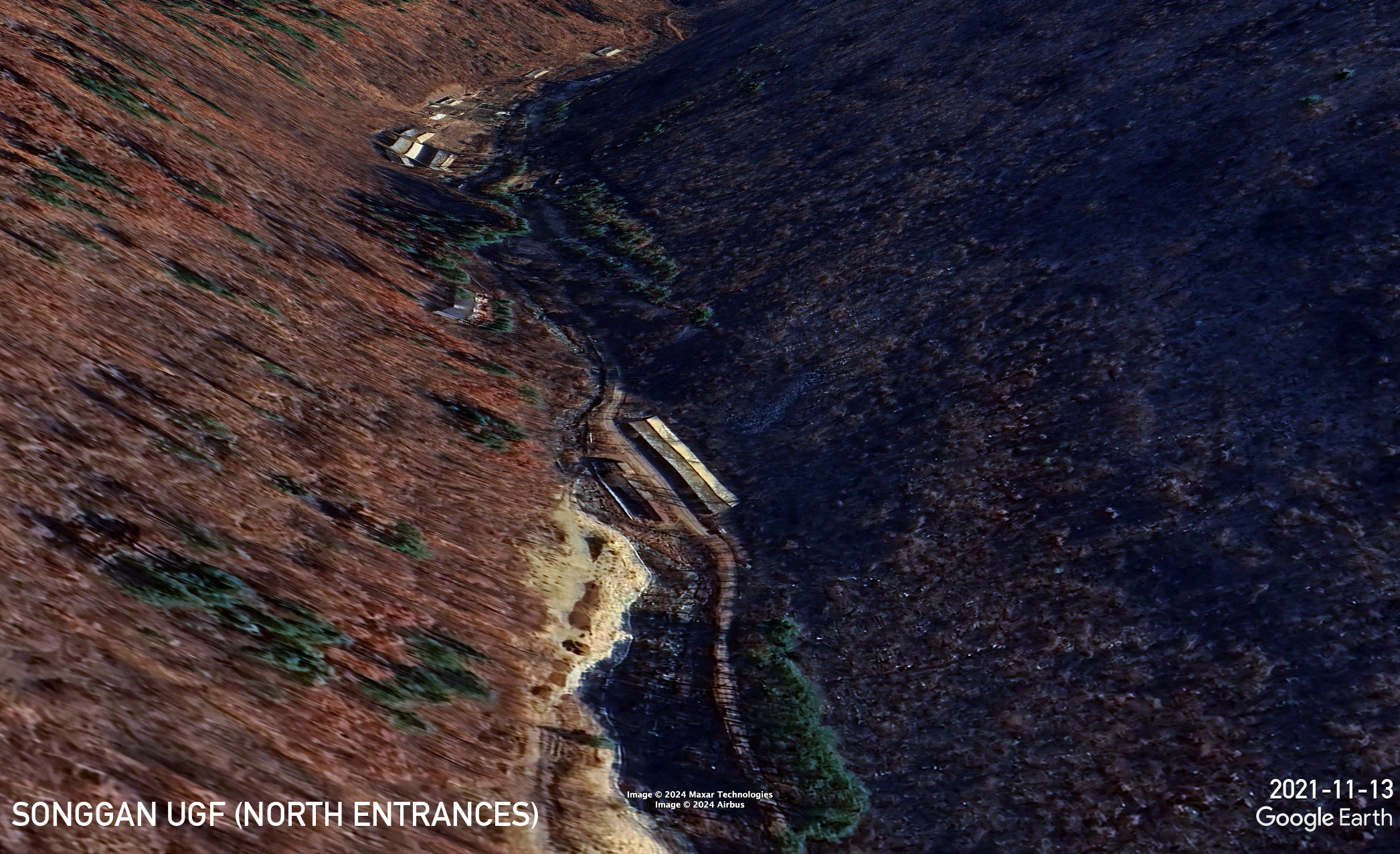
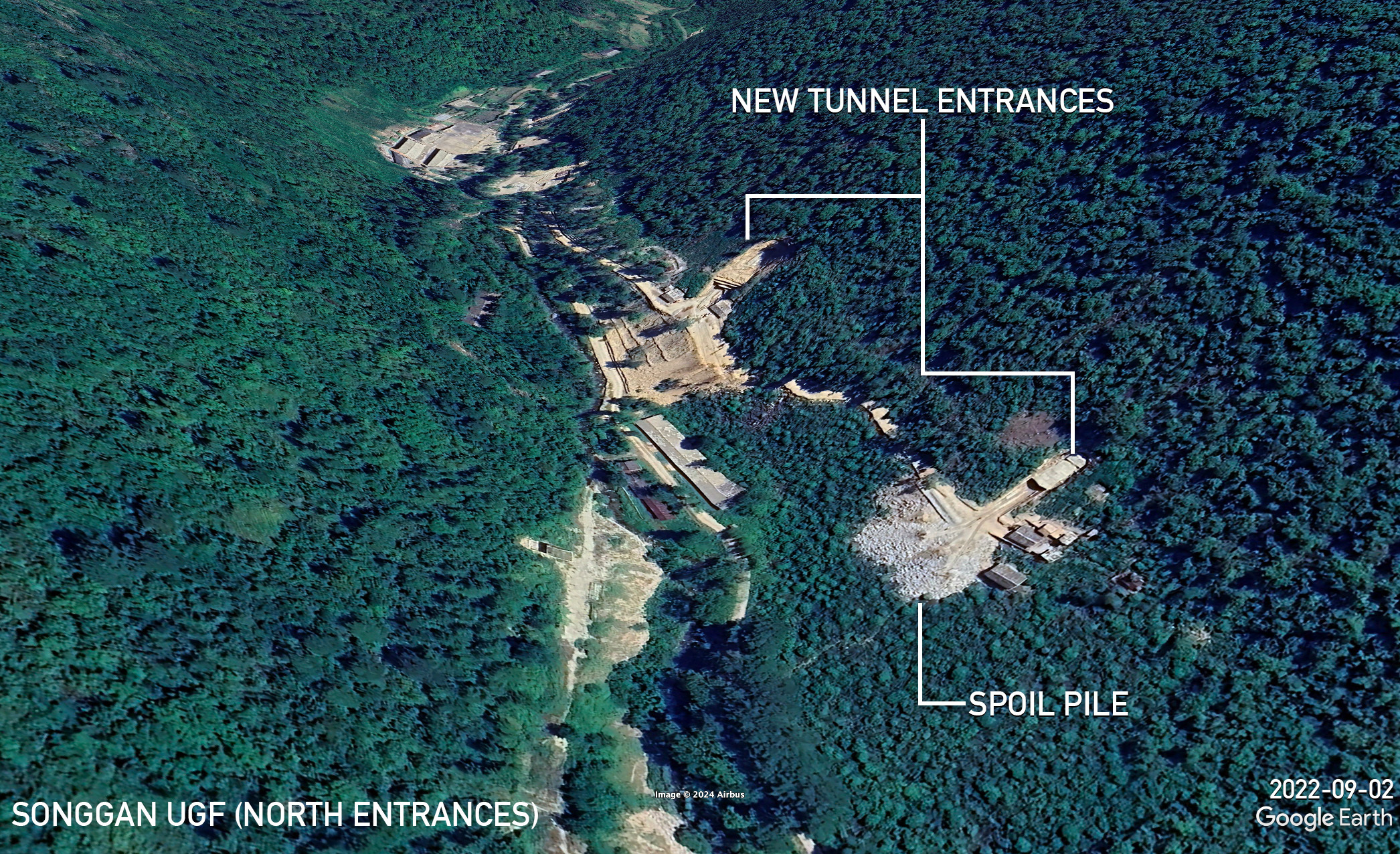
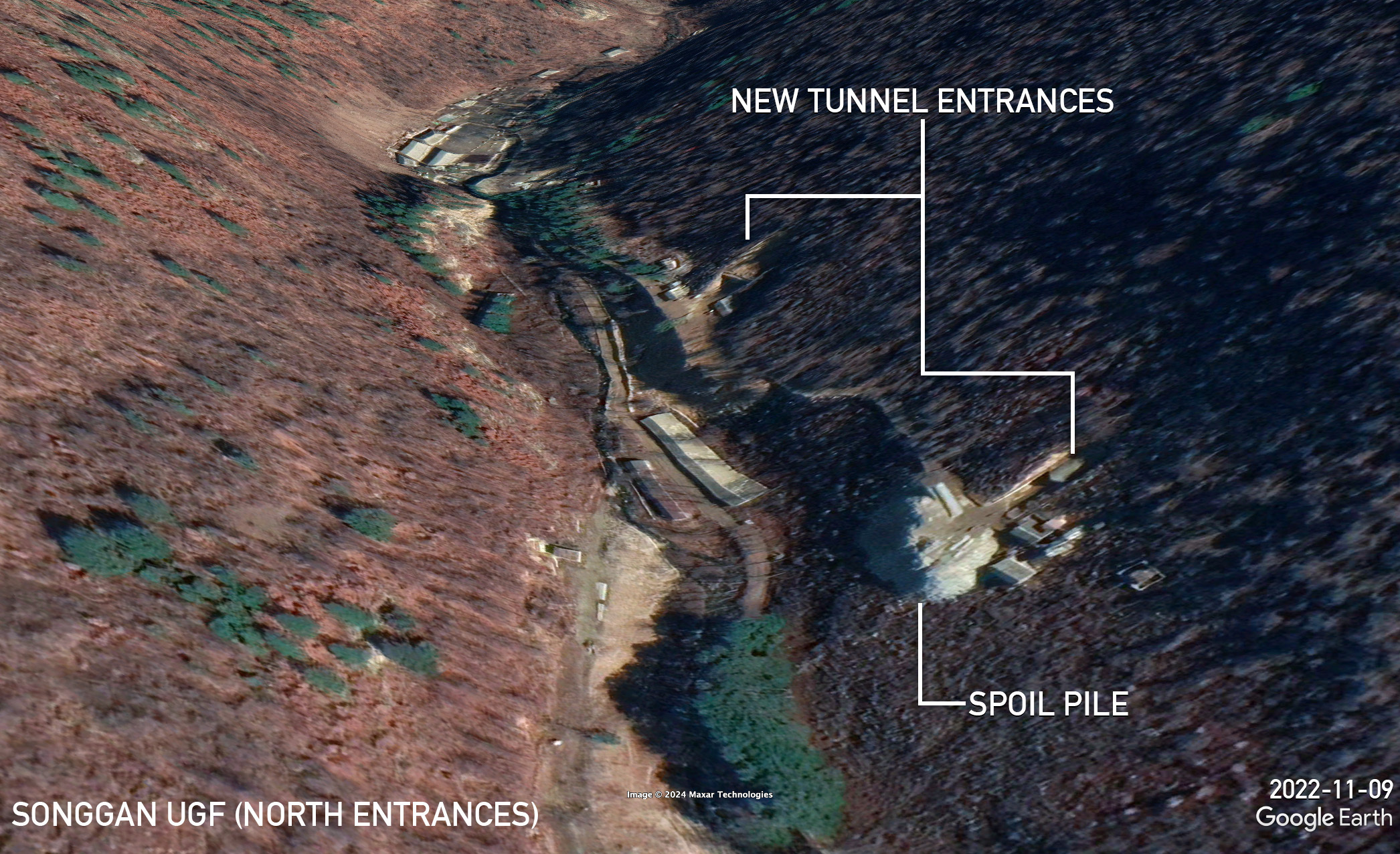
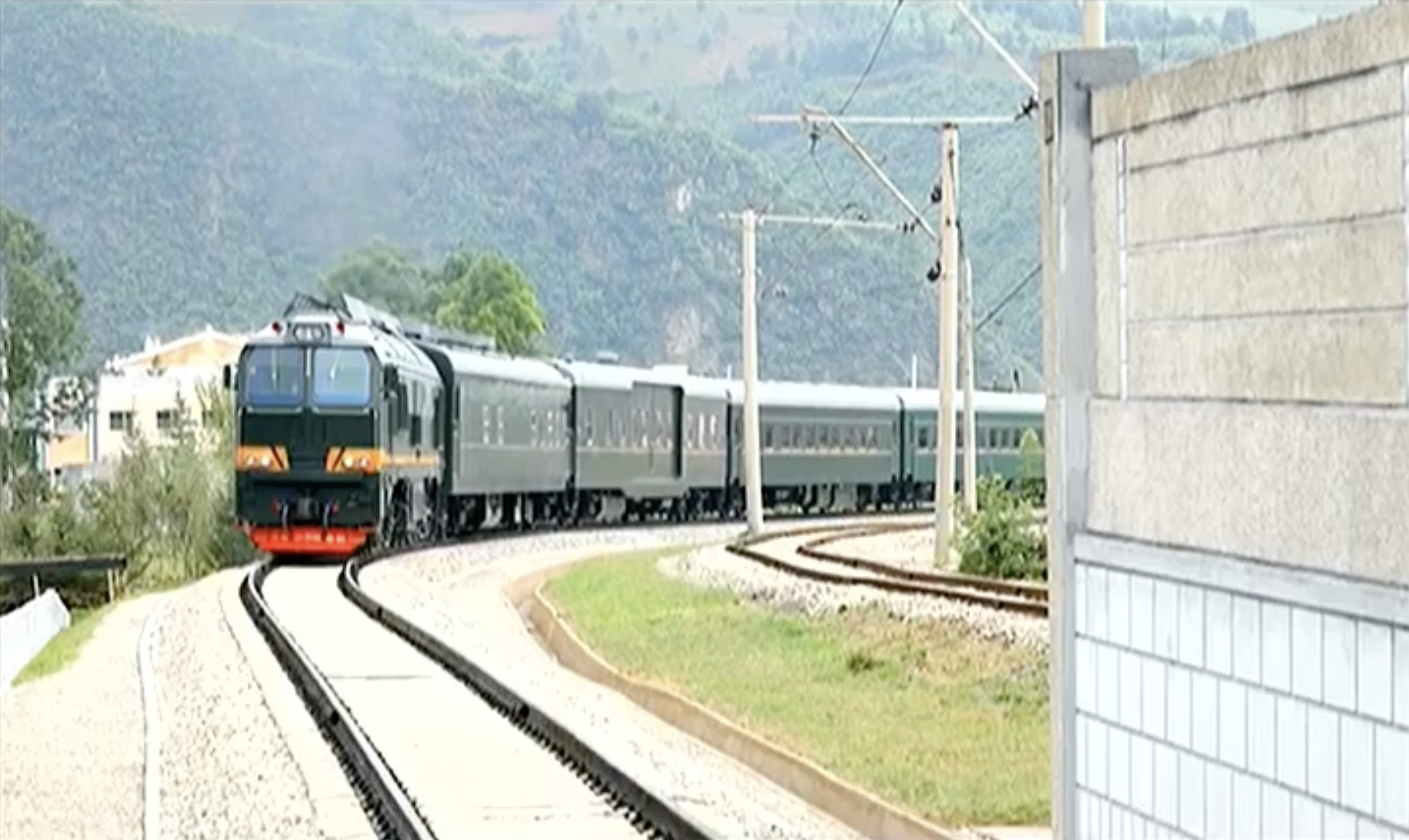
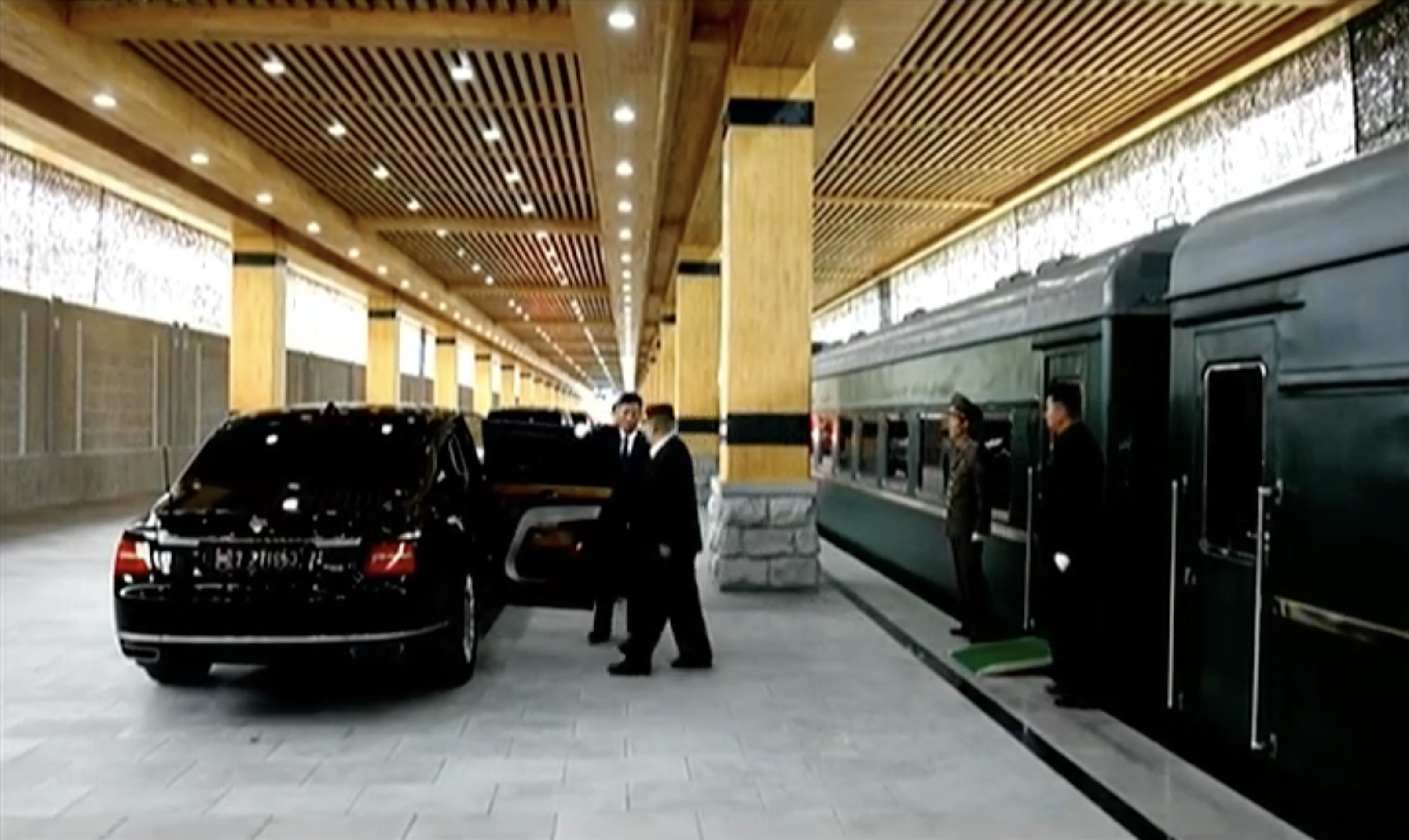
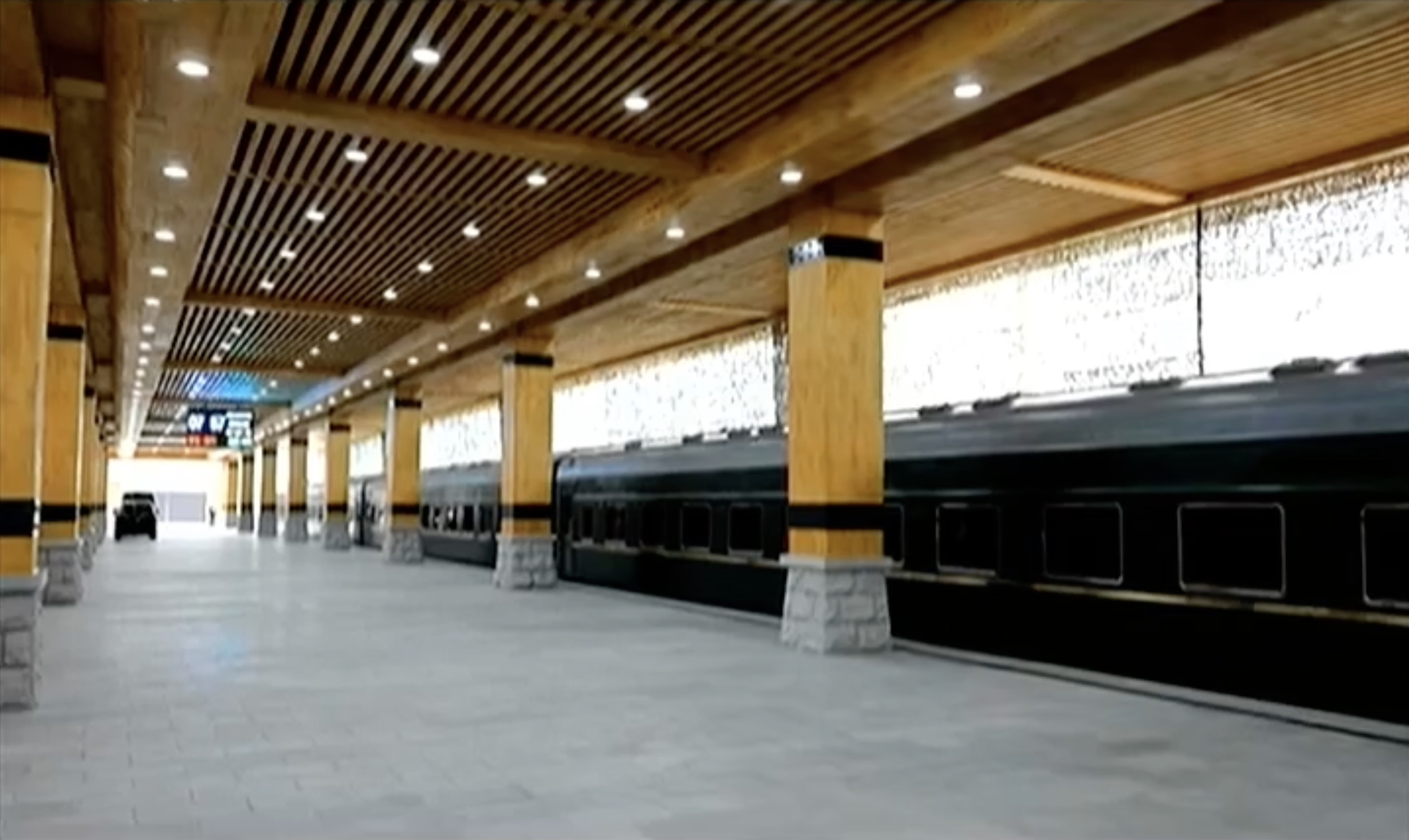
Another tunnel entrance appeared to be built over the winter of 2023-24 on the other side of that part of the mountain to the southwest. If connected to the previously built underground facilities, there would be a tunnel over 1.2 km (0.75 miles) in length connecting the two sites. The new tunnels are located between munitions plants with existing underground facilities, the new Songgan weapons factory to the north and a complex to the south that has previously been called the February General Steel Enterprise (2월제강종합기업소) and the Jagang Machine Plant (자강기계공장). Given that the new tunnel site is not directly connected to either factory complex, it seems more likely to be a storage rather than a production facility, while its location suggests it is likely to be military-related. Kim Jong Un just visited the new Songgan factory again in June, but state media didn’t mention any inspection of the tunnels. State TV showed him using a new train station built in the last year near the February General Steel Enterprise in the town center, suggesting he may be planning to visit the area more in the near future. Kusong Another similarly extensive underground facility is under construction at the site of a May 2017 Hwasong-12 intermediate-range ballistic missile (IRBM) launch, a munitions plant referred to as the January 12 Factory (No. 112 Factory) in Kusong, North Phyongan Province. Planet Labs imagery showed preparations for the excavation of new tunnels in the mountain just south of the factory complex in late 2021 before two new tunnel entrances appeared by mid-2022. At the same time, on the other side of the mountain to the south as well, work started on a third tunnel entrance after two were built over the previous decades. If the two sides are connected, the tunnel system would stretch over 1.5 km. Since March this year, piles of dug-out rock spoil appeared to grow and new support structures were built outside both north and south tunnel entrance areas, while a new road bridge was built over a stream in May as part of work that started in late 2022 to build a heavy-duty road from the factory to the north tunnel entrances. 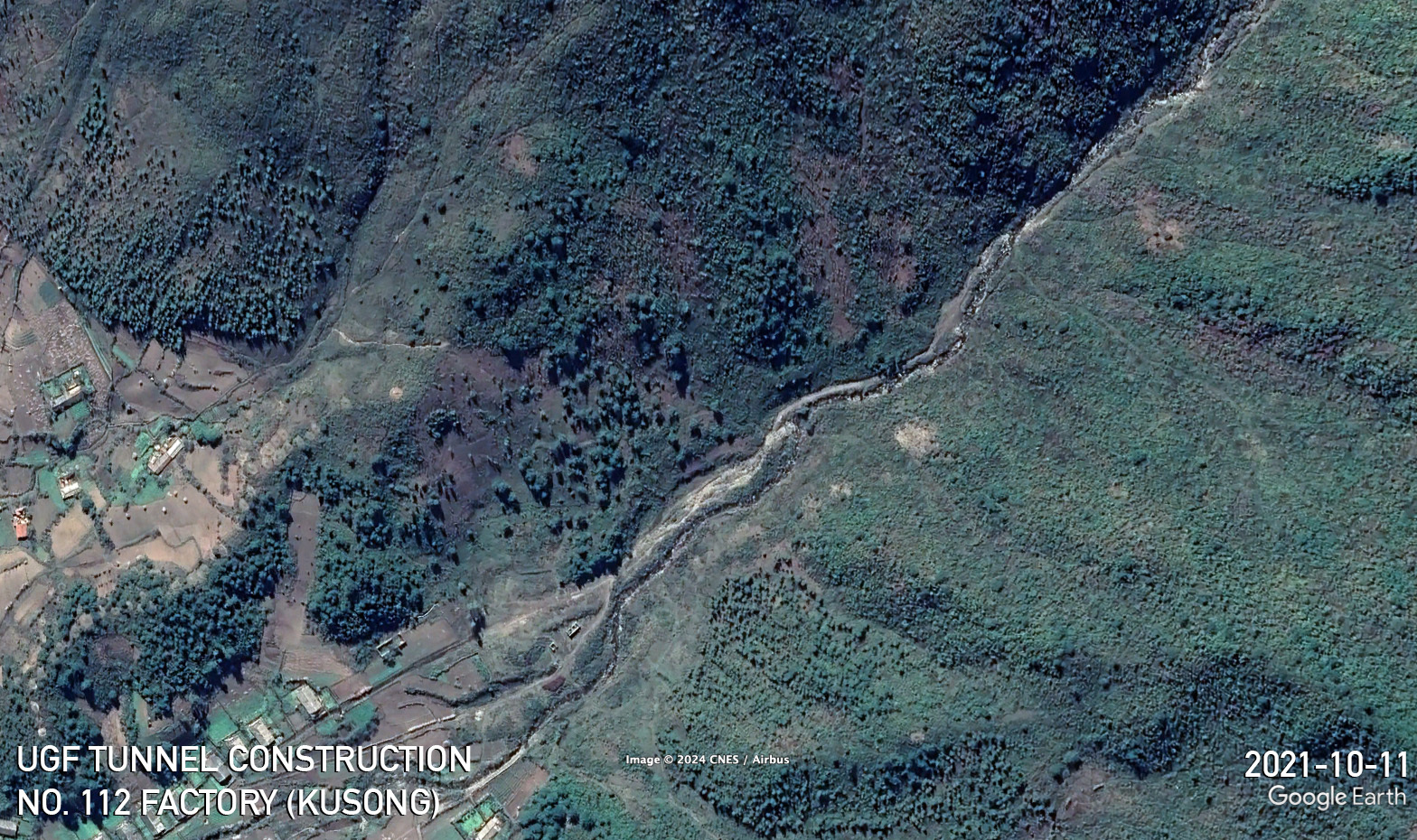
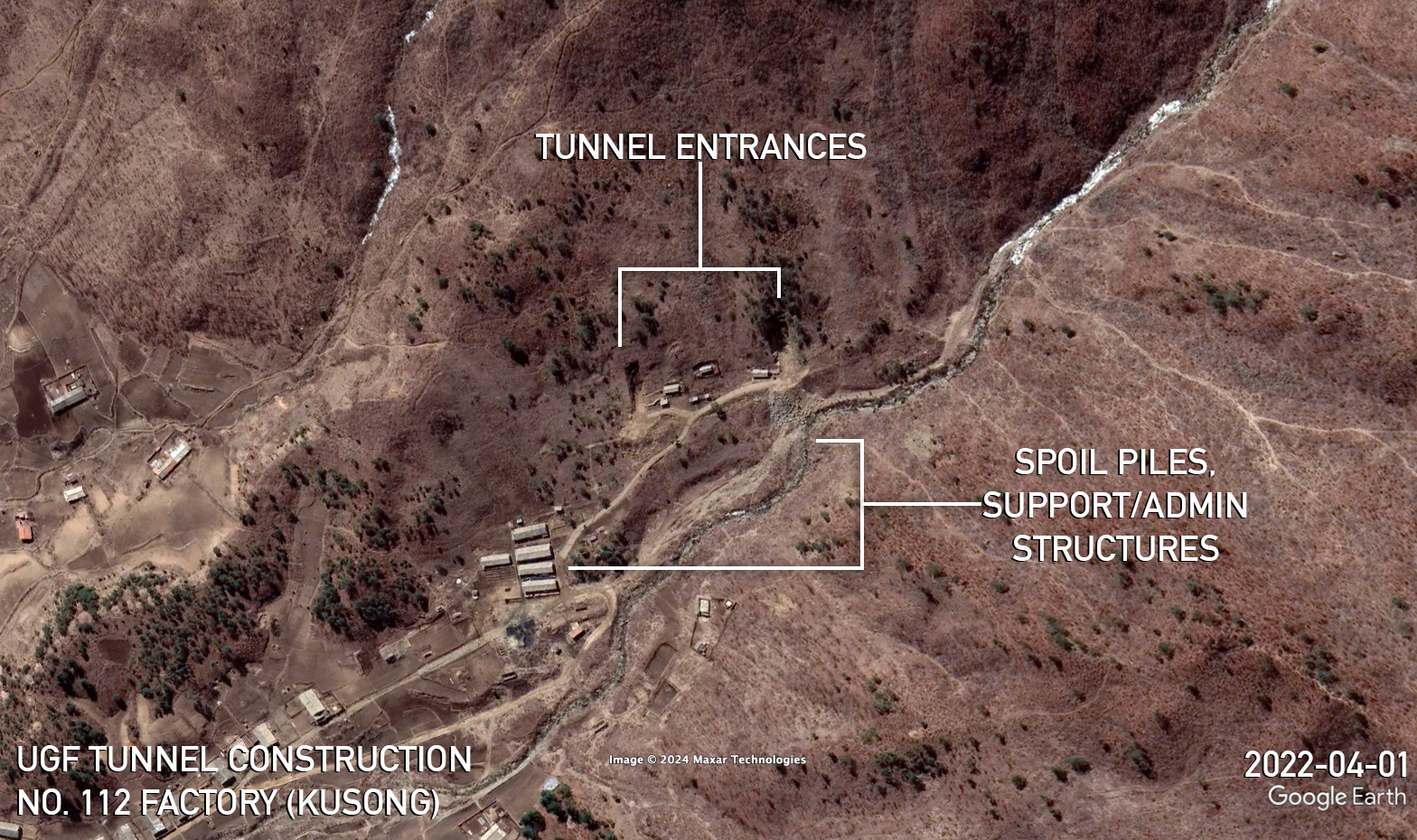
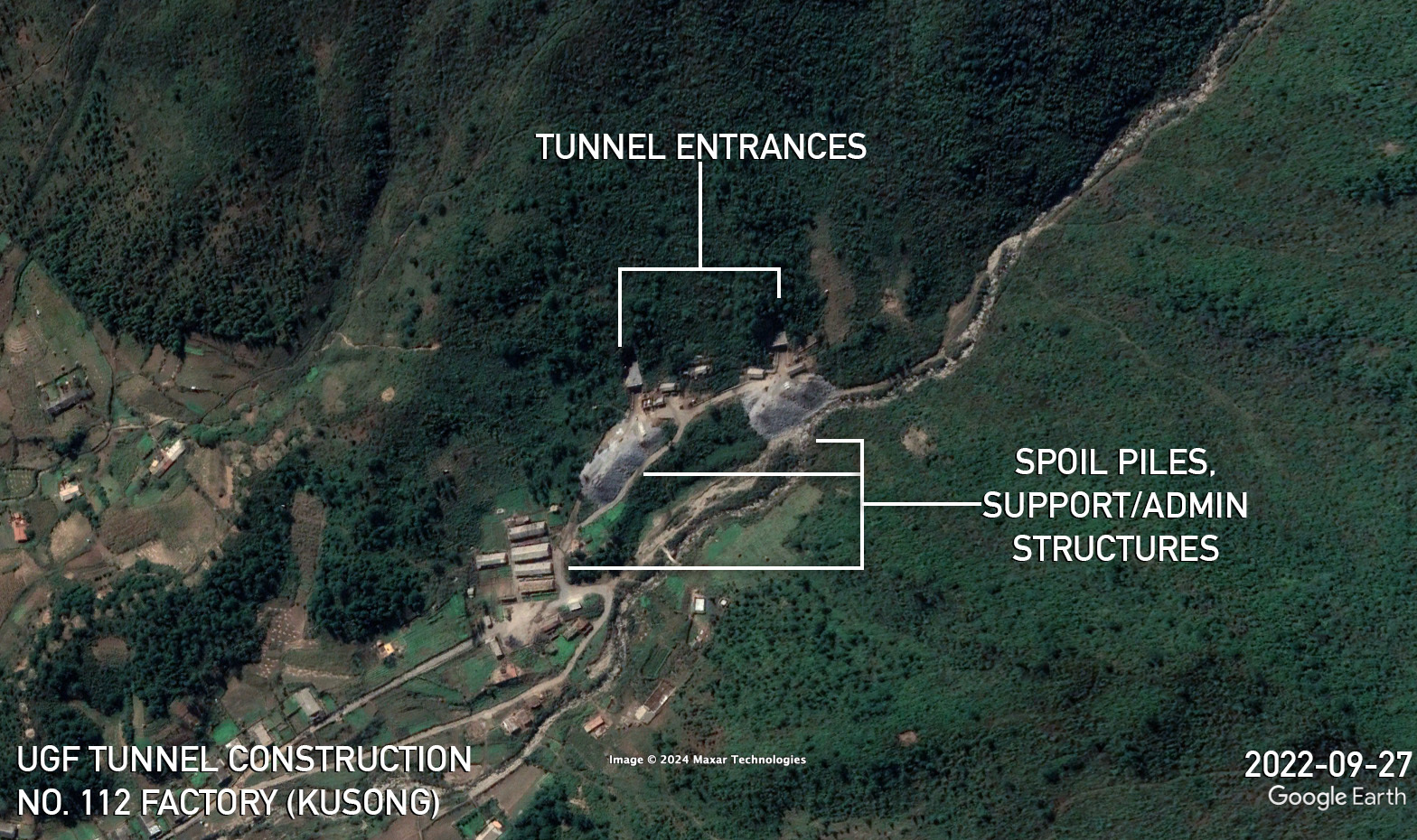
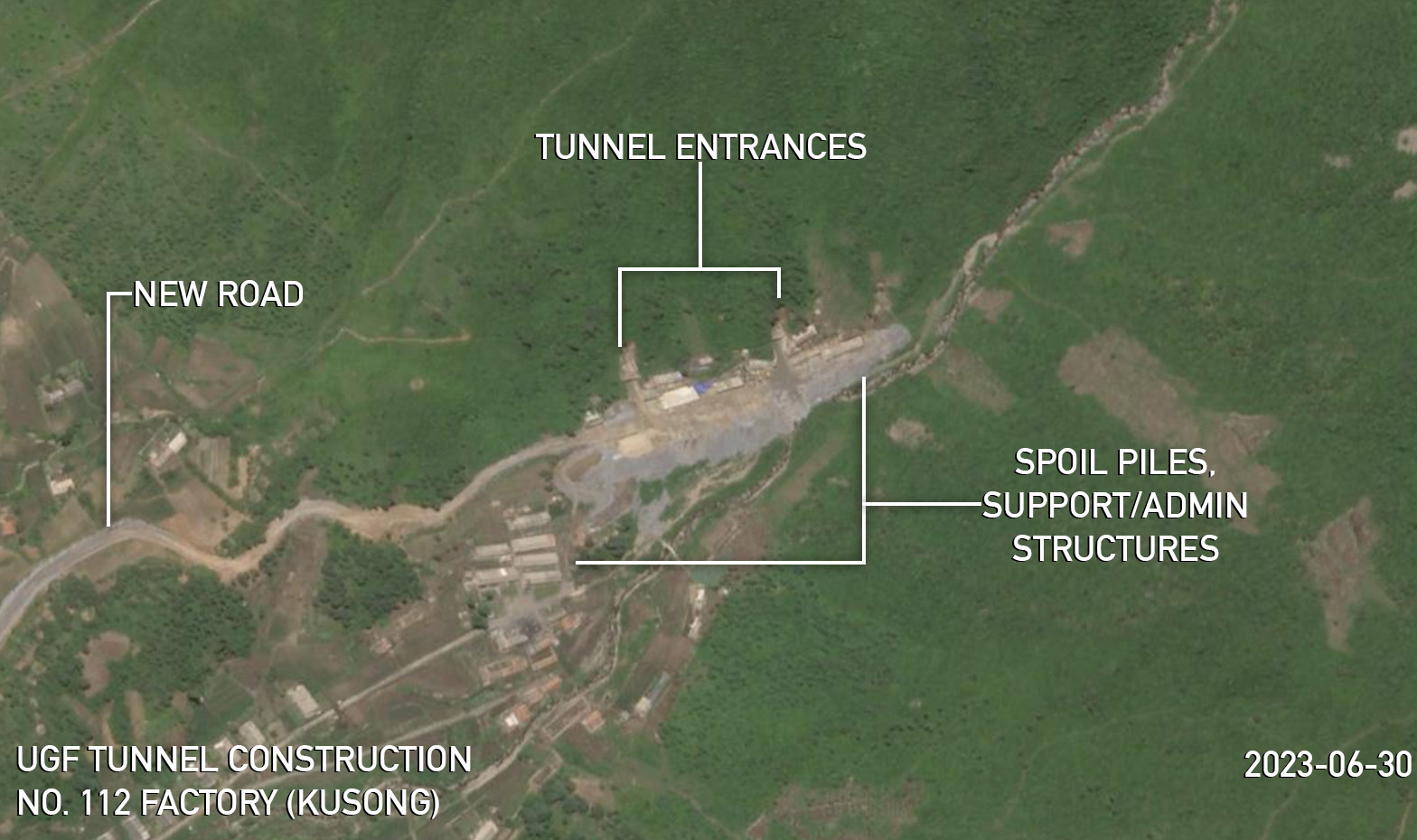
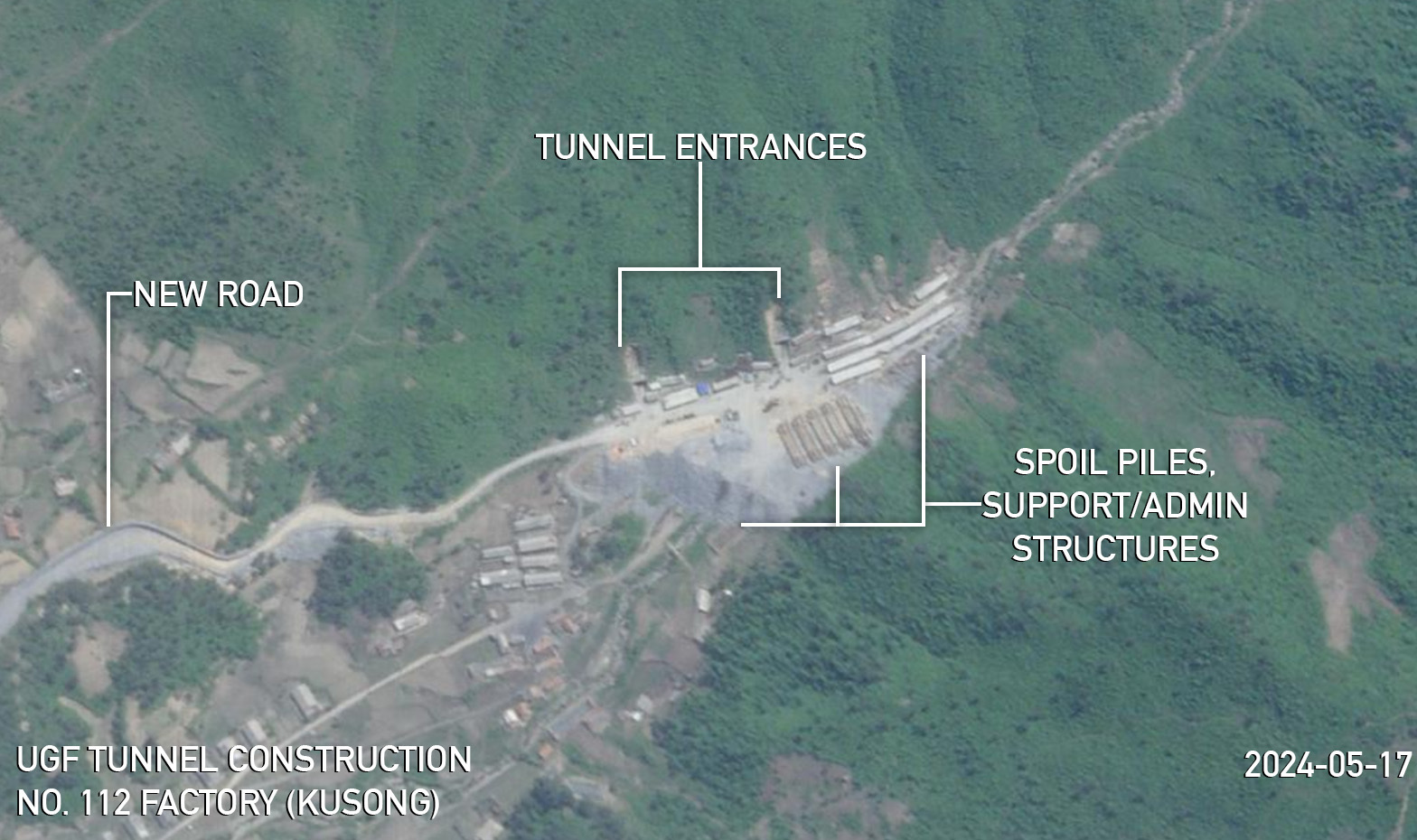
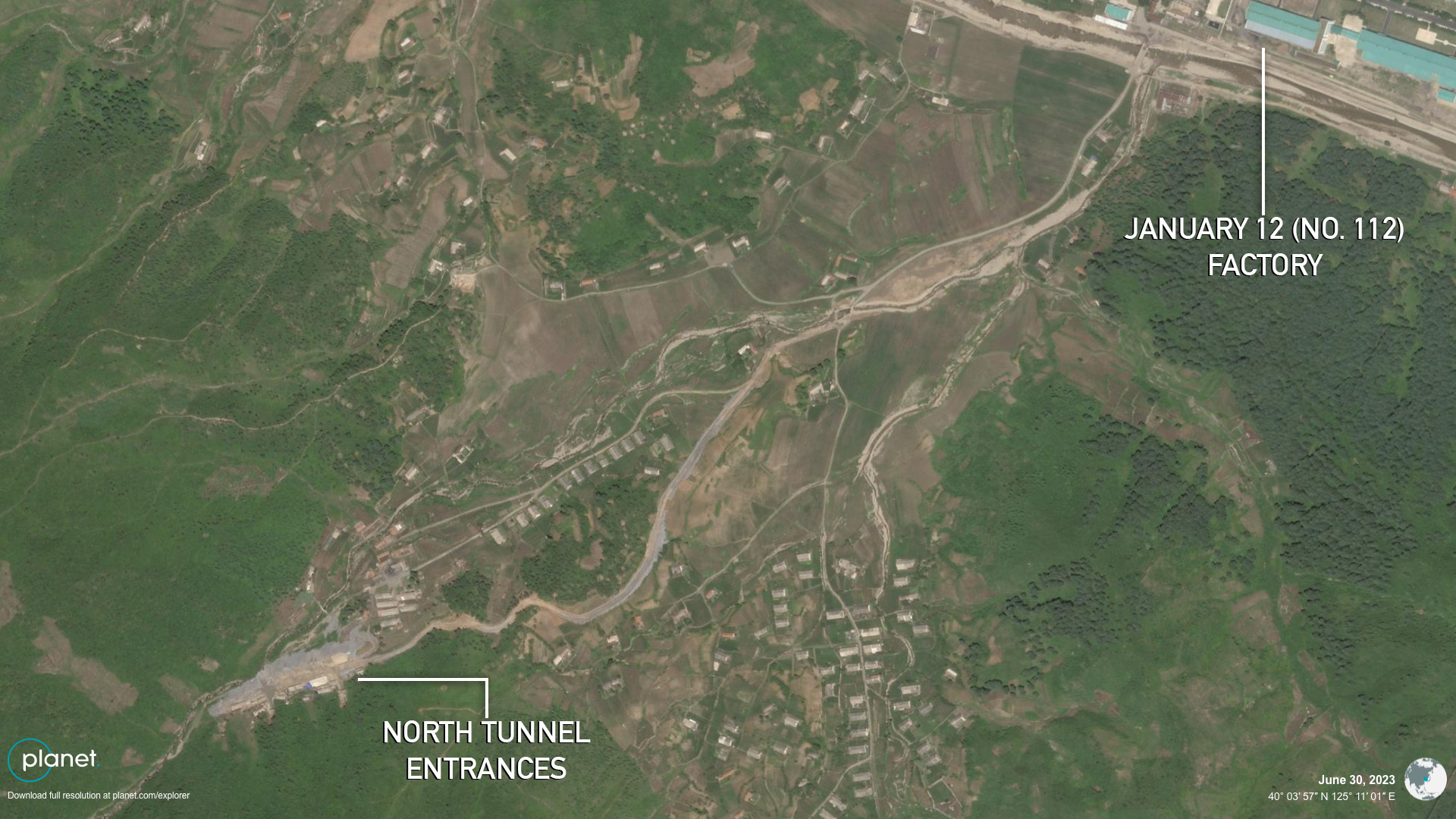
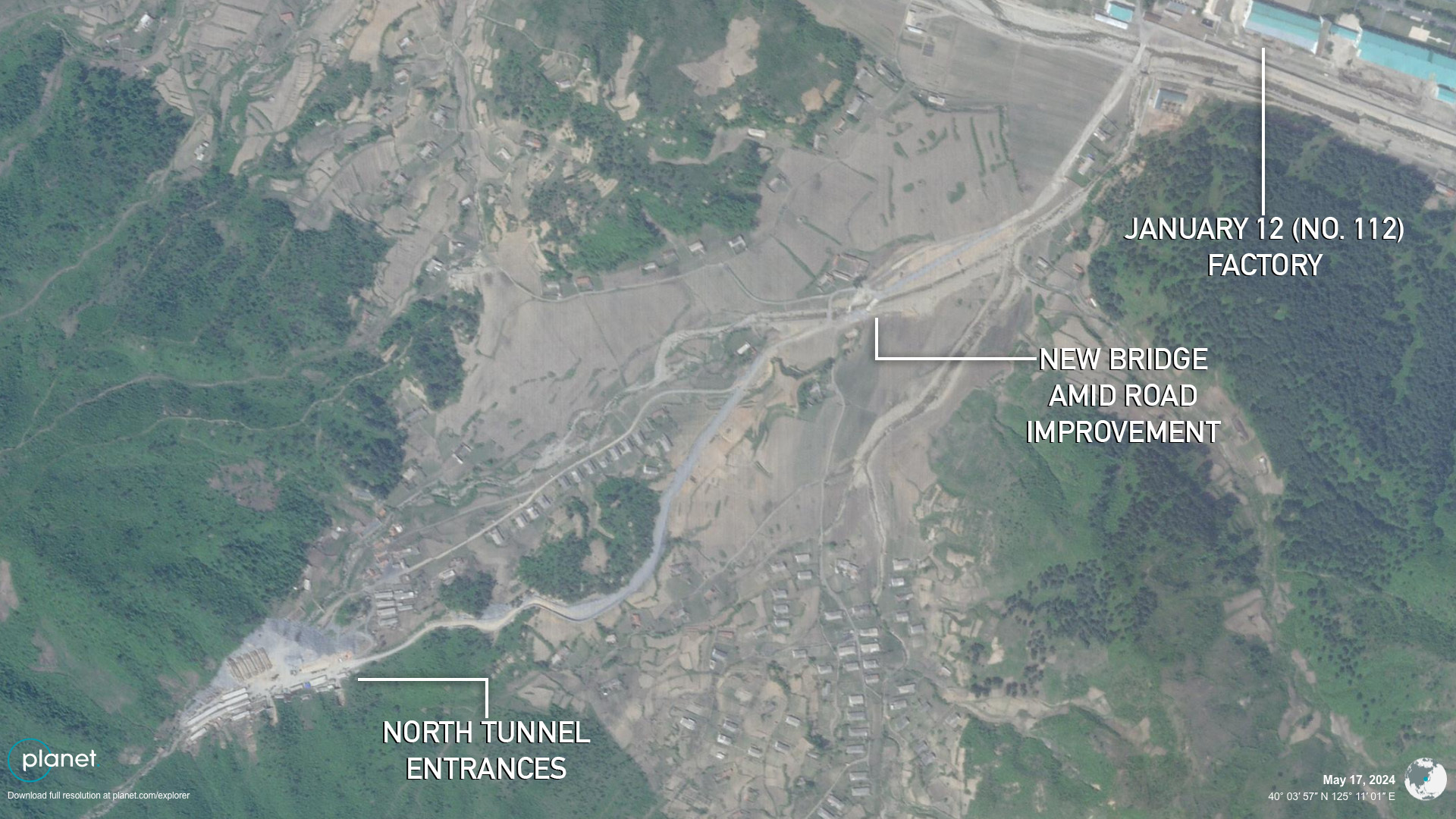
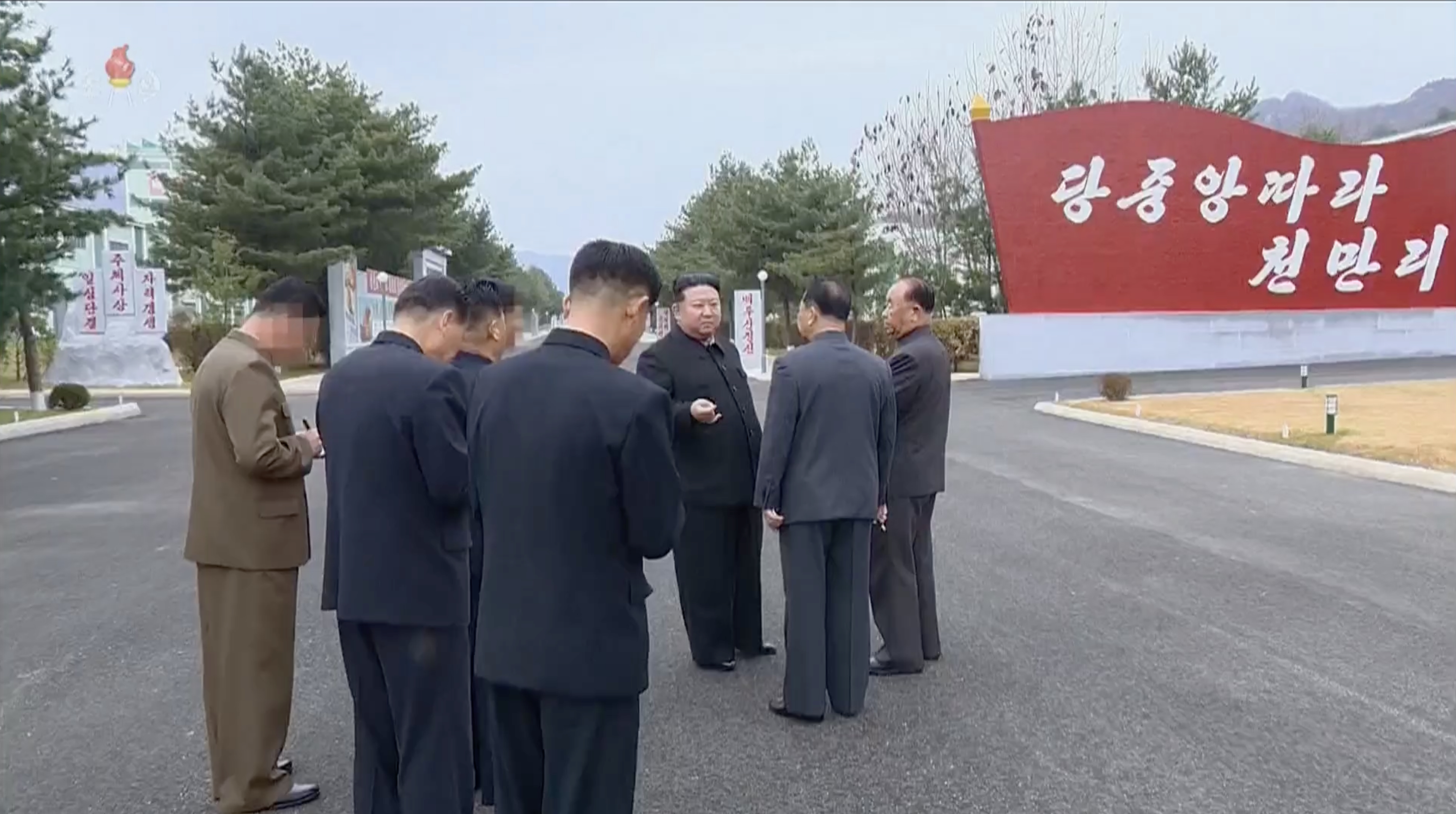 These are closer to the factory than the Songgan case but still far enough away — just over one kilometer — to suggest a storage role rather than production directly related to the factory as their purpose. The south side tunnel entrances are in a valley around 3.5 km (2.1 miles) west of what is unofficially referred to as the Kusong Tank Plant, which was recently almost completely rebuilt. Kim Jong Un visited the January 12 Factory sometime in 2023, according to NK Pro analysis of state TV documentary footage released earlier this year, meaning he likely also inspected the underground facility project. The Kusong Tank Factory appears to produce North Korea’s new main battle tank (MBT-2020) and possibly also new self-propelled guns (SPGs) and armored fighting vehicles (AFVs), while it remains unclear what the January 12 Factory produces. CONSTRUCTION AT RIFLE FACTORY Just before and after Kim inspected rifle production at the February 8 General Machine Factory (2.8기계종합공장) last August in Jonchon, nearby Songgan, Planet Labs imagery showed demolition work and possible preparation for new construction. Boosting small arms production could be aimed at widening distribution to Korean People’s Army (KPA) units after showing off multiple new rifles at military parades and exhibitions in recent years, or to export to Russia and other customers. According to NK Pro analysis, two large administrative or museum buildings were torn down near the front gate and tunnel entrances between July and Oct. 2023, while most trees lining the main road inside the complex also appeared to be cut down over the winter of 2023-24. 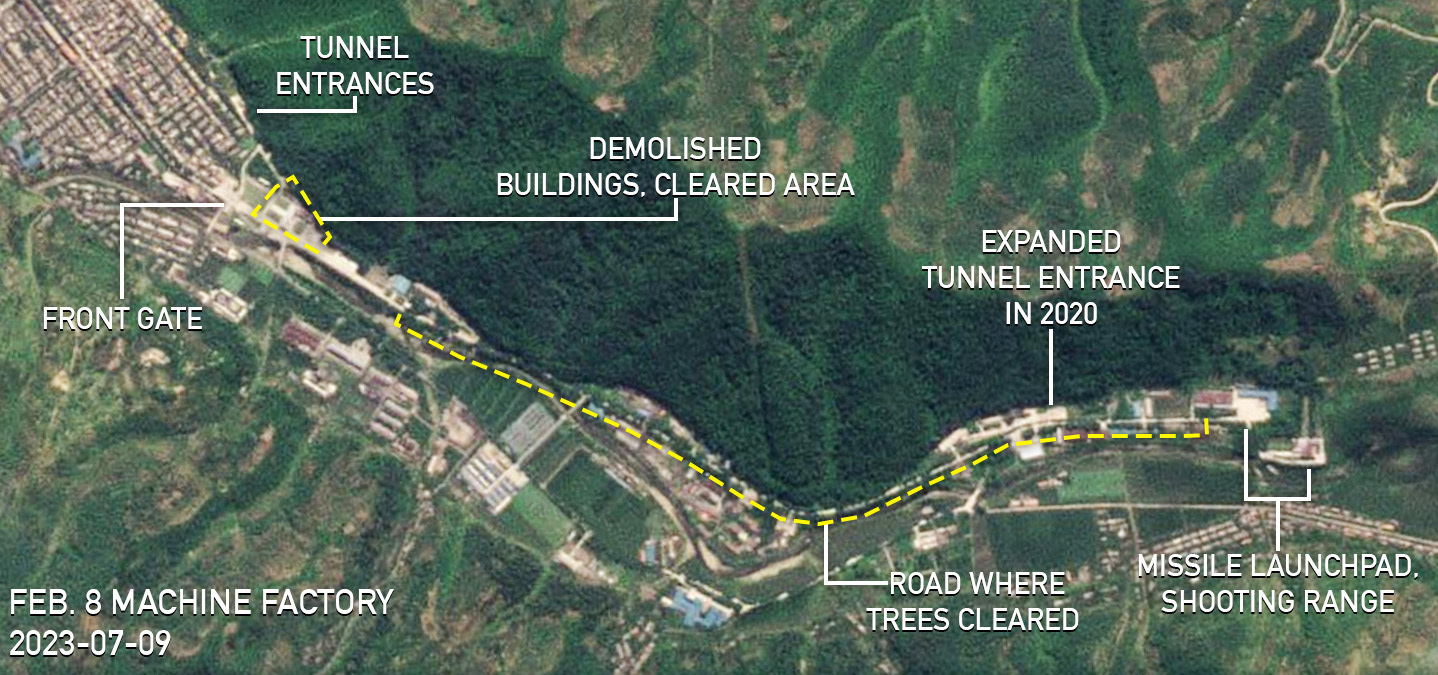
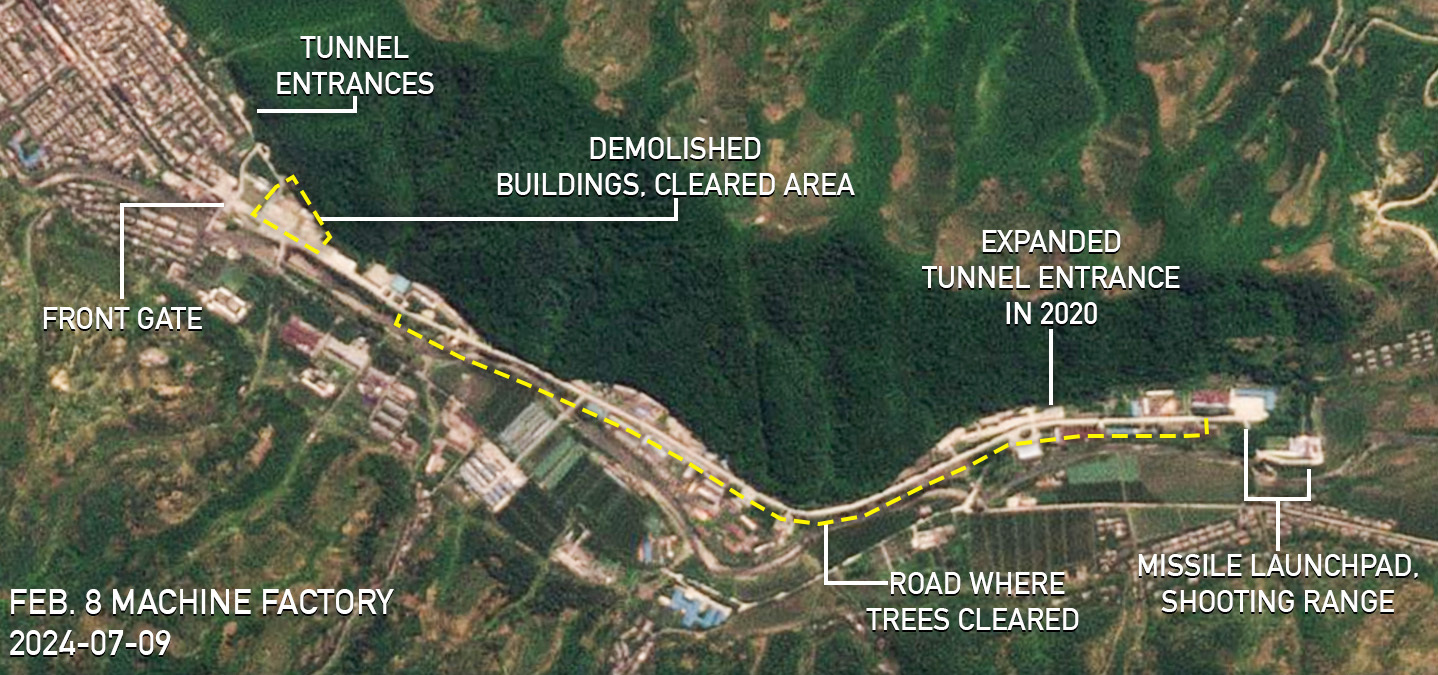
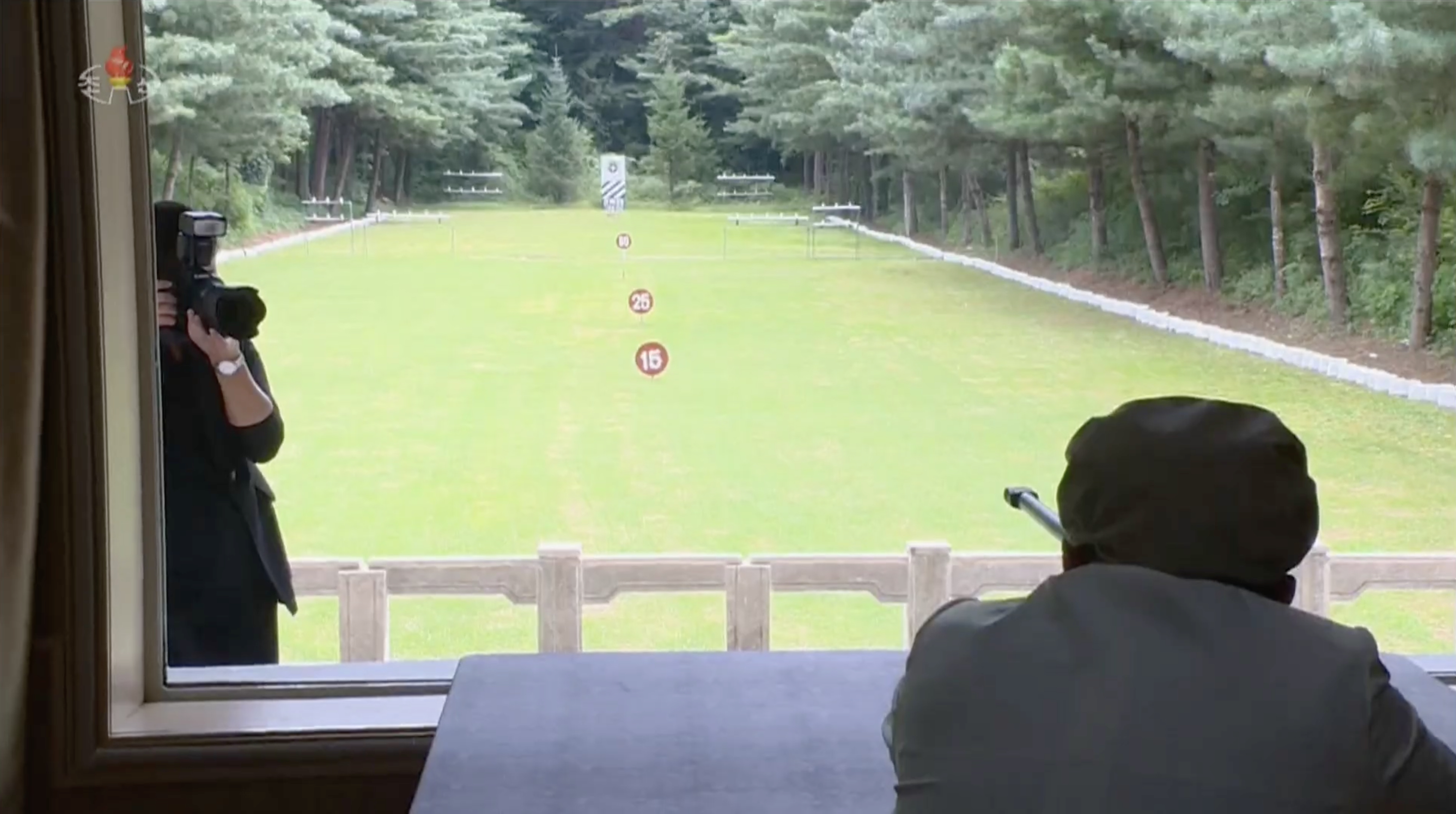 There does not appear to be significant new work at the far west end of the complex where Kim tested out rifles last August and where long-range ballistic missile launches have been conducted numerous times. The land and tree clearing suggests new buildings could soon go up near the factory entrance and further to the west, or that there are plans to move large items or trucks throughout the complex that would have been hindered by the trees. It’s possible Kim visited again and checked on the project’s progress in early May when state media showed him once again testing out the same rifles at an unnamed factory, but that factory hasn’t been geolocated. Meanwhile, a facility across the river that researchers say may contribute to uranium extraction, the Jonchon Rock-drill Factory (전천착암기공장), was recently demolished and is scheduled to be rebuilt. Given the current construction at the numerous sites listed above and others, including upgrading the Nampho Dockyard to improve naval shipbuilding capabilities, it is likely that there are more projects underway to improve munitions production around the country. Edited by Alannah Hill © Korea Risk Group. All rights reserved. |

October 27, 2026Oct 27, 2026

The ultimate resources for professionals working on North Korea
 SHARE
SHARE COPY LINK
 X
X MASTODON