  Analysis North Korea’s ambitious rural housing project off to slow start: AnalysisOnly a few thousand new homes appeared across the country last year as state media stays coy about construction targets  Kim Jong Un’s project to revitalize the nation’s rural communities and solve food shortages is off to a modest start, according to NK Pro analysis of recent state media reports, revealing that a relatively small number of new homes were built outside the capital in 2022. NK Pro found that local officials held move-in ceremonies for 42 farms and villages and around 5,000 new homes as part of the ruling party’s “rural construction plan” first introduced in Jan. 2022. The total is only half of the party’s annual target for new homes in Pyongyang alone, and matches the annual target set for a single mining region which Kim designated for a separate project. State media did not set a time period or specify how many new homes or villages would be part of the rural plan after it was first unveiled at a plenum in Jan. 2022. Authorities have also left the population in the dark about exactly how many people have benefited from the project at the end of its first year. 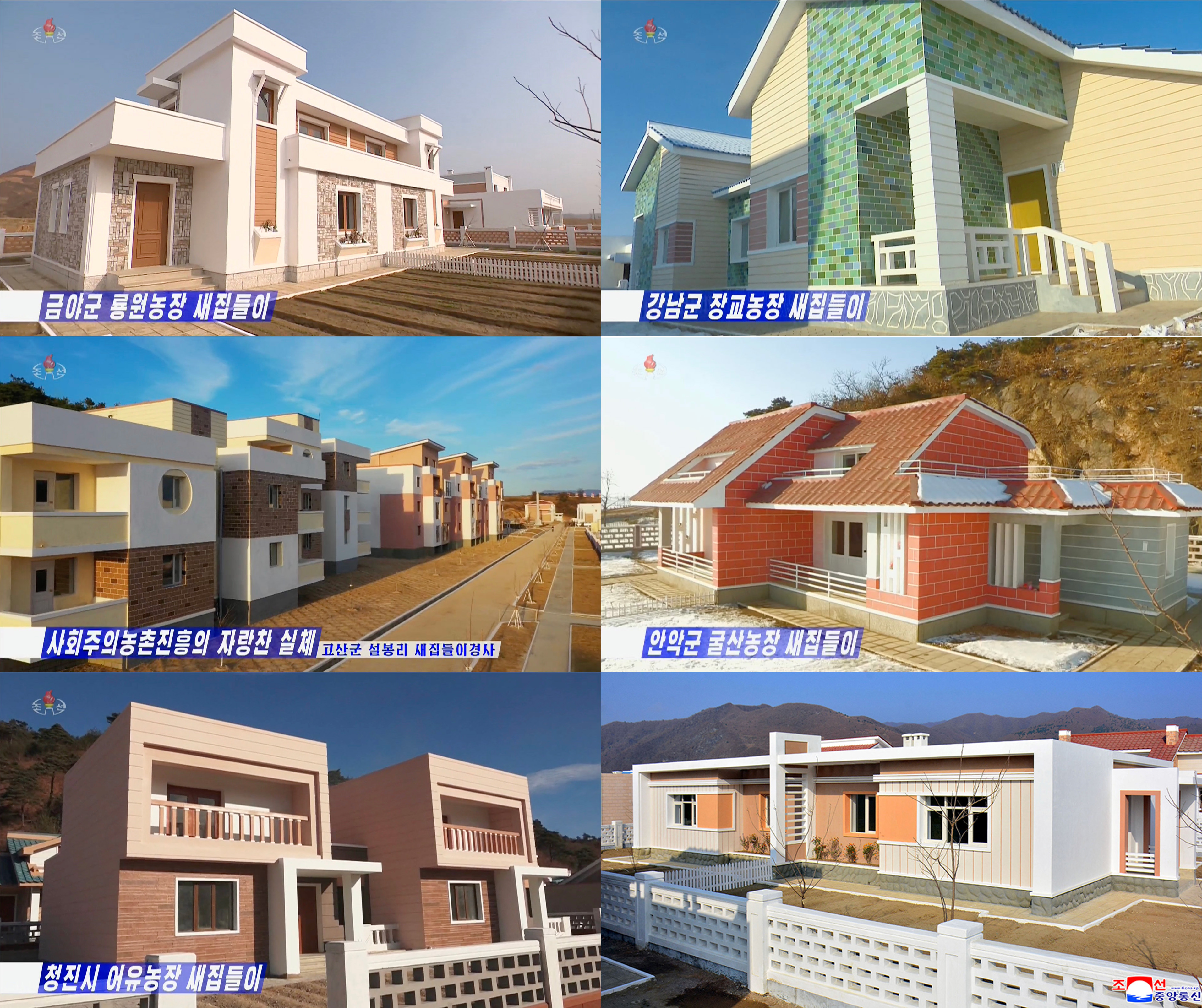 The ruling Workers’ Party has been more forthright about development in other parts of the country, such as a plan to build 50,000 homes in Pyongyang and 25,000 homes in the remote Komdok mining region within five years announced at the Jan. 2021 congress. It unveiled the rural construction plan at a plenum a year later. Most of the new neighborhoods of apartment buildings and duplex houses linked to the rural plan are attached to farms and contain around 120 homes each, according to Korean Central Television (KCTV) and Korean Central News Agency (KCNA) reports from last November and December. The apartments are constructed in varying, modern designs — a trend that emerged in North Korea around 2019. But they mostly have bare-bones interiors without the luxurious fixtures and air-conditioners included with new apartments built for elites in the capital last year. Some have also exhibited poor construction quality: Large water stains are clearly visible on new houses in Pukchong County’s Mundong Fruit Farm, caused by rain penetrating their simple painted concrete block structures — a common sight throughout North Korea.  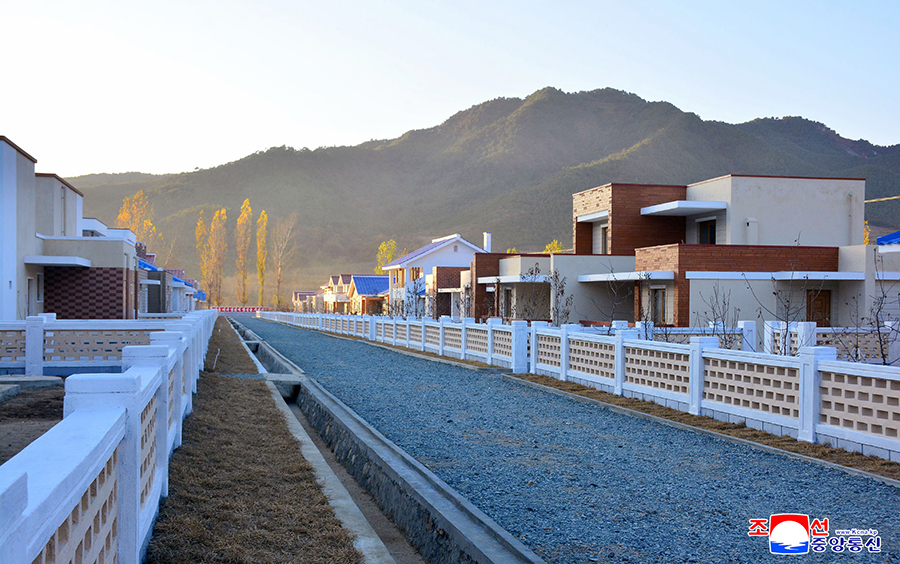 The Pyongyang capital area saw the largest number of new home ceremonies, while most other provinces and major cities also celebrated the opening of new villages. Only the northern border provinces of Jagang and Ryanggang appeared to be left out of the end-of-year festivities. State media said the new neighborhoods were often built within “short periods,” such as the Paesan Vegetable Farm in Pyongyang’s northern Unjong district in just 90 days. Demolition of old homes began in the village by March while construction of around a dozen apartment buildings took place between August and October, according to NK Pro analysis of Planet Labs satellite imagery, roughly lining up with state media’s claims. Imagery also shows that another cluster of duplexes for workers of the Poju Farm in the east coast city of Sinpho was mostly built between August and November following the demolition of some older homes in spring. 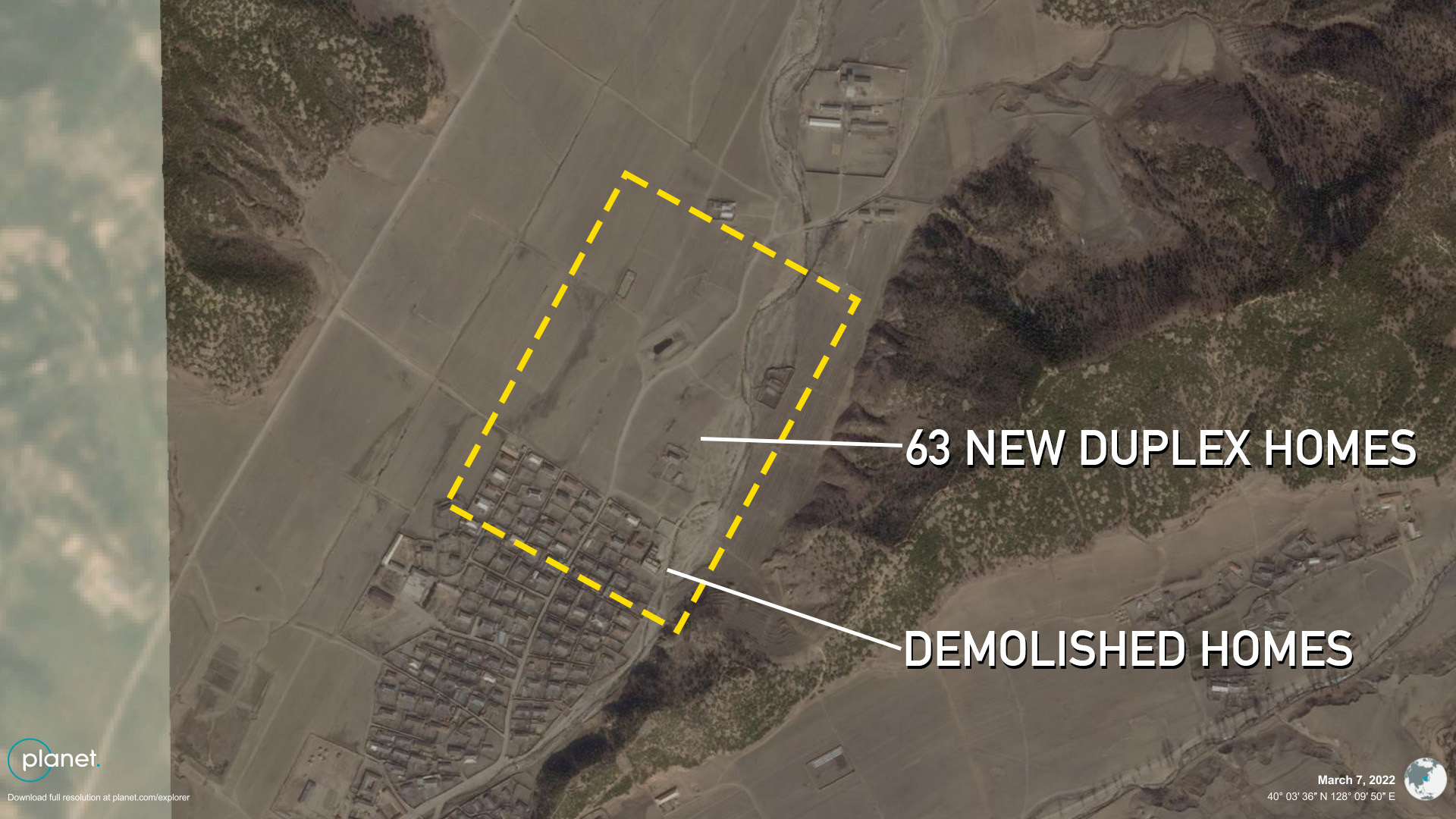 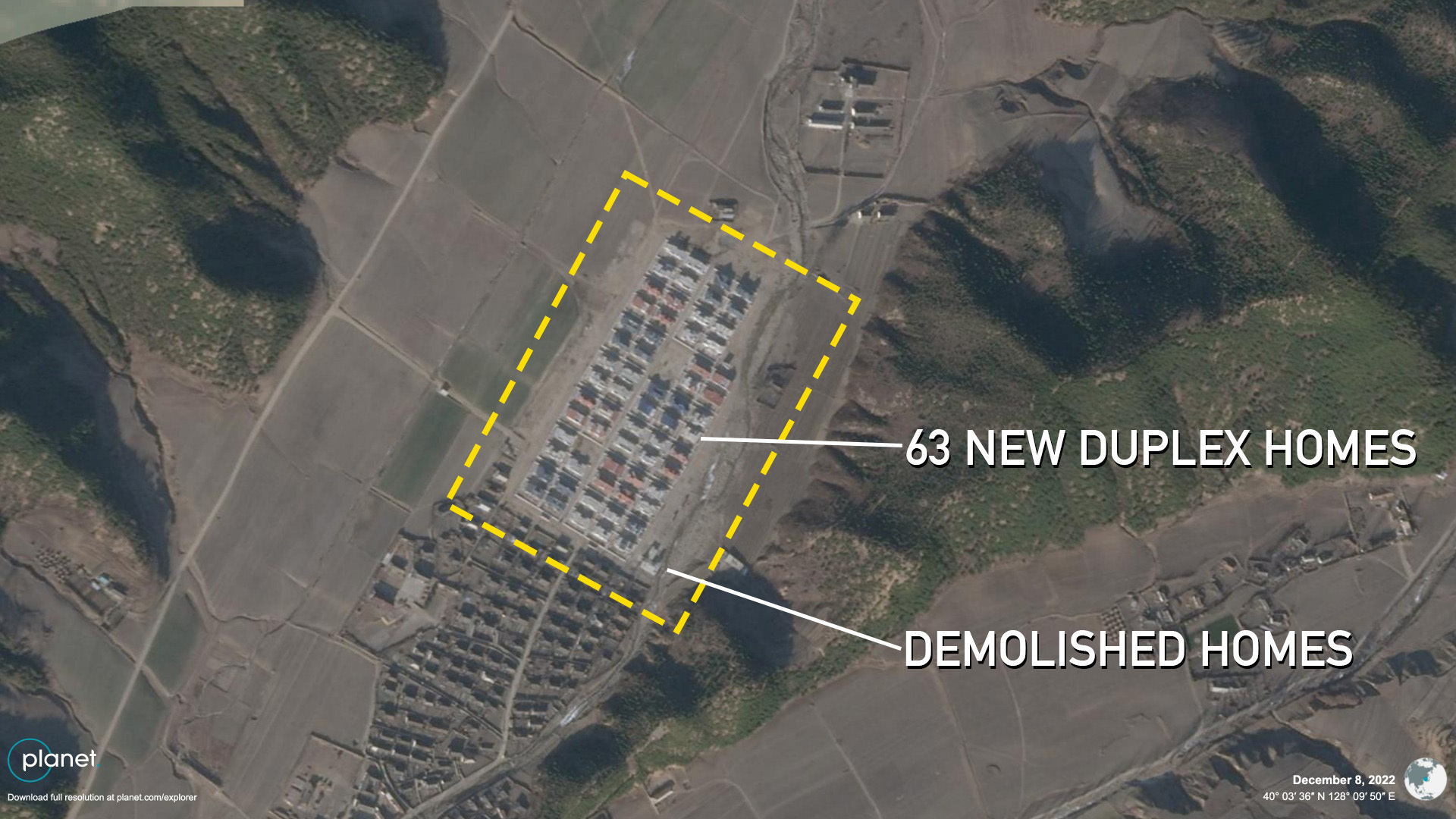 These high-resolution images of Poju Farm in Sinpho taken in March and Dec. 2022 show old homes being demolished and new homes built in their place and on previously empty land next door | Images: Planet Labs, edited by NK Pro 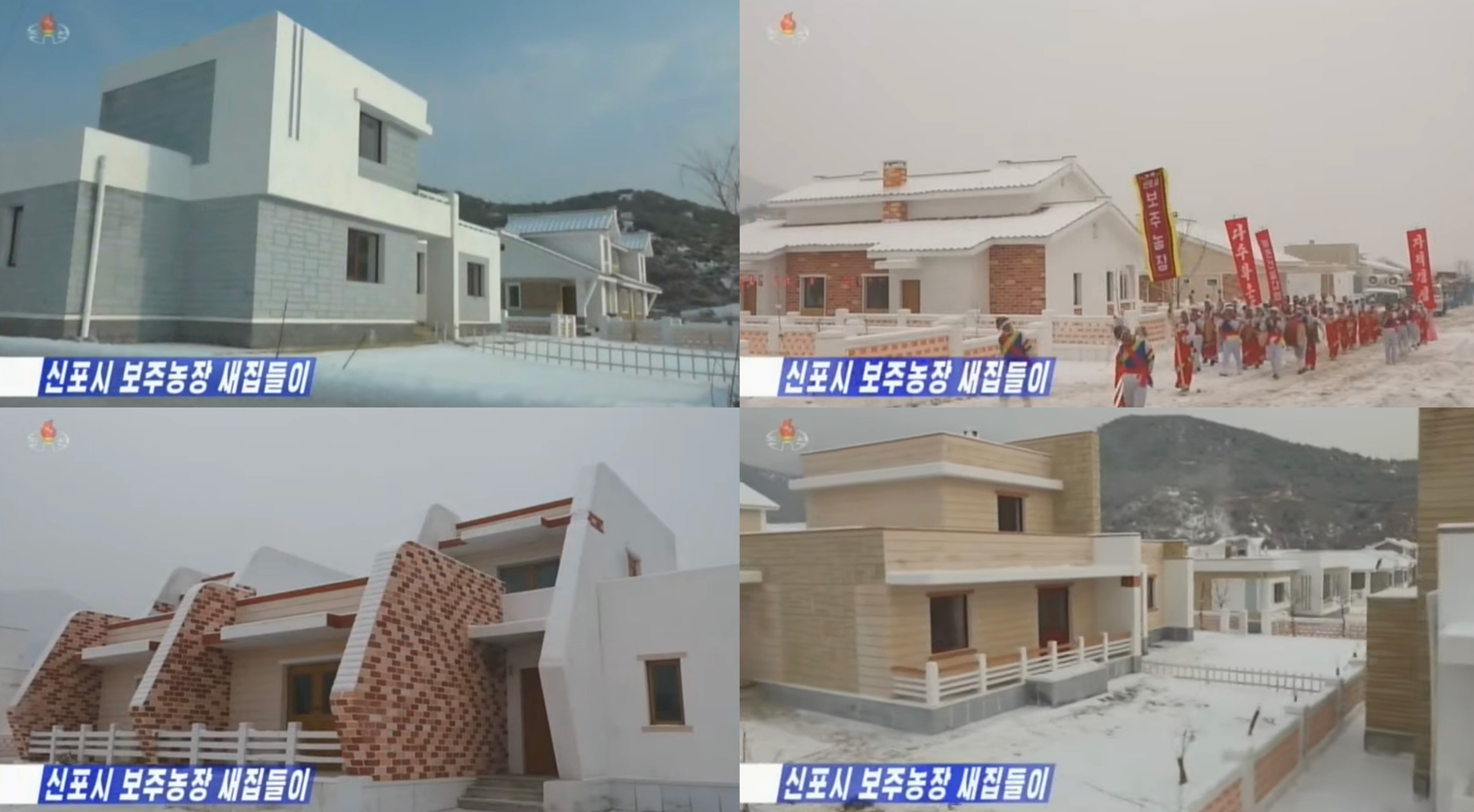 But with thousands of farms and villages nationwide, North Korea’s upgrading of only 42 of them indicates Kim’s rural development project is much less ambitious than it was initially made out to be. Citizens learned on Jan. 1 last year about Kim’s plan to “solve the food problem of the country and dynamically wage a struggle for drastically changing the living environment of rural inhabitants.” The party set “mid-term and long-term rural development strategies” with a focus on the three main areas of building new homes for farmers, correcting their ideology and providing them with more advanced farm equipment. 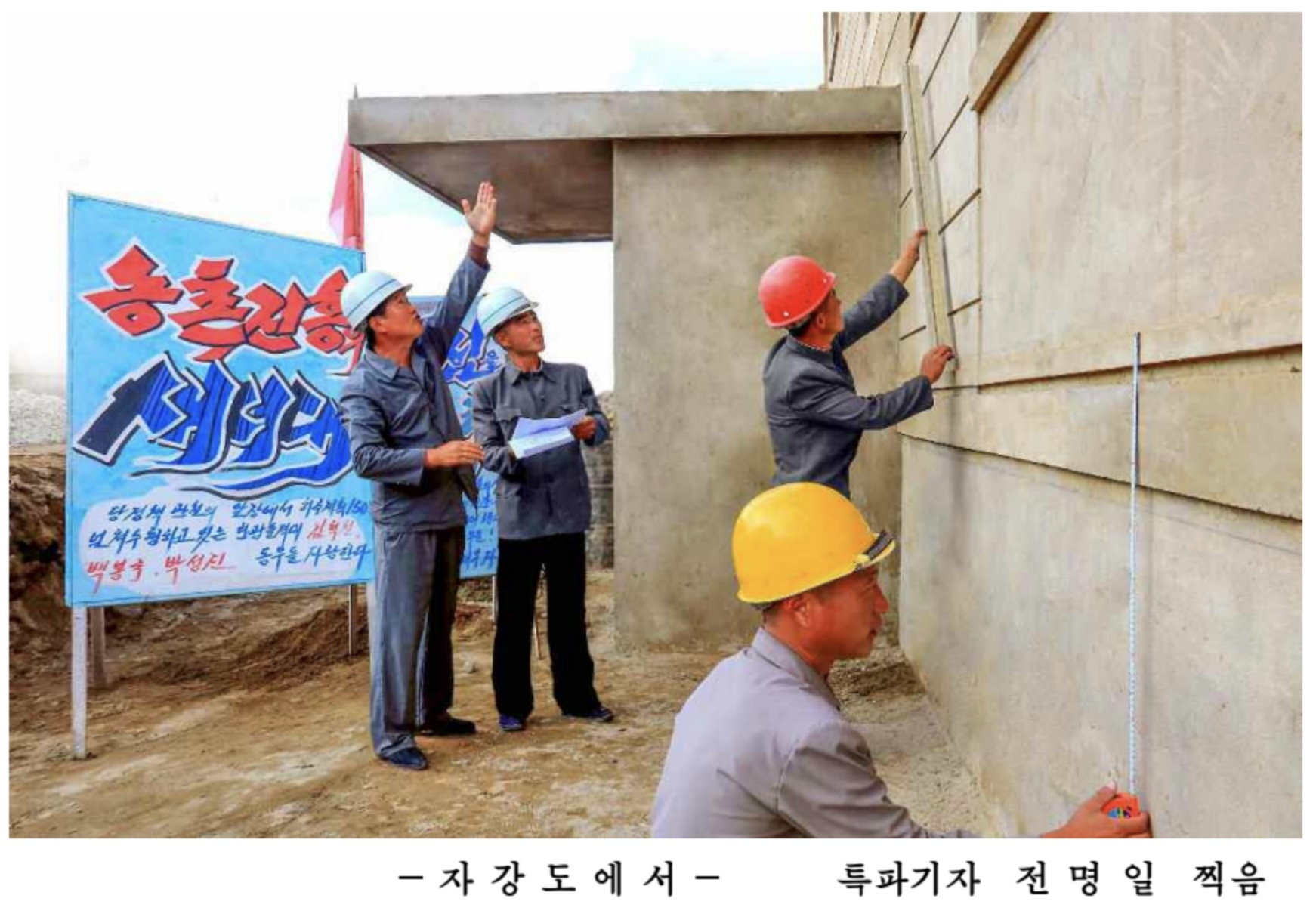 Central authorities reportedly pushed architectural design bureaus across the country to lead the project at the local level and demanded uninterrupted distribution to construction sites of cement and finishing materials from major state factories. State media said this distribution and construction carried on despite economic hardships as well as a COVID-19 outbreak and severe lockdowns last summer. The recent end-of-year party plenum final report only briefly mentioned the rural project, saying “model houses representing the new era of rural development were built in cities and counties across the country” in 2022 and that Kim demanded “greater efforts” toward the project in 2023. Despite the small number of completed villages so far compared to the total number nationwide in need of rebuilding, the slow drip of propaganda on moving-in ceremonies over the last two months gives the impression of a much wider scope of success. 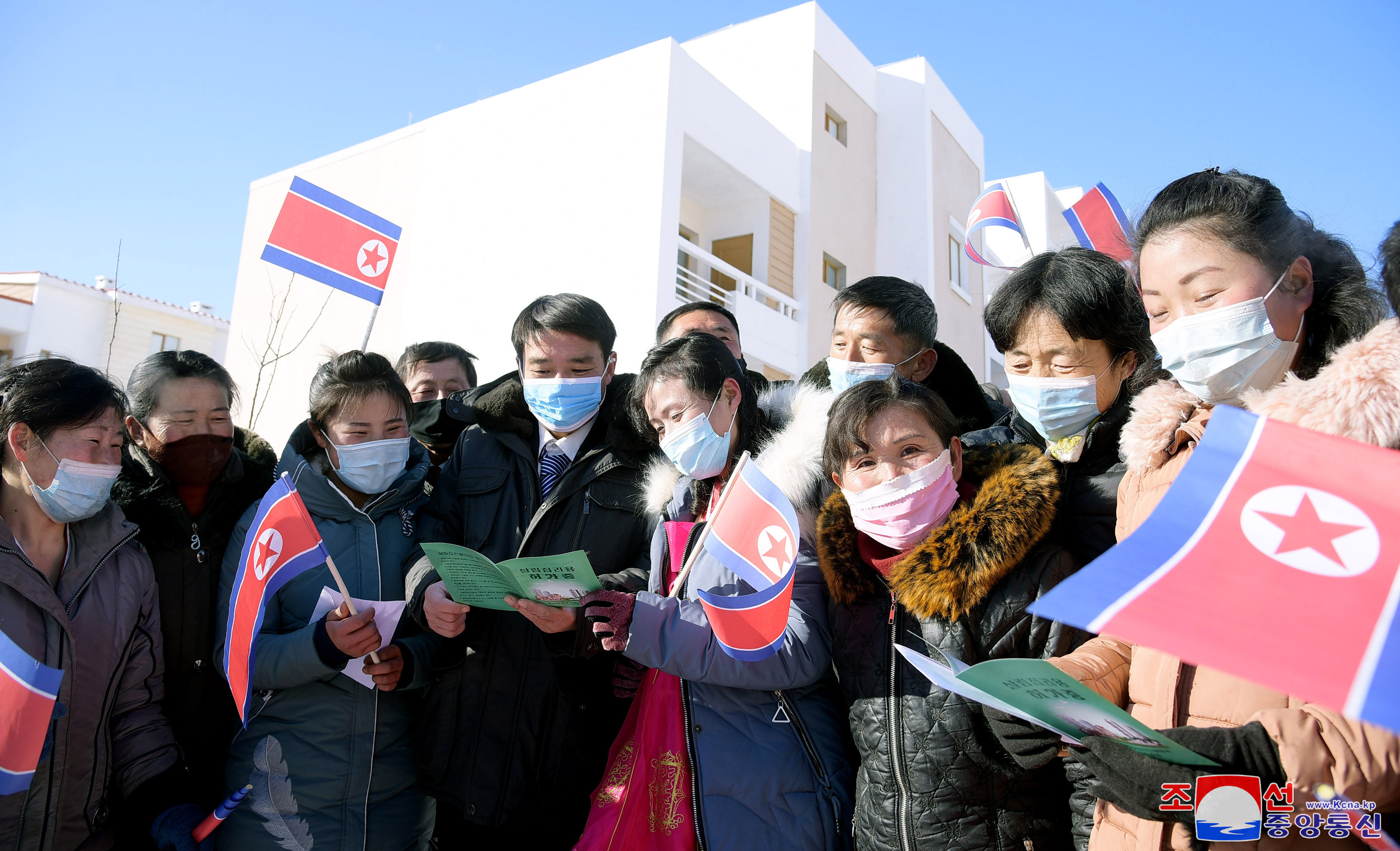 State media has reported on such new village completion ceremonies for years, but the large number of recent ceremonies concentrated in a short span may convince rural residents they are also in line for new government-built homes. Indeed, satellite imagery shows many more instances across the country of small neighborhoods being demolished and replaced with new homes and apartment buildings in 2023 but which have yet to be finished or reported in state media. Meanwhile, state media also reported on move-in ceremonies for a large number of new apartment buildings in Komdok in late December, but without specifying how many homes were built. KCNA and KCTV similarly avoided claiming success at the end of 2021 in meeting Kim Jong Un’s instructions to build 5,000 homes in the mining region per year. State media is also expected to report soon on the opening of last year’s 10,000-home skyscraper street project in Pyongyang’s Hwasong district. Builders blamed “crisis”-level economic problems for missing their 2021 project deadline by four months, eventually opening Songhwa street last April. Below is a full list of all 42 locations where officials held move-in ceremonies in Nov. and Dec. 2022:
Edited by Arius Derr © Korea Risk Group. All rights reserved. |

October 27, 2026Oct 27, 2026

The ultimate resources for professionals working on North Korea
 SHARE
SHARE COPY LINK
 X
X MASTODON