  News North Korea starts rebuilding major airbase in latest sign of air force revivalSatellite imagery shows construction on runway, but expert says still unclear if Pukchang Airbase could host new drones 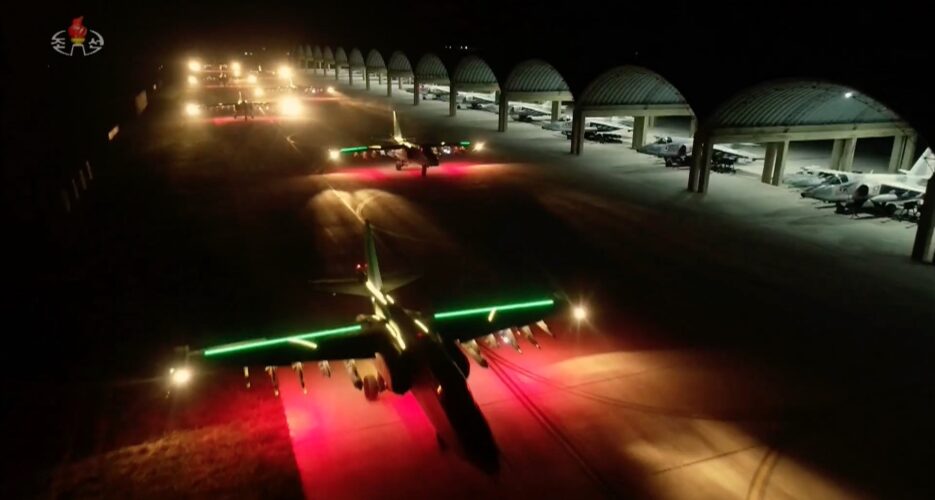 North Korea has started to rebuild another major airbase north of Pyongyang, in the latest sign that leader Kim Jong Un seeks to develop air force capabilities after decades of stagnation. NK Pro analysis of Planet Labs satellite imagery shows that workers started to prepare the runway of Pukchang Airbase in the central part of the country for resurfacing in late August as part of an apparent remodeling project. Digging work to the west end of the runway may be part of plans to expand its length, while construction also appeared to start around existing aircraft revetments in mid-July. The project is still in its early stages. It follows another large-scale project to expand a fighter jet airbase in nearby Sunchon to the southwest from 2021 to this year. Pyongyang also recently revealed it is developing new reconnaissance drones and combat unmanned aerial vehicles (UAVs) to give the air force its first new capabilities in decades. Meanwhile, reports emerged Tuesday that Kim Jong Un may visit a fighter jet factory in Russia as part of his trip to the Far East of the country this week. 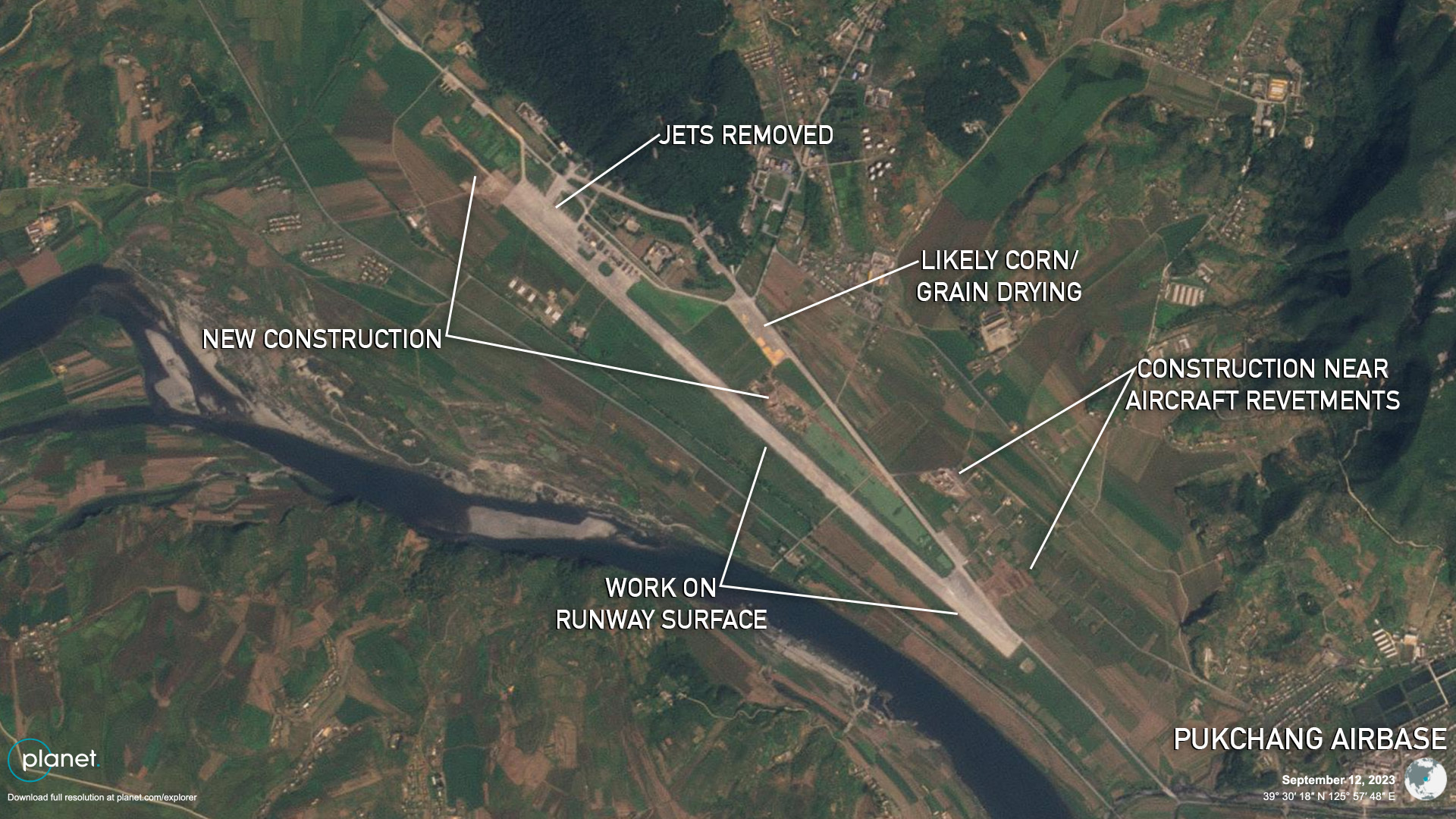
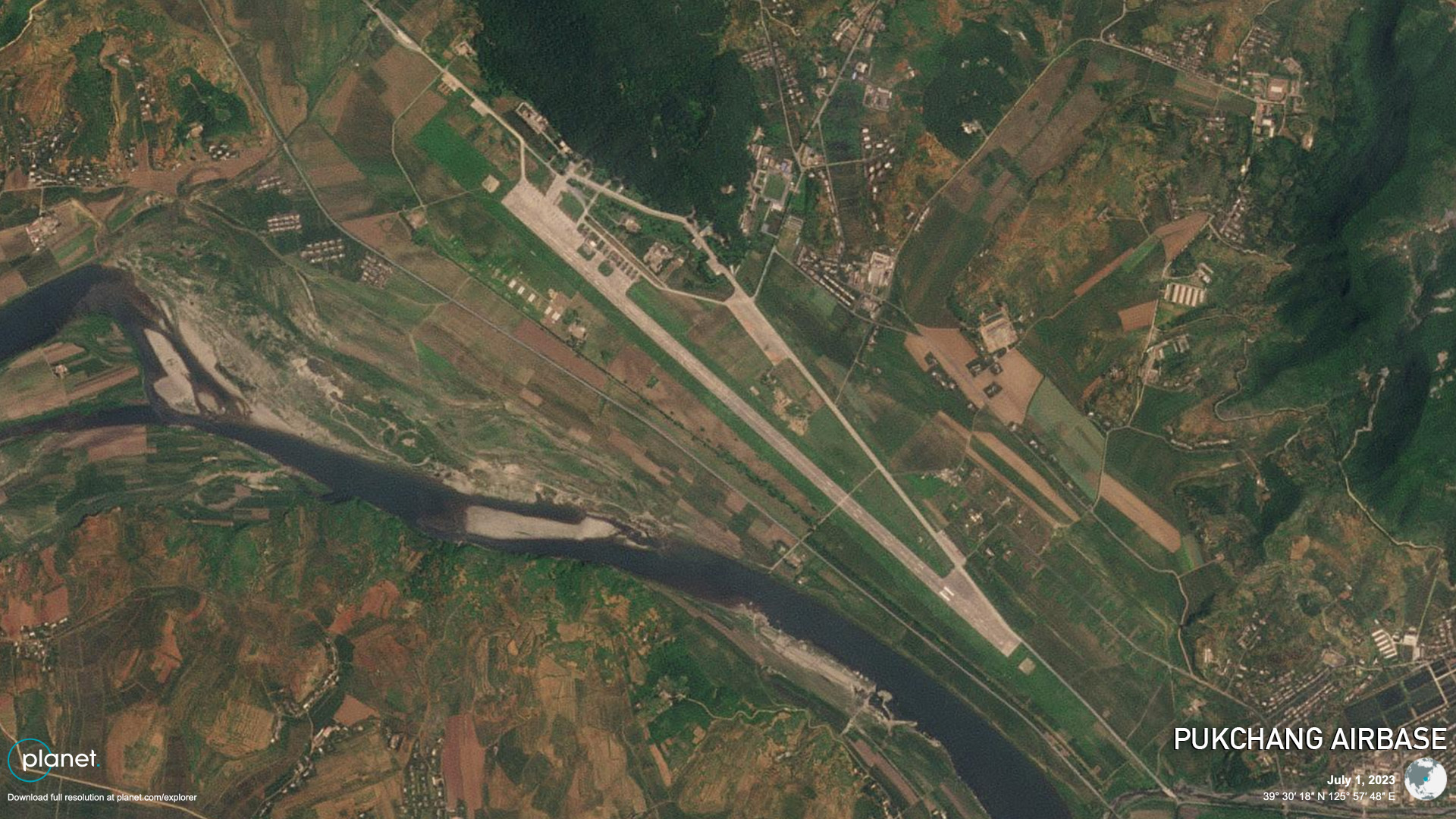
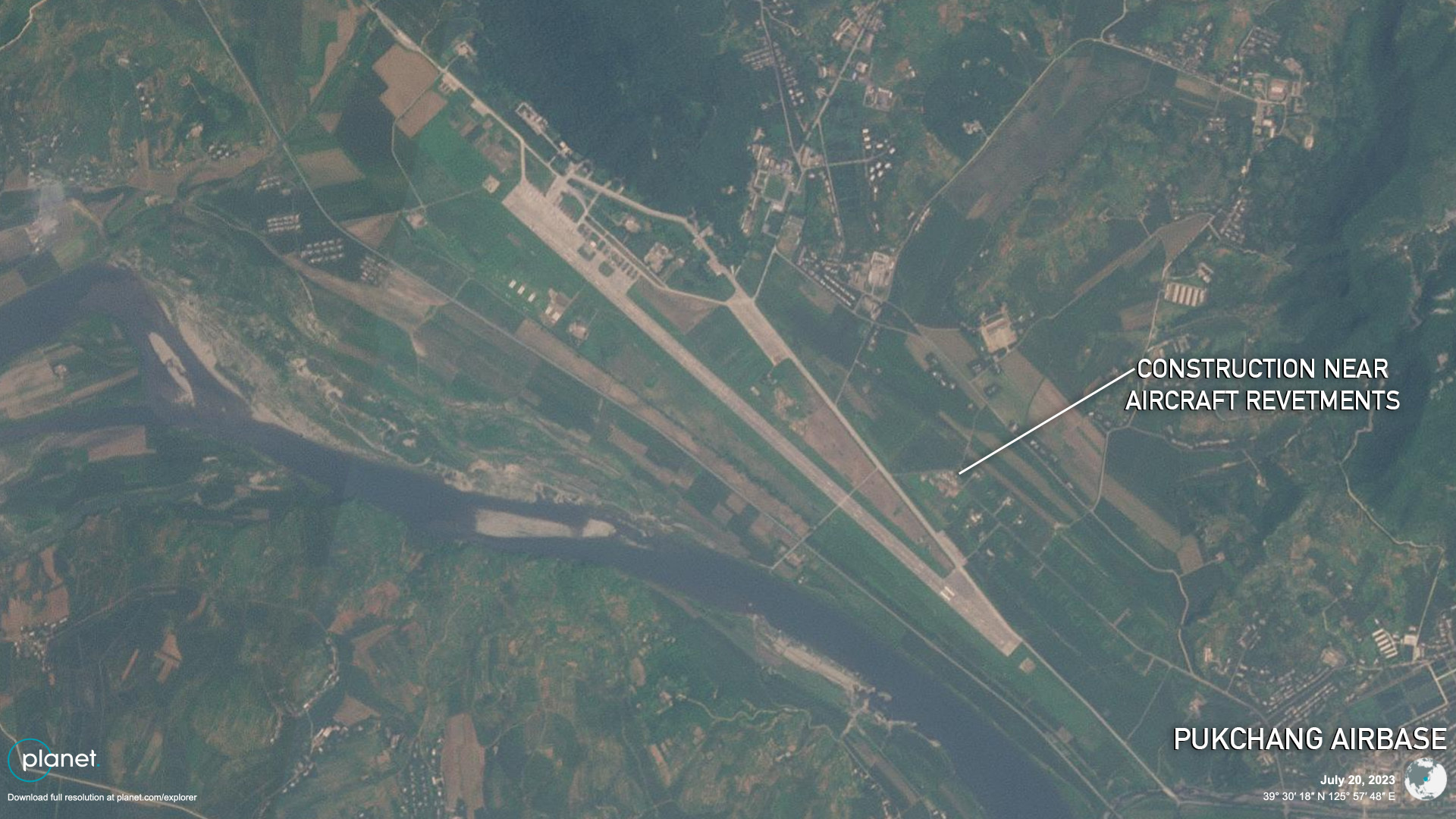
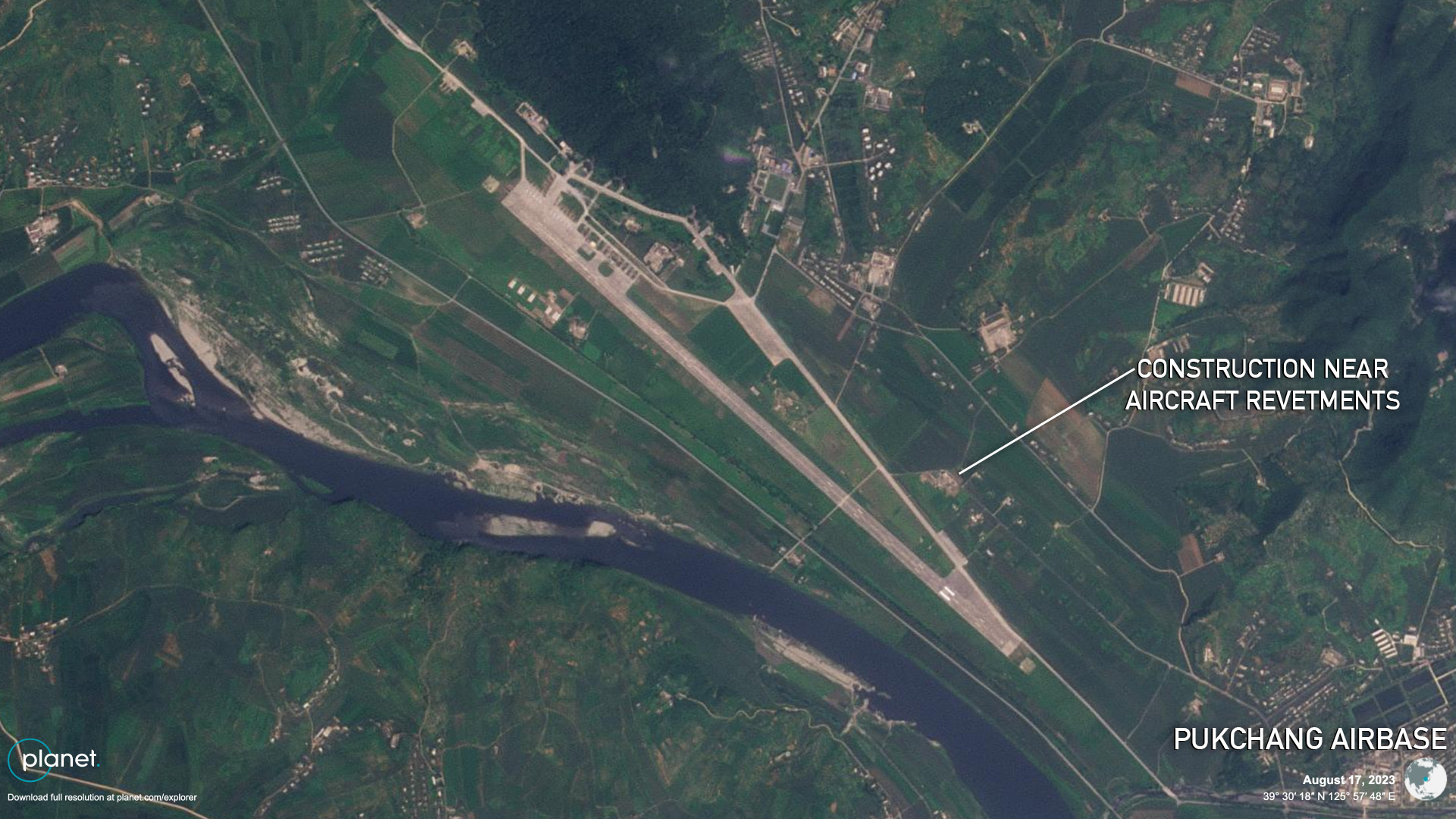
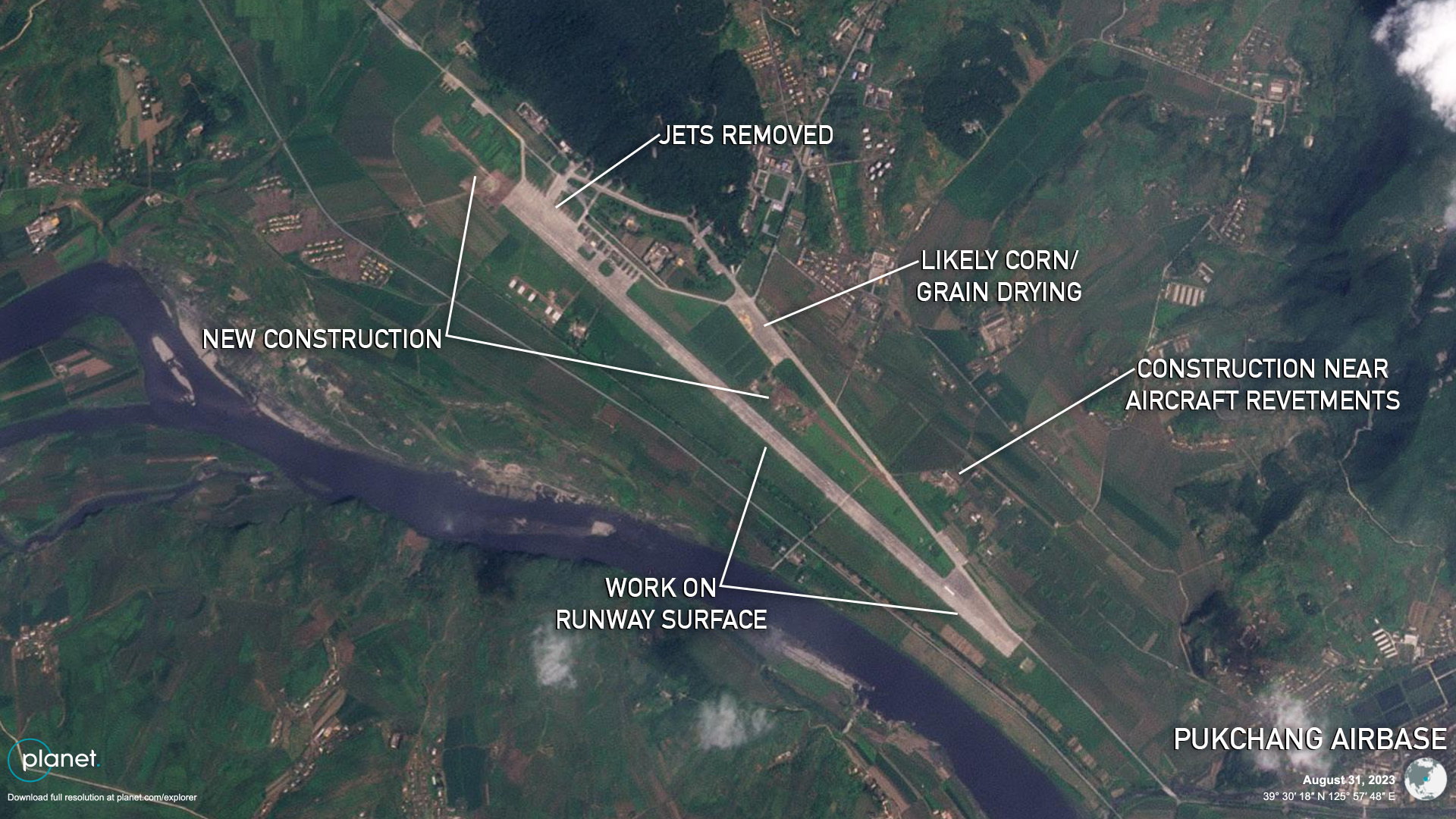
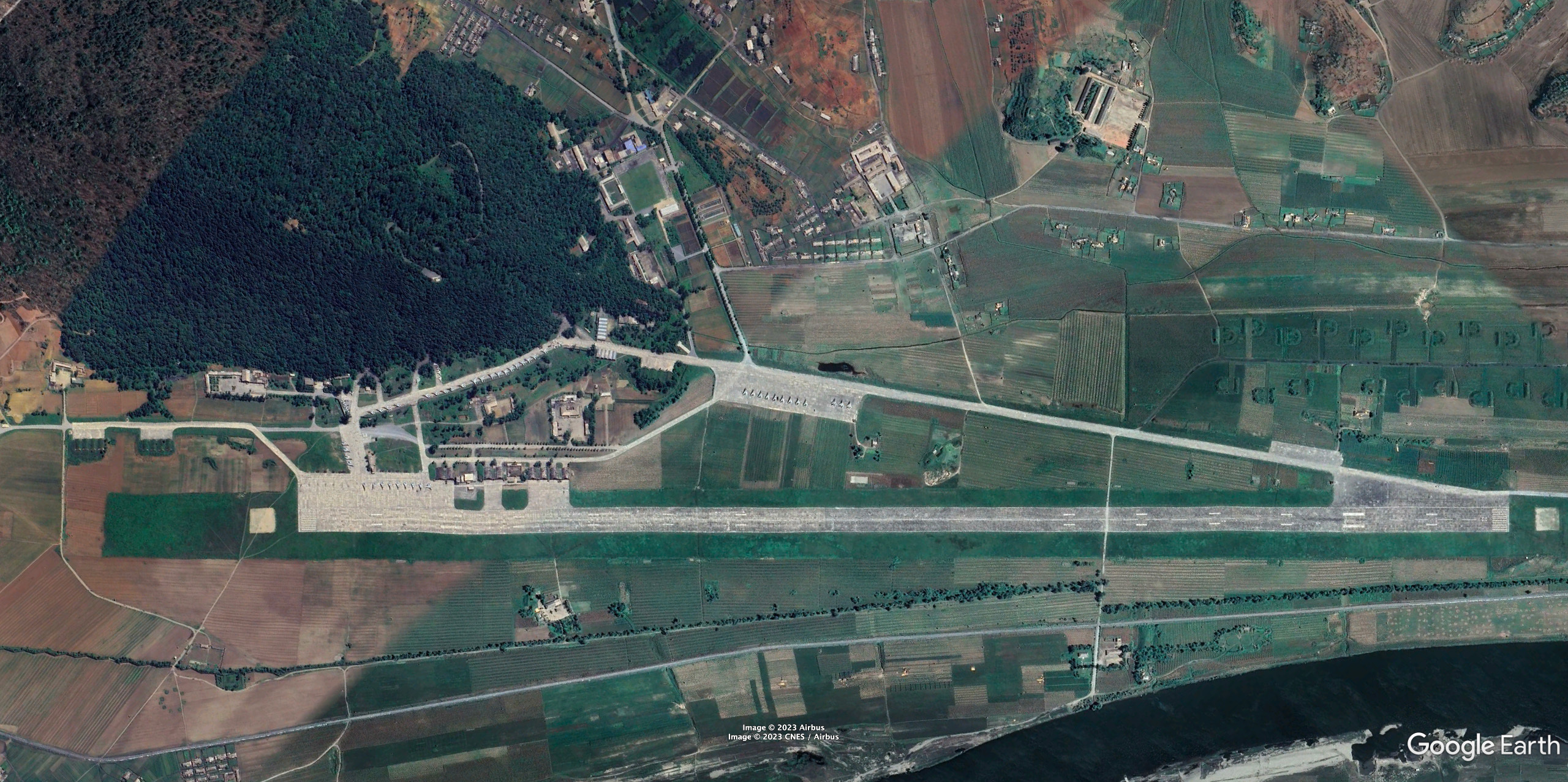 Joseph Dempsey, research associate with the International Institute for Strategic Studies, told NK Pro that a general project to upgrade the Pukchang Airbase is natural since “the state of all the military runways is pretty poor” in North Korea. He said MiG-23 fighter jets typically stationed there were moved off site ahead of the new construction project, and that satellite imagery suggests workers are “creating a new taxiway addition running parallel to the runway.” Asked whether the project intends to make Pukchang a new drone base, Dempsey said it is possible but too early to tell. Assuming North Korea would use radio instead of satellite communications to control drones like its copy of the U.S. Global Hawk reconnaissance model, the aircraft would be “limited to a maximum of about 300 km without a repeater,” he said. This means Pukchang could serve as a base “for conducting strategic high altitude recon along the border.” But North Korea “may be years away from operational deployments,” Dempsey added. NK Pro has not found evidence of any large structure or hangar construction at any North Korean airbase in recent months. So far, it has tested its two new UAV models at Panghyon Airbase in the northwest, likely due to their development and possibly even production at factories in the same area. “North Korea’s air force is in desperate need of recapitalization, more so than other branches of its military as it cannot produce replacement platforms itself and has very limited capacity to produce any upgrades,” Dempsey said. He added that Pyongyang is expected to develop UAVs to “complement” but not replace its crewed aircraft. North Korea would “ideally get a limited number of new aircraft” since “even the youngest of their combat aircraft are approaching 30 years old.” Kim Jong Un reportedly visited a drone engine factory in July, but state media did not reveal the state of its production lines and obscured key details such as its location and the current development stage of the project. The factory Kim is reported to be planning to visit in Russia this week — the Komsomolsk-on-Amur Aircraft Plant — produces Sukhoi fighter jets that could be of interest to Pyongyang. U.N. sanctions Resolution 2397 prohibits member states from selling all kinds of aircraft, engines and related parts to North Korea. The measure allows for the transfer of spare aircraft parts for repair, but only for a specific list of commercial passenger aircraft. Kim notably said at an air force event last November that he places more stock in “pilots armed with indomitable spirit” than in “any cutting-edge fighter jets,” brushing off the notion of his aging air force fleet. Despite the new project at Pukchang and recent upgrades to Sunchon Airbase, North Korea has also demolished numerous other smaller airfields in recent years in order to build greenhouse farms, an import disinfection center and other facilities. Together, the upgrades and demolitions may be part of a broader, longer-term strategy to recalibrate air force priorities, but the bigger picture remains unclear. Kim also recently revived publicity of the navy and said he hopes to initiate a “second revolution in strengthening the naval forces.” Over recent years, Kim has mostly focused his military-related activities on land-based nuclear missile delivery methods. Edited by Bryan Betts © Korea Risk Group. All rights reserved. |

October 12, 2026Oct 12, 2026

The ultimate resources for professionals working on North Korea
 SHARE
SHARE COPY LINK
 X
X MASTODON