  News North Korea-linked tankers see increased activity in MayUptick may be part of efforts to evade U.N. sanction restrictions on refined petroleum  North Korea-linked shipping activities in May were marked by an increase in the voyages of fuel-carrying tankers and bicoastal trips. At least 25 ships were detected making DPRK-related voyages from May 1 to May 25, according to NK Pro analysis of Automatic Identification System (AIS) ship-tracking data. Ships are meant to broadcast AIS signals in order to help nearby vessels avoid collision, but those conducting North Korean operations — both DPRK-flagged and foreign-owned — have become adept at tampering with their AIS to avoid tracking. Significantly, at least six of the detected ships were classified as tankers. The rise in their activity may indicate recent changes in North Korea’s fuel economy and distribution. In 2017, the United Nations attempted to stifle the DPRK’s nuclear program by placing a 500,000 barrel cap on refined petroleum, but Pyongyang has regularly evaded this limit via illicit ship-to-ship (STS) transfers. For these North Korea-linked ships, the Chinese port of Longkou remained the most popular foreign port on AIS. As previously observed by NK Pro, there have been few AIS-tracked voyages to the once-popular port of Dalian, where containers of international aid meant for North Korea are still apparently being stored. Only the C Morning was seen loitering on the western side of the multi-port city, near Pulandian Harbor. An international seaport in China’s Shandong Province, Longkou handles a variety of dry and liquid cargo, but is most relevant due to its coal and iron processing. Transports of iron and coal from North Korea are subject to U.N. sanctions, barring some exceptions. At least one off-the-books pickup of unspecified “humanitarian aid” from Longkou by a DPRK vessel was reported to the U.N.’s Panel of Experts (PoE) in 2020. 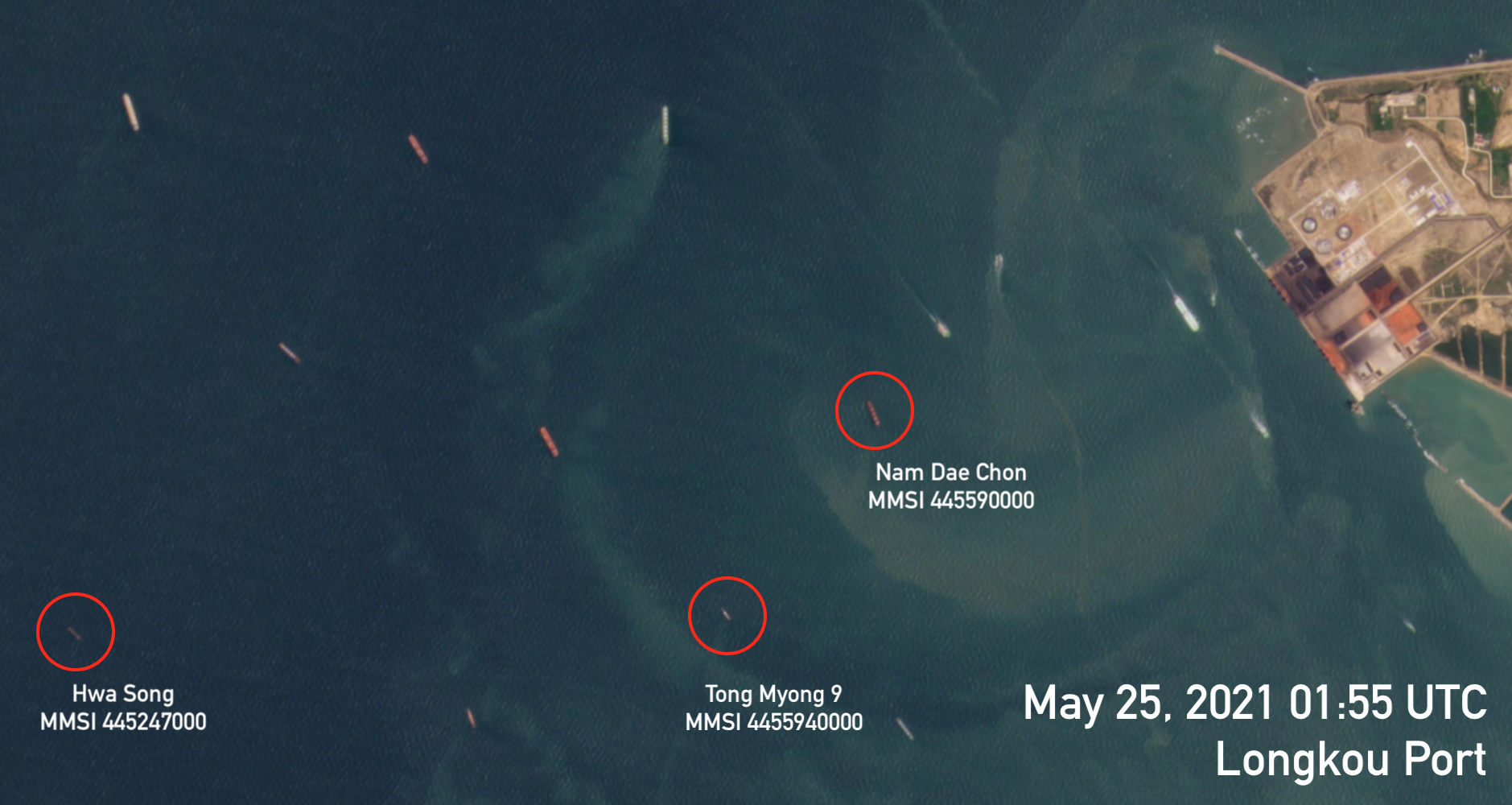 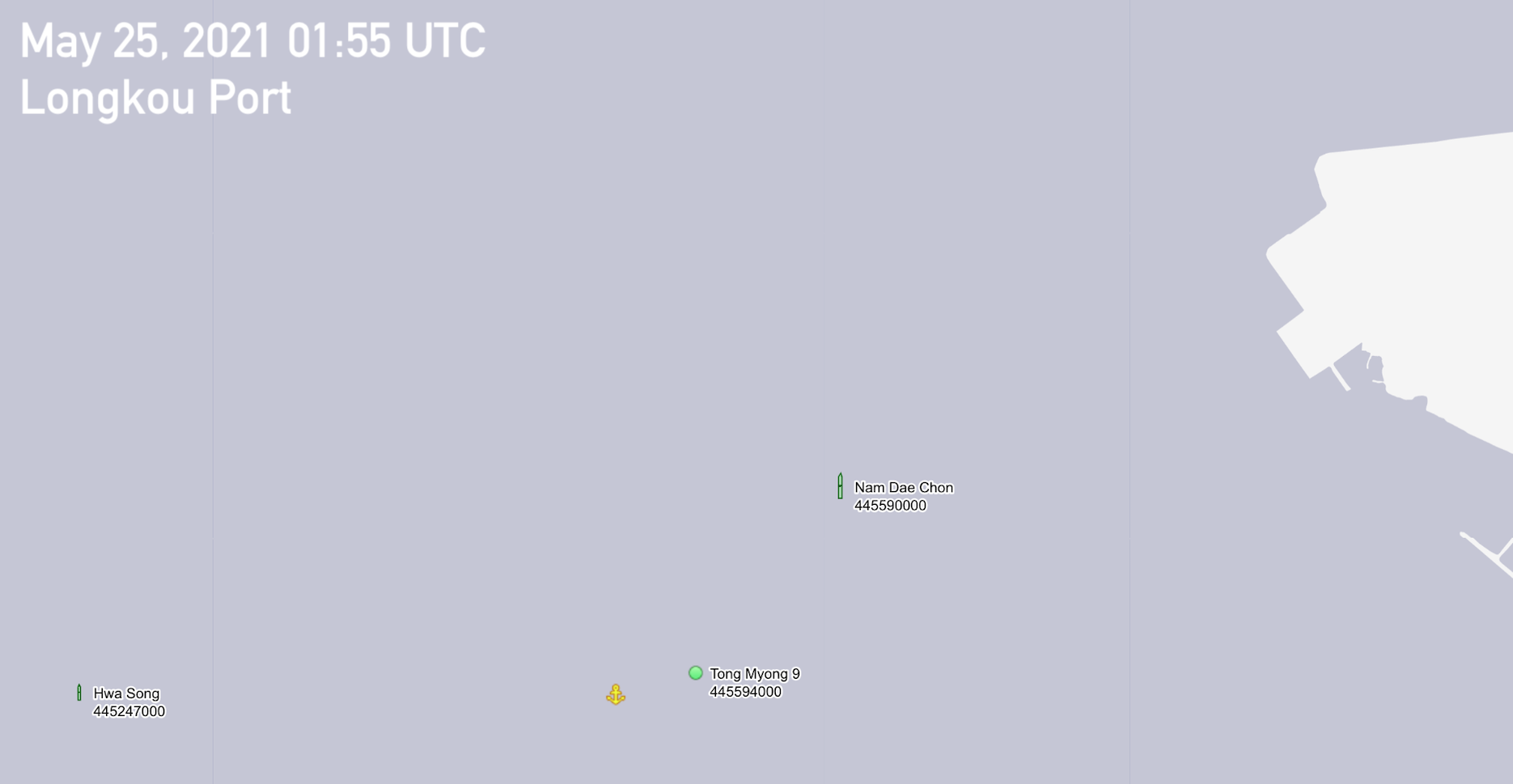 According to AIS data, at least four North Korea-linked ships made voyages to Longkou between May 1 and May 25. The Nam Dae Chon has been loitering just outside of Longkou for just over 3 weeks, having appeared on May 4. It was later joined by the Hwa Song, Tong Myong 9 and Wanda 8 — all either North Korea-flagged or previously linked to North Korean shipping activities — in extended loitering behavior at Longkou. DPRK-linked ships also frequented the Zhoushan Islands in May, a coal-smuggling hotspot off the coast of Shanghai. At least four ships — the KS1, Jamaican-flagged Jinhai, Hoe Ryong and the Kum Ya — were detected there in May. The area has continuously hosted illicit transfers of sanctioned North Korean coal despite the pandemic, with many violations in 2020 recorded by the PoE. Notably, the Zhoushan Islands functioned as a midway point for the Kum Ya during one of its two bicoastal journeys via the Korea Strait in May. After leaving the east-coast port of Chongjin and crossing through the narrow strait, which bridges the Korean Peninsula and the DPRK’s west and east coasts, the Kum Ya was detected arriving at the Zhoushan Islands on May 14. The dense ship traffic clogging the Korea Strait makes it dangerous to cross without functioning AIS. North Korean ships trying to keep a low profile are no exception. The Yu Jong 2, Pu Ryong, Kum Ya, Rye Song Gang 1, Paek Ma, and the Ryong Rim were six tankers out of a larger pool of 10 DPRK-linked ships that made bicoastal journeys in May. The crossing of the Yu Jong 2 may have saved 21 lives last Saturday. After leaving the DPRK’s east coast and sailing near the Japanese island of Dogojima, the DPRK-flagged Chong Bong broadcast a distress call on May 21 and finally sank on May 22. Its 21 crew members were rescued by the nearby Yu Jong 2. Edited by Arius Derr © Korea Risk Group. All rights reserved. |

October 04, 2026Oct 04, 2026

The ultimate resources for professionals working on North Korea
 SHARE
SHARE COPY LINK
 X
X MASTODON