  Analysis North Korea eyes China border trade resumption as quarantine center clearedImagery shows movement at freight intake platforms after Kim Jong Un ordered ‘reexamination’ of COVID border policies 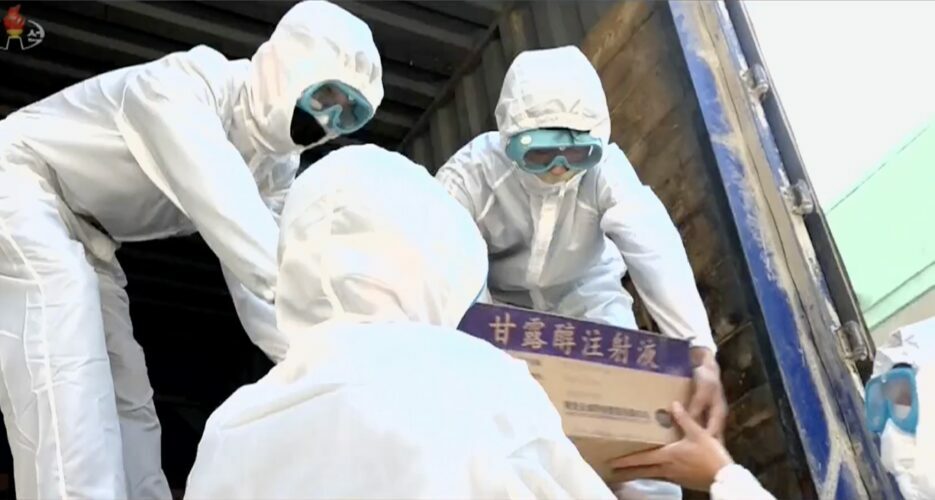 All goods appear to have cleared quarantine at North Korea’s large-scale import disinfection complex near the Chinese border, according to NK Pro analysis of satellite imagery. The development comes as Pyongyang seeks to “reexamine” pandemic border controls, a sign that it is looking to boost trade activity ahead of a possible restart to operations at the site. North Korea built the quarantine center last year at Uiju Airport near Sinuiju and began filling it with blue and white-covered stacks of items in January, after allowing trains into the country for the first time in 17 months. The last items arrived in late April, before North Korea and China agreed to halt cross-border trade amid new virus outbreaks in both countries, and remained mostly in place until earlier this month. 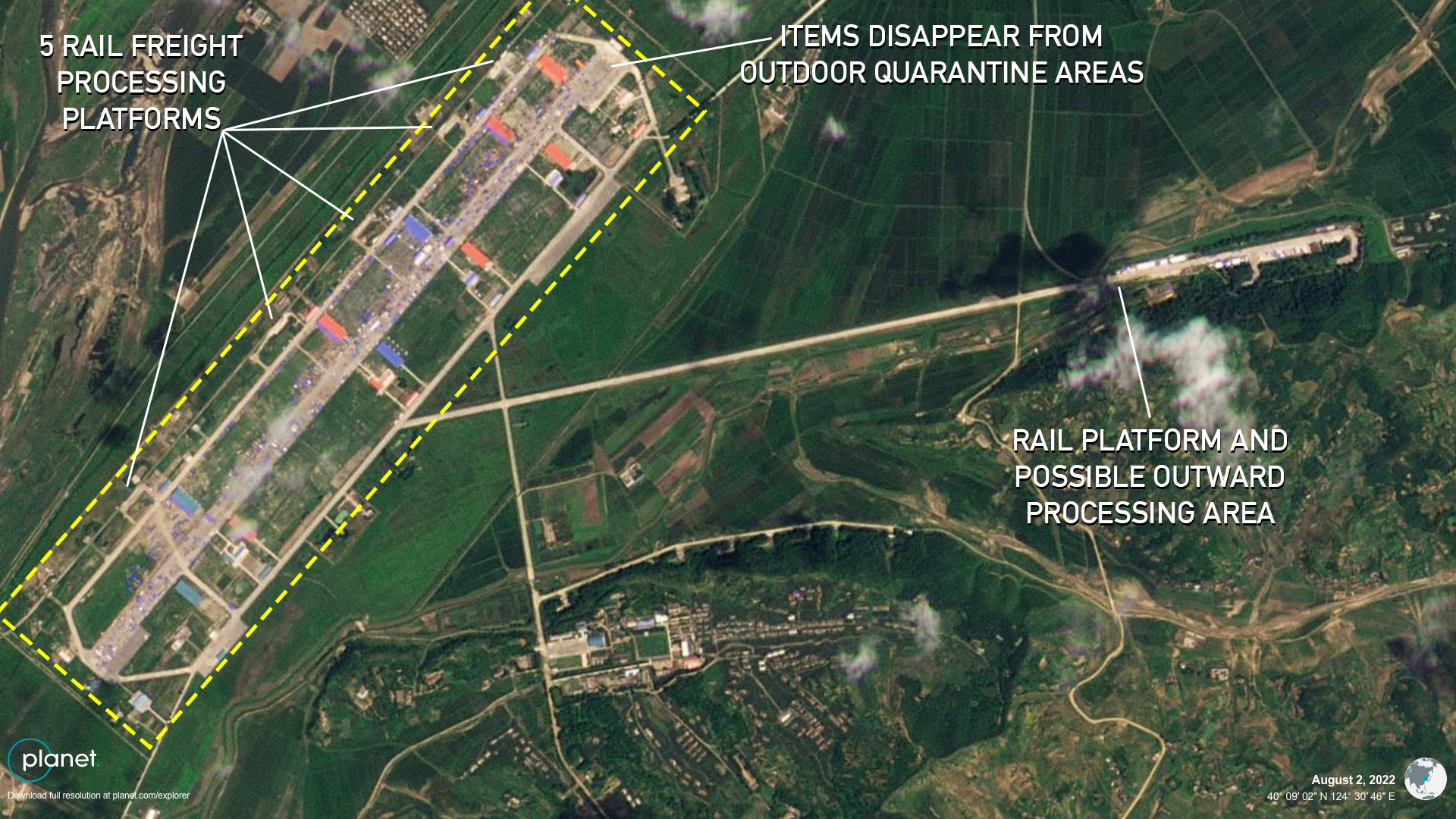 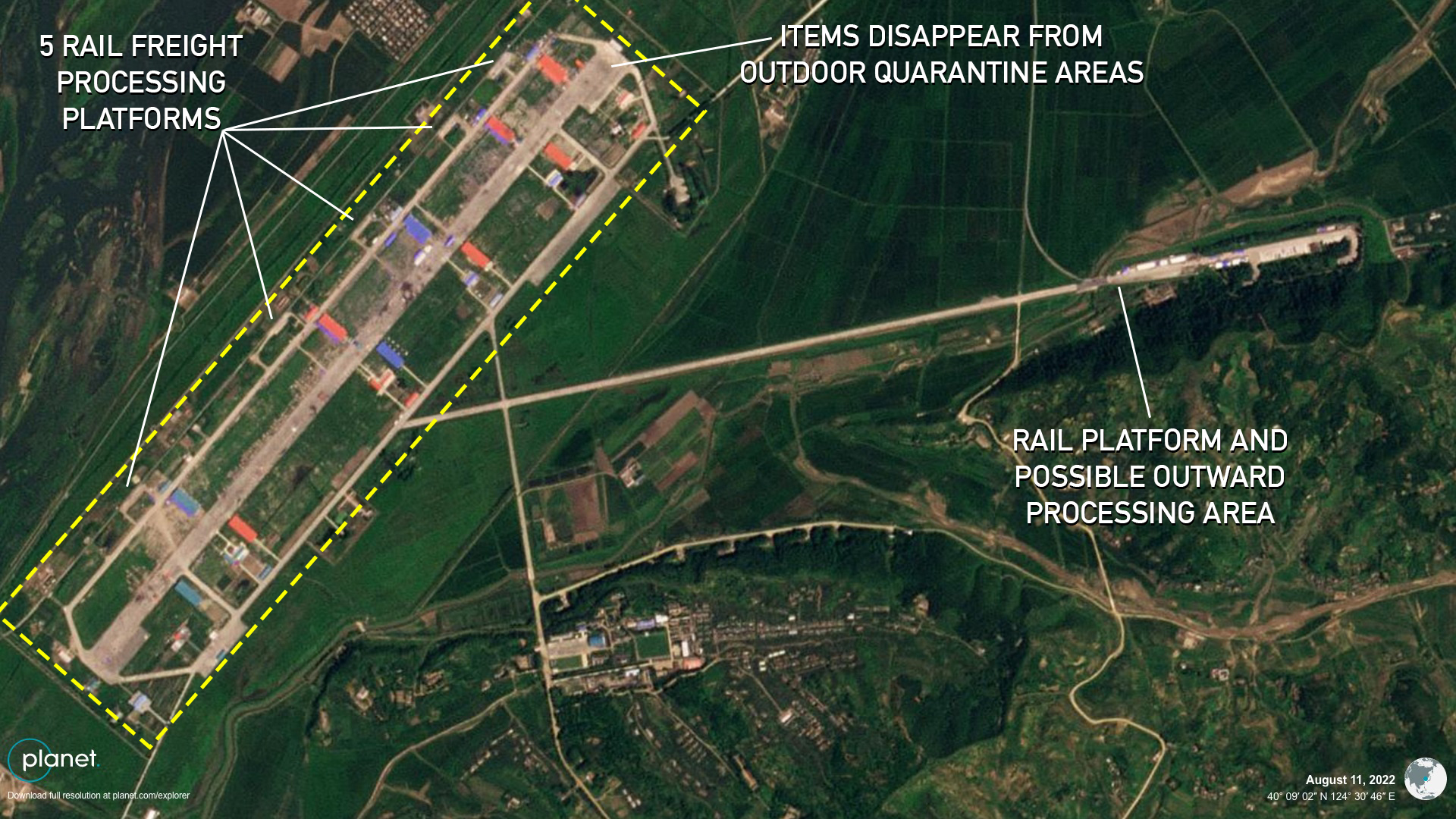 Items mostly disappeared from outdoor quarantine areas on the Uiju Airport runway and support roads between Aug. 2 and 11 | Images: Plant Labs PBH, edited by NK Pro 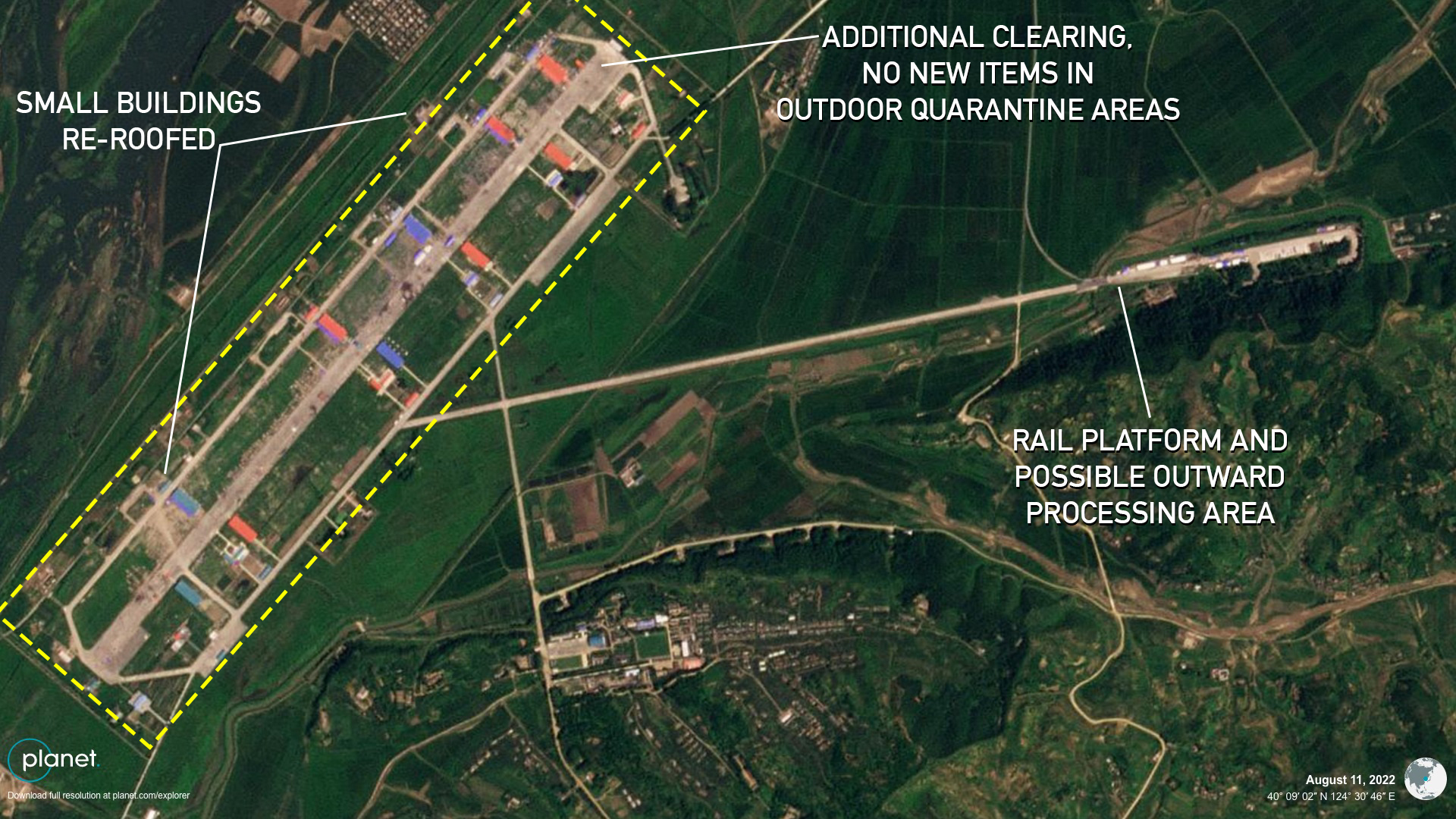 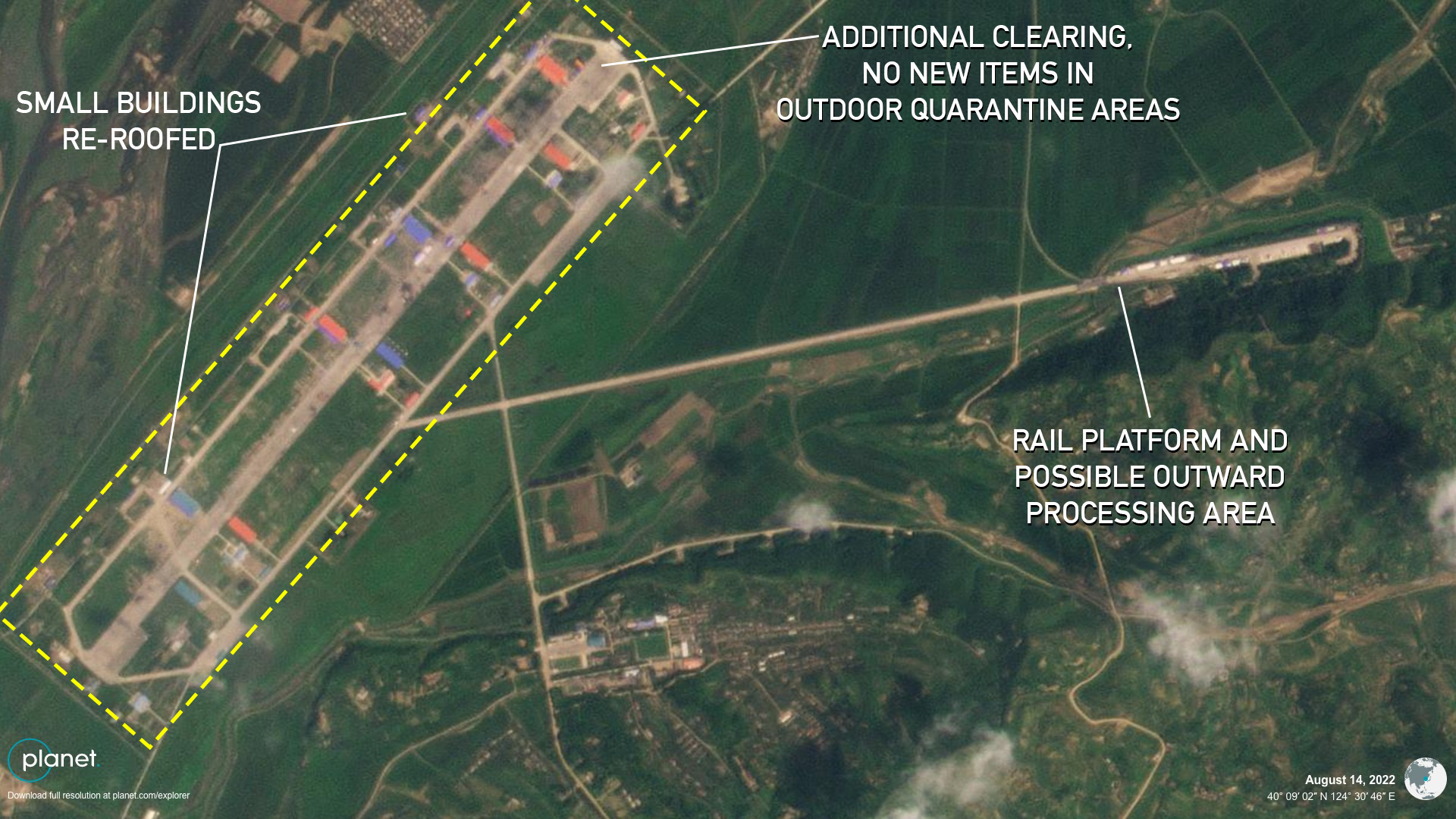 Workers appeared to re-roof two small buildings on site between Aug. 11 and 14 as a few more items were removed from the now mostly empty quarantine areas | Images: Plant Labs PBH, edited by NK Pro The clearing of the complex between Aug. 2 and 11, visible in Planet Labs imagery, is thus the latest evidence that DPRK authorities are enforcing a roughly 90-day quarantine period for items coming into the country. The quarantine policy apparently stems from what the DPRK leader’s sister Kim Yo Jong and other officials have cited as a fear that COVID-19 can survive on objects for long periods of time despite scientific evidence to the contrary. These fears resulted in North Korean leader Kim Jong Un last week demanding a “reexamination” of border blockade policies to prevent the spread of new variants from abroad, even as he declared the country completely “clean” of the virus. State media on Saturday also said “demands are increasing” for strict observance of the mask mandate and disinfection procedures “at import processing centers and other regions and places where epidemiological dangers are inherent.” The same report announced that masking and social distancing policies were rescinded for all areas “except frontline areas and borderline cities and counties.” Radio Free Asia (RFA) reported earlier this month, per unnamed sources, that cross-border train operations would resume around Aug. 8 or 9 and that even freight trucks would be allowed to operate across the Dandong-Sinuiju road bridge for the first time since early 2020. RFA then reported on Aug. 9 that the trade resumption was delayed due to heavy rains and more storms forecast for the coming week. According to Korean Central Television (KCTV), flooding occurred in parts of North Phyongan Province where Sinuiju is located from Aug. 14 to 15. Monday’s evening news weather report forecast clear skies for Aug. 16, indicating the trade route could reopen this week barring any infrastructural damage sustained from the storms. NK Pro found evidence of activity at the Uiju Airport disinfection complex’s five rail freight processing platforms in late July and early August, possibly as part of Kim’s demands for a review of procedures or other training. It is also possible the zone received trains from China during that time, but any movement of trains across the border is likely to be captured on camera by locals and foreign media reporters in Dandong, as when the first train crossed on Jan. 17 this year. Trains also appeared at the five rail platforms on at least 10 days in December and January ahead of the corridor’s official opening — an apparent precedent for workers in the complex conducting training or other activities involving the reception of non-import carrying trains. North Korean Vice Cabinet Premier Ri Song Hak said at last week’s COVID-19 “victory” event that the DPRK’s “economy was in a recession due to the global health crisis” last year but that the country was able to import badly needed goods thanks to Kim Jong Un’s decision to “hand over an entire military airfield” — referring to the Uiju site — state media’s first official acknowledgment of the facilities. Edited by Arius Derr © Korea Risk Group. All rights reserved. |

October 09, 2026Oct 09, 2026

The ultimate resources for professionals working on North Korea
 SHARE
SHARE COPY LINK
 X
X MASTODON