  Analysis “New ways of calculation”: Kim Myong Gil’s Stockholm press conference, in fullA full transcript of the DPRK chief negotiator's post-talks remarks 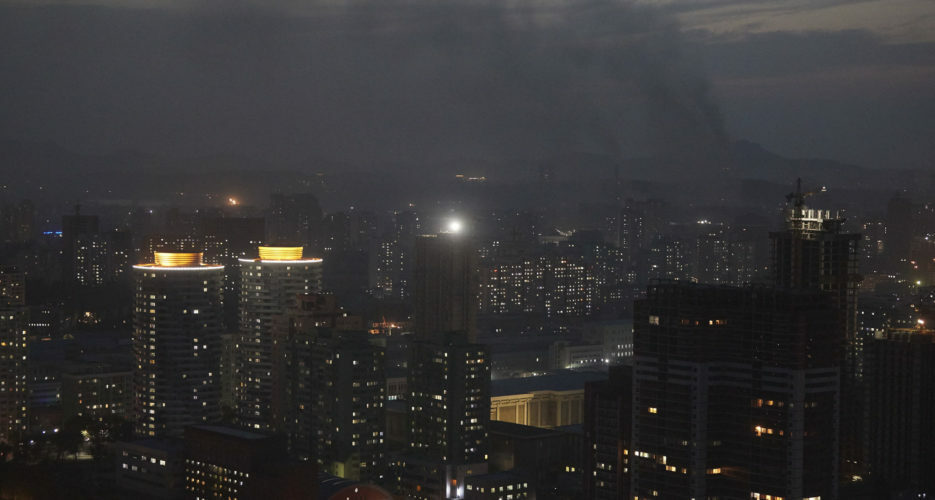 This weekend saw long-awaited talks between the U.S. and North Korea in Stockholm end in disagreement, with the DPRK side blaming the U.S. for failing to provide it with a new kind of deal and coming to the negotiating table “empty-handed.” In the immediate aftermath of the negotiations, chief North Korean negotiator Kim Myong Gil returned to the DPRK embassy in Stockholm to give his assessment of the talks — and why they broke down. For the benefit of our readers, NK Pro is publishing the content of press conference — both in its official translation provided by a DPRK interpreter at the time and our own translation — in full. North Korean translation: Our ambassador Kim Myong Gil, our top negotiator of the DPRK will present an interview and then will take only three questions on the side. This DPRK-U.S. working level talks was planned in conformity to the agreement in the Panmunjom DPRK-U.S. summit in last June. Since then, it was not easy to make it happen, as it had to overcome various difficulties. These talks was held at a crucial moment, when the situation on the Korean peninsula stands at the crossroads of dialogue or confrontation. Therefore, we have come to the negotiating table, with a responsibility that we should ensure a result to promote the development of the DPRK-U.S. relations, and also with an expectation that the U.S. will come up with a correct method of calculation and it will accelerate the positive improvement of DPRK-U.S. relations. However, the negotiations has not fulfilled our expectations and finally broke up. And I’m very unpleasant about it. The breakup of the negotiation without any outcome is totally due to the fact that the U.S. would not give up their own viewpoint and attitude. These days, the U.S. raised expectations by offering suggestions like “flexible approach,” “new method,” and “creative solutions.” But they have disappointed us greatly, and dampened our enthusiasm for negotiations by bringing nothing to the negotiation table. We have already clarified to the U.S. side what kind of calculation is necessary and gave plenty of time. But still the U.S. came to negotiation table empty-handed, which shows that they have no intention to solve the issue through dialogue. In this negotiation, we have proposed a realistic way to break the deadline of the DPRK-U.S. dialogue, caused by the U.S.’s wrong approach, and make a break-through in solving the problem. We made it clear that we can enter into a full discussion on denuclearization measures… when the U.S. responds in a sincere way to our preceding steps for denuclearization and confidence building, such as the discontinuation of nuclear and ICBM tests, dismantlement of the northern nuclear test ground, and repatriation of remains of U.S. soldiers. This is a realistic and appropriate proposal to recover confidence between the DPRK and the United States, which was unilaterally undermined by the U.S. and also to create an atmosphere that is helpful to the solution of the problem. The U.S. has openly threatened our rights to existence and development since the Singapore’s DPRK-U.S. summit meeting alone, they have imposed sanctions against the DPRK for 15 times, and resumed joint military exercises one after the other, which the U.S. President himself committed to suspend and introduced sophisticated war equipment into the Korean peninsula and its neighborhood. Our position is clear: the complete denuclearization of the Korean peninsula is possible only when all the obstacles that threaten our safety and check the development are removed completely, without a shadow of a doubt. Claiming that our rights to existence can be ensured only when we first abandon nuclear deterrence, while the threats from the U.S. are still in place, that gave rise to the nuclear issue on the peninsula, and made its solution so difficult, is like putting the cart before the horse. We suspended the negotiations on our judgement that the U.S. is not practically prepared for the negotiations, and advised them to consider carefully a little longer until the end of this year. It is now totally up to the U.S. attitude, whether they kindle again the seed for resuming dialogue by boldly acknowledging the cause that broke down the current DPRK-U.S. working level negotiations, or close the door for dialogue for good. We will take only three questions from you. Reporter A (in Korean, translated by NK Pro): Are you saying the U.S. side did not express any positive thoughts or intentions regarding regime guarantees? Reporter B (in Korean, translated by NK Pro): My question is, will you maintain the moratorium on ICBM and nuclear testing until the end of the year? Reporter C (in Korean, translated by NK Pro): If the U.S. side comes up with another calculation, would you be willing to come to another [round of] negotiations within the year? I cannot publicize all the details what happened during the negotiations right now, but what’s clear is that the US side did not come to the negotiation with the new method of calculation which we have asked before. So what is clear is that complete denuclearization of the Korean peninsula is possible only when all the obstacles that threaten our safety and check the development are removed completely, without a shadow of a doubt. We’ve already made it clear that if the United States fingers the hackneyed and old-fashioned scenario, which has nothing to do with new ways of calculation, then the DPRK-US dialogue will come to an end. Whether our discontinuation of nuclear and ICBM test fire will resume or not totally depends on the US attitude. It is unchangeable in our stance to solve the Korean peninsula issue through the means of dialogue. However, if the United States admits the unilateral and hackneyed ways of thinking and action, then there’s no meaning in dialogue even though they sit with us 100 times, 1000 times. I wonder whether it might be necessary for the United States to waste time having a dialogue only for the purposes of having a dialogue. But for us, we don’t need that kind of dialogue. NK Pro translation: [Begin recording Kim Myong Gil] These DPRK-U.S. working-level negotiations were not an easy meeting: they were mapped out as per the agreement reached at the DPRK-U.S. summit meeting in Panmunjom last June, and various obstacles had to be overcome with difficulty to arrange [the meeting]. These negotiations proceeded at a critical time, when the situation of the Korean Peninsula has entered a crossroads between dialogue and confrontation. As such, we came to the negotiations with a sense of responsibility that we should derive a result to lend impetus to the development of DPRK-U.S. relations this time, and with the expectation that the U.S. would come out with a right calculation, which in turn would accelerate the positive development of DPRK-U.S. relations. The negotiations, however, did not meet our expectations and broke down. I am very displeased about this. That these negotiations did not generate any outcome and broke down is entirely due to the fact that the U.S. has not abandoned its hackneyed position and attitude. The U.S. has raised our expectations so much all this time, hinting at a flexible approach, new method, and a creative solution. However, it showed up with nothing, disappointing us greatly and dampening our desire for negotiations. That the U.S. came to the negotiations empty-handed, despite the fact that we had already clearly explained to the U.S. side what calculation is needed and gave it enough time, shows it ultimately has no intention of resolving the issue. During the negotiations, we presented a realistic method by which to break the stalemate in the DPRK-U.S. dialogue, brought about by the U.S.’s wrong approach, and by which to create a breakthrough in resolving the issue. We made our position clear that we can enter into a full-scale discussion on the next phase of measures for denuclearization if the U.S. responds sincerely to the denuclearization and trust-building measures we have preemptively taken, such as the suspension of nuclear testing and ICBM test launches, the dismantlement of the northern nuclear test site, and the return of US soldiers’ remains. This is a realistic and valid proposal for restoring relations of trust between the DPRK and the U.S., which the U.S. unilaterally abrogated, and for creating an atmosphere conducive to resolving the issue. Following the Singapore DPRK-U.S. summit meeting alone, the U.S. put into effect 15 rounds of sanctions measures targeting us; even resumed one by one the joint military exercises that the president himself pledged to suspend; and openly threatened our right of existence and development by drawing in state-of-the-art war equipment around the Korean Peninsula. Our position is clear. The complete denuclearization of the Korean Peninsula is possible only when all obstacles threatening our security and undermining our development are removed wholly, and without room for doubt. The assertion that our right of existence and development will be guaranteed only when we first give up our nuclear deterrent, while there remains intact the U.S. threat that generated the Korean Peninsula’s nuclear issue and is making its resolution difficult, is the same as saying we should put the cart before the horse. We have concluded that the U.S. side is not actually prepared to negotiate with us. As such, we suspended the negotiations and advised [the U.S.] to think this over a bit more until the end of the year. It completely depends on the U.S. attitude whether it rekindles the fire of resuming dialogue by boldly admitting the causes of the failure of these DPRK-U.S. working-level negotiations and rectifying them, or whether it forever shuts the door to dialogue. Thank you. [End recording Kim Myong Gil] [Begin recording unidentified reporter A] Are you saying the U.S. side did not express any positive thoughts or intentions regarding regime guarantees? [End recording unidentified reporter A] [Begin recording unidentified reporter B] My question is, will you maintain the moratorium on ICBM and nuclear testing until the end of the year? [End recording unidentified reporter B] [Begin recording unidentified reporter C] If the U.S. side comes up with another calculation, would you be willing to come to another [round of] negotiations within the year? [End recording unidentified reporter C] [Begin recording Kim Myong Gil] We cannot tell you everything in detail here what was mentioned during the negotiating process. However, one thing is clear: the U.S. did not bring one single calculation that we demanded. The calculation we are demanding is that only when the U.S. takes measures to perfectly remove all institutional mechanisms that threaten our security and undermine our development [can the Korean Peninsula’s denuclearization be achieved], and that it must prove so in practice. We have already made our position clear that if the U.S. toys with an old scenario that has no bearing on a new calculation, that could end the dealings between the DPRK and the U.S. Whether we maintain the moratorium on nuclear testing and ICBM test launches or revive them completely depends on the U.S. position. Our position of trying to resolve the Korean Peninsula issue through dialogue and negotiations remains unchanged. That said, dialogue is meaningless, be it sitting down face to face for a hundred times or a thousand times, if the U.S. clings to its self-righteous, one-sided, and hackneyed position. So, while wasting precious time on negotiations for the sake of negotiations may be something the U.S. needs, we do not need it at all. Thank you. [End recording Kim Myong Gil] Korean transcript: 이번 조미 실무협상은 지난 육월 판문점 조미 수뇌 상봉에서 이룩된 합의에 따라 구상되고 그 사이 여러 가지 난관들을 힘겹게 극복함에 마련된 쉽지 않은 만남이었습니다. 이번 협상이 조선반도 정세가 대화냐 대결이냐 하는 기로에 들어선 관건적인 시기에 진행된 만큼 우리는 이번에 조미 관계 발전을 추동하기 위한 결과물을 이뤄내야 한다는 책임감, 미국이 옳은 계산법을 가지고 나옴으로써 조미 관계의 긍정적 발전이 가속되리라는 기대감을 안고 협상에 왔습니다. 그러나 협상은 우리 기대에 부응하지 못하고 결렬되었습니다. 나는 이에 대해서 매우 불쾌하게 생각합니다. 이번 협상이 아무런 결과물도 도출해내지 못하고 결렬된 것은 전적으로 미국이 구태의연한 립장과 태도를 버리지 못한 데 있습니다. 미국은 그동안 유연한 접근과 새로운 방법, 창발적인 해결책을 시사하며 기대감을 한껏 부풀게 하였으나 아무것도 들고 나오지 않았으며, 우리를 크게 실망시키고 협상 의욕을 떨어뜨렸습니다. 우리가 이미 미국 측에 어떤 계산법이 필요한가를 명백히 설명하고 시간도 충분히 주었음에도 불구하고 미국이 빈손으로 협상에 나온 것은 결국 문제를 풀 생각이 없다는 것을 보여줍니다. 우리는 이번 협상에서 미국의 잘못된 접근으로 하여 초래된 조미 대화의 교착상태를 깨고, 문제 해결의 돌파구를 열 수 있는 현실적인 방도를 제시했습니다. 핵 시험과 대륙간탄도로케트 시험 발사 중지, 북부 핵 시험장의 폐기, 미군 유골 송환과 같이 우리가 선제적으로 취한 비핵화 조치들과 신뢰 구축 조치들에 미국이 성의 있게 화답하면 다음 단계의 비핵화 조치들을 위한 본격적인 논의에 들어갈 수 있다는 립장을 명백히 했습니다. 이것은 미국이 일방적으로 파기한 조미 사이의 신뢰 관계를 회복하고, 문제해결에 유리한 분위기를 만들기 위한 현실적이고 타당한 제안입니다. 싱가포르 조미 수뇌회담 이후에만도 미국은 열다섯 차례에 걸쳐 우리를 겨냥한 제재 조치들을 발동하고 대통령이 직접 중지를 공약한 합동군사연습마저 하나둘 재개했으며, 조선반도 주변에 첨단 전쟁 장비들을 끌어들여 우리의 생존권과 발전권을 공공연히 위협하였습니다. 우리의 립장은 명백합니다. 조선반도의 완전한 비핵화는 우리의 안전을 위협하고 발전을 저해하는 모든 장애물들이 깨끗하고 의심할 여지 없이 제거될 때에라야 가능하다는 것입니다. 조선반도 핵 문제를 산생시키고 그 해결을 어렵게 하고 있는 미국의 위협을 그대로 두고 우리가 먼저 핵 억제력을 포기해야 생존권과 발전권이 보장된다는 주장은 말 앞에 수레를 놓아야 한다는 소리와 마찬가지입니다. 우리는 미국 측이 우리와의 협상에 실제적인 준비가 되어 있지 않다고 판단한 데 따라 협상을 중단하고 연말까지 좀 더 숙고해 볼 것을 권고하였습니다. 이번 조미 실무협상이 실패한 원인을 대담하게 인정하고 시정함으로써 대화 재개의 불씨를 되살리는가 아니면 대화의 문을 영원히 닫아버리는가 하는 것은 전적으로 미국의 태도에 달려 있습니다. 감사합니다. Q/A — 미국 측에서 체제보장에 대해서 긍정적인 생각이나 의사표시를 전혀 하지 않았다는 말인가? — ICBM 그리고 핵실험 중지 조치에 대해서는 연말까지 유지할 것인가? — 만약 미국 쪽에서 또 다른 계산법을 들고 나온다면 올해 중으로 다른 협상에 나오실 의향이 있는가? ▲ 우리가 협상 진행 과정에 거론된 내용을 구체적으로 여기서 다 말할 수는 없습니다. 그러나 한 가지 명백한 것은 미국이 우리가 요구한 계산법을 하나도 들고 나오지 않았다는 것입니다. 우리가 요구하는 계산법은 미국이 우리의 안전을 위협하고 우리의 발전을 저해하는 모든 제도적 장치들을 완전무결하게 제거하려는 조치를 취할 때만이, 그것을 또 그리고 실천으로 증명해야 한다는 것입니다. 우리는 미국이 새로운 계산법과 인연이 없는 낡은 각본을 만지작거리면 그것으로서 조미 사이의 거래가 막을 내릴 수 있다는 데 대해서 이미 명백히 립장을 표명했습니다. 우리의 핵시험과 ICBM 시험 발사 중지가 계속 유지되는가 그렇지 않으면 되살리는가 하는 것은 전적으로 미국의 립장에 달려있습니다. 조선 반도 문제를 대화와 협상을 통해서 해결하려는 우리의 립장은 불변합니다. 다만 미국이, 독선적이고 그 담에 일방적이고 그 담에 구태의연한 립장에 매달린다면은, 백번이고 천번이고 마주 앉아도 대화가 의미가 없다는 것입니다. 그래서 협상을 위한 협상을 하면서 아까운 시간을 랑비하는 것이 미국에는 필요할 지 모르겠지만 우리에게는 전혀 필요가 없습니다. 감사합니다. Dagyum Ji, Oliver Hotham, and Minyoung Lee contributed to this report Featured image: Magnus Johansson © Korea Risk Group. All rights reserved. |

October 21, 2026Oct 21, 2026

The ultimate resources for professionals working on North Korea
 SHARE
SHARE COPY LINK
 X
X MASTODON