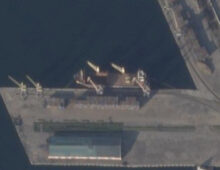
  News Junk vessel acquired by North Korea reappears at a rarely visited portShip may be part of elaborate sanctions busting scheme linked to Chinese companies 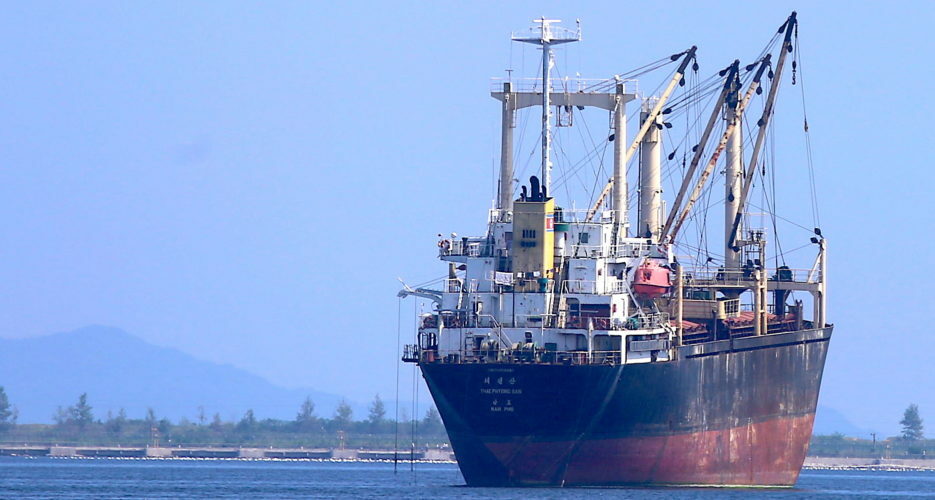 In early 2019, the Chinese shipping company Ningbo Marine had a problem: it had absorbed another firm’s ships, but many of Zhejiang Fuxing Shipping’s assets were too old to be seaworthy. So in May that year, Ningbo Marine decided to auction five off for scrap. Now one of those ships — the Ming Zhou 6 — has resurfaced as the DPRK-flagged Tae Phyong 2 at the North Korean port of Haeju. At 27,370 deadweight tons, it’s one of the largest and newest additions to Pyongyang’s fleet. According to automatic identification system (AIS) data from MarineTraffic, the first trip the Ming Zhou 6 made as a North Korean asset was to China’s Longkou Port in early March. From there, it went to Nampho, North Korea’s busiest port, and temporarily stopped broadcasting its AIS signal. It then set off for the infrequently-visited North Korean port of Haeju, arriving on May 20. “According to the reported and available AIS data, the vessel appears to make trips to Longkou and Nampho but has not historically visited Haeju,” said Jamie Withorne, a research assistant at the James Martin Center for Nonproliferation Studies. “It is a possibility the vessel was engaged in international trade, though this is unknown for certain.” 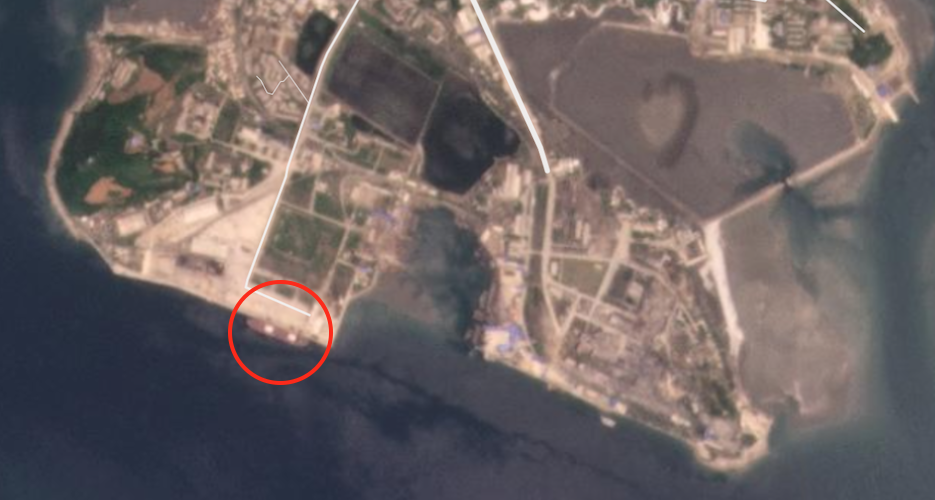 The Ming Zhou 6 has caught the eye of authorities before. The U.N. Panel of Experts, which monitors the impact and evasion of DPRK sanctions, inquired about and received a reply from China that the Ming Zhou 6 was taken off its registry and its certificates voided in May 2019. The Ming Zhou 6 is not the only Chinese scrap ship thought to be illicitly acquired by the DPRK. In June 2019, the bulk carrier Fu Xing 12, part of the same group of five sold by Ningbo Marine, was also auctioned to a Chinese buyer for scrap but reappeared under the North Korean flag five months later. The sale of the Ming Zhou 6 followed a similar pattern with that of the Fu Xing 12. Both ships were won at unusually high bids, six and three times their ‘net book price,’ respectively. On May 16, 2019, the Ming Zhou 6 was auctioned off by Ningbo Marine. From a book price of 392,600 USD, bidding started at 1.24 million USD. It was finally sold at 2.37 million USD to a Chinese national named Su Jianpo, who would later also buy the Fu Xing 10 from Ningbo Marine for 4.11 million USD about a week later. 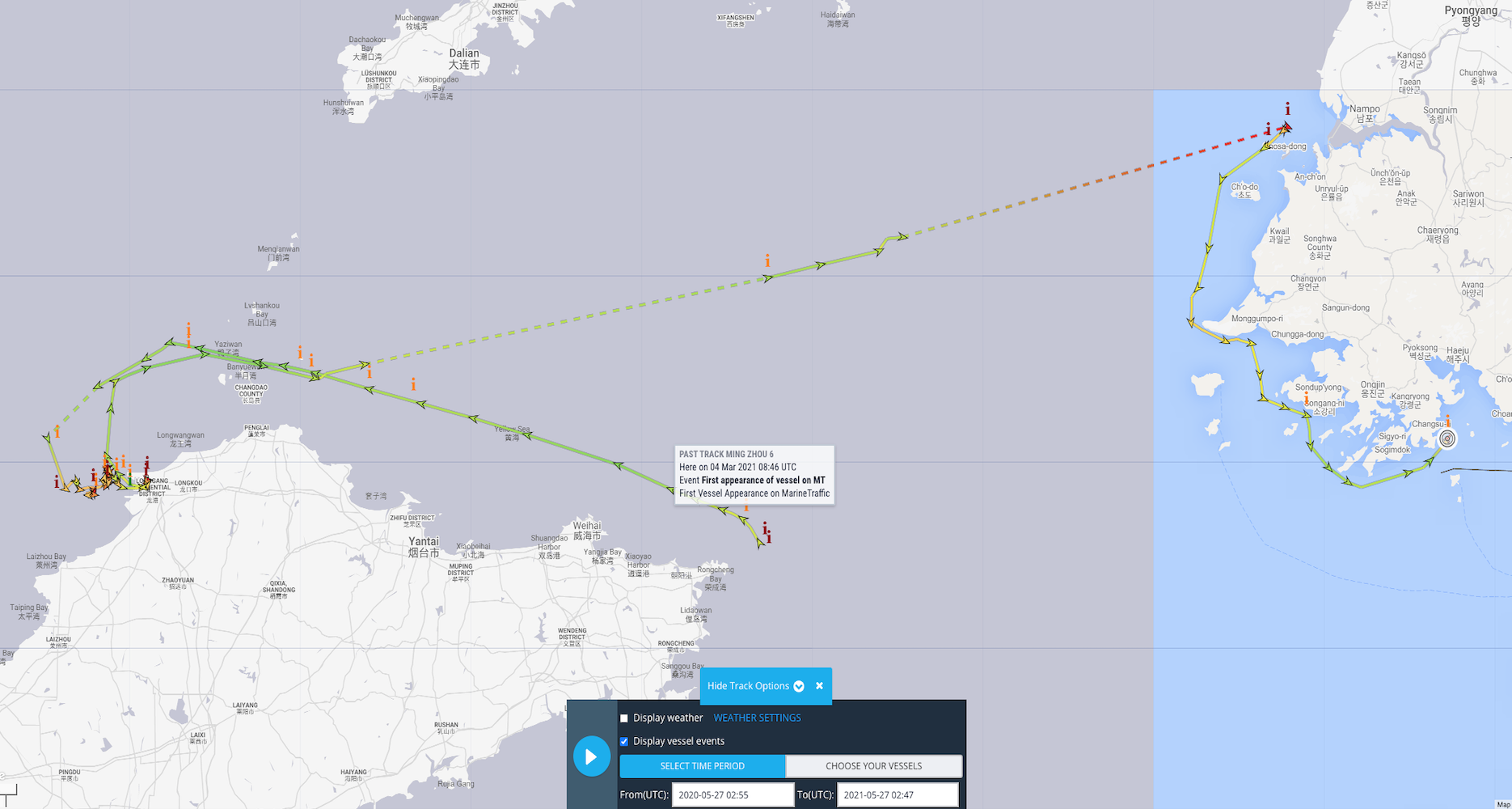 NK Pro was unable to reach Su or his companies — Zhoushan Baotong Shipping Co Ltd, incorporated two months before his acquisition of the Ming Zhou 6, and Hebei Xuze Construction Engineering Co Ltd — for immediate comment. However, NK Pro was able to uncover a trail of company documents and shareholders linking Su to one of the Ming Zhou 6’s intermediary owners, Fujian Changhe Shipping Co. Ltd, which owned the ship for almost a year before the Ming Zhou 6 officially became the Tae Phyong 2. According to Equasis, an open-source shipping information system, the ship was registered under the new name Xiang Jiang 99 at least since June 2019, the same month it listed a new owner: Fujian Changhe. At least two layers of companies seperate Su from Fujian Changhe, as detailed in the network graph and timeline below. And according to the latest report by the UN’s Panel of Experts, a member state alleged that “the Ming Zhou 6 was acquired by a joint venture between China and the DPRK that had been set up to transfer the vessel to the latter country.” 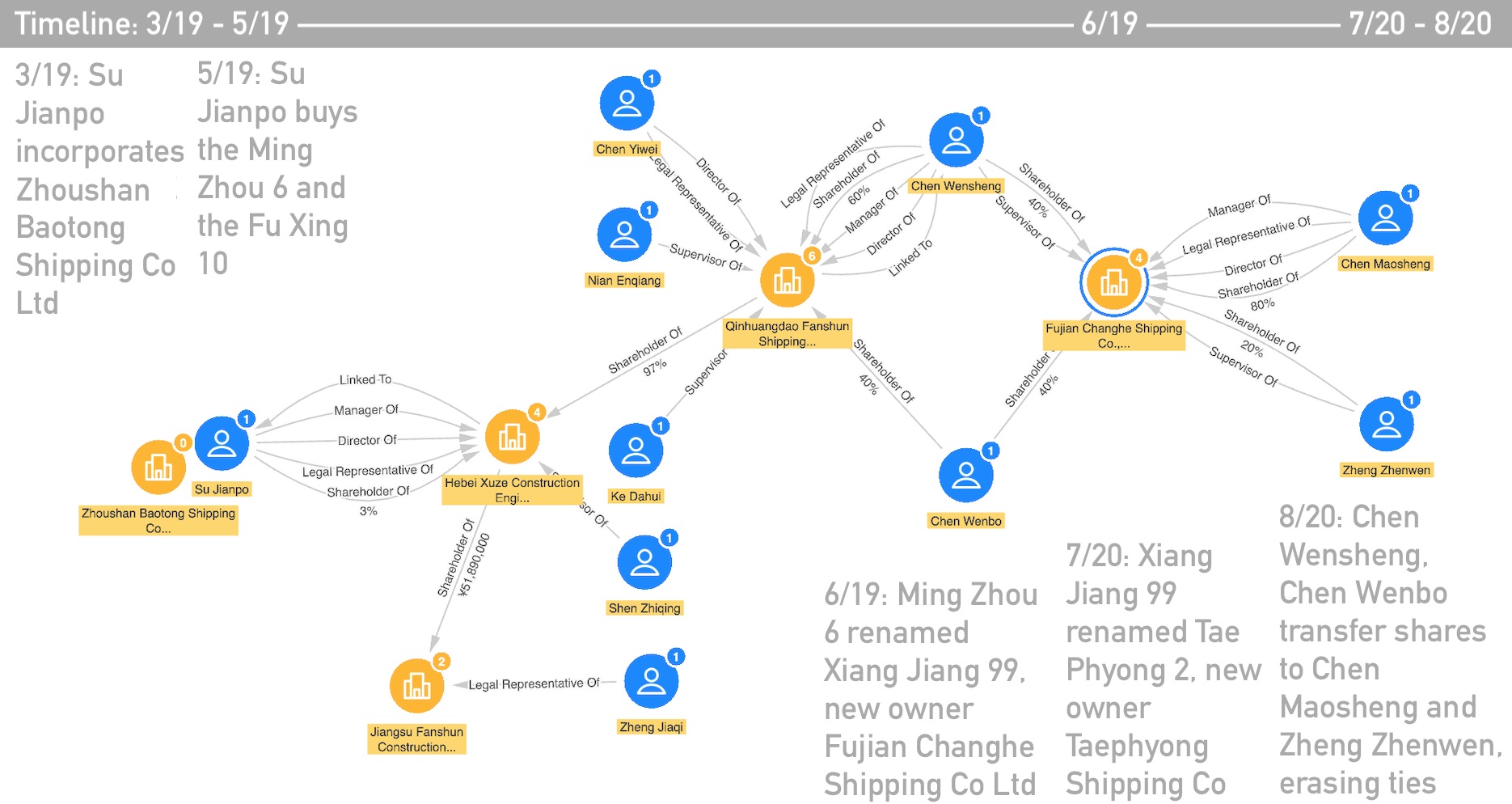 International Maritime Organization records show that the ship has been renamed the Tae Phyong 2 since at least July 2020, although some AIS platforms still resolve its profile to the Ming Zhou 6. It’s been owned by the DPRK-based Taephyong Shipping Co. at least since then. Exactly how the ship changed hands from Fujian Changhe Shipping Co. to the North Korean shipping company is unclear. NK Pro was unable to reach Fujian Shanghe Shipping Co for comment. Another company linked to two of the major shareholders of Fujian Shanghe Shipping Co. denied a request for comment. U.N. sanctions ban the selling, supplying, or transferring of new or used vessels to North Korea, barring approved exemptions. Edited by Arius Derr © Korea Risk Group. All rights reserved. |

October 04, 2026Oct 04, 2026

The ultimate resources for professionals working on North Korea
 SHARE
SHARE COPY LINK
 X
X MASTODON