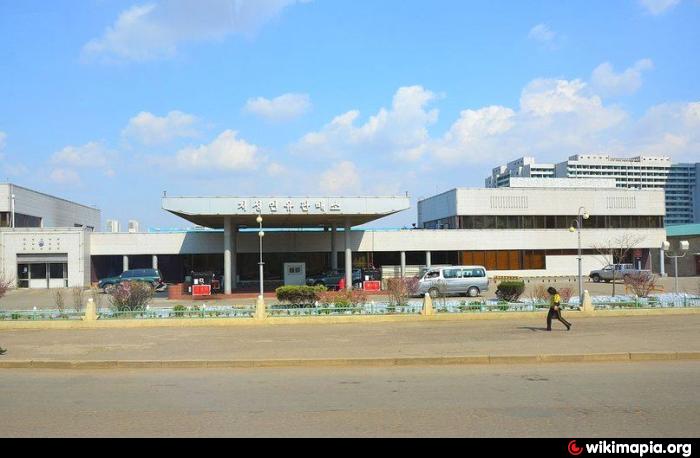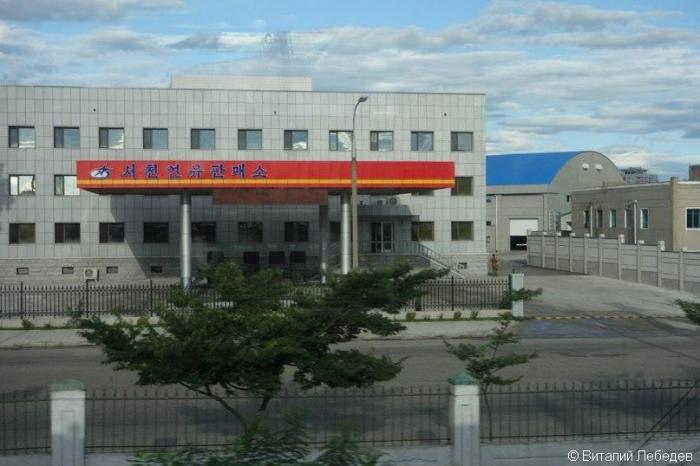
  Analysis Fueling the country: tracking North Korea’s growing number of gas stationsReflecting increasing demand, new stations are popping up across the DPRK 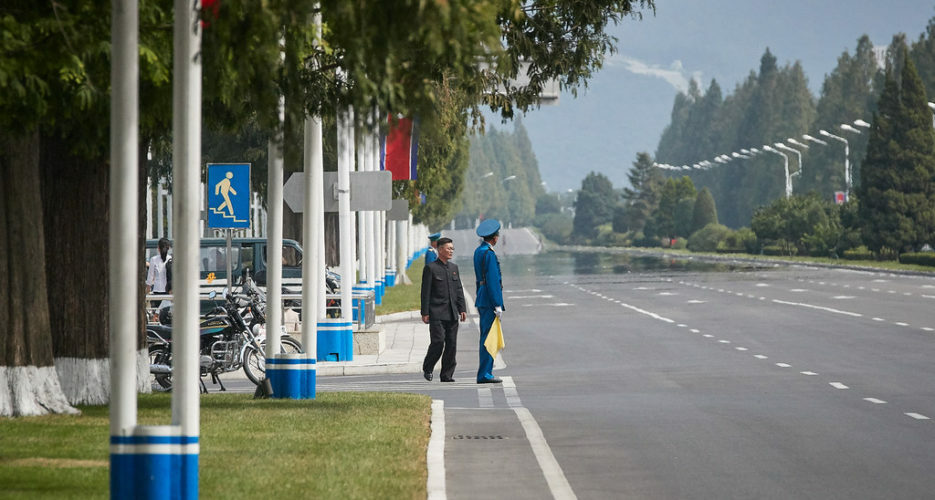 Transportation in North Korea has always been challenging, but prior to the economic crisis of the 1990s people could get around the country on trains, or within Pyongyang using trams and the subway. Private car ownership was practically unheard of. Today things are different. The DPRK capital still has the subway, trams, and buses, but it also has what could be described as baby traffic jams caused by the additional cars and taxi services. The rest of the country, too, is getting used to private busing services as the rail system has yet to recover. Private ownership of cars is still not common, but the streets are indeed filling up with cars, motorcycles, rentals, taxis, and buses. How those vehicles managed to get inside North Korea (like Kim Jong Un’s new Mercedes) is its own story, but one thing all of those cars and buses need is fuel. Traditionally, vehicles were assigned to farms, factories, and “leadership” units, where they would be maintained and kept gassed up by fuel depots or at the farm/factory itself. Anything that would look like a gas station to a westerner was a rare sight. As the economy began to improve and the donju (middle class) rose in prominence, vehicles began to proliferate and with that the need to keep them fueled. This has led to a boom in the construction of gas stations around the country.
For some context, North Korea’s population of 25 million is a little more than the U.S. state of Florida. Florida had 8000-9000 gas stations as of 2009. After looking over every major population center, county seat, and along the major highways, this author has identified just 112 stations nationwide. The limits of satellite imagery analysis make it tricky to confirm how many are operational, but what makes that number important is that the majority have been constructed since Kim Jong Un took power. Nearly all of them are on the western side of the country, from Haeju, through Pyongyang, and up to Sinuiju. While still not widespread, the ones that do exist speaks to the state of the economy, the state’s ability to provide enough refined oil products to feed the stations, and the increased numbers of passenger and cargo vehicles on the ground. Of the various types of vehicle available, motorcycles have become a popular and more affordable mode of transportation (compared to cars), and private ownership of them has been legal since 2012.     Below is gas station this author has labeled “Hamhung 5” (as it was the fifth one located in the city). As of February 2019 it was under construction. It’s one of the newest to be built.
Most stations seem to only have two to three pumps, but unlike many gas stations in the West, most North Korean stations also come with vehicle repair shops and other amenities. Priority over constructing new gas stations seems to have been given to Pyongyang (unsurprisingly) and key trading cities like Sinuiju, Hamhung, and Rason, while the bulk of the country currently goes without these symbols of progress. Of the 112 gas stations this author was able to identify, 11 were constructed prior to 2004 and 73 were built from 2012 onward, with 17 being constructed in 2017, four in 2018, and two under construction in early 2019.
North Korea doesn’t have any domestic sources of oil, but it does have two refineries (although only one is thought to be active). The Ponghwa Chemical Factory, near the Chinese border, has an estimated refining capacity of 2 million tons a year. As of 2018, UN sanctions limit imports of petroleum products to 500,000 barrels of refined products and 4 million barrels of crude oil annually. However, attempts to bypass sanctions through illegal imports are known to come from China and even “non-deliberate” South Korea violations. As a result, exact figures on North Korea’s consumption of crude and refined products are difficult to estimate, and this uncertainty calls into question the total number of gas stations that may have fuel and be operable at any given time. Nonetheless, their continued construction speaks their increasing need within the domestic economy. Gas prices have fluctuated based on how tightly China decides it wants to enforce sanctions. In mid-2017 the China National Petroleum Corporation even briefly suspended the sale of all petroleum products. From January-August 2017 fuel prices more than doubled to just under 25,000 won per kilogram (or roughly $3.07/kg). However, by December 2018, prices had dropped and were around 15,000 won per kg (~$1.86). Fuel prices appear to have continued to fall into the middle of 2019. Prices are based on won values as determined by Daily NK market trends. Edited by Oliver Hotham and James Fretwell Featured image: NK Pro © Korea Risk Group. All rights reserved. |

October 23, 2026Oct 23, 2026

The ultimate resources for professionals working on North Korea
 SHARE
SHARE COPY LINK
 X
X MASTODON