  Analysis Amid North Korean food ‘crisis,’ signs of possible humanitarian aid importsTwo inbound shipments of possible humanitarian aid detected in May and June 2021 satellite imagery 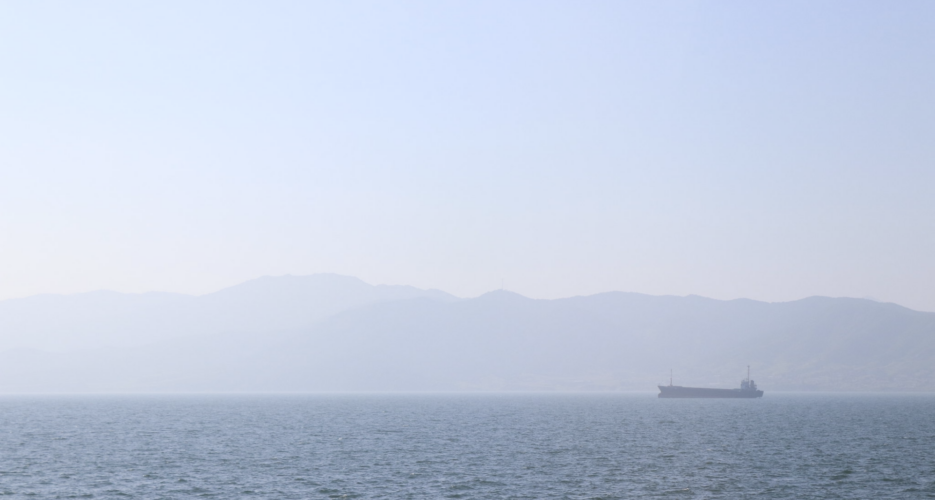 Humanitarian aid appears to have been delivered to North Korea on at least two occasions in May and June 2021, analysis of satellite imagery and vessel tracking data reveals, as Pyongyang recently conceded that the country is battling a “food crisis.” Two DPRK-flagged bulk carriers show up in satellite imagery from May and June delivering white parcels of cargo to both Nampho and Haeju ports in North Korea. The deliveries appear similar to other probable aid cargo deliveries detected from China to the DPRK during the summer of 2020. “These images suggest that the North Korean authorities are moving to try to stem the food crisis they admit they face,” said Peter Ward, an analytic contributor to NK Pro. “But given the long lead-in times due to quarantine measures, it is unclear when and what impact these shipments will have on the food supply in-country.” Several other North Korea-flagged vessels have been observed making the same journey in recent months, possibly indicating the shipments in May and June were the start of an increased effort to import aid into the country. While Pyongyang might have imported the aid to improve conditions for ordinary North Koreans, some think the timing means it could be related to the apparent demotion last week of two senior officials for undermining COVID-19-related protection measures. THE EVIDENCE Satellite imagery shows North Korea’s largest bulk carrier RINA (IMO 9133290) — which can carry up to 10,112 metric tons of cargo — unloading goods at Nampho port on June 13. The TAE PHYONG 2 (IMO 8605727) — a ship with a capacity of 8,767 metric tons — was also spotted delivering goods of a similar appearance at Haeju port on May 30. Automatic identification system (AIS) data and imagery shows these vessels may have gone through a quarantine period after leaving China and before delivering the goods to North Korea. These idle periods significantly increase the length of time before aid can enter the country. 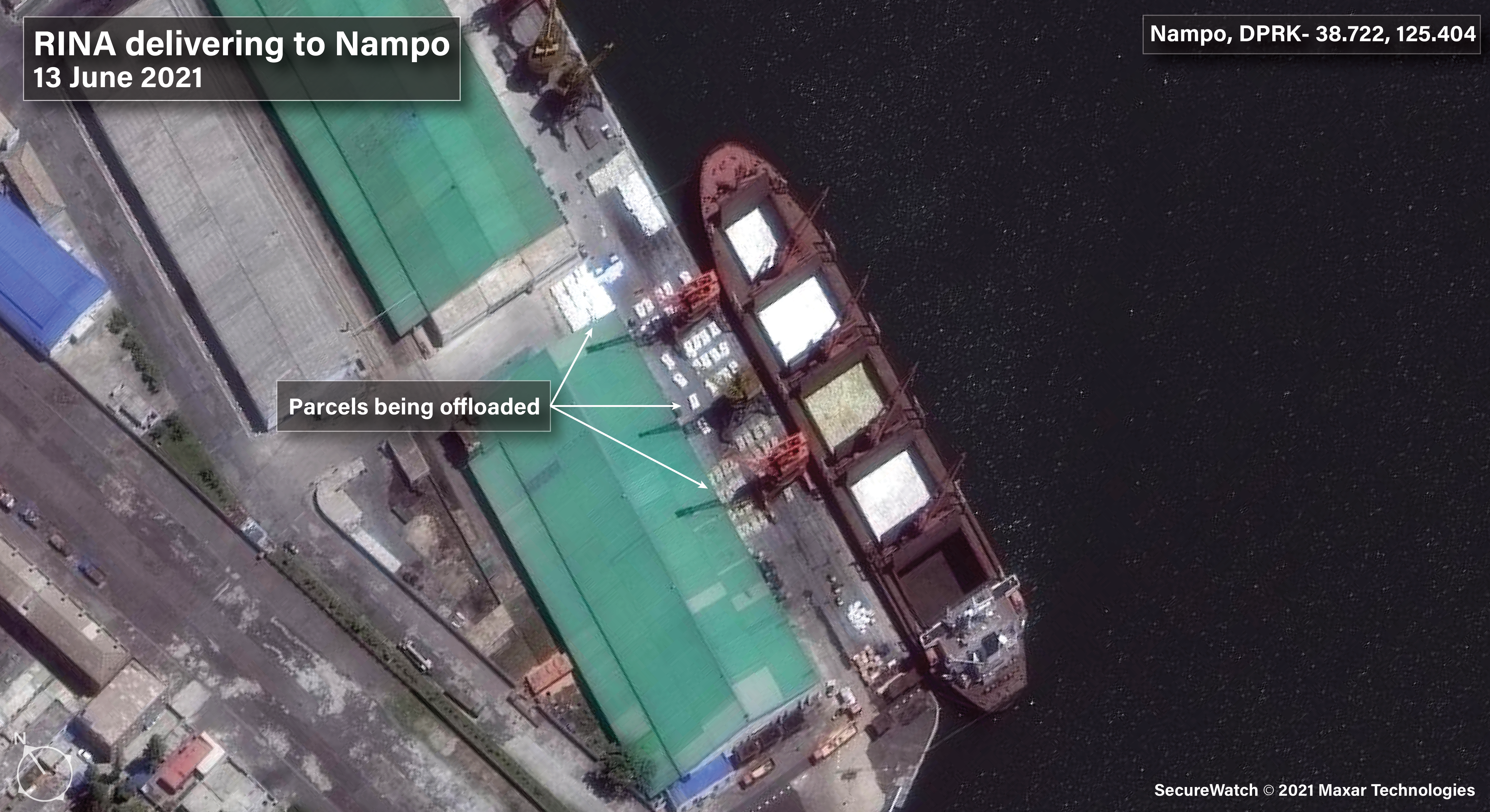 The RINA took over two months to deliver its cargo to North Korea, possibly due to quarantine measures. On April 5, the RINA arrived outside Longkou, China and was anchored for four days before entering port. After the vessel loaded its cargo, it traveled to outside the Nampho lock gate in North Korea, where it anchored from mid-April to mid-June before delivering the goods. These measures are possibly indicative of stringent quarantine procedures for goods entering North Korea from abroad. 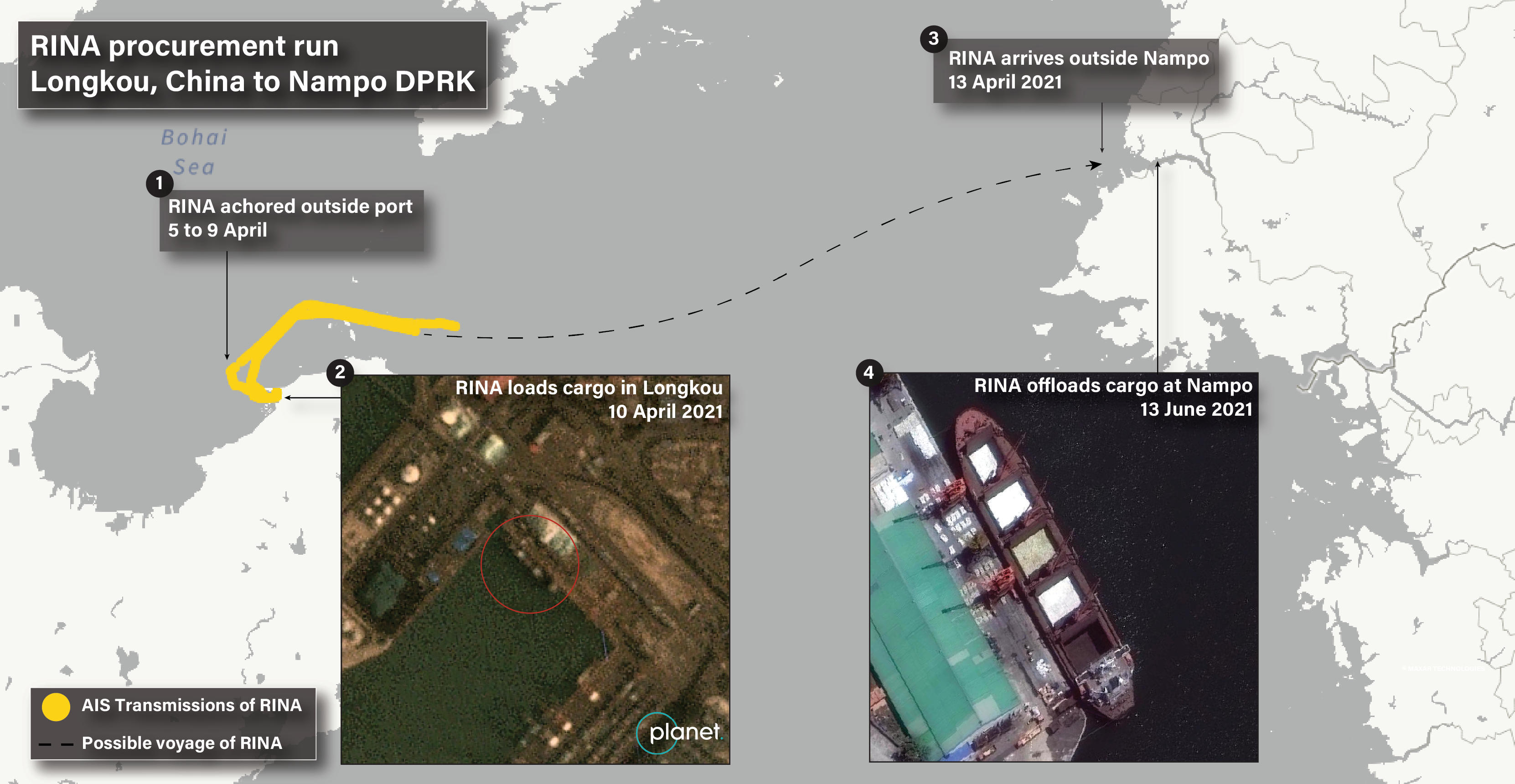 Another possible shipment, delivered in May 2021, followed the same pattern. The TAE PHYONG 2, a recently acquired North Korean vessel, traveled to China’s Longkou on March 9. The vessel waited outside the port for two days before picking up its cargo and carrying it back to outside the Nampho lock gate in North Korean waters. It waited until May 18 before sailing from Nampho and finally delivering its cargo to Haeju. 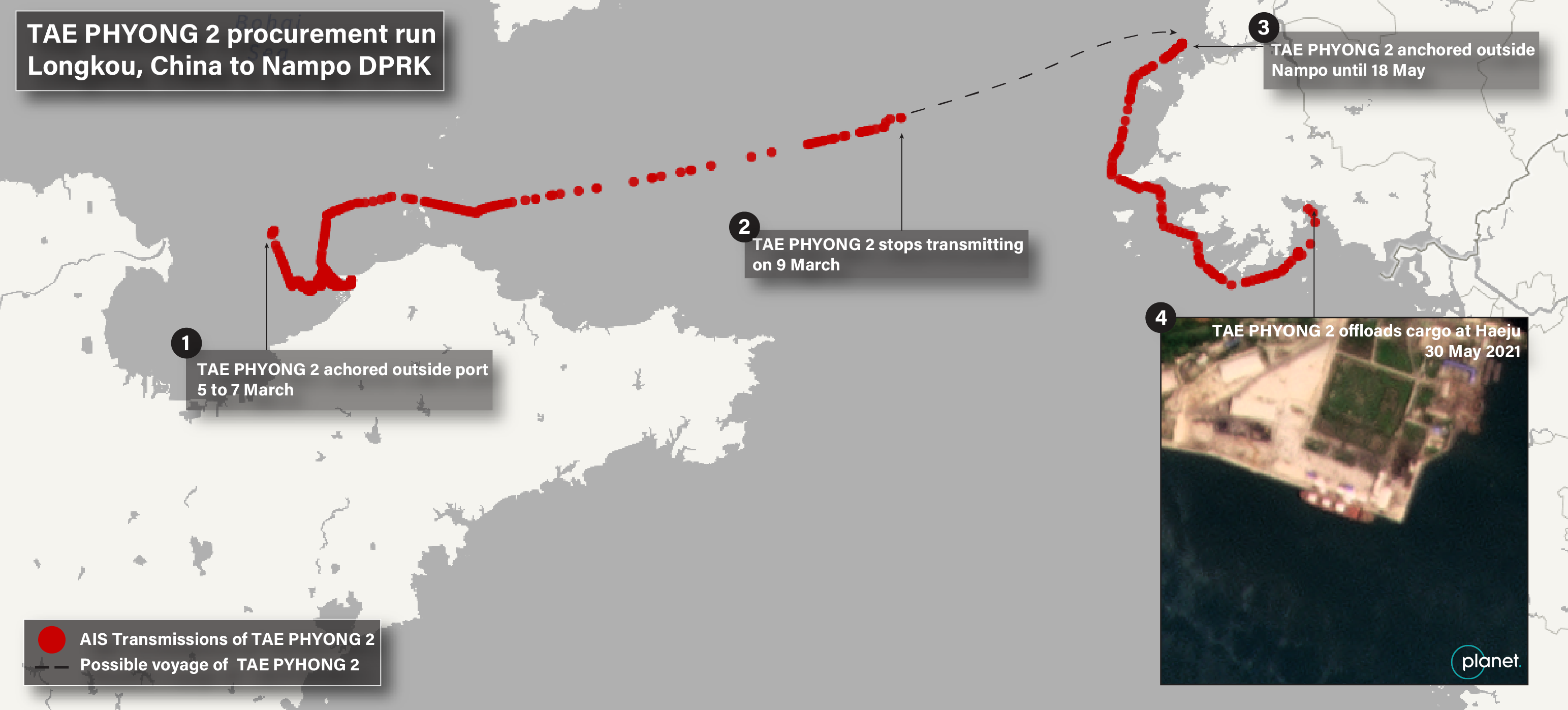 Although only low-resolution imagery is available, the vessel visited the same berth as the RINA in Longkou port, from which previous humanitarian aid has been shipped. Three-meter resolution imagery from Planet Labs later showed the TAE PYONG 2 in Haeju, North Korea, with its cargo bays open and white cargo visible in the holds. While it is unclear if the cargo was food aid or fertilizer, it may have been shipped in to support North Korea amid an ongoing struggle to feed its population. Analysis of AIS data indicates that at least five other North Korea-flagged vessels — including the TAEDONGMUN (IMO 9311339), HWASONG (IMO 8217685), NAM DAE CHON (9138680), TONG MYONG 9 (8748309) and JINHUNG 8 (8416023) — have visited Longkou port since May 2021. Currently anchored outside Nampho, they may be in a similar “quarantine” phase of operations. Low-resolution satellite imagery shows several of these vessels also appear to be loading white cargo. The visits of several other vessels to berths where humanitarian aid has previously been loaded may indicate a larger effort to import aid into North Korea than just the two shipments detailed above. 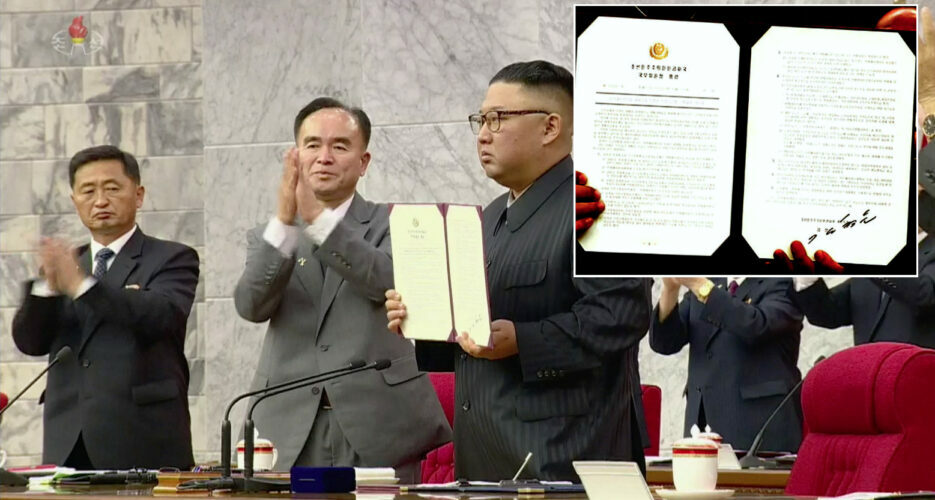 CAUSE OF “CRISIS”? Notably, the two deliveries come after Chinese trade data showed a collapse in PRC exports to the DPRK in May, as well as reports of spiking food prices throughout much of North Korea since early June. They also come weeks before Kim Jong Un apparently demoted Korean People’s Army Marshals Ri Pyong Chol and Pak Jong Chon for their role in a “great crisis” that undermined “prolonged” COVID-19 prevention efforts. South Korean news site Daily NK reported last Friday that Ri triggered Kim’s ire by approving rice imports into Nampho port and across the Chinese border without sufficient COVID-19-related quarantine efforts. “There is talk that Ri Pyong Chol lost his party position this time around for personally approving the rice imports from overseas,” a source told the site. NK Pro and RUSI could not corroborate the claims. The military ordered the imports, the site’s sources said, because it had insufficient stocks of its own to satisfy a rumored instruction from Kim Jong Un to release strategic rice supplies to the general population. Official North Korean state media alluded to the existence of such instructions when it reported that Kim approved a “special order” to relieve growing food insecurity pressures at a mid-June plenum meeting. State media told viewers that “distribution and processing will quickly follow from grain being nationally guaranteed,” with leader Kim reportedly stressing that “all work must be carried out responsibly until the food arrives with the people.” The Haeju and Nampho deliveries of May 30 and June 13 would have been ordered weeks in advance of Kim’s signing of the special order to “guarantee” nationwide grain distribution in mid-June, but those orders could relate to earlier shortages. For example, a report in early June said the military was facing major grain shortages. “I definitely think that the deliveries to Nampho and Haeju in May and June may be related to the ‘grave incident’ that Kim Jong Un discussed at the recent Politburo meeting,” Peter Ward said. “From what we know, the border is largely sealed, and the sudden appearance of these aid shipments could easily point to a breakdown in the chain of command,” he continued. “We should also remember that the military is one of the most important actors in the country’s foreign trade system. If anyone has the capacity to manage aid shipments quickly, it’s probably them.” THE BROADER CONTEXT Since the summitry of 2018, reports have routinely surfaced about massive Chinese exports of humanitarian aid — grain and fertilizer — to North Korea. The Japanese newspaper Asahi Shimbun, citing anonymous sources, reported in Aug. 2019 that China would ship a mammoth delivery of 800,000 tons of rice aid to North Korea through maritime channels. Informed government sources in South Korea later confirmed the delivery to NK Pro but said the amount was actually between 500,000 to 600,000 tons of aid. In Nov. 2020, the PRC reportedly provided the DPRK with similar levels of aid once again, comprising “550,000 tons of fertilizer” and “600,000 tons of corn and other types of grain between June and August.” The Chinese and DPRK governments did not issue any official announcements for either of these reported shipments, but satellite imagery may have detected some of the cargo deliveries. 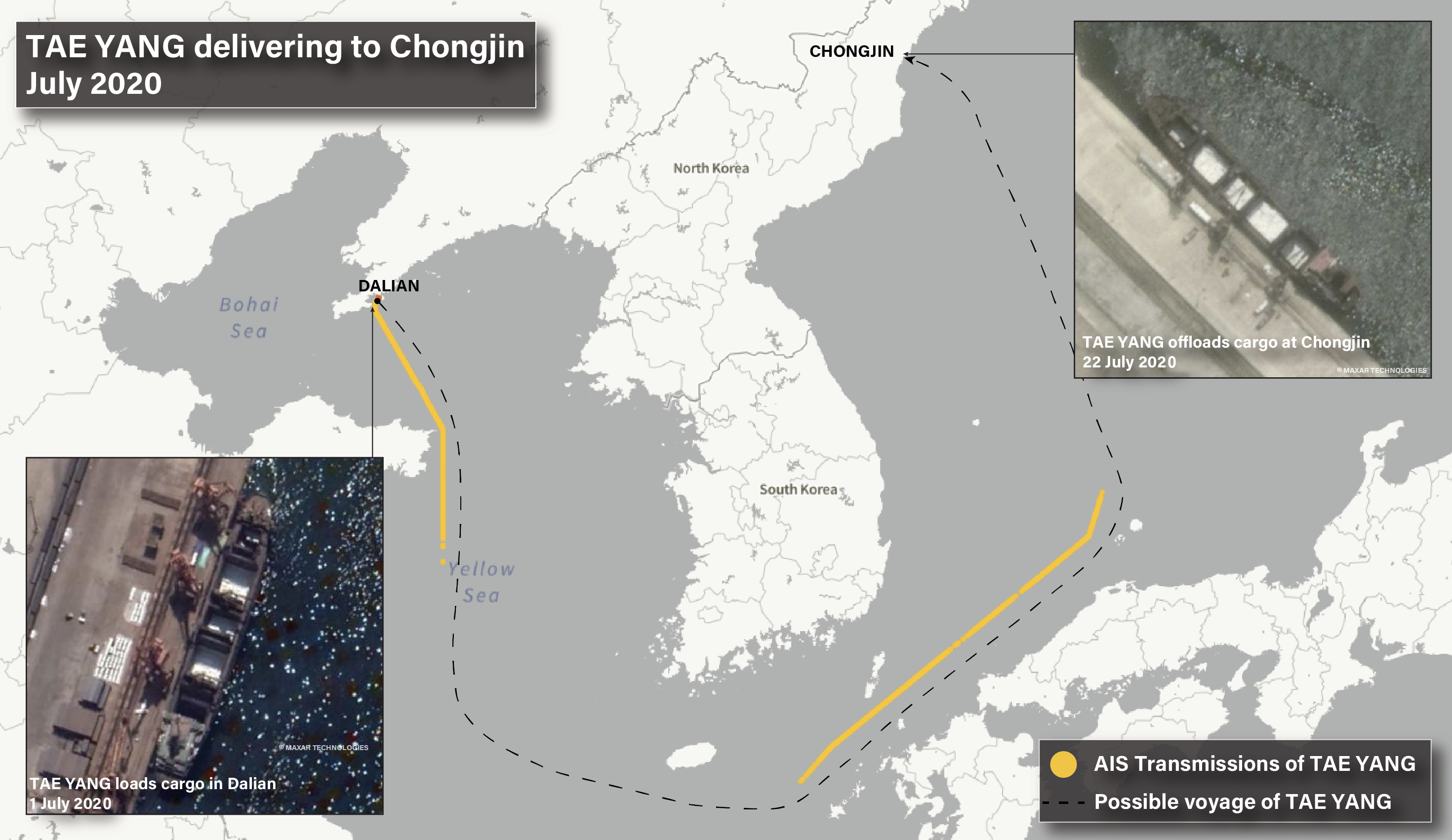 In mid-2020, several large DPRK-flagged bulk carriers, normally tasked with shipping coal and evading sanctions, were observed in satellite imagery analyzed by RUSI loading white sacks of cargo from ports in Dalian and Longkou in China. The Dalian terminal was the Dalian Beiliang Grain Terminal, a berth specifically used for transporting grain from large silos. The port of Longkou has also historically been used as a shipping route between North Korea and China. 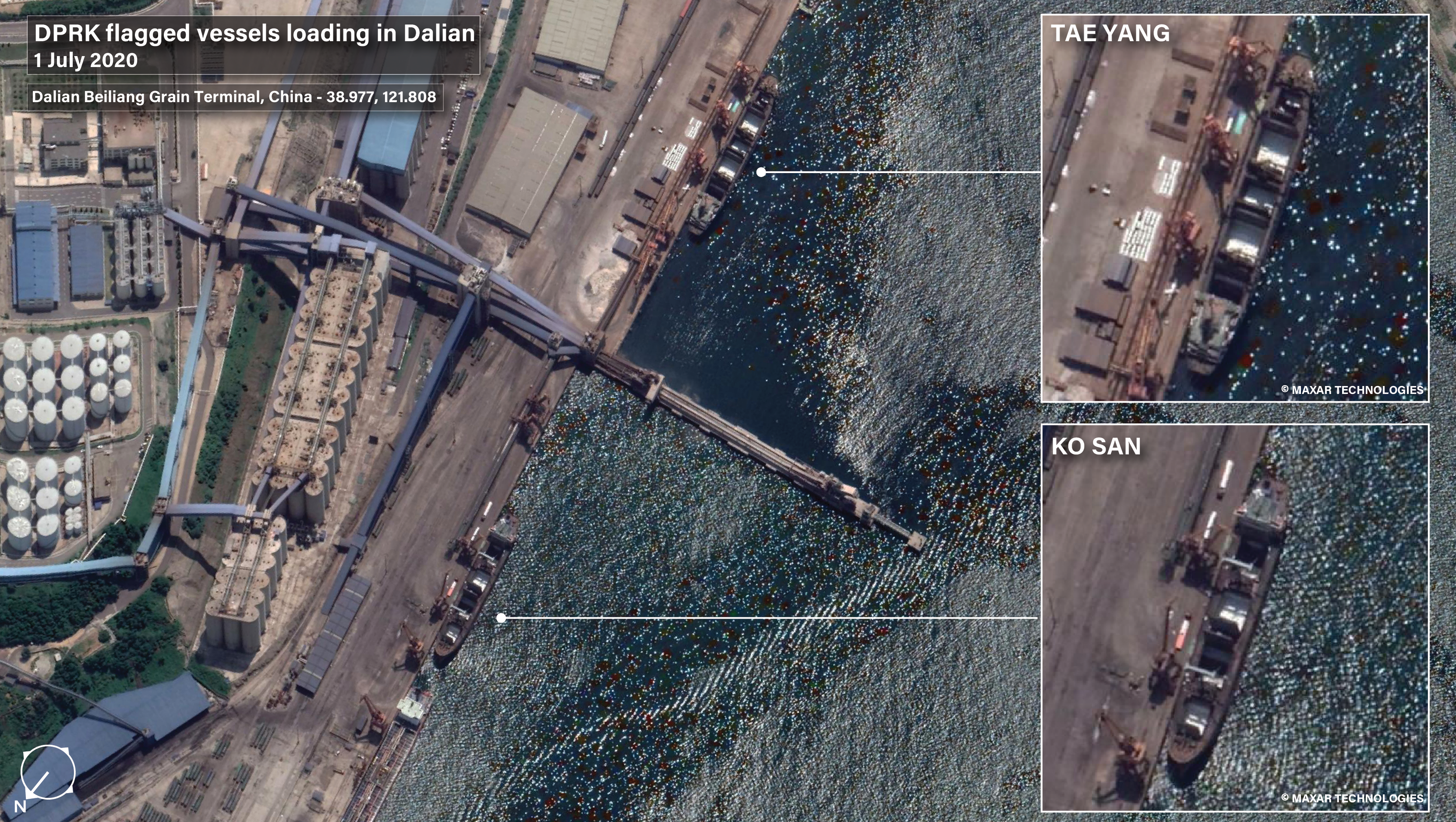 Aside from these possible deliveries, the U.N. Panel of Experts on North Korea, tasked with monitoring the sanctions regime, also noted “humanitarian aid cargo” shipments around the same time in 2020. White sacks could be observed being loaded onto the TAE PHYONG at Longkou port, at the same berth where the RINA and TAE PYONG 2 received their cargo in June 2021. “At least 11 other Democratic People’s Republic of Korea-flagged vessels have conducted similar voyages exporting coal and importing humanitarian cargo on the same voyage,” the panel’s latest report noted. 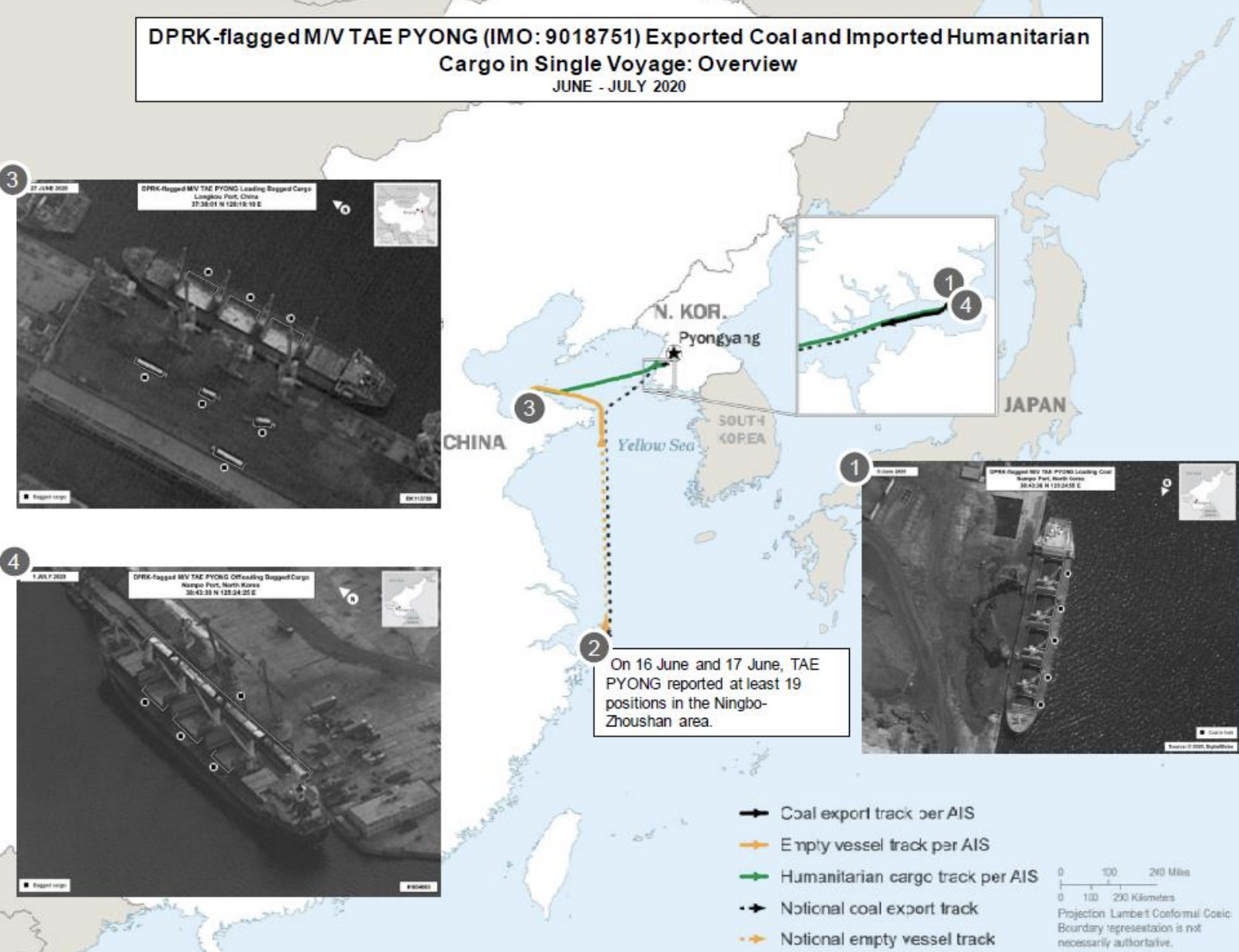 While not conclusive, the apparent quarantine routine indicates North Korea is taking coronavirus measures extremely seriously. The measures have not only limited North Korea’s ability to export resources for revenue generation and import petroleum, but also appear to be hampering possible shipments of aid into the country. U.N. reporting indicates that due to adverse weather and closed borders, North Korea may currently have an uncovered food gap of 860,000 metric tons. The U.N. warns that if the gap is not covered, North Korea could “experience a harsh lean period between Aug. and Oct. 2021.” Though North Korea’s border measures could have mitigated the spread of COVID-19 into the country, they appear to be slowing aid deliveries at a time when it seems they are needed most. Edited by Bryan Betts © Korea Risk Group. All rights reserved. |

October 09, 2026Oct 09, 2026

The ultimate resources for professionals working on North Korea
 SHARE
SHARE COPY LINK
 X
X MASTODON