  News After serious drops in trade, North Korean ship activity surges near ChinaAt least five DPRK-flagged ships not seen since 2017 reappeared near the Shandong Peninsula 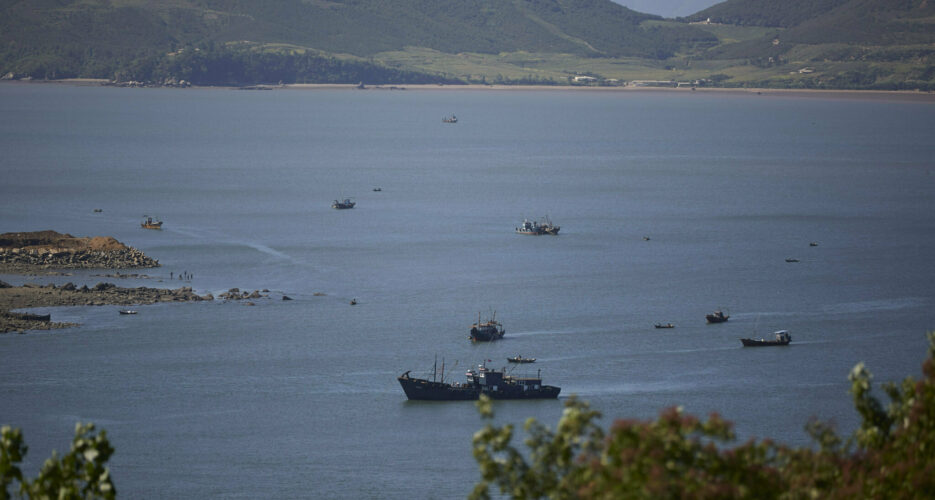 North Korean ships roved through the Yellow Sea and East Sea throughout late March, signaling a continued pickup in activity after trade appeared to take a serious hit amid the COVID-19 pandemic last year. At least 18 North Korea-linked vessels were detected between March 13 and March 29, according to Automatic Identification System (AIS) data. Five ships returned to the ship-tracking system after nearly four years of absence. The number of North Korean ships giving off AIS signals first started to increase in February, and many DPRK-flagged ships started lingering at Chinese commercial ports around that same time. Previously, official data from China and Russia suggested that North Korean trade plummeted for months on end last year. And in Aug. 2020, both the World Health Organization and UNICEF stated that the Dalian-Nampho water route was closed and that only COVID-19-related shipments were being allowed through the Sinuiju-Dandong land border. The increase in ship activity — especially at Chinese coal and iron ports like Longgang — could result in a cash bump for Pyongyang if the ships are exporting sanctioned coal. It’s unclear whether the same cargo ships will also import Chinese goods to North Korea, but a newly-published U.N. Panel of Experts report claimed that DPRK ships were offloading coal at Chinese smuggling hotspots before picking up “humanitarian aid cargo” at Chinese ports in 2020. 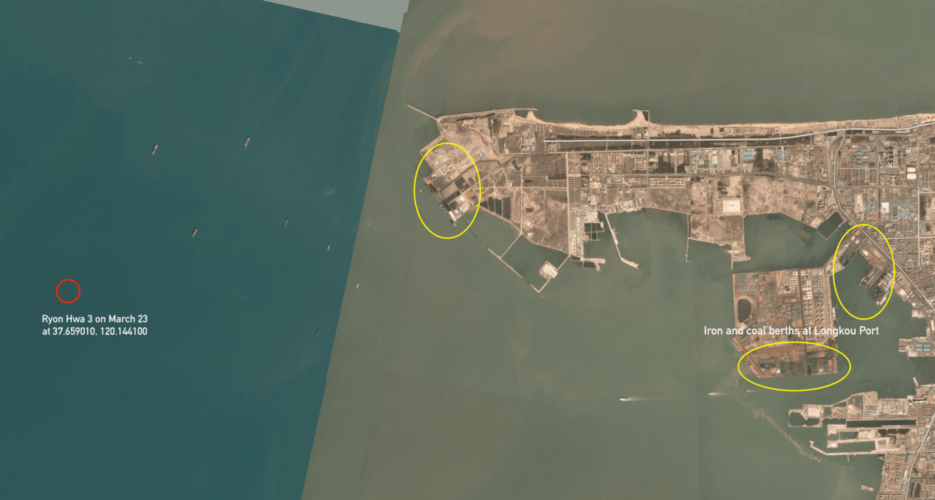 AIS activity of 18 North Korea-linked ships from Mar. 13-19 2021 | Image: NK Pro, kepler.gl While ships linked to North Korean trading are generally good at hiding or obscuring their identities on AIS, the return of five ships not seen since 2017 suggests that Pyongyang cares more about moving products quickly than doing it secretly. The Jin Hung 9, Tu Ru Bong, Hung Bong 3, Nam Pho 9 and Hwang Gum Phyong 2 were all last detected on AIS in 2017. However, that does not necessarily mean the five ships were in stasis for the last four years — for example, the Jin Hung 9 was detected on satellite imagery making illegal coal smuggling trips throughout the COVID-19 pandemic period in 2020, with its AIS off the entire time. Still, the surge in activity in late March 2021 puts the shipping industry at around the same level of activity as it was last year, when the DPRK was leaning heavily on its maritime fleet to move products as trade on its land borders contracted in the early stages of the global pandemic. Edited by Kelly Kasulis © Korea Risk Group. All rights reserved. |

October 08, 2026Oct 08, 2026

The ultimate resources for professionals working on North Korea
 SHARE
SHARE COPY LINK
 X
X MASTODON