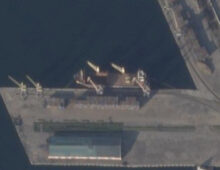
  News Taiwanese ship travels from N. Korean port to Chinese coal power plantMember states must notify UN of foreign coal shipments from the DPRK's Rason port 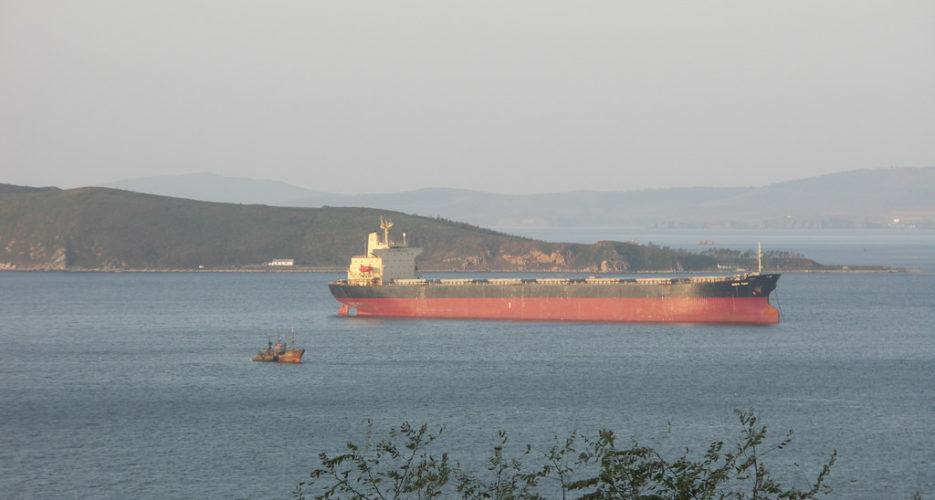 A large Taiwanese-owned ship recently visited a North Korean port in Rason before heading to a Chinese coal power plant near Shanghai, the NK Pro ship tracker shows. The vessel’s movements are in tension with a November UN resolution which restricts member states from importing North Korean coal, while also requiring them to notify the 1718 Committee of any non-DPRK coal transshipments from the Rason area. The 47,000-tonne Explorer announced its visit to the DPRK’s Rason Port on the March 10, according to data from Marine Traffic, before sailing to a terminal attached to the coal-fired Caojing Power Station in Shanghai. It remained at the power plant for nearly two days, then departed again for the DPRK’s northeastern regions. The ship was last seen on tracking systems on Wednesday, headed north towards the DPRK, with its transponder broadcasting its location as “Rason (KP)”. Tracking data from Marine Traffic also reveals how low the ship was sitting in the water, an indicator of whether or not vessels are loaded with cargo. The Explorer appeared to be sitting well below the waterline as it made for the Chinese coal plant on the outward trip from Rason. The ship was subsequently higher in the water after it left the facility on March 21.  The Marine Traffic data does not include information on the Explorer’s exact cargo. The bulk of North Korea’s coal exports are typically comprised of anthracite, a pure burning form of the commodity used in China’s industrial sector. But Chinese customs figures typically show some smaller exports of other coal types, while anthracite could also be blended with other kinds of coal for use in power plants. “I would think that China would use North Korean anthracite in industry, as news stories suggest, but probably also in some power plants, maybe blended with domestic and other imported coal,” David Von Hippel, senior researcher at the Nautilus Institute for Security and Sustainability told NK Pro.  Although tracking systems did not capture exactly where the Explorer berthed, Rason’s Rajin port does have a specific terminal for loading coal. Photographs taken after the Explorer left for Shanghai, and before its return to the North Korean port, indicate the facility is still in use. “There appears to be activity on at the rail-to-ship transshipment point. It is unclear exactly what that activity is, as imagery between March 9 and 20 shows the pile getting very slightly larger in some areas and disappearing from others,” Scott LaFoy, a Washington D.C.-based satellite imagery analyst, told NK Pro.   The Explorer’s movements come after Beijing suspended all imports of North Korean coal on February 18, in accordance with UN Resolution 2321, which limits member states from buying what is the DPRK’s most lucrative export. But establishing if and how the trade breached sanctions is more complex, as certain kinds of coal exports from Rajin port are exempted from the UN’s restrictions, provided the 1718 Committee has been notified. “Coal that the procuring State confirms on the basis of credible information has originated outside the DPRK and was transported through the DPRK solely for export from the Port of Rajin (Rason), provided that the State notifies the Committee in advance,” paragraph 26 of Resolution 2321 reads. The 1718 Committee did not respond to requests for comment on whether China had alerted the UN body to the imports, though there is no mention of any exemptions or applications on the committee’s website. Pinpointing the coal’s origin is also complicated by a relatively large Chinese and Russian business presence in the region. Both countries have invested in the DPRK’s northernmost port, with Russian companies also upgrading Rajin’s coal handling facilities. But even if the coal did not originate in North Korea, the UN’s 1718 Committee would still require notification of any shipments from the area. “If it can be shown that it is carrying coal, and that the 1718 Committee has not been notified, then the presumption would be that this is a breach,” a sanctions expert familiar with UN practices who asked to remain anonymous told NK Pro. Should it have originated in North Korea, the shipment would likely be breaking China’s own import ban, imposed after the foreign ministry said it had already approached the UN’s yearly quota last month. When contacted by NK Pro the Explorer’s owner – the Taipei-based Jacksoon Shipping – would not reveal any details of the trade, or who the coal belonged to. The state-owned China Power Investment Corporation – which runs the Caojing plant – also declined to provide further information on the Explorer’s movements. The Explorer’s trips between Rason and Shanghai follow an earlier NK Pro report which identified a smaller North Korean ship moving between different Chinese and North Korean coal terminals. The DPRK vessel left a large port in China, where it was docked at a berth used to unload bulk cargoes like coal. After returning to the DPRK, it sailed up the Taedong River, to a North Korea terminal which, satellite imagery indicates, only handles coal shipments. Edited by Oliver Hotham © Korea Risk Group. All rights reserved. |

October 08, 2026Oct 08, 2026

The ultimate resources for professionals working on North Korea
 SHARE
SHARE COPY LINK
 X
X MASTODON