  News Sailing in the dark: North Korean ship reappears after vanishing for 5 yearsDae Bong 1’s disappearance from tracking system suggests it sailed under false identity for years, expert says 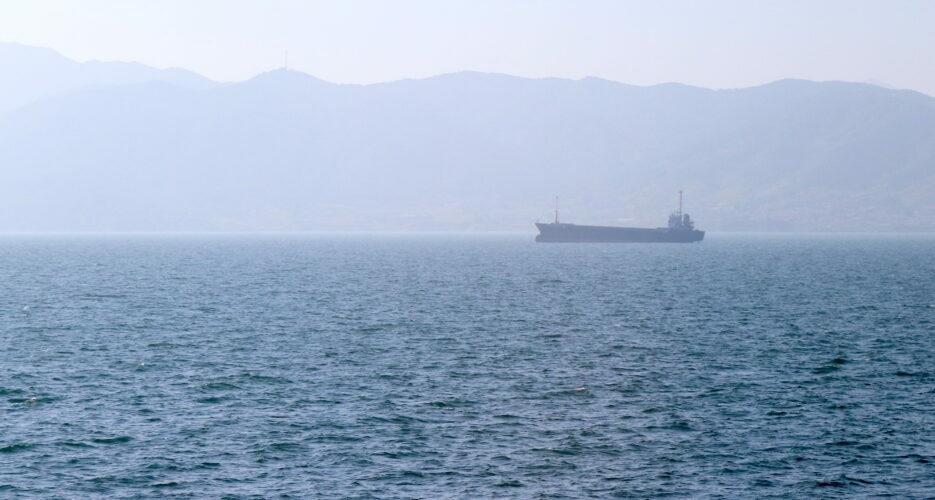 A North Korean ship recently reappeared after vanishing in Chinese waters five years ago, tracking data shows, raising questions about its whereabouts and possible involvement in sanctions evasion since then. Late last week, the 3,800-deadweight ton Dae Bong 1 (IMO 8408193) broadcasted over the automatic identification system (AIS) for the first time since July 2017 from inside Nampho’s lock gates, where it has since made several transmissions while idling outside a shipyard. AIS refers to a collection of ship-based radios, ground stations and satellites that provide vessel locations and other identifying information. Before last week, the Dae Bong 1’s was last seen in July 2017 outside of Caofeidian, a Chinese city on the western edge of the Bohai Sea some 370 miles (600 kilometers) from Nampho. 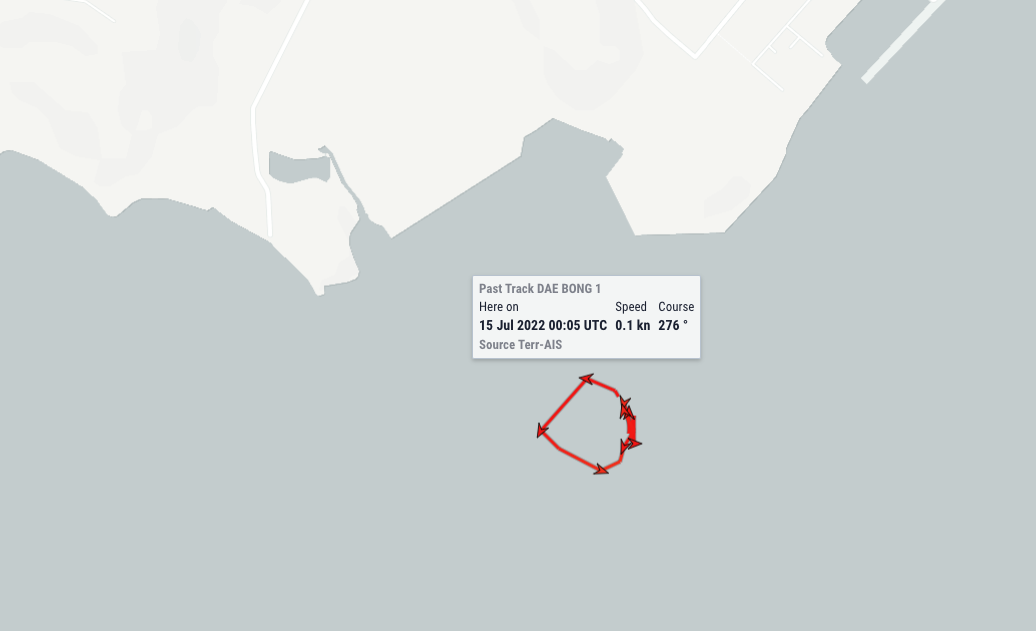 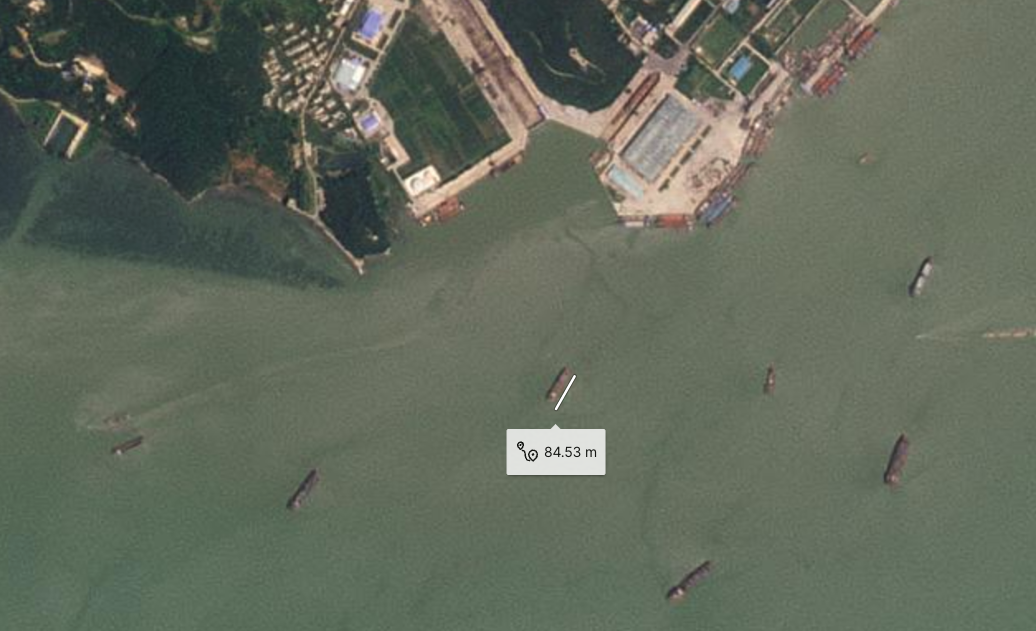 International maritime convention requires nearly all merchant vessels to broadcast their location around the clock. This applies especially in heavily trafficked stretches of water, such as the Bohai Sea where the vessel has historically been spotted, to avoid collisions. According to James Byrne, a researcher at the Royal United Services Institute (RUSI) who monitors North Korea’s fleet, the vessel has likely been sailing under a falsified AIS profile since it disappeared. “It’s very likely the Dae Bong 1 has been sailing as usual but simply without transmitting on its IMO registered identity,” Byrne said, pointing out that much of the North’s fleet has stopped transmitting their registered identities in recent years. “Doing so allows the Chinese authorities to maintain the fiction that vessels engaged in illicit activities are not visiting their waters, while also making those ships more difficult to track,” he told NK Pro. GOING DARK Sanctions monitors typically use AIS data to keep tabs on North Korean ships. Turning off one’s AIS transponder is an easy way to avoid detection, but five years is an exceptionally long period of time to sail in the dark. Maritime database Equasis shows North Korea acquired the ship between 2010-2011, meaning the Dae Bong 1 has spent nearly half of its time under Pyongyang’s control in radio silence. The Dae Bong 1 is not the first North Korea ship to reappear after an unusually long hiatus: The Tae Dong Mun (IMO 9011399) also vanished for five years, popping up again earlier this year at a Chinese coal port. According to U.S. government agencies, lengthy dark voyages such as these are “red flags” of illicit behavior. In the past, North Korean ships have routinely switched off their AIS transponders before engaging in ship-to-ship transfers with foreign vessels of sanctioned commodities such as coal and oil. Without AIS location data, it’s difficult to determine what routes the Dae Bong 1 may have been sailing since 2017. Just before it vanished, however, its final transmission came from a wharf in Caofeidian that the U.N. has linked to DPRK-origin coal sales. U.N. sanctions have prohibited North Korea from exporting high-grade anthracite coal since 2017, though researchers continue to see evidence of the trade nonetheless. Edited by Arius Derr © Korea Risk Group. All rights reserved. |

October 09, 2026Oct 09, 2026

The ultimate resources for professionals working on North Korea
 SHARE
SHARE COPY LINK
 X
X MASTODON