
  Analysis Rail trade with North Korea threatened as COVID surges in Chinese border cityChina reports rising cases in Dandong, but numbers yet to reach levels that led to last trade shutdown in April  COVID cases have surged in the last week in the largest Chinese city on the border with North Korea, according to government health authorities, posing a threat to a cross-border rail trade route that the two sides reopened in September. NK Pro analysis of Planet Labs satellite imagery shows trains continued to enter North Korea’s large freight disinfection and quarantine complex on the border through Nov. 26, around 10 days after cases spiked dramatically in China’s Liaoning Province. However, numbers began to rise in the border city of Dandong — situated right up against North Korea’s Sinuiju — around Nov. 23 and reached a high of 39 “asymptomatic” cases on Nov. 28, according to the Health Commission of Liaoning Province. Monday’s number could be a sign the route is in danger of closure, as it is the highest officially recorded in the city since May in the days just after China and North Korea agreed to shut down the trade route due to virus outbreaks on both sides of the border In the province as a whole, cases have also risen from just a handful each day earlier this month to now eight straight days over 100. Numbers reached 302 on Nov. 23, a high of 590 on Nov. 26 and 566 in the most recent report covering Nov. 28. 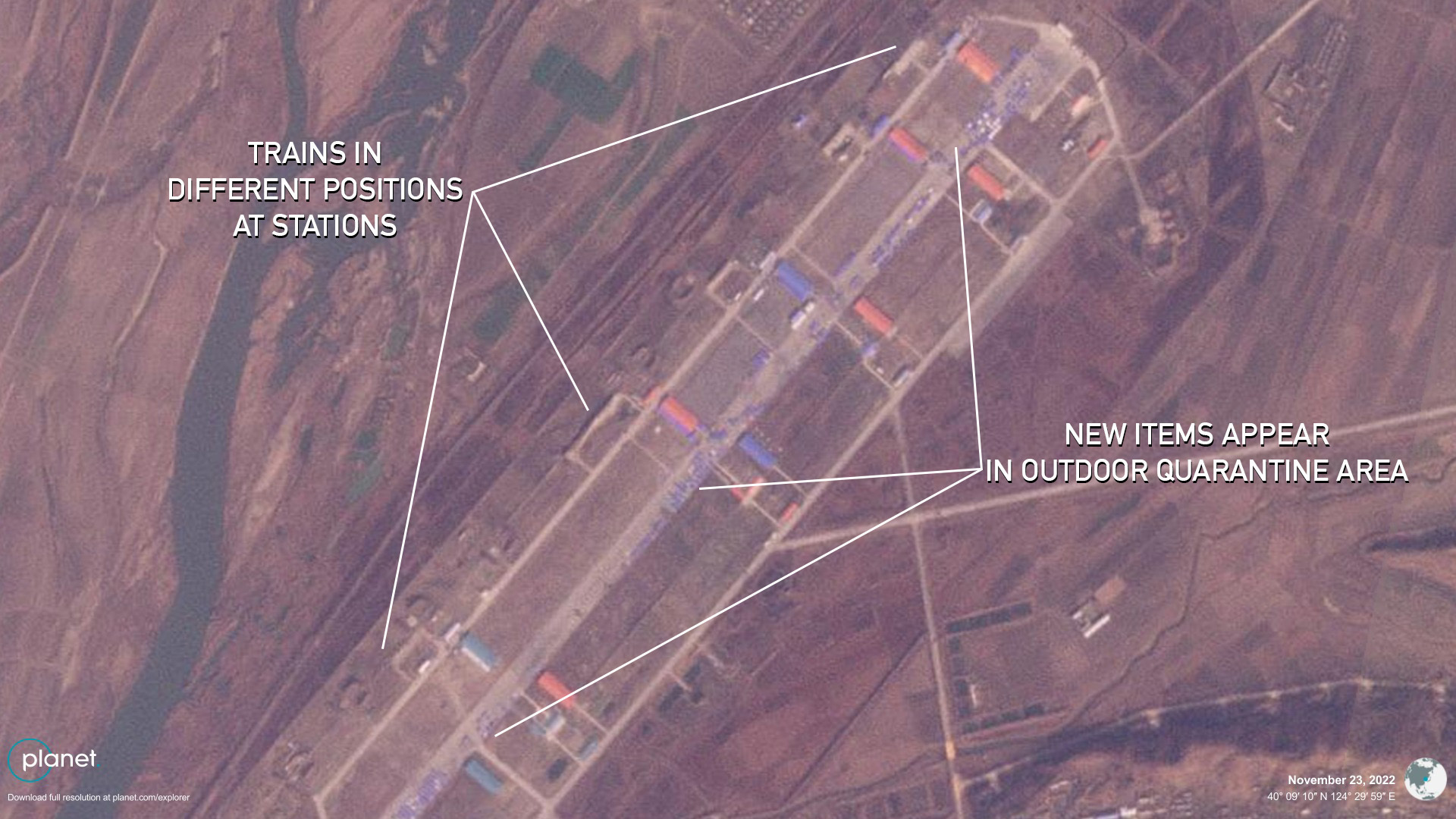 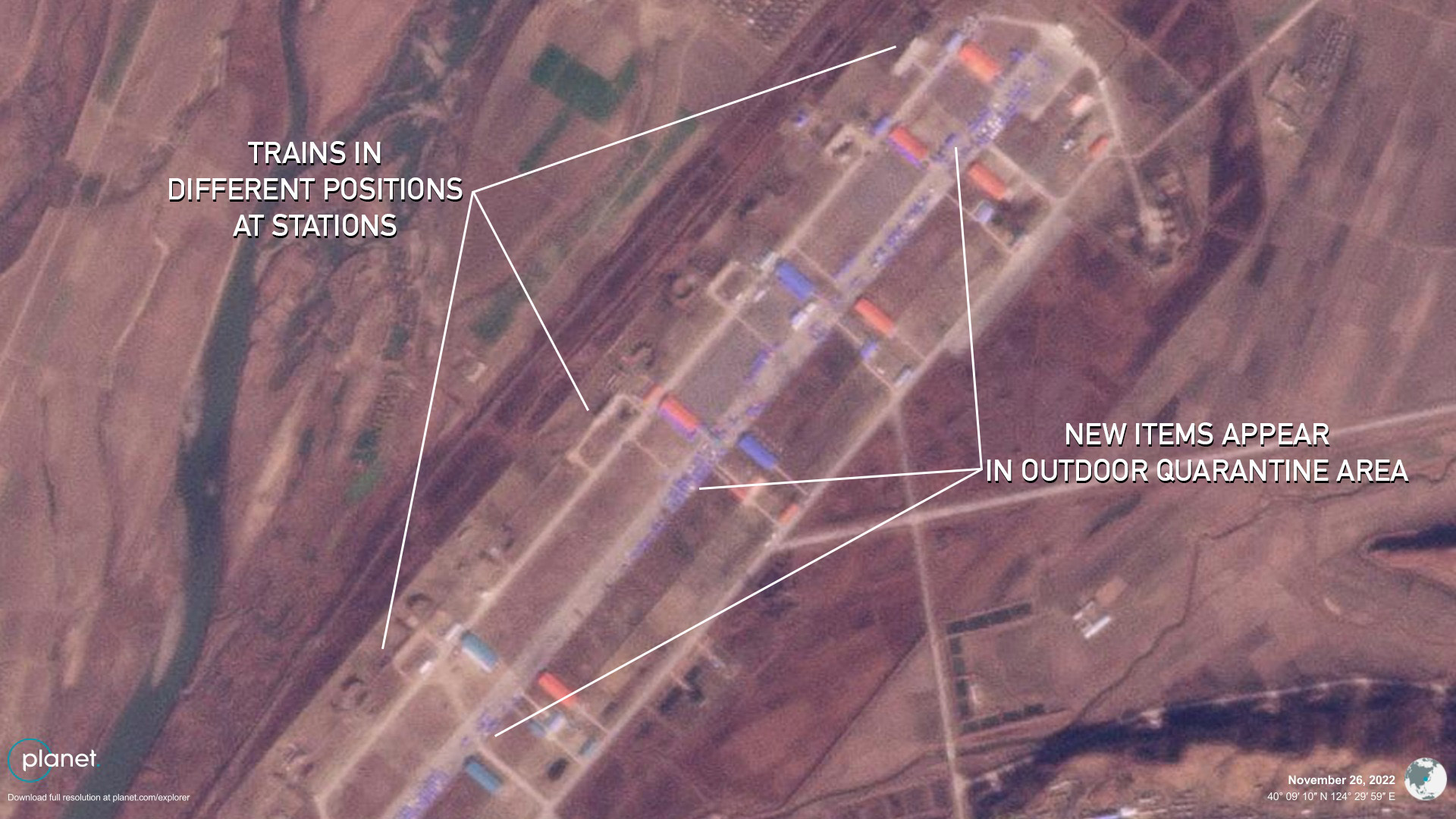 Trains appeared to change position at the Uiju disinfection and quarantine complex between Nov. 23 and 26 as new items appeared in the outdoor quarantine area, indicating trains continued to carry imports from China into the complex | Images: Planet Labs, edited by NK Pro Dandong had not officially gone into total lockdown as of Nov. 29, but city officials pleaded with the public late last week to comply with pandemic-related regulations to prevent a more severe outbreak. When the train route shut down in April, North Korea was facing its first official nationwide COVID outbreak while Dandong had experienced five straight days of over 30 asymptomatic cases per day. Numbers reached a high of 102 on April 26 and 91 a day before the closure. Dandong also recorded 25 confirmed symptomatic cases on April 25, four days before the shutdown, but only a handful per day in the weeks after that while asymptomatic cases fluctuated from a few to dozens per day until July. This suggests health authorities on both sides may have seen rising asymptomatic cases — similar to what’s happening now — as dangerous enough to merit a border shutdown. On the other hand, a more uncontrolled spread across the border in the North could have been the primary factor leading to the closure. The rail trade route reopened in late September amid months of no recorded COVID cases on either side of the border. North Korea has not reported any domestic COVID cases since declaring the virus was completely eliminated from the country in August. The DPRK converted an airport near the border city of Sinuiju into the highly secure disinfection complex last year and finally agreed with China in January this year to restart regular rail shipments that had been halted by pandemic measures in 2020. Chinese trade data shows North Korean imports of staples like medicine and rice jumped in October to their highest levels since the start of the pandemic, possibly owing to the train route reopening the previous month. Imagery also suggested DPRK authorities may have shortened the quarantine period at the disinfection complex for some items, meaning such staples would reach recipients sooner as the harsh winter approaches. Satellite imagery in the coming days should reveal if trains stop bringing shipments into the complex, while the Chinese foreign ministry is expected to confirm any change to the route’s operation, as it did in April and September. Meanwhile, China has been rocked by widespread anti-government and anti-lockdown protests in recent days, but none have been confirmed in Dandong. Edited by Arius Derr © Korea Risk Group. All rights reserved. |

October 27, 2026Oct 27, 2026

The ultimate resources for professionals working on North Korea
 SHARE
SHARE COPY LINK
 X
X MASTODON