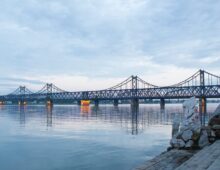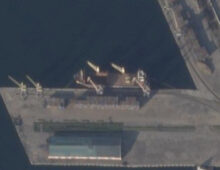
  Analysis One of North Korea’s largest cargo ships unloads illicit coal in China: ImageryApparent delivery comes as North Korea’s primary seaport sees increased activity in recent weeks  One of North Korea’s largest active service bulk carriers delivered coal to the Chinese port of Longkou and returned with white-bagged cargo, satellite imagery and ship tracking data suggest, in the latest sign North Korea could be engaged in a sort of barter system with China. In early March, satellite imagery from PlanetLabs showed a 175-180 meter-long vessel docked directly adjacent to a conveyor system, itself connected directly to a 285,000 square foot coal depot. The ship undocked sometime between March 7 and March 10, and on March 13, ship tracking data shows the Rina (IMO 9133290), a 28,700-ton bulk carrier, sailing away from Nampho and toward Longkou. 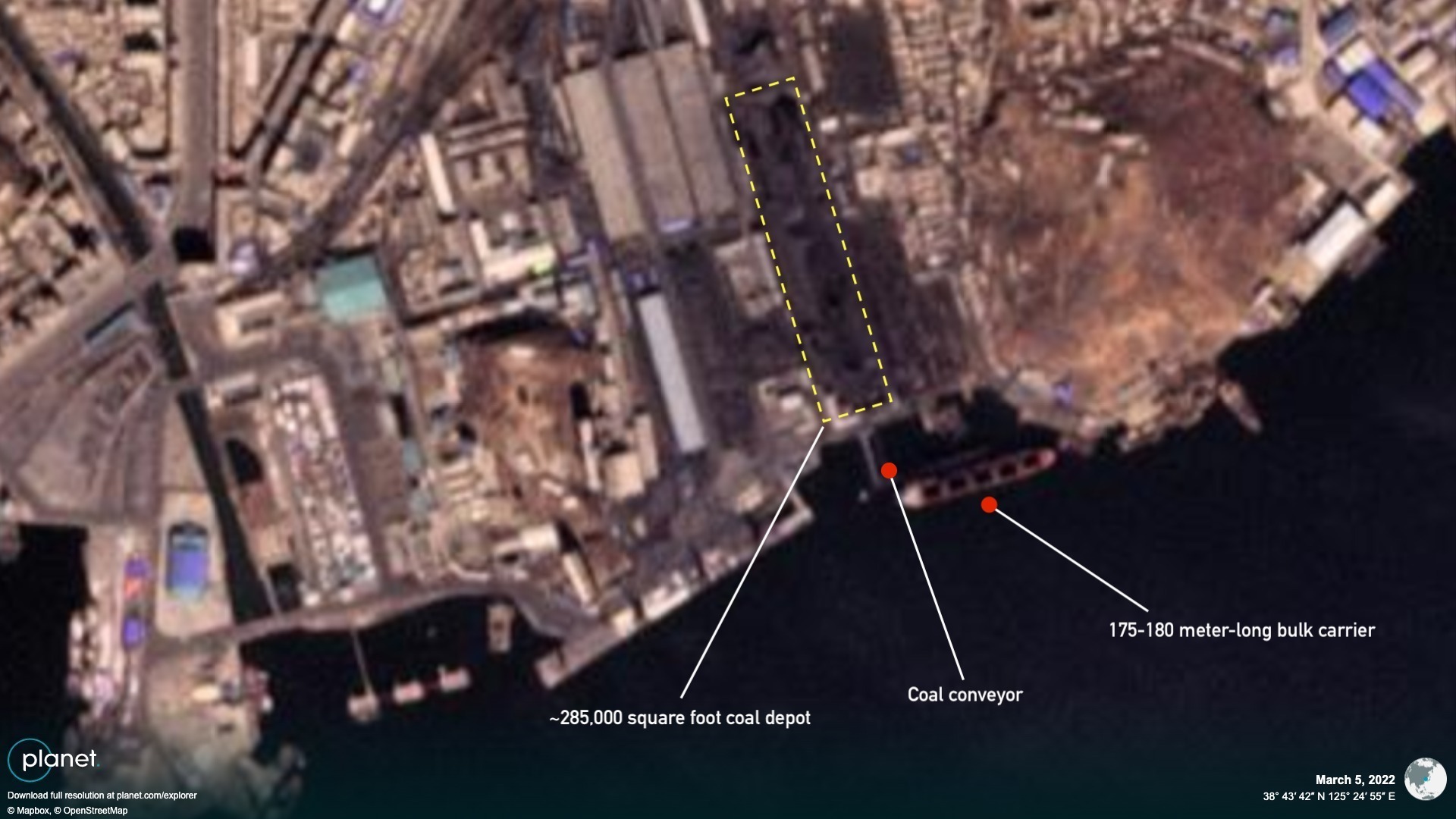 Previous U.N. reports have cited multiple instances of North Korean ships delivering illegal coal at Longkou (or Ningbo-Zhoushan in the south) and then loading up with fertilizer, rice and other humanitarian cargo before returning to Nampho. Oftentimes these transactions are conducted via barter, which U.N. sanctions monitors described in their latest report as a “common sanctions evasion tactic in order to avoid funds transferred recorded in the international financial system.“ According to VesselFinder, only three active North Korean bulk carriers are large enough to fit the dimensions of the vessel seen at Nampho in early March: the Rina, Mi Rae 1 (IMO 8649840) and Ryong Rim (IMO 8018912). The Mi Rae 1 has not broadcasted over its automatic identification system (AIS), a sort of GPS for ships, in the last year, while the Ryong Rim was last seen this January sailing north through the Yellow Sea. AIS data shows the Rina docked next to a known coal terminal at Longkou between March 29 and April 18. Satellite imagery from the same period shows a vessel matching both the Rina’s dimensions as well as the dimensions of the ship seen loading coal at Nampho in early March opening its massive holds over several days. 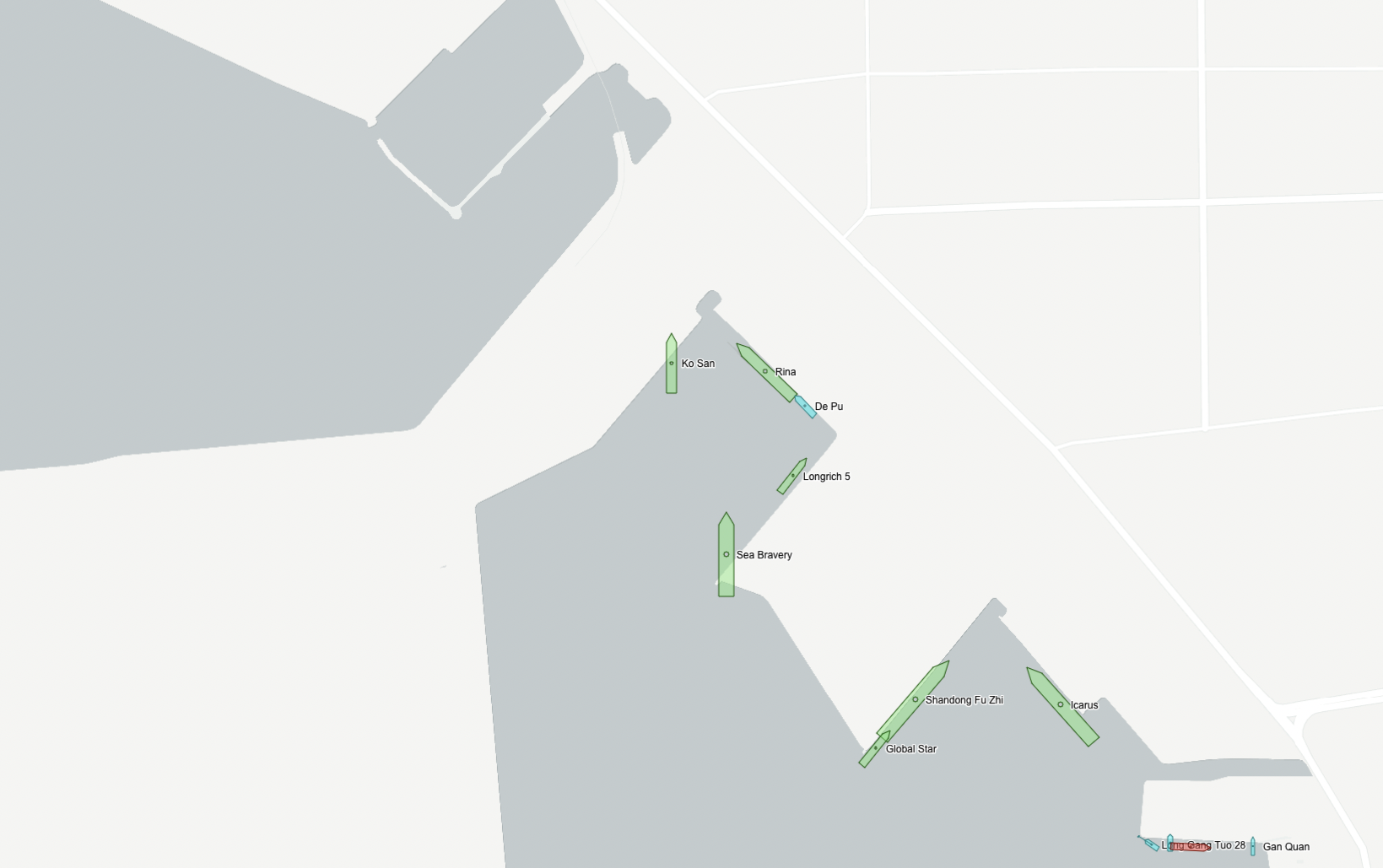 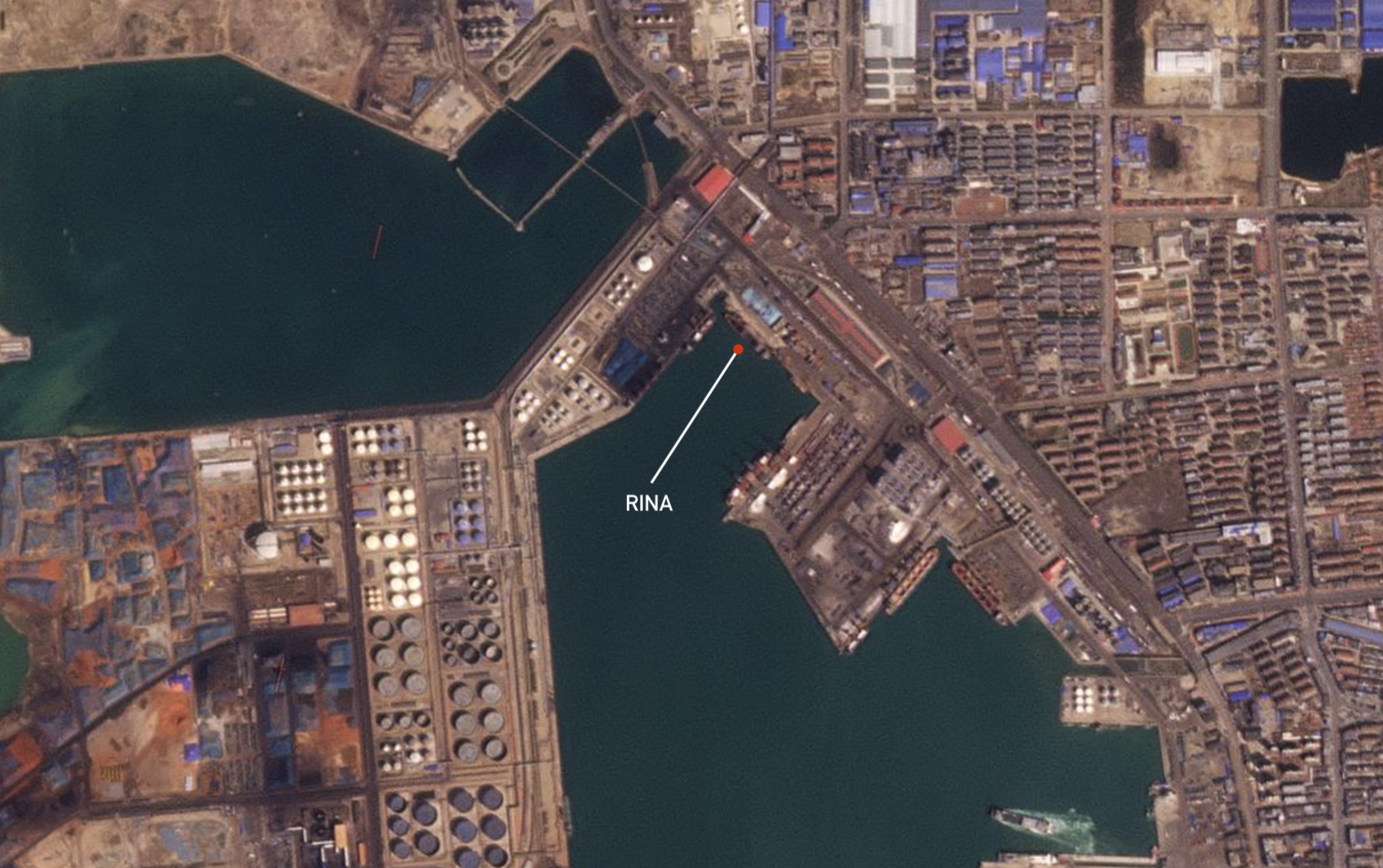 Dock equipment on the ship’s starboard side can be seen approaching each hold as they open in succession. Over the next week, the holds appear to fill with white-colored cargo, likely bags of some kind. 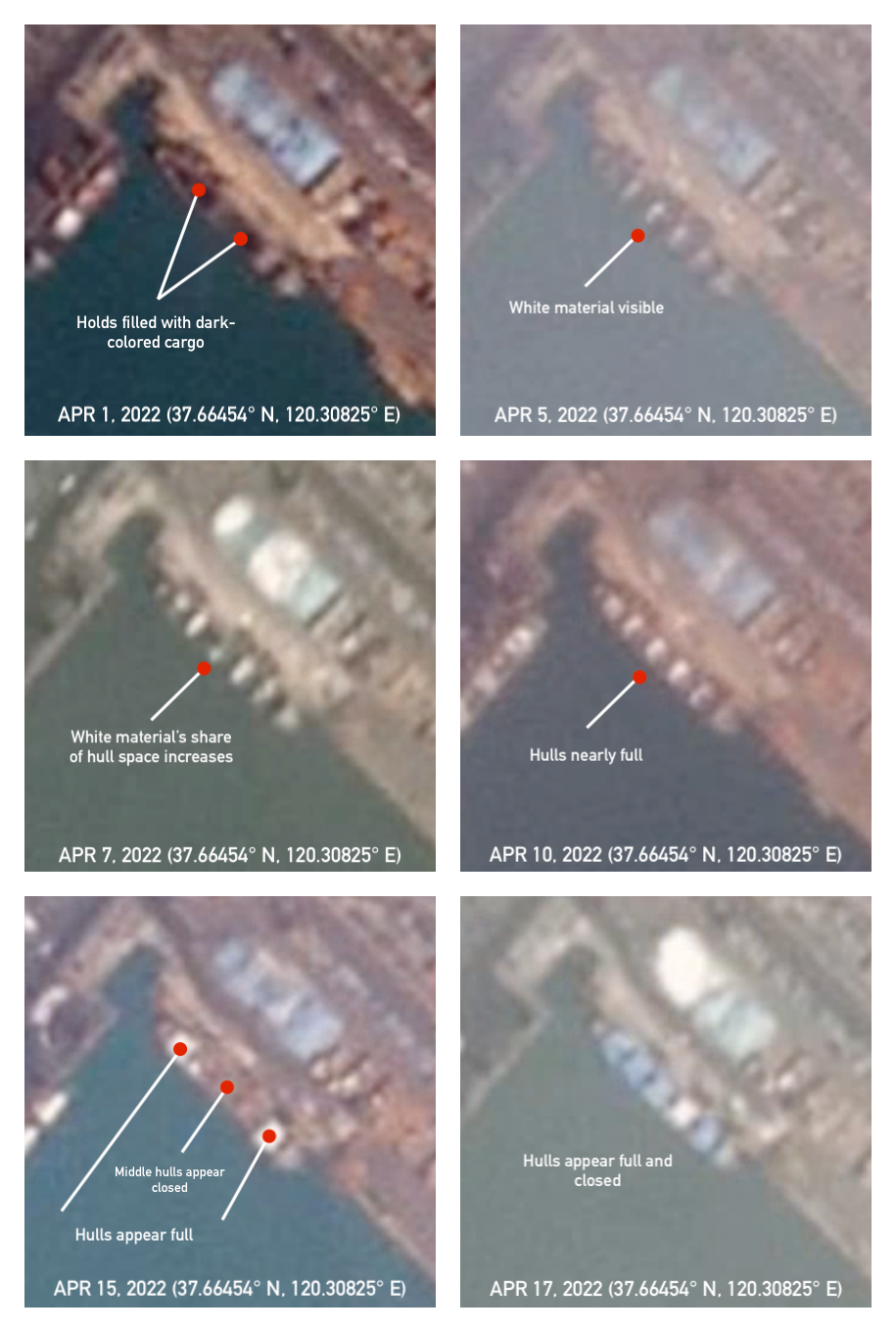 On April 17, two days before MarineTraffic data indicates the Rina departed Longkou, all but one of the ship’s five holds could be seen closed as loading concluded. The latest available AIS data shows the Rina appeared outside Nampho’s lock gates on Tuesday. It is expected to quarantine for several weeks before being allowed inside, barring any significant change in Pyongyang’s COVID-19 prevention rules. 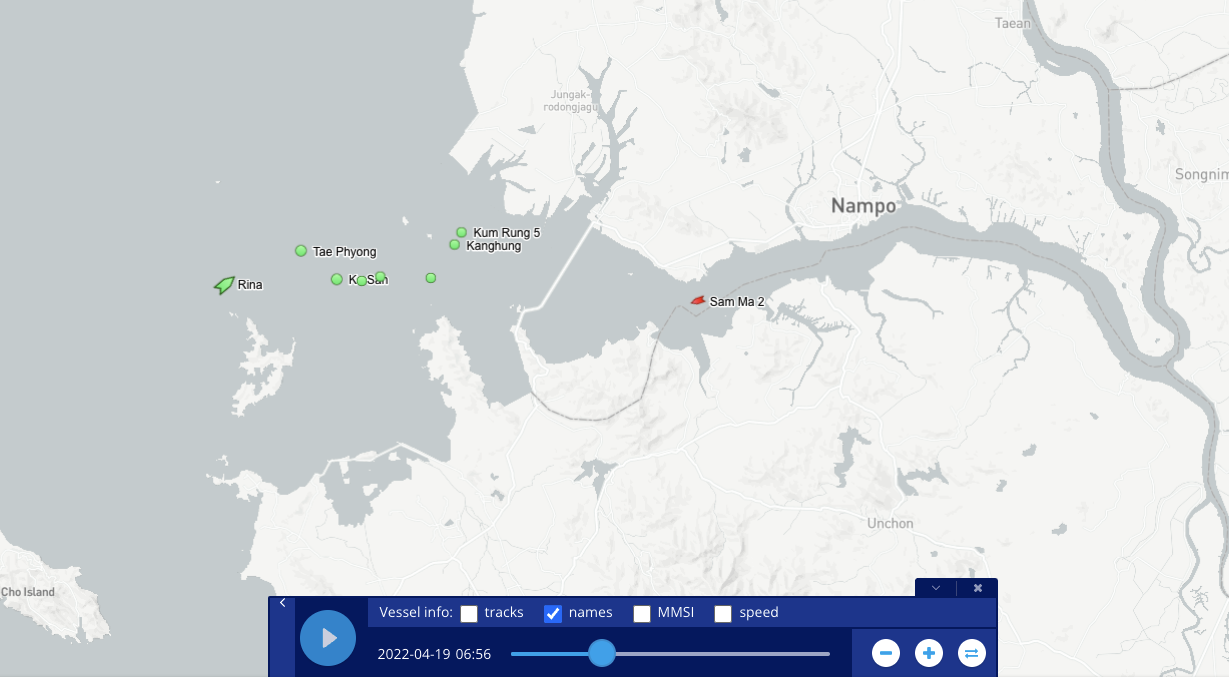 Medium- to high-resolution imagery is likely needed to verify the contents of the Rina while it was docked at Longkou, but its visit to a coal conveyor in Nampho directly before the voyage points to ann illicit delivery. The Rina’s visit also comes amid a general uptick in the number of ships observed outside of Nampho via terrestrial AIS, as well as at least one ship appearing to skip the weeks-long quarantine typically required for vessels traveling from foreign ports. Chinese customs data, meanwhile, shows North Korea has imported unusually low amounts of fertilizer in the first quarter of 2022, despite the start of several planting seasons in March. April’s import figures are expected in mid-May. Edited by Arius Derr © Korea Risk Group. All rights reserved. |

October 09, 2026Oct 09, 2026

The ultimate resources for professionals working on North Korea
 SHARE
SHARE COPY LINK
 X
X MASTODON