  Analysis North Korean ship appears to manipulate location data to move illegal coalTae Dong Gang 9 jumped hundreds of miles in GPS system within hours, the latest sign DPRK continues to flout sanctions 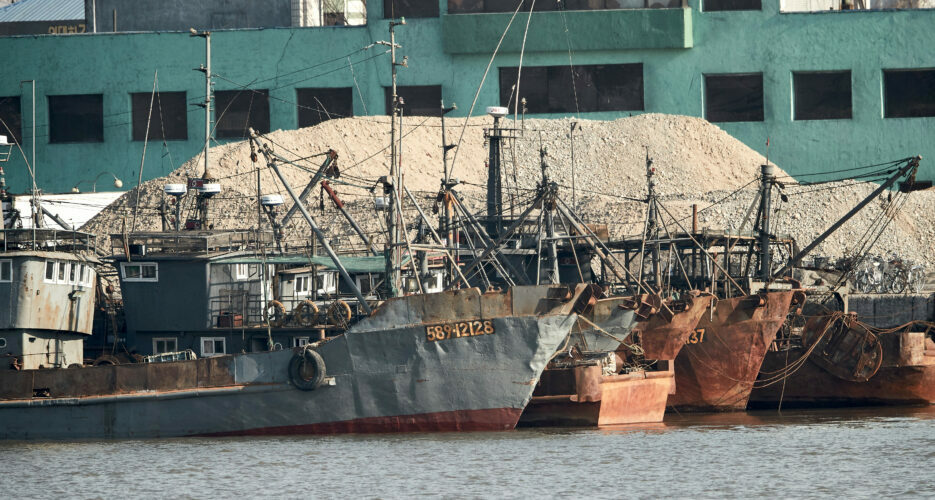 A North Korea-flagged ship not previously known to move coal appears to have manipulated its location data in an attempt to conceal an illegal shipment, NK Pro analysis of ship-tracking data and satellite imagery shows. The vessel, a 5,200-ton cargo vessel known as the Tae Dong Gang 9 (IMO 8408791), made the delivery to Longkou, a major Chinese seaport, on or around Feb. 5, using a range of tactics to obfuscate its activities. U.N. Security Council Resolution 2371, introduced in Aug. 2017 after Pyongyang tested multiple intercontinental ballistic missiles (ICBMs), explicitly bans the country from exporting coal, seafood, lead and iron ore. The Tae Dong Gang 9’s delivery demonstrates Pyongyang’s continued success in using well-known sanctions evasion tactics and comfort in using old ships for new purposes. THE FIRST SLIP-UP The Tae Dong Gang 9’s first appearance in 2022 came between Jan. 10 and Jan. 15, when it broadcasted over its automatic identification system (AIS) — a sort of GPS for ships — at least three times from within Nampho’s lock gates. While ships occasionally broadcast from outside the lock gates while waiting to complete mandatory quarantine, it’s rare to see vessels within the port. During this period, the ship also appeared to erratically jump hundreds of miles between Nampho and Longkou. In one instance, the ship transmitted from Longkou just 5 hours after it claimed to arrive in Nampho, an impossibility that would have required the ship to sail four times faster than its max speed, according to maritime database MarineTraffic. Katsu Furukawa, a former maritime specialist for the U.N. panel that monitors North Korean sanctions evasion, said erratic location data could be a sign of “spoofing,” a technique where ships occasionally assume the identity of other vessels over AIS to obscure their location. On Jan. 16, one day after it appeared in Nampho, two ships matching the Tae Dong Gang 9’s profile docked next to the port’s primary coal hub, according to low-resolution satellite imagery. 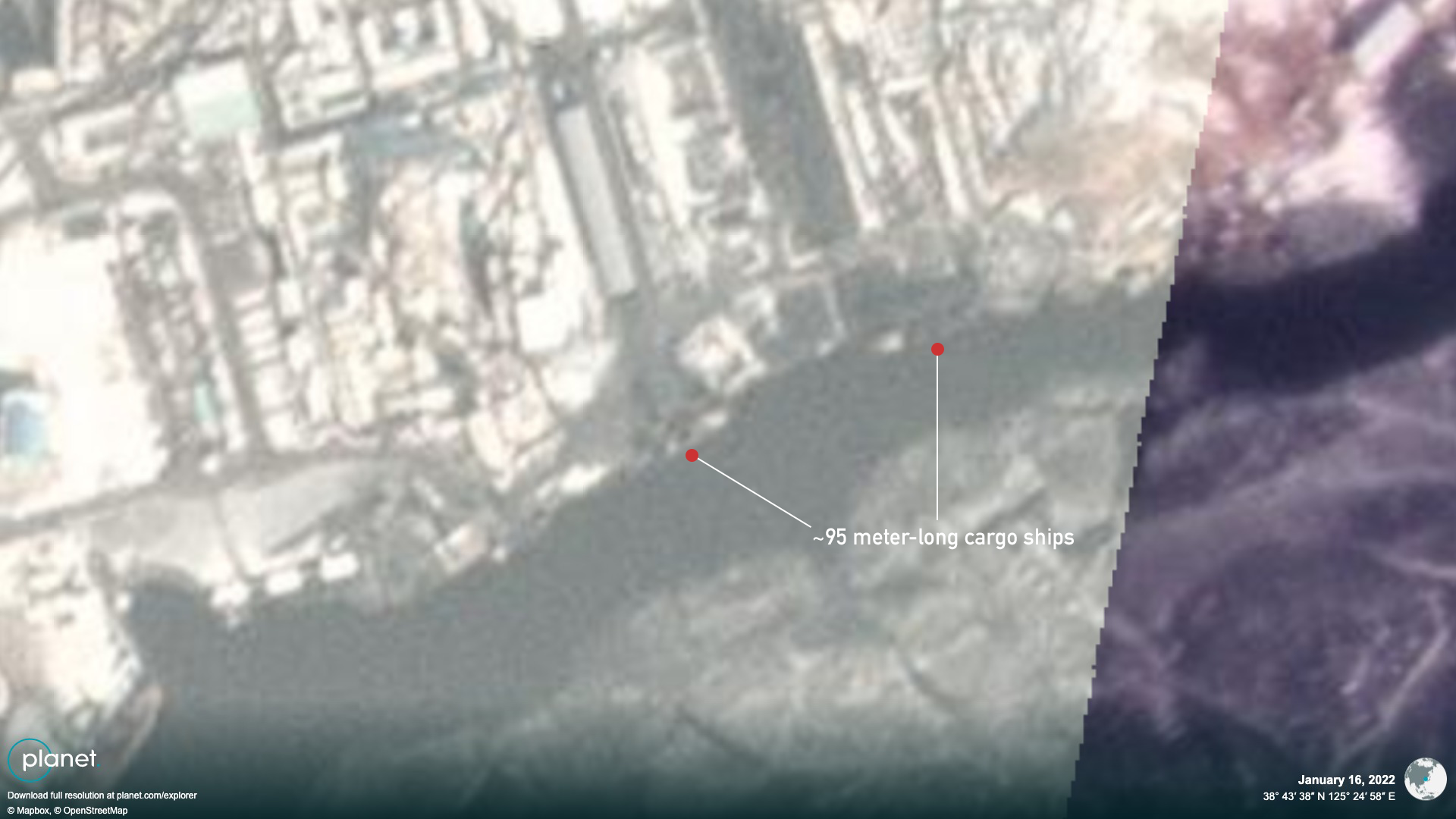 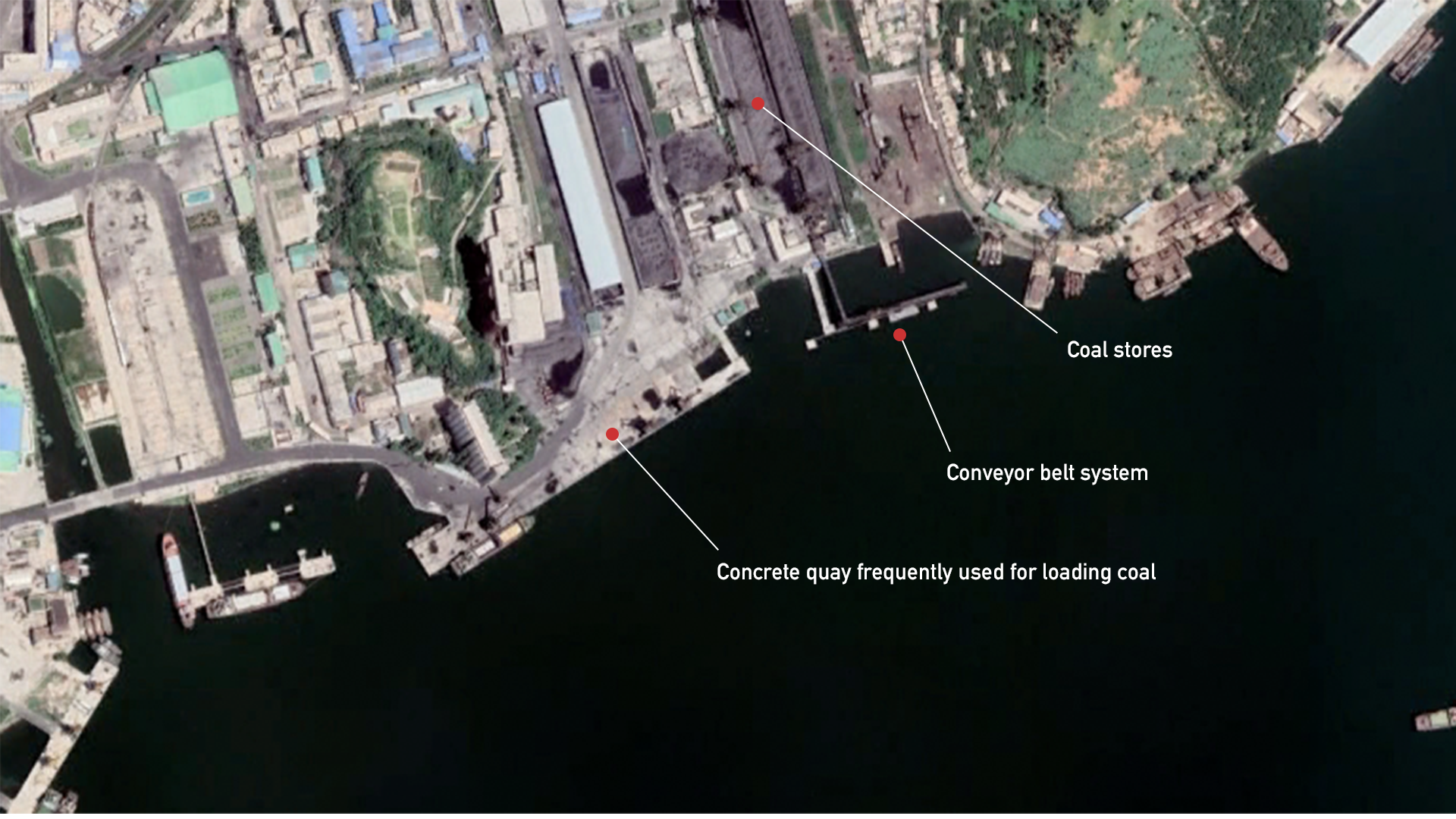 One of the vessels appears next to a coal conveyor belt with its holds open, while another is berthed at a concrete pier also used to load coal. Both ships left by Jan. 18. AIS data shows the Tae Dong Gang 9 likely anchored outside of Longkou around Jan. 19-20, at which point it entered a holding pattern common for vessels waiting to dock. Two weeks later, the ship broadcast that it was making its way into the port, finally docking at a known Chinese coal depot on Feb. 5. Satellite imagery captured on Feb. 6 shows a vessel matching the Tae Dong Gang 9’s profile docked at the coal depot with its holds open, revealing what appears to be a dark substance. AIS data also shows the Tae Dong Gang 9 docked there. 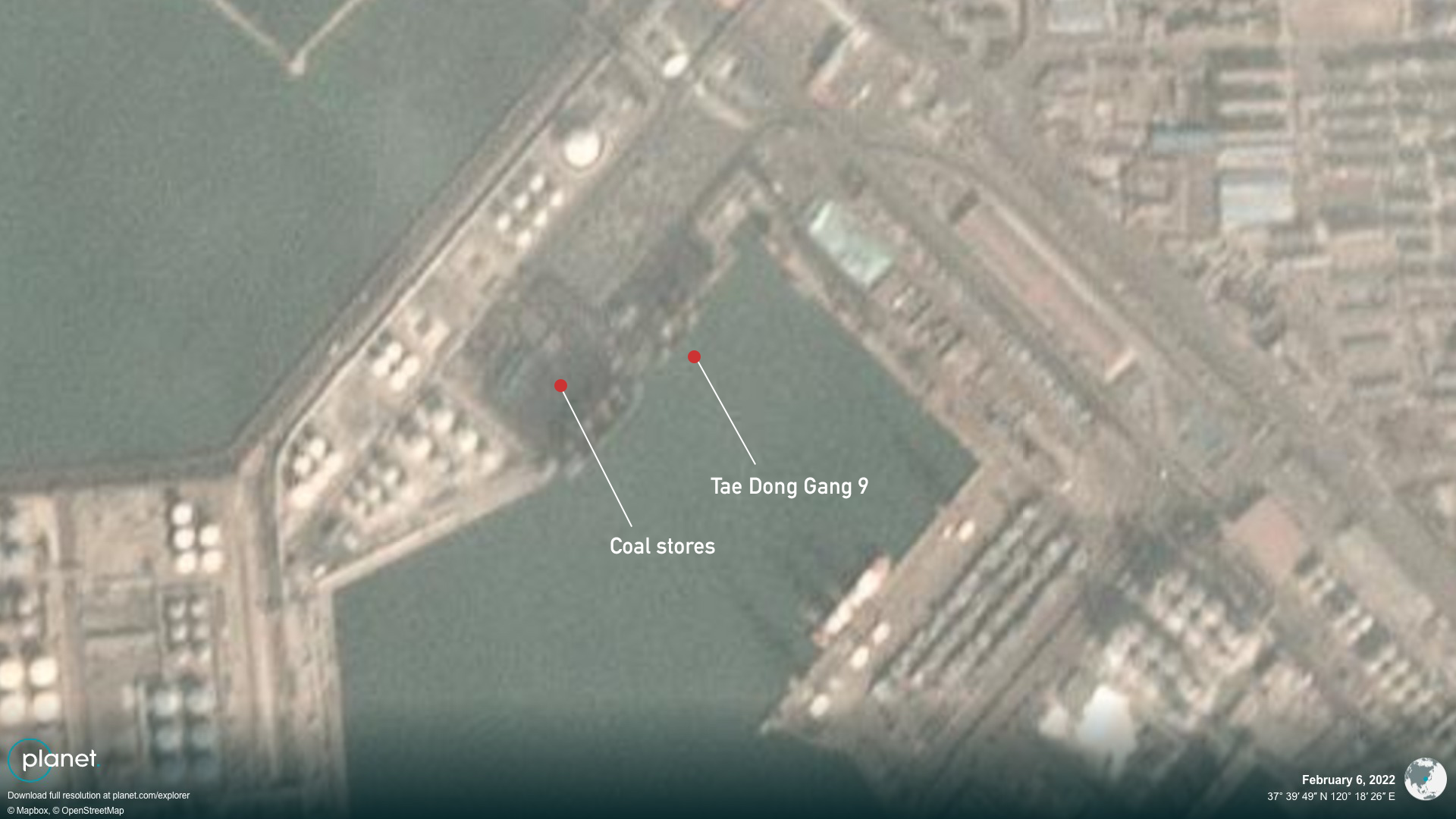 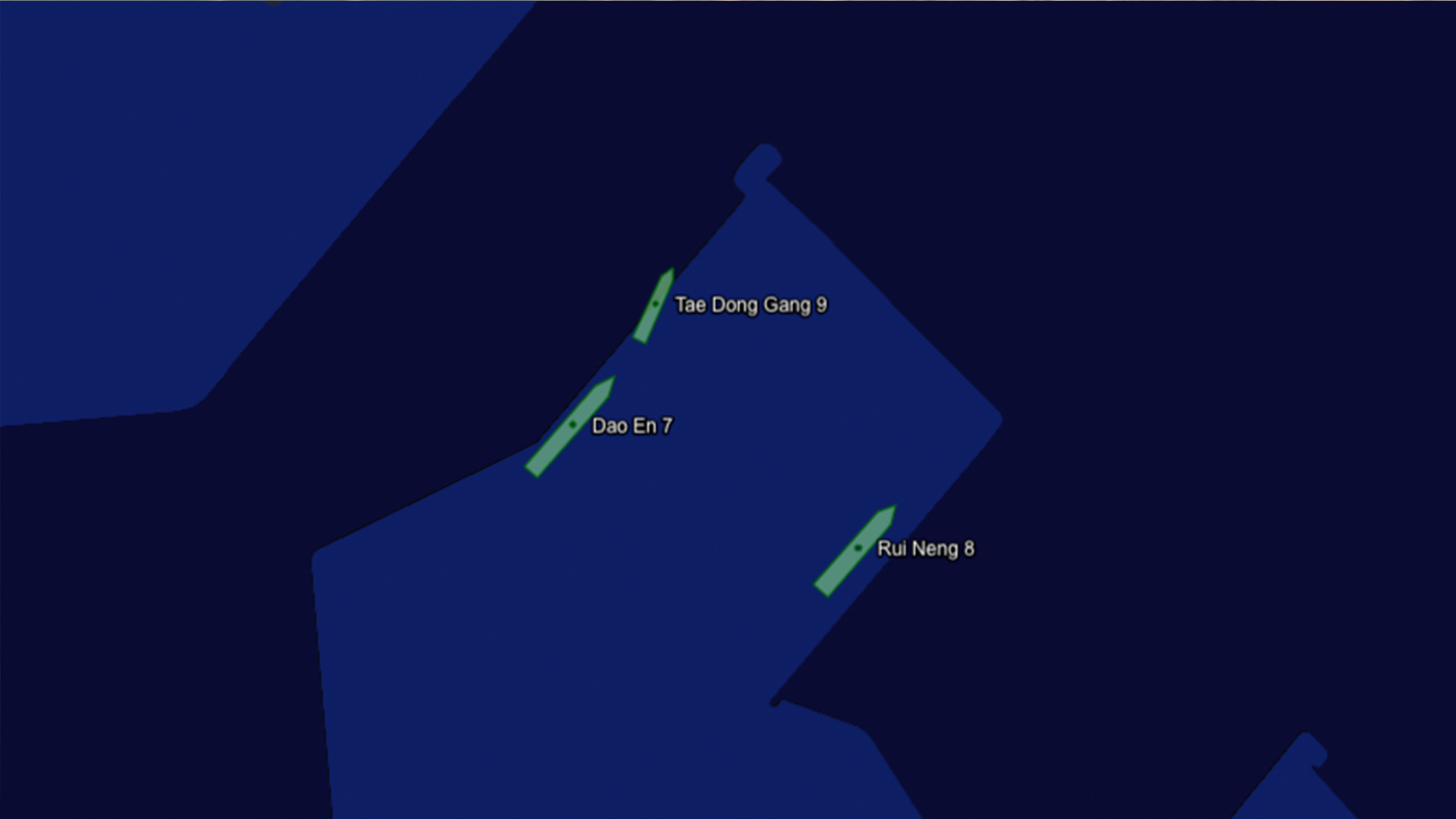 According to a 2016 report from the Center for Advanced Defense Studies (C4ADS), this berth is part of a coal terminal frequented by vessels associated with the Liaoning Hongxiang Group shipping network. Liaoning Hongxiang’s website is no longer accessible, but an archived version of the site from 2016 shows the company explicitly stated its desire to become an import-export hub for China and North Korea. THE ROT RUNS DEEP The possible coal delivery appears to be the latest example of North Korea flouting international sanctions to fund its weapons programs. While the country’s illicit fuel trade was essentially dormant in early 2021, an analysis from the Royal United Services Institute (RUSI) found that fuel trade ramped up beginning in June, likely due to nagging fuel shortages that drove up prices in much of the country. Another spike in exports occurred in October, when Beijing ordered provincial governments to secure fuel “at all cost” to meet a demand spike. In the case of the Tae Dong Gang 9, the ship’s unsanctioned status means its presence in Longkou likely received less scrutiny than vessels already known to move illicit cargo. Still, the ship appears to sport ties with other entities known to conduct illegal activity at sea on behalf of Pyongyang. For instance, Myohyang Taedonggang Shipping Co, which owns the Tae Dong Gang 9, operates at least two other vessels: the Tae Dong Gang 1 (IMO 8672110) and the Tae Dong Gang 3 (IMO 8730998). Ship ownership records from Equasis show the Tae Dong Gang 1 was previously owned by Aoyang Marine Group Ltd. According to C4ADS’ 2019 report “Lux & Loaded,” Aoyang Marine Group Ltd has connections to Ocean Maritime Management (OMM), a North Korean company sanctioned by the U.S., U.N. and E.U. for shipping arms from Cuba to North Korea. Aoyang Marine Group Ltd was also implicated in an elaborate scheme to illegally import armored Mercedes Benz vehicles into North Korea for use by Kim Jong Un himself, according to the same report. The Tae Dong Gang 3 has not broadcast over AIS since Aug. 2019, but the draft of an upcoming U.N. report seen by NK Pro indicates the ship is also actively moving illegal coal. Edited by Bryan Betts © Korea Risk Group. All rights reserved. |

October 09, 2026Oct 09, 2026

The ultimate resources for professionals working on North Korea
 SHARE
SHARE COPY LINK
 X
X MASTODON