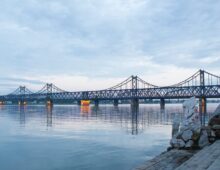
  News North Korean imports hit 20-month high as shipments of medicine jumpJanuary resumption of rail trade appears to lift imports, though totals still well below pre-pandemic years 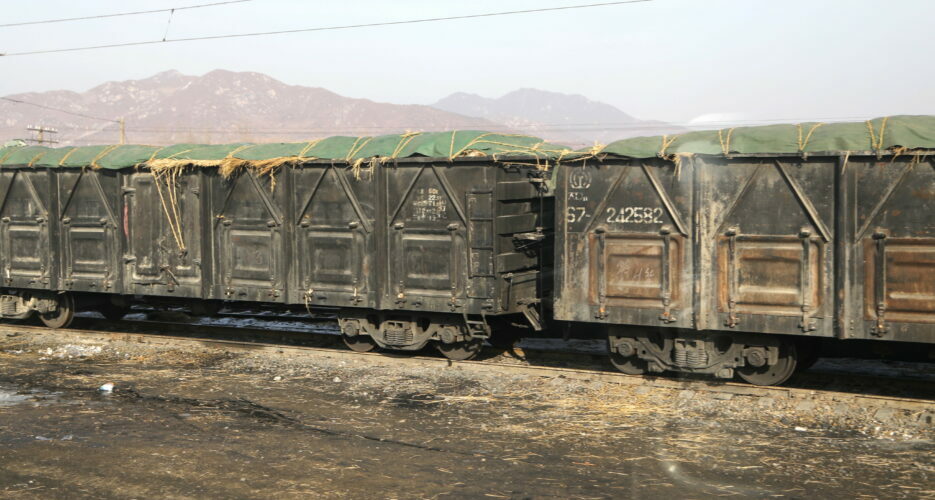 North Korea’s trade with China continued to rebound from record lows to reach the highest level in nearly two years, recent Chinese trada data shows, as renewed overland cargo shipments since January appeared to buoy imports. Imports of pharmaceuticals in particular ticked up in January and February, pointing to the possible prioritization of medicine and other essentials. According to data from China’s General Administration of Customs (GAC), North Korea imported $57.5 million worth of goods from China in January and $59 million worth in February — the highest level since June 2020. Exports to China dropped sharply, however, from $19 million to $2 million during the same period. GAC data also reveals that North Korea appeared to increase imports of pharmaceuticals (HS Code 31), buying $5.2 million worth in January and $5.3 million worth in February. By comparison, the country imported $3.2 and $2.7 million worth of medicine in Nov. and Dec. 2021. Plastics for industrial and packaging applications made up the country’s top imports in January and February, worth $6.5 and $13 million, respectively. Meanwhile, exports dropped sharply during the same period from $18 million to just $2 million. Although imports from China have risen steadily since mid-2021, North Korea economy expert and NK Pro contributor Peter Ward cautioned that overall trade remains just a fraction of pre-pandemic levels, making it difficult to analyze official statistics. The latest figures come a month and a half after China and North Korea officially resumed overland freight trade between Dandong and Sinuiju. Until then, Pyongyang had imposed a near-total ban on the movement of people and goods across its borders in an effort to insulate itself from the spread of COVID-19. Chinese customs data does not differentiate between trade via rail and sea. An NK Pro analysis of low-resolution satellite imagery, however, shows that goods continued to accrue at the disinfection center near Sinuiju between January and February, suggesting rail trade has continued apace and now makes up a modest portion of North Korea’s imports. Low-resolution satellite imagery shows cargo accumulating at a major disinfection center near Sinuiju between Jan. and Feb. 2022 | Images: Planet Labs PBH Japanese media footage aired in mid-January appeared to show Chinese workers loading trains bound for Sinuiju with intravenous glucose solution. GAC data also shows that roughly 80% of all pharmaceutical imports came from China’s Liaoning Province — which includes the city of Dandong — suggesting at least some of the increase of medicine imports came via rail. Chinese customs data only includes official trade. The smuggling of oil, coal and other illicit commodities are not included, even though they likely make up a large part of the country’s overall trade. UNSTABLE IMPORTS AND COVID PARANOIA According to Go Myong-hyun, a research fellow at the Asan Institute for Policy Studies, the recent swings in North Korea’s exports to China are likely due in large part to the occasional sale of “big ticket” items to China. The most recent data, for instance, shows North Korea exported $11.2 million worth of molybdenum, tungsten and silks in January. While exports of silk are relatively common, historical data shows North Korea exported just $600,000 worth of tungsten in 2021 and no molybdenum at all. Go warned, however, that Pyongyang remains highly sensitive to the virus situation in China, where officials are currently scrambling to contain cluster infections across the country, including in the northeastern province of Jilin, which shares a border with North Korea. “North Korea is always taking the most paranoid reading of anything when it comes to the pandemic,” he explained. “I’m sure they see [China’s case numbers] and multiply them by a factor of 100.” This paranoia has fueled consistently stringent border controls in North Korea, a country experts say is poorly equipped to deal with a runaway pandemic without vaccines. For that reason, Kee Park, director of Korea Health Policy Project at Harvard Medical School, previously told NK News that outbreaks in bordering Chinese provinces could lead to even harsher crackdowns, including on recently renewed rail-based trade at the border. Edited by Arius Derr © Korea Risk Group. All rights reserved. |

October 08, 2026Oct 08, 2026

The ultimate resources for professionals working on North Korea
 SHARE
SHARE COPY LINK
 X
X MASTODON