  Investigations North Korea tearing down gray markets and replacing with ‘20×10’ facilitiesSatellite imagery shows reorganization of contentious ‘jangmadang’ markets under Kim Jong Un’s pet project  North Korea is tearing down long-standing town markets and replacing them with standardized facilities under leader Kim Jong Un’s “20×10” rural development project, according to NK Pro analysis of satellite imagery. Like existing markets in almost every town in North Korea, the replacements are also outdoor covered facilities, but they are built at new “leisure complexes” (종합봉사소, literally “general service center”) that Kim has mandated for construction in at least 20 counties and cities per year. If old town markets continue to be replaced and brought under stronger regulations at Kim’s pet project sites in every county and city, the change could mark the biggest intervention into the country’s contentious free markets in years. 
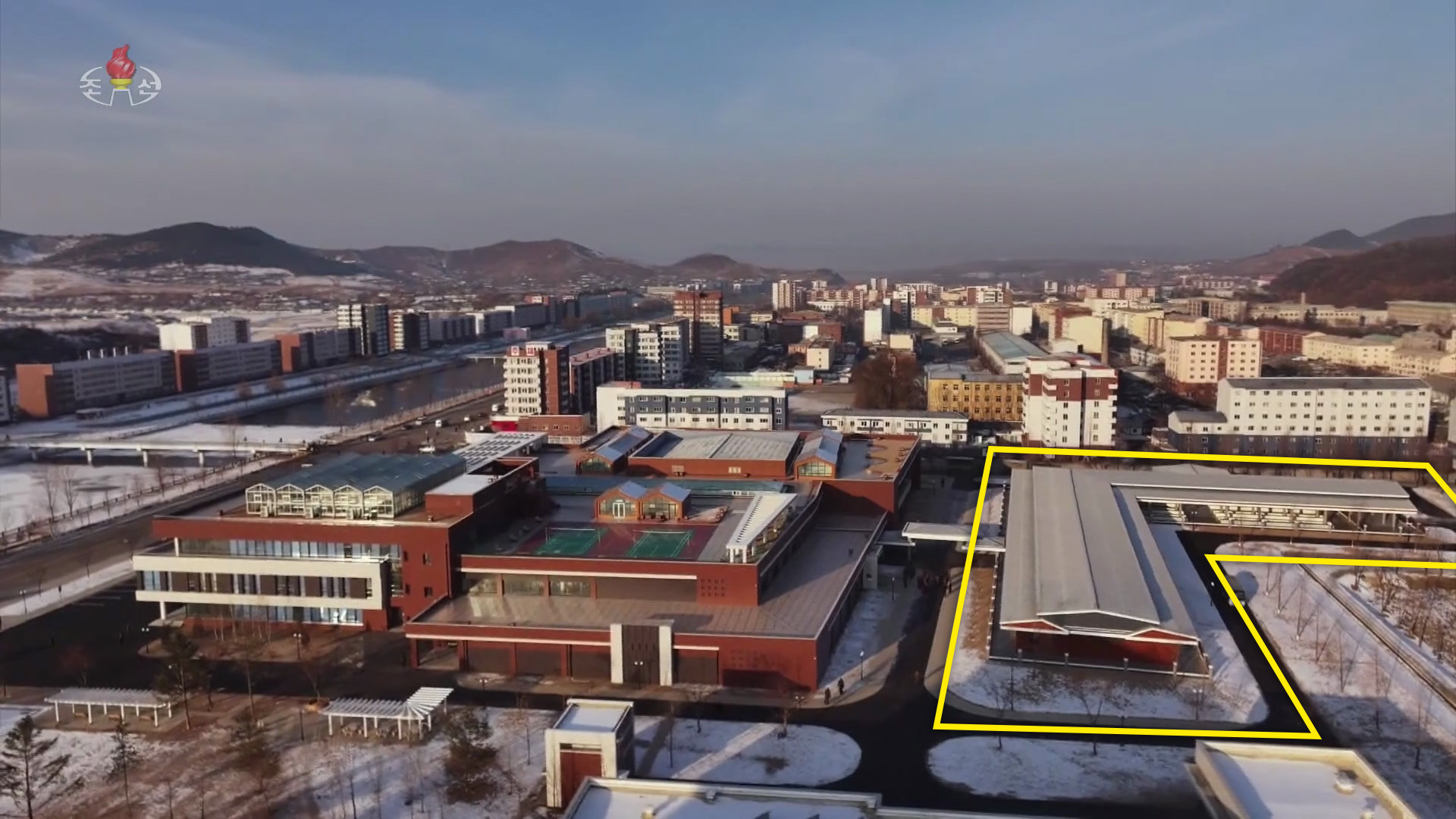
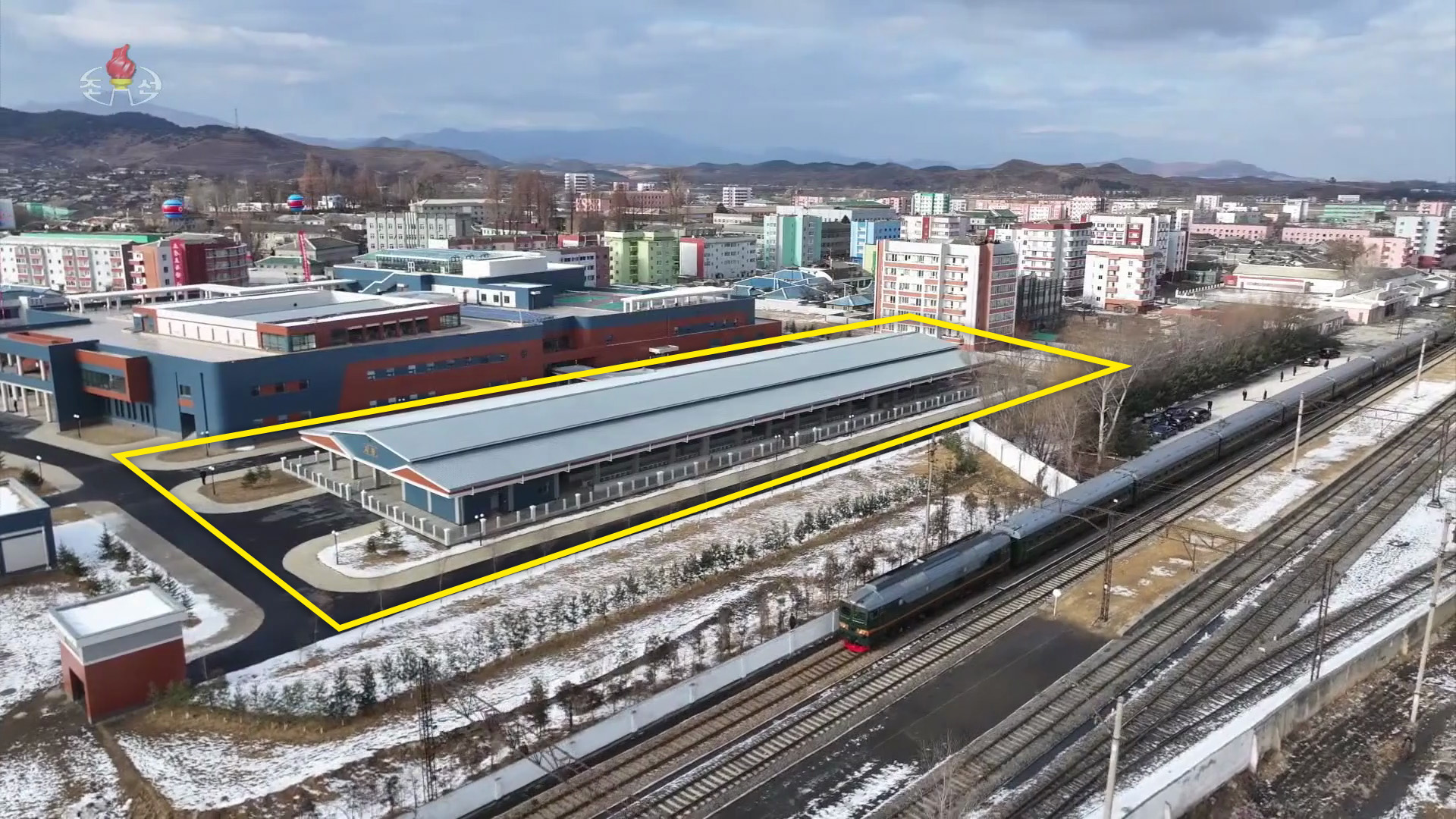
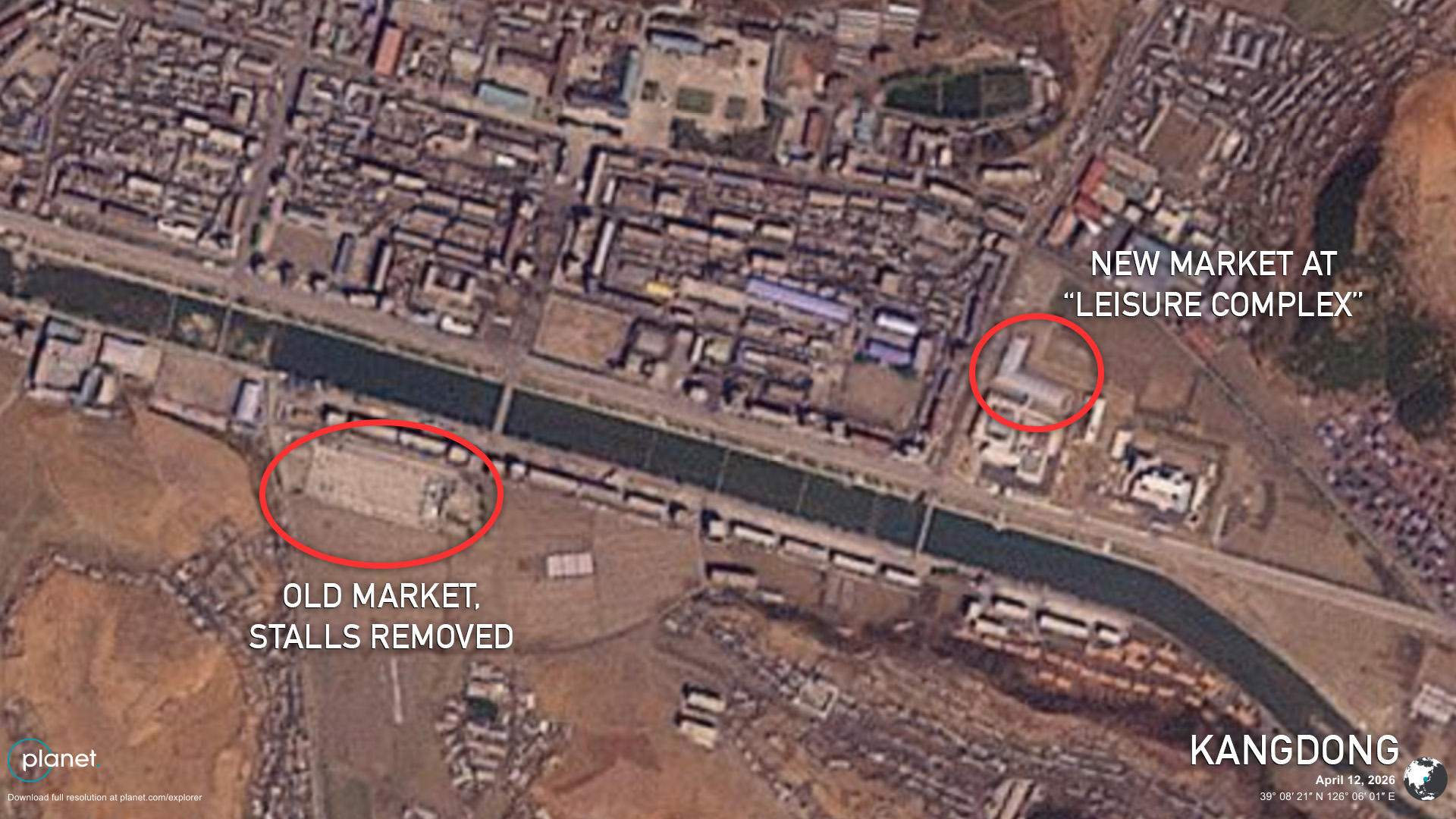
WHAT THE IMAGERY SHOWS Planet Labs and Maxar satellite images show that in the three towns where the first leisure complexes were built last year, the old open-air markets in two towns, Kangdong and Kaephung, were completely removed and the one in Jongphyong was partially removed. The new markets will likely be an upgrade in terms of build quality and cleanliness, but the change in Kangdong is a significant downgrade in terms of space, as the new market is around 3,700 m² and the old one was over twice as large. The new market in Kaephung is around 2,250 m² and looks roughly the same size as the old one that was torn down. In Jongphyong, the new market is around 3,400 m², about half the size of the old one, which has not been removed entirely. 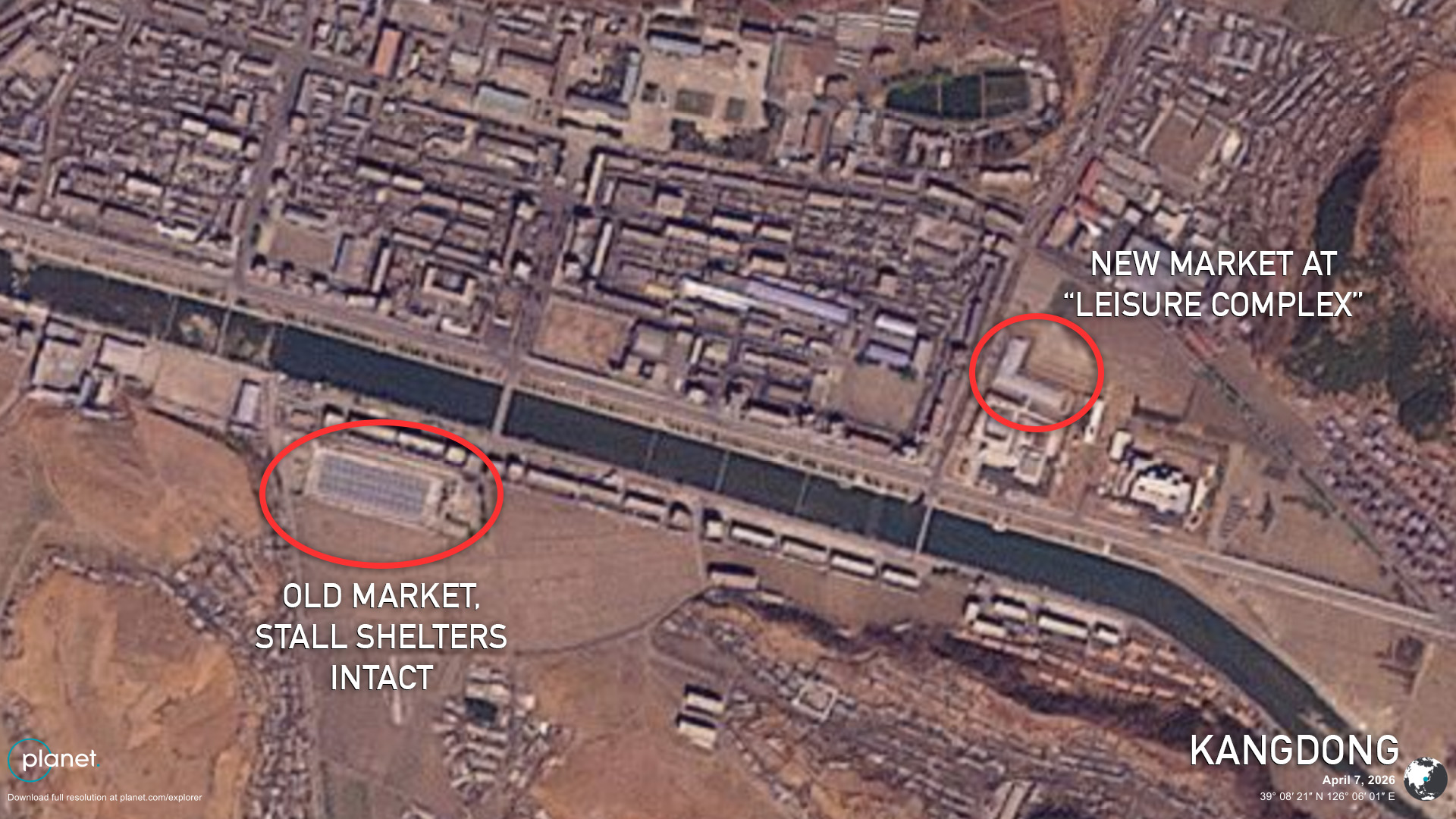
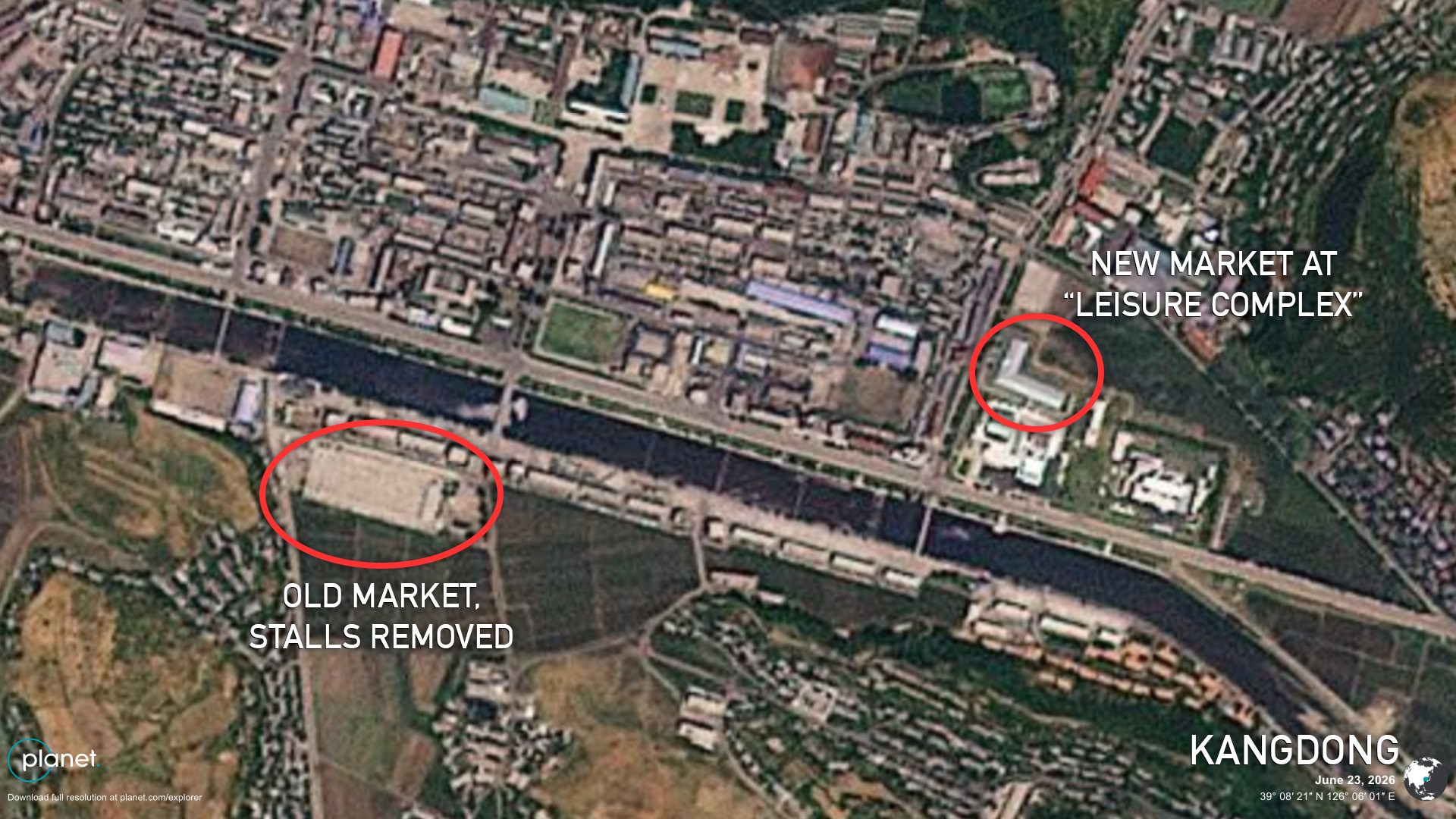
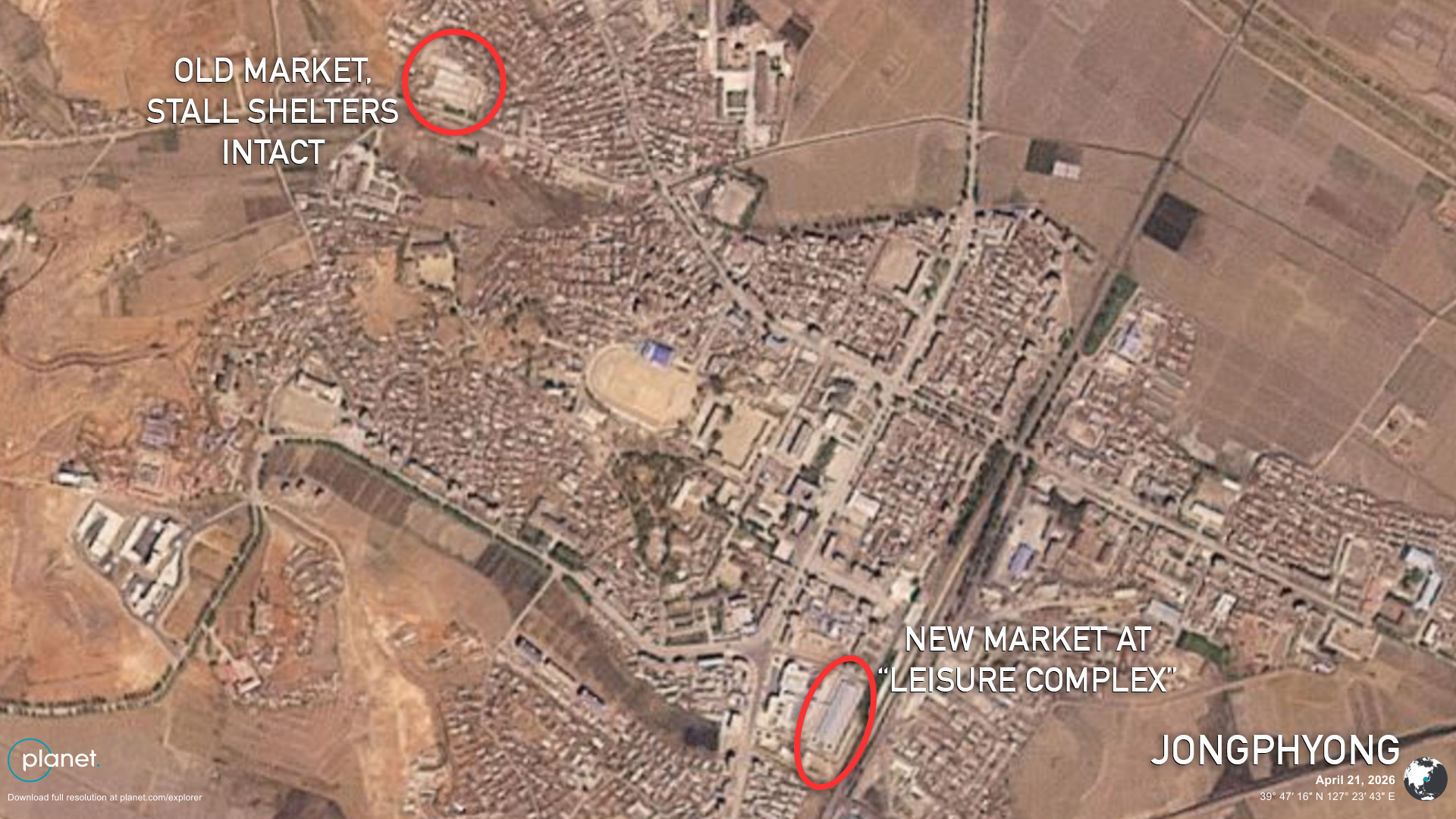
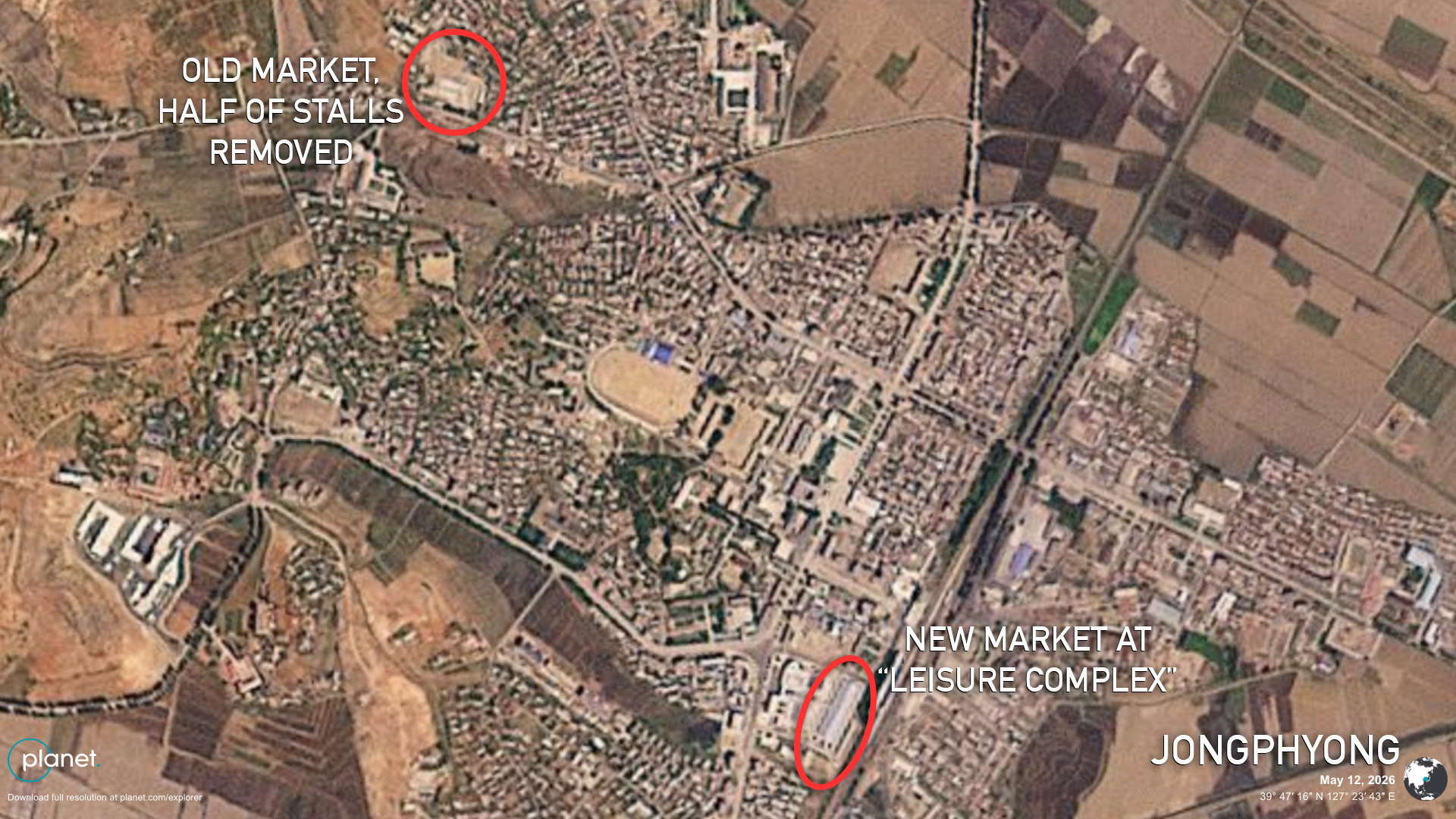
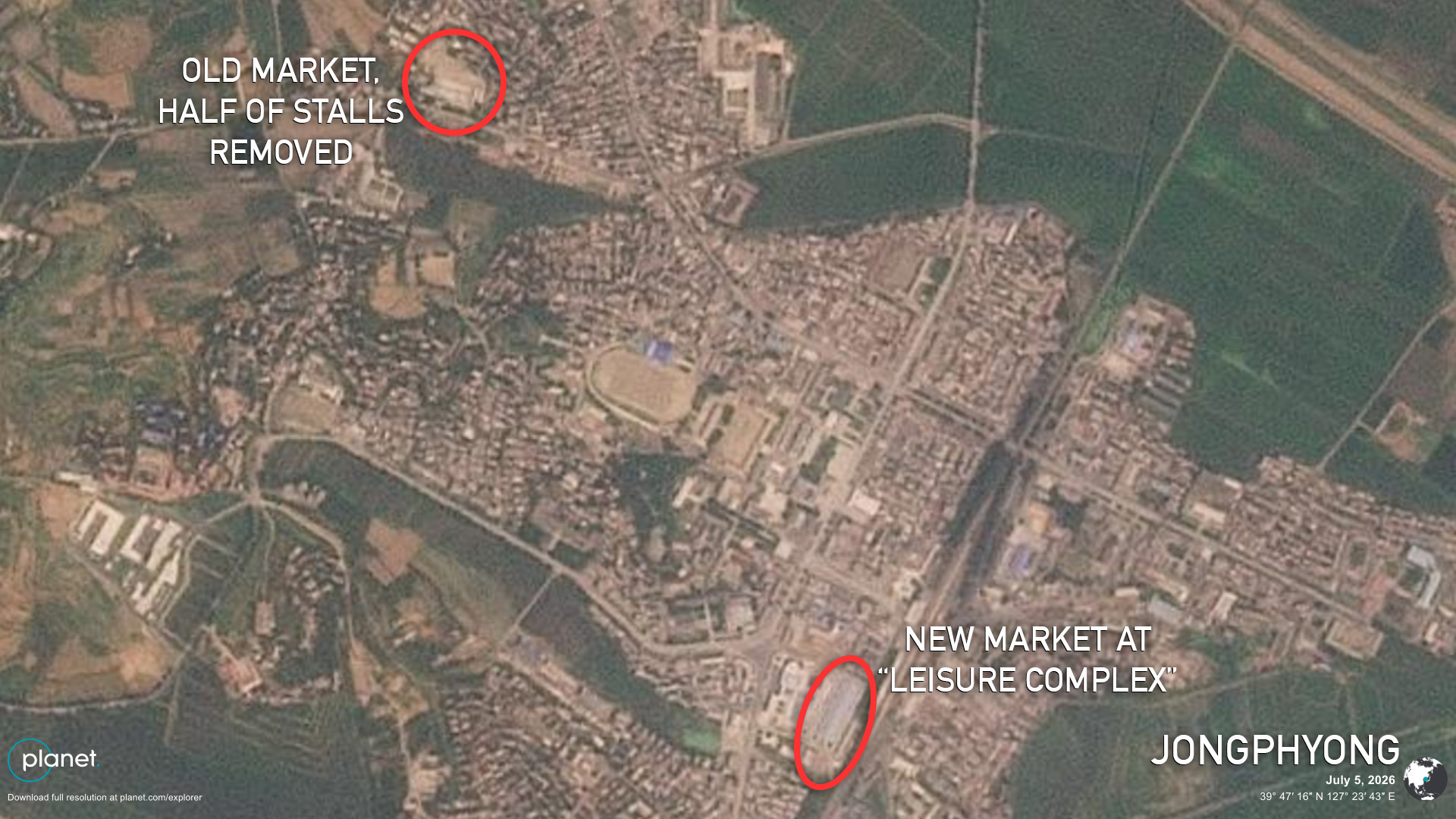
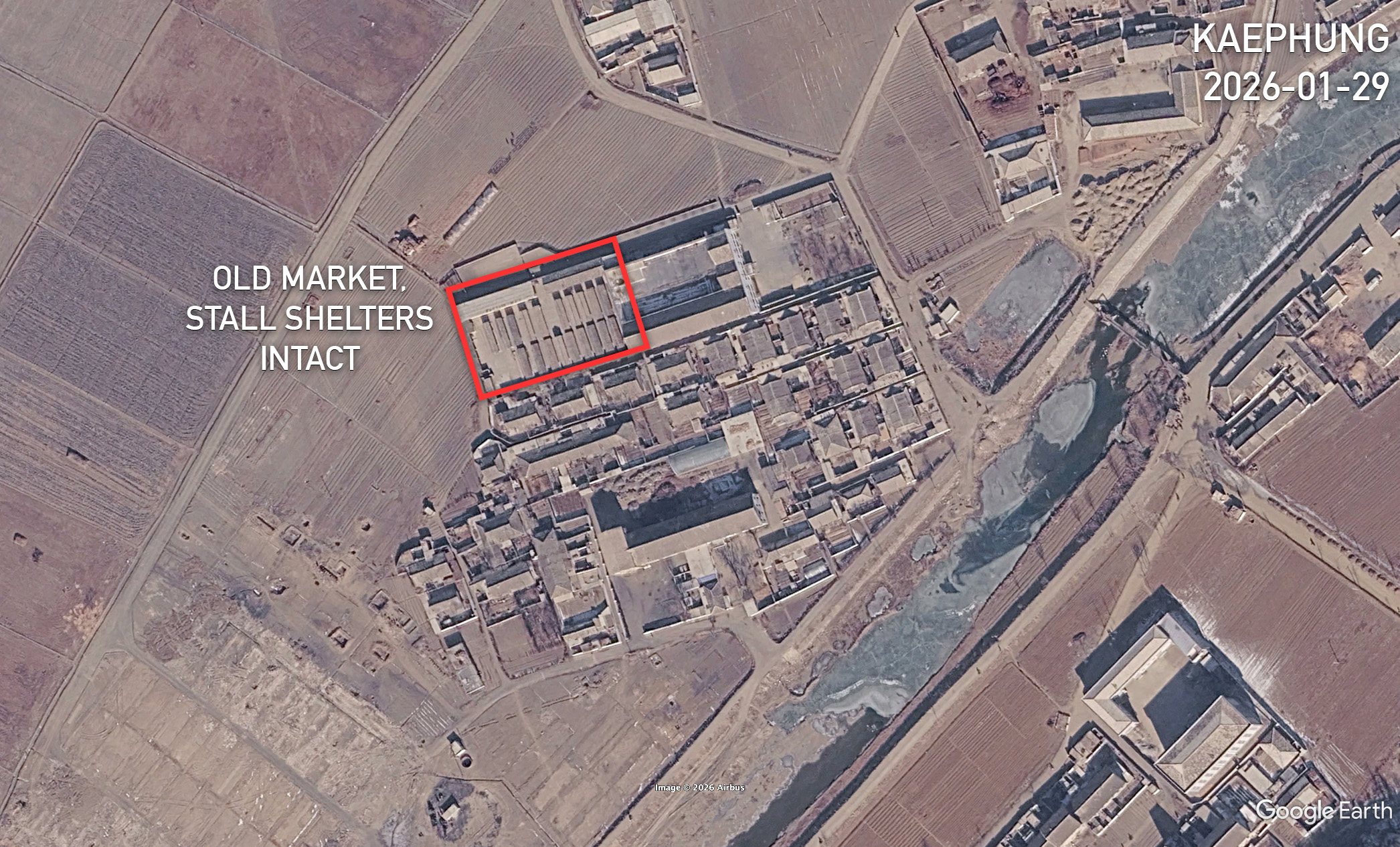
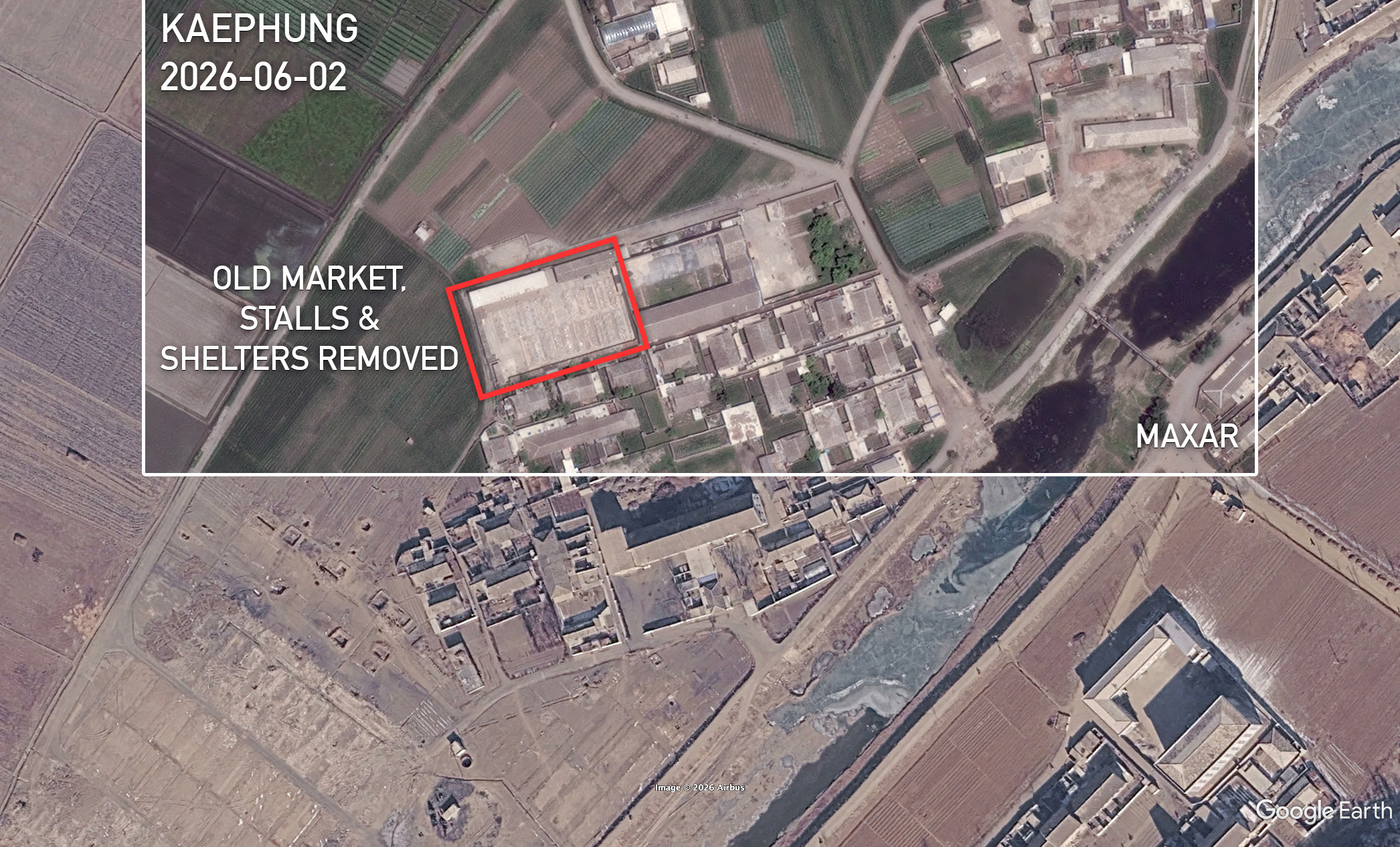
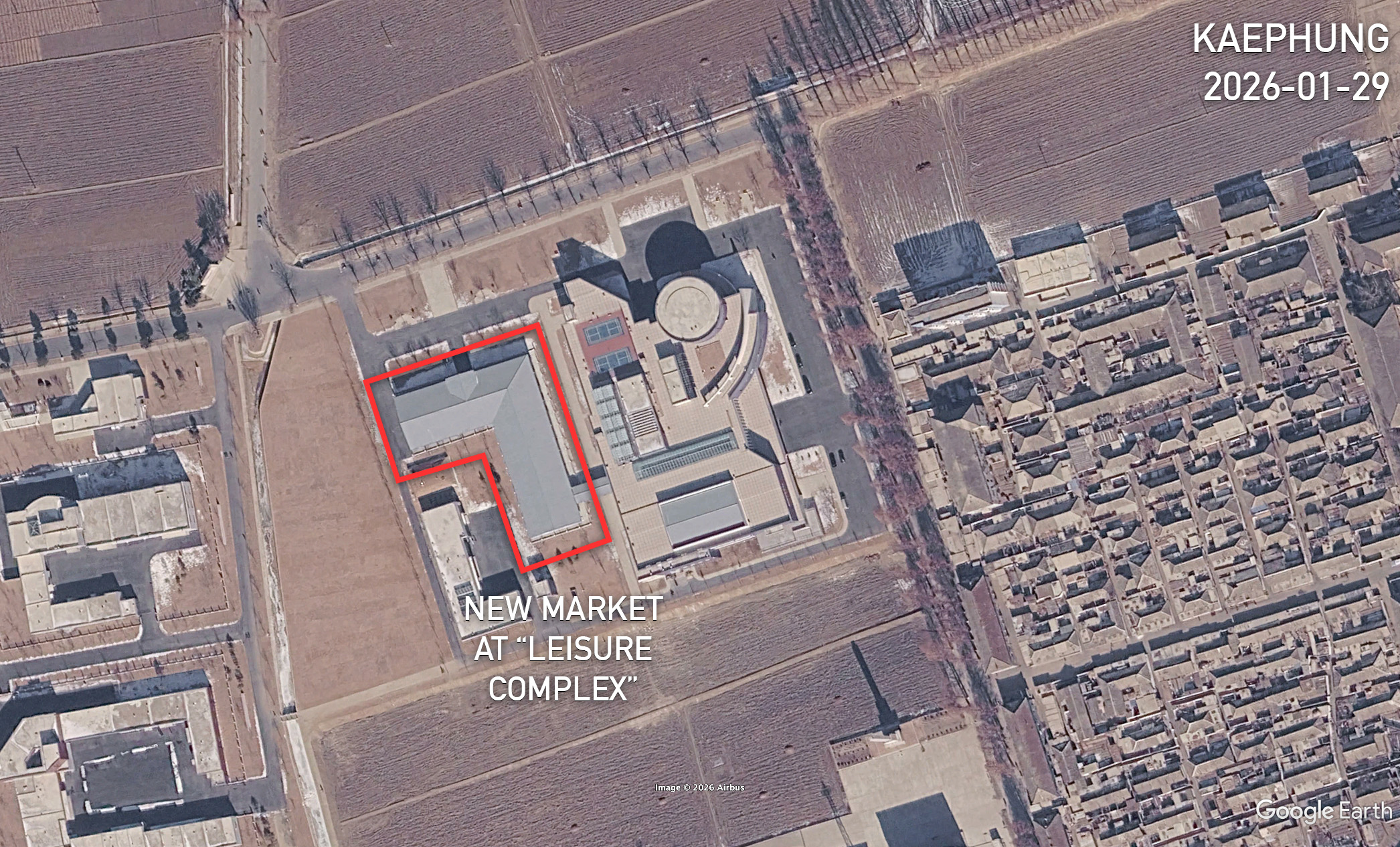
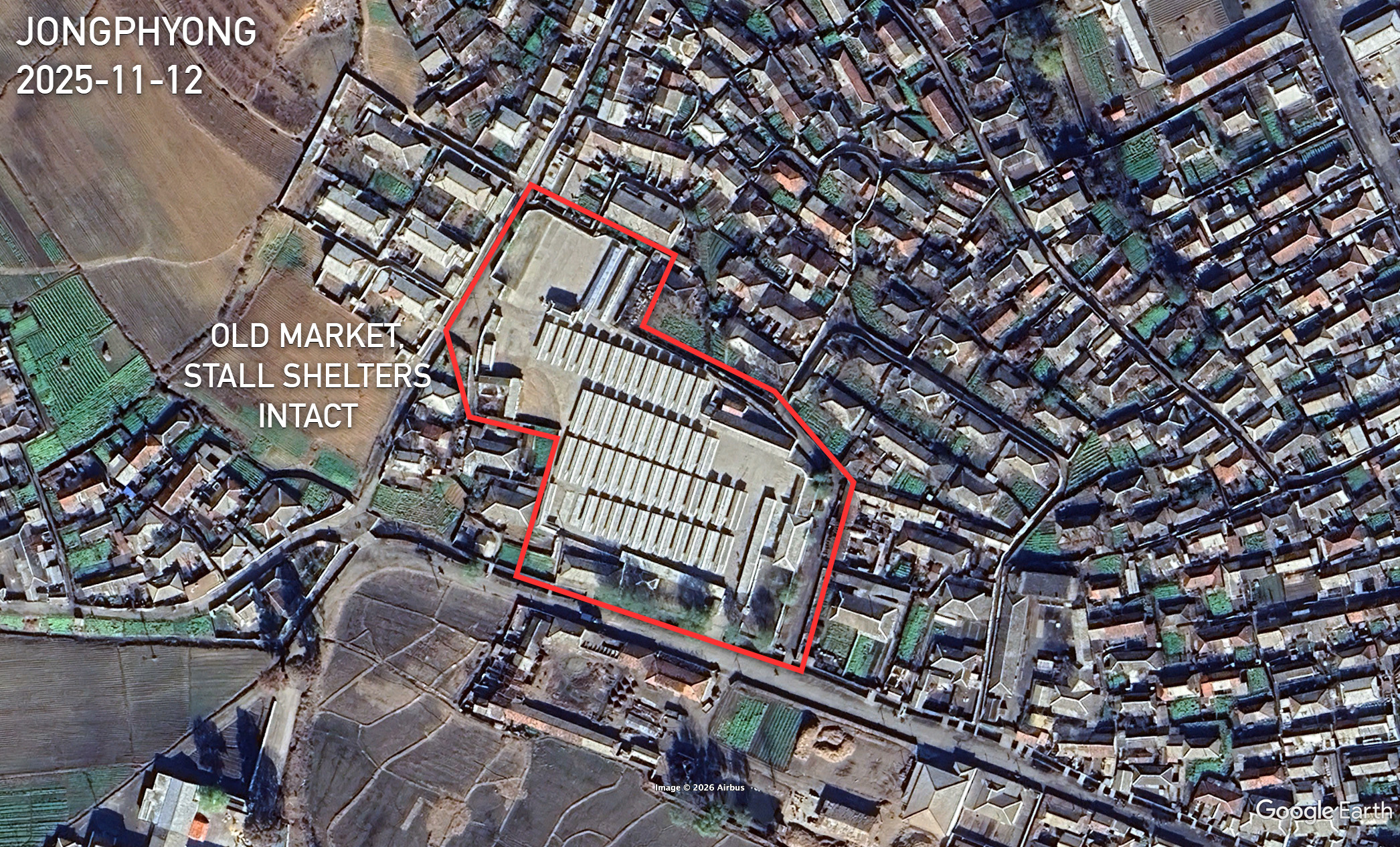
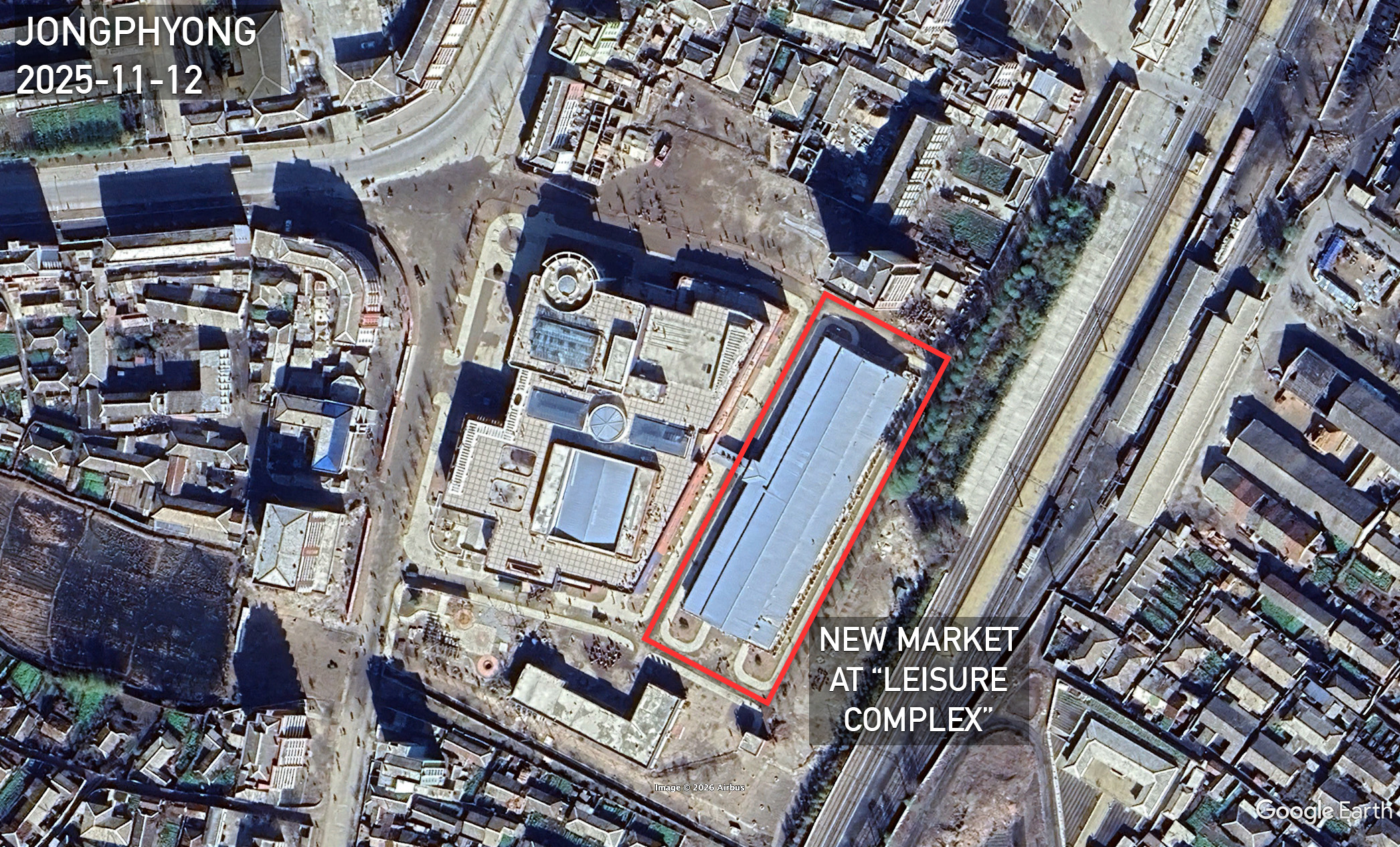
Existing markets appear largely intact in the 21 towns where 20×10 project construction is taking place this year, imagery shows. In the tiny town of Sijung, for example, the small existing market was moved to a new spot to make way for new 20×10 project construction. Meanwhile, Planet Labs medium-resolution imagery shows the covering structures at the existing market in Pongsan turned red in early June, suggesting they were replaced or reroofed. Since the Kangdong, Kaephung and Jongphyong leisure complexes opened last December and the old markets in those towns were not fully or partially removed until around April, it’s possible that the markets in this year’s selected towns won’t be torn down until sometime early next year. MARKETS IN NORTH KOREA North Korea’s town markets are commonly referred to as “jangmadang” in foreign media. Vendors are known to sometimes set up shop on street sides and alleys, but permanent markets typically feature signs at their entrances using the same word, “sijang” (시장), that is used for similar markets in South Korea’s capitalist system. They are gated and officially regulated by the government, though not often acknowledged in official propaganda, where it is more typical to see articles decrying capitalism and the pursuit of money. Shopping is instead typically presented in state media as people engaging in services provided or closely overseen by the government, with links often drawn between the leader and specific shops and department stores. State media has not reported on the new market replacement plan or shown the new facilities in detail, though wide shots in some promotional clips of the leisure complexes show that the markets consist of rows of stall space covered by a large roof structure and no outer walls. 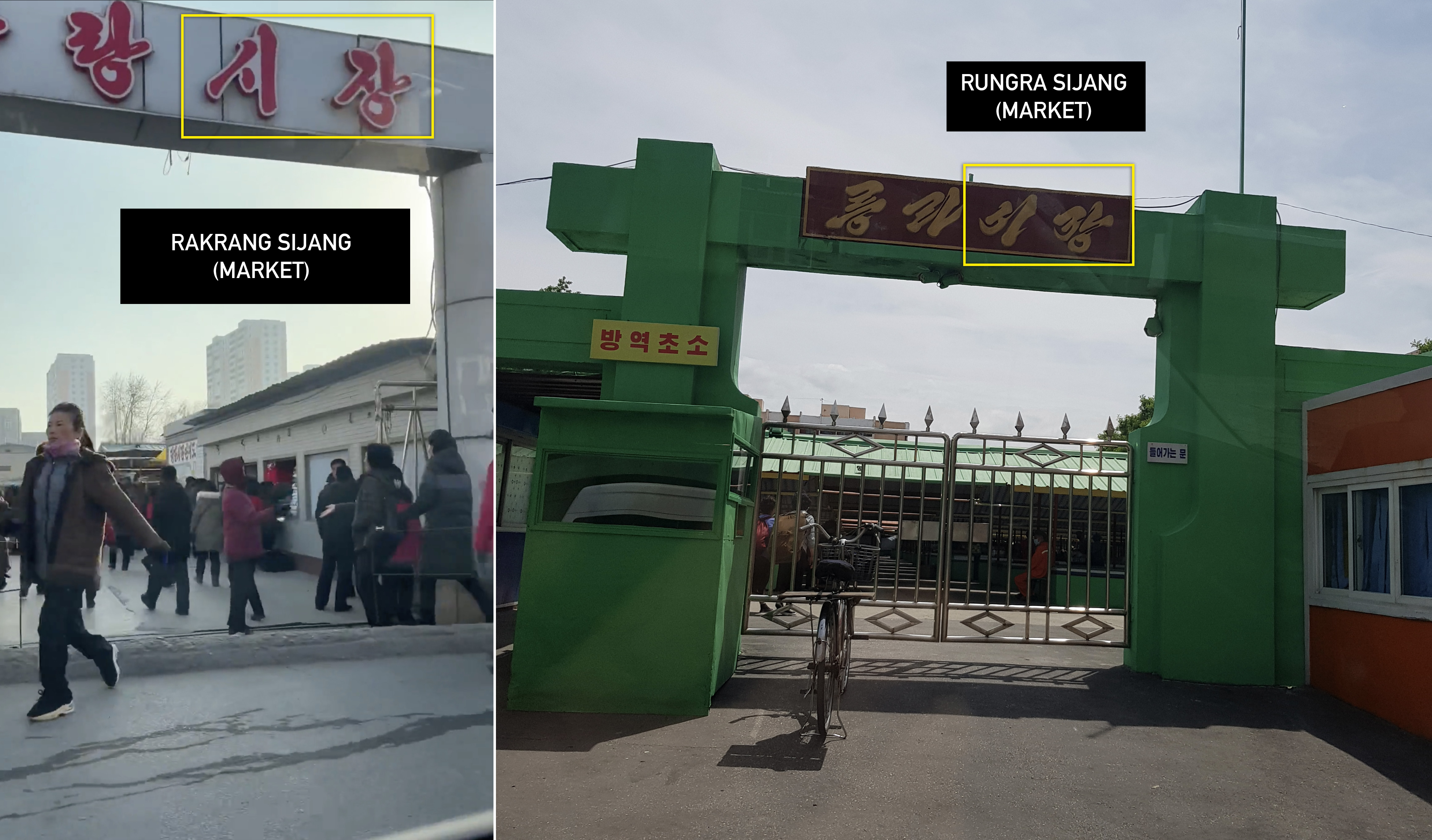 A program aired on Korean Central Television (KCTV) on April 20 showed and described 12 different sections of the Jongphyong leisure complex including a supermarket, hair salon, library, movie theater and workout rooms, but included no mention or shots of the outdoor market. Even directories installed near the front doors of the Jongphyong and Kangdong complexes do not mention the markets, state TV footage shows. North Korea’s main daily newspaper Rodong Sinmun did briefly mention Kim’s instructions related to the new markets under the 20×10 project last month. It said he ordered “something like a market or vendor stalls with only a roof — like the shopping areas at a railway station” to be set up at the leisure complexes to “guarantee the residents’ convenience in daily life and cultural life.” In the same sentence, Kim described how a “general store selling daily necessities, foodstuffs” and other goods produced locally should be built indoors. An employee of the Jongphyong general store said during the aforementioned KCTV program that 70% of the goods it offers are produced locally. It’s likely that the new outdoor markets will offer a wider range of products from abroad and other parts of the country, like existing outdoor markets do. 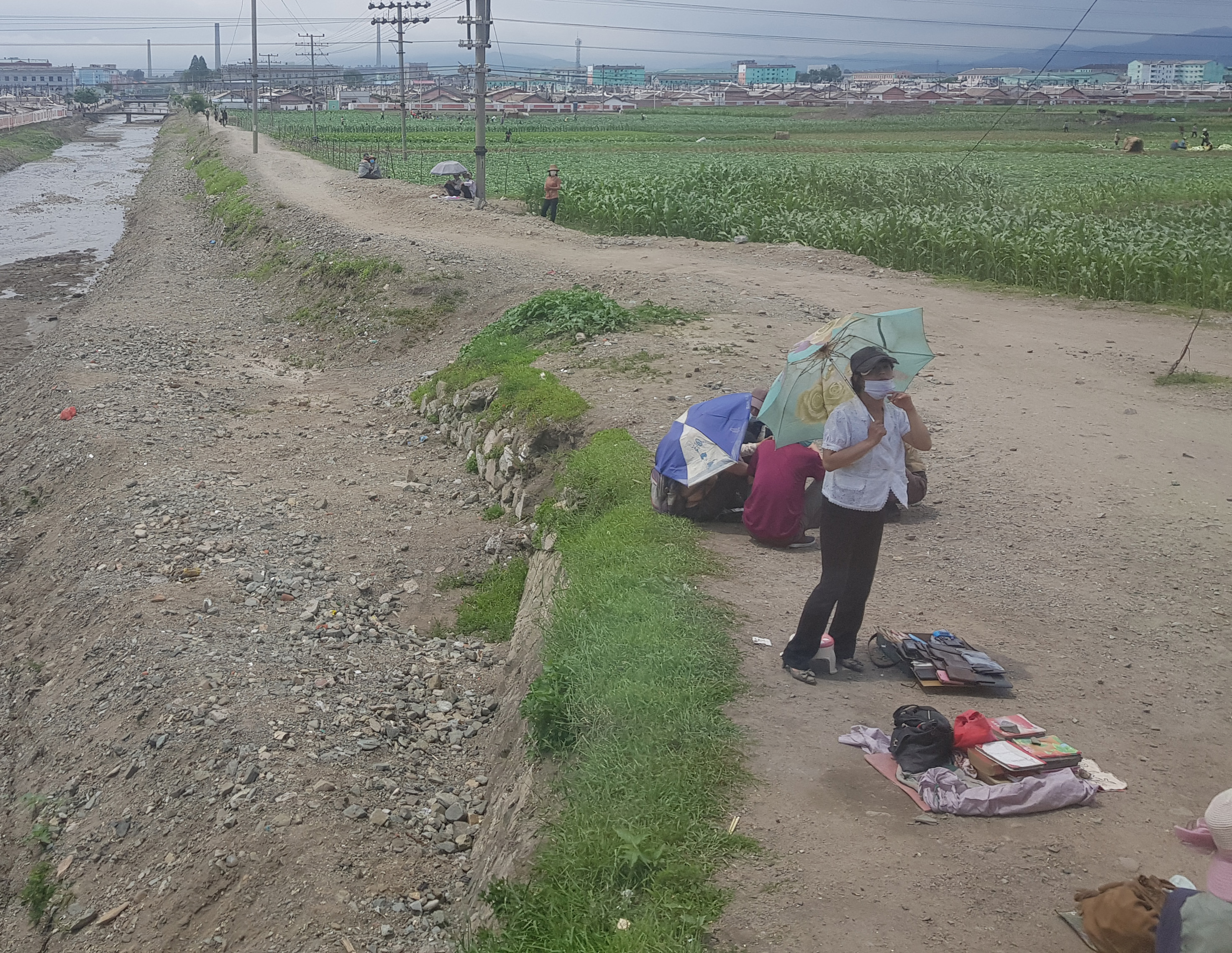 WHAT THE CHANGE MEANS It’s unclear if the new markets will impose stronger vetting of vendors or adopt the same systems of the old ones. At existing markets, individual vendors pay rent for stalls and sell goods they’ve acquired on their own, while authorities attempt to control prices, according to Peter Ward, a research fellow at the Sejong Institute in Seoul. Ward told NK Pro that moving markets into Kim’s leisure complexes appears to be part of ongoing efforts to “centralize control” of what have become “non-state third spaces,” where despite government oversight, individuals have been able to build their own networks of trust and communication outside the state hierarchy — a potential threat to Kim’s grip on society. The expert previously wrote that Kim Jong Un is using the 20×10 project to try to take back top-down control of the economy from the markets, which people came to rely on after government distribution programs collapsed and led to famine in the 1990s. Asia Press also reported last month that the state has expanded its ability to set prices at local markets since instituting more social controls during the pandemic, citing interviews with North Koreans still living in the country. Ward told NK Pro that authorities have “always tried and they’ve always struggled” to control markets, likening them to something the government sees as better to capture and regulate than to ban outright and struggle to police. He said this is why state media does not promote these kinds of vendor markets, explaining that even though locals are well aware of the new facilities, North Korean authorities don’t want to draw attention to them — just like a government wouldn’t feature an officially sanctioned red light district in promotional material. According to Ward, it remains to be seen whether Kim can continue to fund rural development with central government planning and execution, and to replace profit incentives as a driving motivator for economic growth. Another factor reportedly contributing to the ability of authorities to control market prices is a recent hike in wages of workers of state-owned enterprises, allowing people to rely less on free market activity to get by. These construction and wage initiatives come as Kim has reportedly earned large sums of money through weapons sales and other contributions to Russia for the Ukraine war, as well as stealing billions of dollars through cybercrime sprees. Edited by Alannah Hill © Korea Risk Group. All rights reserved. |

October 28, 2026Oct 28, 2026

The ultimate resources for professionals working on North Korea
 SHARE
SHARE COPY LINK
 X
X MASTODON