  Analysis North Korea secretly building missile launchers at obscure factory near capitalInvestigation finds production of weapons targeting South since last year, ahead of recent mass deployment to frontlines 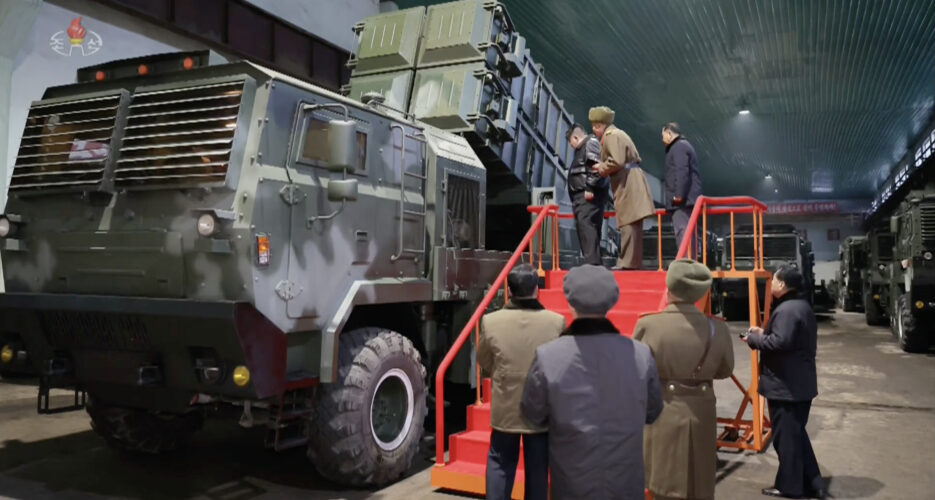 North Korea appears to have recently started using a decades-old factory near the capital to build launch vehicles for nuclear missiles, according to exclusive analysis of satellite imagery, underscoring Kim Jong Un’s push to rapidly increase production of capabilities that target the South. The facility just outside Pyongyang has been producing the transporter erector launchers (TELs) since at least Nov. 2023, and their size and shape suggest that they are for Hwasong-11D short-range ballistic missiles (SRBM), according to a joint NK Pro investigation with the New Tools Team at the James Martin Center for Nonproliferation at the Middlebury Institute. State media claimed last week that Kim Jong Un oversaw the deployment of 250 launchers of the same missile system to South Korean border regions. Kim has visited several factories producing Hwasong-11D TELs, possibly including this newly discovered factory in January. It is located in a secure area of southern Phyongsong, just up the road from the DPRK navy headquarters. The revelation offers further evidence that Kim has scrambled to boost missile launcher production in the last few years at new and converted factories as he seeks recognition of the DPRK as an irreversible nuclear power and pushes weapons exports to Russia. ACTIVITY AT THE FACTORY Planet Labs satellite imagery shows that around 49 vehicles, likely TELs, appeared parked on a sports field at the Phyongsong factory between Nov. 8 and 9 last year, indicating they were being produced or assembled there. Some were removed about a week later but around 45 units remained until they were moved in early March. Between 14 and 18 vehicles appeared parked adjacent to a large production building nearby, and these then disappeared by April 25. High-resolution Airbus satellite imagery clearly shows vehicles featuring cabs and flatbeds, without erectable launch canisters installed but with what appear to be related mechanisms at the rear. They measure around 8.5 meters long and just under 3 meters wide, similar to an NK Pro estimation of the Hwasong-11D TEL observed at a Feb. 2023 military parade. The analyst Decker Eveleth also found this TEL model to be 8.5 to 9 meters long with canisters installed. 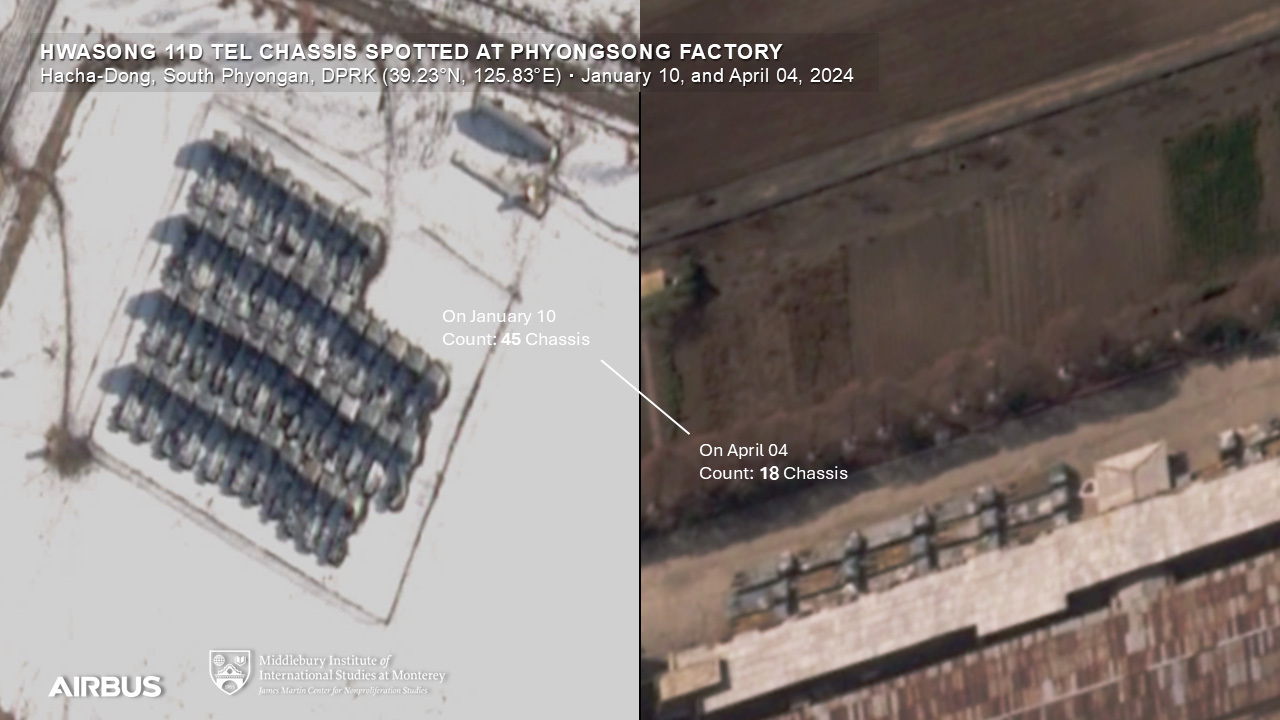 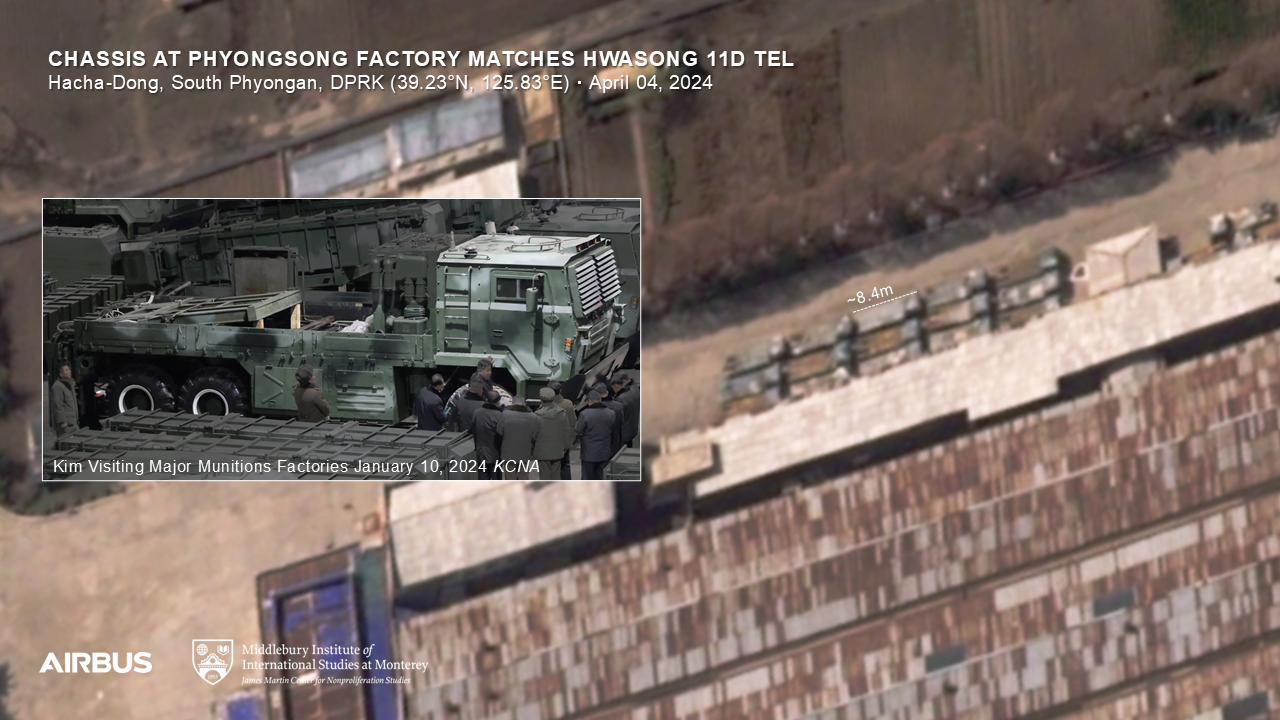 TEL chassis have not appeared outside at the factory since late April, but high-resolution Planet Labs imagery taken throughout June showed long narrow objects, possibly launch canister parts, laid out across several paved areas, indicating the complex was still active. John Ford, a research fellow on the New Tools Team, said it’s unclear where the chassis originate and whether they are imported Chinese trucks or locally produced. “Either way, the chassis need to be fitted with the launch canisters and the lifting and stabilization mechanisms. This is what Kim was learning about when he was visiting factories producing this TEL in January,” he said. 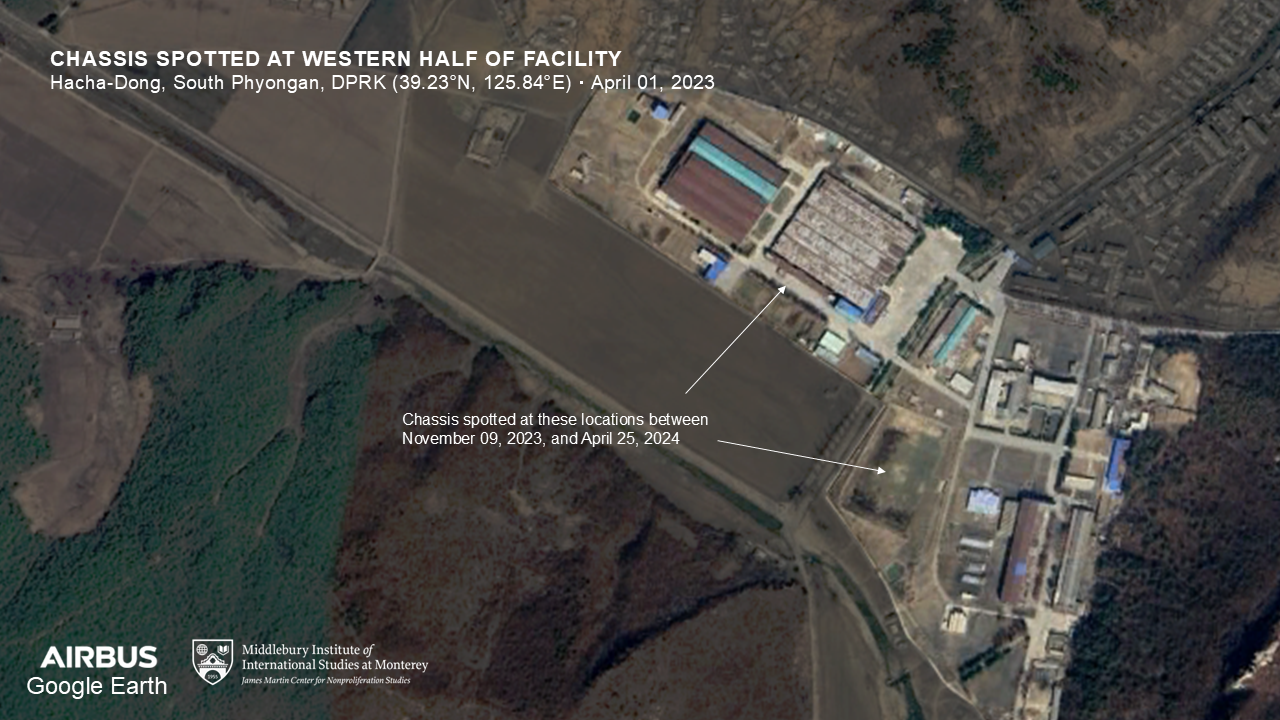
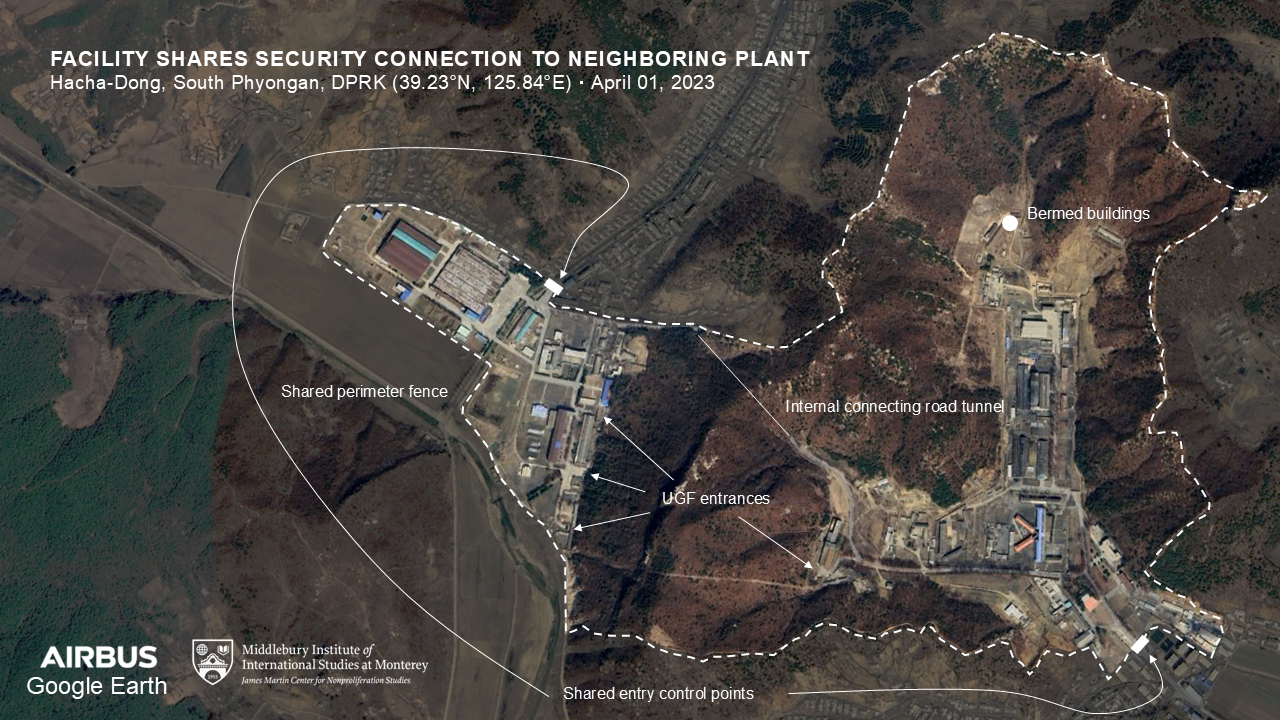
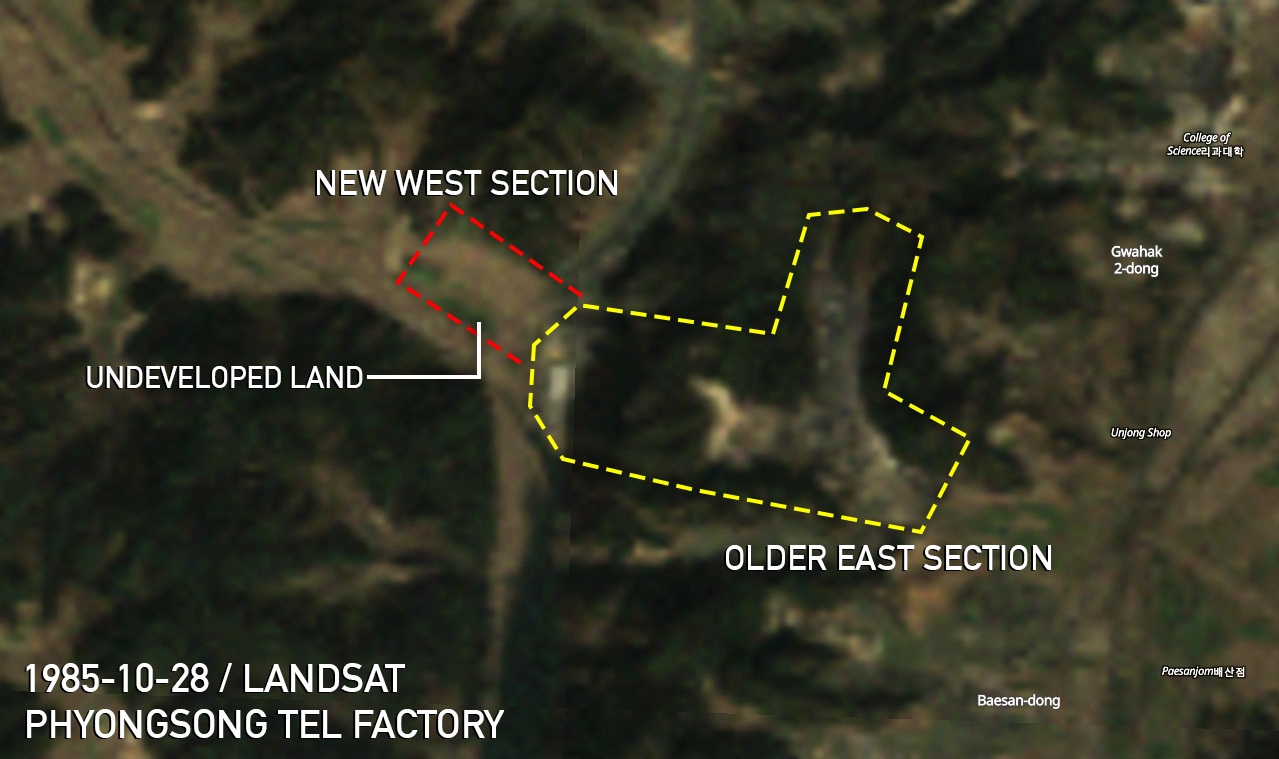
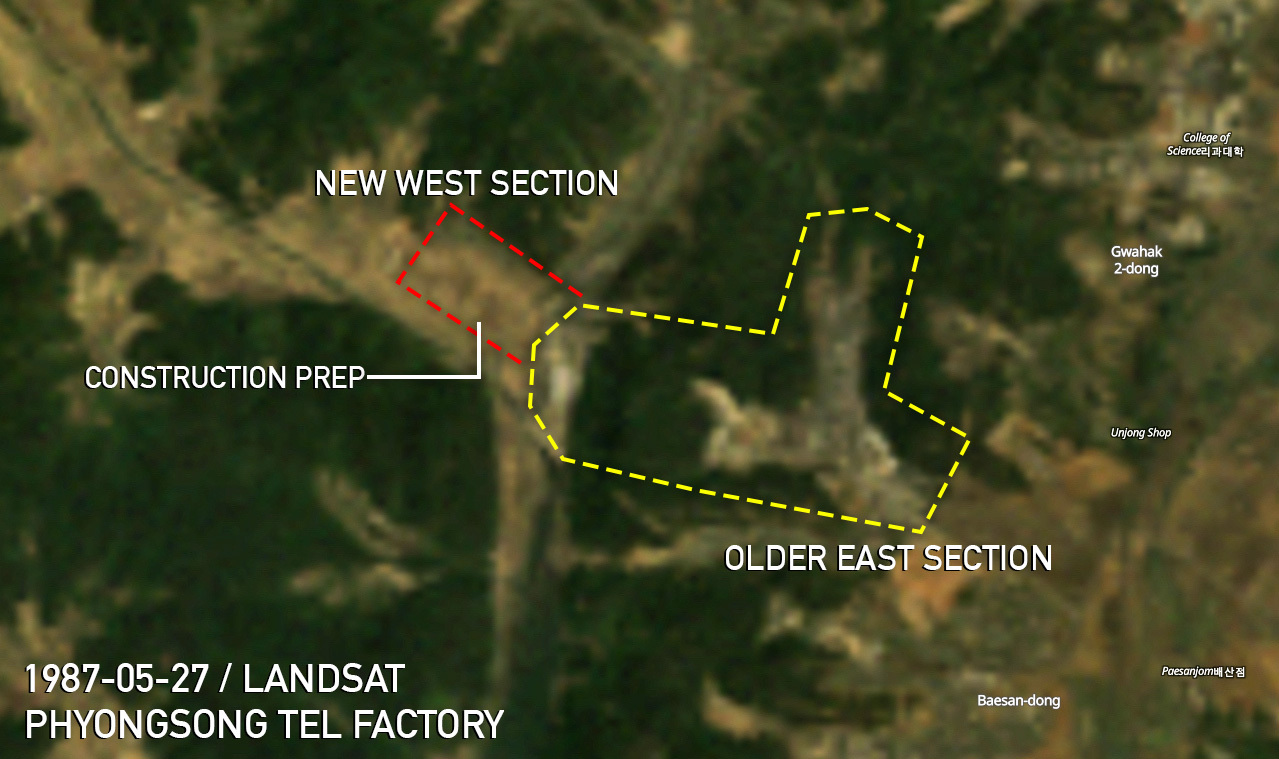
Ford added that Kim Jong Un’s deadline for mass producing the system was likely “so intense it necessitated reactivating older facilities such as the November 20 Factory and the Phyongsong plant to meet the demand.” “When we track around 50 chassis outside at Phyongsong, and then watch the number of chassis decrease over the subsequent months, only for 250 of these trucks to appear completed later this year, it suggests to me that this facility played a role in Kim Jong Un’s order.” Each TEL can carry four Hwasong-11D SRBMs (also referred to as close-range ballistic missiles or CRBMs). North Korea says the missiles are nuclear-capable, but the country is not believed to have anywhere near 1,000 nuclear warheads. “It is clear that part of their combat plan is to saturate ROK with Hwasong-11s, some of which will have nuclear or other WMD payloads,” Ford said. “It appears the main way they intend to do this is by having lots of trucks.” The possibility of Kim boosting production in order to export the system to Russia to supplement its use of North Korean Hwasong-11A SRBMs against Ukraine also cannot be ruled out, but evidence of completed shipments has yet to emerge. POSSIBLE KIM VISIT Photos of Kim Jong Un inspecting at least 28 units of the Hwasong-11D TEL inside an unidentified factory in January may have actually been taken at the Phyongsong site, evidence suggests. It was previously tentatively identified as a facility next to the Kumsong Tractor Factory. For one, unique window arrangements seen in the photos match a building at the west end of the complex, analysis of satellite imagery shows. 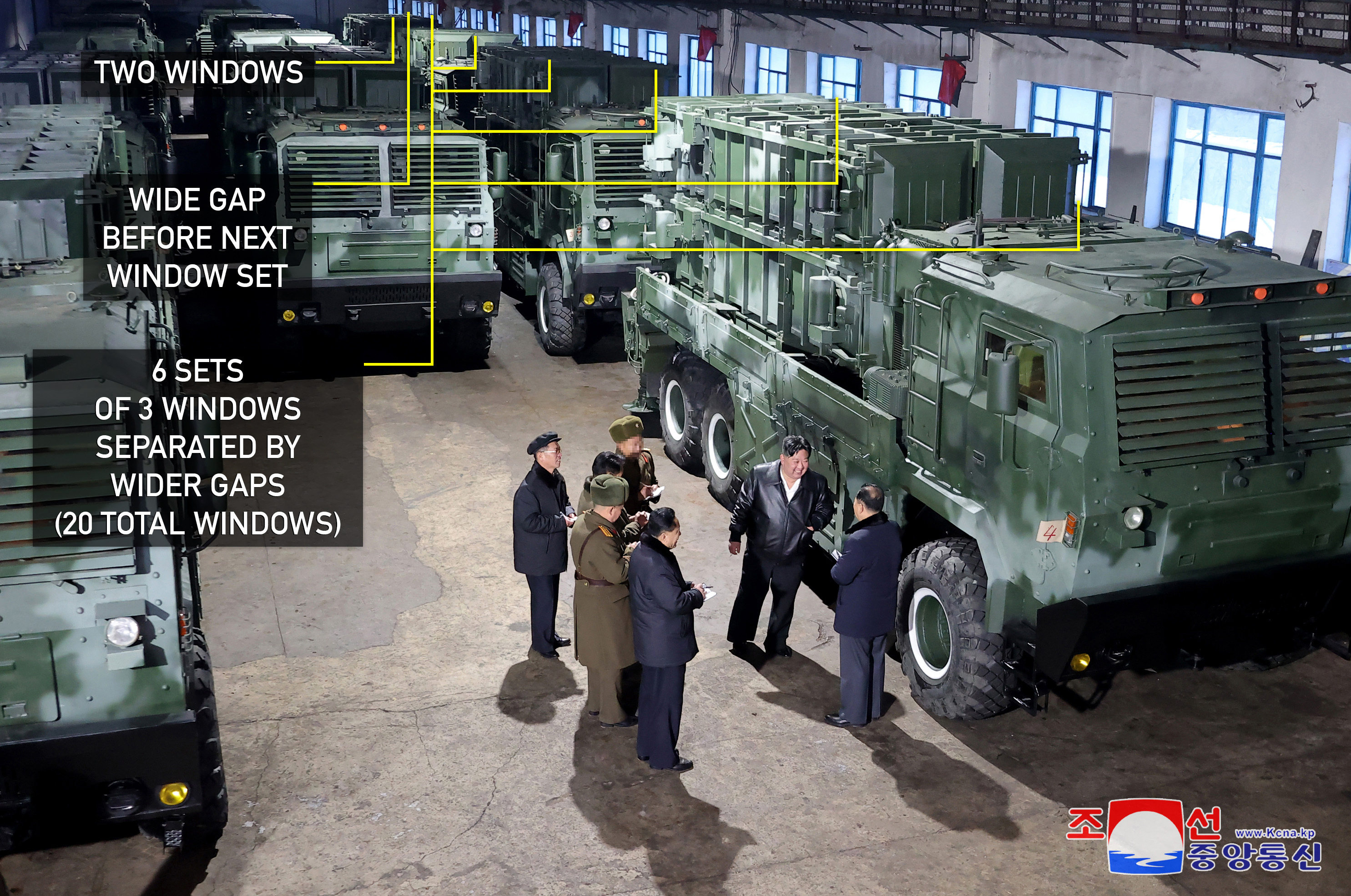 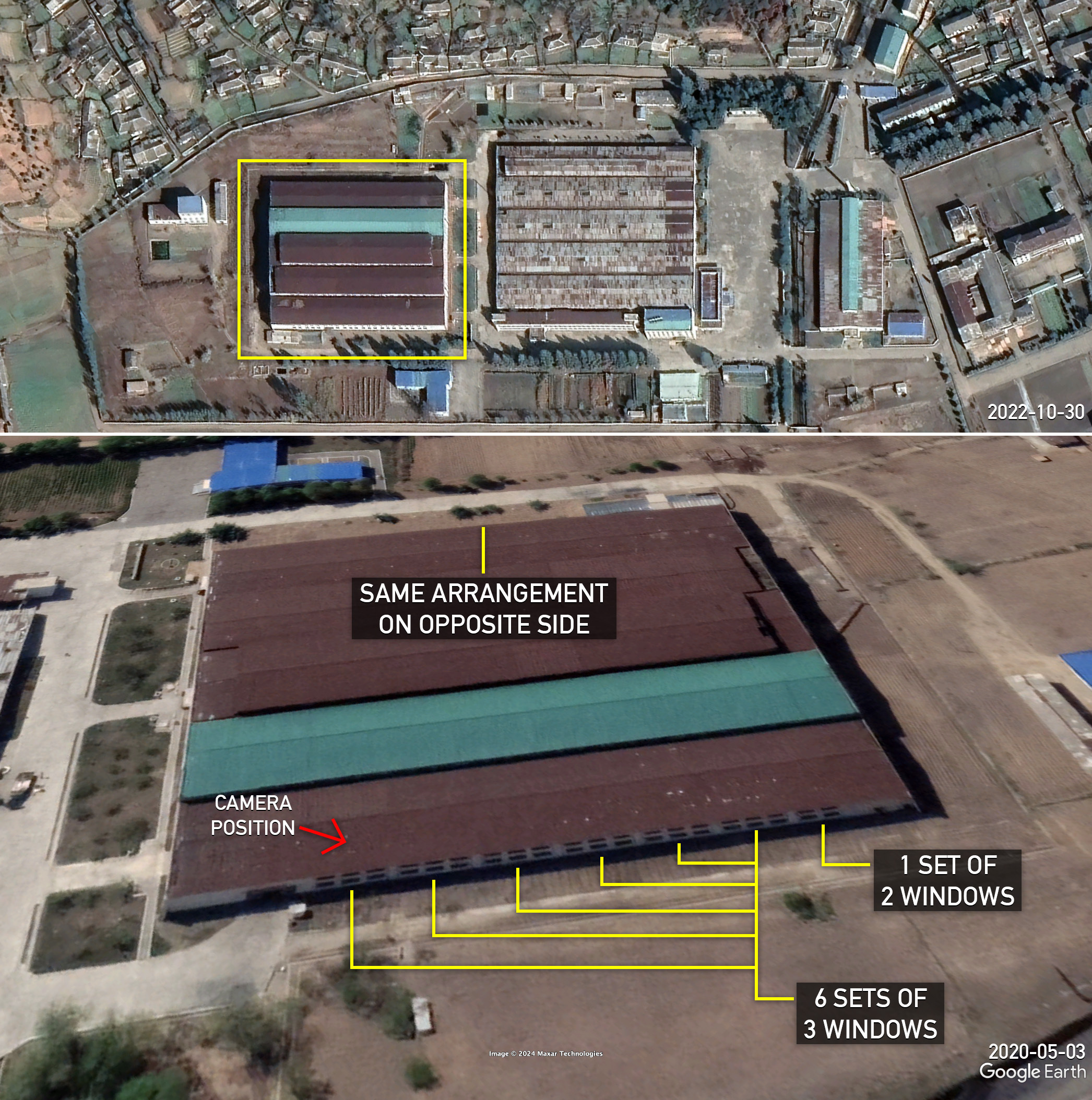 The timing of the Jan. 8 or 9 visit lines up with the November to April visible production activity there as well. State media has not otherwise promoted this factory either — something Pyongyang would likely do if the vehicles were related to long-unfulfilled promises to mass produce ordinary industrial trucks. Decker Eveleth and Jeffrey Lewis of the New Tools Team previously identified the November 20 Factory in western Pyongyang as the other of the two locations where Kim inspected Hwasong-11D TELs in the Jan. 10 state media report. There appeared to be at least 27 TELs inside one building at that factory in the photos released with the report. NK Pro later identified a newly built factory by Mount Ryongak in Pyongyang as the likely location where Kim inspected 99 more Hwasong-11D TELs on May 14. A total of at least 154 TELs appeared inside three factories in the two state media reports in January and May. However, it’s possible some of the vehicles first shown at the November 20 Factory in January were moved to the nearby Ryongaksan factory and displayed there in May. Besides Hwasong-11D TELs, one cab section of a Hwasong-12B IRBM TEL also appeared in the Jan. 10 photos of the unidentified factory, suggesting this model could also be under production at the Phyongsong factory. HISTORY OF THE FACTORY The apparent TEL factory in Phyongsong was built in the late 1980s, but it is located within the security perimeter of an older complex split by a small mountain and connected by tunnels. Landsat satellite imagery accessed through Sentinel Hub’s EO Browser shows construction on one large production building comprising five parallel sections and offices in the newer western area of the complex began by May 1987, and that it and other support buildings were mostly complete by March 1988. A second large production building, also with five parallel sections, was then built between Aug. 1988 and Oct. 1991, with possibly additional finishing construction ongoing until late 1992. This is the building with the matching window arrangement described above. 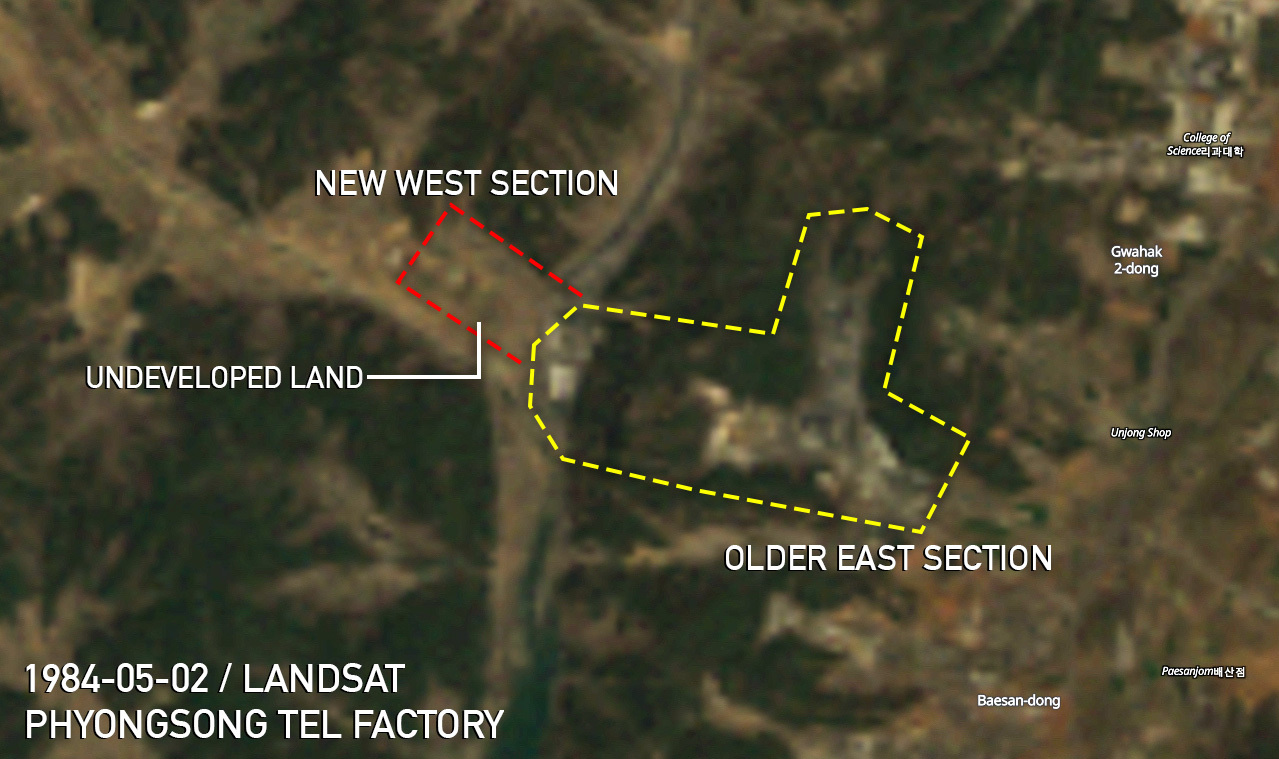
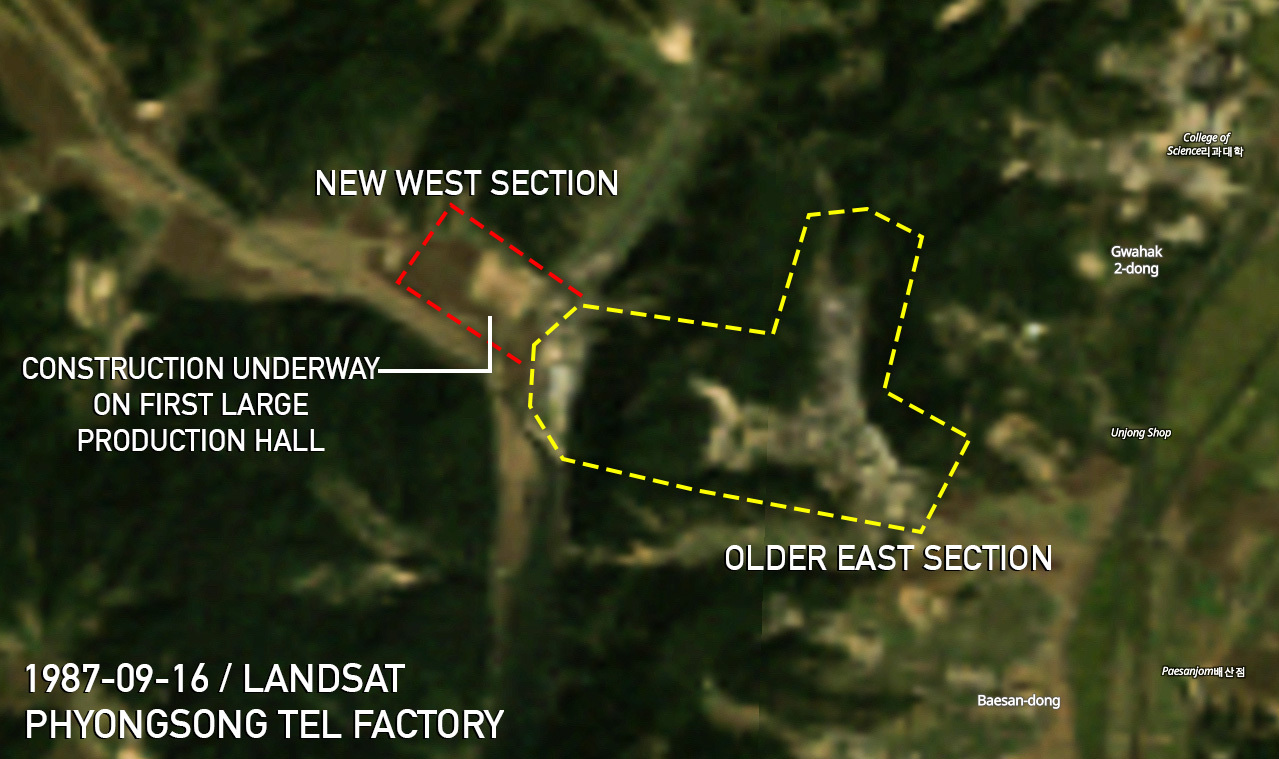
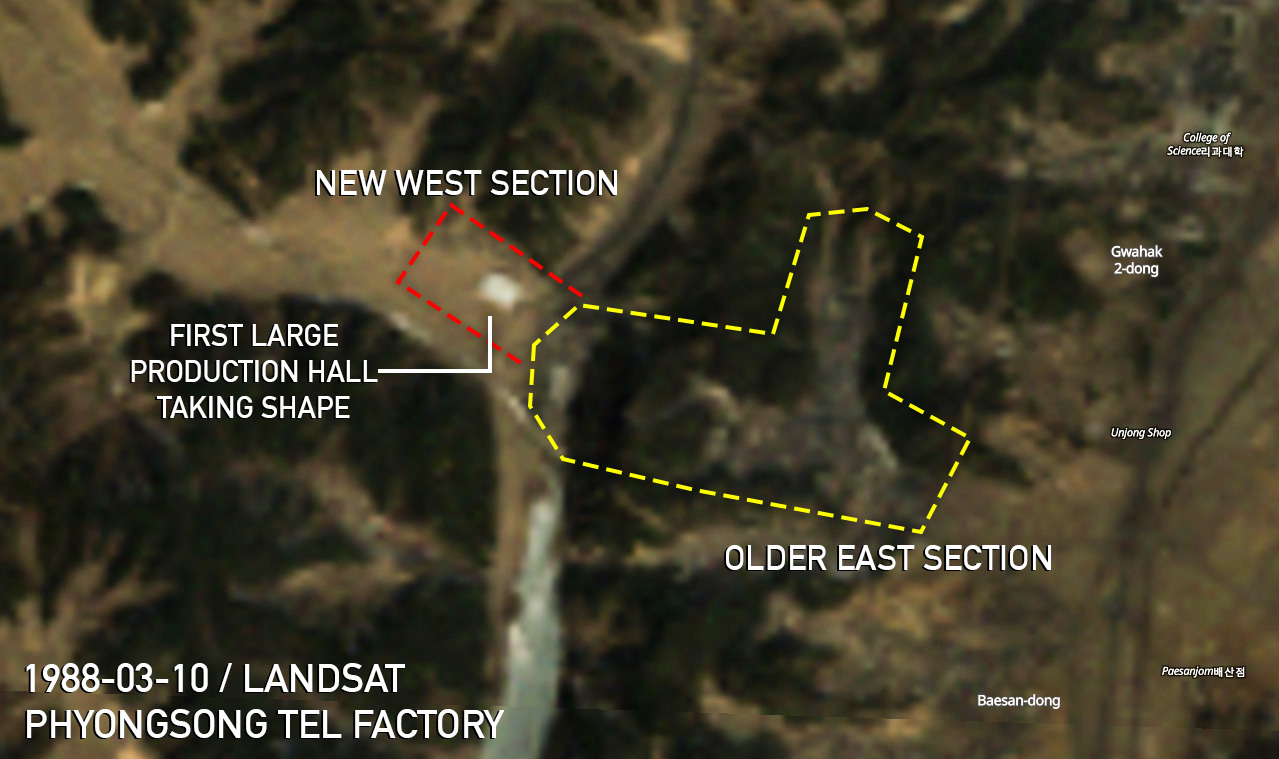
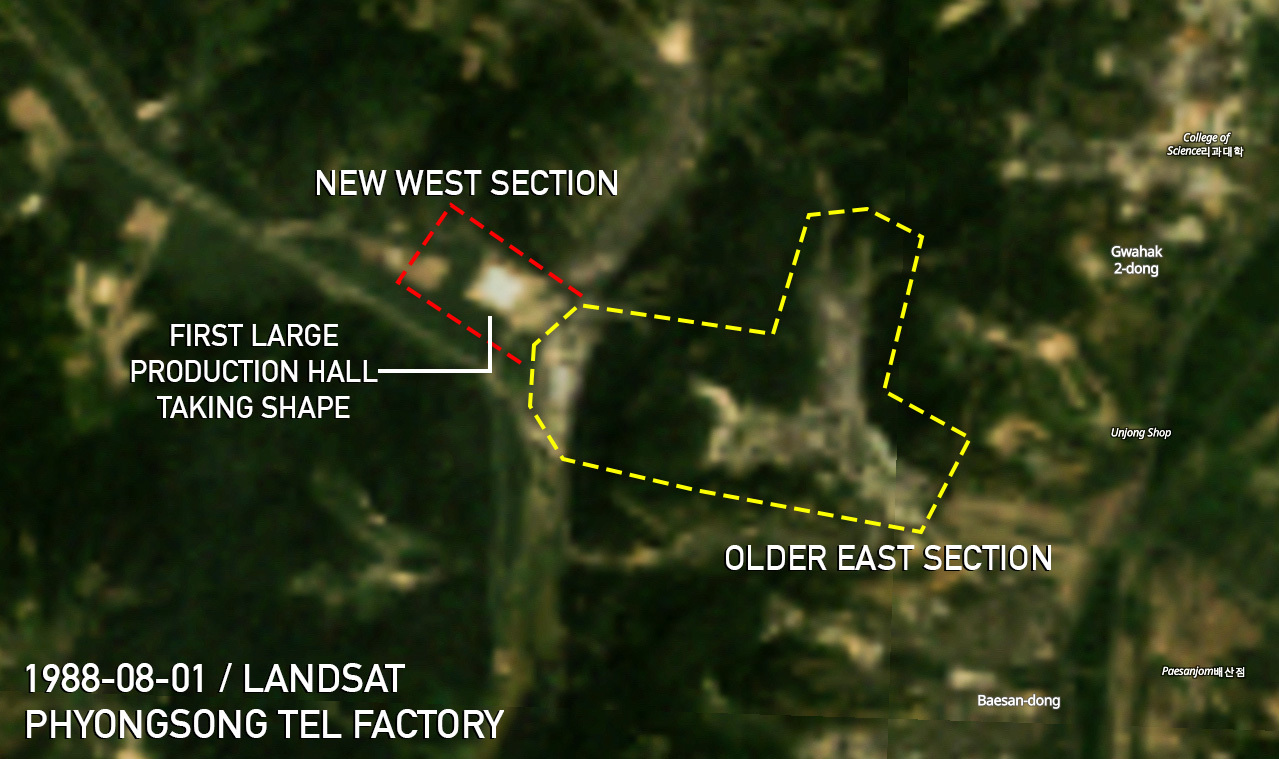
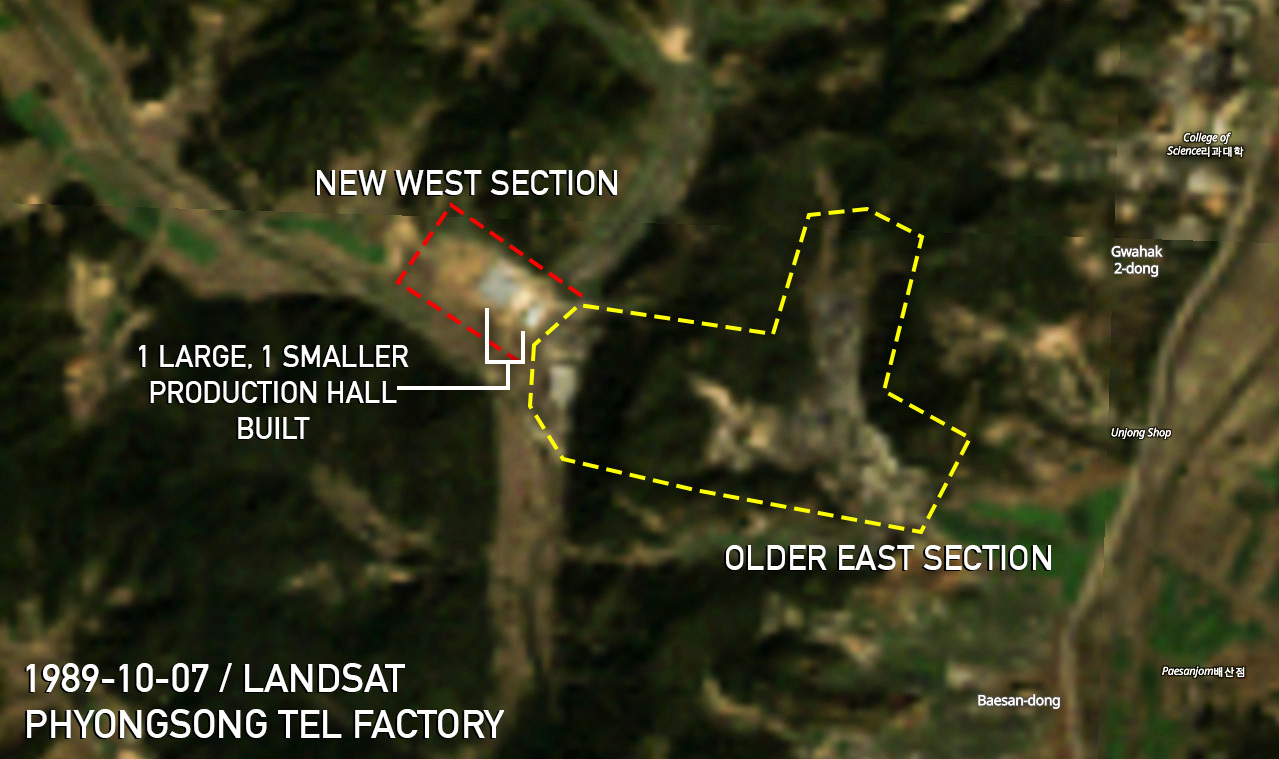
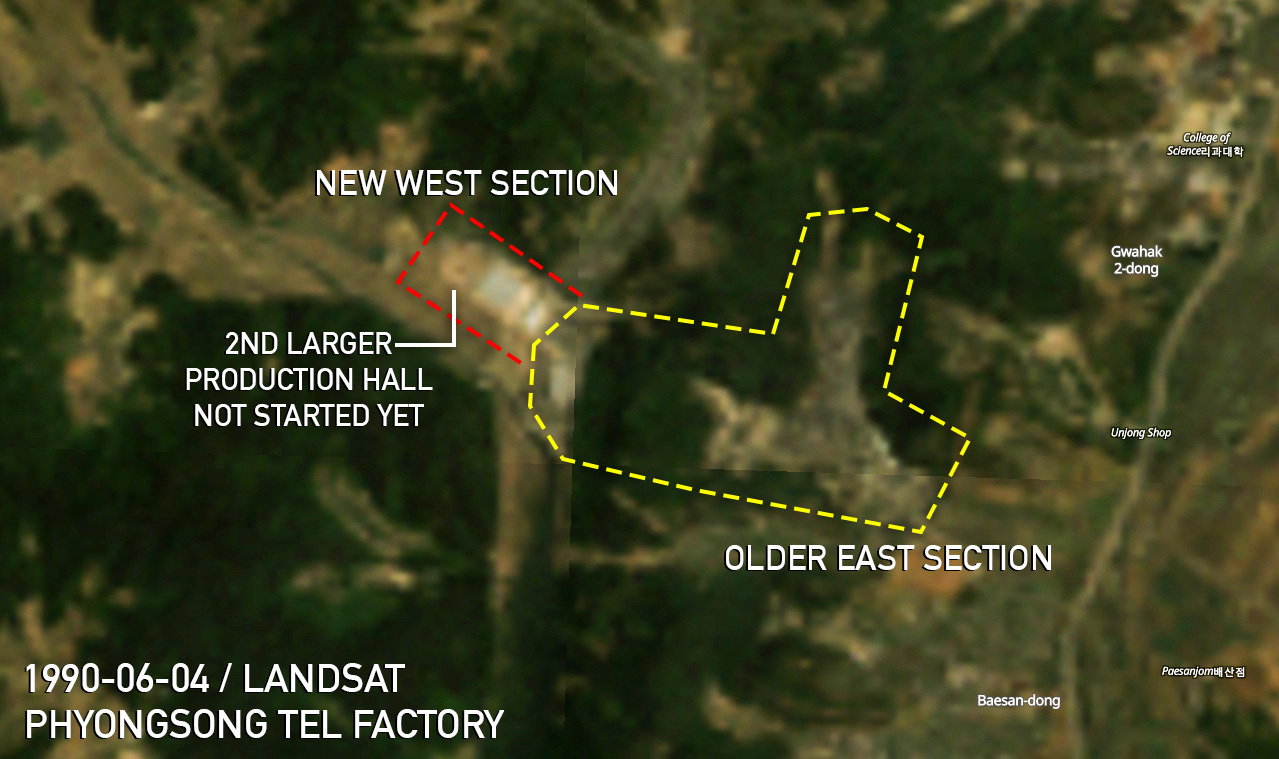
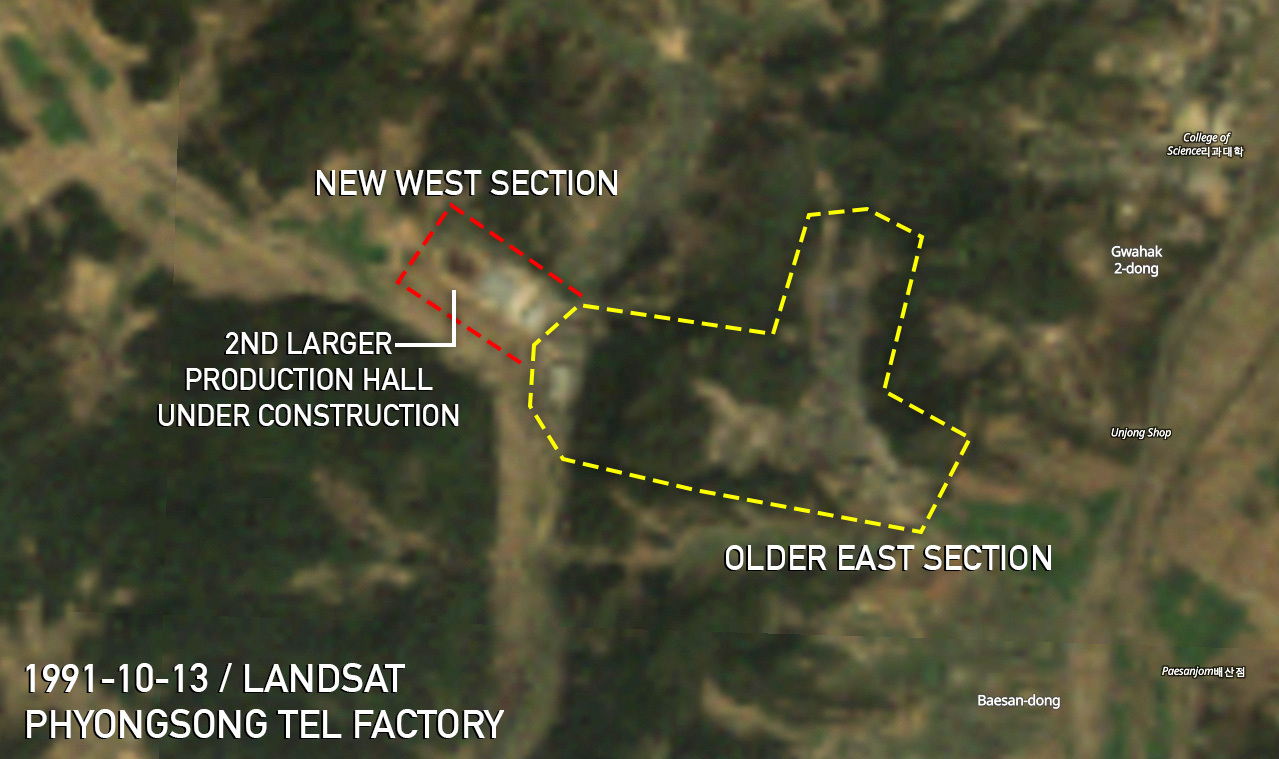
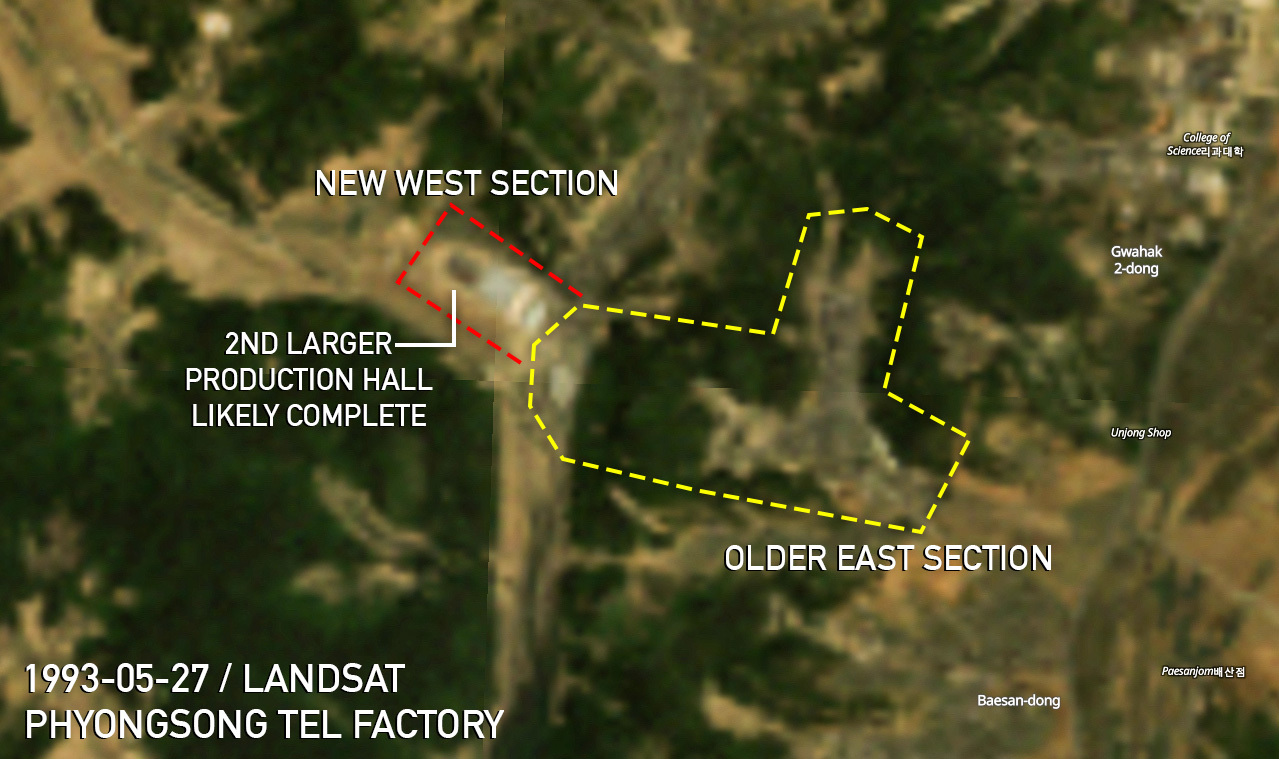
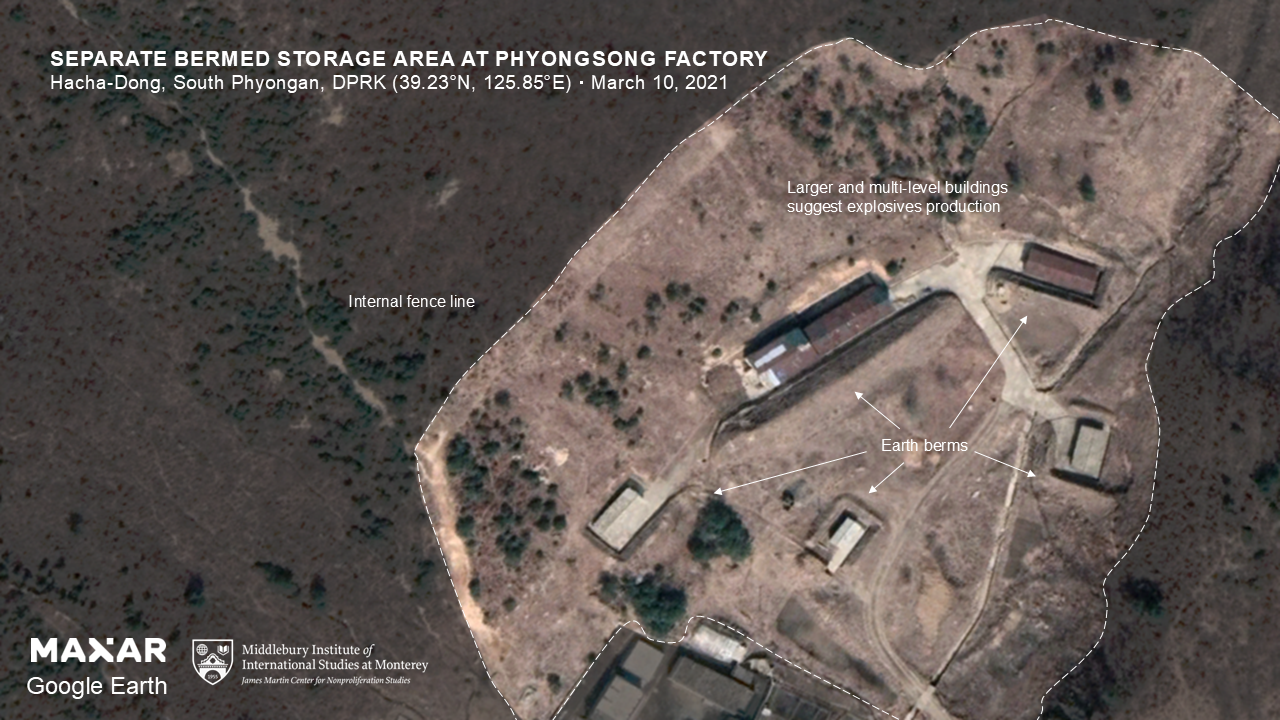 The complex also features underground facilities accessible via tunnel entrances into the central mountain, suggesting the factory may have been originally intended to make sensitive military equipment or weapons. Ford said the purpose of the older part of the complex on the east side of the mountain remains unclear, but that it features apparently disused buildings. Ones near the entrance may be active, however, since they were reroofed in recent years. Notably there are five buildings at the north end of this area that are surrounded by protective berms, suggesting it is “for more than storage and probably does some explosives handling or production,” according to Ford. TEL deliveries from the west side would likely run through the tunnel and out of the east entrance to the main highway that connects to Pyongyang, since this is the most direct route. North Korea’s official name for the factory is unclear, but it could be the Phyongsong Farm Machine Factory (or Phyongsong Agricultural Machine Factory, 평성농기계공장). The DPRK’s Rodong Sinmun reported on April 22, 1989 that this factory opened with six production buildings, which could possibly refer to five halls inside the larger building and one separate one. This might be the same factory that the DPRK’s Minju Joson reported was under construction on Jan. 25, 1989, though it used a slightly different name, the Phyongsong Trailer-type Farm Machine Factory (평성련결농기계공장). A factory with the same name in Haeju has similarly sized buildings to the Phyongsong site. Construction around these dates lines up with Landsat imagery showing the first large production hall was finished by early 1988, but the reports came before the second large building was finished. South Korea’s Dong-A Ilbo also reported on Nov. 22, 1988 that North Korean media covered a groundbreaking ceremony to start building the Phyongsong Trailer-type Farm Machine Factory only days earlier, which does not line up with Landsat imagery showing the Phyongsong TEL factory already partially built by then. Ultimately, it appears possible that the TEL factory is indeed the Phyongsong Farm Machine Factory and that the trailer-type farm machine factory is different and located elsewhere in the city. However, it’s also possible the TEL factory has a different name and has not received frequent state media coverage due to its military connections. For example, South Korea’s Chosun Ilbo reported on Jan. 8, 1996 that the Thaebaeksan Motors Factory was located in Phyongsong’s Paesan-dong, an area known to be in the general vicinity of the TEL factory but further east. (The TEL factory is located in what is now called Hacha-dong.) The March 16 Factory — which now makes TELs for a range of short- and long-range nuclear missiles — produced trucks named Thaebaeksan in the past, but it is located in northern Phyongsong. It may be that the Thaebaeksan Motors Factory was an alternate name for that location, but the article’s specific mention of Paesan-dong raises the possibility that this southern Phyongsong TEL factory is a branch (분공장) of the March 16 Factory. Edited by Bryan Betts © Korea Risk Group. All rights reserved. |

October 11, 2026Oct 11, 2026

The ultimate resources for professionals working on North Korea
 SHARE
SHARE COPY LINK
 X
X MASTODON