  Investigations North Korea rapidly rebuilding on top of wreckage after severe flash floodsSatellite imagery reveals construction in disaster prone areas at military HQ as authorities keep lid on likely tragedy  North Korea is rapidly building hundreds of new homes on the grounds of those wiped out by a devastating flash flood in July, according to NK Pro analysis of satellite imagery, while authorities continue to keep a lid on news of the disaster. The flooding occurred in July around a large military base north of the inter-Korean border in the town of Singye. Heavy rains appeared to cause a nearby reservoir to overload and its dam to break open, sending a torrent of water down a valley and through the town. Planet Labs imagery suggests a large stream of water erased over 380 houses and public buildings in its path, leaving a muddy scar hundreds of meters wider than the riverbed. State media has not disclosed details about the event despite the likelihood of casualties. The Rodong Sinmun briefly reported over one month after the event that Singye suffered “catastrophic” downpours on July 21, claiming locals received thorough warnings and alerts, but it did not elaborate on damages. Though it wasn’t reported earlier in national news, satellite imagery showed swaths of tents along the flooded river by early August for construction workers and displaced residents, likely under an operation overseen by local or national authorities. By Aug. 25, Planet Labs images showed construction had started on over 40 new concrete apartment buildings and 75 single-story duplexes in the same locations as the destroyed homes. 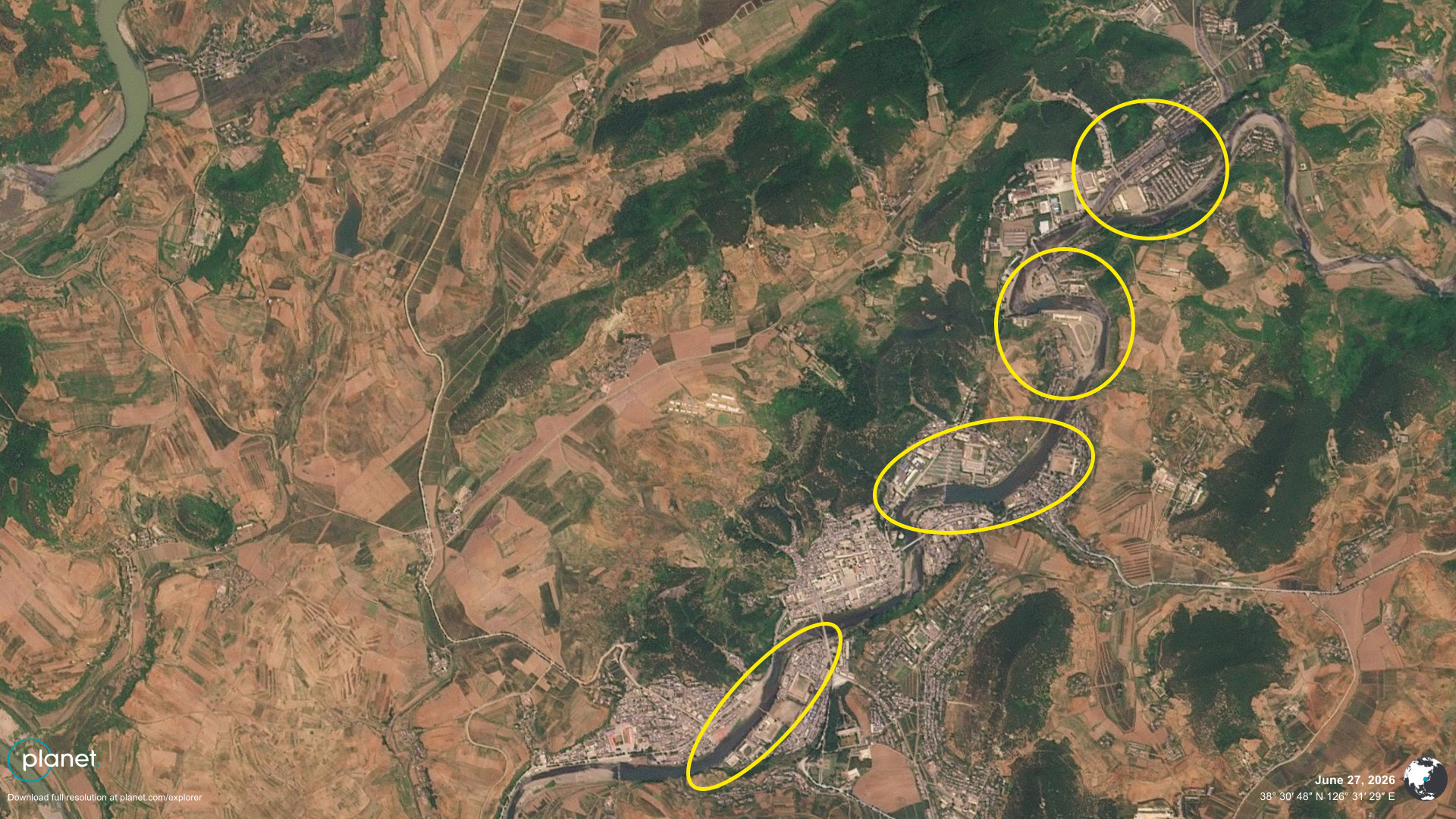
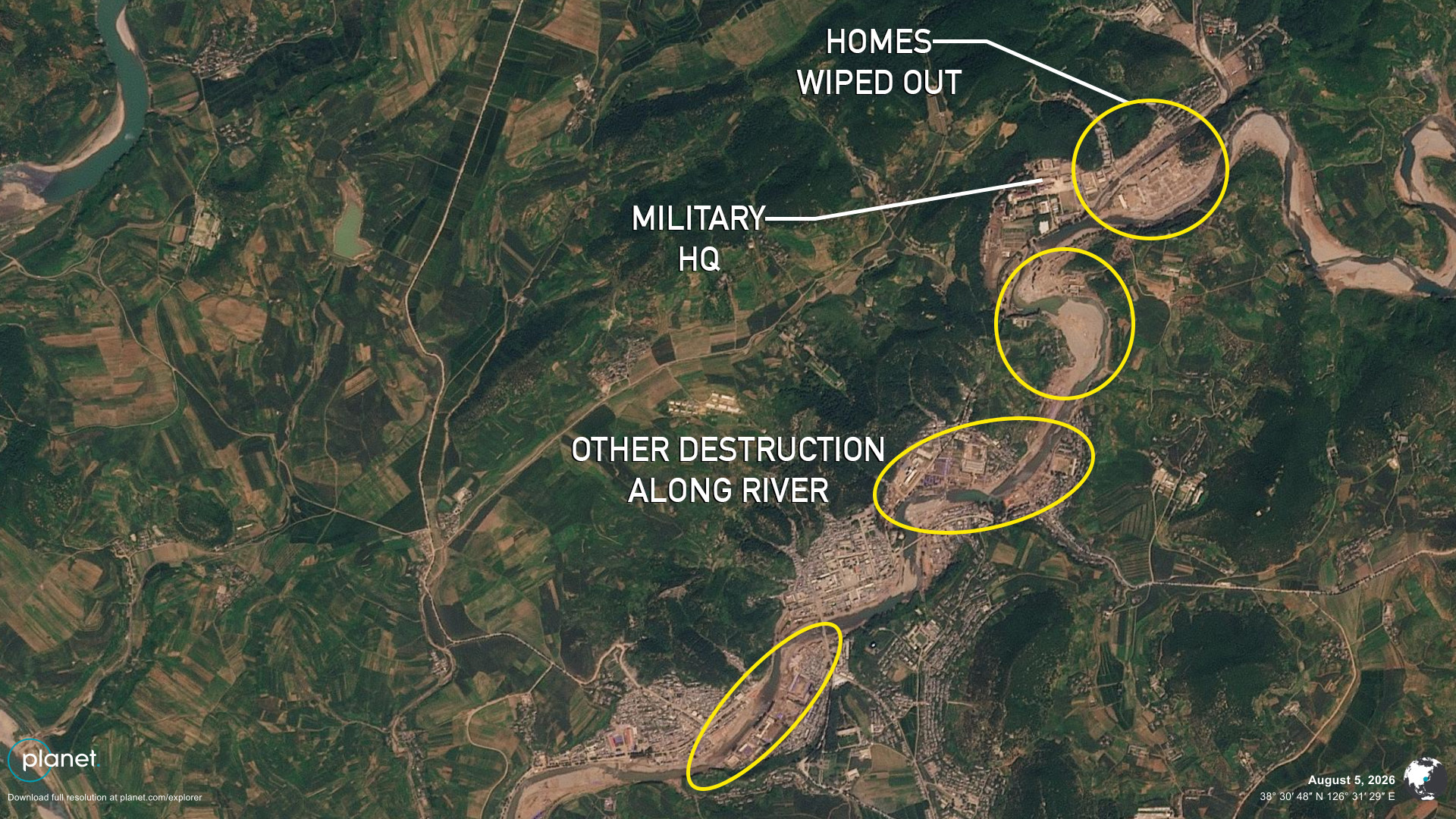
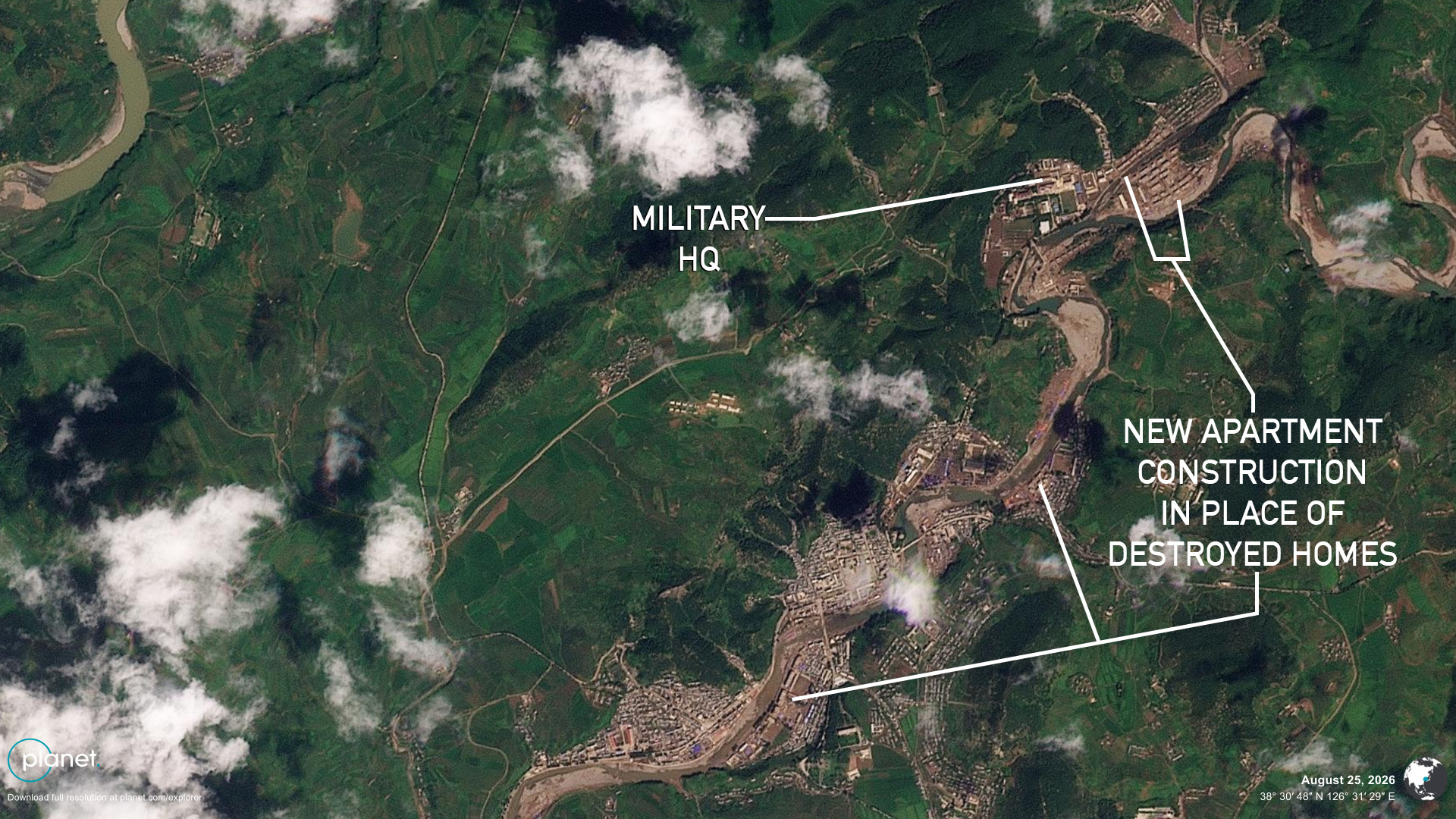
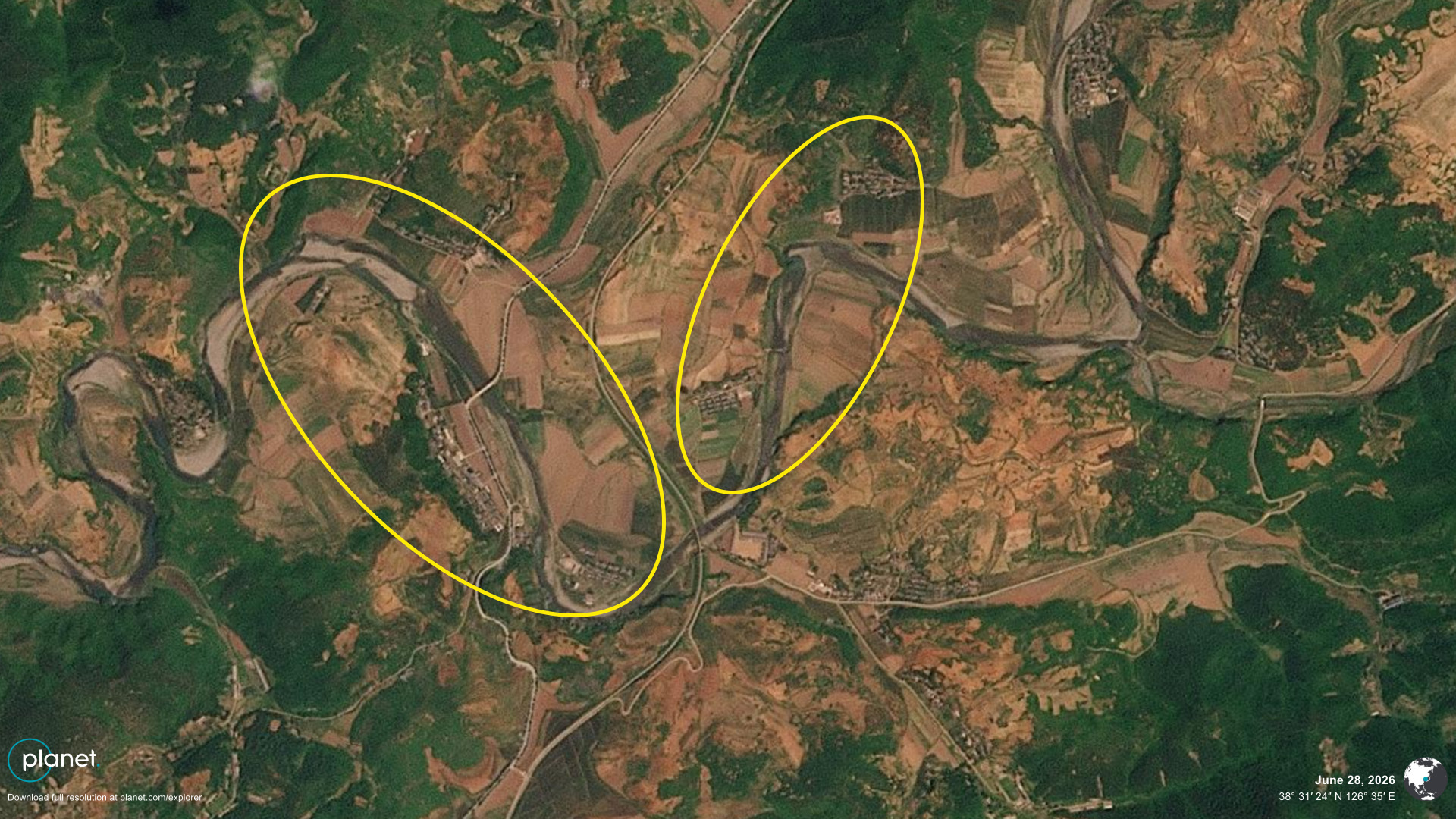
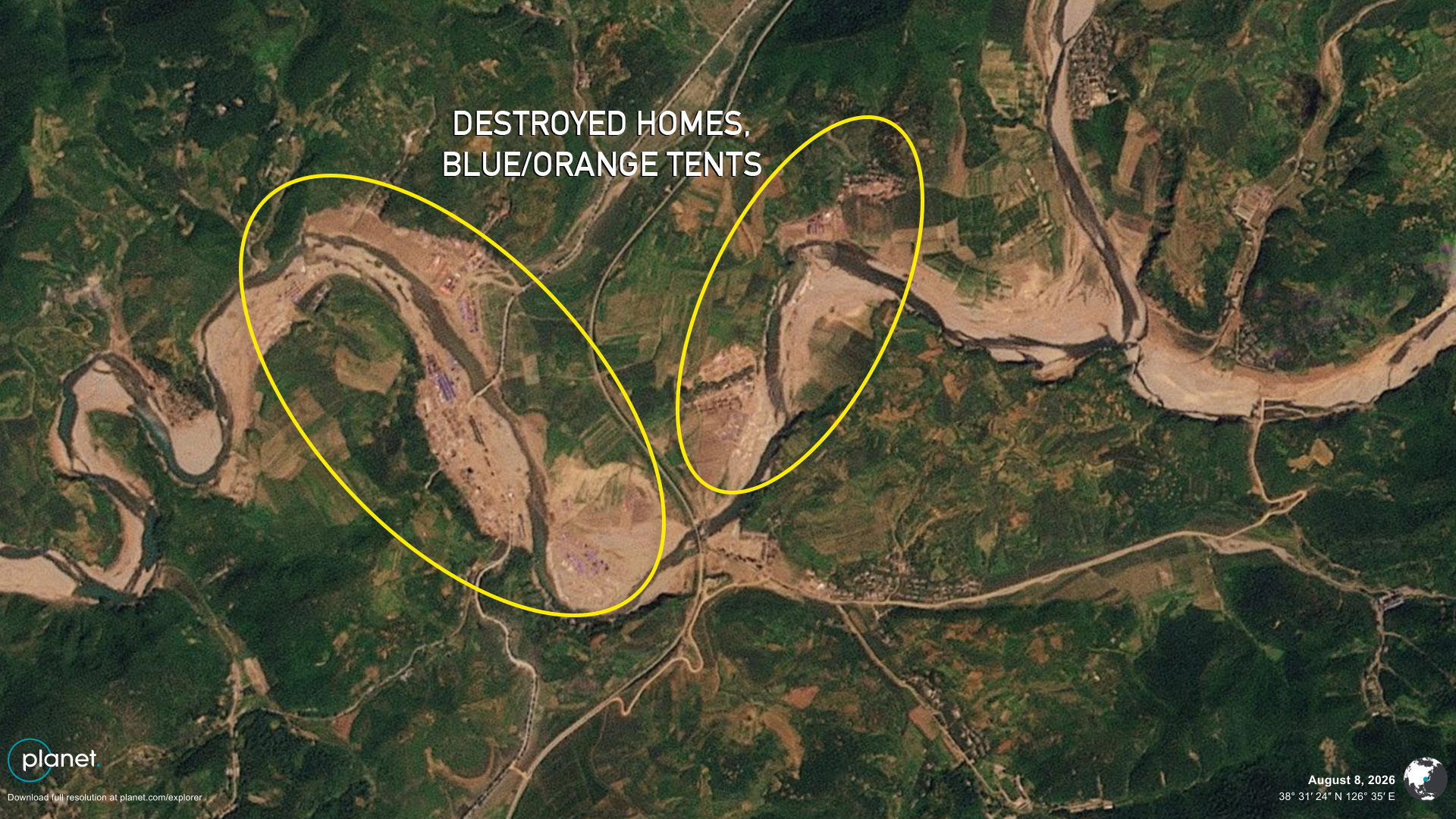
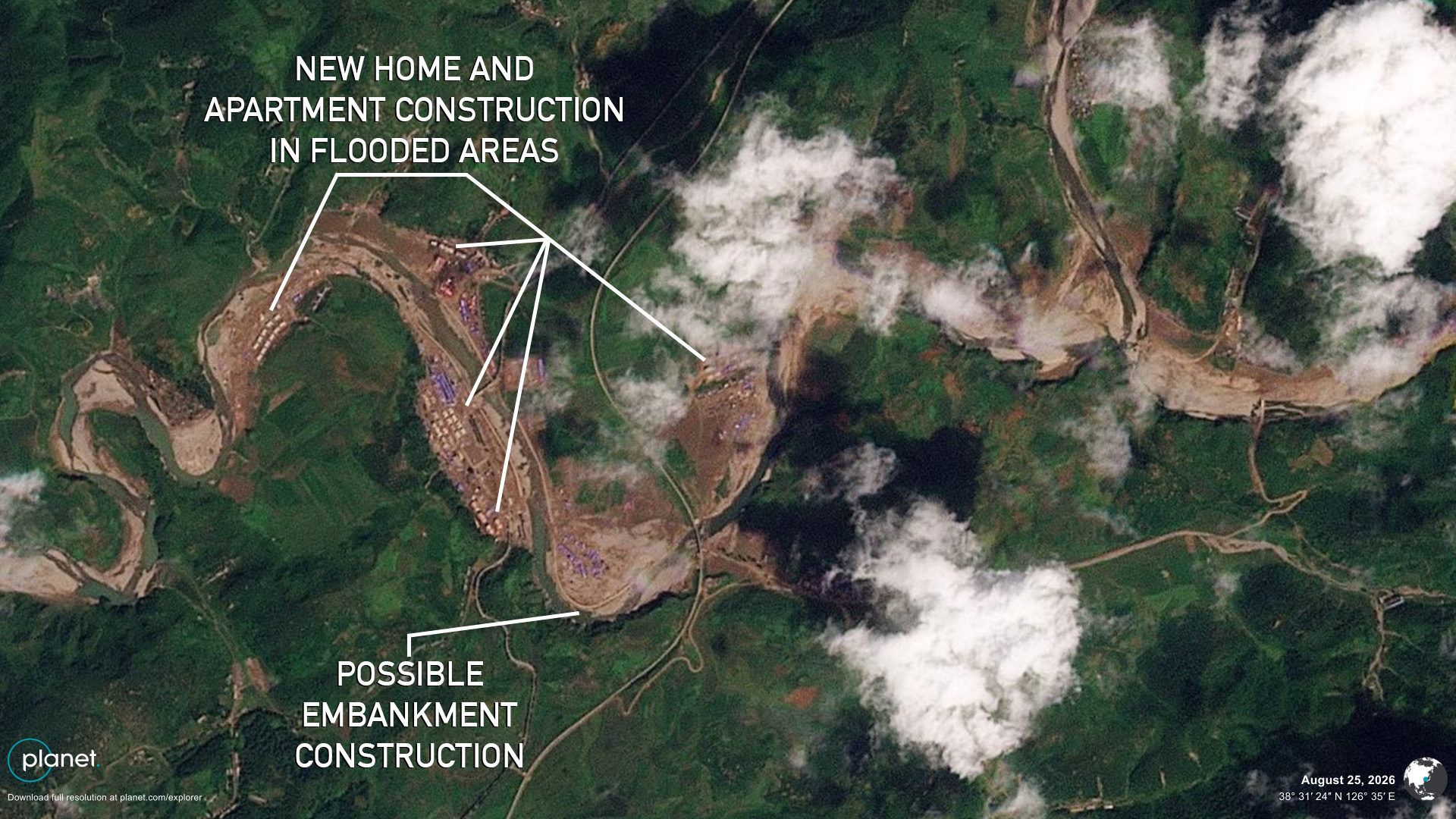
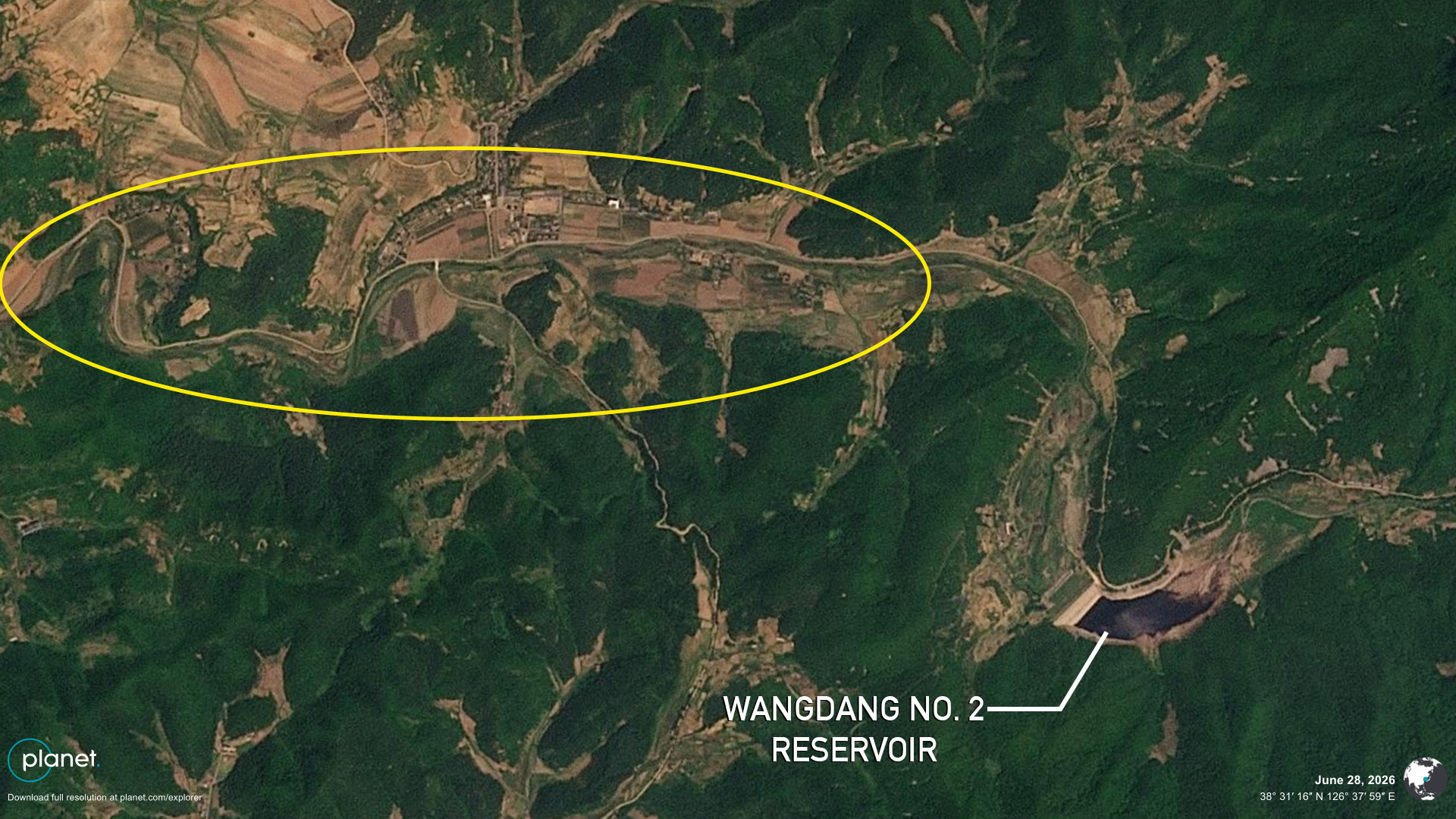
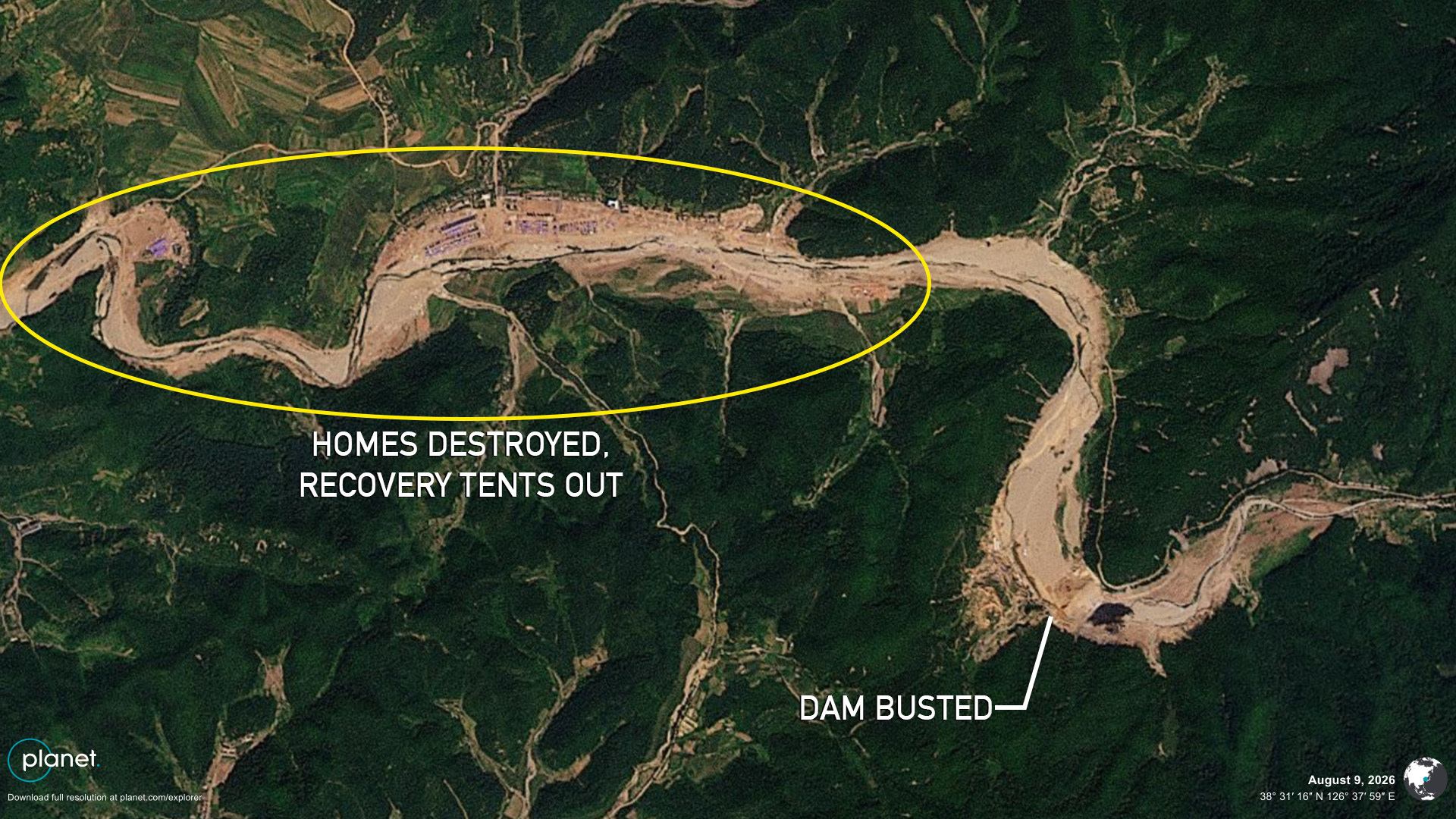
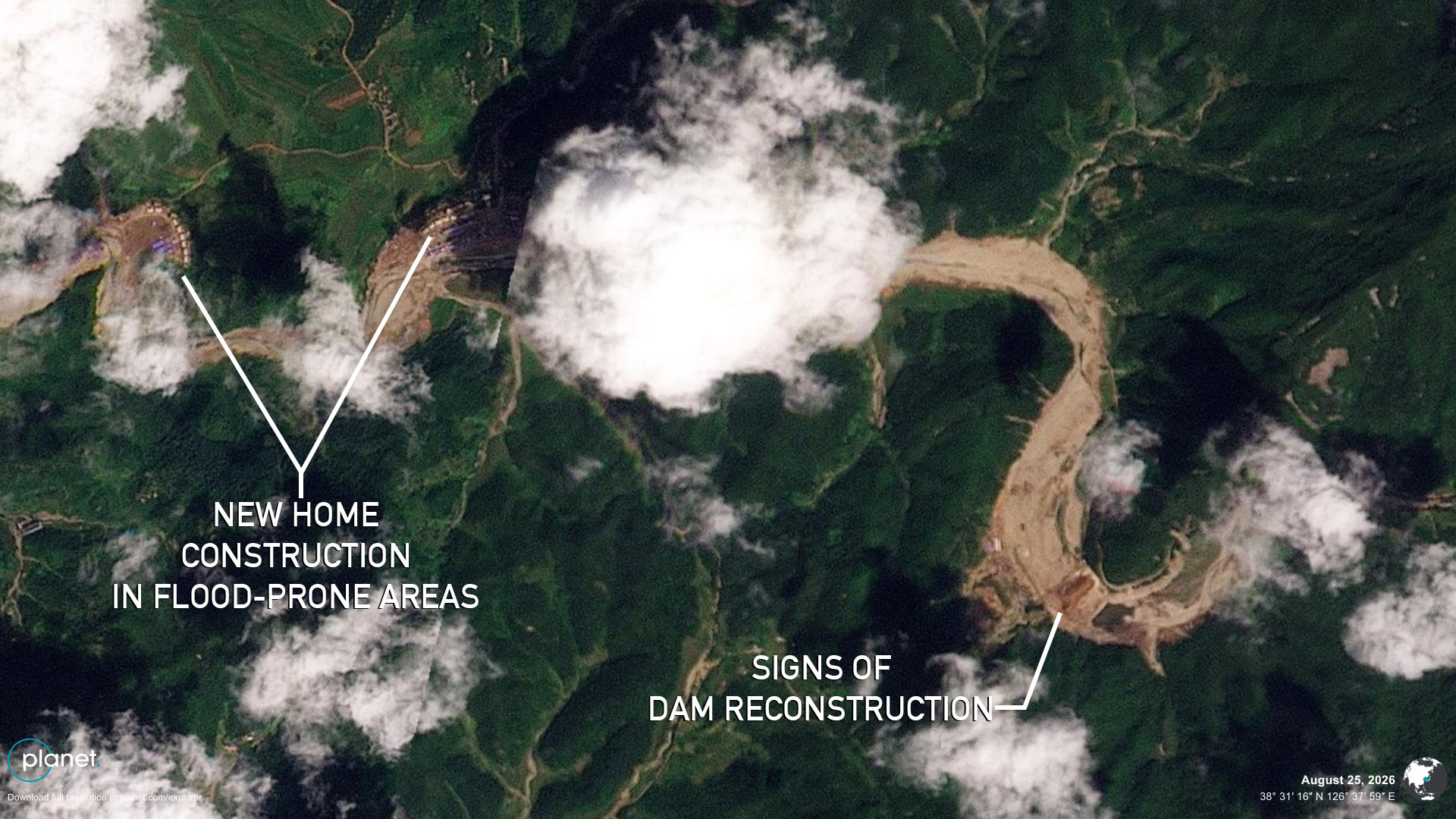
Workers also appeared to be attempting to fix the reservoir’s broken dam and build embankments or other protective infrastructure along the river leading down the valley and into Singye. The construction points to government efforts to rapidly rehabilitate the area and rehouse those who lost their homes. However, the short timeline from destruction to reconstruction suggests authorities may have neglected to conduct proper investigations into the cause of the flood and geological surveys on safe housing zones in favor of quickly moving on from the disaster. NK Pro has found past instances of homes being similarly rebuilt quickly in flood-prone areas before being inundated by water during storms in subsequent years. North Korea’s authoritarian government has long maintained a policy of hiding most negative domestic news from the population, with selective coverage of natural disasters that is usually focused on leader Kim Jong Un’s “benevolent” response and blame on lower-level officials. This was the case after flooding in the northwest in 2024, on the east coast in 2023 and several other major storms and typhoons over the last decade. Kim publicly inspected reconstruction efforts two years ago near another village that was entirely wiped out by a massive landslide; state media similarly hid details of that tragedy. State media regularly reports on disasters in other countries, seemingly in order to send a message to the population that such events are unavoidable, thus easing pressure on authorities. This included showing on state TV footage of the Nepal flash flooding last week which involved similar characteristics as the Singye floods. The main state newspaper Rodong Sinmun published Kim’s condolences to Nepal and China over the disaster, while it’s unclear if he expressed similar concerns over Singye through internal channels. Edited by David Choi © Korea Risk Group. All rights reserved. |

October 12, 2026Oct 12, 2026

The ultimate resources for professionals working on North Korea
 SHARE
SHARE COPY LINK
 X
X MASTODON