  Investigations North Korea has refortified 74% of border in DMZ, satellite imagery showsNK Pro analysis finds Pyongyang has accelerated construction of defense lines since June under anti-South Korea policy  North Korea has accelerated an anti-South Korea project to build new defenses inside the demilitarized zone (DMZ) over the last five months, according to NK Pro analysis of satellite imagery, reinforcing about 74% of the total length since adopting an explicitly anti-South Korea policy in early 2024. The extensive network of paths mapped by NK Pro has been carved into forests along the roughly 130-mile-long DMZ (210 km) since construction began in April 2024, with DPRK soldiers completing 42% just since June. The new construction has involved clearing trees and building new walls, fences and tank traps, usually close to the military demarcation line (MDL) and in some cases right alongside it. But it does not appear that North Korea is attempting to take ROK territory by building defense lines across MDL, despite doing so on one patch of land last year. Still, South Korea has reported on DPRK soldiers crossing the border bisecting the DMZ numerous times during the construction, leading Seoul to propose military talks on clarifying MDL lines last week. Pyongyang has yet to respond. 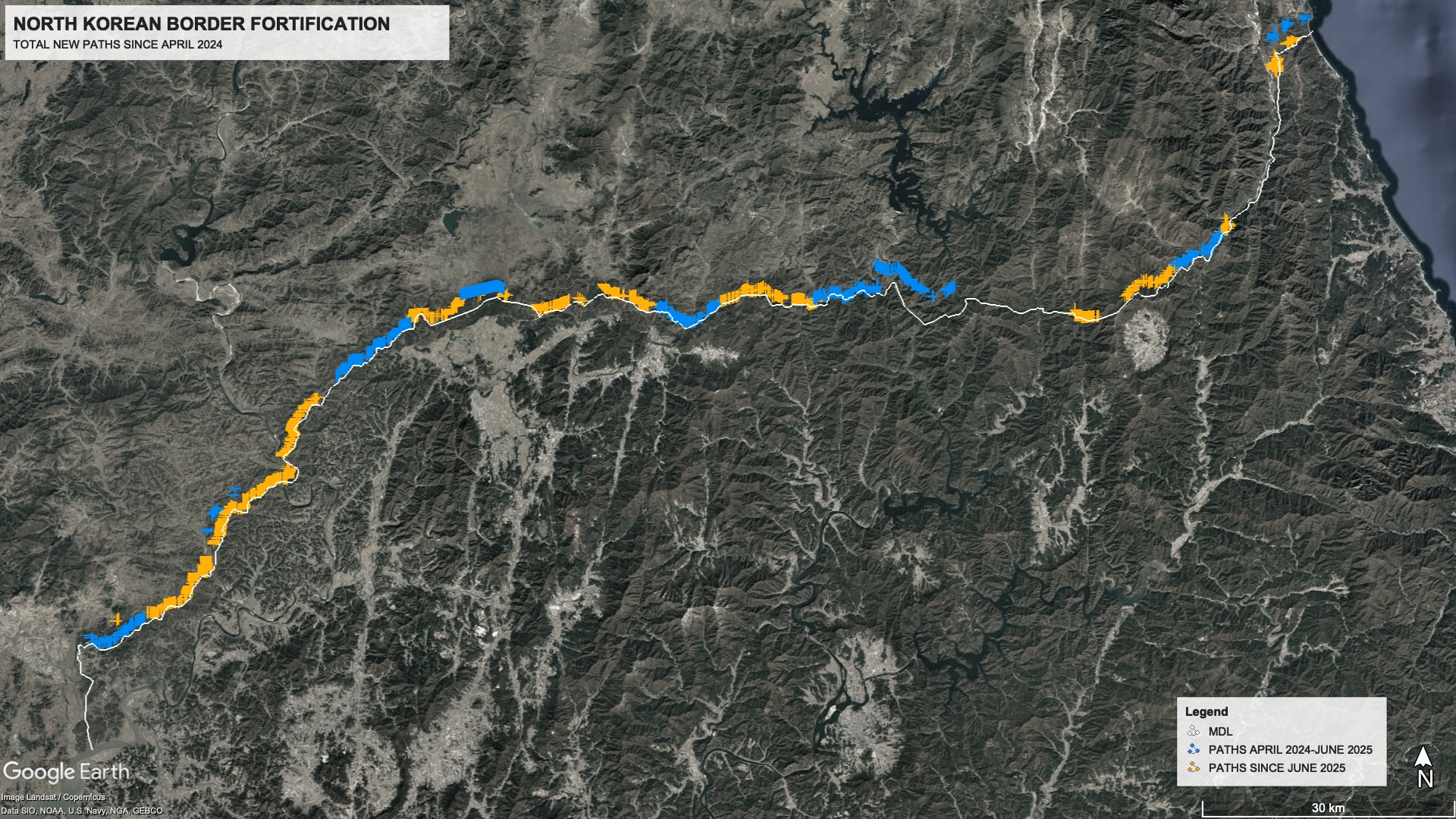
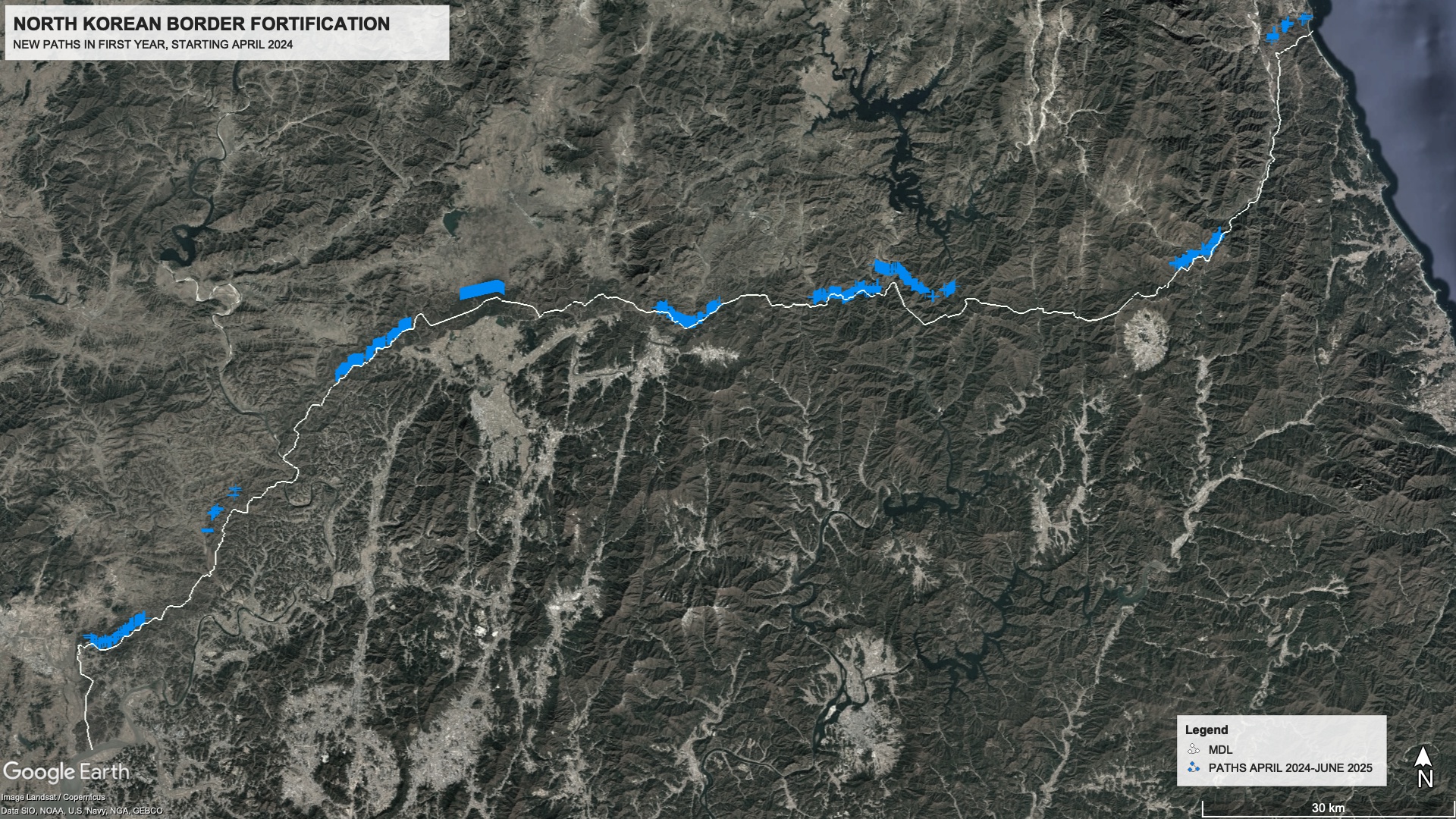

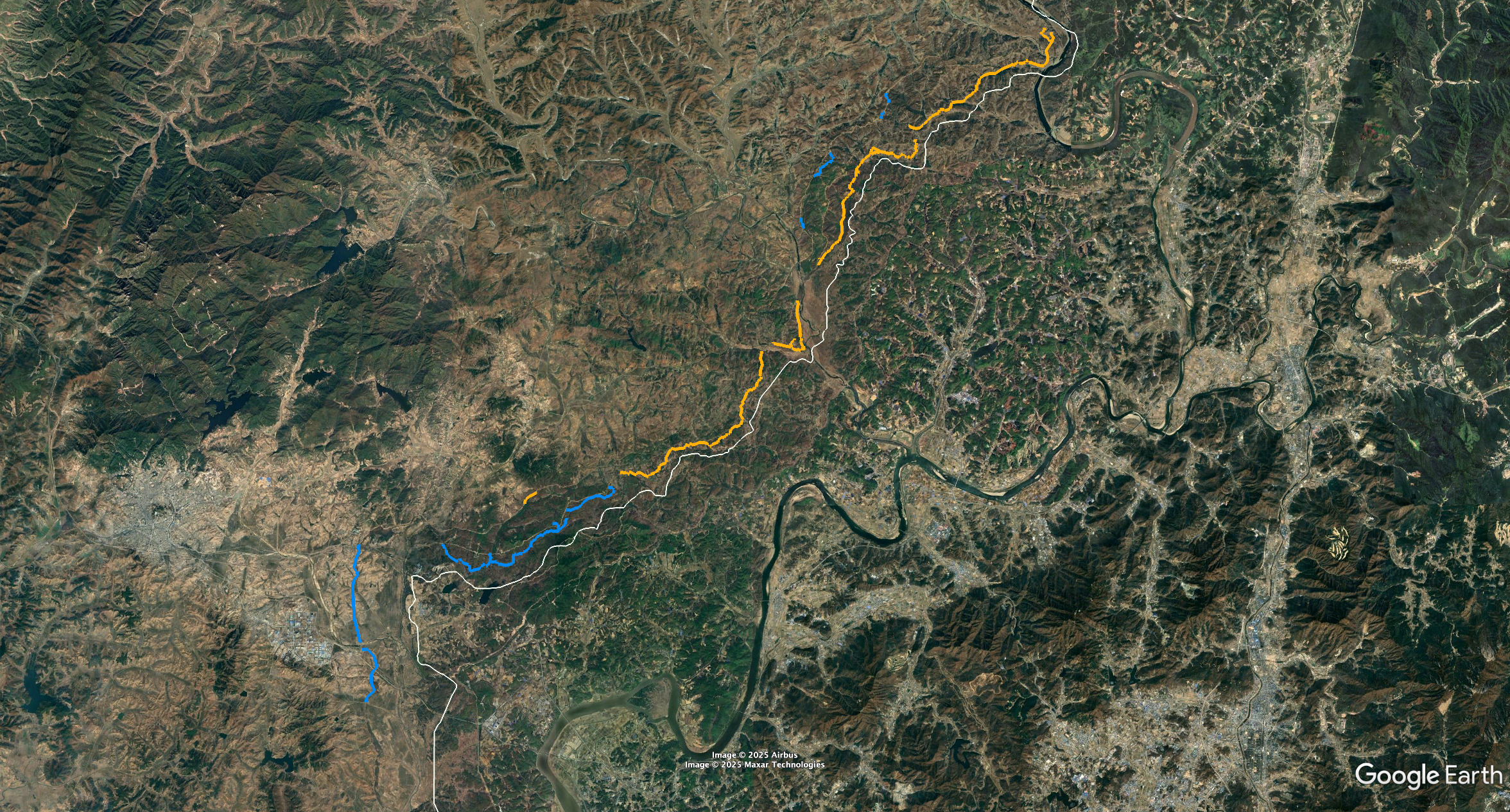
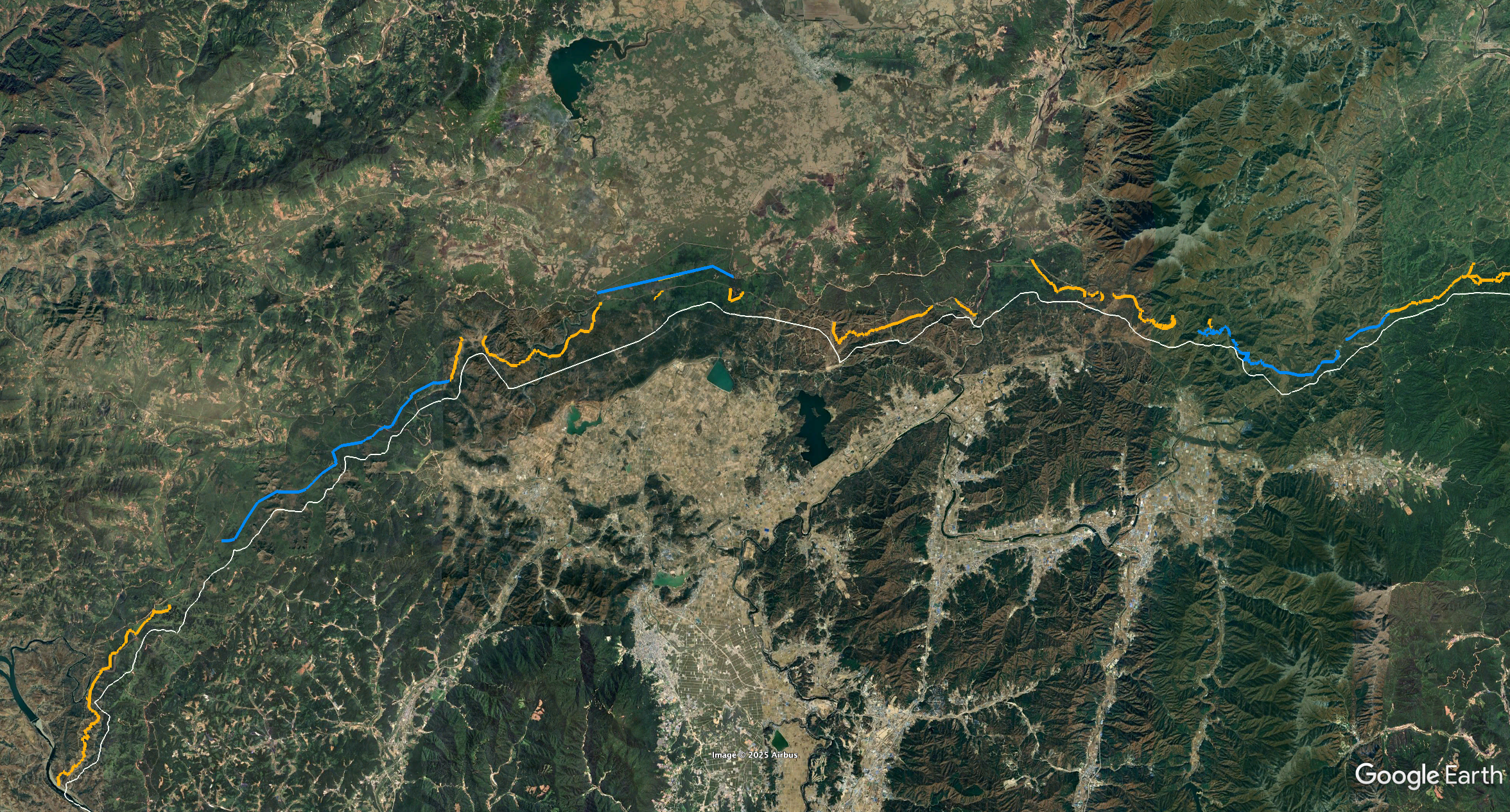
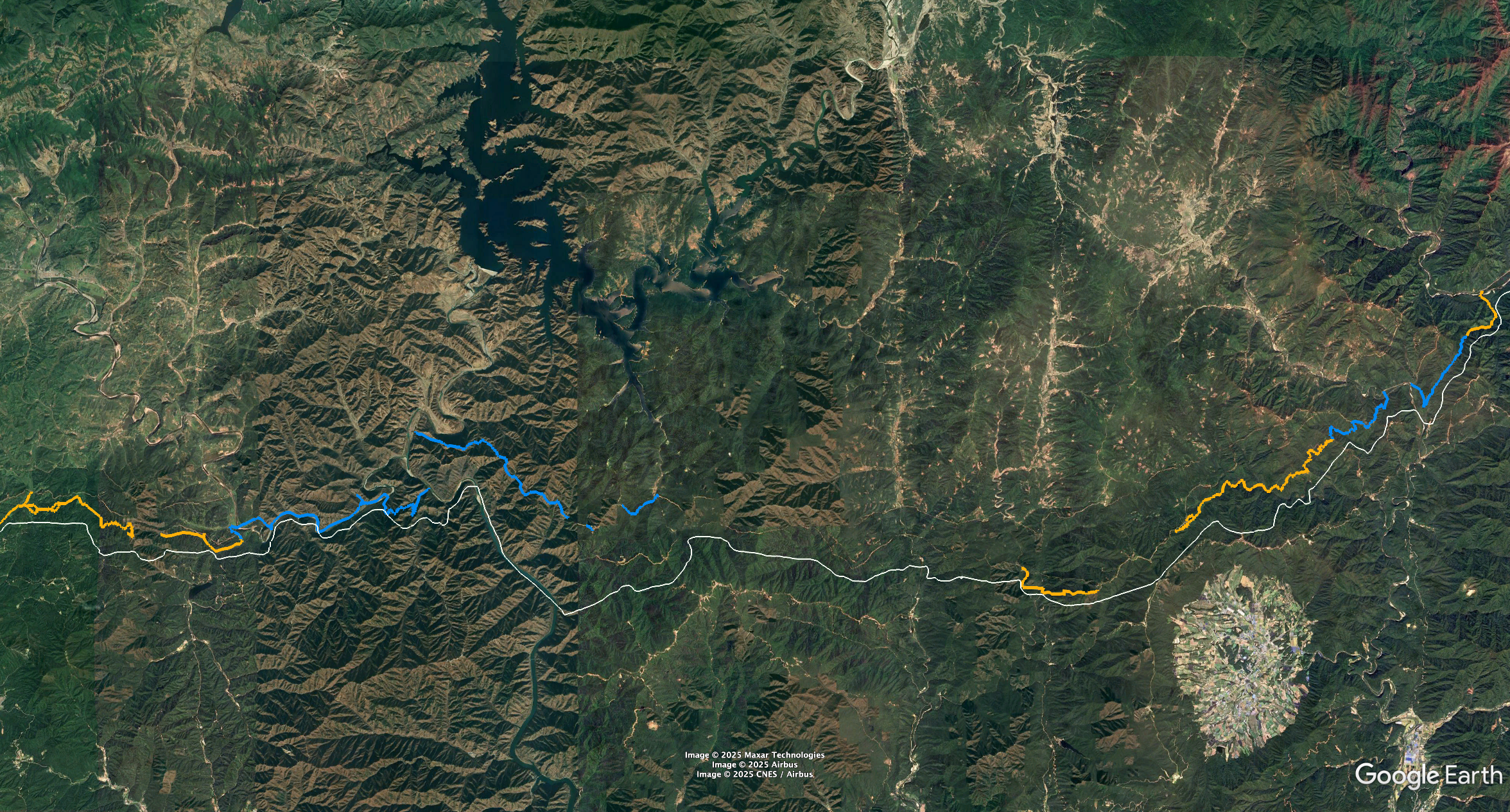
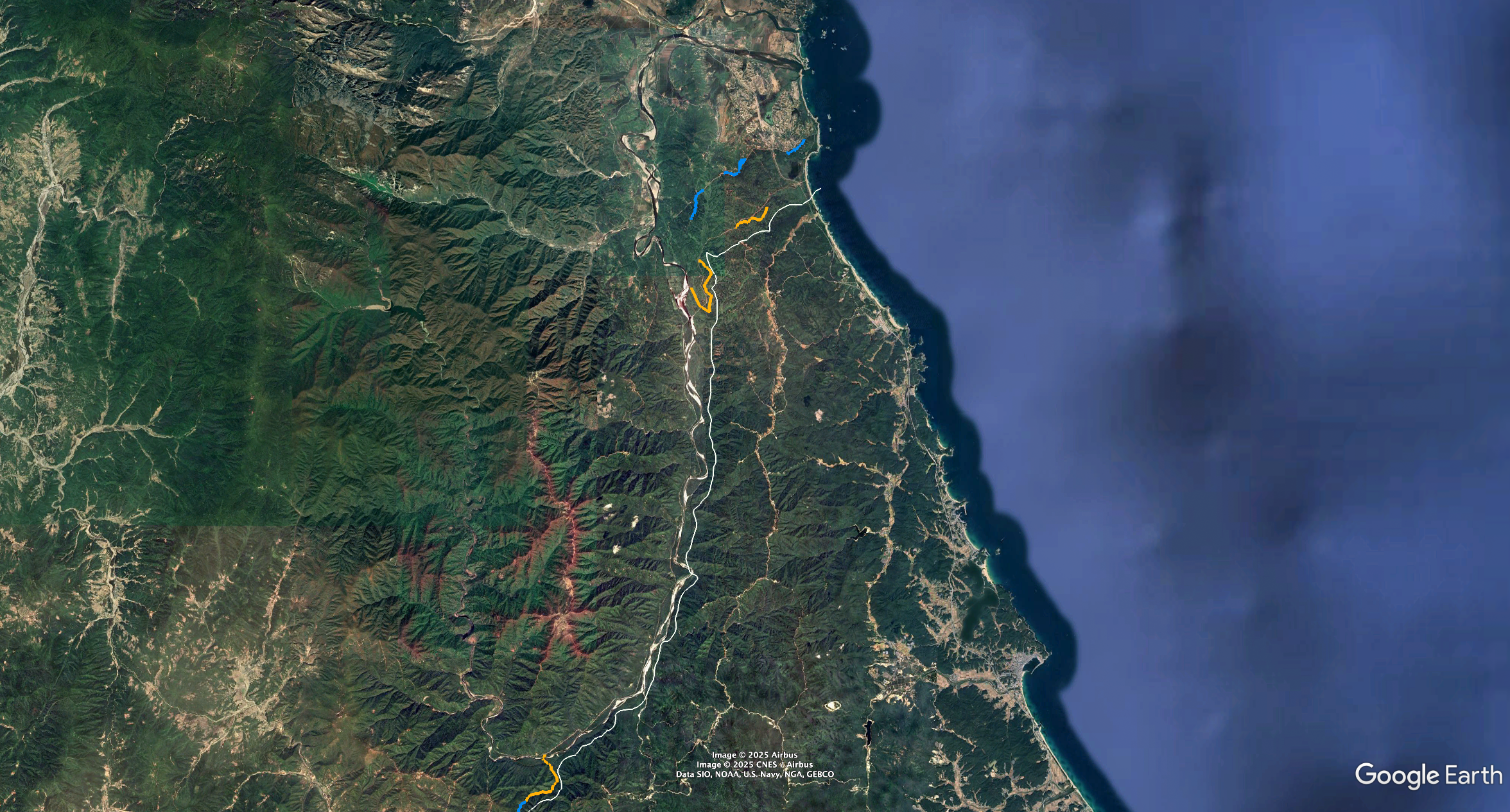
Using Planet Labs medium-resolution imagery, NK Pro traced the new defense lines in two stages: The first period covers construction between spring and winter 2024, when work slowed down, and the second starts from June 2025 when North Korea announced it had restarted border construction. The total length of the paths in the first yearlong period was around 42 miles (68 km), while the total in the second period of just five months was longer at around 54 miles (87 km), showing North Korea poured more resources into the project this year. NK Pro calculated these figures, as well as the length of the MDL, at a more zoomed-out scale to avoid problems of the so-called coastline paradox. A more detailed measurement of the twists and turns in the paths at a more zoomed-in level produces slightly longer figures (55 miles in the first period and 71 miles in the second). Brand new defense lines have not appeared across around 26% of the line (34 miles or 55 km), though NK Pro has identified work to widen or reinforce existing fenced paths in many cases, suggesting the true length or percentage of the border seeing new construction is likely higher than calculated here. 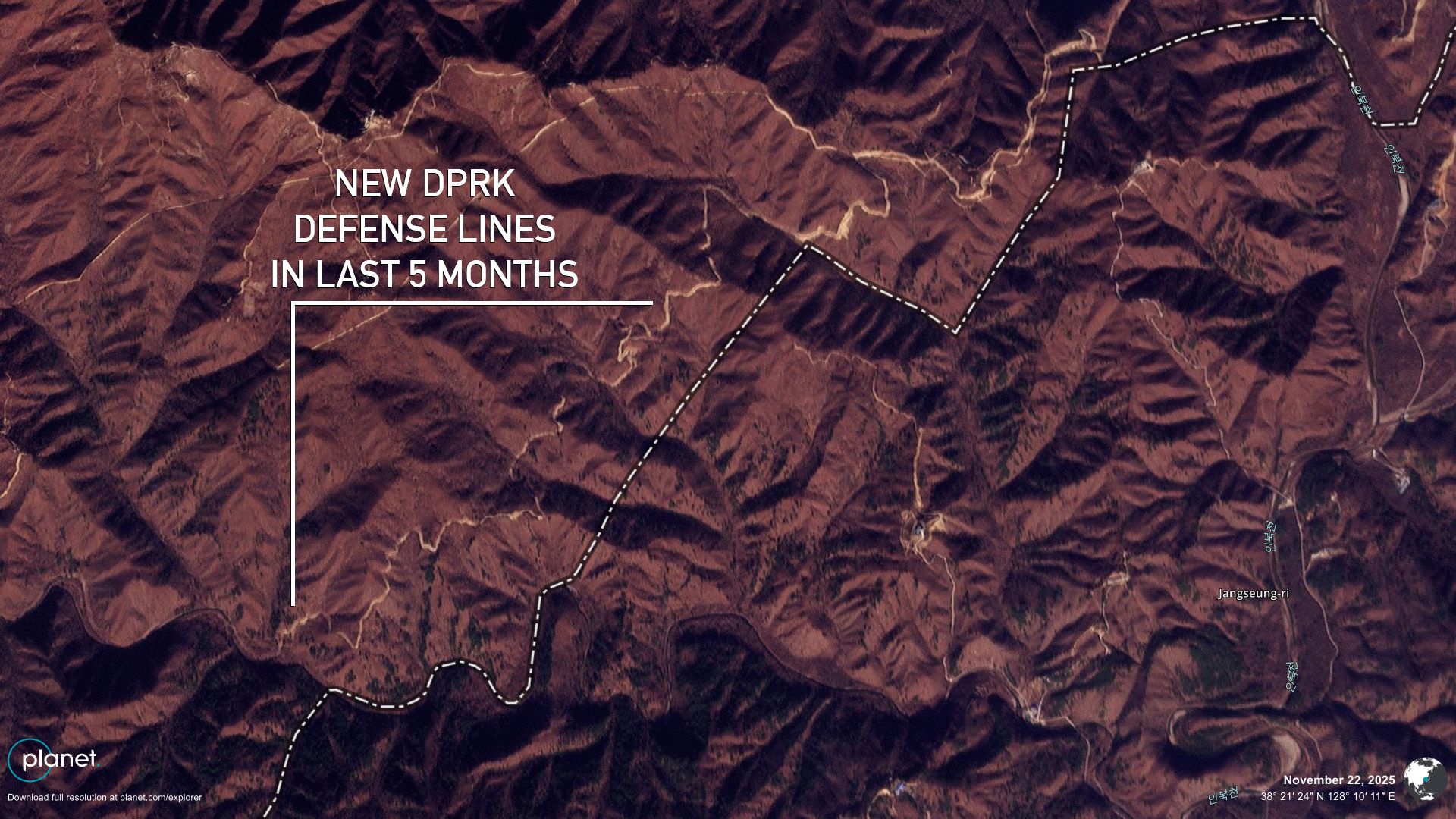
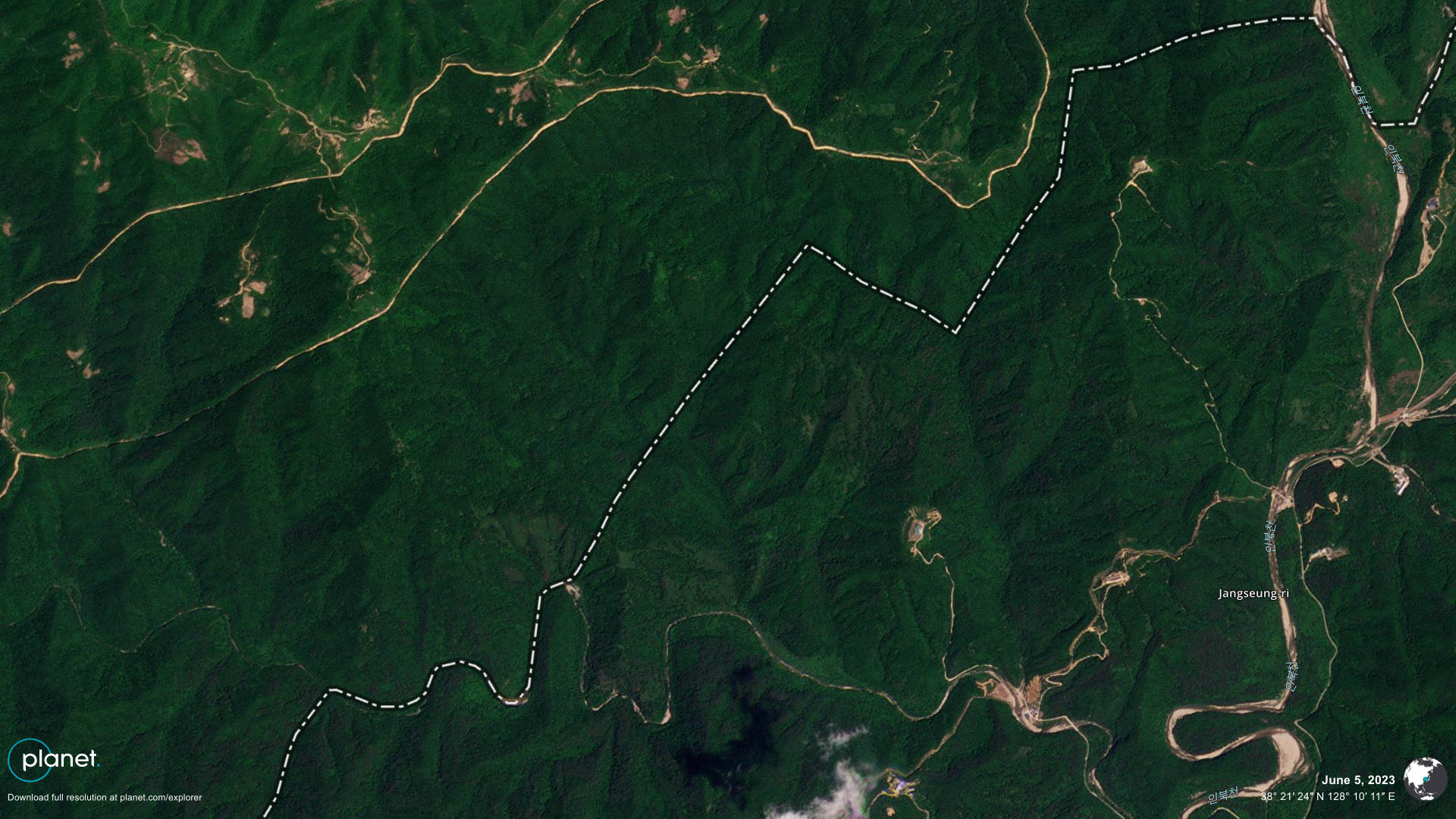
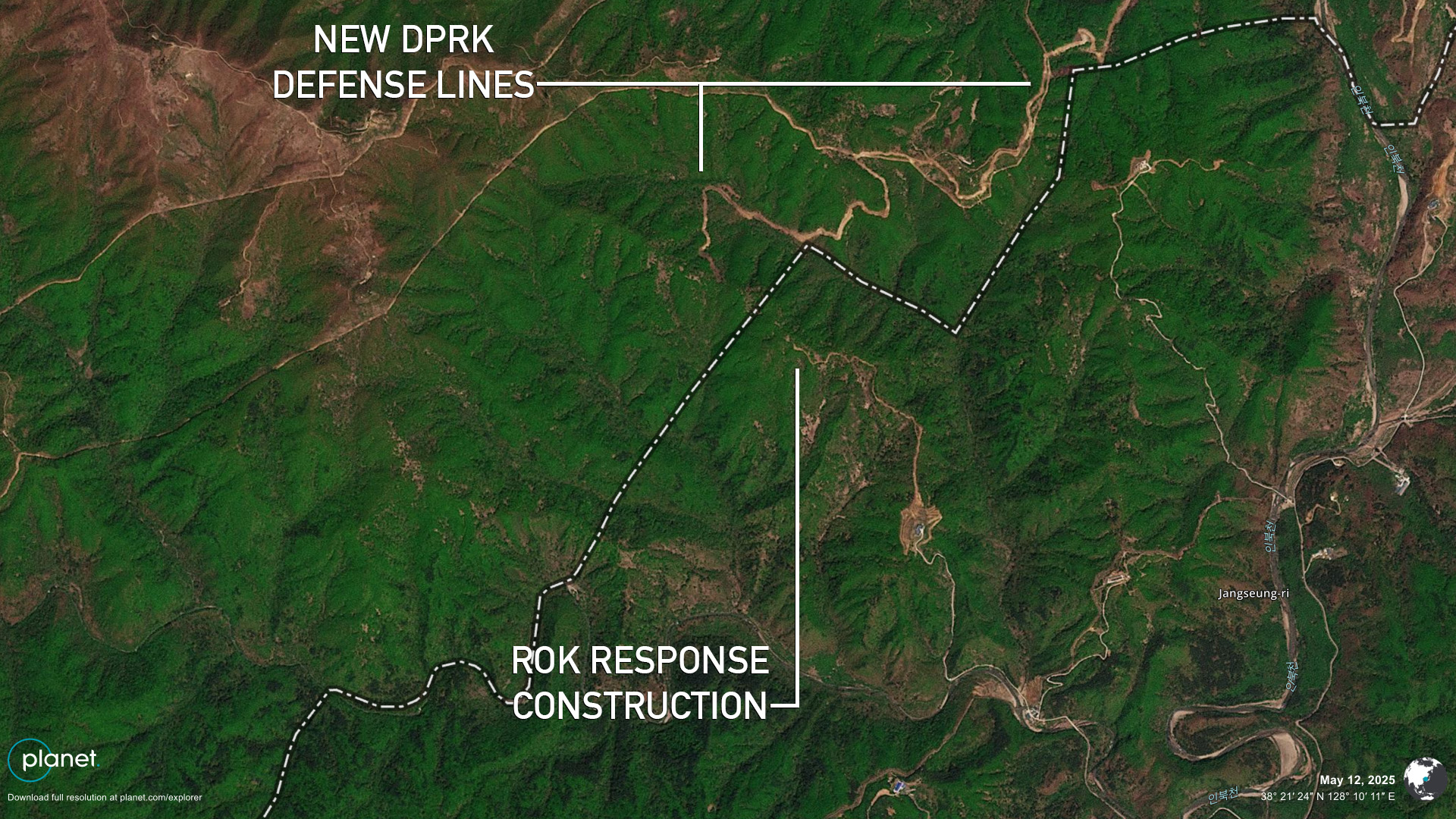
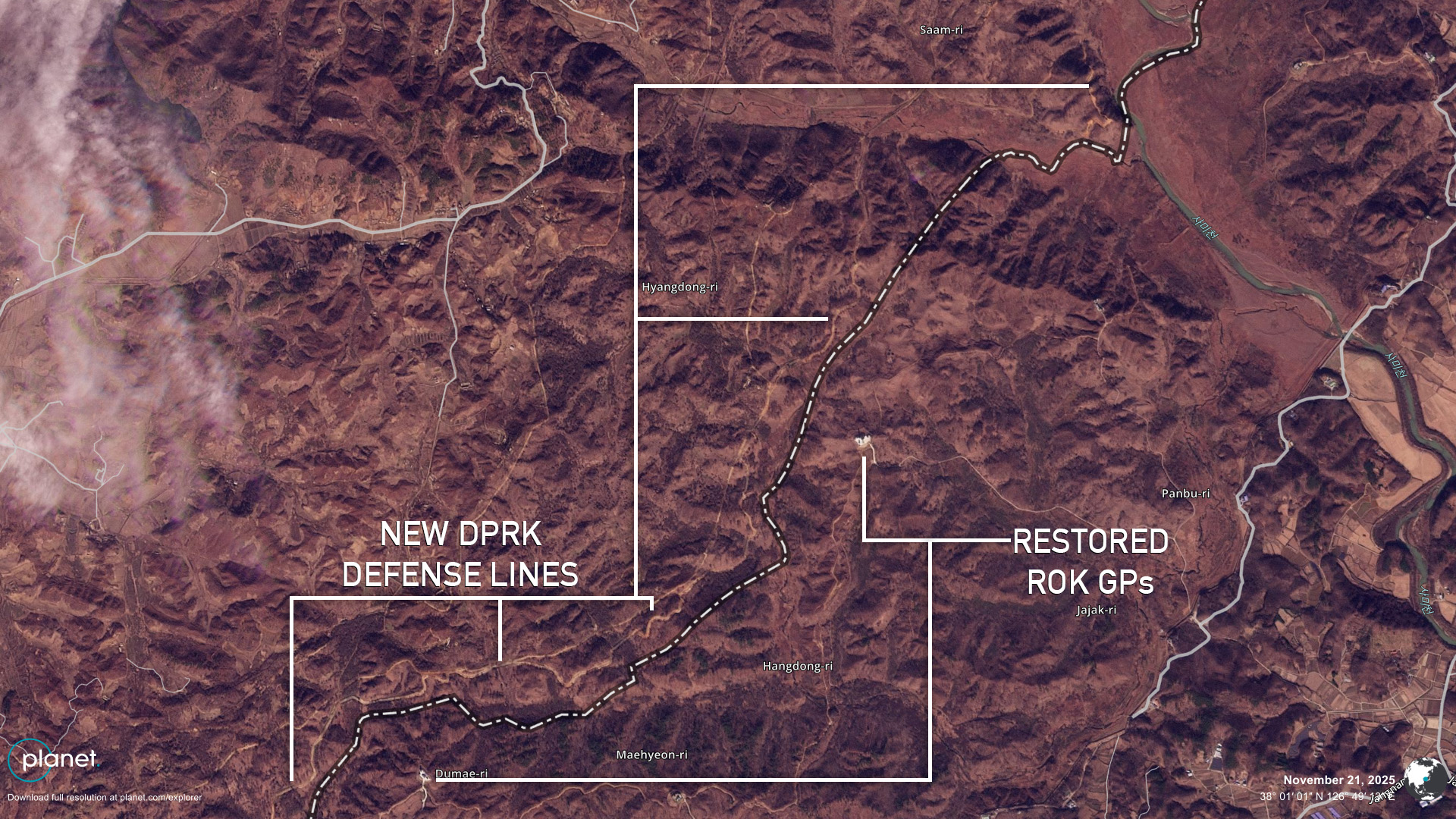
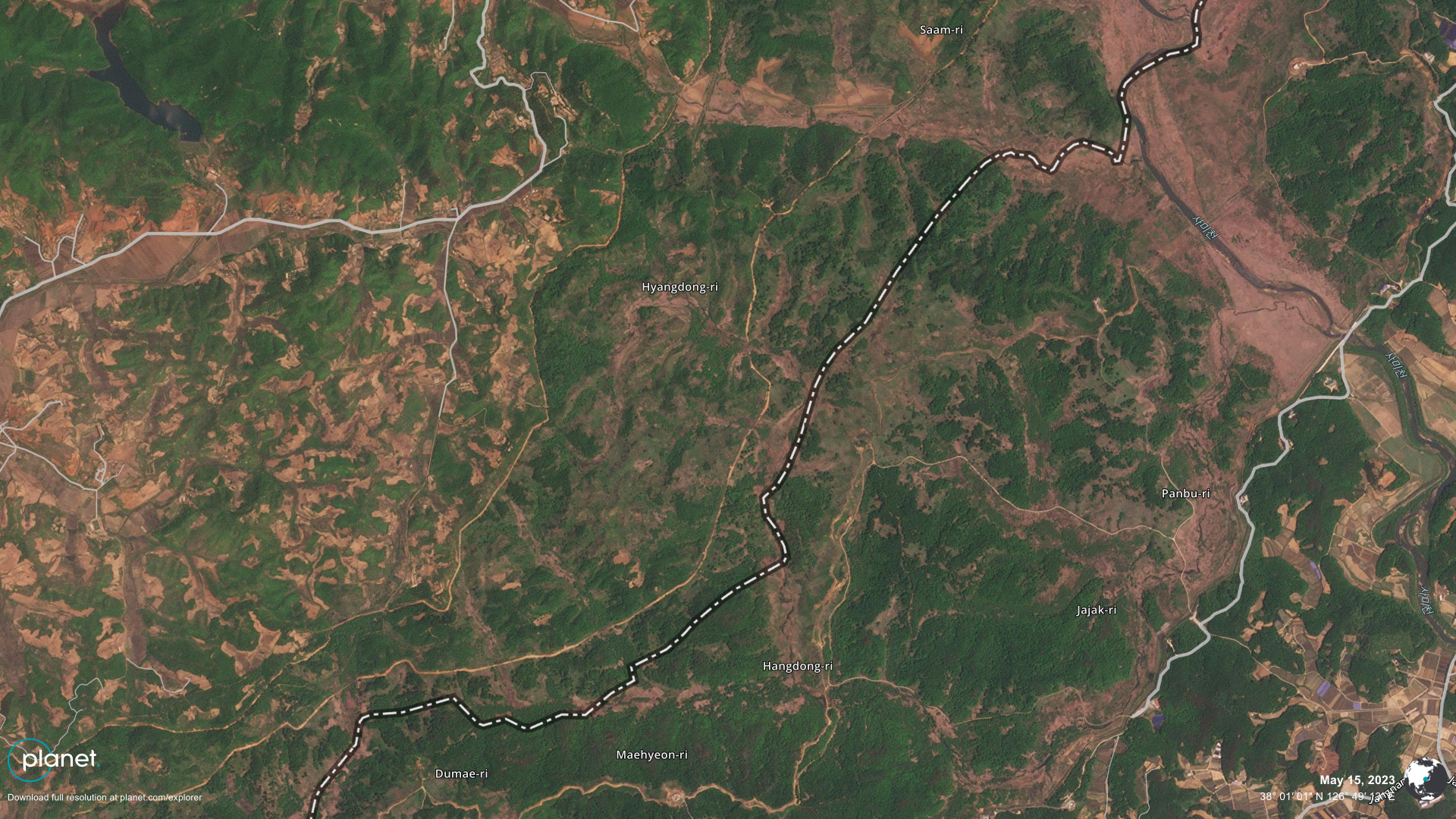
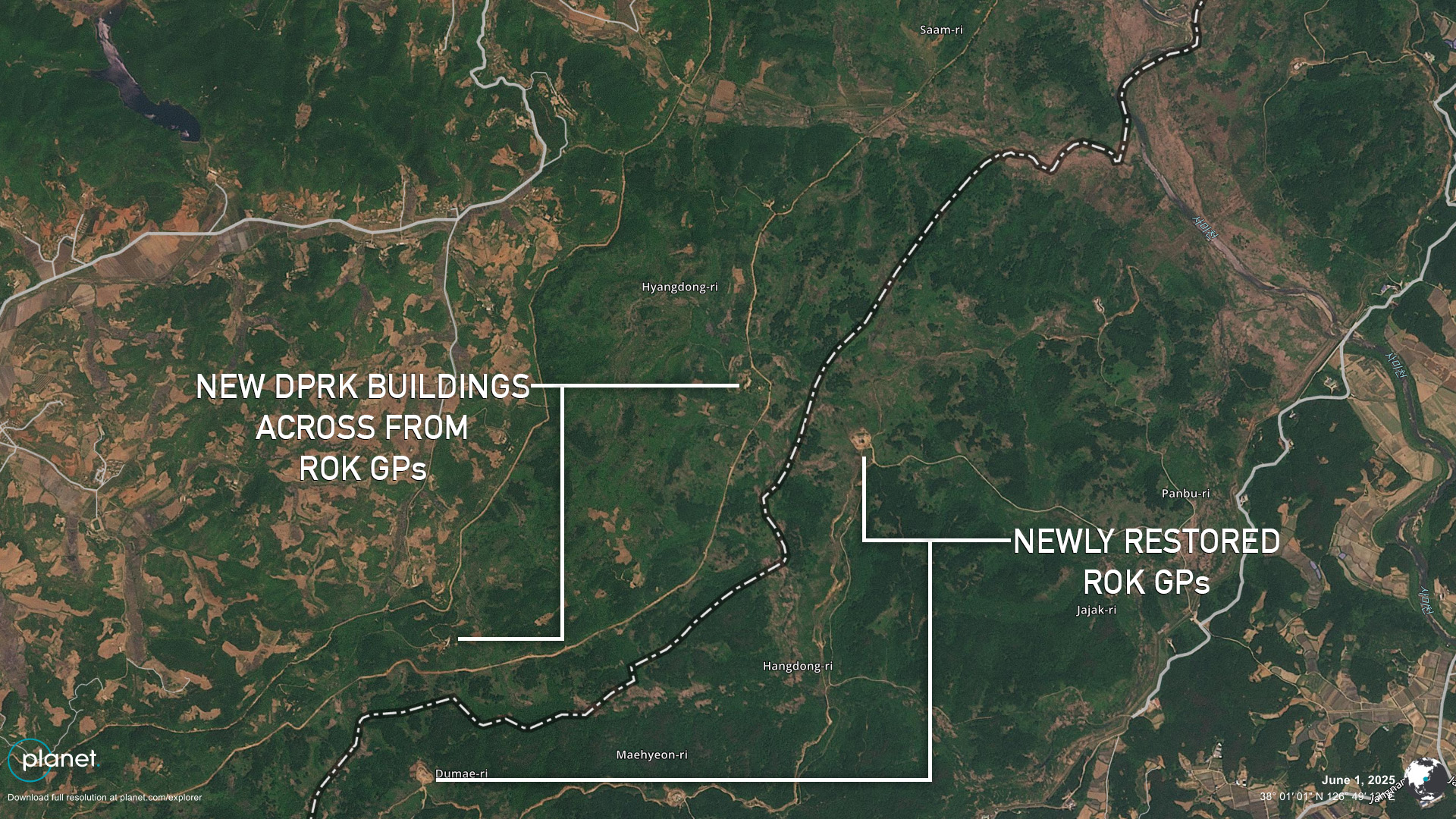
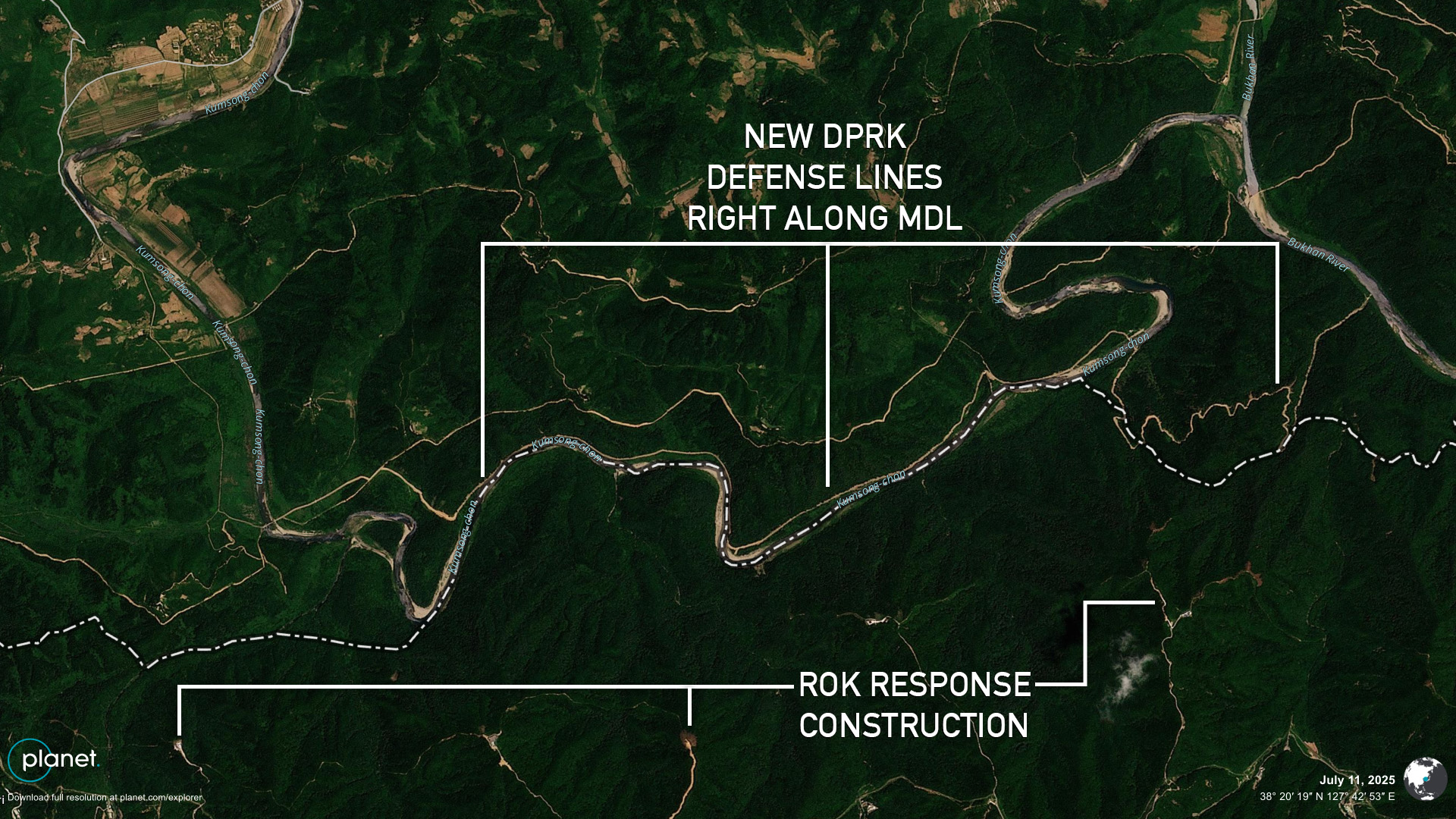
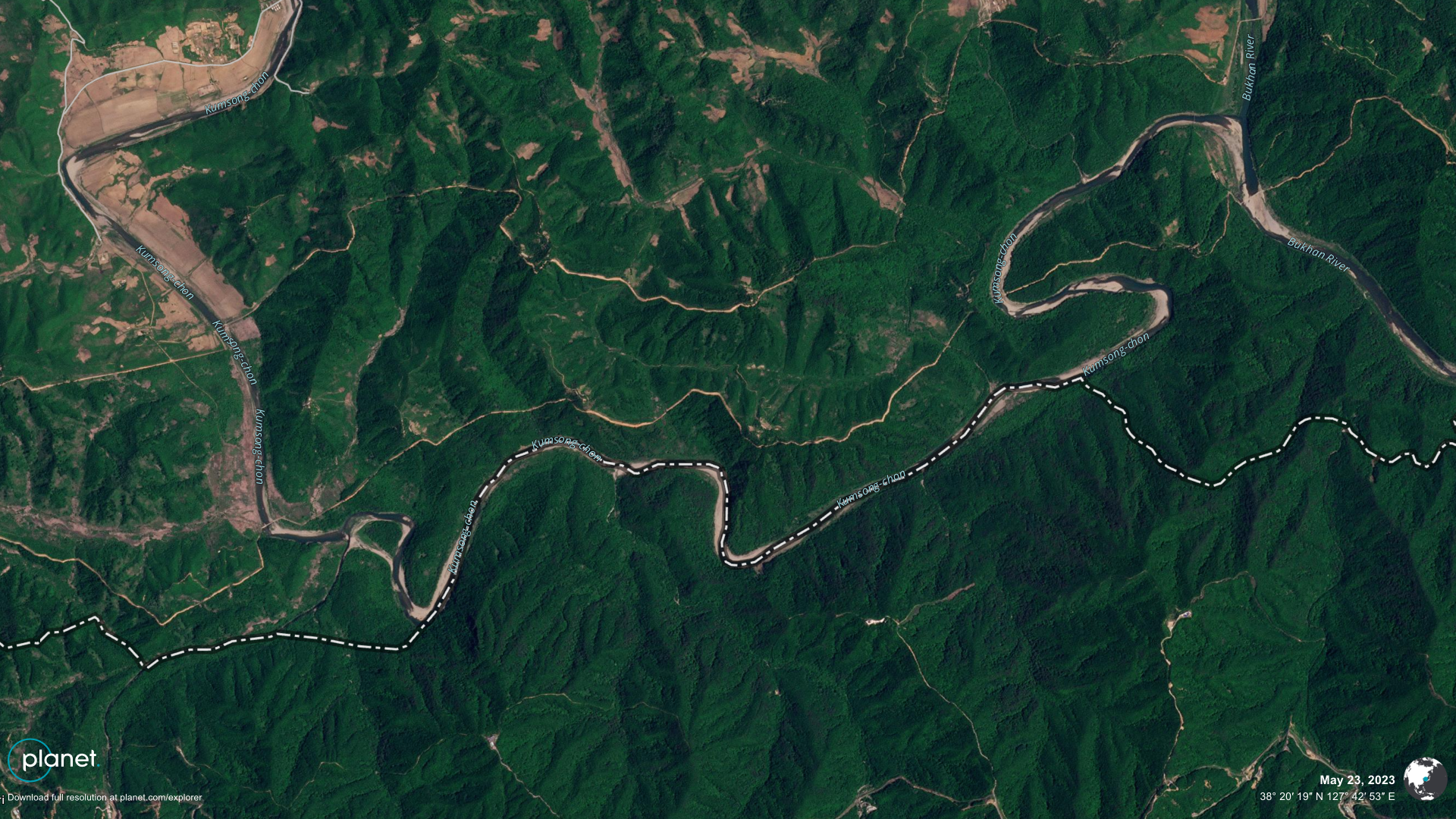
The Armistice Agreement that ended fighting in the Korean War in July 1953 delineated the northern and southern boundaries of the DMZ, as well as the MDL roughly midway between them. However, on the ground, the MDL is only marked by signposts spaced far apart; many are now covered by vegetation or missing due to a lack of maintenance since the 1970s, likely leading to some accidental crossings by troops. Both countries have maintained an active military presence in the DMZ since the armistice, violating stipulations in the agreement against such activity. But North Korea’s recent large-scale activity suggests a more proactive rejection of the DMZ restrictions, while it has also led to South Korea responding with its own smaller-scale construction to monitor the North’s movements. The recent construction is likely related to DPRK leader Kim Jong Un’s demand in Jan. 2024 that the constitution be amended to “legitimately and correctly define” the nation’s territorial borders for the first time, as part of his official policy change rejecting inter-Korean unification. Pyongyang has yet to publicize the results of these efforts. The locations and appearance of the North’s DMZ construction, however, raise questions over whether the new defense lines will delineate the country’s southern border as drawn in future official maps. Since this would effectively cede land between the defense lines and the MDL to South Korea, it is more likely that the new official North Korean map will still consider the MDL as the southern border. Changes to internal military regulations will likely complement the constitutional changes to account for rules on military activity beyond the new defense lines. Planet Labs imagery shows that construction by thousands of troops through DMZ forests has been rapid and ongoing in recent weeks, suggesting North Korea may still build new installations along the remaining 25% of the border. Kim Jong Un may also have set a deadline for the work in relation to the upcoming party plenum scheduled for mid-December. Most of the area of the DMZ with no new defense lines is in mountainous southeastern Kangwon Province, near where Kim Jong Un inspected a newly completed power plant last week. Edited by Bryan Betts © Korea Risk Group. All rights reserved. |

October 10, 2026Oct 10, 2026

The ultimate resources for professionals working on North Korea
 SHARE
SHARE COPY LINK
 X
X MASTODON