  Analysis North Korea appears to stop extended quarantine for imported goods: ImageryFewer trains seen at border facility as Chinese imports empty out, in what may be sign of major pandemic policy change 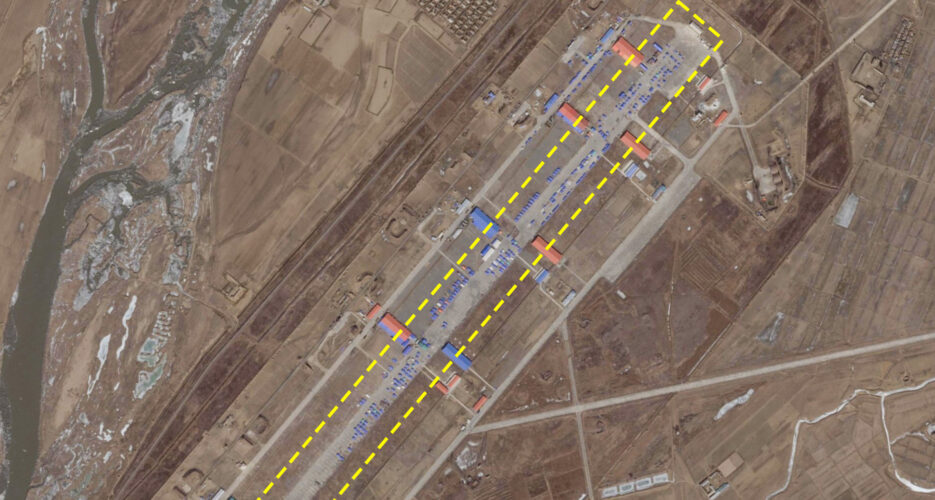 North Korea no longer appears to be quarantining imports at its giant COVID-19 disinfection complex on the Chinese border, according to NK Pro analysis of satellite imagery, in what could signal major changes to the country’s pandemic era trade policies. Planet Labs imagery shows that hundreds of stacks of items quarantined outdoors on the runway of the highly secure Uiju Airport complex have mostly disappeared since early March. Fewer trains have also appeared inside the zone compared to previous months. In the past, stacks of items covered in blue, white and other colored material have appeared to stay in place on the runway for up to three months, revealing the extreme paranoia of DPRK authorities over the virus spreading on surfaces, out of step with the rest of the world. 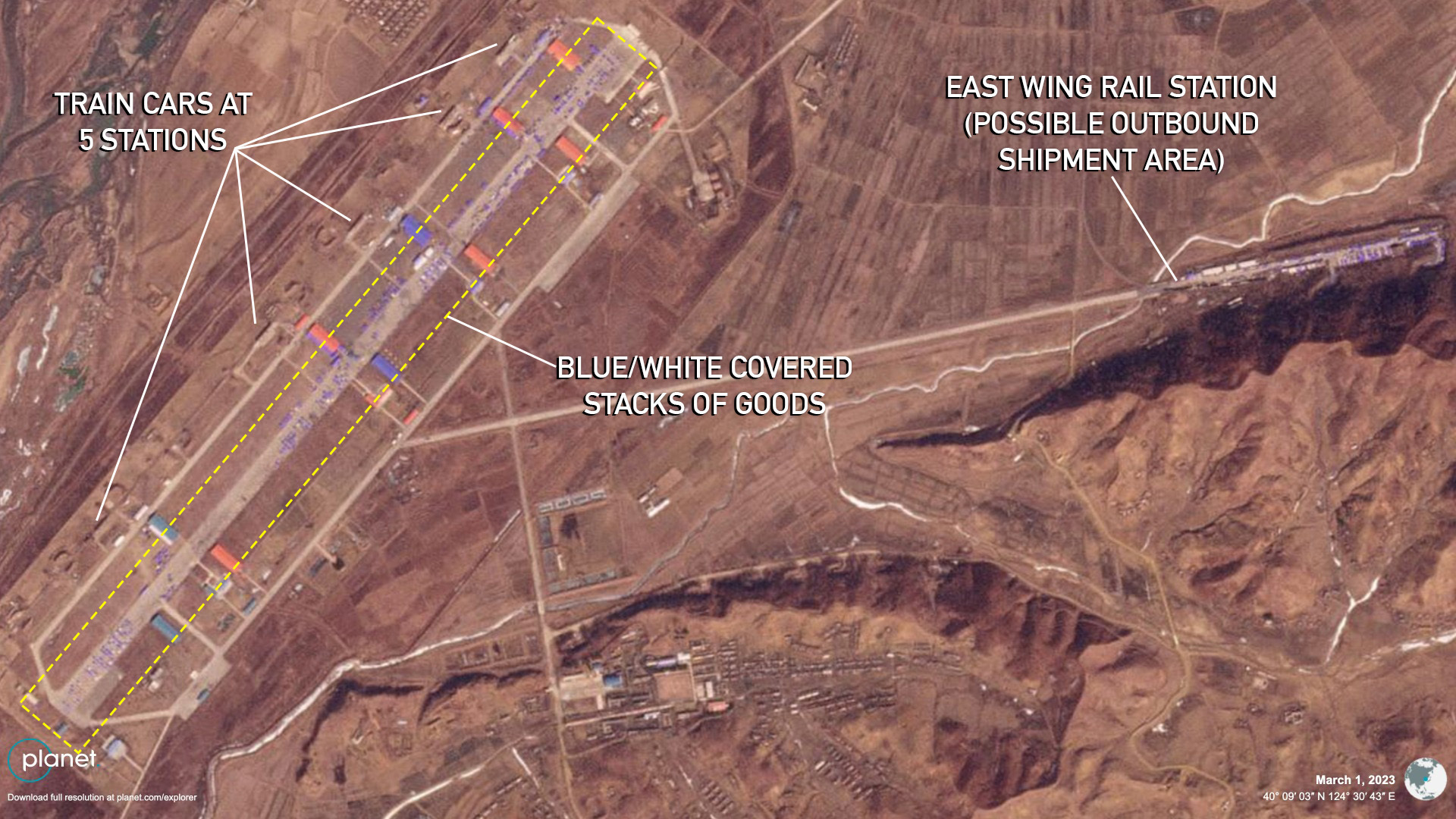 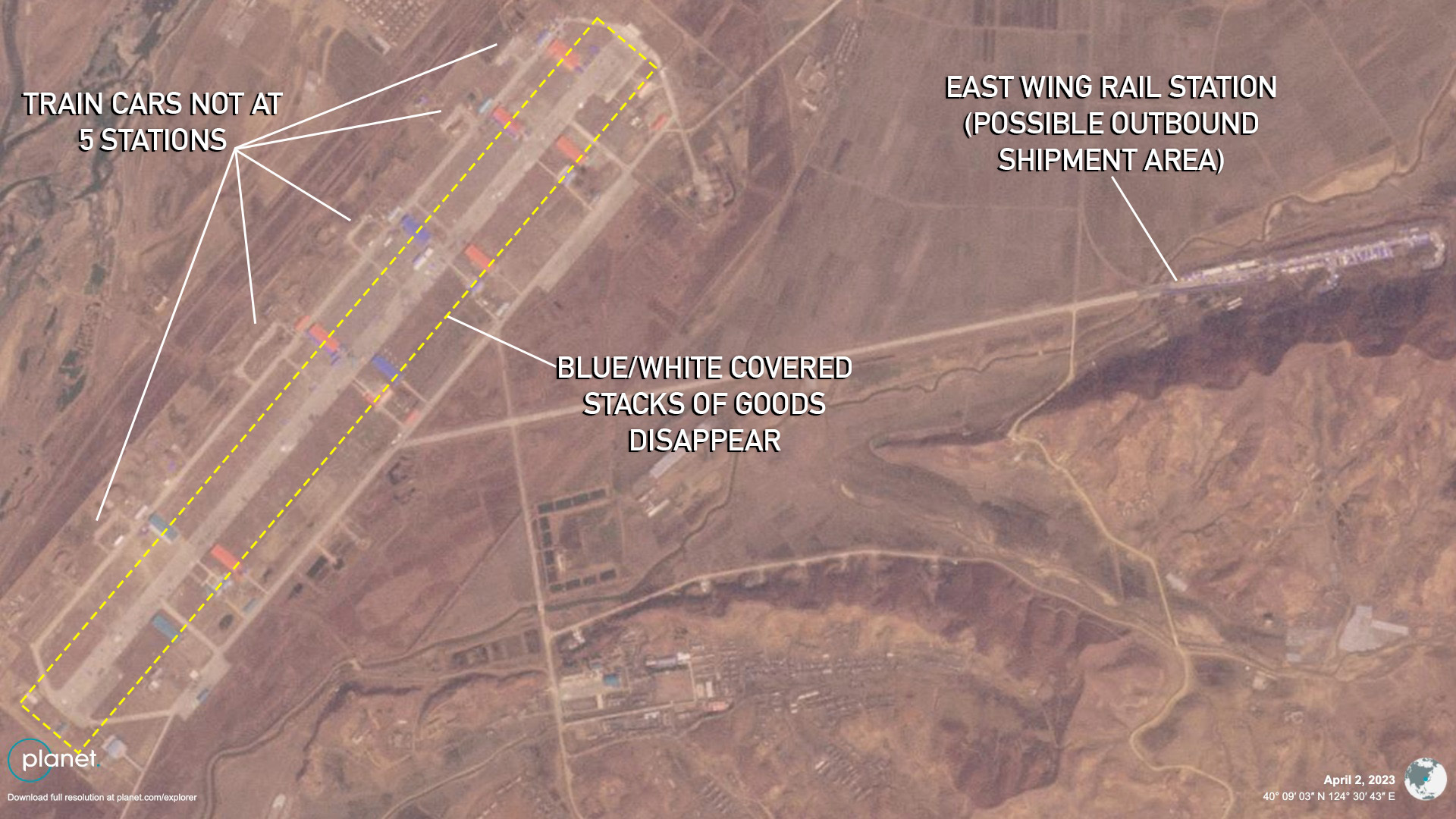 Almost all stacks of goods quarantining on the runway in early March were gone as of April 2 | Images: Planet Labs, edited by NK Pro 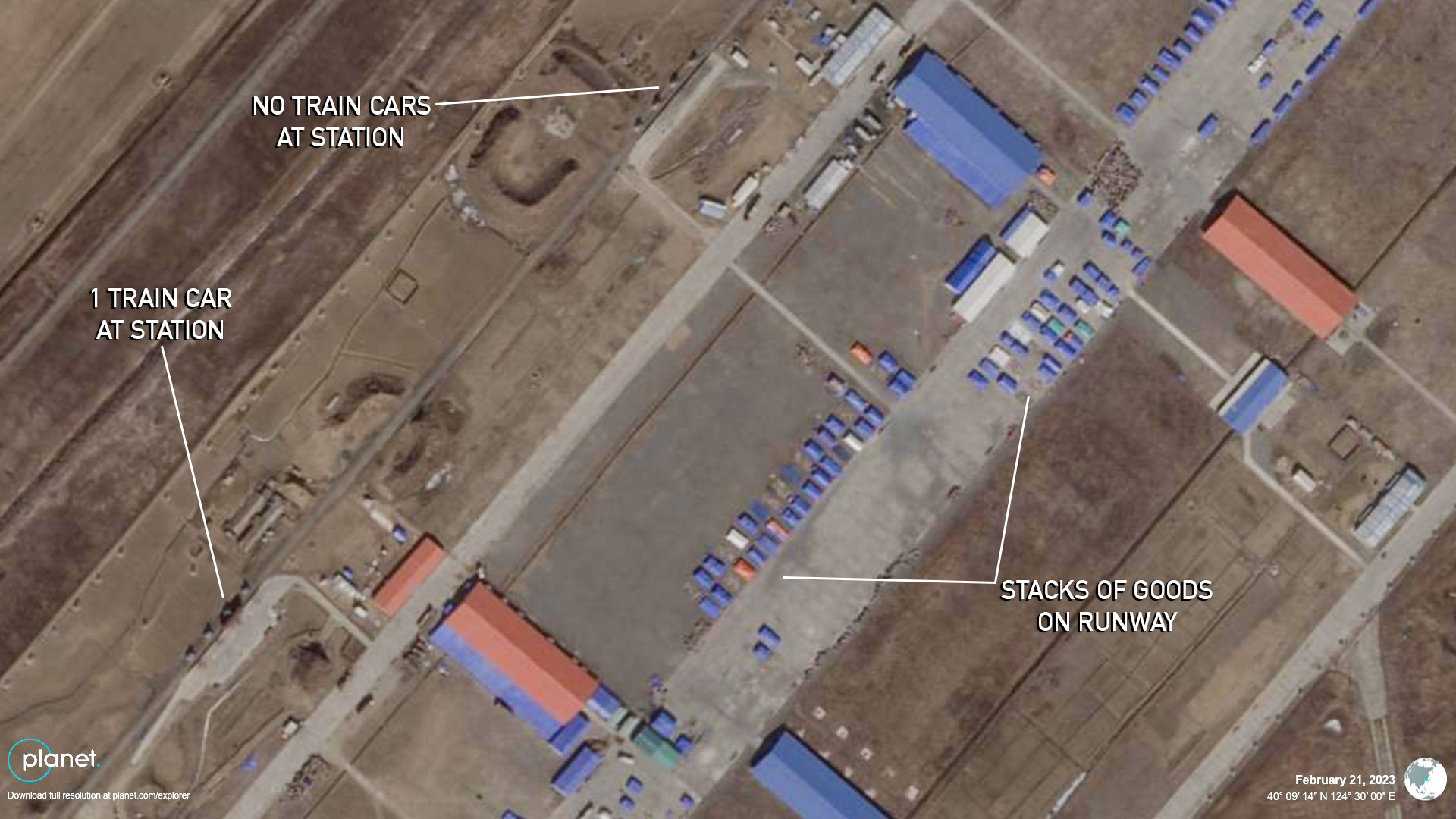 North Korea first converted the Uiju Airport into a disinfection and quarantine center in 2021, but only started accepting cross-border train shipments in Jan. 2022. It’s located near the city of Sinuiju and across from China’s Dandong. Quarantined items gradually disappeared from the runway once before, after Pyongyang and Beijing agreed to halt shipments in late April last year due to COVID-19 outbreaks. However, there have not been signs of similar lockdowns or virus breakout concerns on either side of the border in recent weeks, suggesting any items that may be arriving at the facilities are no longer required to go through extended outdoor quarantine. The Uiju complex began operating again last September after the summer shutdown. It has been difficult to determine the required quarantine duration in the recent period since specific stacks of items could have been moved around or covered in different colored material at any given time. Resumed activity at a possible outbound delivery station to the east last October pointed to around a three-week quarantine. Twenty-car trains reportedly cross from China once per day, while the cars have appeared in satellite imagery — almost always taken before noon — split along five offloading stations inside the complex. But in another curious development, NK Pro analysis finds that trains have only appeared inside the complex on a handful of days since early March, and when they do appear, it has only been one or two train cars at each station instead of four. It may be that North Korea is still requiring imported goods to be disinfected in the complex but that they are quickly cleared for outbound delivery instead of going through extended quarantine outdoors. If this is the case, the reason that trains are no longer appearing in the complex with the same frequency may be due to a scheduling change. Trains entering the country from China may also simply be allowed to go straight to their destinations in Pyongyang or other parts of the country if both disinfection and quarantine rules are lifted. This would allow North Korea to significantly increase its import capacity. 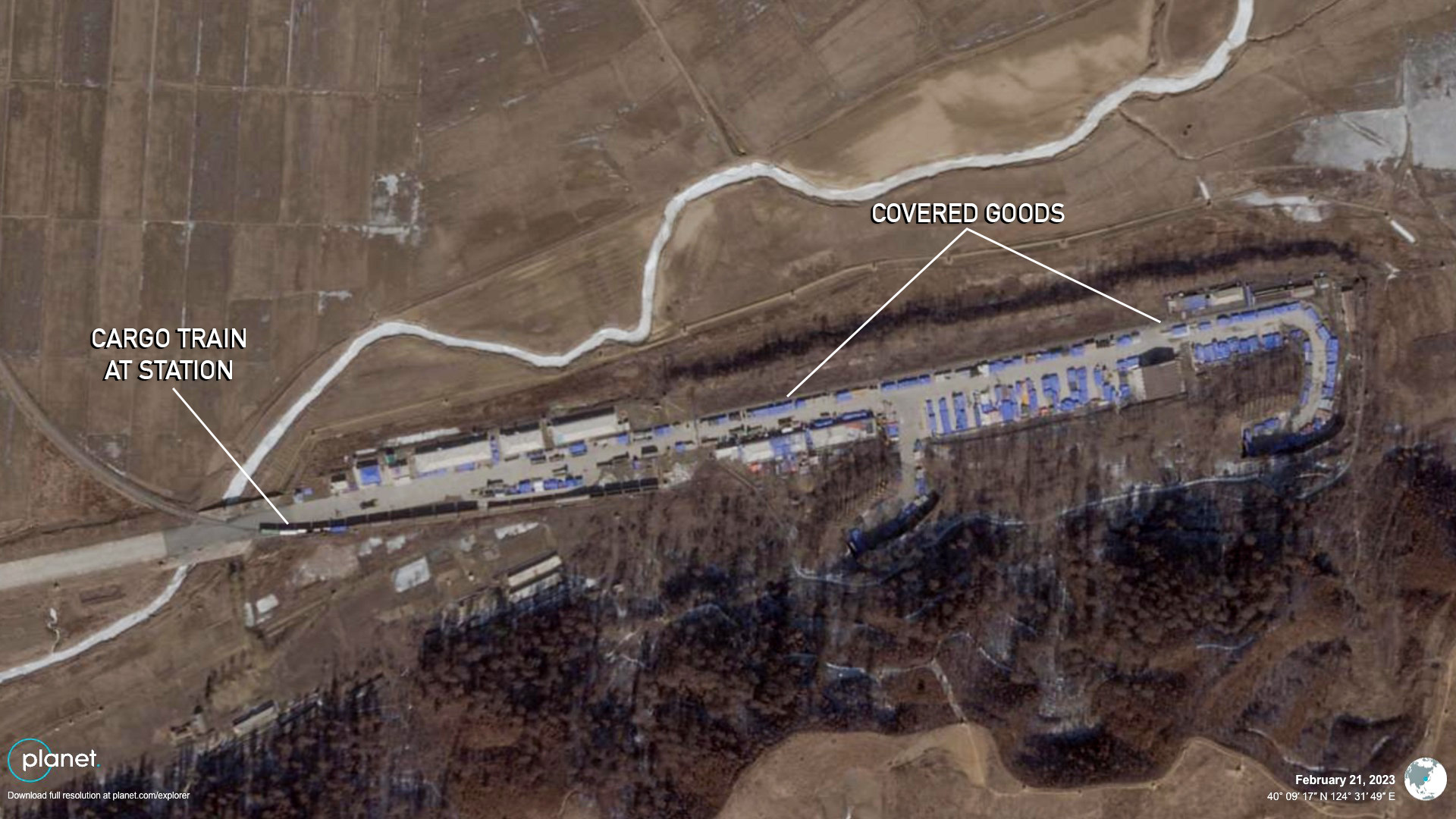 South Korea’s Yonhap News Agency reported that trains were carrying mostly rice as recently as March 21 after Pyongyang requested emergency food shipments amid shortages, according to multiple anonymous sources. While operations at the Uiju complex appear to be winding down, DPRK authorities appeared to begin beefing up security late last year around a trade processing facility on its border with China in the far east, according to NK Pro analysis. Planet Labs imagery shows frequent activity in the last month at this facility, formerly known as the Wonjong International Market, but it’s unclear if it will serve as a disinfection and/or quarantine facility. Heavy truck traffic similar to before the pandemic has also not yet appeared at Chinese customs on the other side of the nearby border bridge, nor at customs in Dandong across from Sinuiju, as trains and cargo ships remain the only regular modes of trade. The Seoul-based Radio Free Asia (RFA) and Hankook Ilbo both reported in recent weeks that traders in Dandong are hearing rumors of a wider reopening to cross-border trade as soon as May or June, though such rumors have spread before but did not pan out. Meanwhile, North Korea last week also officially allowed the first person to enter the country from abroad in three years — new Chinese Ambassador Wang Yajun. The Chinese embassy in Pyongyang said he arrived in Pyongyang on Monday. This may indicate that authorities have only required Wang to go through a maximum quarantine period of less than a week. The last time foreign diplomats entered the country, in March 2020, they went through a “difficult” 30-day quarantine in Phyongsong, north of the capital. Edited by Arius Derr Updated on April 4 at 10:42 a.m. KST with confirmation from the Chinese embassy on the new ambassador’s arrival in Pyongyang. © Korea Risk Group. All rights reserved. |

October 24, 2026Oct 24, 2026

The ultimate resources for professionals working on North Korea
 SHARE
SHARE COPY LINK
 X
X MASTODON