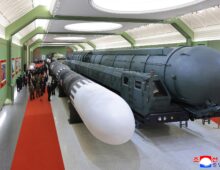
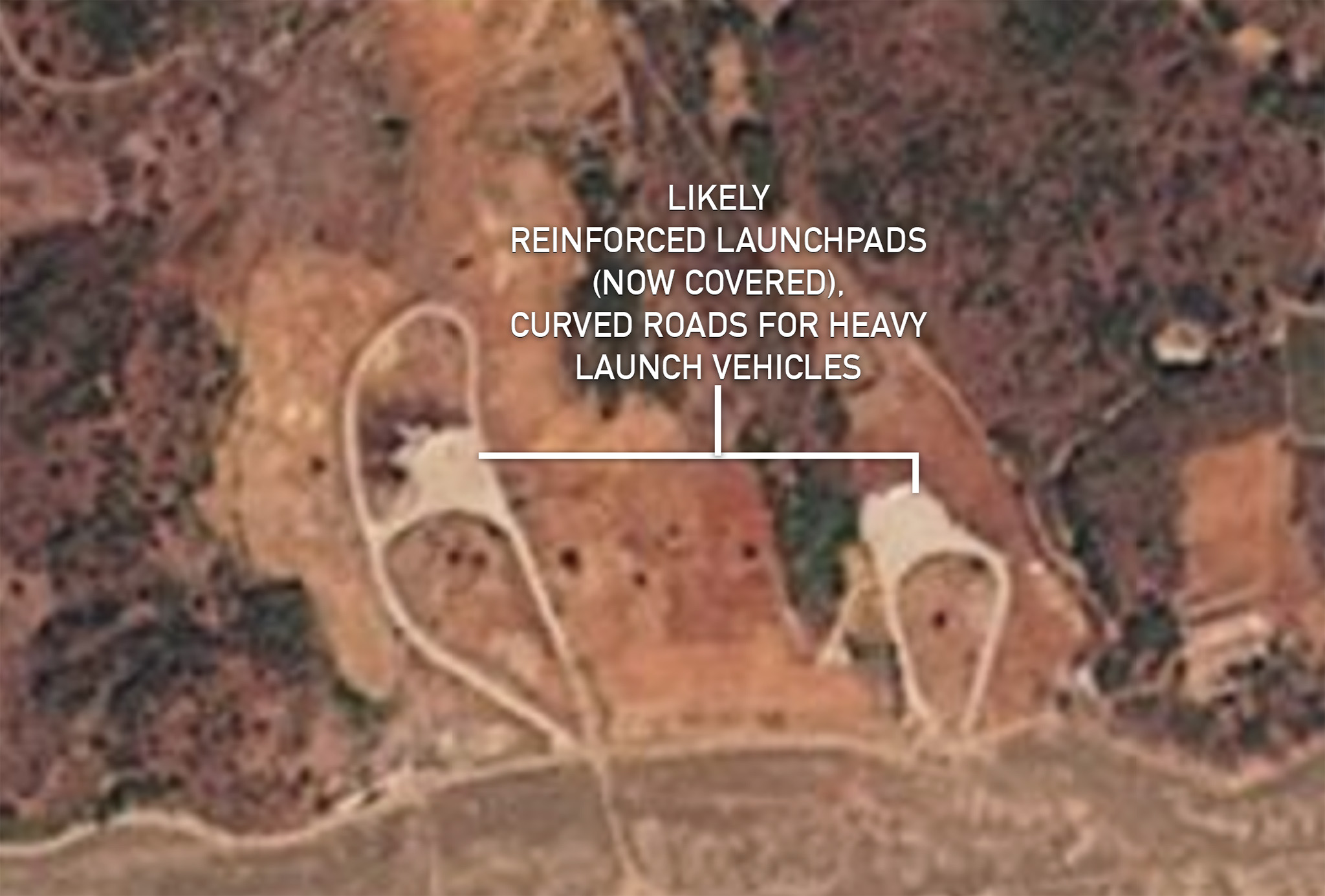
  Investigations Major construction ramps up at North Korean missile base attached to Kim mansionSatellite imagery reveals new hexagonal bunkers and large administrative center near site of 8 recent missile tests  North Korea is building major new installations at a missile test site attached to ruling Kim family mansions in eastern Pyongyang, according to NK Pro analysis of satellite imagery, including two hexagonal concrete structures, underground walkways and likely missile launchpads. NK Pro previously reported in May on the start of construction at the site along the Taedong River located between Kim’s “Jindallae Guesthouse” at the east end and another whose name is unknown on the west end. Now, newer high-resolution imagery shows the mysterious hexagonal structures in more detail as well as a complex of buildings, possibly an administrative missile-related facility, erected in the last few months. The work is not yet finished, but with Kim Jong Un’s extensive 5-year weapons development plan still incomplete and due by the end of this year, it’s possible the site could host more missile testing in the coming months. All of the new construction spread across a 400-hectare area (1000 acres) appears related to missile test plans or even operational missile launching. The newly built concrete pads, now covered with grass, closely resemble two confirmed launchpads elsewhere in the complex that underwent the same construction process, and the surrounding work progressed in parallel with the development of these pads. 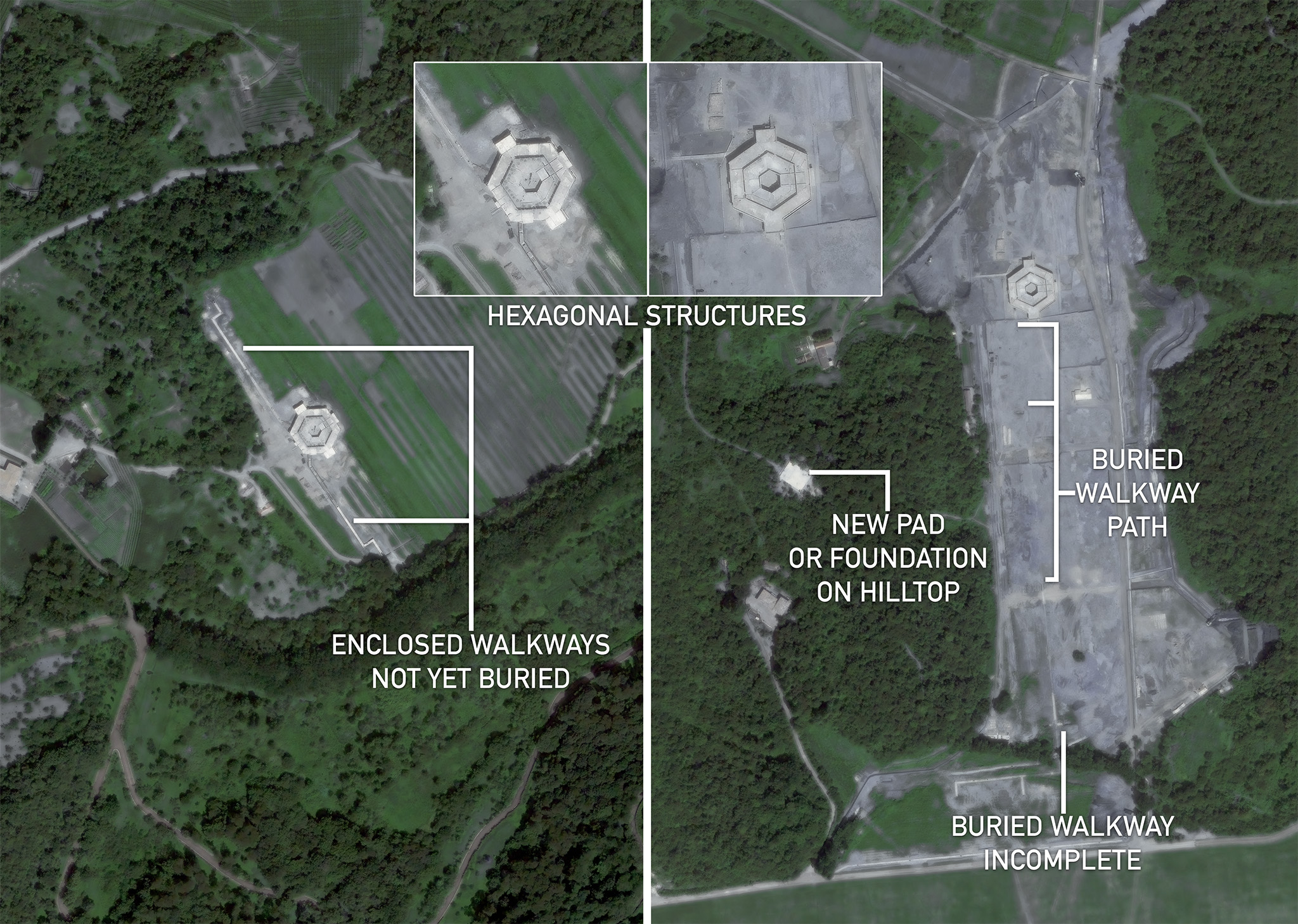 The project began with the demolition of a village in the area in Dec. 2024 and ground clearing work for the new pads over the following months, Planet Labs imagery shows. Work on the possible administrative center at the west end began in March, followed by what looked like concrete being poured to reinforce the two launchpads and connecting roads in April. The first hexagonal structure started to go up in early April near the launchpads, and the second one at the far west end of the complex a couple weeks later. Both are around 38 meters across. Planet Labs imagery shows long trenches were also dug leading away from the structures, appearing to connect to other parts of the complex. A high-resolution Maxar image taken in late July suggests they were underground walkways covered with dirt instead of efforts to bury cables or pipes, based on their width of 2 meters. John Ford, an expert on the North Korean military with the Middlebury Institute’s Open Source Team, told NK Pro it looked like vents have been installed evenly spaced along the trench lines after they were buried, further suggesting they are walkways. He also said the hexagonal buildings could be some form of bunkers for use during military situations. At the site near the west end mansion pond, five large buildings began to go up from May to June. Though only partially constructed in the July 29 high-resolution image, the buildings do not appear to feature layouts indicative of a new mansion. 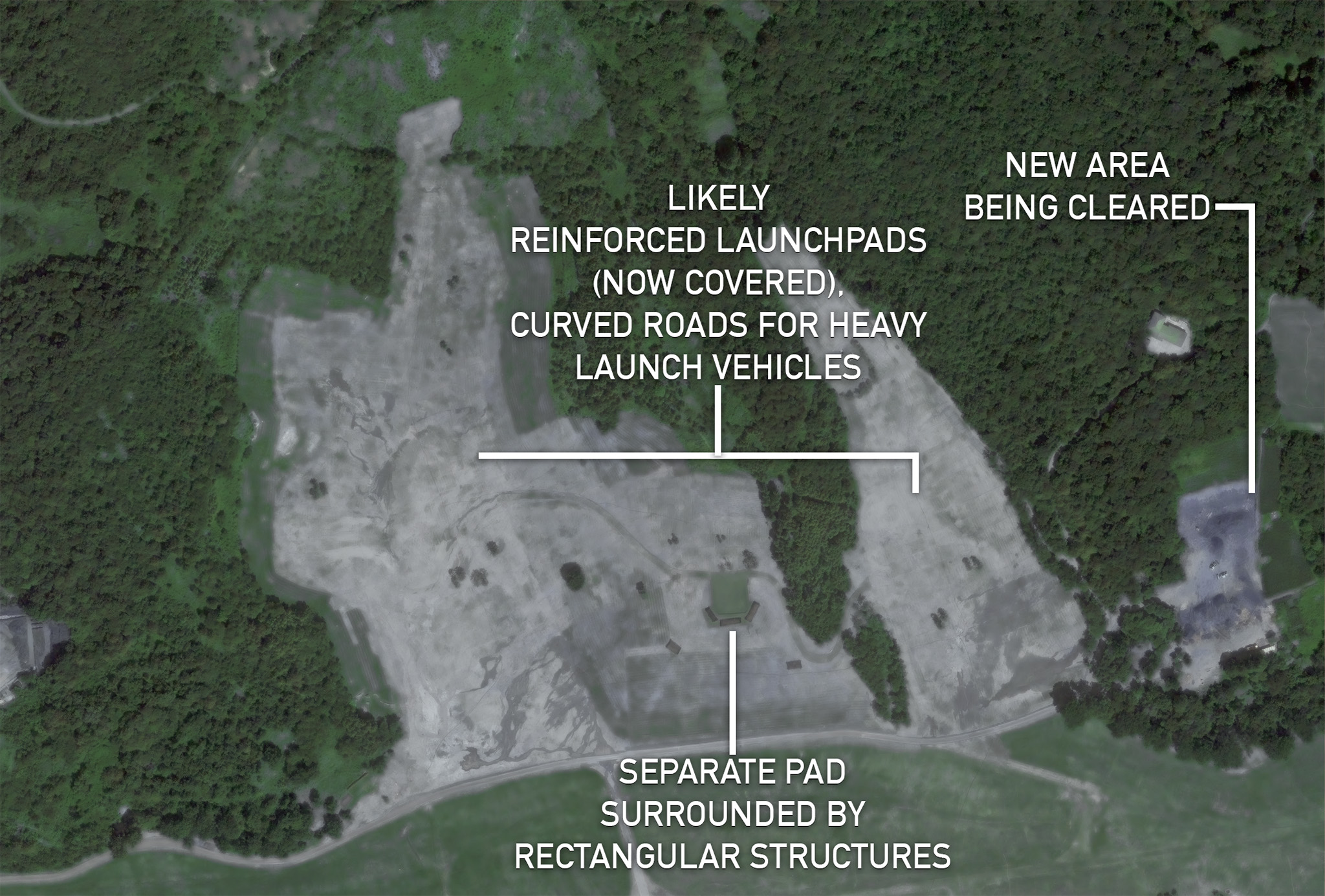
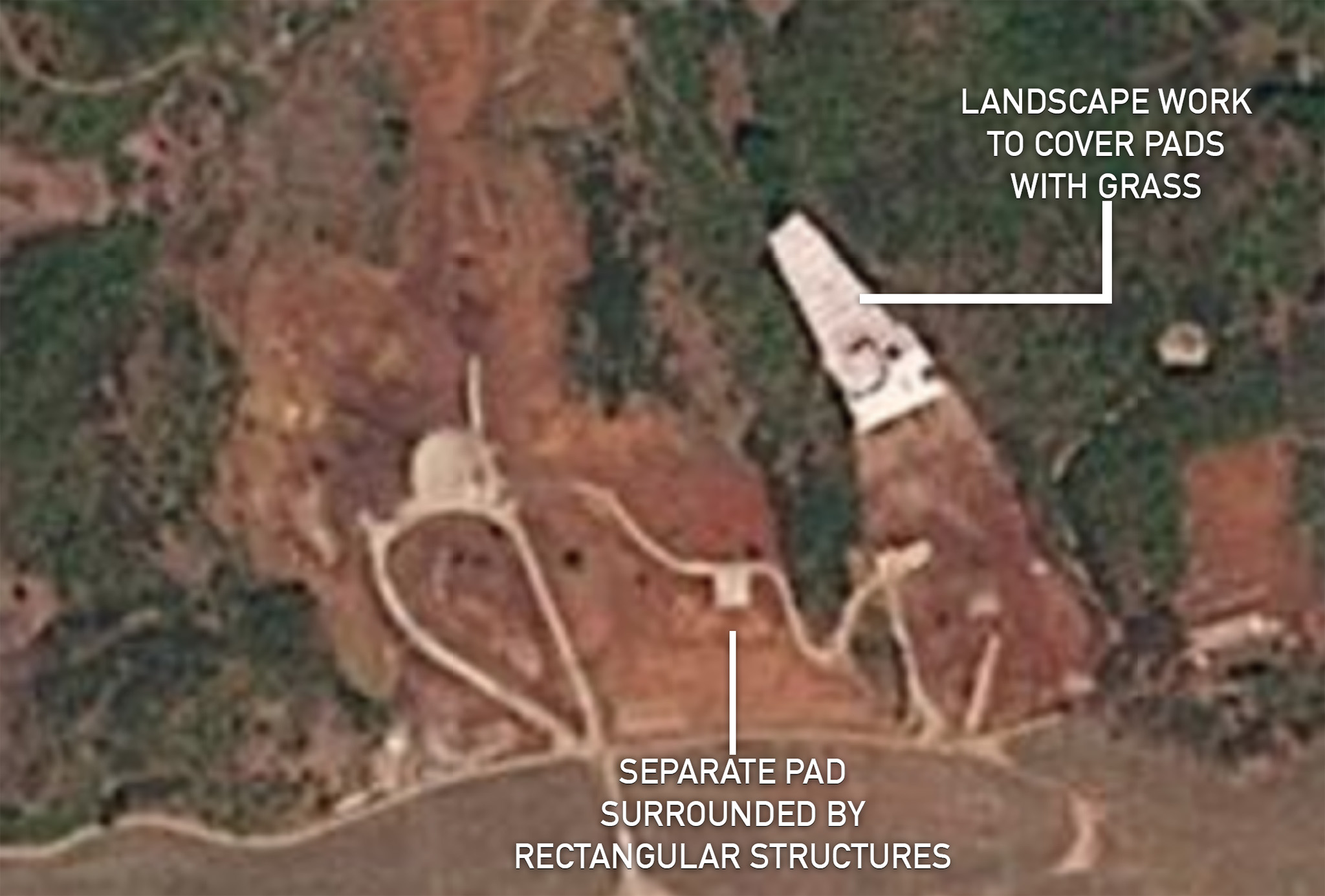
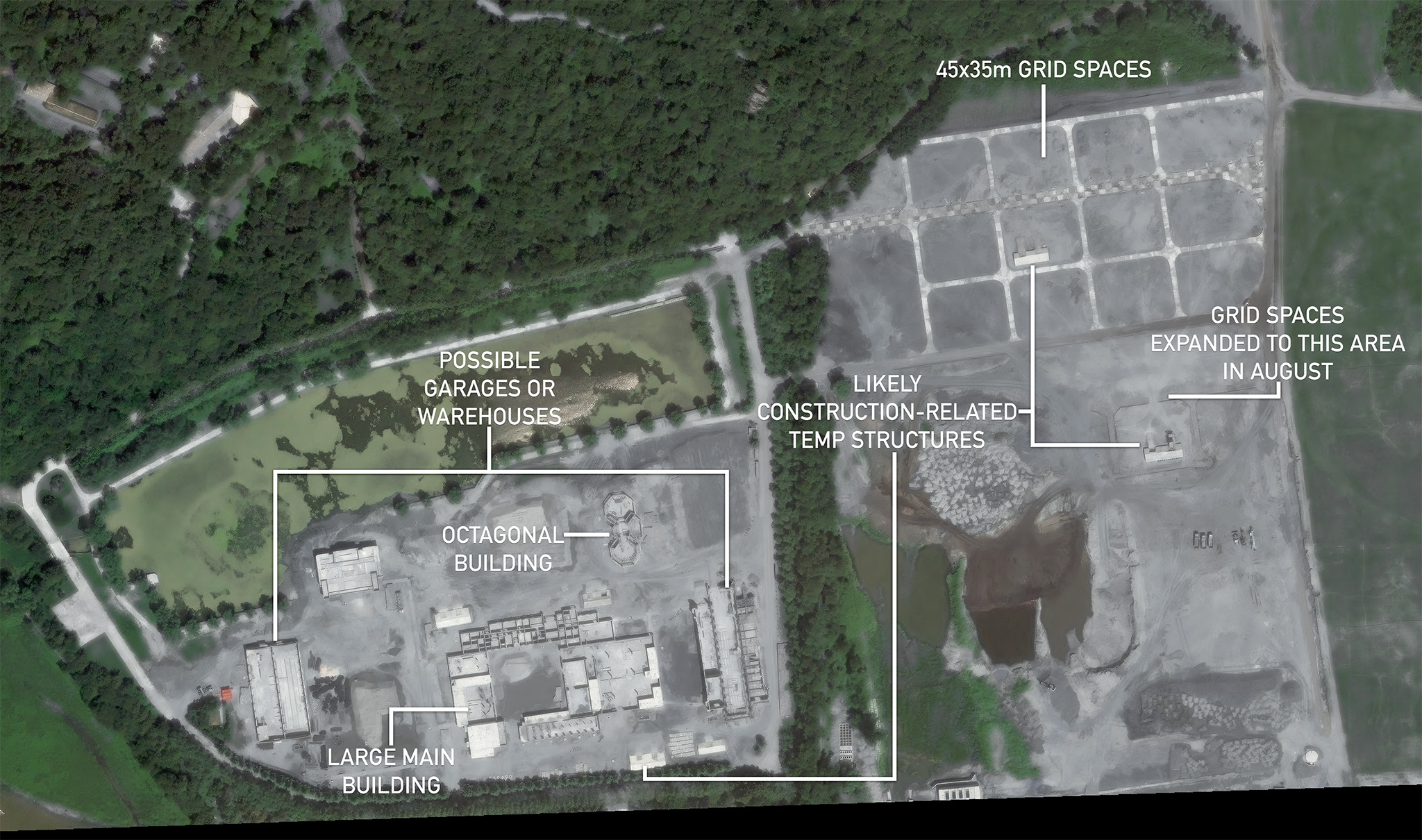 One is around 120 by 70 meters with multiple different functions, including offices at the north end and large open spaces whose purposes remain unknown. Another building features two connected octagonal structures, while two others with large garage doors could be used for vehicle storage, or as warehouses or production or repair halls. A mysterious grid of streets also began to appear to the east of the building complex in mid-May, creating 20 flat rectangular spaces in between the streets each measuring around 45 by 35 meters. Other new construction in the area includes a large concrete foundation or bunker built on a hilltop directly adjacent to the eastern hexagonal structure in May. Three structures were also built flanking another grass-covered but likely concrete-reinforced pad in between the two larger launchpads, possibly a vehicle parking or launch support area. No major new construction has appeared to occur in recent months on either mansion directly, nor on the grounds of the multiple existing missile test launch areas near the Jindallae Guesthouse. However, the complex hosted eight missile tests in the last two and a half years as part of Kim Jong Un’s push to improve nuclear warhead delivery capabilities against South Korea, Japan and the U.S. mainland. Meanwhile, North Korea built a new missile base south of Pyongyang earlier this year as well, with features seemingly meant to disguise it as a golf course. Another riverside area north of the Jindallae Guesthouse was also turned into a missile launchpad for a test last January. Edited by Alannah Hill © Korea Risk Group. All rights reserved. |

October 14, 2026Oct 14, 2026

The ultimate resources for professionals working on North Korea
 SHARE
SHARE COPY LINK
 X
X MASTODON