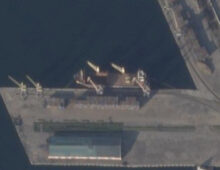
  Analysis Heavy ice chills North Korean coal exports, but oil imports hold steady: ImageryOverall traffic at Nampho fuel depots appears to dip in winter as sea navigation becomes more challenging 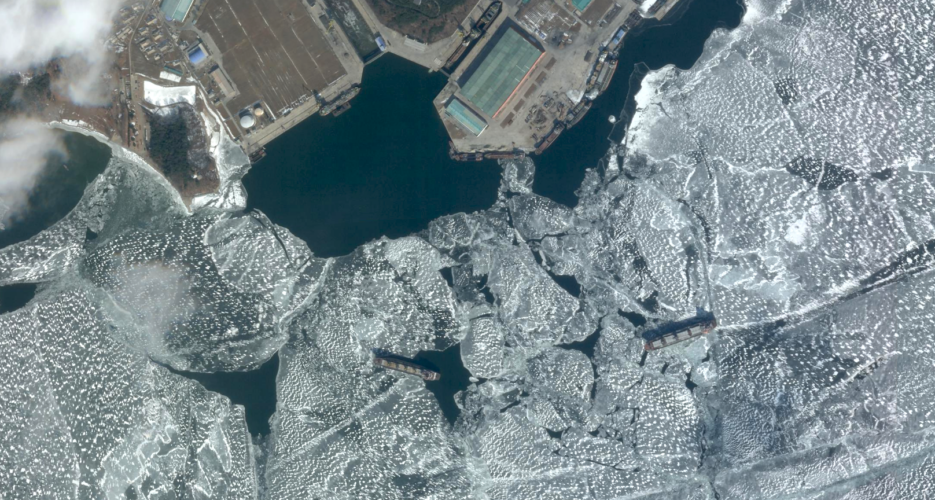 North Korea’s oil imports appeared to hold steady in the first quarter of 2022 while coal depots saw less traffic, NK Pro analysis of satellite imagery reveals, a finding experts suggest is due to freezing of the Taedong River in the frigid winter months. Low-resolution satellite images taken between January and March show at least 17 ships docked at North Korea’s main oil terminal in Nampho. Though slightly less than the 21 ships observed in the fourth quarter of 2021, the figure is higher than the same period last year, when only four ships were visible at the same terminals. Imagery also shows at least two ships docked outside of a newly constructed auxiliary oil terminal at Nampho, indicating the facility has not encountered any major issues since it went online in Oct. 2021. 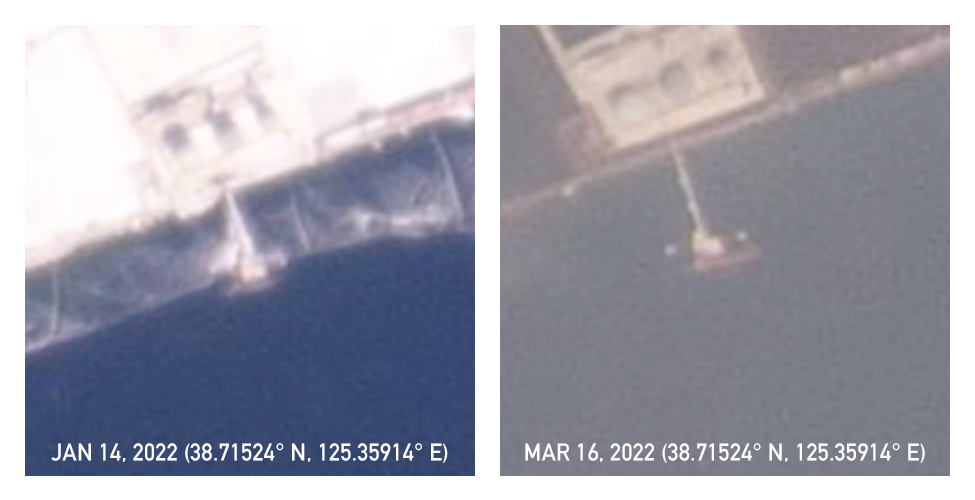 U.N. sanctions prohibit North Korea from importing more than 500,000 barrels of refined petroleum per year, and all deliveries up to that point must be reported to sanctions monitors. China told the U.N. it exported 17,000 barrels of refined oil to North Korea between January and February. In previous years, however, Washington has accused Pyongyang of exceeding the annual import cap several times over, citing satellite imagery of what it claims were unreported oil deliveries. Meanwhile, observable activity at known coal depots dropped by roughly half in the first quarter of 2022. Chongjin, which sits on the country’s northeastern coast, saw far fewer vessels in January and February this year than during the previous quarter in 2021, though traffic appeared to pick back up in March. Nampho’s main coal quay, however, saw a year-on-year increase in visits in the first three months of the year, including by several massive bulk cargo ships. 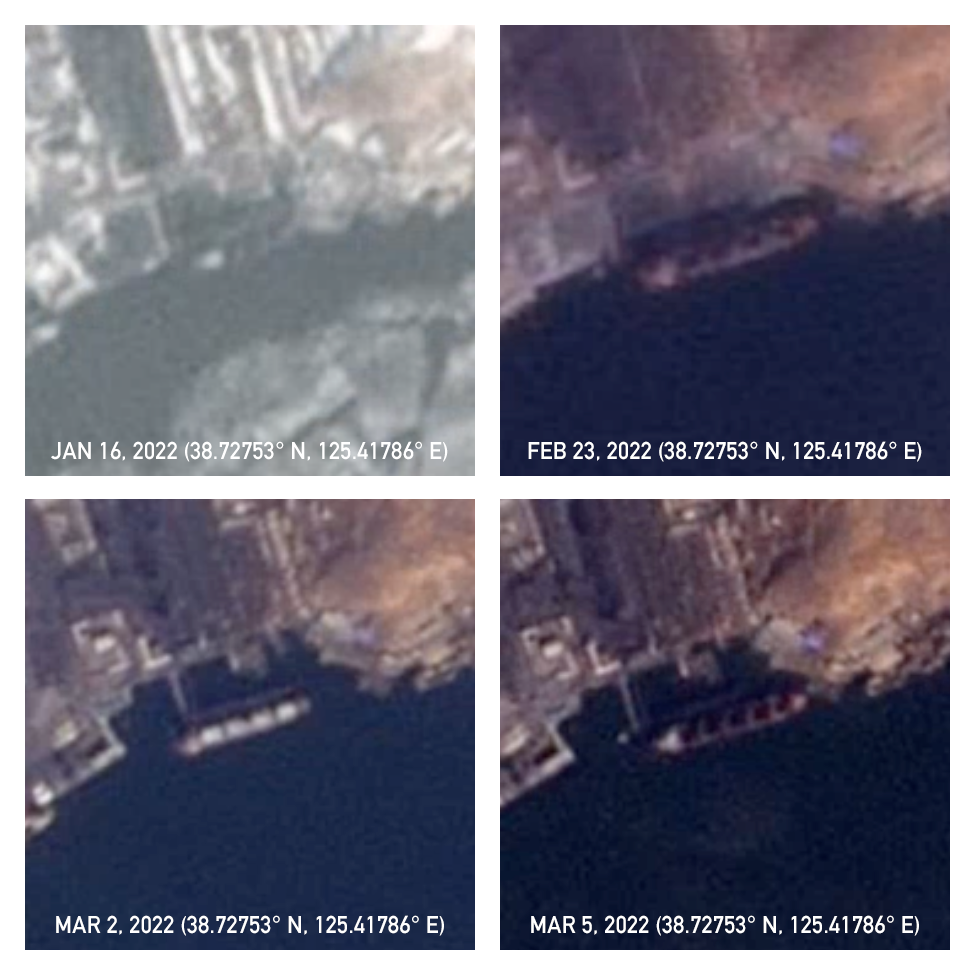 A previous analysis from the Royal United Service Institute’s (RUSI) Project Sandstone, which tracks North Korea’s oil supply chains, found that the country’s fuel trade was comatose in early 2021 but ramped up considerably between May and June. While imagery limitations make it difficult to verify whether every ship that visited a North Korean coal berth indeed took on coal, refined petroleum deliveries are easier to identify due to the single-use nature of oil terminals. OIL ON THE ROCKS According to James Byrne of the Royal United Service Institute’s Project Sandstone, which tracks North Korea’s oil supply chains, frigid conditions can complicate navigation, thereby dampening overall port volume. “This year there was significant ice cover, but oil kept flowing into the port and year-on-year deliveries are up significantly,” he said. “Cargo is also coming in, but the vessels continue to quarantine for a period before going in.” Low-resolution imagery between Dec. 2021 and March 2022 shows ice blanketing the surface of the Taedong River around the Nampho port. Visible cracks indicate at least some vessels — likely heavier, sturdier cargo ships and tankers — are still able to break through the ice. Ice covered large stretches of the Taedong River between December and early March | Video: Planet Labs PBH A 2018 study by the Korea Institute of Ocean Science and Technology found that more vessels were present at Nampho in winter months but that the ratio of moving ships to stationary ships was higher in summer months, suggesting ice has a chilling effect on meaningful port activity. Neil Watts, a former U.N. specialist who tracked North Korea’s maritime activity, added that winter conditions also create rougher seas, making ship-to-ship transfers — a common sanctions evasion tactic — much riskier. The U.N. established the current 500,000-barrel import cap after Pyongyang tested an intercontinental ballistic missile (ICBM) in 2017. The same resolution also said the U.N. was determined to take “significant measures” if North Korea conducted a future nuclear or ICBM test. Pyongyang did just that late last month when it launched what it claimed to be a Hwasong-17 capable of striking practically every country in the world. Even then, any efforts to further limit the DPRK’s oil imports are likely to meet stiff resistance from China and Russia, both of which have continued to call for relaxing sanctions. Edited by Arius Derr Correction (April 7, 2022 at 6:20 p.m. KST): A previous version of this article misquoted Neil Watts as saying patches of ice formed outside of Nampho’s lock gates. © Korea Risk Group. All rights reserved. |

October 09, 2026Oct 09, 2026

The ultimate resources for professionals working on North Korea
 SHARE
SHARE COPY LINK
 X
X MASTODON