
China's very specific embargoed trade codes leave room for other kinds of coal and iron
Earlier this month China’s Commerce Ministry issued a statement writing the most recent UN resolution into its national law, limiting imports of some of North Korea’s most lucrative trades.
According to Beijing, North Korean coal and iron exporters now have to provide documentation to prove their shipments are for livelihood purposes. Should the income from the trade head into any of the North’s weapons programs, the shipments will be blocked.
“If it is confirmed by solid information that the imports are not for the people’s livelihood, or are related to the nuclear program or the ballistic missile program of the DPRK, the customs authority will not clear such imports,” the Ministry of Commerce’s statement reads.
Some observers have already noted the persistent ambiguity around the livelihood exception included in UN Resolution 2270. Exactly how it will be interpreted, and what investigations will be carried out to uncover the “solid information” has not yet been made clear.
Beijing released a list 25 very specific items in an accompanying annex, which on their face of cut across many of the North’s core exports
Despite the vagueness, China appeared to take the opposite approach when it outlined exactly which products would no longer be accepted at the country’s borders. Beijing released a list 25 very specific items in an accompanying annex, which on their face of cut across many of the North’s core exports, as required by UN Resolution 227.
“Decides that the DPRK shall not supply, sell or transfer, directly or indirectly, from its territory or by its nationals or using its flag vessels or aircraft, coal, iron, and iron ore, and that all States shall prohibit the procurement of such material,” paragraph 29 reads.
Yet the method is potentially counterproductive if a blanket ban is the main objective. Drilling down on a very detailed product description could allow small changes to products or exports, so moving them out of a sanctioned category.
DETAILED FILES
Attempts to ban different items in trade often rest on existing “harmonized system” (HS) codes which all countries use to log and report their trade data. The system allows governments to categorize all in-going and outgoing trade universally.
HS codes have no easy task, as they attempt to categorize all traded items into internationally recognized divisions and subdivisions. The codes get longer the more detailed the description of a product.
The category “01” denotes all live animals, while “0105” is live poultry. This process continues all the way down to eight or sometimes 10 digits. For example, code “01051110” describes “live chicken equaling 185g for pure-bred breeding.”
The Chinese Ministry of Commerce’s accompanying annex contains 25 10-digit HS codes, the longest and most specific type of code available. Codes of that specificity aren’t even carried by many Chinese customs data re-sellers, who usually make do with 8 digit codes.
Providing the most detailed codes available appears in tension with the idea of a blanket ban. One four-digit code -2701- would cover all coal products, but Beijing instead released five 10-digit product categories, out of a possible six.
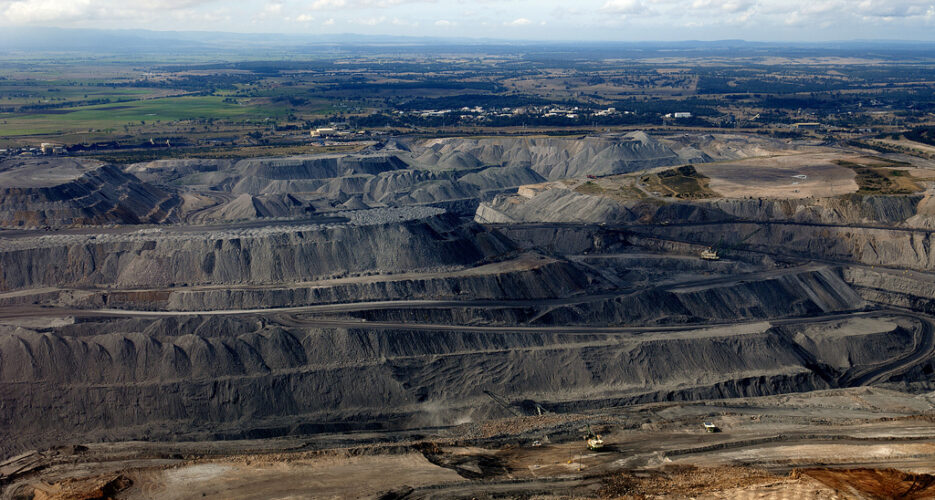
The gap means one coal category is not currently included in China’s embargo. North Korean exports of anthracite and coking coal in various forms are banned, though coal which is processed into briquettes is not, even though they are still exported by North Korea to China.
While the exported amount is small, only $3 million last year, it is unclear why the group was exempted, and (on paper) could allow the DPRK to tweak its manufacturing process, skirting Chinese regulations.
Iron gets a similar treatment. While iron ores are appear well covered (again using numerous very specific trade codes, instead of one blanket one), many forms of even slightly processed iron are not included.
The category for iron and steel exports is vast, given the number of different products in the industry, the eventual number of 10-digit codes relating to iron is in the hundreds
The category for iron and steel exports is vast, given the number of different products in the industry, the eventual number of 10-digit codes relating to iron is in the hundreds.
Although China’s Ministry of Commerce again included the North’s major iron exports, a type called “pig iron” manufactured from blast furnaces, but left dozens of other iron products off its list.
Iron ingots were not included, nor were any processed forms of iron like iron bars or rolls. In total there are 39 products containing iron, or made from iron that were not included in Beijing’s sanctions documentation. Again the total exports were not large, but their non-inclusion could allow for alternations in manufacture or classification.
WHERE IT HURTS
If implemented correctly however Beijing’s current approach will still be effective, capturing the spirit of the UN Resolution, if not the particulars. The trade groups which the Ministry of Commerce did issue encompass a large percentage of the DPRK’s export revenues.
Last year, North Korea generated nearly $1.2 billion in trade with China from exports now included in the embargo figures from the ITC Trade Database show. The number is almost totally comprised of revenue generated from coal, which in recent years has earned the DPRK more than $1 billion annually.
The embargo means that clothing and textiles are now the North’s most valuable exports, bringing in nearly $800 million a year. But given that total Chinese imports of North Korean goods brought in $2.5 billion last year, China’s new legislation will cut the North’s revenues in half.
How willing Beijing is to cut out one of its largest coal suppliers is still very much in the spotlight. A recent NK News investigation found that earlier this month, North Korean coal carrying vessels continued to visit Chinese ports.
The various levels at which the sanctions could be evaded remain numerous, from trade codes to implementation at ports, and recent Reuters article reported that so far Chinese exports to the DPRK remained buoyant.
“My broad interpretation is that this simply gives the Chinese a stick, not that they will necessarily use it; they have a lot of discretion already; this probably adds some more,” Stephan Haggard, director of the Korea-Pacific Program (KPP) at the University of California told NK News.
Leo Byrne
Leo Byrne is the Data and Analytic Director at NK News and is based in Seoul, South Korea.
Follow him on twitter @LeoPByrne
');
newWindow.document.write('Directing your request...
'); newWindow.document.write('
');
newWindow.document.write('Try clicking another headline while you\'re waiting
'); newWindow.document.write('Please click here if the article does not load
'); newWindow.document.write('