
  News China-DPRK ‘bridge to nowhere’ closer to opening as highway work restartsRevived activity shows that North Korea is eager to use the bridge as soon as it reopens its borders 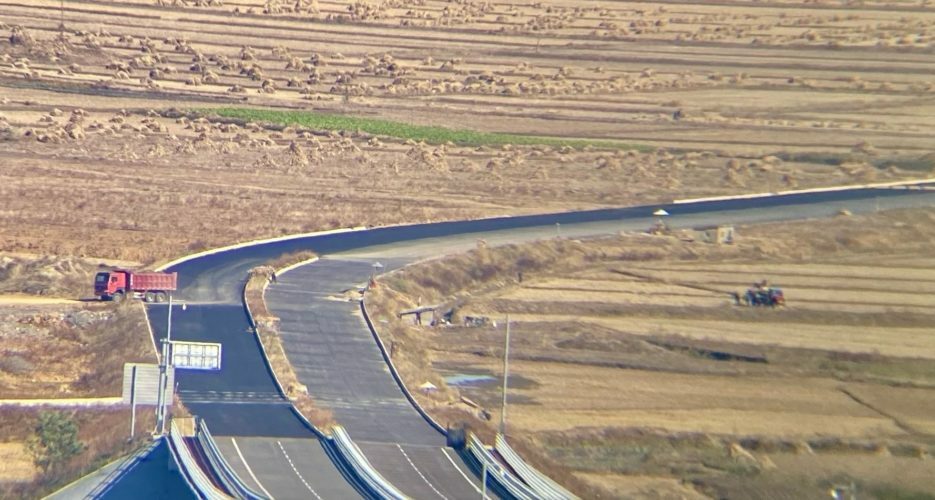 North Korea and China are once again inching closer to boosting overland trade through the multi-million dollar New Yalu River Bridge, which was infamously dubbed the “bridge to nowhere” due to its ongoing near-finished state. From 2013 until late last year, the unfinished bridge had abruptly ended in an open field on the DPRK side of the border. This month, satellite imagery shows that the China-bound side of the connecting highway was paved in just under four weeks, ending a period of stalled construction since early August. The renewed activity demonstrates that North Korea is eager to finally use the bridge as soon as it reopens its borders — especially considering that construction is happening despite a strict government decree limiting movements near the border. PAVING WOES Activity on the connecting highway project, located at the western edge of the border between Sinuiju and Dandong, has seen ups and downs since the road was first carved out from Oct. 2019 to Nov. 2019. Only the DPRK-bound side of the highway was then paved from late April 2020 to mid-May 2020, but there were already signs of neglect by late June, as drifting dirt appeared to cover most of the newly-paved lanes. From late Feb. 2020, a large area on the side of the road and near the end of the bridge — likely to house customs facilities and possibly even a Chinese-owned special economic zone (SEZ) — grew to the size of around 85 football or soccer fields before activity suddenly stopped in mid-August. The halt in progress may have been related to new, stricter rules cracking down on movements near the border, thought to be done in order to prevent an outbreak of COVID-19 from miring major events planned for the Oct. 10 party foundation day holiday. But the latest work to complete the connecting highway eventually commenced prior to the holiday. Planet Labs satellite imagery shows that the paving of the China-bound lanes finally began at the foot of the bridge between Oct. 2 and Oct. 3. Work progressed at a pace of around 200 to 300 meters (656 to 984 feet) of paving each day. The paving headed east towards the existing North Korean highway, finally reaching the connecting point between Oct. 25 and Oct. 27. The new highway stretching from the bridge on the lefthand side to the top-right corner of the frame turns black throughout October as paving work resumed. | Images: Planet Labs The small patch of dirt road actually linking the new and existing highways was finally paved by the following day, on Oct. 28, according to Planet Labs imagery. A photo reportedly taken on Oct. 23 from a building across the border in China and posted to Chinese social media site Weibo (shown above) also revealed freshly-paved China-bound lanes and dirt-covered DPRK-bound lanes. Another photo showed construction vehicles in what appeared to be the large potential customs or SEZ area next to the road. However, no major progress appeared in that area in either the photo or in satellite imagery through Oct. 29. For the coming months, painted lane markers or installing new side barriers would serve as a sign that North Korea and China are serious about finally opening the New Yalu River Bridge soon. However, it’s unlikely that trade will flow over the new bridge in the immediate future: There is little chance that North Korea will open its borders anytime soon amid a global surge in COVID-19 cases, and construction on the DPRK side’s new customs facilities has yet to begin. Edited by Kelly Kasulis © Korea Risk Group. All rights reserved. |

October 24, 2026Oct 24, 2026

The ultimate resources for professionals working on North Korea
 SHARE
SHARE COPY LINK
 X
X MASTODON