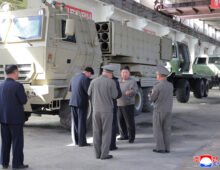
  
Investigations North Korea upgrades test facility for long-range nuclear missile enginesSatellite imagery shows larger shelter built at Sohae horizontal stand despite claim of ‘final’ test for Hwasong-20 ICBM  North Korea has upgraded facilities used to test engines for the country’s newest long-range nuclear missiles, according to NK Pro analysis of satellite imagery, pointing to plans for further motor testing in the future. Planet Labs imagery taken on Dec. 9 shows a new telescoping shelter was installed late last month to cover the horizontal test stand that is used for solid-fuel missile engines. It appears to feature three sections, where the wider and taller front section can slide over the middle, and both together over the rear section. Construction on the stand started in early October, just a few weeks after using it for what Pyongyang said was the ninth and final test of a “high-thrust solid-fuel engine using composite carbon fiber materials.” 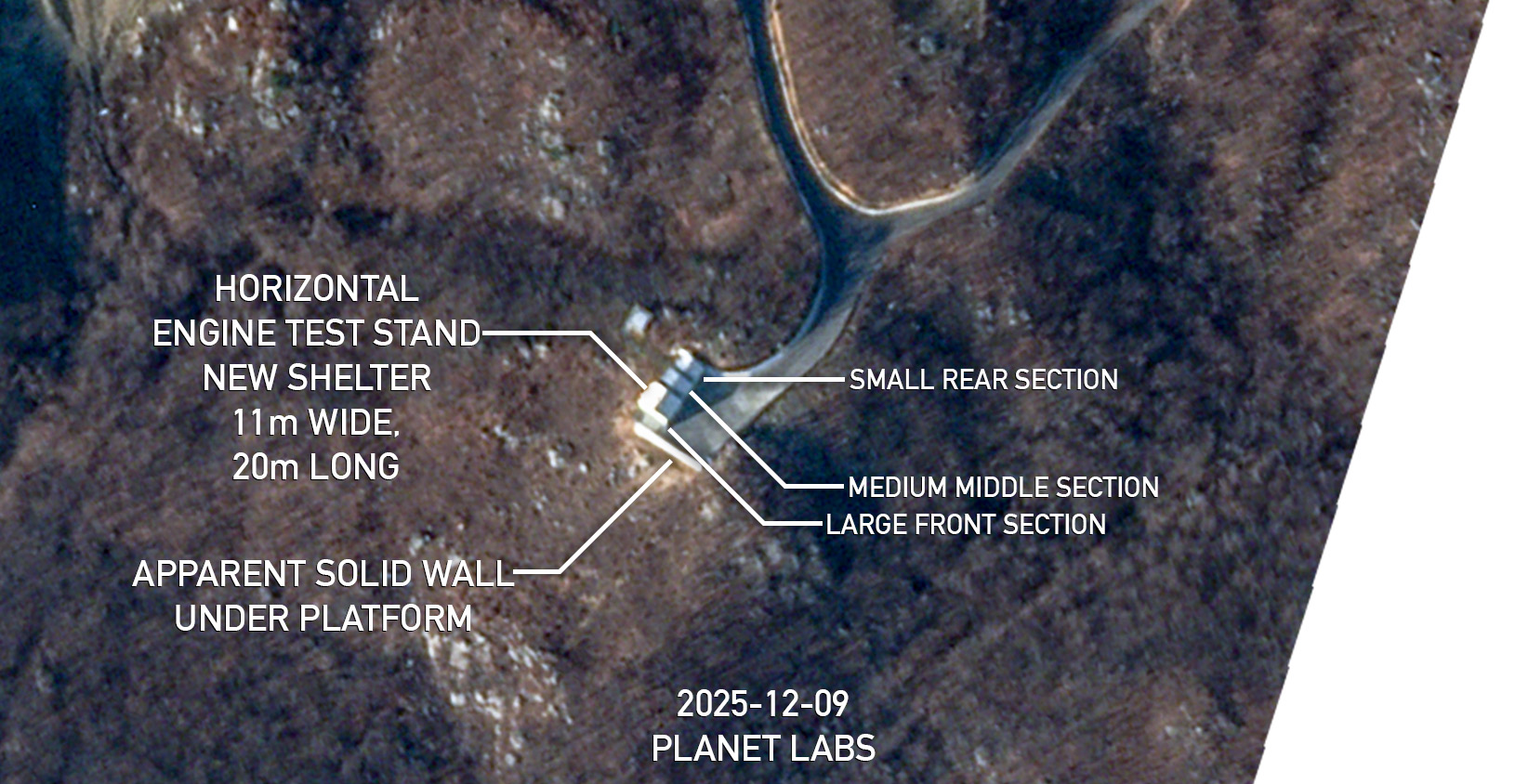
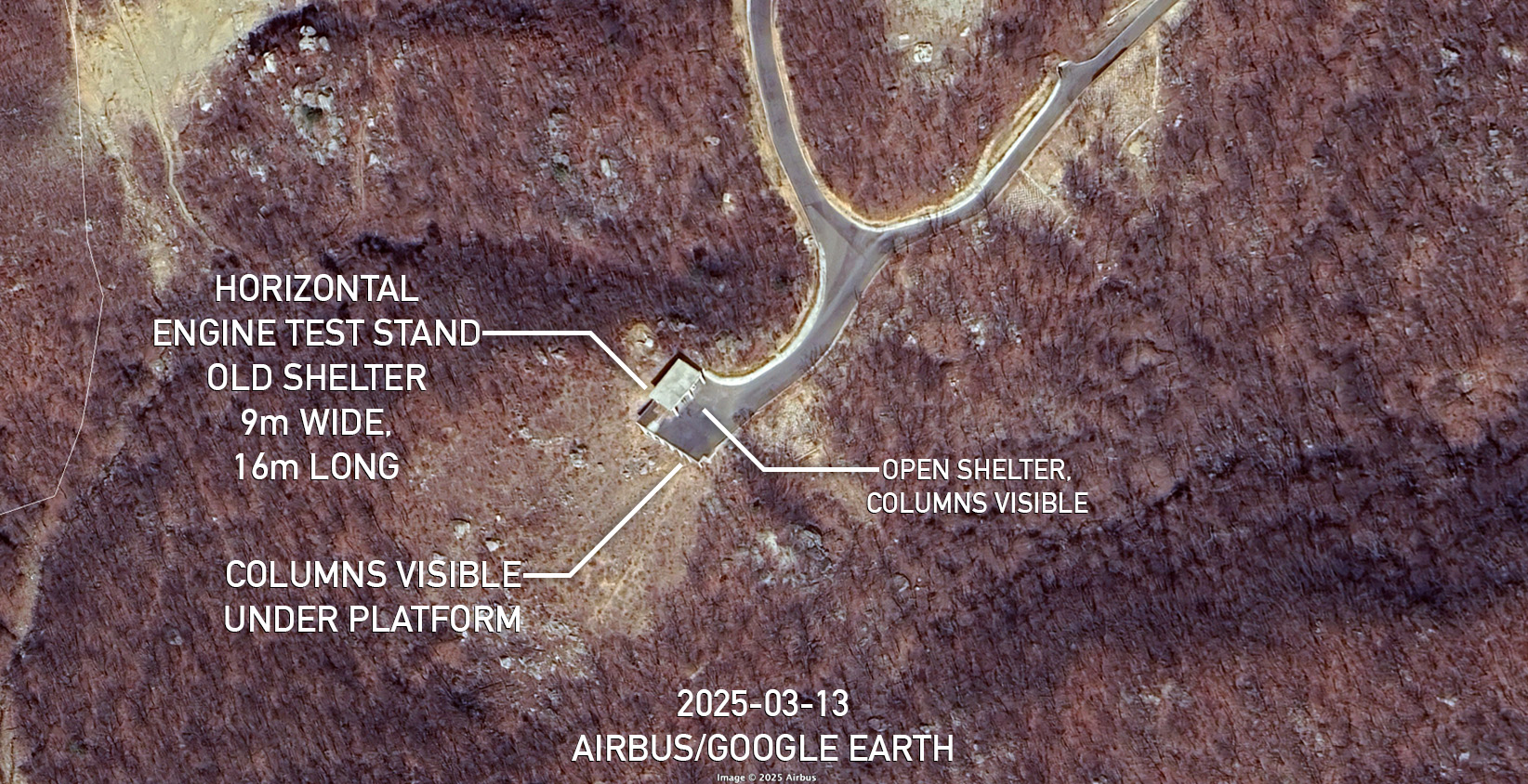
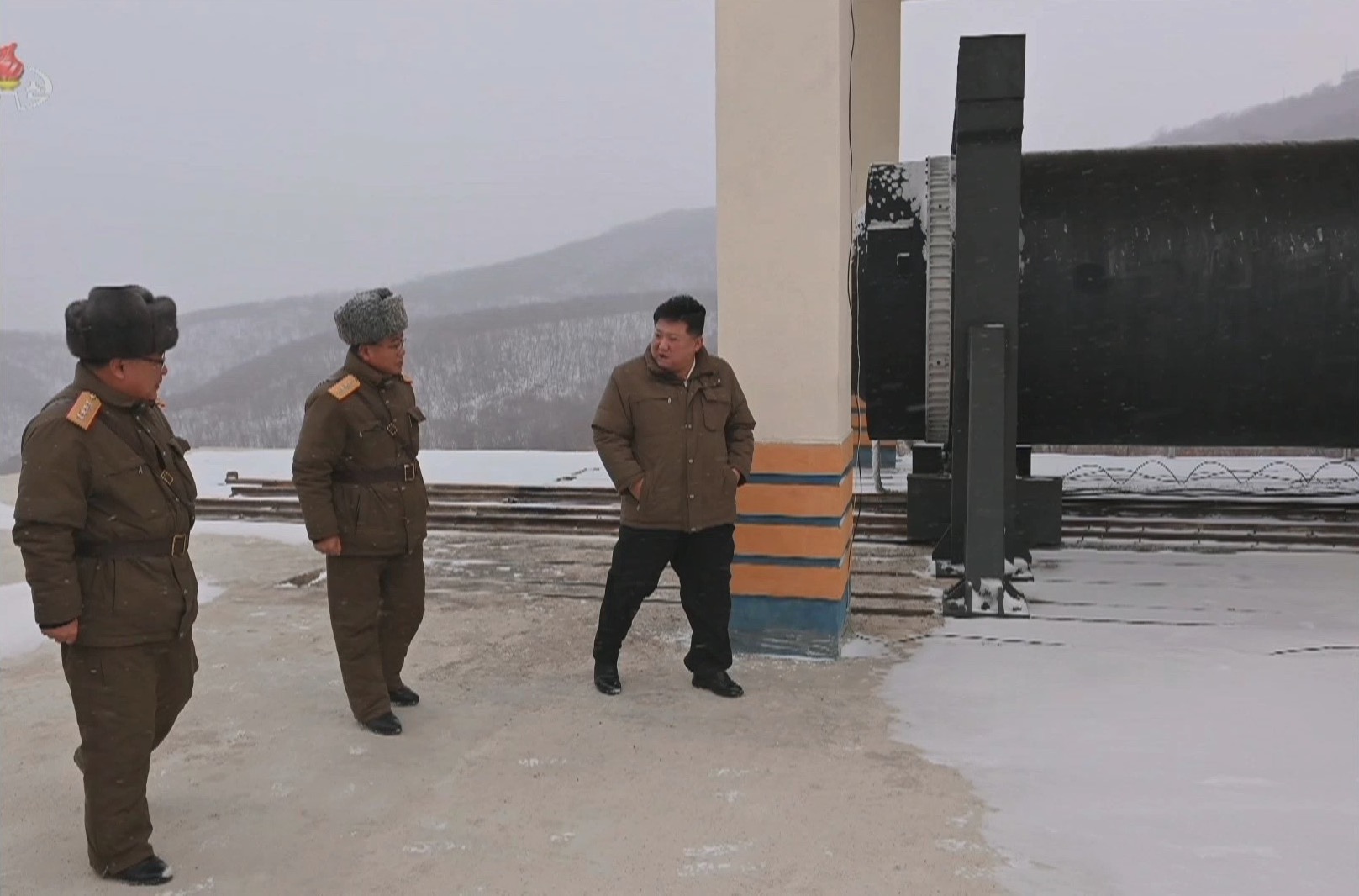
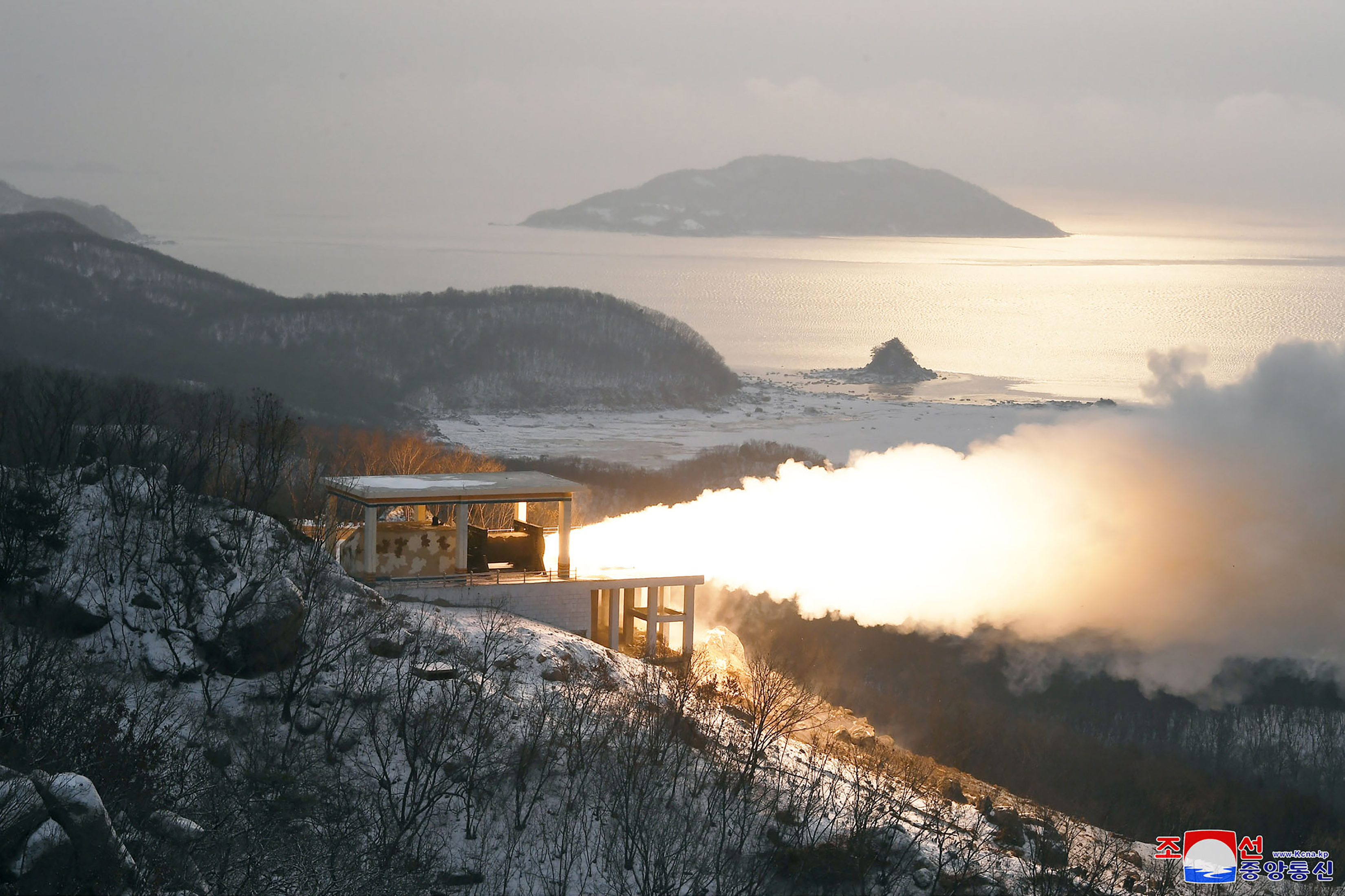
During a research lab inspection prior to the test in early September, Kim Jong Un said an engine with similar stated thrust will “be used in the Hwasong-19 intercontinental ballistic missile (ICBM) and the next-generation Hwasong-20 ICBM.” North Korea successfully test launched the Hwasong-19 once, in Oct. 2024, and first revealed the largely similar Hwasong-20 at a weapons expo and military parade in Oct. 2025. State media coverage of Kim’s recent engine-related inspections suggest he was satisfied with the state of development of the first-stage engine used in the country’s newest ICBM, raising questions over why the test stand was subsequently upgraded. Despite Kim’s statement, it is possible that further tests are still planned, as the Hwasong-20 has yet to be test launched, or that he has started the development of larger engines for a Hwasong-21 ICBM or other missiles that require upgrades to the stand’s infrastructure. But future testing may also be for smaller, second or third-stage ICBM engines, or for separate systems — like Kim’s unfulfilled “sea-based” ICBM demand from 2021 — where upgrades to the stand are simply to improve conditions for standard test preparation work. The apparent telescoping feature of the shelter would allow it to slide open and expose the entire anchor block and engine installation area, meaning workers could more easily load engines from trucks by crane and from the side, avoiding columns that held up the prior permanent shelter. For past tests, engines appeared to be loaded onto support brackets in the open space in front of the shelter and pushed back to the anchor block on rails. Now, the shelter extends almost to the end of the platform. It also appears to be a fully enclosed shelter, allowing workers to conduct preparatory work while being protected from the elements. 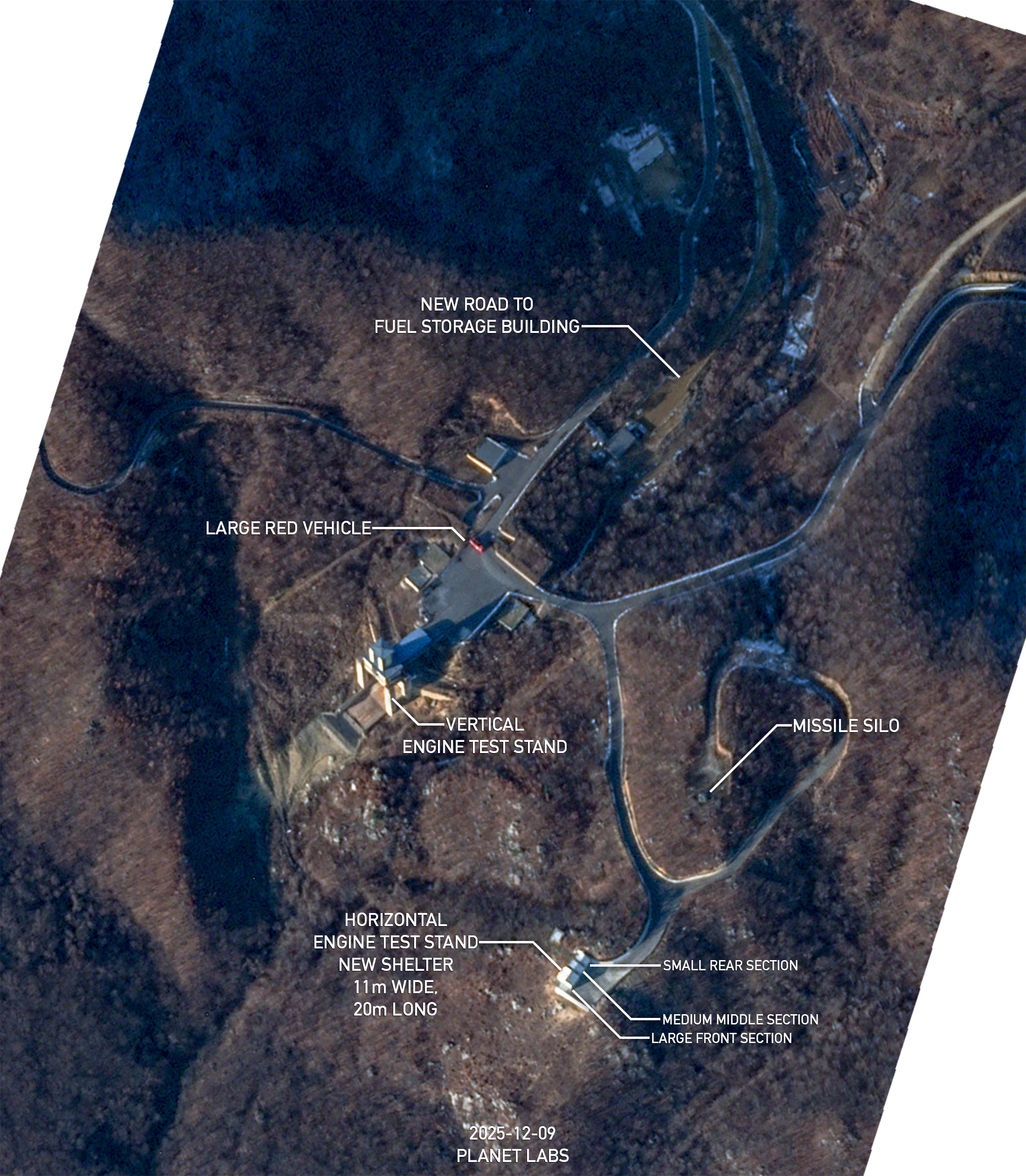  Besides work on the shelter, it appears that the area under the test stand — built on a sloping hillside — has also been enclosed, protecting the platform’s support columns. At the nearby vertical test stand used for liquid-fuel rocket engines as well, workers built a new road in early November to what CSIS has identified as an existing fuel/oxidizer storage building. This indicates plans to continue using the facilities for tests, possibly for rockets under the DPRK’s stalled military reconnaissance satellite program. The Dec. 9 Planet Labs image shows a large red truck outside the vertical test stand, possibly a fire truck, that was previously seen being used during an engine test attended by Kim. Edited by David Choi © Korea Risk Group. All rights reserved.

|

September 22, 2026Sep 22, 2026

The ultimate resources for professionals working on North Korea
 SHARE
SHARE COPY LINK
 X
X MASTODON