  Analysis Chinese imports appear to fill North Korean quarantine zone after trade restartAccumulation of goods visible in satellite imagery shows DPRK maintaining strict COVID-19 prevention policies 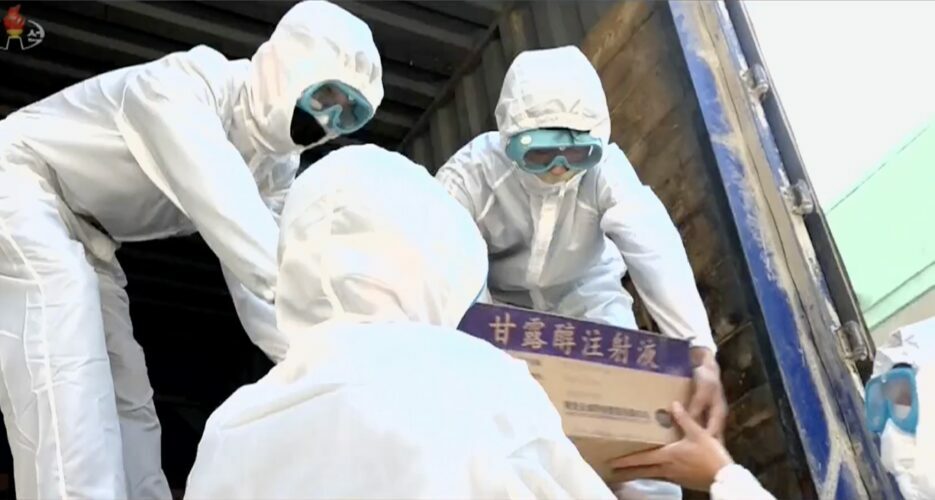 Stacks of what appear to be Chinese imports have begun accumulating at a giant North Korean quarantine zone near the border, according to NK Pro analysis of satellite imagery, after the two sides resumed overland trade last week for the first time in five months. NK Pro analysis of Planet Labs satellite imagery shows items covered in blue and white material started to appear on the runway of North Korea’s Uiju Airport disinfection compound between Sept. 29 and Oct. 4. Their appearance shows Pyongyang is maintaining strict COVID-19 prevention policies, nearly two months after declaring the virus “eradicated” in the country. The fresh imports are expected to remain in outdoor quarantine for up to three months, according to the precedent set when the zone was last operating between January and April. 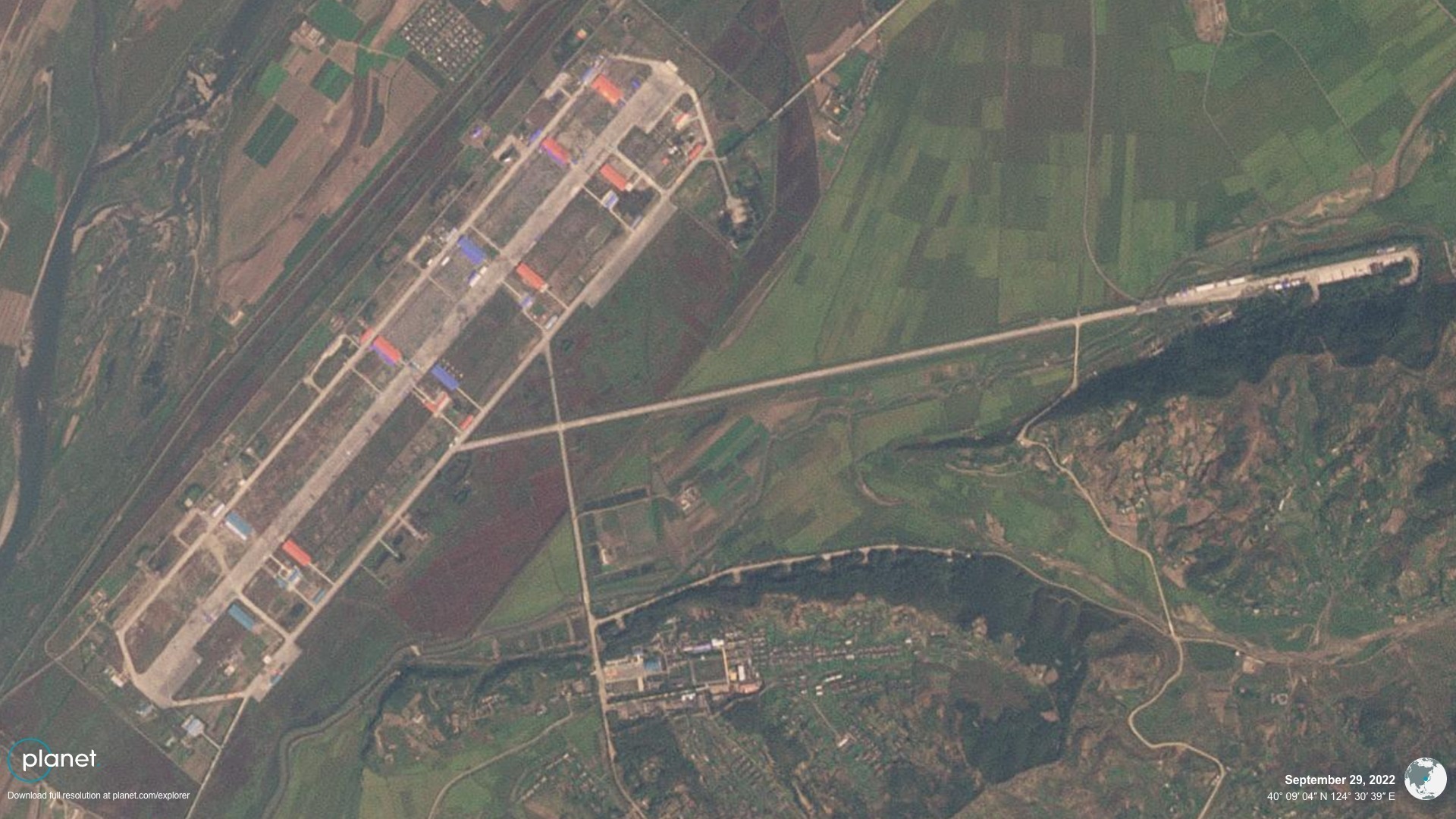 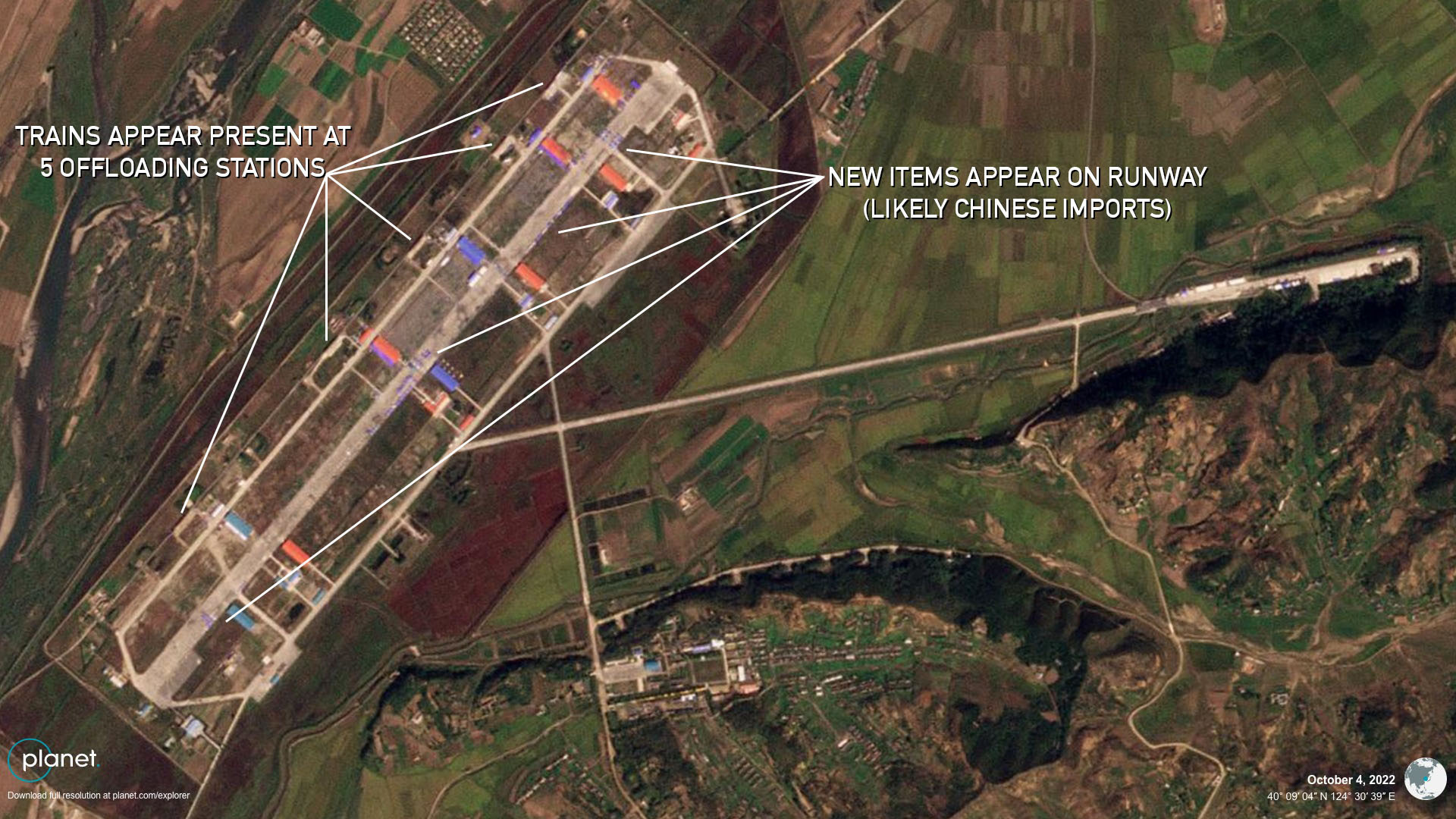 Items did not appear on the runway three days after trains from China started entering the disinfection and quarantine zone, but did appear in the next available satellite image taken on Oct. 4 | Images: Planet Labs PBH, edited by NK Pro Trains once again began carrying goods from China’s Dandong through North Korea’s Sinuiju and on to the airport-turned-disinfection center on Sept. 26, according to China’s foreign ministry and local Dandong media. Beijing said the restart came after new negotiations with Pyongyang. China and North Korea have maintained limited ship-based trade routes since Pyongyang shut the country’s borders in Jan. 2020 to prevent the spread of COVID-19, but the Dandong-Sinuiju train route is the only overland route that has operated for any extended period during the pandemic. 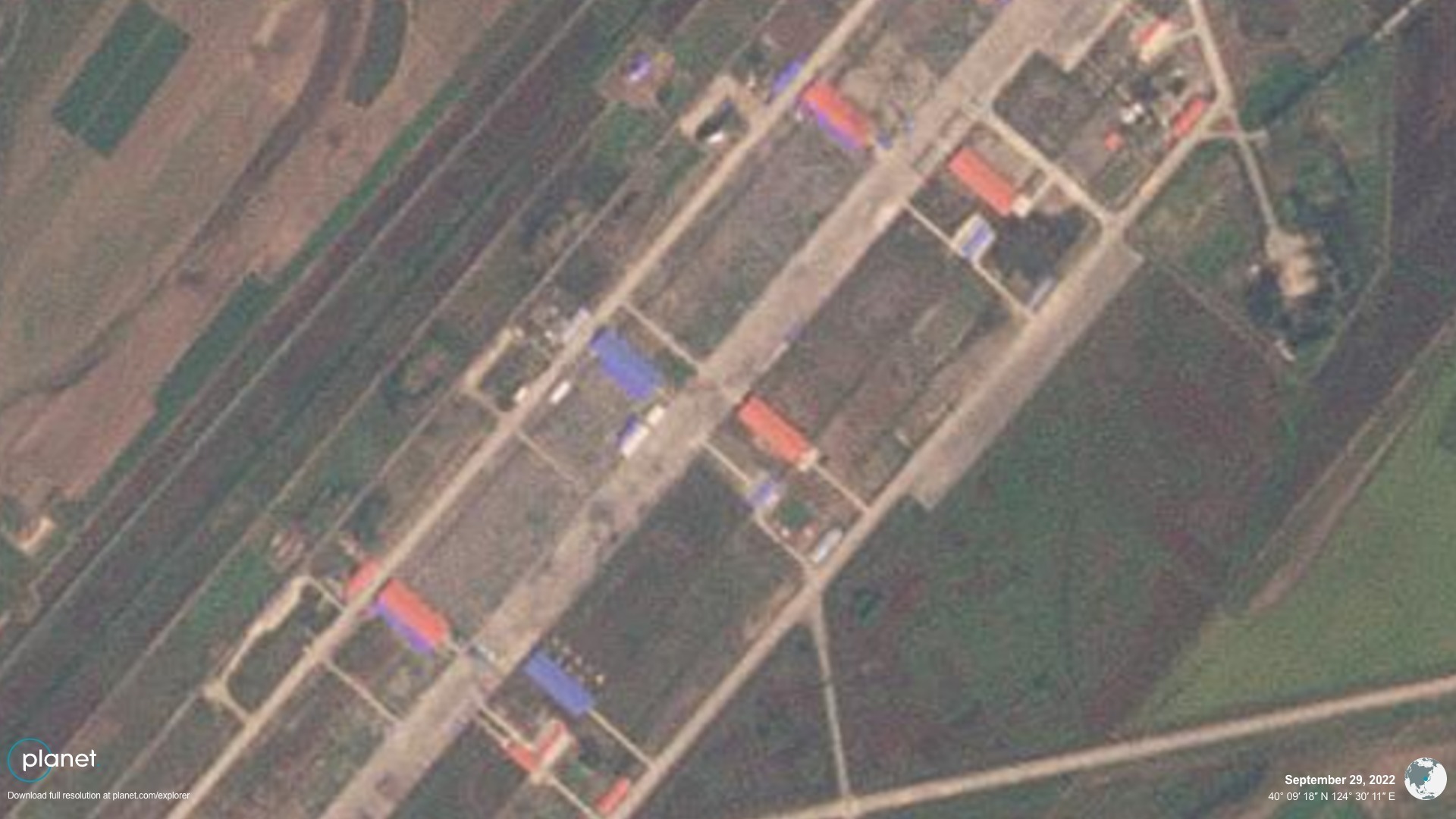 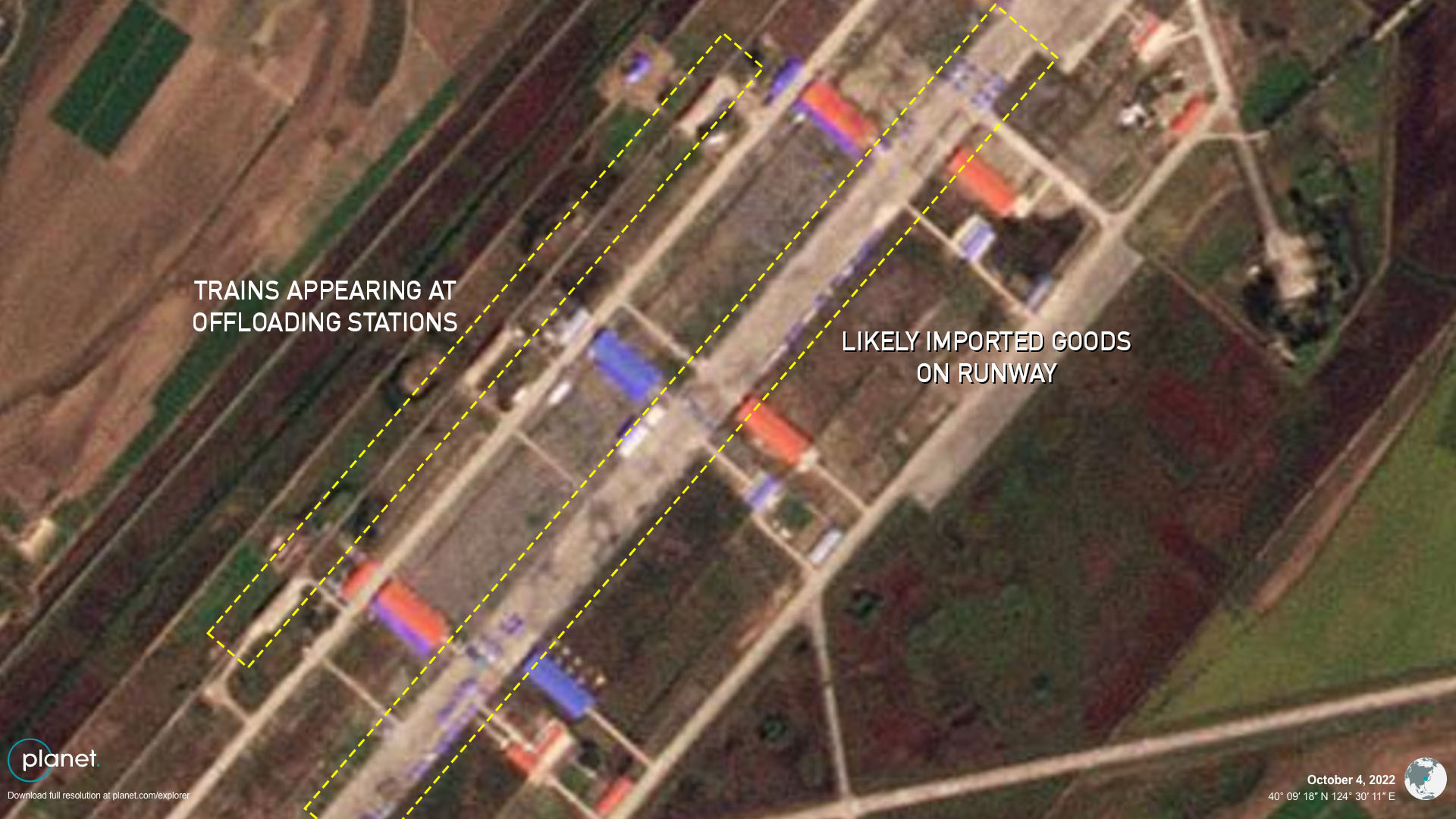 A closer look at the Uiju Airport outdoor quarantine area and train stations (with blue and orange-roofed warehouses likely serving as disinfection facilities in between these areas) on Sept. 29 and Oct. 4 | Images: Planet Labs PBH, edited by NK Pro Items had not yet appeared on the Uiju Airport runway in satellite imagery taken on Sept. 29 — three days after the latest opening — suggesting items first go through a multi-day disinfection process in five large, 330-foot-long (100-meter) warehouses situated between the runway and five offloading rail stations. The runway did not start to fill up with goods until around four days after the disinfection zone’s first opening in January as well. Further analysis of satellite imagery in the coming weeks and months will help determine if Pyongyang’s roughly 90-day mandatory quarantine period for imports is still in effect. North Korea appears to base the policy on concerns that COVID-19 can live on surfaces for months. The U.S. Centers for Disease Control and Prevention says the virus can be detected on certain non-porous surfaces for “weeks” but that the risk of transmission indoors “is minor after 3 days, regardless of when it was last cleaned.” The overland trade restart comes as North Korea is dealing with chronic food and material shortages and as it likely seeks large-scale imports of specialized goods in order to complete major construction projects such as a new street of skyscrapers in the capital that DPRK leader Kim Jong Un ordered completed by the end of the year. Edited by Arius Derr © Korea Risk Group. All rights reserved. |

October 03, 2026Oct 03, 2026

The ultimate resources for professionals working on North Korea
 SHARE
SHARE COPY LINK
 X
X MASTODON