  News North Korea’s fuel trade on pace to recover in 2022: ImageryOver 1,300 satellite images show how Pyongyang’s fuel trade appeared to ramp up as 2021 came to a close 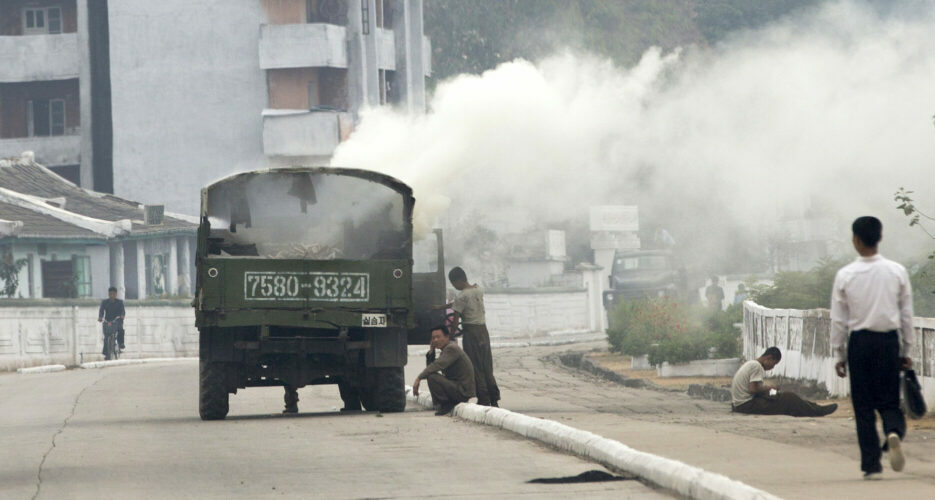 Illicit fuel has continued to flow in and out of North Korea’s ports in recent months, with evidence suggesting that fuel imports are on pace to recover from a lull in early 2021. The accompanying influx of revenue appears set to propel the regime’s weapons program into the new year, after North Korean leader Kim Jong Un pledged late last month to strengthen the country’s military due to the “ever-destabilizing” regional security situation. An NK Pro analysis of 1,385 low- to medium-resolution satellite images identified nearly 300 instances of ships berthing at known oil and coal terminals in 2021, with a noticeable uptick beginning between July and August. U.N. Security Council Resolution 2371, passed in Aug. 2017 in the wake of an intercontinental ballistic missile (ICBM) test, explicitly bans North Korea from exporting coal, the sale of which provides the Kim regime funds that could advance the country’s weapons programs. As the U.N. Panel of Experts (PoE) on North Korea noted in its latest report, coal exports and oil imports continued at a “much reduced level” in early 2021. Fortunately for Pyongyang’s coffers, a massive surge in Chinese demand around October appeared to kick-start coal exports, as North Korean merchants could now fetch significantly higher prices. 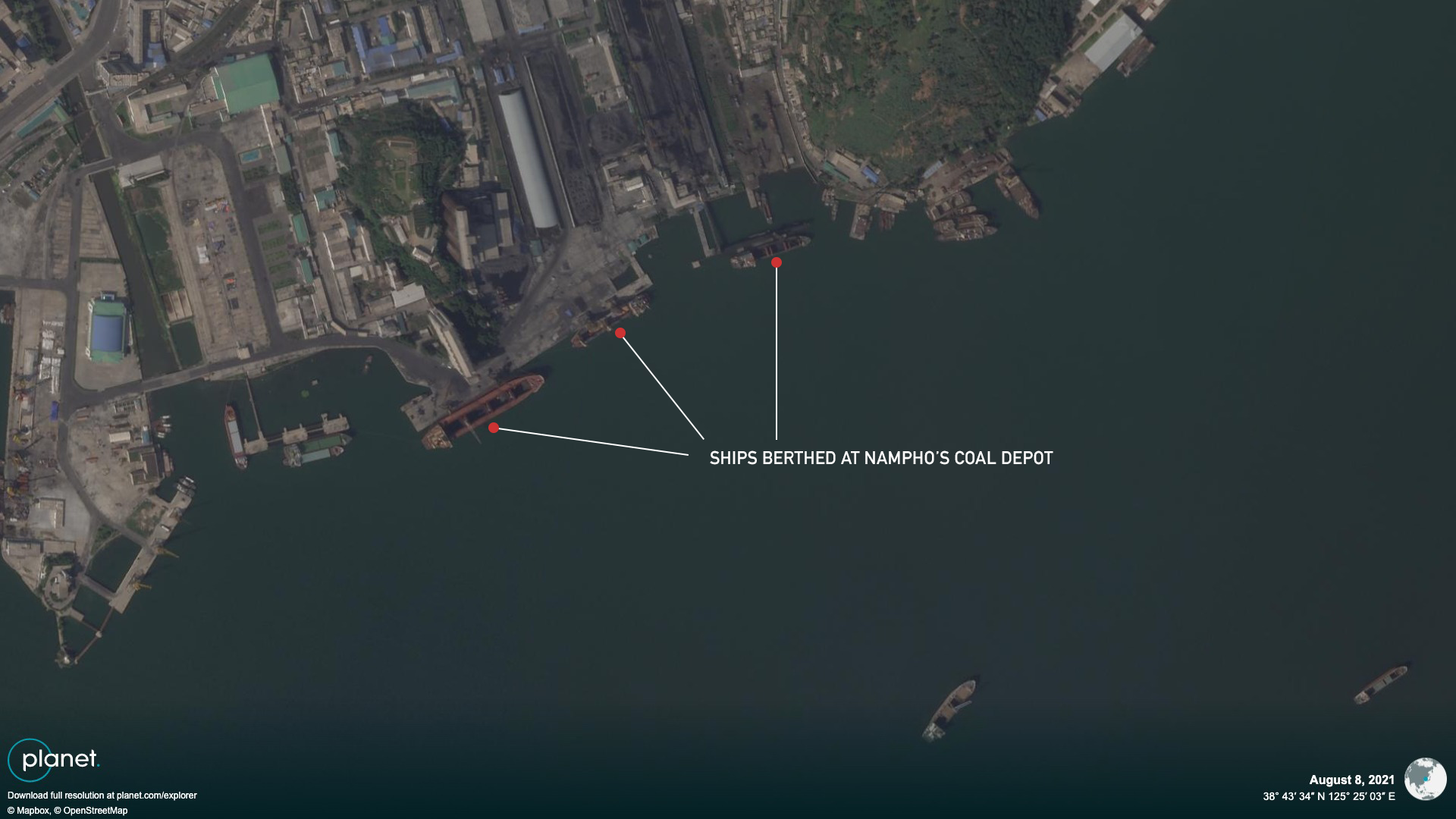 Katsu Furukawa, a ship-tracking specialist and former member of the PoE, said the increase in port activity contrasted with the moribund state of land trade with China, underscoring how the regime has become increasingly reliant on sea-based trade. “North Korea is at least trying to perfect this new operation of sanitizing cargo transported by sea,” he explained. “But the bulk of materials transported by sea is, in fact, more like fertilizer, coal and petroleum — these are basic materials for the industrial sector or agricultural sectors, but they’re not commodities for ordinary people.” While imagery limitations make it difficult to verify that every ship visiting a coal berth indeed took on coal, refined petroleum deliveries are easier to identify due to the single-use nature of oil terminals. 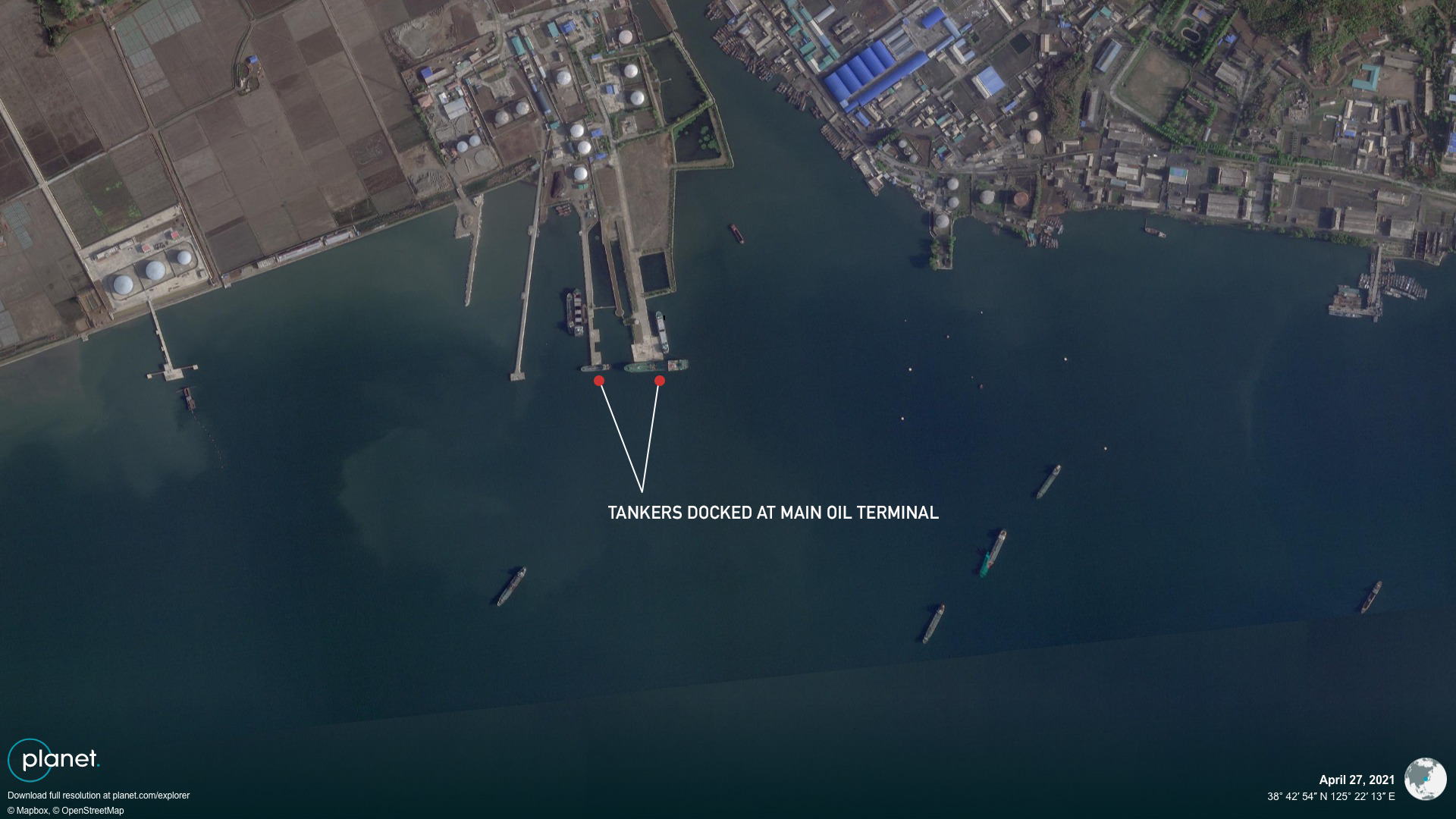 NK Pro also observed at least 43 likely refined petroleum deliveries at Nampho’s several oil terminals across 166 low- to medium-resolution images in 2021. Again, oil deliveries appeared to pick up significantly starting in July — right around the same time available market price data shows a rapid drop in fuel prices. Researchers at the Royal United Services Institute’s (RUSI) Project Sandstone identified a similar trend. Their analysis, which used high-resolution imagery to identify individual oil tankers and their carrying capacity, estimates the DPRK imported up to 670,000 barrels last year — well over the U.N.-set cap of 500,000. Rudiger Frank, head of the Department of East Asian Studies at the University of Vienna, said the timing of the uptick could signal oil reserves had reached a “critical level” in mid-2021, leading Pyongyang to dial up oil imports despite COVID-19 fears. Last year also saw the first deliveries to a new oil terminal at Nampho built the same year. With two of the facility’s three tanks being roughly twice the size of those at Nampho’s main oil depot, the new terminal adds considerable storage and intake capacity. 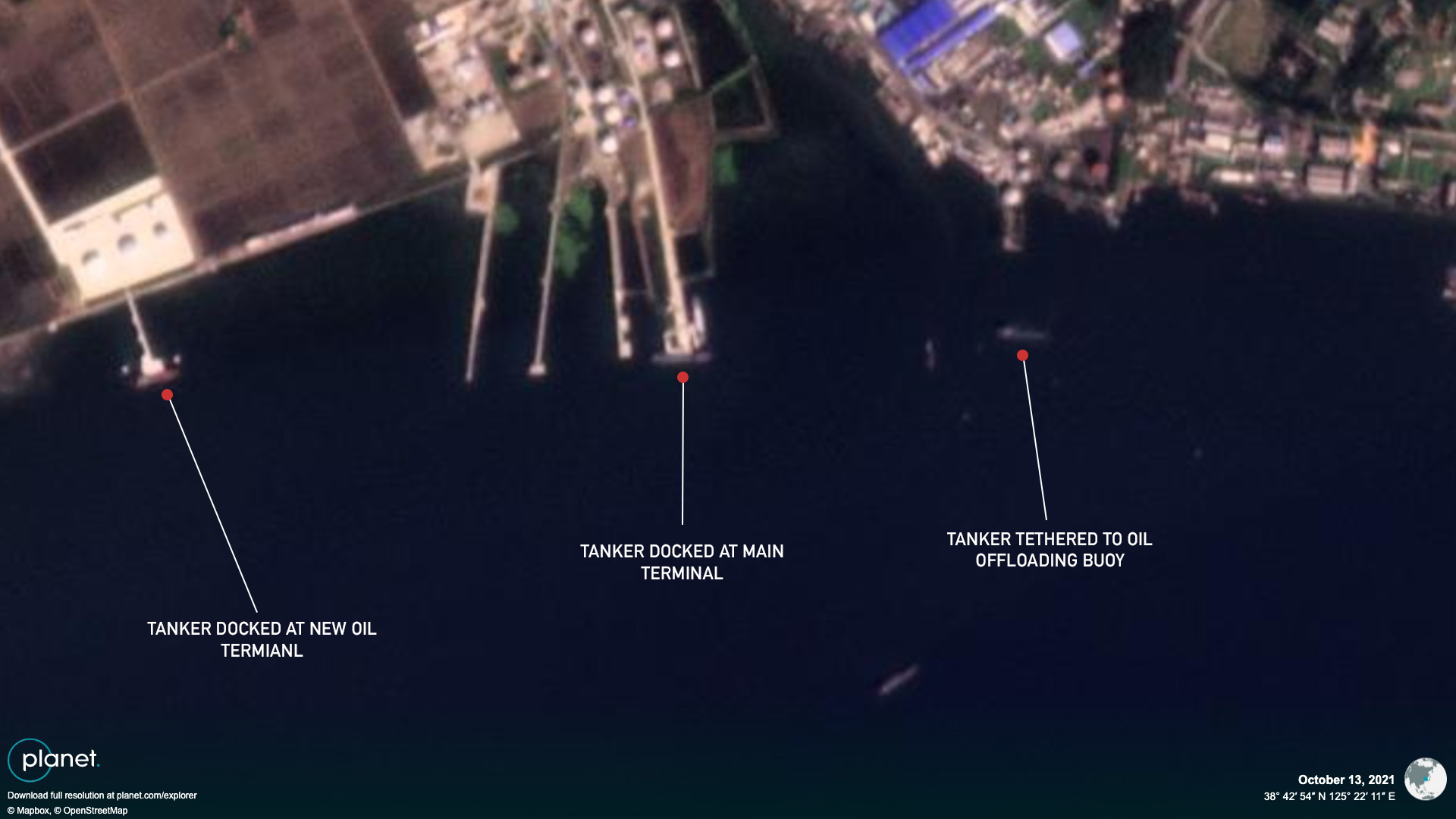 Edited by Arius Derr © Korea Risk Group. All rights reserved. |

October 02, 2026Oct 02, 2026

The ultimate resources for professionals working on North Korea
 SHARE
SHARE COPY LINK
 X
X MASTODON