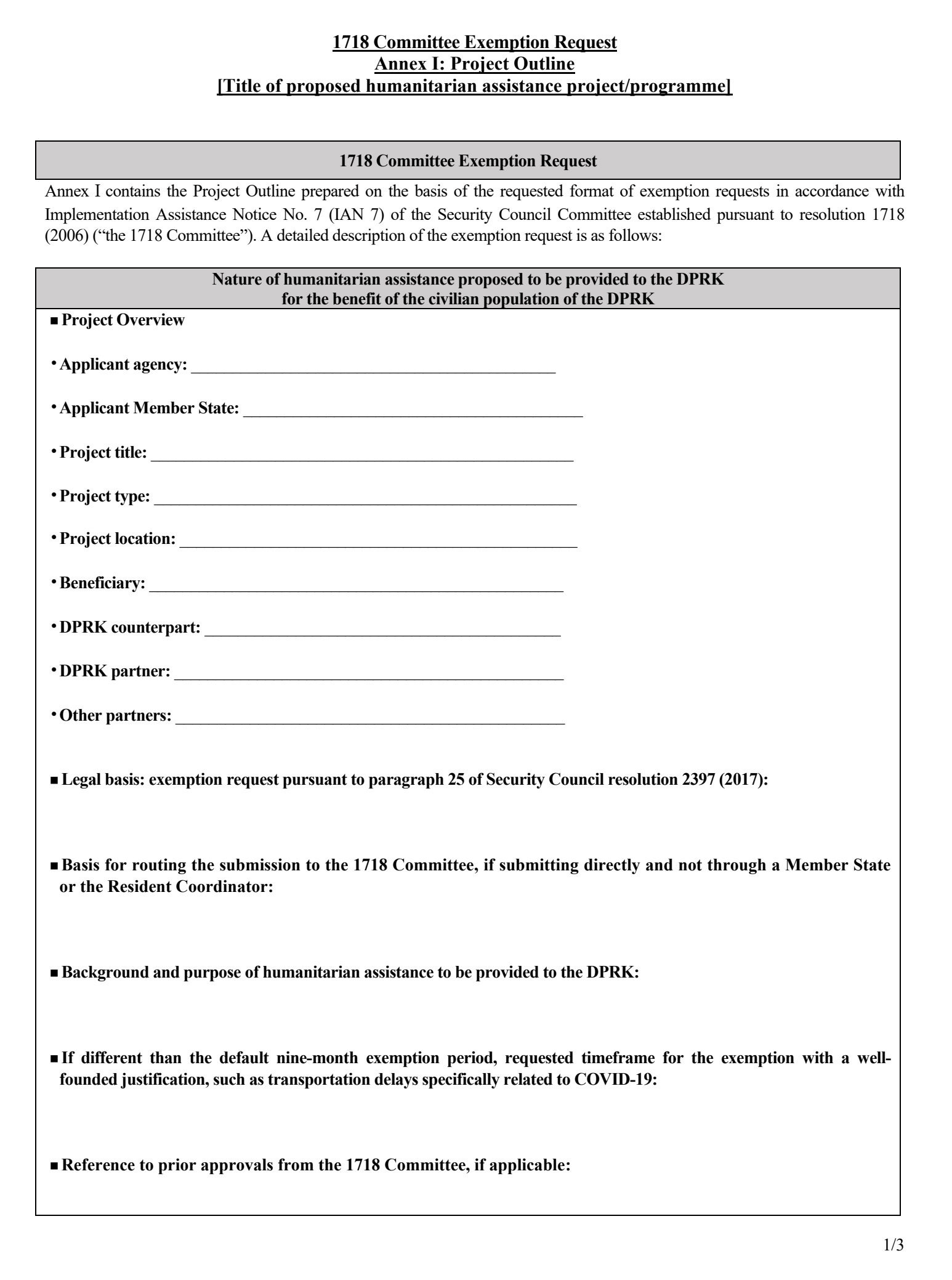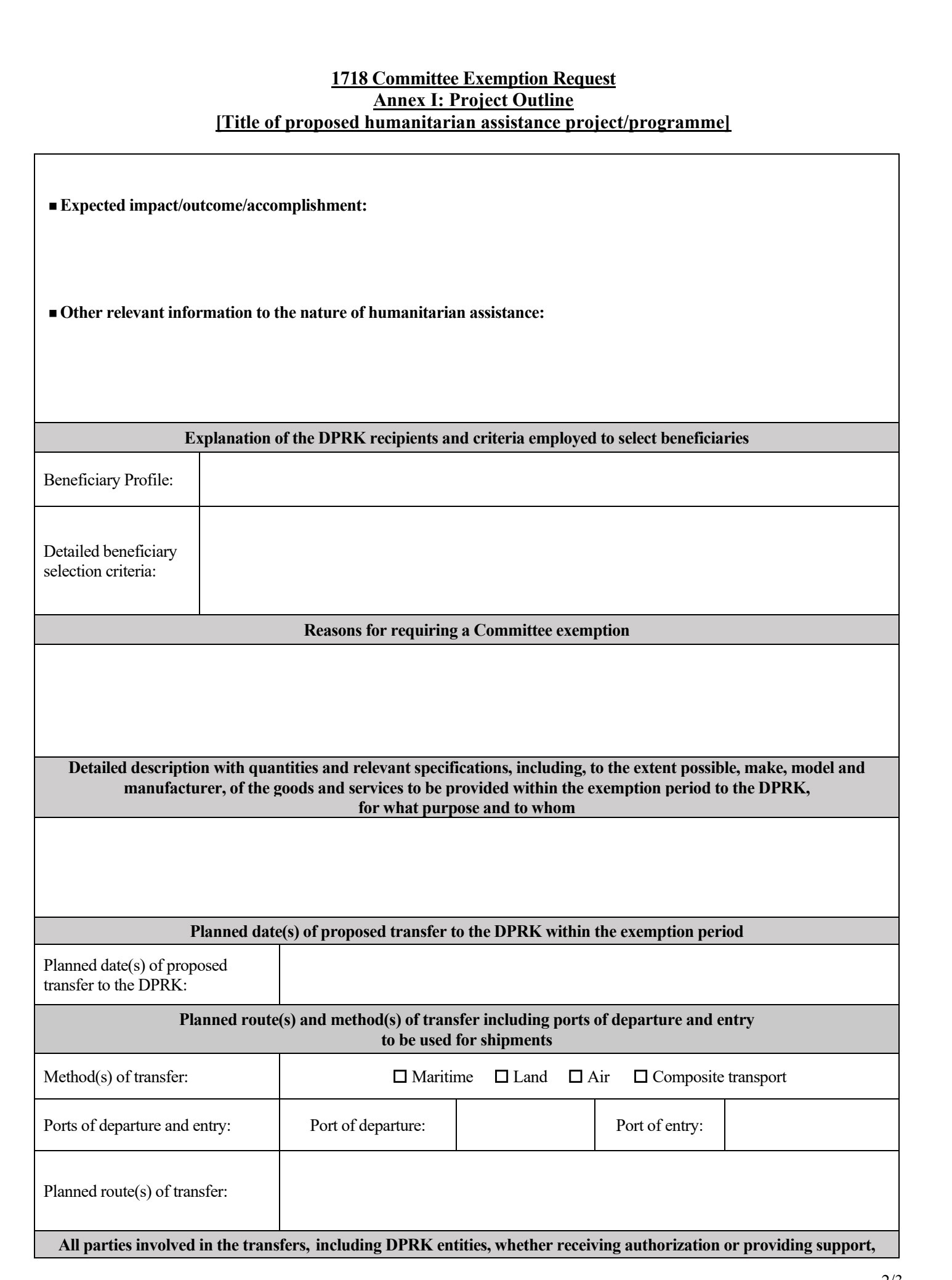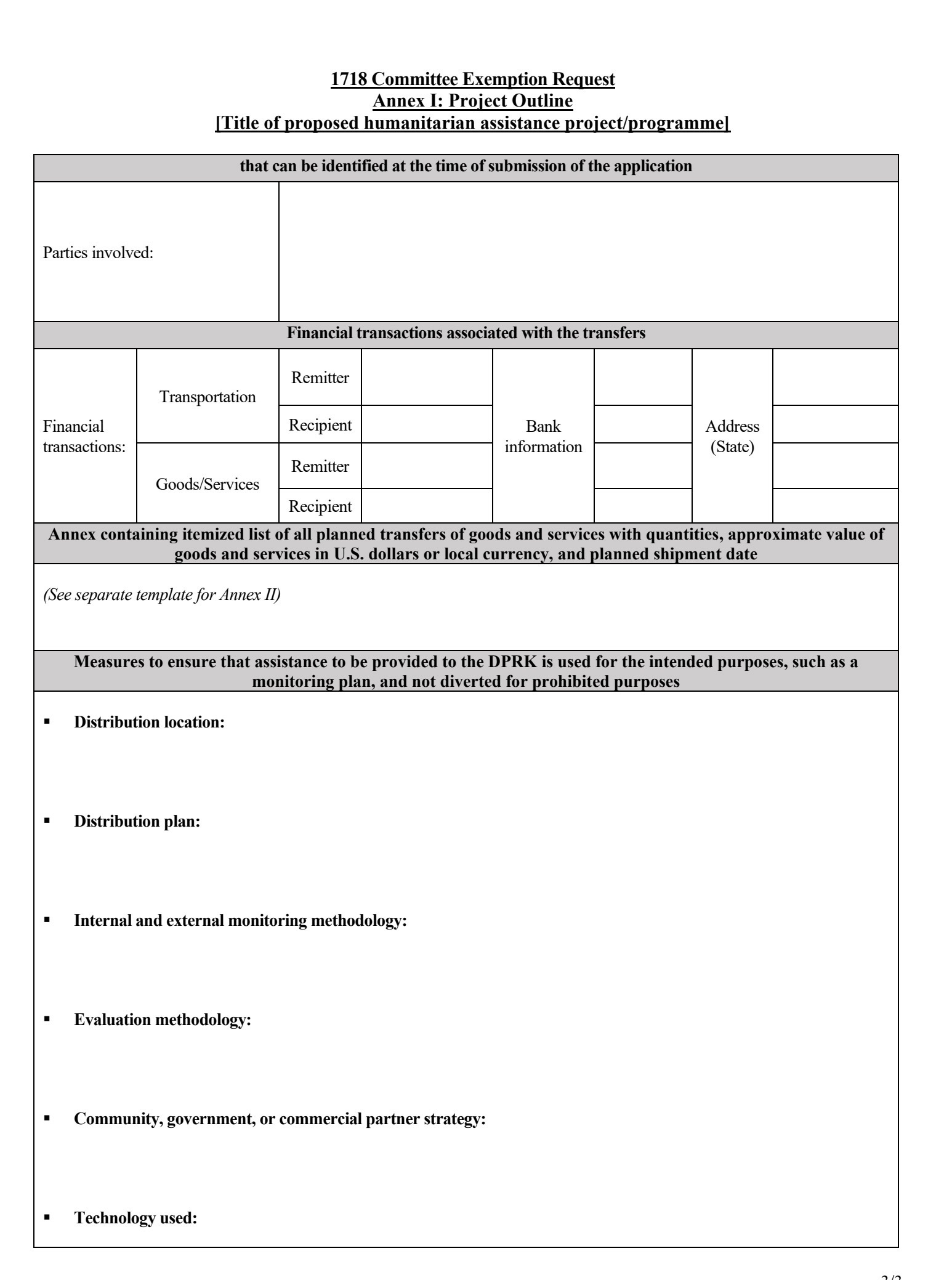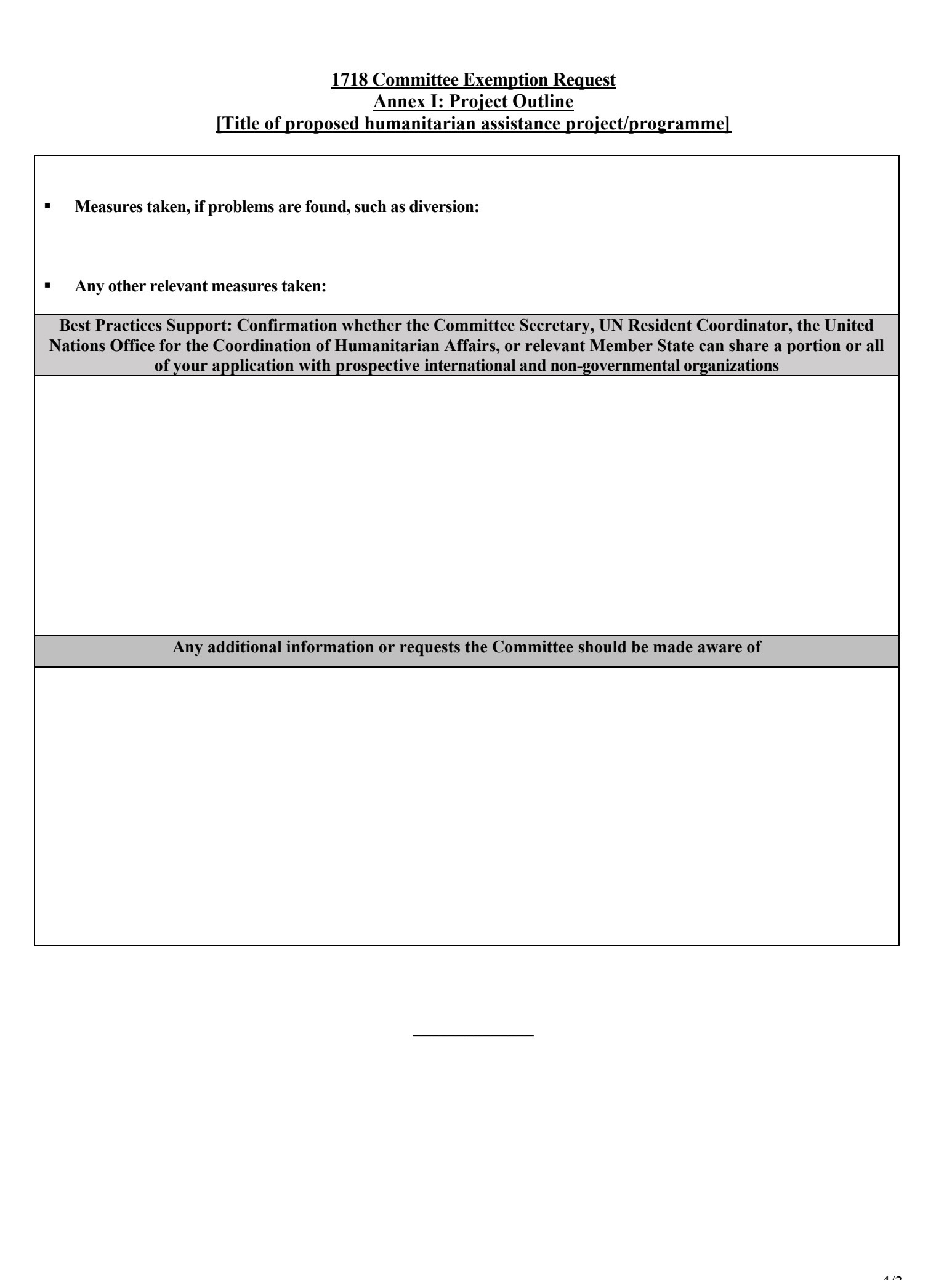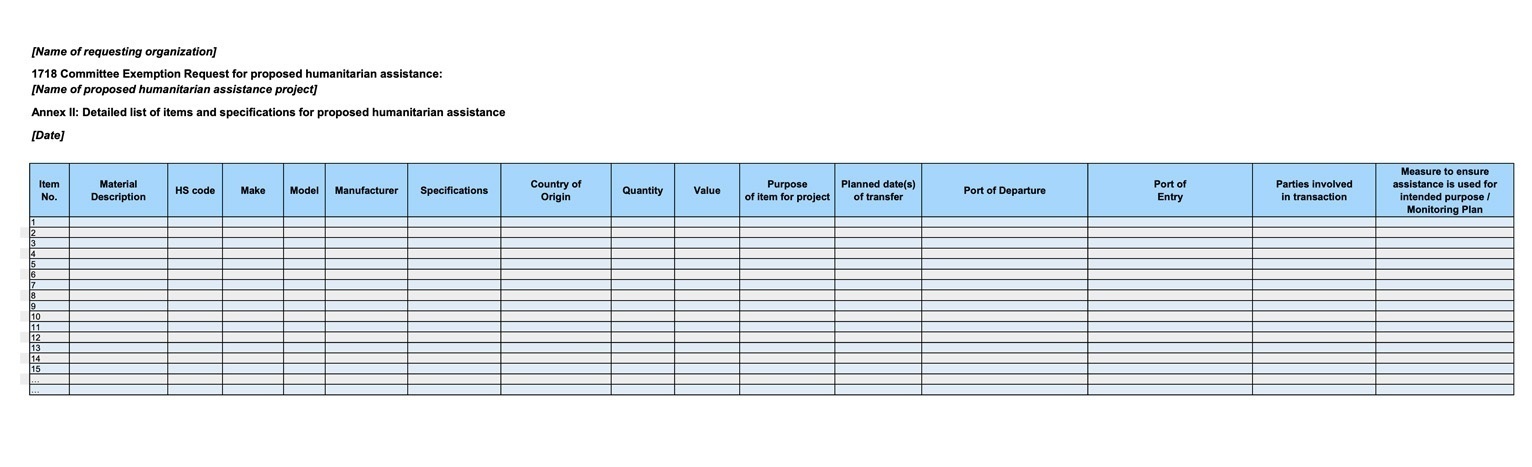
Analysis Document: New UN sanctions exemptions guidelines for North Korea-related aidNew guidelines detail the sanctions exemptions process for humanitarian groups trying to help North Korea  On Tuesday, NK News reported that the United Nations will expedite its approval process for any foreign aid directed towards North Korea. Now, NK Pro has obtained a copy of the new guidelines from a U.N. Security Council source, which is republished below in full. Earlier this week, Kelly Craft — an American ambassador to the United Nations — announced that the U.N. adopted a U.S. proposal to make sanctions exemptions “easier and faster” so that aid groups can help North Korea in a more timely manner. As part of the changes, the U.N. has now extended the sanctions exemption period from the usual six months to nine months, meaning that aid groups automatically get three more months to gather and deliver goods. The U.N. committee will also be required to handle urgent requests under a more “expedited timeline.” Below is a full, unedited copy of the document obtained from a U.N. Security Council source: Implementation Assistance Notice No. 7: Guidelines for Obtaining Exemptions to Deliver Humantarian Assistance to the Democratic People’s Republic of Korea The Security Council Committee established pursuant to resolution 1718 (2006) believes that the following information may be useful to Member States in carrying out their obligations contained in resolutions 1718 (2006), 1874 (2009), 2087 (2013), 2094 (2013), 2270 (2016), 2321(2016), 2356 (2017), 2371 (2017), 2375 (2017) and 2397 (2017). The Security Council has repeatedly affirmed that the measures imposed by the abovementioned resolutions are not intended to have adverse humanitarian consequences for the civilian population of the Democratic People’s Republic of Korea (DPRK) or to affect negativel\ or restrict thosea ctivities, including economic activities and cooperation, food aid and humanitarian assistance, that are not prohibited by these resolutions. Furthermore, many of the measures found in these resolutions contain explicit humanitarian exemptions that include, in some cases, the need to obtain an explicit exemption from the Committee in advance on a case-by-case basis. Nevertheless, in order to create a comprehensive humanitarian exemption mechanism, paragraph 25 of resolution 2397 (2017) reaffirms that the measures imposed by resolutions 1718 (2006), 1874 (2009), 2087 (2013), 2094 (2013), 2270 (2016), 2321 (2016), 2356 (2017), 2371(2017), 2375 (2017) and 2397 (2017) are not intended to have adverse humanitarian consequences for the civilian population of the DPRK or to affect negatively or restrict those activities, including economic activities and cooperation, food aid and humanitarian assistance, that are not prohibited by resolutions 1718 (2006), 1874 (2009), 2087 (2013), 2094 (2013), 2270(2016), 2321 (2016), 2356 (2017), 2371 (2017), 2375 (2017) and 2397 (2017), and the work ofinternational and non-governmental organizations carrying out assistance and relief activities in the DPRK for the benefit of the civilian population of the DPRK, stresses the DPRK¶s primar\ responsibility and need to fully provide for the livelihood needs of people in the DPRK, and decides that the Committee may, on a case-by-case basis, exempt any activity from the measuresimposed by these resolutions if the Committee determines that such an exemption is necessary to facilitate the work of such organizations in the DPRK, or for any other purpose consistent with the objectives of these resolutions. As such, the Committee offers the following recommendations for Member States and international and non-governmental organizations carrying out assistance and relief activities in the DPRK for the benefit of the civilian population of the DPRK. Format of Exemption Requests The Committee recommends that Member States and international and non-governmental organizations carrying out assistance and relief activities in the DPRK for the benefit of the civilian population of the DPRK and requiring a 1718 Committee exemption, submit requests for exemptions in a letter containing the following elements:
The Committee recommends that Member States and international or non-governmental organizations obtaining humanitarian exemptions should do their utmost to consolidate all planned shipments into three shipments or less every nine months, per project, to the best extent practicable. If an applicant who has received a Committee exemption needs to make necessary and well-justified changes to items planned for transfer to the DPRK (such as exact specifications and quantities) and/or the method and parties involved in the transactions (such as the final shipping and delivery plan), the applicant must promptly provide the Committee with all changes needed for review through a follow-up exemption letter. The Committee would then review all the changes requested and make appropriate adjustments to the exemption it provided, where necessary. If an applicant is unable or in any other way not in a position to provide the above information, the Committee recommends submitting the reason the information is missing and a plan to update the Committee as the details become available. If applicants face any challenges during the process, the Committee recommends they consult its Member State, the Committee Chair, the United Nations Office for the Coordination of Humanitarian Affairs, or the United Nations Resident Coordinator in the DPRK. For applicants’ convenience and optional use, please find an blank application and annex template for organization’s applications on the 1718 Committee website. Routing of Exemption Requests from International and Non-Governmental Organizations to the 1718 Committee There are three ways international or non-governmental organizations can seek exemptions from the Committee as outlined below. However, United Nations agencies, ICRC, IFRC, IOC, or an organization that has received two or more exemptions during 18 months preceding the date of the new application, or the exemption request is in regards to providing urgent emergency humanitarian assistance to the DPRK people, such as aid to fight against pandemic outbreaks, like COVID-19, or aid to respond to a natural disaster, can submit exemption requests directly to the Committee via the Committee Secretary, in accordance with relevant national authorities and organization bylaws:
Committee Approval Process Due to the time-sensitive nature of humanitarian assistance, the Committee will endeavor to process exemption requests as quickly as possible to provide decisions within a reasonable timeframe in accordance with the Committee Guidelines. Exemptions will be granted for a period of nine months from the date of the letter by which the Committee has granted the exemption, unless the applicant specifically requests otherwise and provides a well-founded justification, such as transportation delays related to a pandemic, for the Committee to consider. If the party that received an exemption is unable to complete the project within the exemption timeframe, the Committee recommends that the party submit an extension request with an explanation, at least ten business days before the expiration date of the exemption. The Committee will review extension requests, updated exemption requests, and urgent emergency humanitarian assistance requests, such as those aimed at responding to pandemic outbreaks, like COVID-19, or natural disasters on an expedited timeframe. Committee Exemption Approval Letter After the Committee has reviewed the exemption request, it will issue a response letter with its decision. If the Committee approves the request, it will issue a letter to the requesting party that explains specifically what the Committee approves for transfer to the DPRK. An annex with an approved list of goods and services by quantity and planned shipment date will be appended to the Committee approval letter. The Committee approval letter and its annex will be published on the 1718 Committee website upon issuance for the public for the exemption period. The approval letter will be translated to all UN languages and the applicant may share it with relevant parties If there is a need for the annex to be translated, for example, to help with procurement, customs, or financial transactions, the applicant should include a translated version in its initial application to be posted online once approved. Publication of the exemption allows relevant natonal authorities involved in reviewing the exempted transfers to the DPRK, and financial institutions and suppliers working with the applicant to quickly and independently verify the exemption. (If applicants require portions of their annex to be kept confidential and not posted online, the applicant should indicate this in their application and submit both a full annex for the Committee’s review and a redacted annex to be posted online, if approved.) Best Practices The Committee believes international and non-governmental organizations planning to carry out assistance and relief activities in the DPRK for the benefit of the civilian population of the DPRK may benefit from reviewing previously approved exemption applications. If a party is willing to make its approved exemption request, or a portion of its exemption request, available for review for the above purpose, or to provide guidance to a prospective party, the Committee requests this information be included in the application. If a party opts in, the Committee Secretary, UN Resident Coordinator, the United Nations Office for the Coordination of Humanitarian Affairs, or relevant Member State, will share the authorized information to prospective international and non-governmental organizations requesting support. Participating in this best practice process will not impact an applicant’s application. Additionally, the Committee Secretary will collate relevant anonymized information for the sake of holding a repository of generalized best practices. Banking Channel The Committee is fully aware of the urgent need for establishing a stable and risk-free banking channel for humanitarian purposes and is actively seized in the process to create one. Limitations of 1718 Committee Exemptions The Committee reminds all international and non-governmental organizations that receiving exemptions from the Committee for United Nations sanctions does not exempt those organizations and their proposed transactions from the relevant domestic regulations and licensing requirements of Member States involved in those transactions. All international or non-governmental organizations requesting exemptions from the Committee must also fully observe relevant regulatory and licensing requirements of Member States that have jurisdiction over all aspects of the proposed transactions and involved parties, such as submitting a translated version of the annex of the Committee exemption approval letter to the customs authority in countries where English is not an official language and adhering to cash carry limitations. ***
© Korea Risk Group. All rights reserved.

|

September 25, 2026Sep 25, 2026

The ultimate resources for professionals working on North Korea
 SHARE
SHARE COPY LINK
 X
X MASTODON