  News Amid improving Sino-DPRK relations, work on Tumen River bridge acceleratesConstruction on long-delayed project stepped up on both sides of border 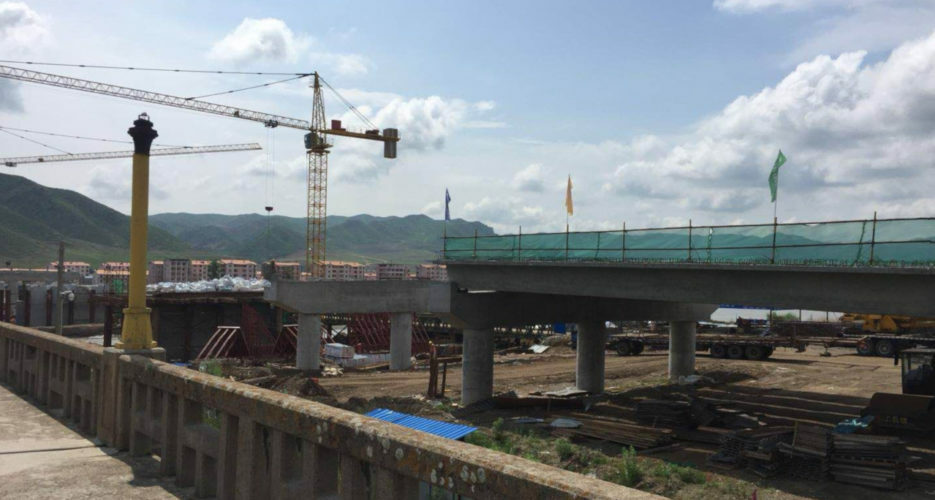 Construction on a new bridge connecting Namyang, North Korea and Tumen, China has accelerated on both sides of the Tumen River since spring, satellite imagery and new photos reveal. Additional road sections appear to have been installed since the beginning of May on the PRC side, while concrete pylon column caps have been installed on the DPRK side. Two-thirds of the bridge’s total columns reside on the North Korean side of the river, though construction appears to be advancing more rapidly on the Chinese side. Previous reporting by NK Pro showed that a single girder section had been installed between columns – without top-layer paving – in the first weeks of October 2017. 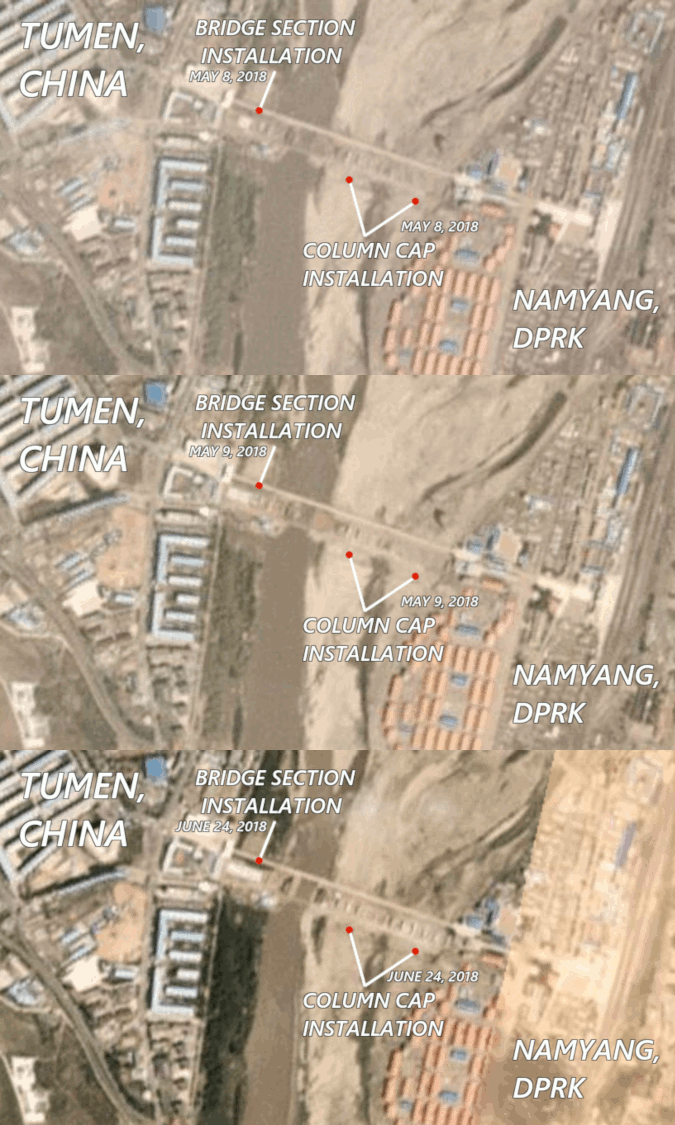 Progress then stalled, however, and while concrete pylons were added between October and May, additional road sections were not added until May 9 this year, when at least two more sections had been installed by June 24, satellite imagery shows. Photographs taken from the old adjacent bridge in the second week of June provide further proof of this progress, showing two active cranes and construction worker activity on both sides of the water as well. Workers are seen building up the nearest column to the water on the DPRK side, while only three of the other columns on that side had their concrete caps (necessary for the connecting road girders and eventually road paving) installed – only one more than was evident in February satellite images.  Satellite imagery from June 24 suggests these caps had been installed on more of the columns on the Namyang side in the previous two weeks. Last October, photographs taken at the location showed that while these column caps were finishing up on the Chinese side, most of the concrete pylons themselves were not yet in place on the North Korean side. Most of the column construction there appears to have been done between that time and February this year, where Google Earth satellite images show near completion of the concrete pylons stage. 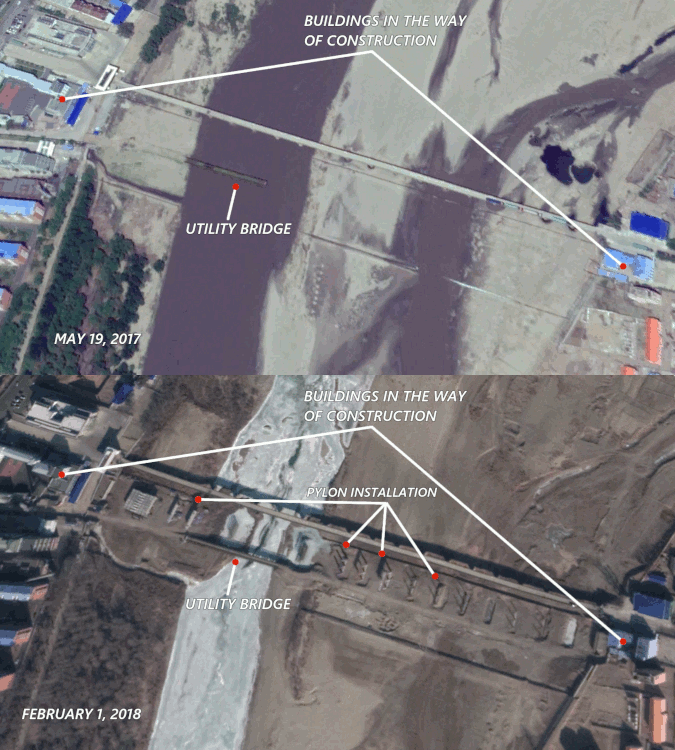 Also appearing on the Chinese side last month was a large blue-roofed structure with Chinese writing along its perimeter reading, in part, “Work Zone.” The open hangar-shaped structure could be used as a storage or staging area by workers, as there appears to be information boards along its back edge. The Chinese-language signs suggests heavy Chinese company involvement, though no company name could be discerned from the writing, and the nationality of the workers is also unclear. Resumed work this year coincides with a return to closer cooperation between China and North Korea following their more strained relationship of 2017, which saw Beijing step up its traditionally-lax sanctions enforcement efforts.  Both Tumen and the larger city of Yanji directly to the west belong to China’s Yanbian Korean Autonomous Prefecture, in which hundreds of thousands of ethnic Koreans reside and which has become a major trade hub between the DPRK and China. Satellite imagery shows that construction on the bridge began in late 2016, when a small utility bridge to be used by workers to cross the water during work began to appear from the Chinese side. NK Pro revealed images taken in January 2017 showing that this utility bridge was still under construction and had not yet been connected to the North Korean side.  Progress accelerated after it appeared to have been connected around June last year, though most of the work continued on the Chinese side before the construction pause the following winter. The progress made in the last two months and the presence of more permanent worksite elements suggest that work may proceed further this time than in past stages. However, while work on the bridge appears to be moving at an accelerated pace, there is yet to be any evidence of related road construction proceeding on either side beyond the bridge, as large buildings remained in the direct path of the bridge road on both sides as of June 24.  The area on the DPRK side directly adjacent to the bridge experienced rapid reconstruction in the last quarter of 2016 following a devastating flood in early September, which saw the Tumen River overflow and cause severe damage to the riverside neighborhood in Namyang. By mid-September, almost the entire neighborhood had been razed in preparation for new construction, and satellite imagery showed around 50 new three-and five-story apartment buildings had been completed by late December. State media announced the new bridge project in September 2015, though preparations for its construction did not begin to appear until last year. Edited by Oliver Hotham Featured image: NK Pro © Korea Risk Group. All rights reserved. |

October 15, 2026Oct 15, 2026

The ultimate resources for professionals working on North Korea
 SHARE
SHARE COPY LINK
 X
X MASTODON