  Analysis Why the DPRK’s subpar healthcare system may be its biggest threat to the regionNorth Korean unpreparedness to deal with a pandemic could undermine regime rule and create internal instability 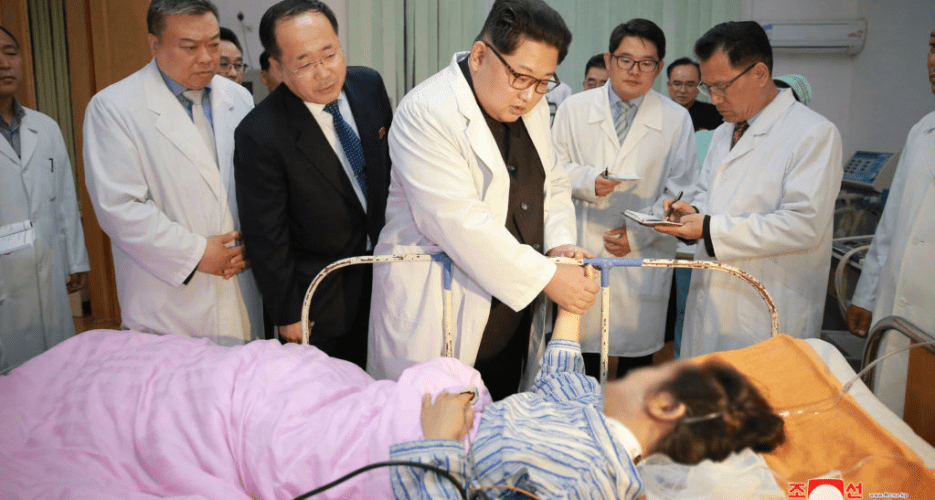 The border is closed but the locals are hungry. Guards are posted but susceptible to bribes. Adventurous cross-border market traders inadvertently introduce a virus the likes of which the medical community is unable to cope with. A government afraid to show weakness tries to cover up an exploding epidemic. While this sounds like the trailer for a new dramatic South Korean movie, it is more likely the introduction to news coverage of a ravaging health pandemic in North Korea. North Korea is known to have medicinal shortages and insufficient healthcare infrastructure. Now facing a viral outbreak in neighboring China, Pyongyang’s response is a reminder that the biggest threat to regional stability might not be in the North’s developing military threat, but in its dilapidated healthcare system. While portraying a regime in control with reports that the North Korean authorities are dispatching doctors to vulnerable areas around the country, Pyongyang has acknowledged that the coronavirus poses a threat to “the security of the state” and has imposed draconian quarantine measures twice as long as those of other countries. North Korea’s medical system is not prepared to respond should the virus spread across its borders. And it is likely willing politically to accept widespread humanitarian devastation over allowing outside assistance and the intrinsic risk of subversive engagement and the influx of external information and influence. The question for the international community is not “if” or “when,” but rather “how” to respond. Nassim Taleb warns of the danger of focusing energy on predicting when an event will occur at the expense of planning for how to respond were the event to arise. From the outbreak of Severe Acute Respiratory Syndrome (SARS), when in 2003 North Korea shuttered its borders, to the concern North Korea will be the weak link in combating swine fever, and the latest coronavirus scare that has led North Korea to ban cross-border transit, the fragility of the North Korean health care infrastructure has been highlighted by academics and media alike. What has not been adequately examined is how North Korea’s response impacts other aspects of its infrastructure (particularly the economy), and when the international community should intervene in order to prevent the further spread of a pandemic or to provide humanitarian assistance to the people of North Korea, who otherwise would suffer due to lack of health care and an indifferent and/or insecure government.  What the coronavirus crisis has brought to light is not just the fragility of North Korea’s medical infrastructure in the face of a pandemic, but also the thin line between economic growth and internal instability that North Korea has managed to walk through its trade — legal and illegal — with China and other cohorts in the face of pressure from outside. Closing the border with China has impacted the availability of necessities, ranging from food to fuel, as seen by spiking market prices in North Korea. Pyongyang’s attempt to prevent the spread of a pandemic could trigger economic crises that challenge the central government’s ability to control its people. Should North Koreans no longer rely on the central authorities – which has increasingly become the norm over the last 20 years – Kim Jong Un loses his battle to sideline military hardliners and empower but control party leaders. Policies, even in light of medical crises, that negatively impact everyday North Koreans’ ability to fend for themselves create a crisis in leadership. Closure of borders and a clampdown on trade means that not only the North Korean medical infrastructure is at risk, but also the domestic economy is facing a crisis. Already suffering U.S. and international sanctions, the additional burden of needing to close borders and cut ties is squeezing the North’s economy, forcing the Kim regime to consider re-engaging with the U.S. while in a position of weakness. This risks undermining the elite’s legitimacy within the country and empowers more militant conservative elements inside the regime. Kim is now faced with a dilemma. A dictator only feels the need to upset regional stability when appearing weak threatens his domestic legitimacy. While there is no established opposition to Kim Jong Un within North Korea, the regime’s inability to improve standards of living threatens its legitimacy, and the economy’s increasing decentralization and independence from central authority has challenged the central government’s control over the population. A scenario is developing in which it is in Kim Jong Un’s best interest to create an external crisis in order to reassert authority. The coronavirus is one more reminder that the fragility of North Korean domestic politics is more threatening to regional security than any military adventurism. Threats to the stability and legitimacy of the North Korean regime are the most likely causes of a situation triggering the decision to intervene under the requirements of the Responsibility to Protect. Inability to contain a pandemic weakens central authority and increases the risk of internal instability, displaced persons, and a refugee crisis spilling across borders that could require a response that puts regional powers at a diplomatic conundrum at best, and a military stand-off at worst.  North Korea is being pressed back to negotiating with the U.S. at a time when Washington’s focus has shifted from Pyongyang to Iran and domestic challenges ranging from impeachment to re-election. The White House is dismantling its North Korea policy team, and by reassigning its policy experts to UN positions, it is sending a signal to the North that its appetite for bilateral negotiations is waning. The White House will likely not reengage with North Korea unless it feels it is guaranteed a political win, which would require an impossible mea culpa by Pyongyang. It is in scenarios such as this that Pyongyang has repeatedly resorted to provocative actions in attempts to convince the U.S. and the international community that humanitarian assistance that backs the regime is the lesser of two evils: grant aid in order to deescalate tensions despite the fact that such aid empowers the regime responsible for the initial crisis. As seen by the global criticism of the initial Chinese attempt to hide the recent coronavirus threat, it is apparent the world stands ready to provide assistance, but not to intervene. The U.S. State Department declared its concern over the “vulnerability of the North Korean people to a coronavirus outbreak,” and its readiness to “expeditiously facilitate the approval of assistance” from international aid and health organizations. However, there is not yet any stated intention to intervene without a North Korean request for assistance. Can the Kim regime withstand the internal political backlash of accepting U.S. aid? China, for all its faults, is capable of managing this crisis. Would the same be true in North Korea? We know the medical infrastructure is incapable of handling a pandemic. We know the regime is threatened by external influence and offers of assistance. The media focuses on the dangers of the North Korean nuclear program, or the artillery threat to Seoul, but what is more of a risk to stability in the region is North Korea’s inability to respond to non-traditional threats, and its hesitance to accept outside assistance in the event of a calamity.  On January 30th, foreign embassies in Pyongyang were notified that air and rail ties between North Korea and China were suspended in an attempt to prevent the spread of the coronavirus. The following day, diplomats were informed that quarantine and medical examination procedures were being put into place in order to isolate potential external exposure to the virus. Border trade between North Korea and China has been effectively closed, to the detriment of the North’s economy, and encouraging North Korean traders to act in ways that undermine the quarantine and challenge efforts to prevent the spread of the virus. This latest fear, however, is just one of many red flags exposing the fragility of the North Korean health care infrastructure. Tuberculosis has been a decades-long threat to thousands of North Koreans, and international aid organizations have been voicing concerns for years. Lack of medicine, food, power and other infrastructure deficits, and shortsighted attempts to treat chronic conditions with opioids barely maintains a fragile society on the brink of crisis. It is time we move past highlighting the danger of a pandemic in North Korea, and start discussing when and how the international community reacts to such a crisis. At what point is it the responsibility of the international community to intervene? What sanctions are less important than human lives? What coordination can take place despite international quarrels or historic angst? Humanitarian efforts in response to geological events or weather phenomena have shown a regional capacity for overlooking politically-charged differences. Overlooking those differences in the absence of a crisis, and planning in advance for collaborative efforts were there to be a need, could save lives. The regional community needs to be prepared for the failure of the North Korean regime to respond to a medical crisis. North Korea has proven to be ineffective at responding to humanitarian disasters and has shown that it is unable to react to epidemics. And it drove away perhaps the most forgiving of aid organizations when Médecins Sans Frontières decided it did, in fact, have limits. U.S.-based organizations have curtailed efforts due to pressure brought about by sanctions, and international organizations are often stymied by Washington’s opposition to aid programs. The International Committee of the Red Cross (ICRC) has been present in North Korea since 2002, and has, over the years, not only highlighted the need for humanitarian assistance and capacity building, it has also warned that NGOs will surge to the needy should a crisis arise that is not being handled by national authorities. The most effective approach to the potential for crisis is for the regional community to plan in advance for coordination of governmental and non-governmental assistance in the case that North Korea is struck with a destabilizing health crisis.  It is well known that North Korea has health care workers ready and waiting, but they are sorely under-sourced, lack training, supplies, and opportunities to serve their communities. International aid organizations have withdrawn financial aid and on-the-ground expertise due to the North Korean regime’s inability to provide the access and local collaboration for fear of external influences. Many areas of our world are in need, and international aid organizations will and should rationalize the distribution of their efforts to those places and to those people it will be the most effective. The North Korean regime’s efforts to limit the influence of external aid cause aid organizations to prioritize assistance elsewhere. This is a threat to the stability of Northeast Asia. Countries in the region, including the United States, need to collaborate with NGOs and international organizations to establish guidelines for intervening in North Korea should a medical crisis occur that Pyongyang is unable to respond to and unwilling to accept assistance for. The most likely threat North Korea poses to the region is not from its military – it is from its inability to guarantee a stable society. Collaboration now can not only improve response efforts, if needed, but also prevent military conflict should intervention be necessary, yet communication channels have not been established. Ultimately, despite political and historic differences, countries in this region – including North Korea – have a shared interest in cooperating to maintain stability and security. While military and nuclear threats own the headlines, basic humanitarian and societal concerns are the largest threat to stability. Recognizing North Korea’s weaknesses and planning for collaborative assistance in the instance of a humanitarian disaster is the most pragmatic focus for our planners and policy-makers. Edited by James Fretwell © Korea Risk Group. All rights reserved. |

October 17, 2026Oct 17, 2026

The ultimate resources for professionals working on North Korea
 SHARE
SHARE COPY LINK
 X
X MASTODON