
  Analysis Why a lack of adequate infrastructure may stifle Kim Jong Un’s tourism ambitionsFailure to develop adequate wastewater management systems could derail the DPRK's long-term plans 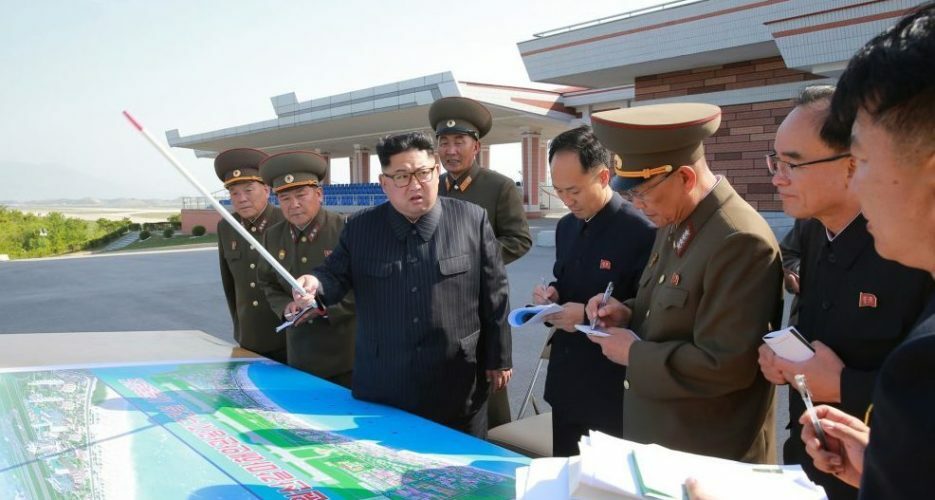 Kim Jong Un has made it a national priority to turn the east coastal region from Wonsan down to Mount Kumgang into a major international tourism area, showing off Wonsan’s miles of beaches and Mount Kumgang’s rugged natural beauty, with official plans seeking to draw in a million visitors annually. He has also taken up the task of improving regional and domestic tourism by building theme parks, ski resorts, hot springs, and even rebuilding the entire city of Samjiyon to become the country’s “gateway to the north” and a key stop before reaching sacred Mount Paektu. But it takes more than constructing massive hotels or ski lifts that currently only ever see a handful of riders each season. A lack of adequate infrastructure and proper environmental considerations have long plagued North Korea. This has played a role in the lack of widespread tourism that goes beyond travel bans and sanctions. One of the first steps towards North Korea’s tourist paradise was the construction of a new regional airfield for the city of Kumgang. However, after seven years, it sits with a tarmac badly damaged by flooding and doesn’t appear to have ever been used. The subsequent expansion of the Wonsan-Kalma International Airport a few years later may have also supplanted the need for this airfield. Likewise, “improved” road networks built in lightning speed (as is the fashion) quickly develop potholes and require constant maintenance. Despite the vast amount of work that has been carried out across the country, certain fundamental infrastructure needs are lacking. Specifically, basic sanitation systems appear to have been neglected in the wake of the various “speed battles” to build those miles of new beachfront property and the new Samjiyon. In 2013 it was announced that the Kalma Airport in Wonsan was to be turned into a civilian, international airport. The redesign and construction cost an estimated $200 million. Not long after, other projects around Wonsan were being constructed or existing sites upgraded (including the nearby Kim family compound).   One of the infrastructure projects was improvements made to a water treatment facility. Located two kilometers away from the new beach resorts, one might expect that these changes would help enable the processing of tens of thousands of gallons of additional wastewater created each day by the nearly five kilometers of new hotels and housing. However, no overall capacity was added. Work on the site began in January 2014, and while the facility was modernized, the original six treatment and clarification tanks were not enlarged, and new ones were not added. There is also no evidence that sewage pipes were laid from the resort area to the treatment plant. A review of the area also failed to reveal any additional changes to the electrical infrastructure in the form of new or enlarged electrical substations to handle the added consumption of electricity once the resort area is fully operational. Despite the addition of new hydroelectric stations to the north of Wonsan, the existing electrical grid is old and inefficient, which suggests that, like the high-rises in Pyongyang, elevators and other services may not always work when needed.  Similar problems can be seen in the construction at Samjiyon. The city of over 30,000 has been almost completely reconstructed, but there is no wastewater treatment plant in Samjiyon, unlike Wonsan which at least has one. In fact, based on this author’s 2017 AccessDPRK national map, the entire province doesn’t appear to have any substantial water treatment facilities. These current projects touch on a nationwide problem of water pollution as well as Pyongyang’s propensity for building mass projects even though the electricity supply can’t meet demand. River pollution is a longstanding concern and major examples of it can be seen in the pollution of the Taedong River (which supplies drinking water to Pyongyang) and the pollution of the Ryesong River in the south of the country from industrial waste. Mismanagement at the few wastewater plants that do exist and the dumping of raw sewage into streams, rivers, and the ocean has been reported by the United Nations Environment Program and risks turning these otherwise scenic areas into polluted messes. Another area to keep an eye on in the future is the resort at Kumgang. Kim Jong Un announced in October 2019 that the site had become derelict and no longer represented the aspirations and independence of North Korea. Kim further said that many of the current facilities would be demolished and new ones built in their place. This would need to include appropriate infrastructure that has been neglected for years. For example, the treatment plant at Kumgang, based on Google Earth images, doesn’t appear to have been active since at least 2011, and likely not since 2008 when tourism from South Korea was abruptly halted after the killing of a Southern visitor.  Recent reporting by 38 North shows that construction at Wonsan is indeed nearing completion and will likely be ready in time to meet the April 2020 deadline set by the regime, but as discussed, the site appears to lack critical infrastructure for handling the large crowds that are projected. While a water supply system is in place to provide ostensibly clean water to the visitors, there isn’t a way to capture that wastewater and process it. This leaves one main alternative, dumping raw sewage directly into the sea – polluting the very site meant to draw in throngs of tourists. Similarly, with Samjiyon, which is meant to be another major tourist draw once completed, the regime is cutting corners to lower costs and increase the speed of construction. All of these examples highlight Pyongyang’s disregard for the environment and a lack of long-term considerations when it comes to civilian programs. They will build beautiful skyscrapers with elevators that don’t work or only run partway up the building and water pumps that can’t supply the upper floors. They will construct enormous highways that soon fall apart despite a general lack of traffic. And they will embark on massive, multi-billion dollar tourism projects that can’t handle some pretty basic functions. Before Kim Jong Un’s wishes are ever fully realized, they will likely have to place more focus on fulfilling the fundamentals rather than simply building countless empty hotel rooms and grand stadiums. Edited by Oliver Hotham and James Fretwell Featured image: KCNA © Korea Risk Group. All rights reserved. |

October 23, 2026Oct 23, 2026

The ultimate resources for professionals working on North Korea
 SHARE
SHARE COPY LINK
 X
X MASTODON