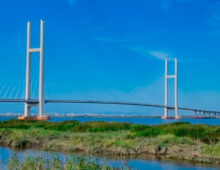
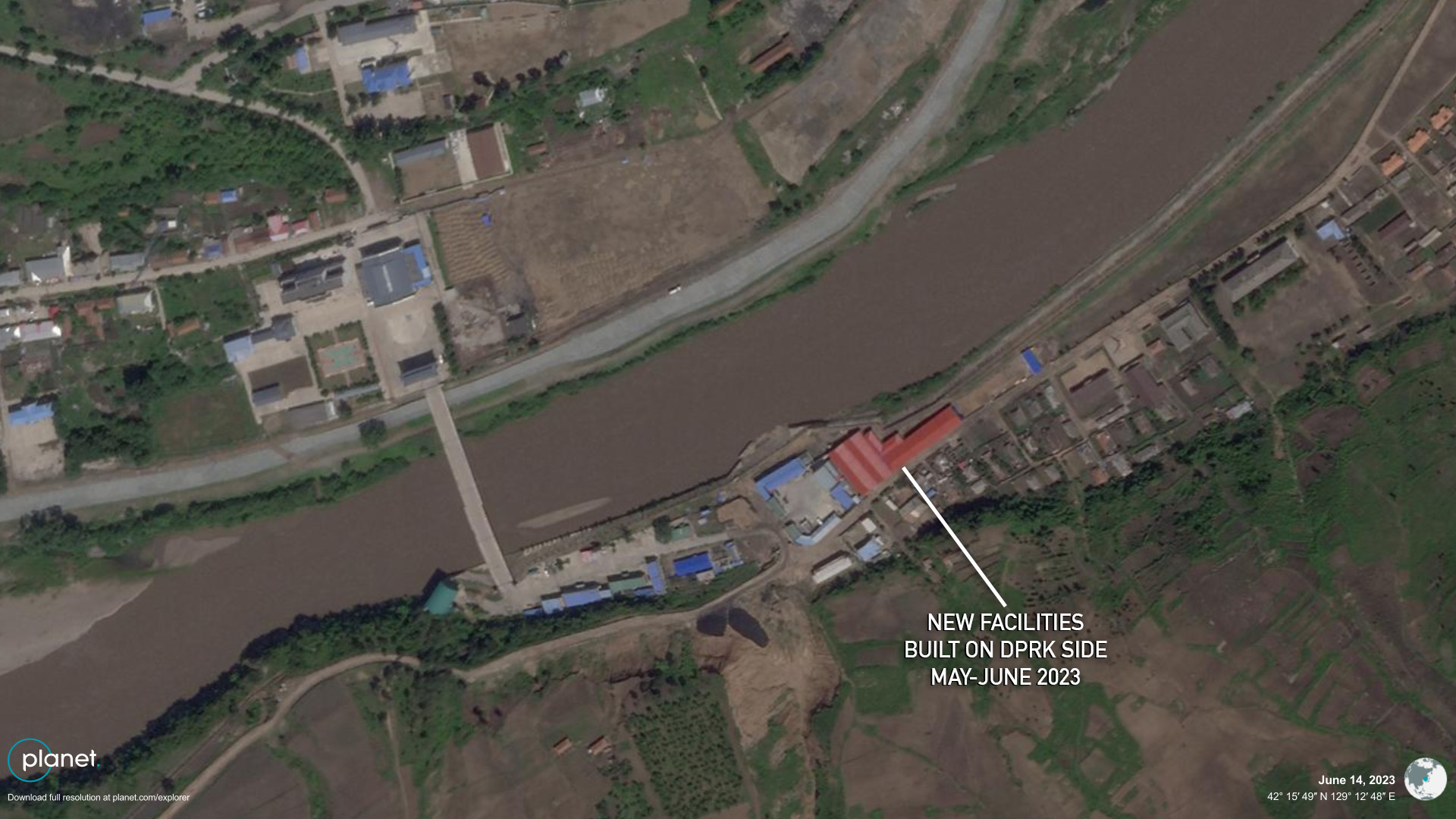
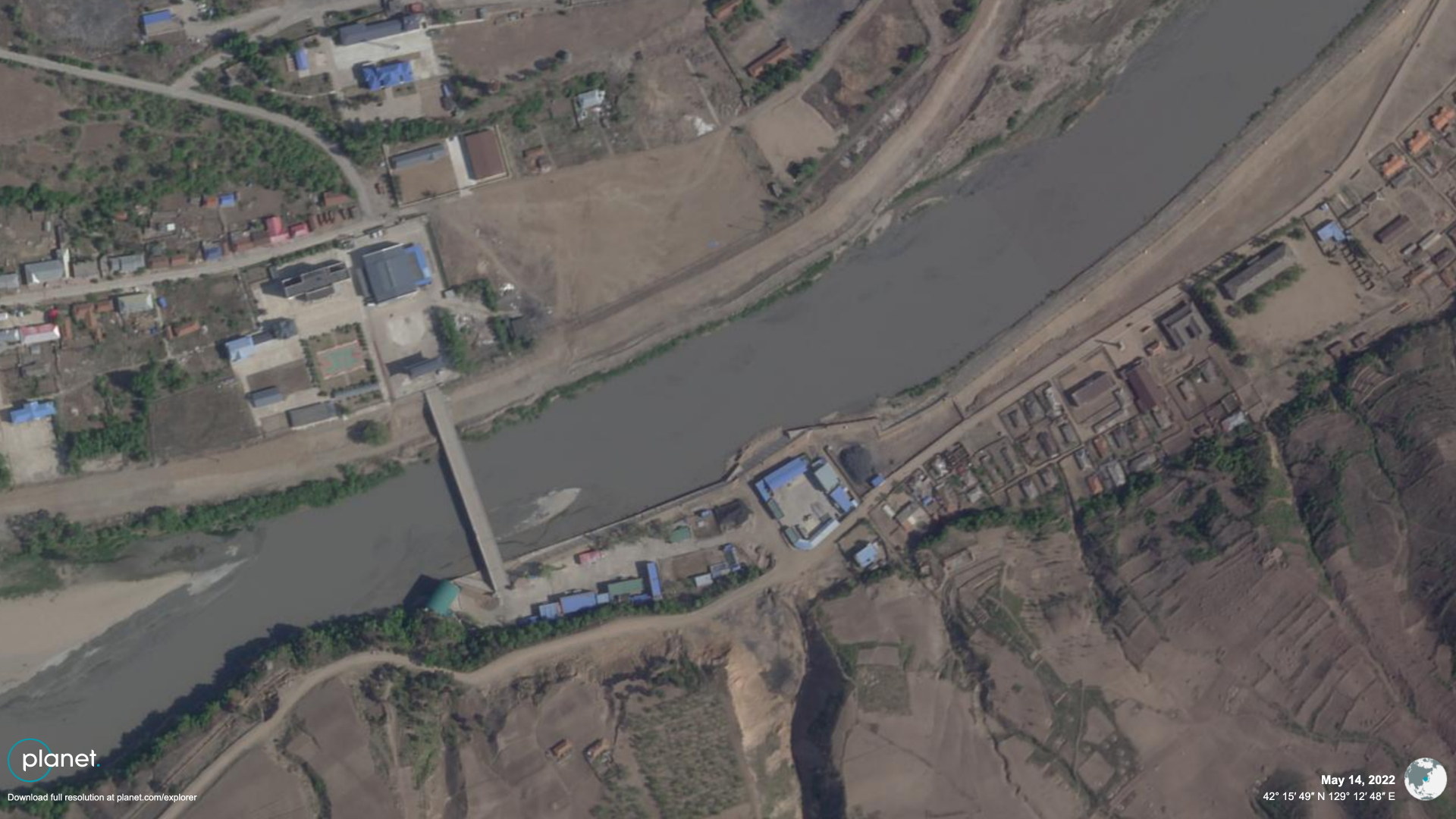
  News Sanctions-busting North Korean factory operating in China, evidence suggestsNK Pro identifies DPRK propaganda at Chinese economic zone, which has seen flurry of activity as COVID controls ease 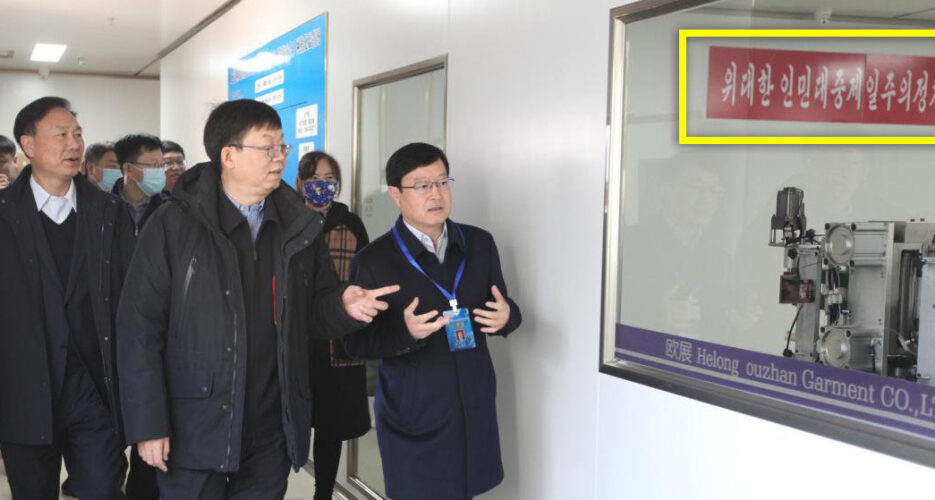 Editor’s note: This is the first in a series of articles exploring economic activity along North Korea’s northern border as the country eases pandemic restrictions. Part two about the Sambong-Kaishantun crossing can be found here. North Korea likely began to jointly operate a medical mask factory in China during the pandemic, an NK Pro investigation has found, in what appears to be another case of DPRK-China sanctions violations approved by their respective governments. The factory is located in a Chinese economic zone across from Musan in northeast North Korea, an area that has seen a revival in recent years after a slow start to initial plans to employ thousands of DPRK laborers. Satellite imagery shows rapid construction in the zone in recent months, and freight trucks began crossing the border bridge connecting the two sides in June. The activity underscores the potential for North Korea and China to dramatically increase trade and cooperation as Pyongyang continues to ease COVID-19 border restrictions. DPRK FACTORY IN CHINA In recent years, there have been numerous reports on North Korean workers who have stayed in China beyond a 2019 U.N. sanctions deadline for Beijing to send them all home. Now, an image uncovered by NK Pro offers evidence of official North Korean government involvement in their presence and work abroad. A photo posted by the Helong Media Center on Chinese social media site Weibo in March 2021 shows a North Korean propaganda slogan on the wall of a medical mask factory in the Helong Frontier Economic and Cooperation Zone (和龙边境经济合作区 / 화룡변경경제합작구). The photo was taken during an inspection by Jilin vice governor Li Wei and local party standing committee member Jin Chengzhe. The partially visible red banner with white Korean text says “the great people-first polit…” (위대한 인민대중제일주의정…), which is part of an official DPRK government slogan that usually reads in full, “Long live the the great people-first politics!” (위대한 인민대중제일주의정치 만세!) 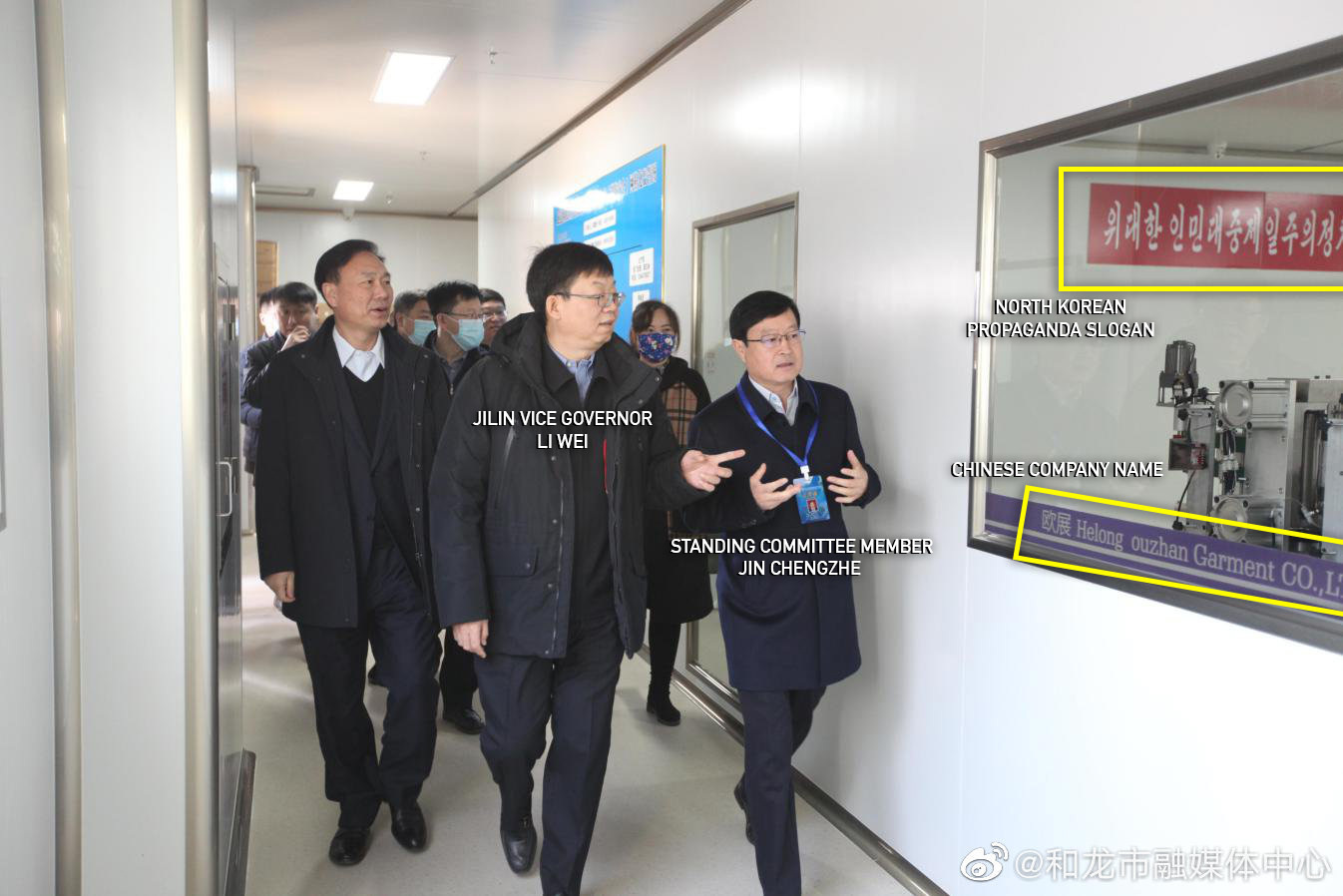 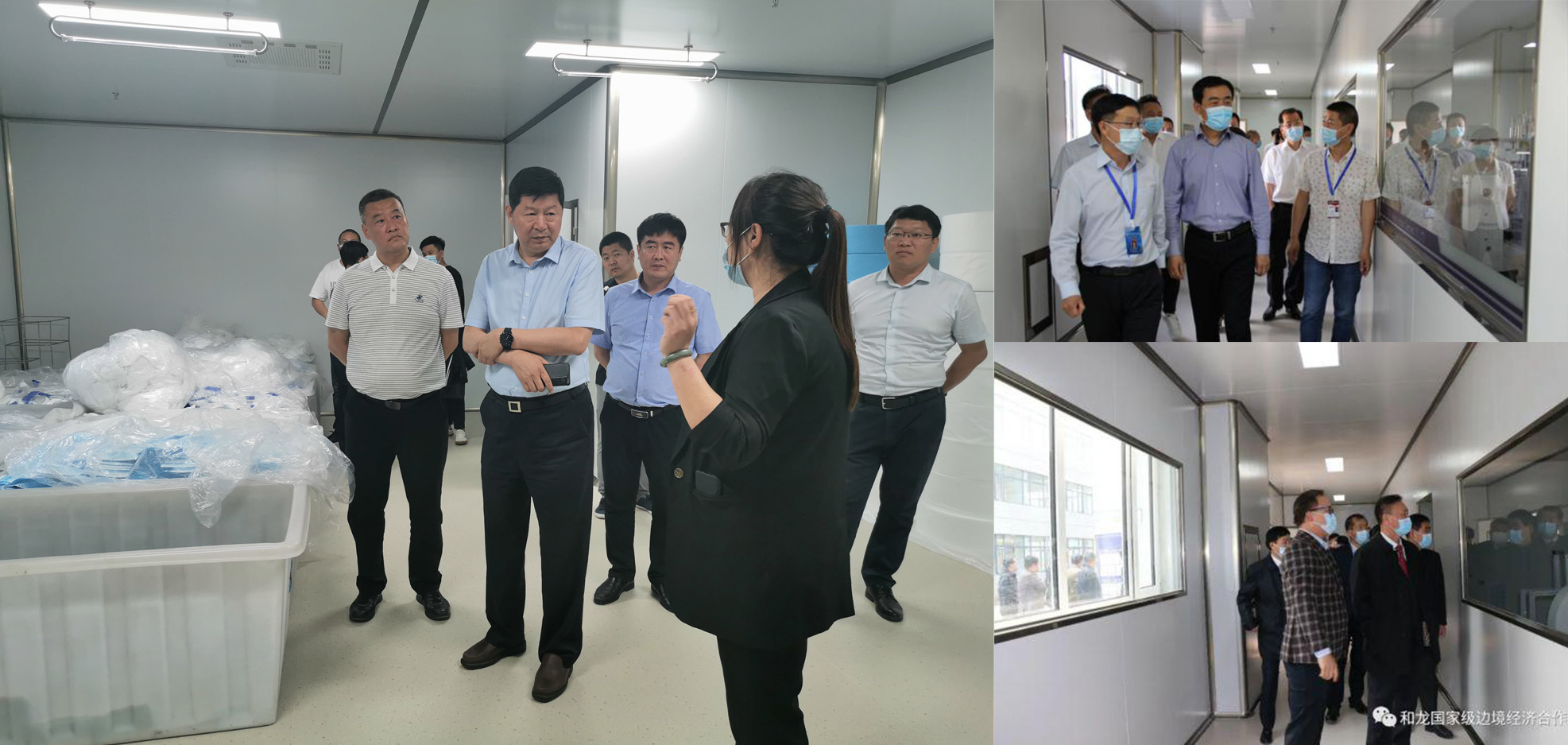 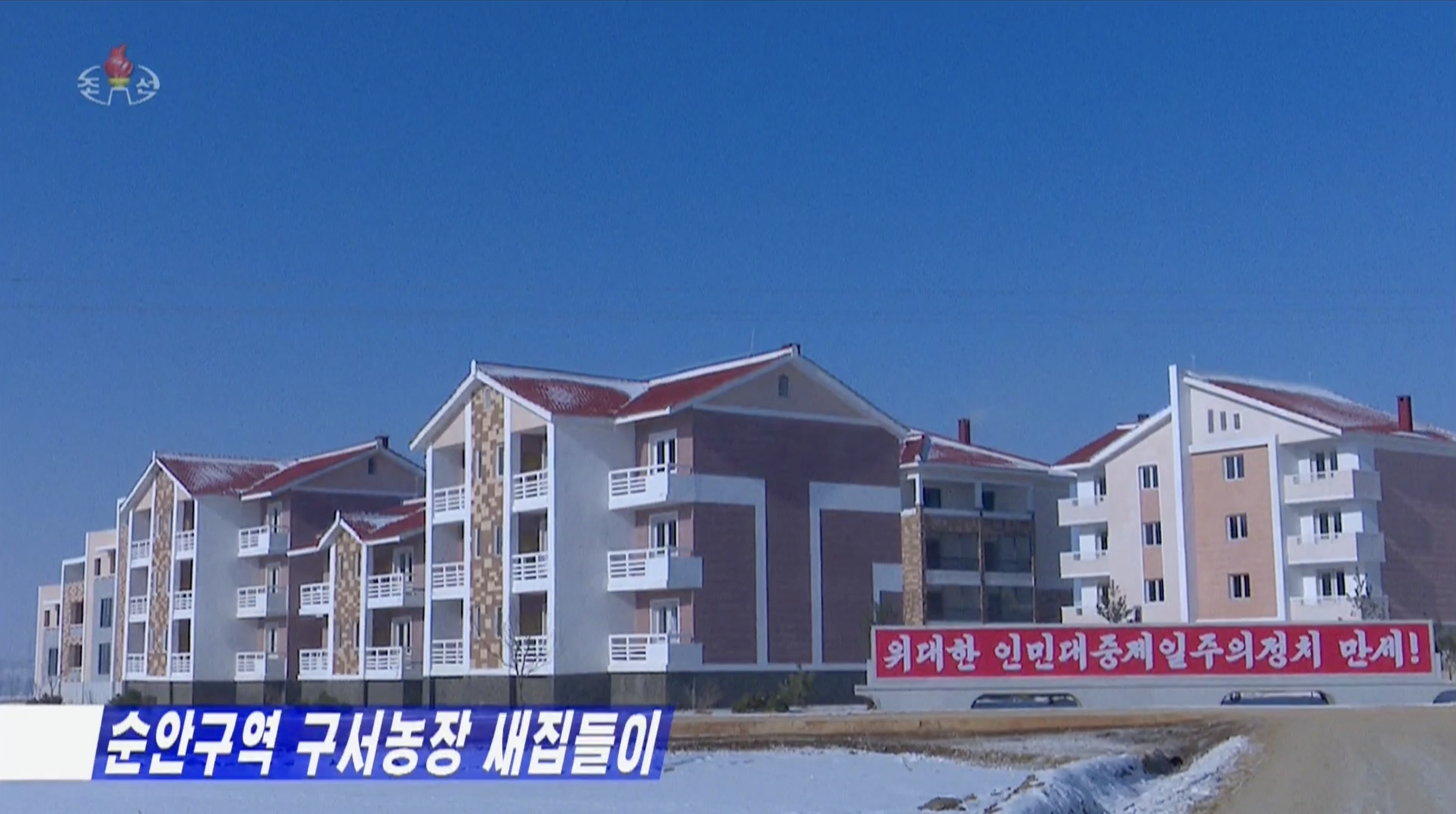 Printed on the window of the production room is the Chinese partner company name in a mixture of English and Chinese, “欧展 Helong ouzhan Garment CO., LTD.” (full name in Chinese: 和龙市欧展服装有限公司). The Helong National Border Economic Cooperation Zone (和龙国家级边境经济合作区) Wechat account and local media published photos in 2020 of government officials inspecting the factory before it opened. They reportedly called it a key part of plans to transform the zone into a hotspot for manufacturing masks and personal protective equipment (PPE) amid the COVID-19 pandemic. The presence of a standard North Korean government-produced propaganda slogan banner in full view of local Chinese officials strongly suggests the Chinese company employed North Korean citizens in violation of U.N. sanctions, and that DPRK partners were involved in operations. NK Pro was unable to reach Ouzhan representatives at company phone numbers provided in brochures and on Chinese websites describing company contact information. China approved the passage of U.N. Security Council Resolution 2397 banning all member states from using North Korean labor after Dec. 2019, and has claimed to the relevant U.N. Panel of Experts that it has complied with the measure. Beijing also passed Resolution 2375 in Sept. 2017 banning joint ventures with North Korean individuals or entities. However, the Panel claimed it received evidence in 2022 that at least nine other garment companies were employing thousands of DPRK workers, including two with “Helong” in their name like Ouzhan. Panel reports have detailed other suspected Chinese sanctions breaches, while NK Pro has reported on multiple recent cases of North Korea importing new Chinese vehicles in violation of the U.N. resolutions. A Chinese media profile published in Jan. 2023 said the Ouzhan Garment Company produces jackets and other clothing in addition to medical gear. There is no evidence to suggest that masks and PPE produced at the factory during the pandemic were delivered to North Korea. 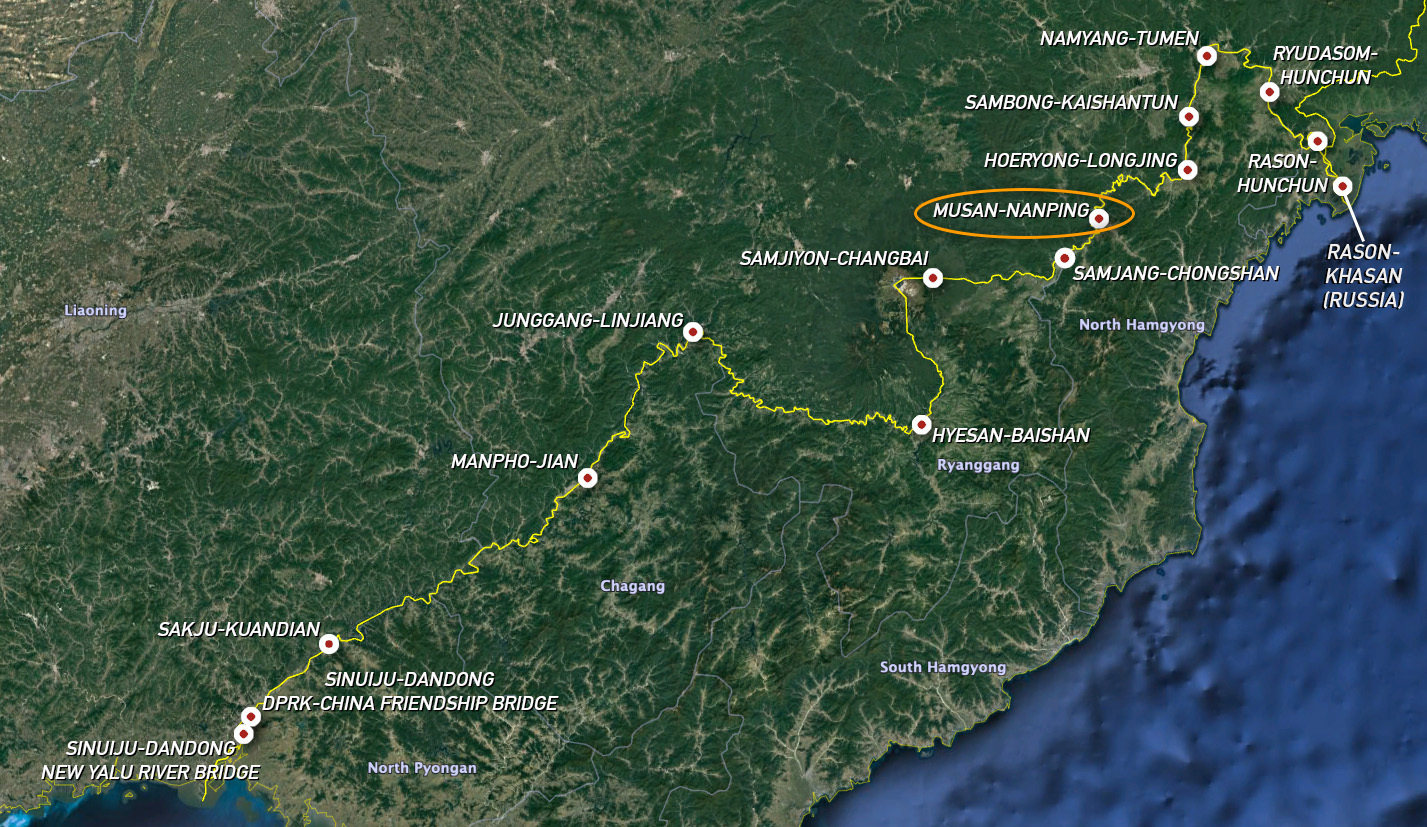 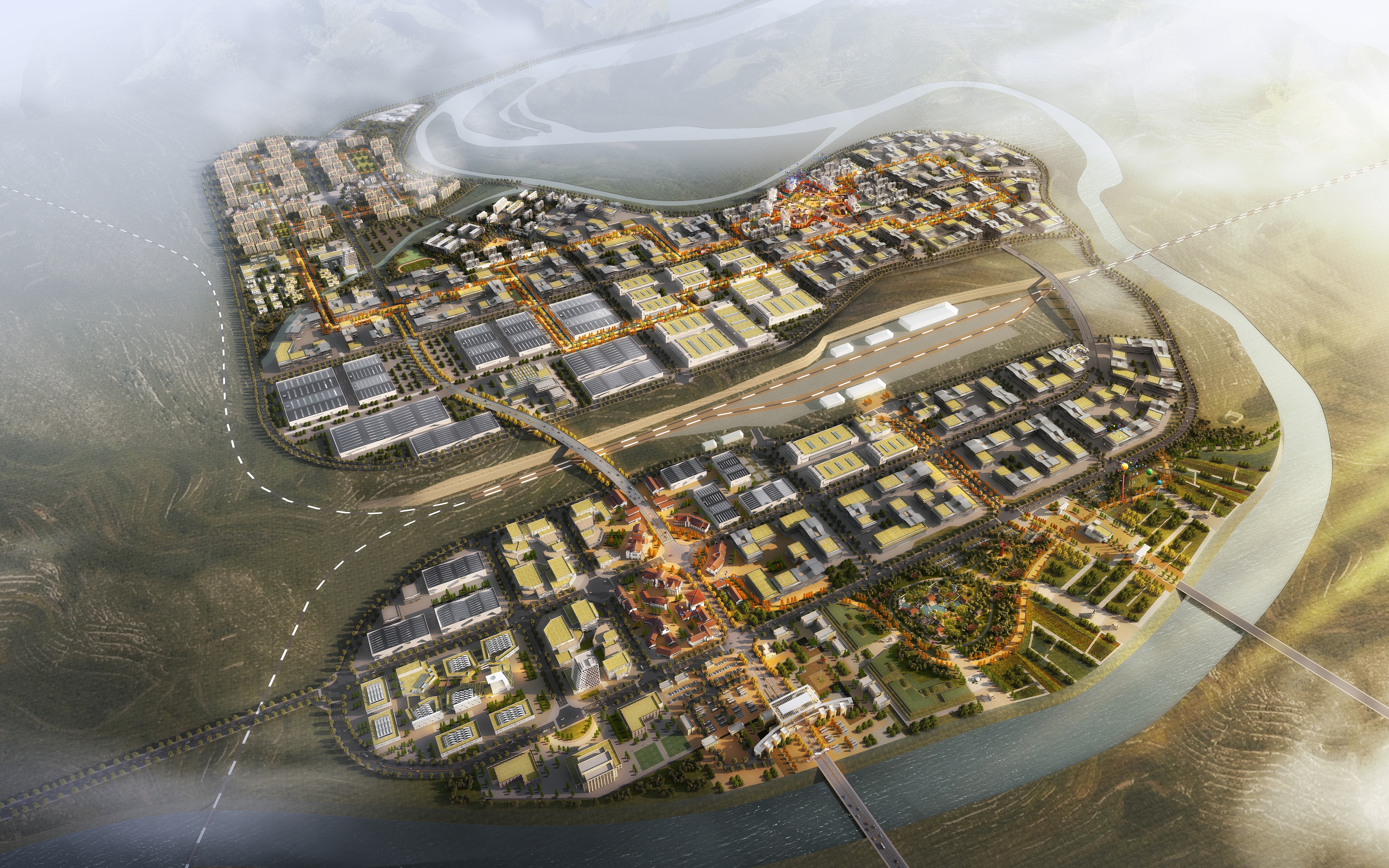 ECONOMIC ZONE AND CROSS-BORDER ACTIVITY The border crossing next to the factory appeared to be closed from Jan. 2020 until June 2023, but recently signs have indicated a reopening. South Korea’s Yonhap News Agency reported in June that the Musan-Nanping border crossing had opened for a test period and that freight trucks had begun to carry goods over the border bridge, citing anonymous sources. NK Pro analysis of Planet Labs satellite imagery shows North Korea began preparing for the opening by building new facilities at the DPRK customs port in May, likely for disinfecting and quarantining imports. Imagery shows likely vehicles on the bridge and vehicles or goods at the new facilities on a constant basis through Oct. 1. 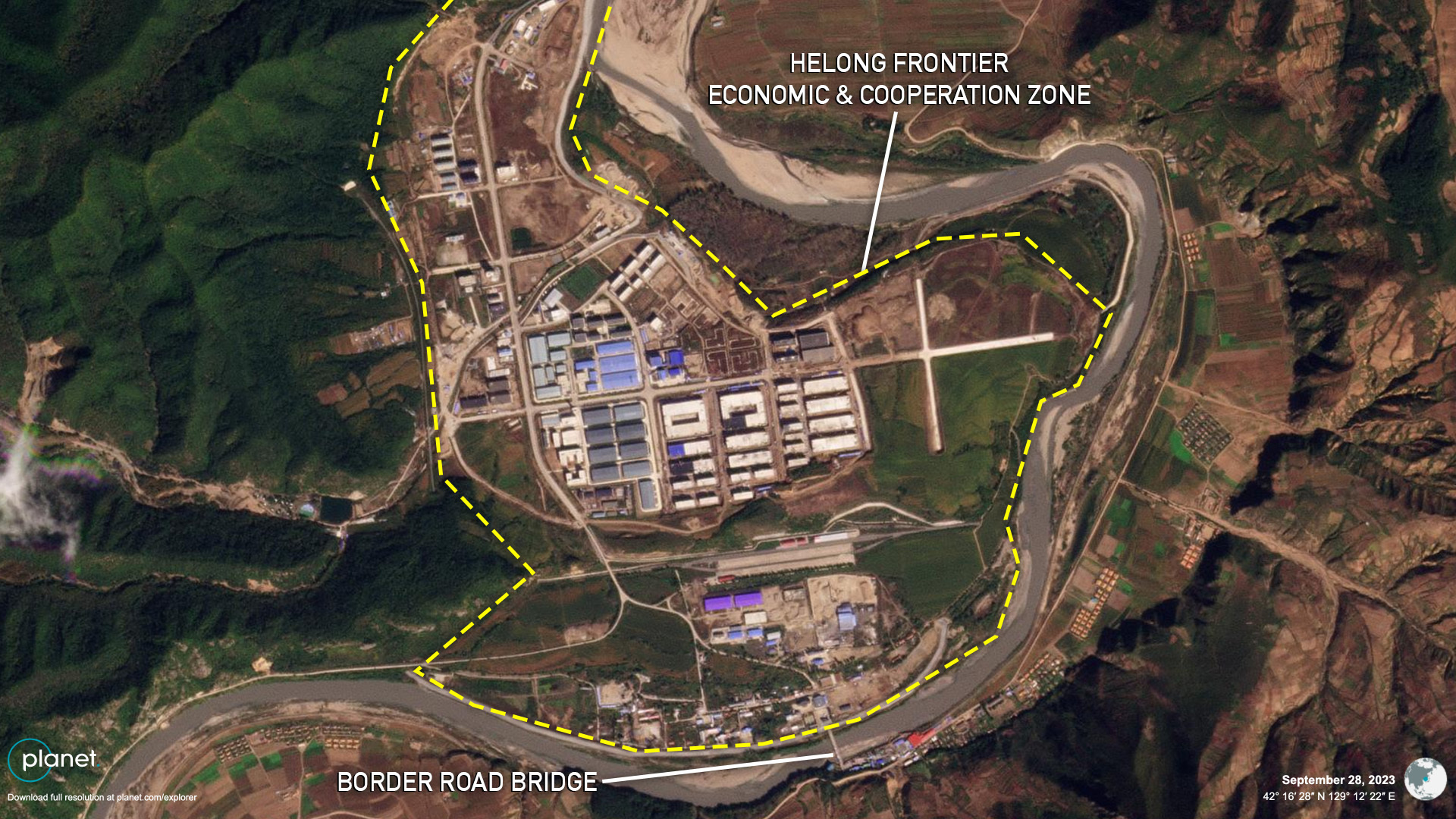
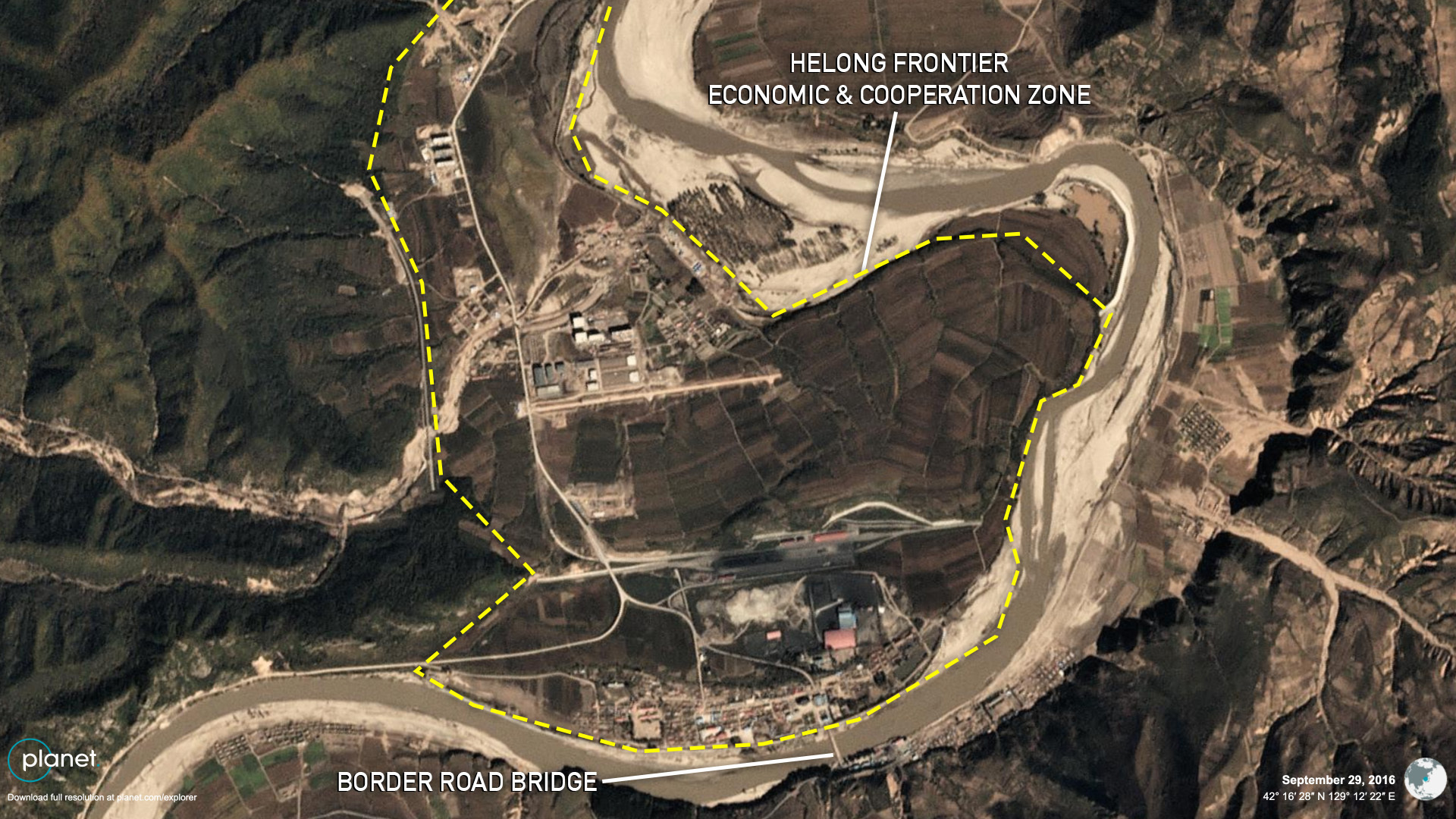
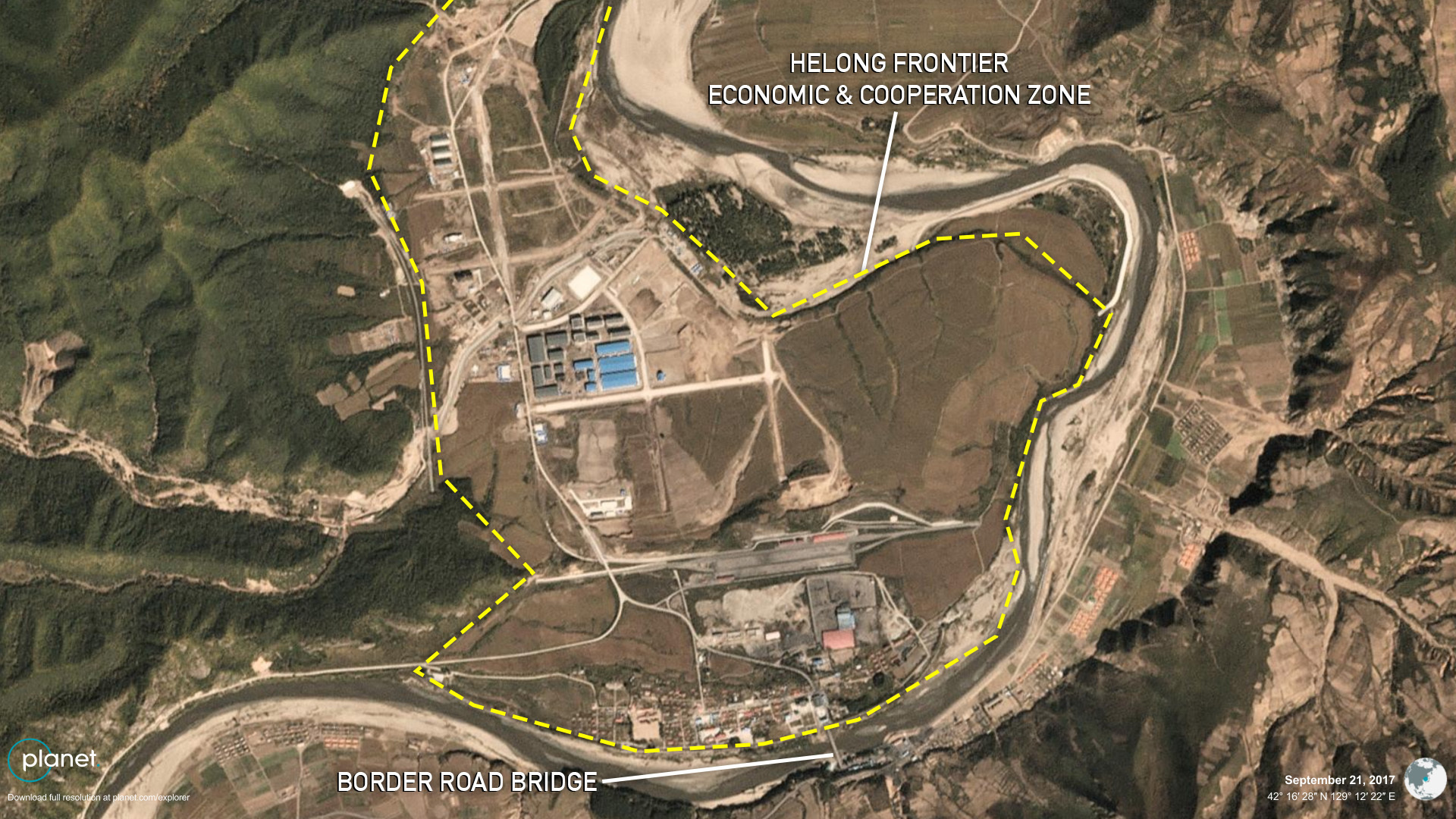
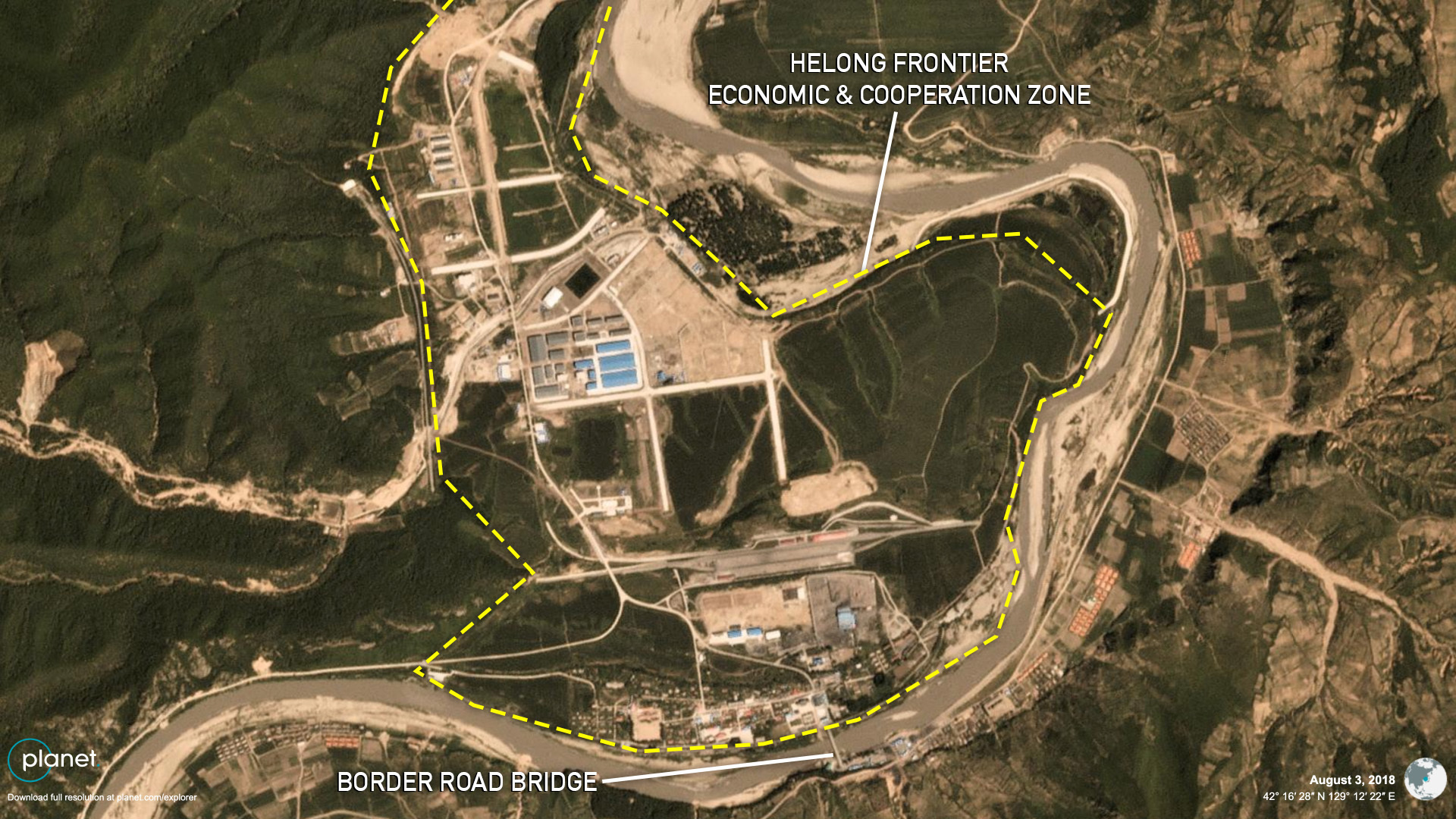
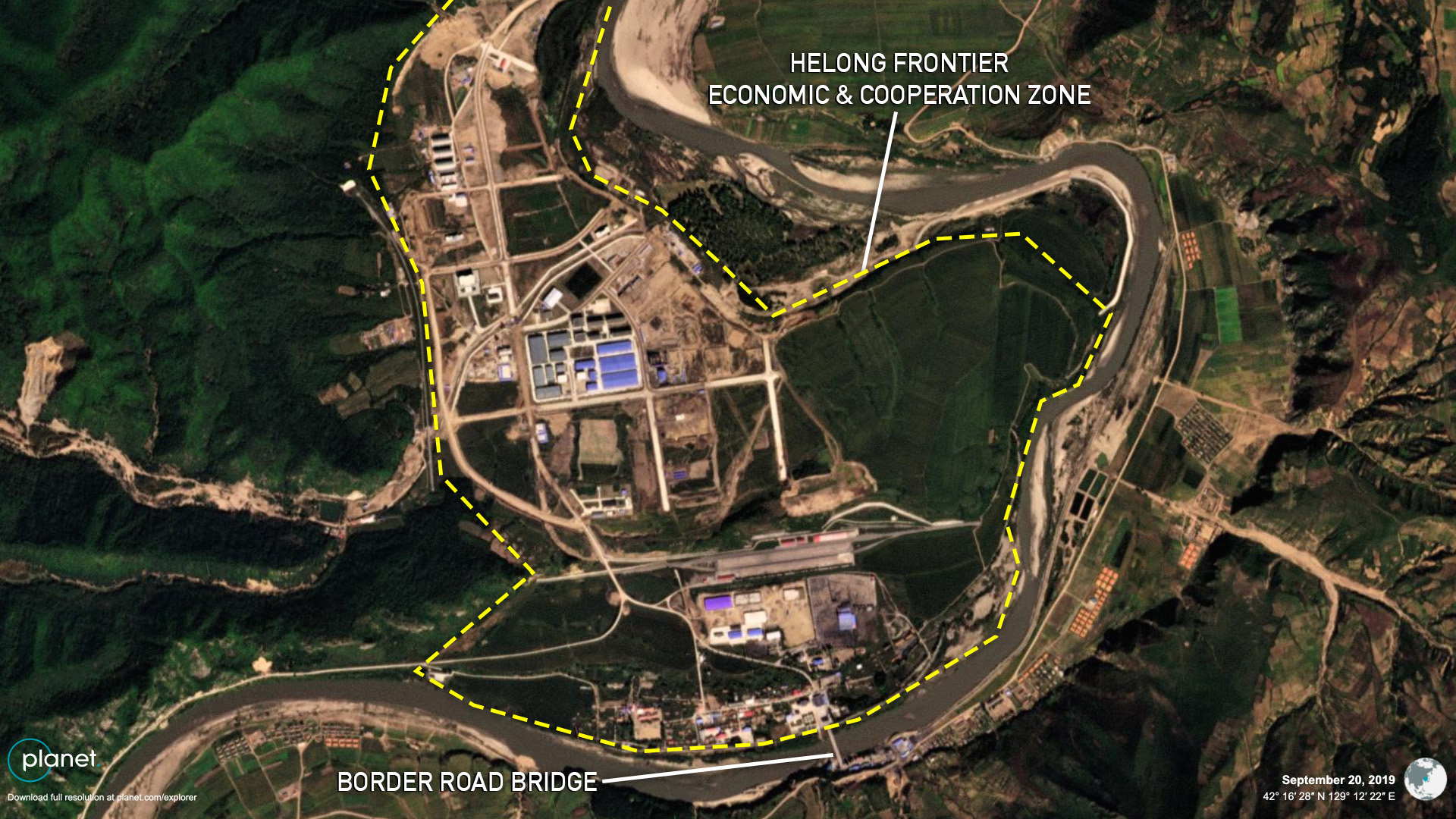
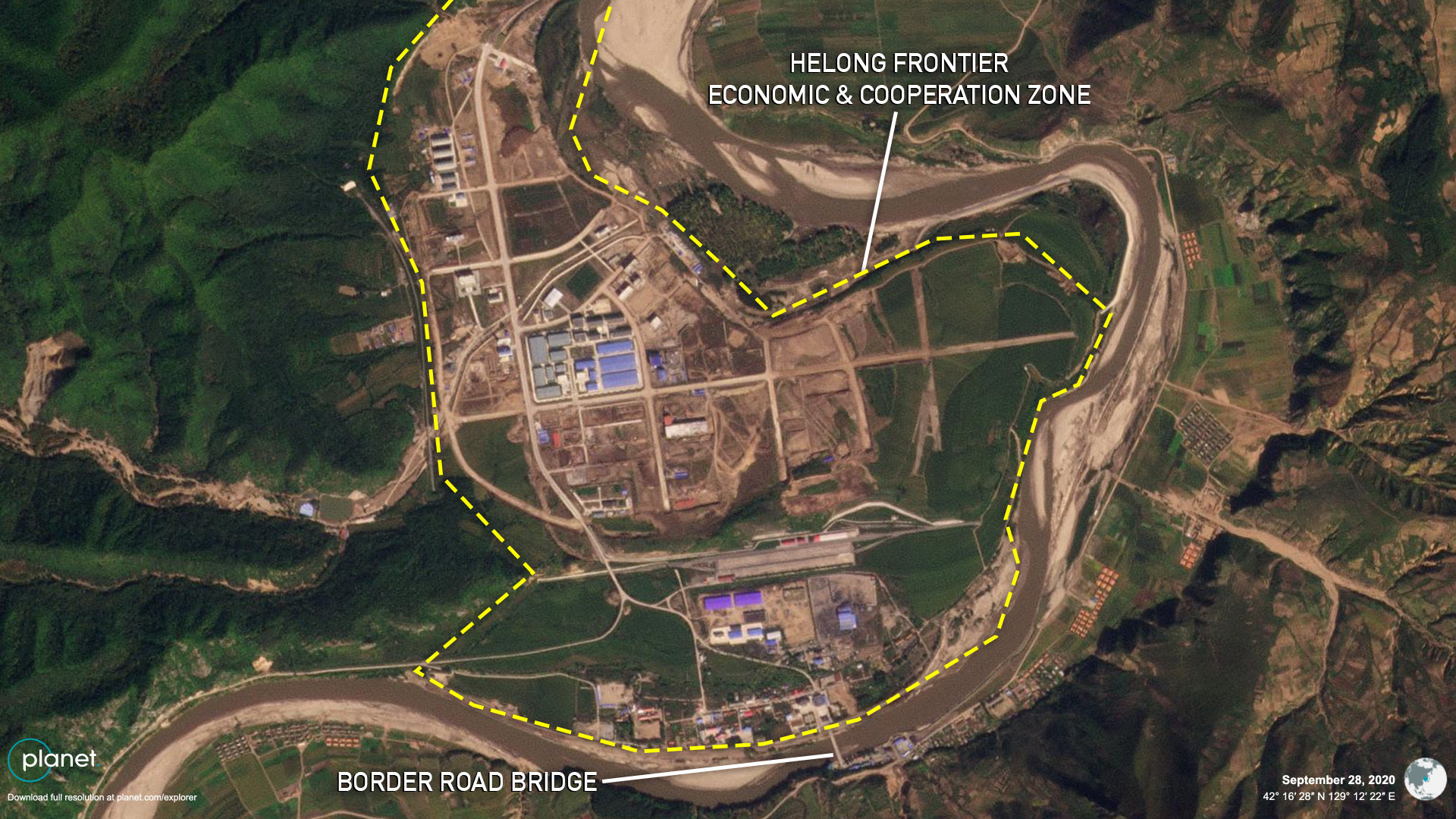
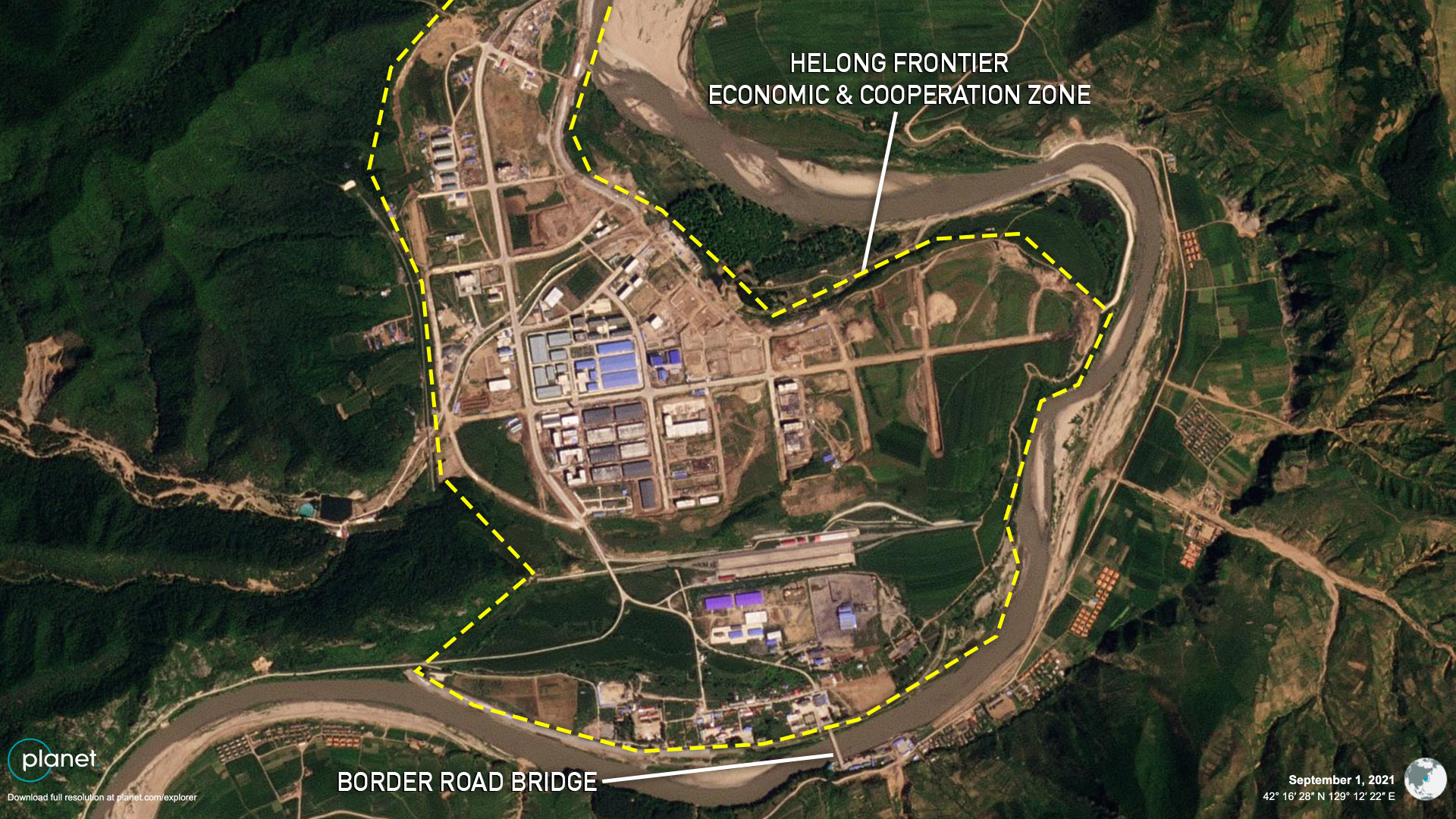
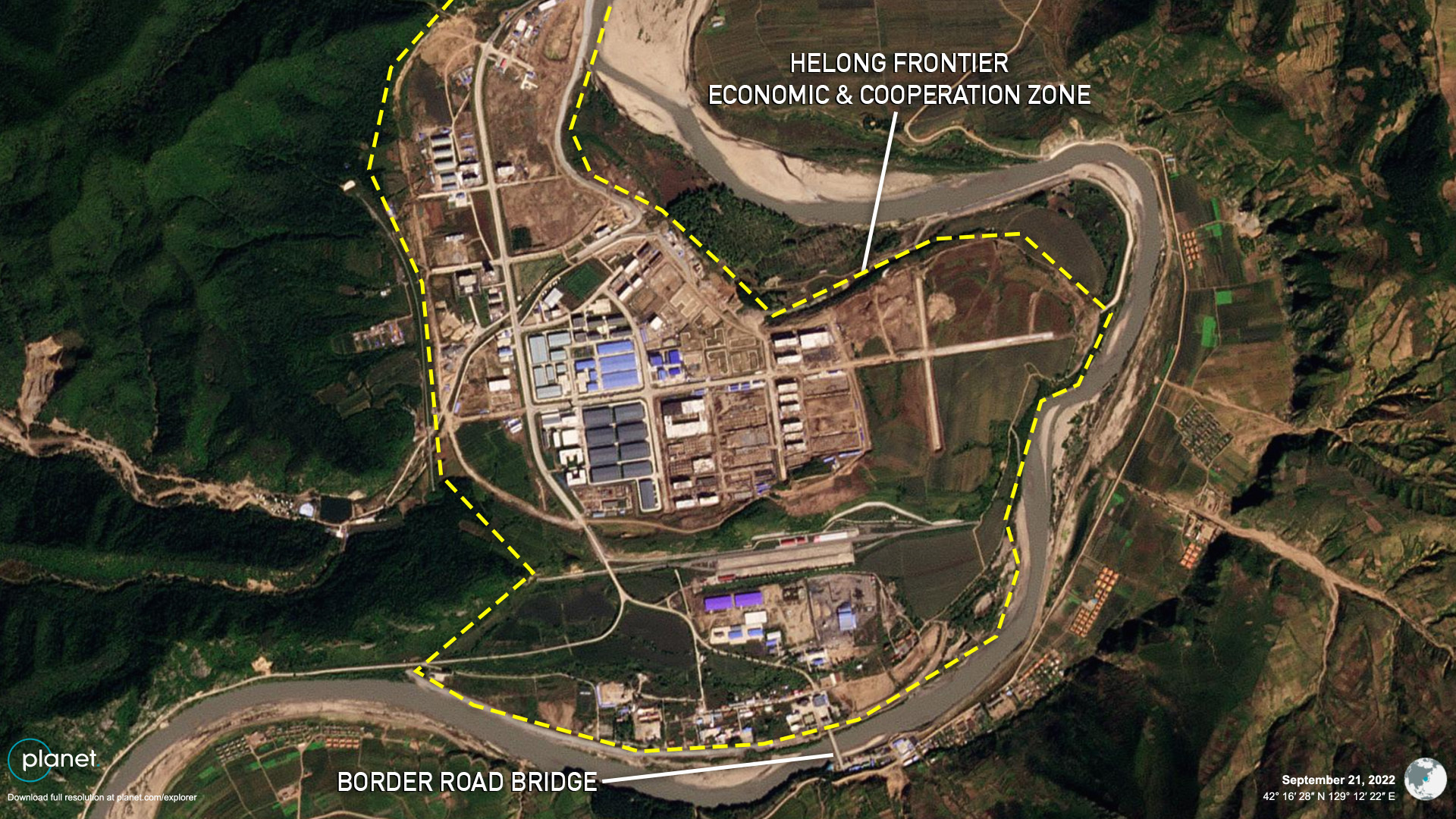
This is only the fourth known North Korean border crossing to reopen to trade: Rail freight began to flow through the Dandong-Sinuiju border in early 2022 and the only crossing with Russia later in the year, and truck freight started moving through the Quanhe-Wonjong crossing earlier this year. Construction of the Helong Frontier Economic and Cooperation Zone in Nanping started in 2016, but by the following year, locals were reportedly doubting its ambitious plans to utilize the cheap labor of tens of thousands of North Korean workers and boost bilateral trade. Significantly strengthened sanctions in 2017 and then the pandemic starting in 2020 appear to have slowed the zone’s growth. But construction accelerated in 2020 despite the border closure, and companies like Ouzhan started operating. The zone’s website claims that textile and tech companies will benefit from the Helong Jindalai General Airport (和龙金达莱通用机场) being built to the north and that they can send goods through North Korea by rail to Chongjin Port on the east coast. The zone is also equipped to help resume cooperation and trade related to North Korea’s Musan iron ore mine across the border. A 3D computer render of the zone on the website suggests organizers plan to build additional cross-border road and rail bridges to facilitate trade, but there are no signs of such construction yet in satellite imagery. Edited by Bryan Betts © Korea Risk Group. All rights reserved. |

October 19, 2026Oct 19, 2026

The ultimate resources for professionals working on North Korea
 SHARE
SHARE COPY LINK
 X
X MASTODON