  News Sanctioned DPRK oil tanker linked to STS transfers re-appears in Chinese watersAn San 1 previously implicated in illicit ship-to-ship transfers of petroleum products 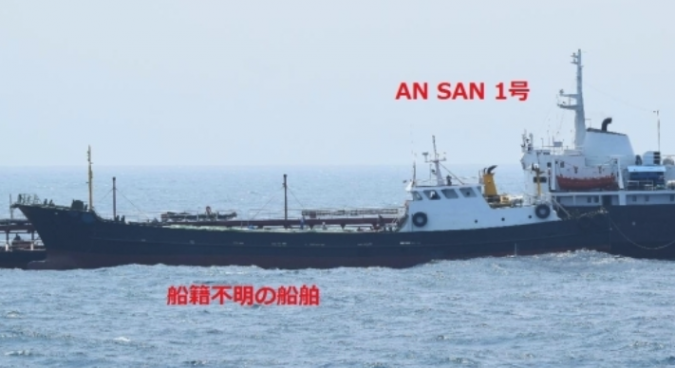 A UN and U.S. sanctioned North Korean oil tanker left the DPRK and broadcast its location within Chinese territorial waters earlier in the month, the NK Pro ship tracker shows. The 3003-tonne tanker, named An San 1, was added to the UN’s blacklist in March last year for its involvement in sanctioned ship-to-ship (STS) transfers of oil products. Japan’s foreign ministry also released photographs of the An San 1 apparently engaged in cargo transfers at sea on two occasions, in July last year and just two weeks before it arrived near China’s coast. International sanctions currently restrict how much refined oil North Korea can import, but the DPRK is long known to have circumvented the measures by conducting the transfers at sea. The practice makes it challenging to ascertain refined oil flows into the DPRK via open source methods, though the U.S. estimated the 500,000 barrel quota was breached midway through last year.  When the An San 1 arrived in the region of Shanghai on February 1, the North Korean tanker listed its point of origin as Nampho, a large port complete with oil offloading facility located on the DPRK’s western coast. The An San 1 only broadcast its location once at 20:56 UTC on a heading that would have taken it towards Zhoushan, a large island near Shanghai that often saw DPRK tanker traffic before tighter UN sanctions were passed in 2017. The positional broadcast is the first time the An San 1 has advertised its location to terrestrial tracking systems since August last year, when it also appeared in Chinese waters near Zhousan. North Korea’s sanctioned oil tankers have rarely broadcast their locations since the international community began targeting the DPRK’s oil imports and tanker fleet, though traveling without Auto Identification System (AIS) positional broadcasts can also be hazardous in very busy waterways such as those around Shanghai. According to the UN, the An San 1 is “subject to assets freeze pursuant to paragraph 12 of resolution 2321 (2016) and prohibited from port entry,” though it does not appear to have stopped at any Chinese facilities. A U.S. Coast Guard and Treasury Department advisory issued at the same time the An San 1 was designated indicated that many STS to transfers were occurring in open waters to the east of Shanghai.  But speaking to the Senate Armed Services Committee on February 12, U.S. Navy Admiral Philip Davidson, chief of the United States Indo-Pacific Command said that North Korea may have shifted tactics. “(North Korea has) been doing transfers in their own territorial waters or near their own shores, and occasionally there have been some transfers in Chinese territorial waters,” Davidson told assembled senators. Edited by Oliver Hotham Featured Image: Japan Ministry of Defense © Korea Risk Group. All rights reserved. |

October 14, 2026Oct 14, 2026

The ultimate resources for professionals working on North Korea
 SHARE
SHARE COPY LINK
 X
X MASTODON