  News Russia plans to build $40M checkpoint on its side of new bridge to North KoreaTender documents outline high costs for dog kennels, toilets and other facilities, highlighting corruption potential 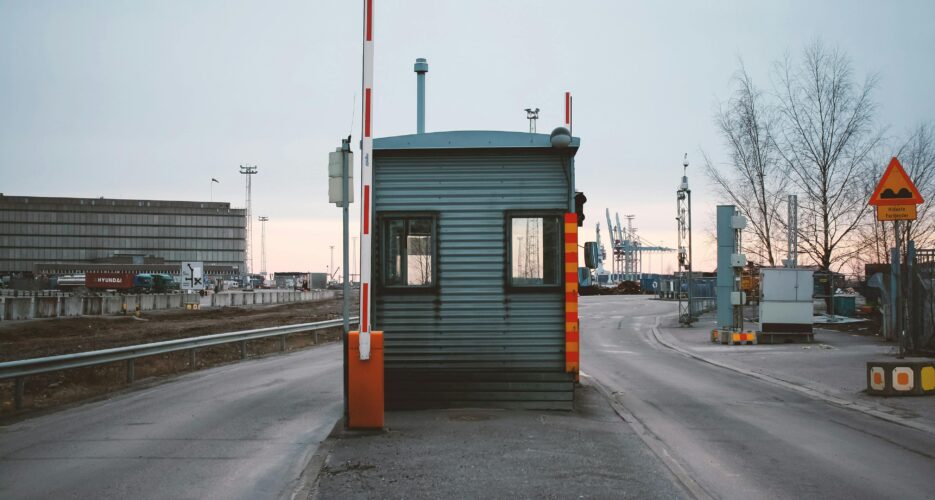 Russia plans to spend nearly $40 million to build a checkpoint on its side of a new vehicle bridge connecting to North Korea, NK Pro analysis of tender documents shows, with $2 million dog kennels and $70,000 toilets raising concerns about possible corruption and kickbacks. Rosgranstroy, the agency overseeing border facilities, launched a tender on June 11 to hire subcontractors for the work, with the bid set to close on June 27, according to publicly available data. The crossing will sit on the Russian end of the bridge that Pyongyang and Moscow began building in late April across the Tumen River, aiming to finish construction by the end of 2026 at a cost of $115 million. 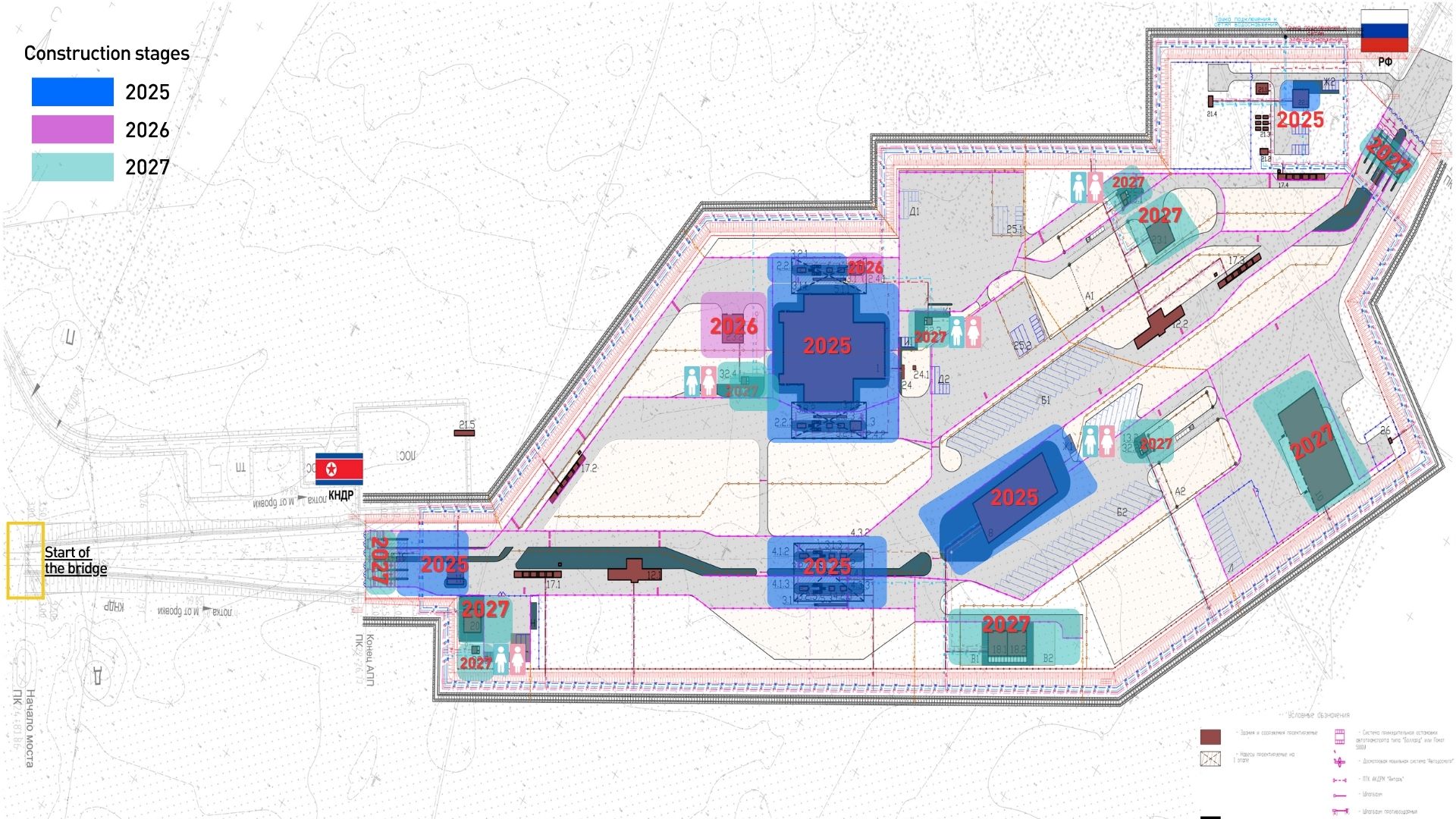
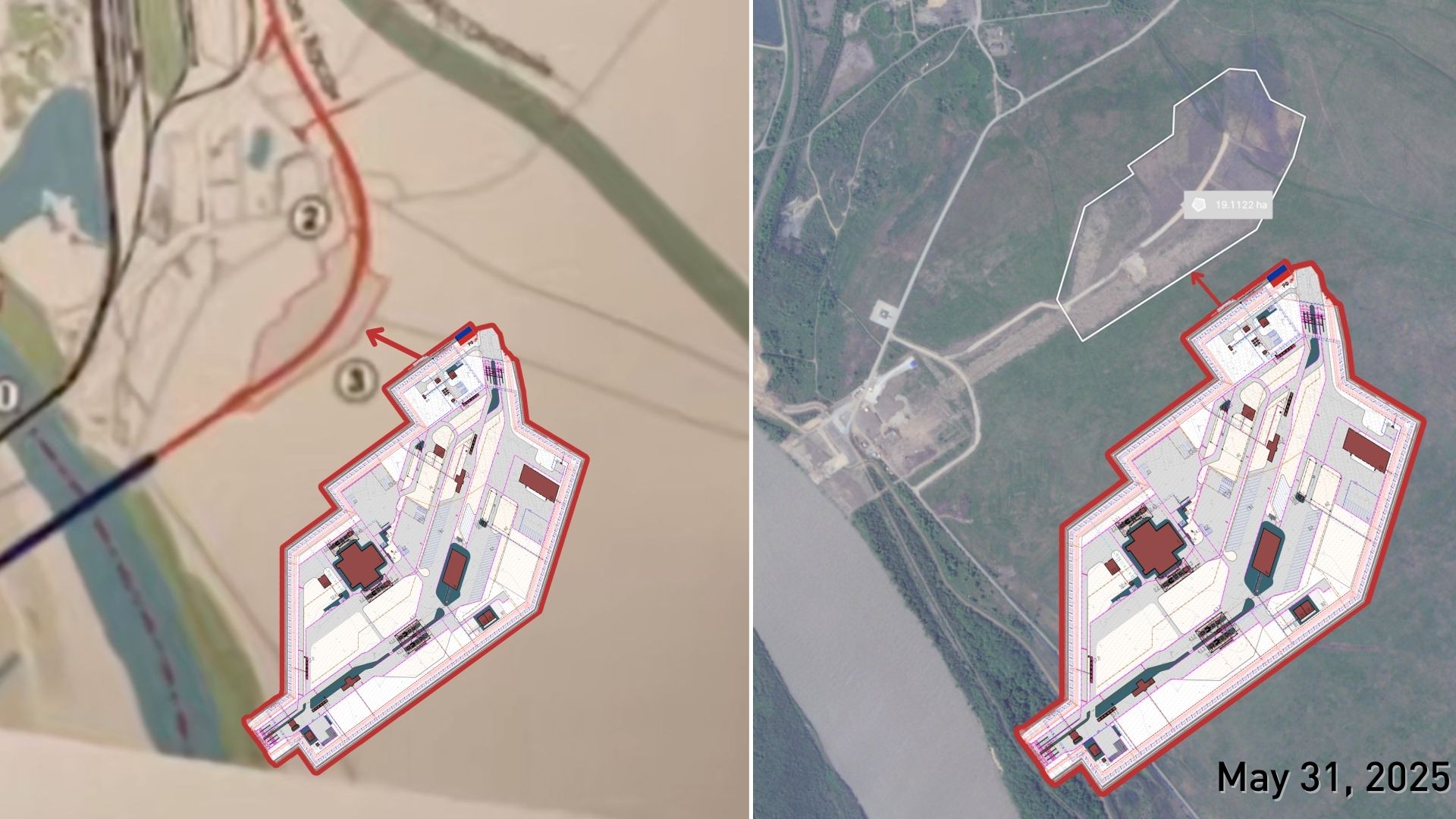
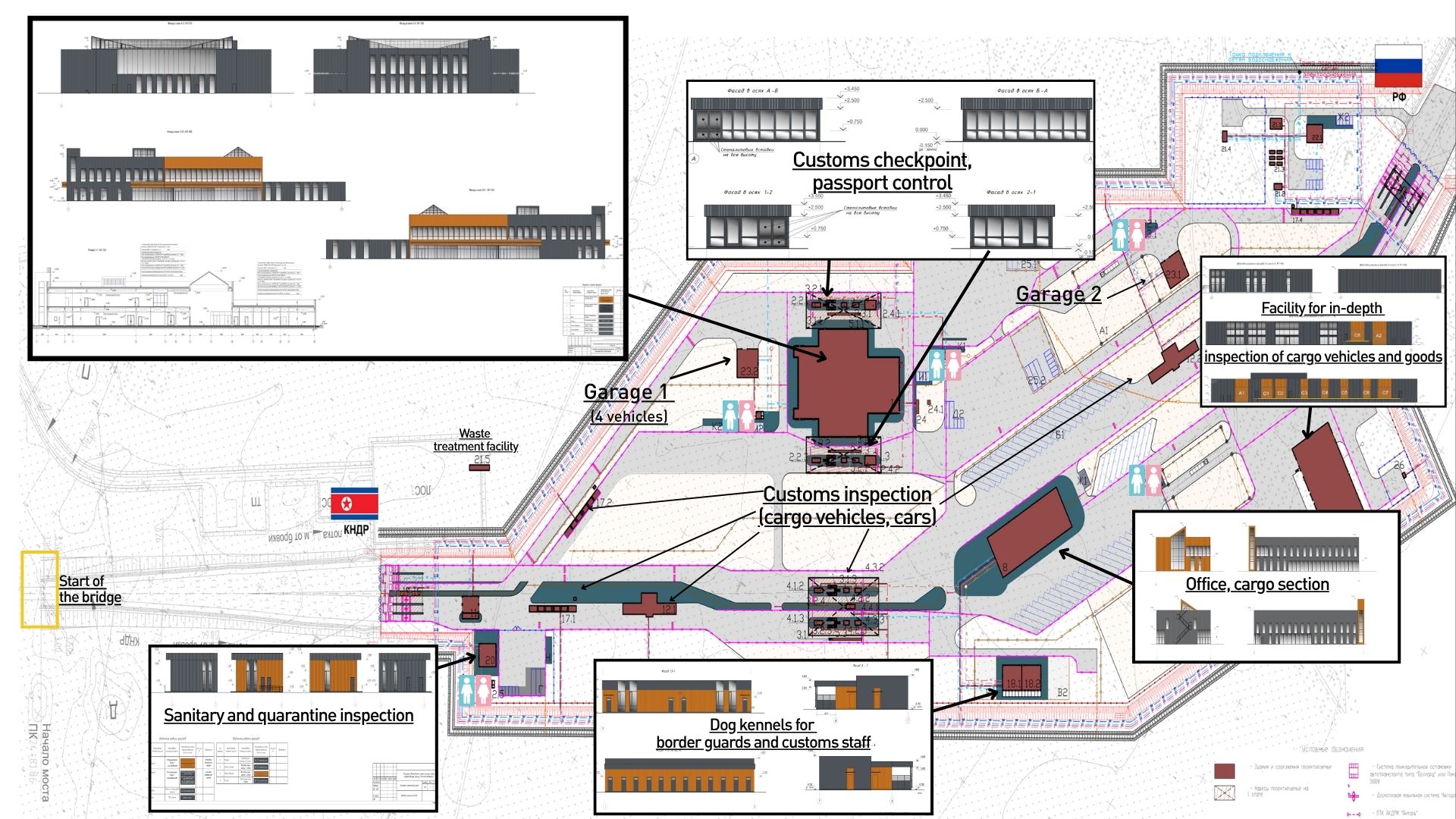
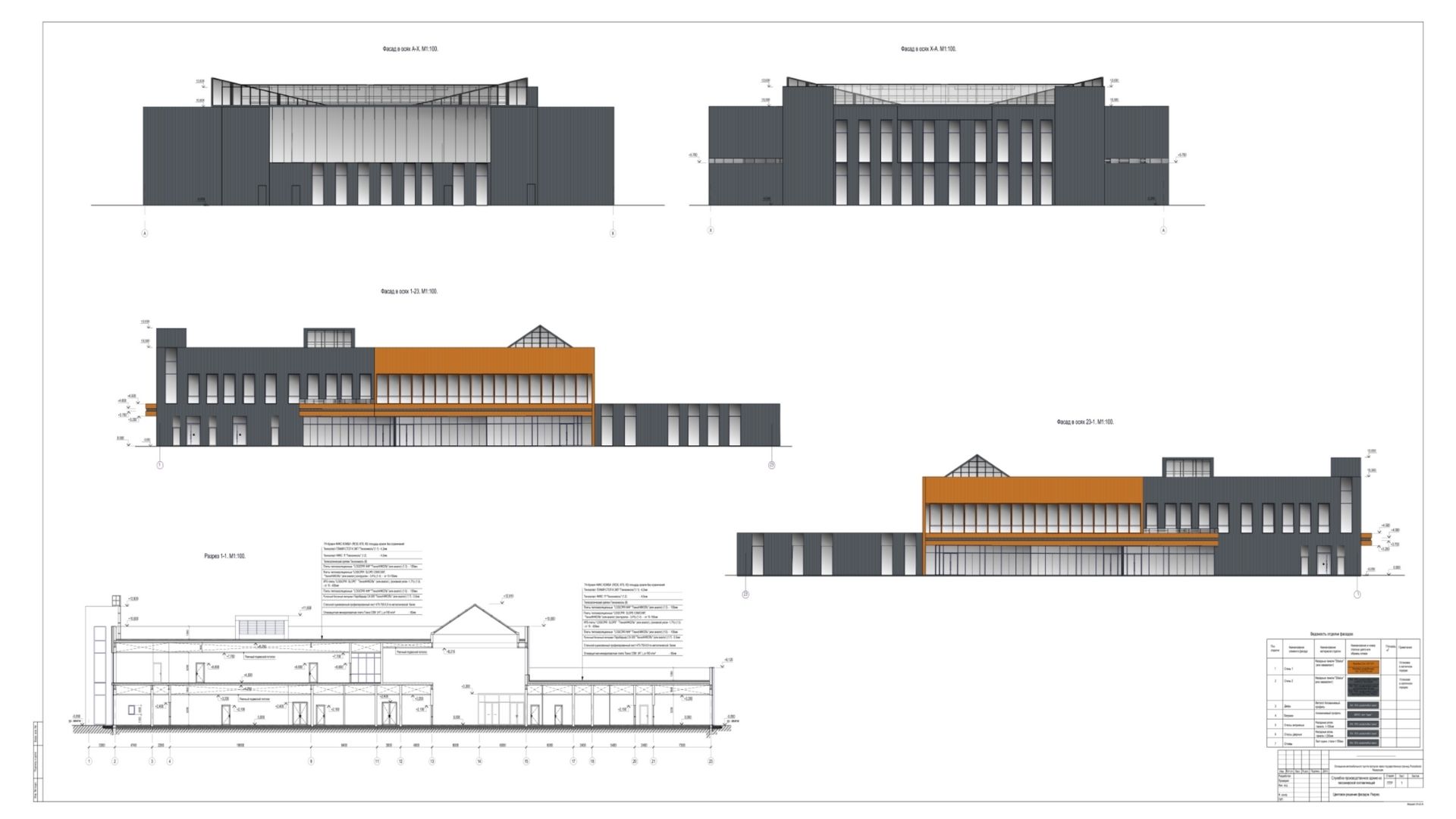
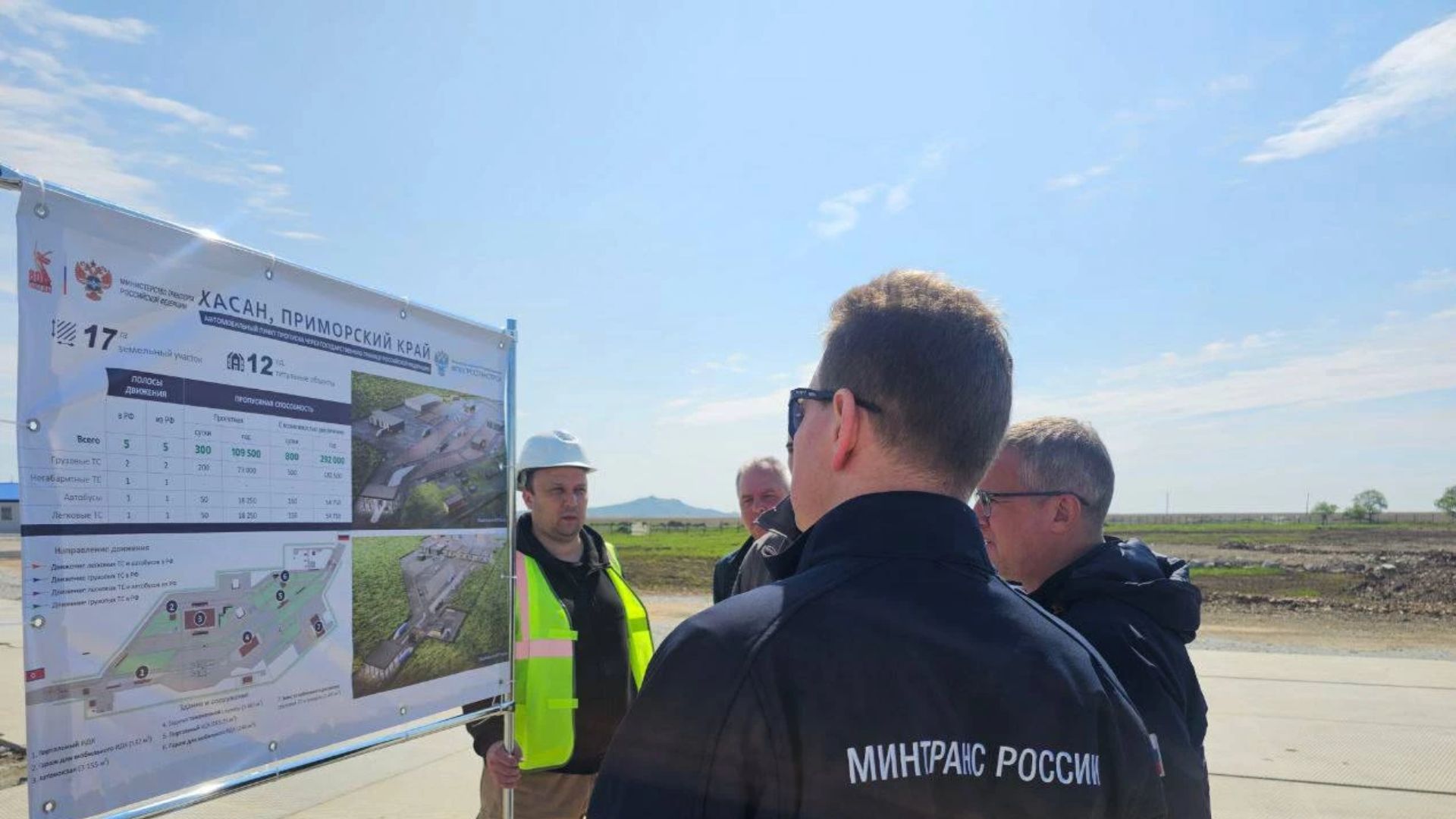
Supporting documents released by Rosgranstroy outline detailed costs and blueprints for the future checkpoint and customs facilities. These include a $17.1 million main office, several “service and operations” buildings and cargo inspection facilities priced at nearly $6 million each and a $2 million garage, according to Rosgranstroy’s tender documents. The agency expects the contractor to complete most of the work by November to December this year, while aiming to finish the garage and a passenger luggage inspection module priced at $336,250 by June 18, 2026. The 20-hectare site will include kennels for border guards and customs staff expected to cost nearly $2 million, alongside a $5.8 million bay for “in-depth inspection of cargo vehicles and goods.” Notably, also slated for completion by spring 2027 are a $513,520 “sanitary and quarantine checkpoint,” five toilets totaling $343,590 and a $130,520 waiting area for drivers. An NK News investigation previously found that the dubious TonnelYuzhStroi firm, named by the government as the bridge’s main contractor, is likely a front for the powerful BTS Most construction conglomerate, which has close ties to Chechen elites. Chris Monday, a Russia researcher at Dongseo University, noted that Russia’s construction sector is “notoriously corrupt,” with many elites rising through large-scale projects. And given Russia and North Korea’s burgeoning military cooperation, the inflated costs may be “covering up other kinds of exchanges,” he suggested. “Both Russia and North Korea want to keep outsiders in the dark as much as possible,” he told NK Pro. “Some of these expenses could be for military use or funneling money into the DPRK, while Kim’s people might be demanding kickbacks.” STRONGER TOGETHER The tender process for the checkpoint comes as Russia has sped up the work on its side of the river, recently starting to install columns for the vehicle bridge, according to analysis of satellite imagery by SI Analytics and NK Pro. “On the Russia side, a workboat meant for column installation over the river was transported by land,” SI Analytics states in its latest nK Insight report, noting continuous “foundation work” on the DPRK side for expected “border checkpoint, customs and immigration sites.” 
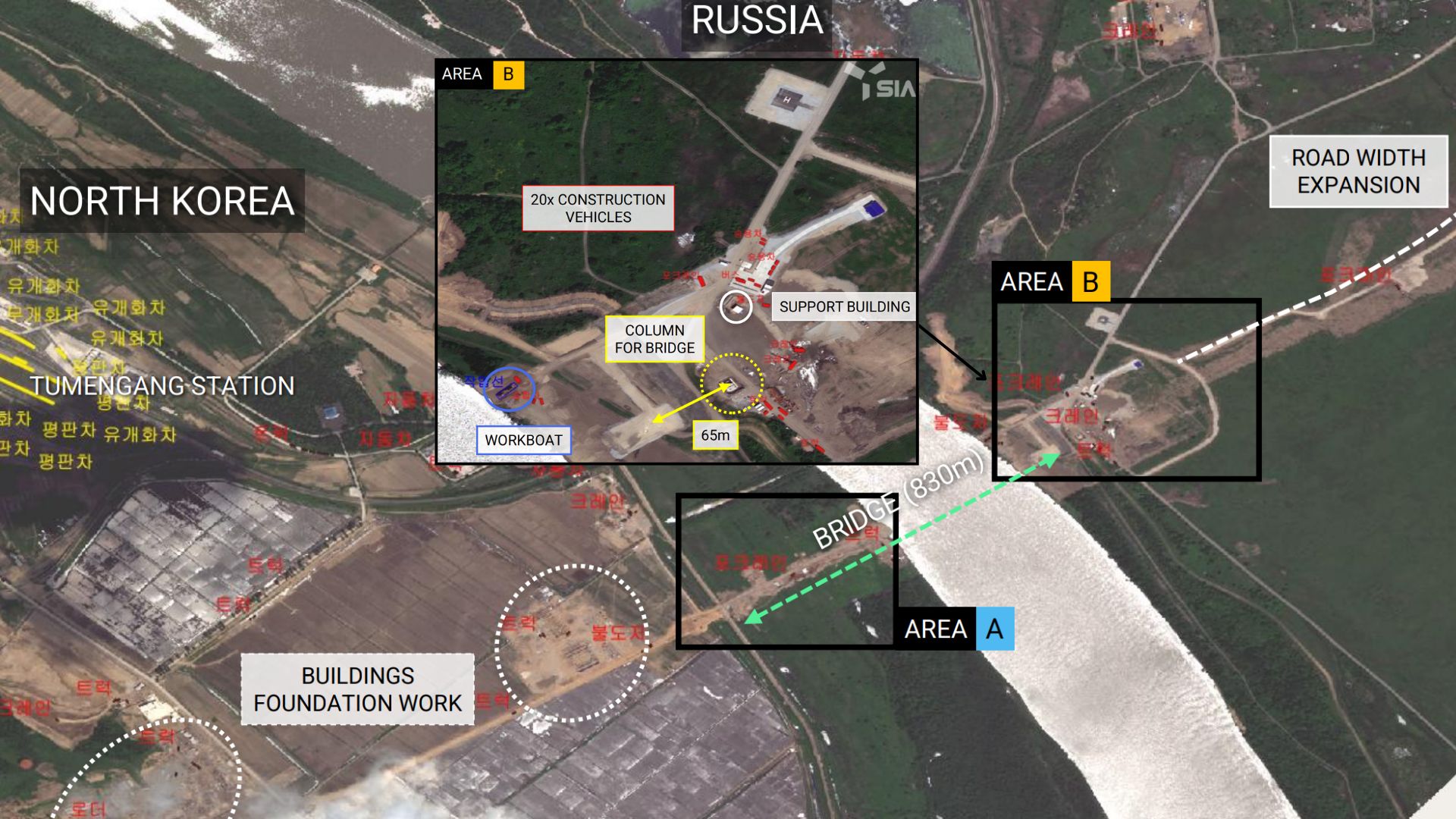
Russia expects that the new 4.7-km road bridge, including access roads, will boost cargo flow and passenger traffic. The bridge itself will be seven meters wide and span one kilometer, with Russia having to complete 424 meters and North Korea 581 meters, according to the Russian Ministry of Natural Resources and Environment. The Russian government is looking to speed up construction to complete the bridge by June 2026 to mark the second anniversary of the summit between Vladimir Putin and Kim Jong Un in Pyongyang, when the leaders signed the Comprehensive Strategic Partnership treaty that paved the way for deeper military cooperation over the war in Ukraine. Meanwhile, North Korea and Russia launched a rail service between their capitals this week, with the first train in over five years departing from Pyongyang on Tuesday and crossing the Tumen River on Wednesday. The Russian customs service reported that it processed the arrival of a “single international carrythrough car” from Pyongyang and “baggage of five [North Korean] conductors” for the train’s 6,000-mile ride across Siberia to Moscow. As of Thursday, the train passed the Russian Far Eastern city of Khabarovsk on its nearly weeklong journey. Russian Railways announced last week that the train will travel between the capitals twice a month, with tickets reportedly costing around $510-573. Similarly, Russian Post resumed a postal link with the DPRK on Tuesday, allowing individuals and firms to send packages of up to 20kg for the first time since the start of the pandemic. Edited by Bryan Betts © Korea Risk Group. All rights reserved. |

October 16, 2026Oct 16, 2026

The ultimate resources for professionals working on North Korea
 SHARE
SHARE COPY LINK
 X
X MASTODON