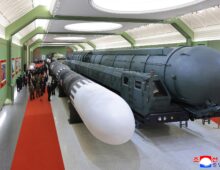
  Analysis Russia obscures North Korea arms trade by moving operation out of military portExperts suggest Russia switched to using commercial port in response to international scrutiny of alleged weapons trade 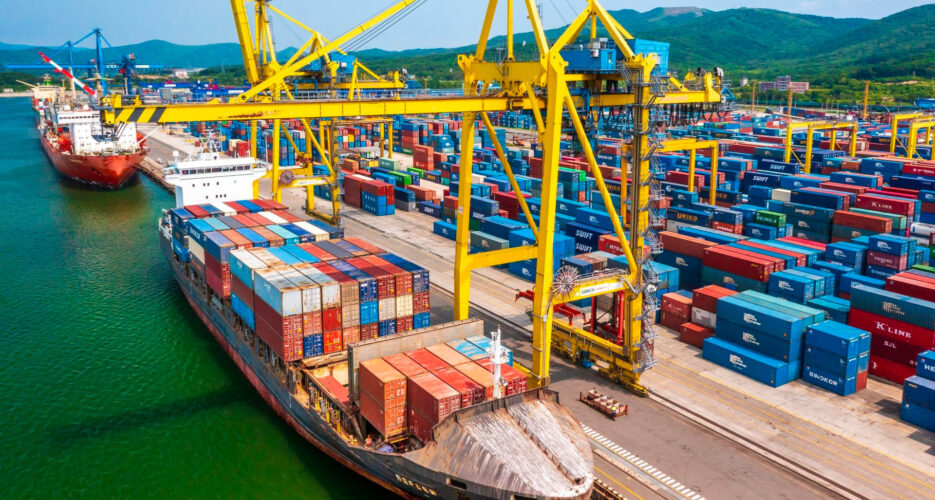 This is the first article in a two-part series analyzing major changes to alleged North Korea-Russia maritime arms trade in the first two months of 2024. Part two can be found here. Russia has stopped using a military port in its alleged maritime weapons trade with North Korea in favor of a commercial port, according to NK Pro analysis, in what appears to be an effort to convince observers the trade is not military related. The shipping operation started last August right after DPRK leader Kim Jong Un was seen showing Russian defense minister Sergei Shoigu various missiles in Pyongyang, and right before Kim met Vladimir Putin in Russia. Russia has denied it is importing weapons from North Korea, but outside experts largely agree that evidence for Russia’s use of DPRK short-range ballistic missiles against Ukraine since December is strong. However, no ships have appeared in satellite imagery at the North Korean Port in Rason since Feb. 12, pointing to a possible halt in shipments or change in the operation. UN-DUNAY-ABLE? NK Pro analysis of Planet Labs satellite imagery shows Russian ships accused of transferring weapons to Russia from North Korea’s Rason Port stopped using a military port in Dunay to the east of Vladivostok in late December. Instead, the four Russian ships that NK Pro has linked to the alleged arms trade operation — Lady R, Angara, Maia-1 and Maria — have moved between Rason and a commercial port further east called Vostochny Port. The Maia-1 and Lady R were last seen there on Feb. 8, before the Maia-1 went to Rason on Feb. 12. The ships started using Vostochny Port as early as Oct. 2, but they continued to dock at Dunay to transfer containers alongside Russian warships until the Russian cargo ship Angara’s final visit from around Dec. 17 to 21. 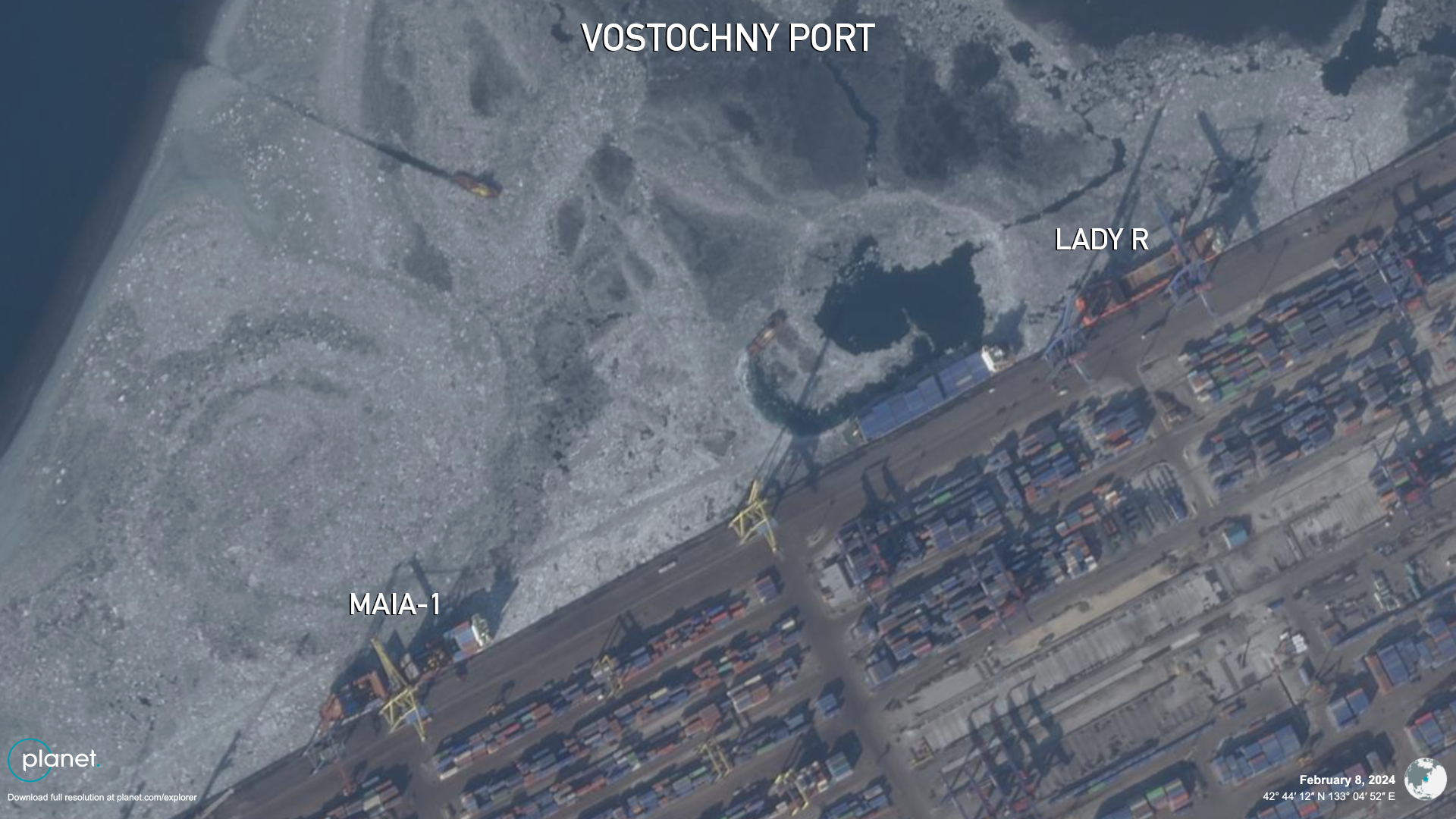
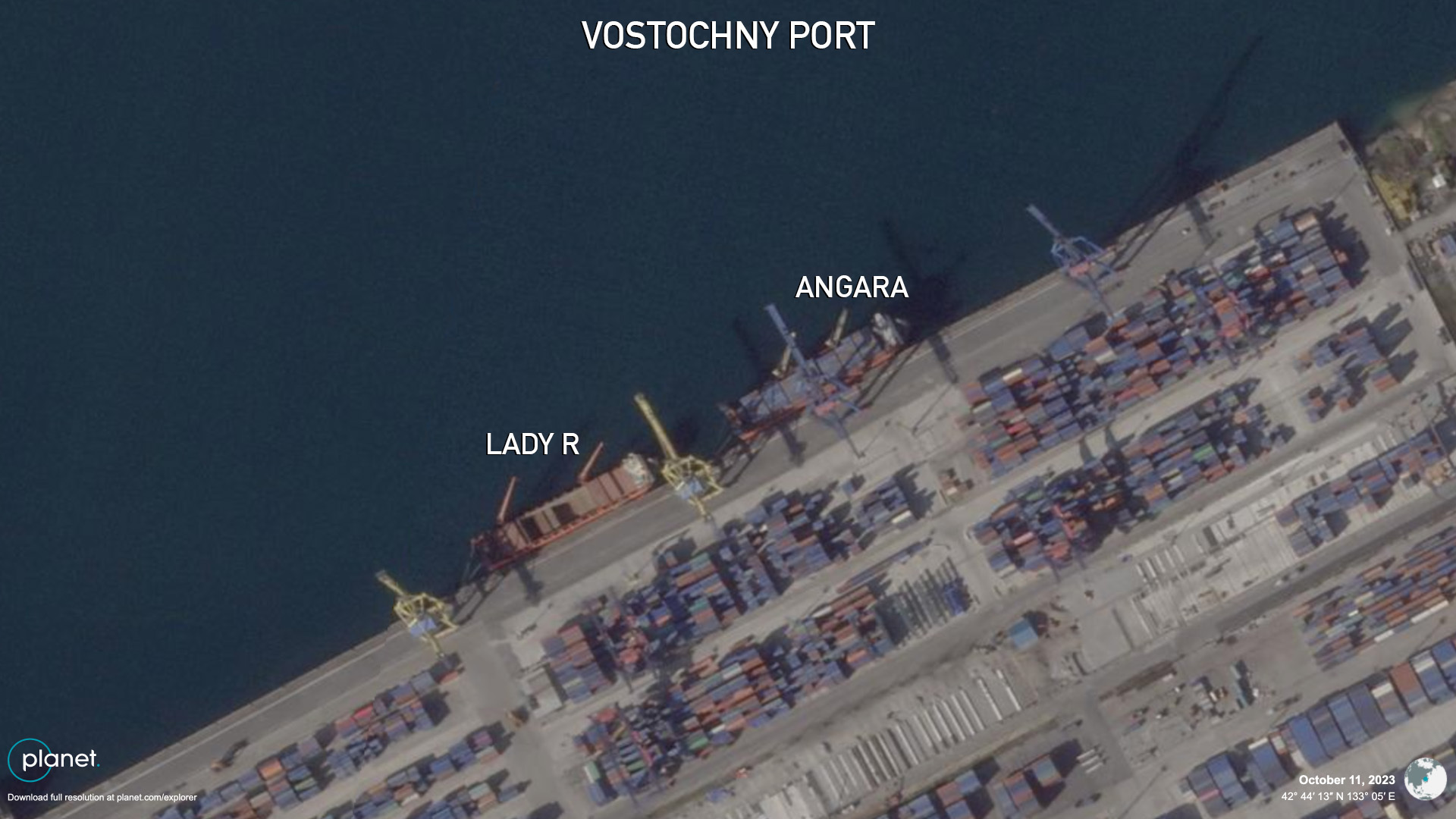
Since the ships stopped going to Dunay, the Maia-1 appears to have made at least five round trips from Vostochny Port to Rason and back, while the Angara made at least two round trips and the Maria three, NK Pro analysis shows. The initial move to start using Vostochny could have been part of an effort to create plausible deniability about the contents of the shipments, and the timing of the move could have been due to greater international attention on the operation, according to Joseph Byrne, a research fellow at RUSI’s Proliferation and Nuclear Policy program. Washington publicly revealed evidence of the operation on Oct. 13, including naming the Angara and claiming it had tracked domestic train shipments of containers from Dunay to a weapons depot in Tikhoretsk in western Russia. Open-source analyses have yet to nail down evidence of specific containers moving from Rason to Dunay or Vostochny and on to Tikhoretsk and other Russian weapon depots closer to the Ukraine border, but evidence of DPRK artillery shells and missiles in Ukraine means they are getting to the frontlines somehow. “They were exclusively shipping to Dunay” from mid-August when the operation began, but “when it all became public, they had to switch it up,” Byrne told NK Pro. “They had to make it deniable, as they were getting hounded, and it was hard to deny with it going right to a military-only facility.” Byrne said it’s “absolutely” feasible that Russia would use a large commercial container port to receive North Korean weapons, but that it’s “dangerous” and “hugely risky.” Katsu Furukawa, a former U.N. Panel expert and specialist on DPRK sanctions evasion, told NK Pro that mixing up illegal cargo with legal cargo at a commercial port is “smuggling 101.” But he said relying on such ports for military purposes isn’t easy, explaining why Vostochny was not the first choice as the operation’s hub. “It requires coordination with many stakeholders, like port authorities or commercial vessel operators.” He also noted the potential dangers of using commercial ports for military transshipments due to explosion risks. “Since the Russian military is involved, I am sure they are taking serious precautions — because not only their careers but lives are on the line.” Furukawa said that Russian smugglers might have initially relied on Dunay out of “recklessness” but had to change their tactics after the U.S. and other governments caught them. For one, the process at Dunay was makeshift and likely not suitable for a long-term operation, using trucks to move containers two at a time between docked ships and a nearby staging area, and more trucks to move the stacked containers to load on trains up the road. Byrne said Russia may have also considered using the Dunay port the “proper thing to do” in terms of security for moving weapons, noting it is also closer to Rason than Vostochny. Without the involvement of a military port, it has become more difficult to determine with certainty that recent shipments are still part of the arms trade operation, though the fact that the same ships continued to transfer the same kinds of containers from the same piers in Rason suggests the operation did not fundamentally change. The U.S. has sanctioned all four aforementioned ships along with the port at Dunay over suspected arms transfers to Russia from North Korea. Washington also sanctioned Russian companies operating at Vostochny Port — Vostochnaya Stevedoring Company (VSC) and TransContainer — saying VSC owns and operates a terminal at Vostochny Port where the four identified vessels have berthed on multiple occasions. Both companies belong to Russia-based Global Ports. TransContainer, whose logo was on the containers carried by vessels in the DPRK operation, provides military transportation services to the Russian government and participated “in the illicit transshipment of North Korean munitions and weapons systems for use on the battlefield in Ukraine,” according to the U.S. Treasury Department. The two companies had not replied to NK Pro requests for comment on their alleged role in the shipping operation at time of publication. Edited by Bryan Betts Correction on Feb. 29 at 1:42 a.m. KST: A previous version of the Oct. 11 image taken of Vostochny incorrectly labeled a ship as the Maia-1. It has been corrected with the label Angara. © Korea Risk Group. All rights reserved. |

October 18, 2026Oct 18, 2026

The ultimate resources for professionals working on North Korea
 SHARE
SHARE COPY LINK
 X
X MASTODON