  Analysis Putin likely took unprecedented number of planes to North Korea for summitNK Pro analysis shows at least 13 Russian aircraft made trip, demonstrating extent of two sides’ efforts to boost ties  More than a dozen aircraft accompanied Russian leader Vladimir Putin on his trip to North Korea last week, NK Pro analysis shows, what appears to be an unprecedented number of planes for a foreign delegation that underscores the two countries’ sweeping effort to bolster ties. At least 13 Russian planes were parked at Sunan International Airport when Putin arrived in the DPRK on June 19, Planet Labs satellite imagery shows. Data from the aircraft tracking service Flightradar24 suggests eight of them were passenger aircraft, including five Il-96 jets traveling with the Russian leader. The number of planes likely exceeds that of any foreign delegation that has arrived in Pyongyang in recent years. Cuba’s leader traveled to North Korea with only one aircraft in 2018, while Chinese President Xi Jinping does not appear to have taken more than a few jets during his visit in 2019, though there was heightened aviation activity between the two countries in advance of his trip and at least one Air China passenger plane at the airport when he arrived. Notably, former ROK President Moon Jae-in took his entire delegation to Pyongyang on just two aircraft, including one Boeing 747, for a summit with North Korean leader Kim Jong Un in 2018. 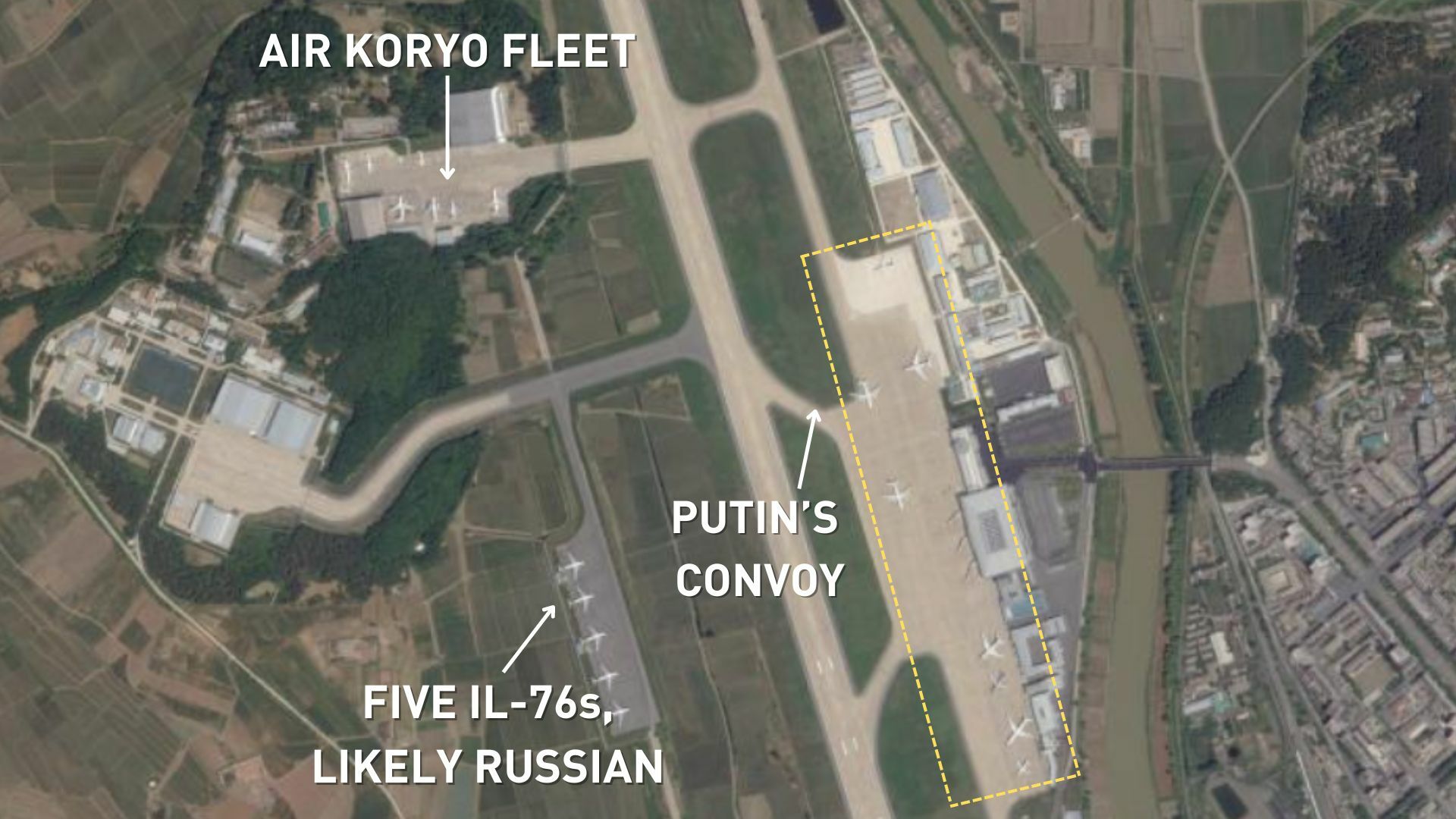
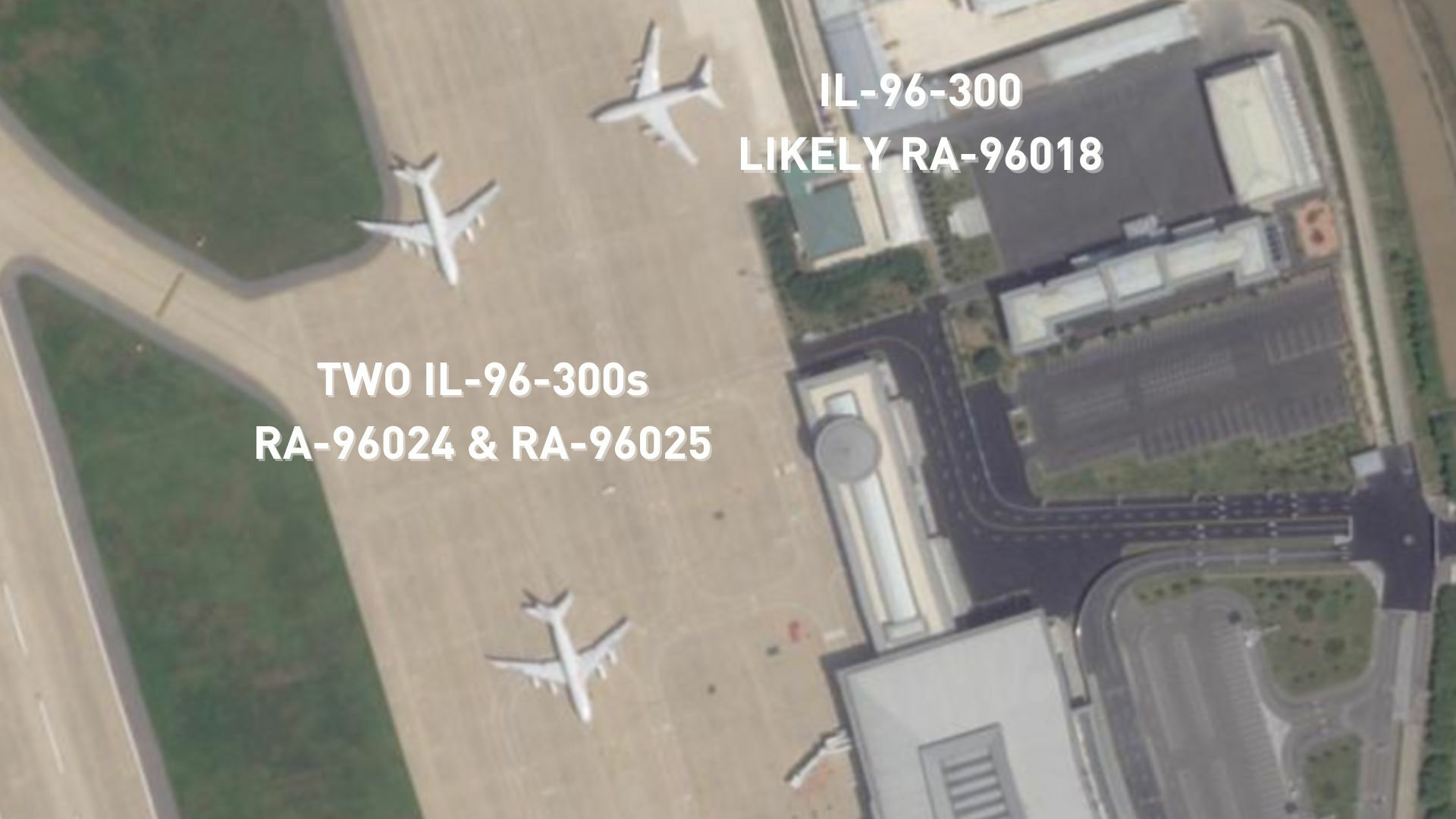
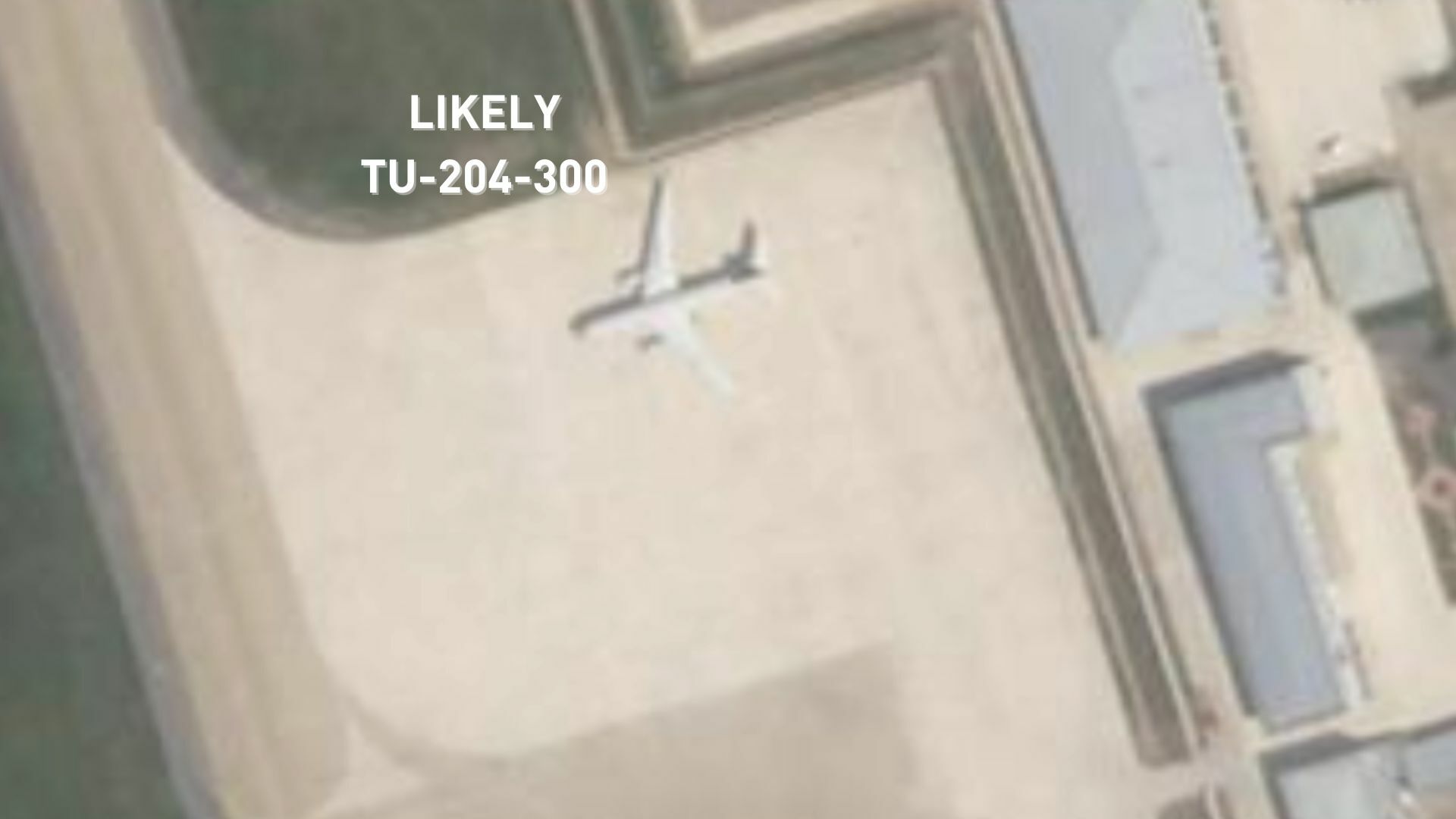
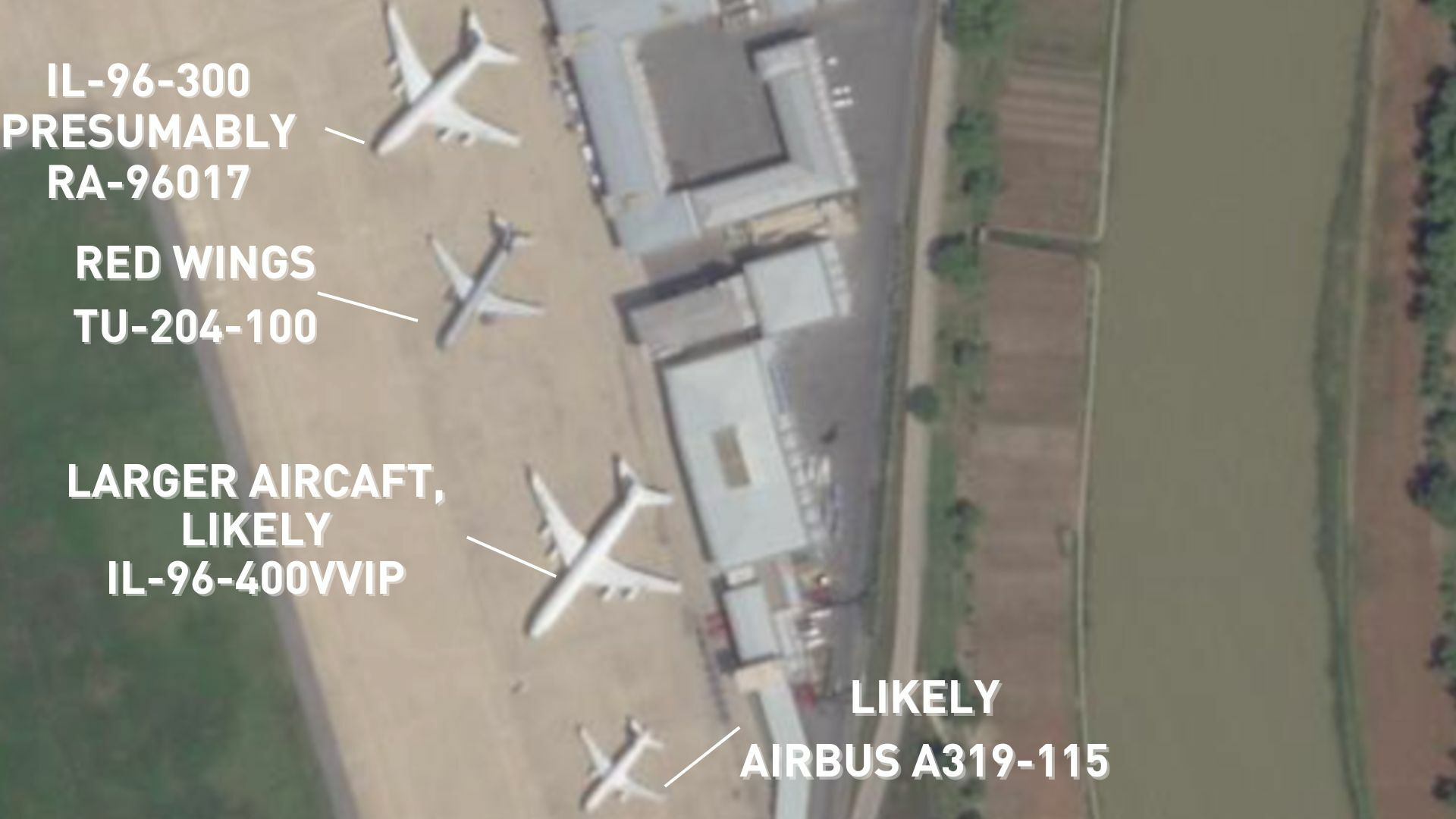
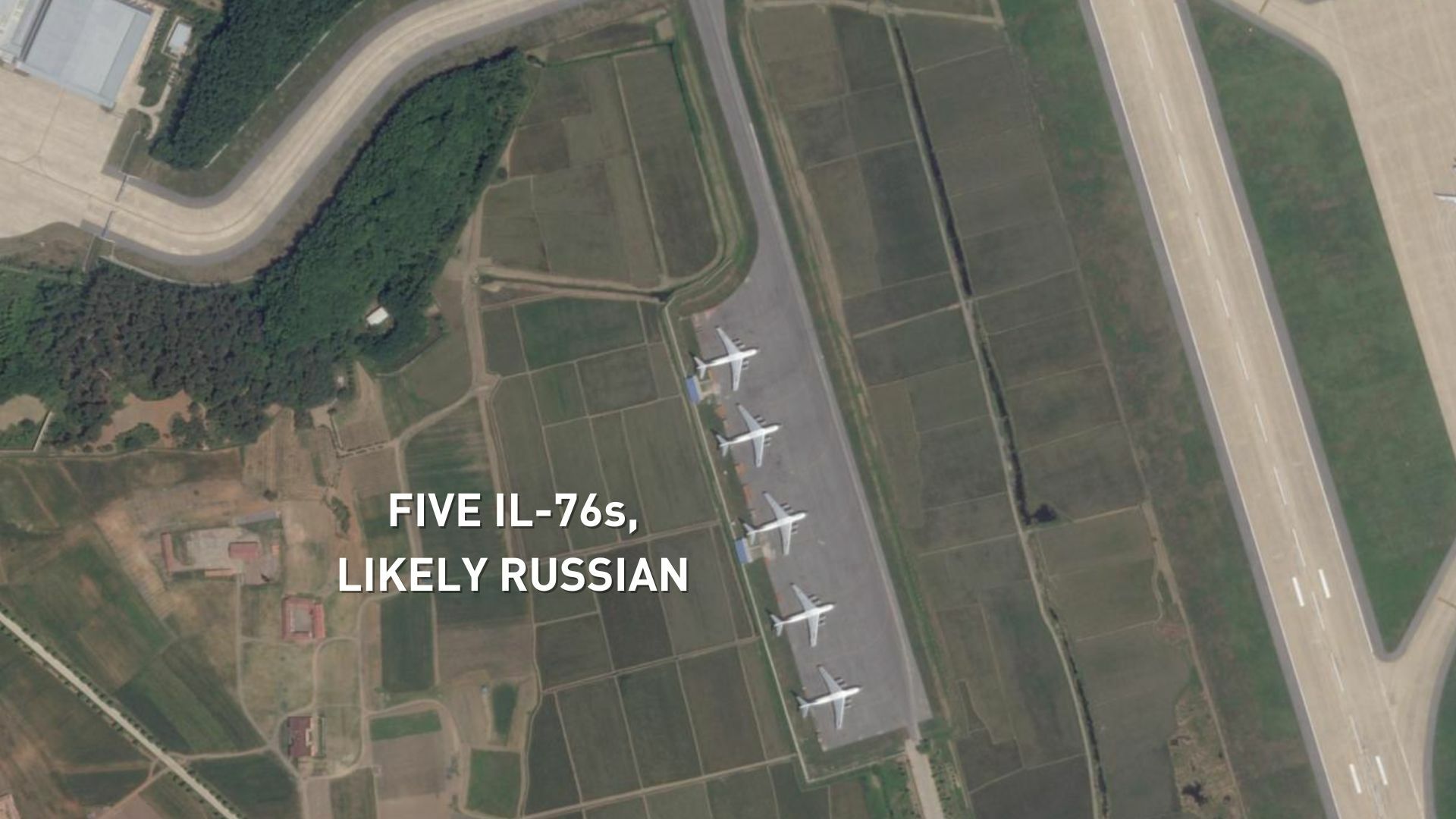
Ed Condit, a retired United Airlines pilot and aviation consultant, told NK Pro that the arrival of such a large number of aircraft is “extremely noteworthy” and “unprecedented.” He explained that the number of flights by the three airlines that regularly flew to Pyongyang before the pandemic — Air China, Russia’s Aeroflot and DPRK flag carrier Air Koryo — “would not rise to the level seen during Putin’s visit.” Condit added that the ability of the DPRK Air Traffic Service to accommodate this many incoming flights in a short period after a yearslong break due to COVID-19 “truly stands out as an accomplishment.” Putin arrived in Pyongyang at around 3 a.m. on June 19 on his Il-96-300 (tail number RA-96024), according to Russian and North Korean state media, despite originally being scheduled to arrive on June 18. His other twin jet — tail number RA-96025 — reached Pyongyang at about the same time, as shown by Flightradar24 records. A slightly older Il-96-300 (RA-96017) accompanied the two planes to Yakutia in the Russian Far East on June 17, landing in Pyongyang the following day ahead of the Russian president, possibly because it was carrying journalists covering the leader’s travels. Putin’s trip to North Korea was part of a wider Asian tour that included the stopover in Yakutia and an official visit to Vietnam. Russia’s Special Flight Squadron Il-96-300 (RA-96018) made a return flight from Moscow to Pyongyang on June 12, a week ahead of Putin’s arrival, disappearing from the radar midair above Siberia, according to Flightradar24. The plane subsequently flew to the DPRK capital on June 17, where it stayed until June 20. North Korean state media showed the plane at the airport during Putin’s visit. 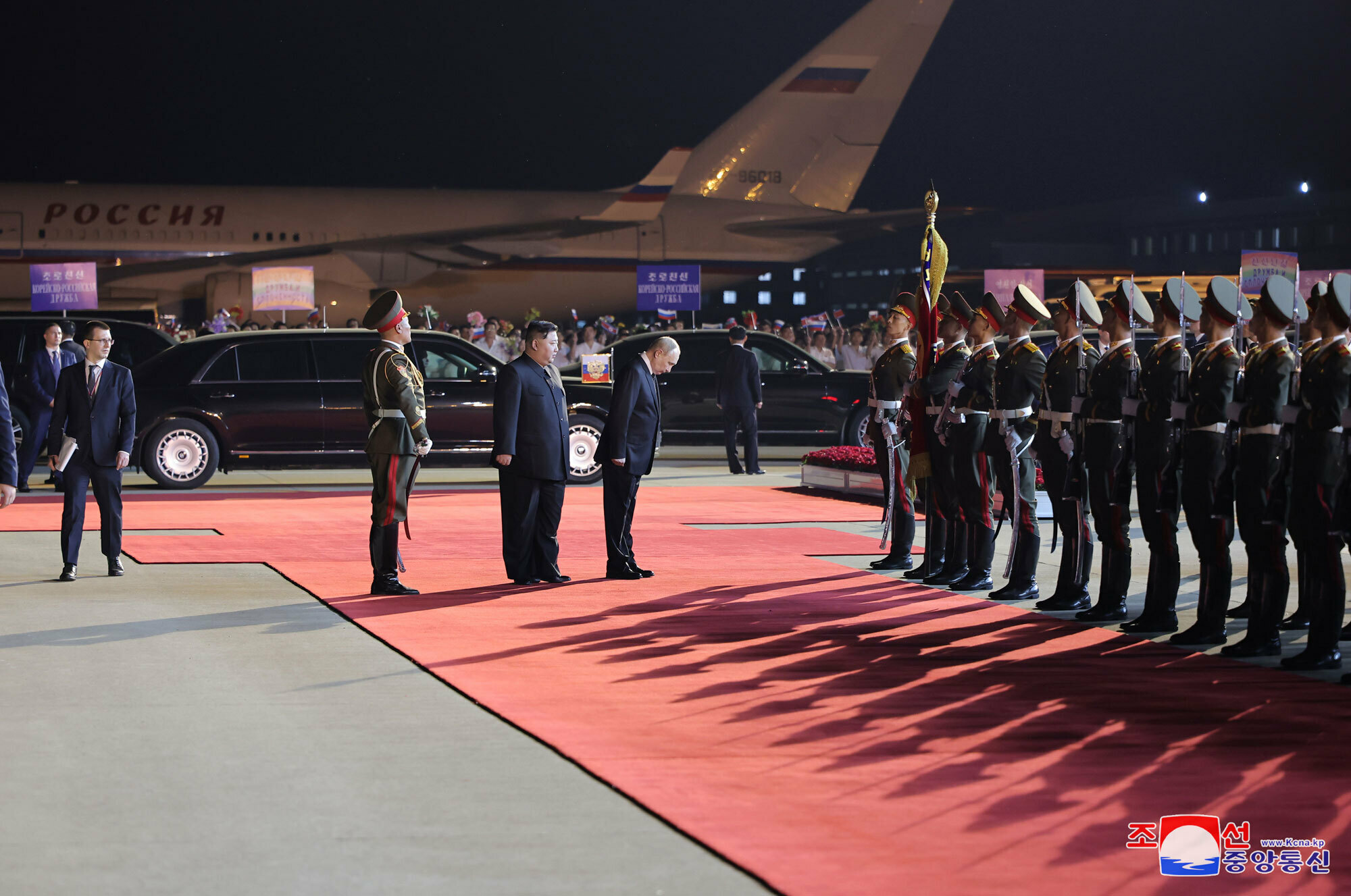 Planet Labs also shows a larger aircraft parked in front of the Sunan International Airport terminal on June 19, with its dimensions similar to that of Il-96-400VVIP, previously used by Russia’s former defense chief Sergei Shoigu. The aircraft (RA-96102) reportedly remodeled from an Il-96T cargo plane was headed eastward in skies above Siberia on June 17, likely in the direction of Pyongyang, when it disappeared from the flight tracker Flightradar24. Satellite imagery confirms the presence of the five Il-96s at the Pyongyang airport on June 19, along with a Special Flight Squadron Tu-204-300 (RA-64057) and an Airbus A319-115 (RA-73025) known to be used by Russian foreign minister Sergei Lavrov. In a notable development, a Tu-204-100 (RA-64014) belonging to the commercial airline Red Wings flew from Abakan in Siberia to Pyongyang on June 18 and returned to Moscow the following day — the first known flight to North Korea by a Russian airline in years. The company didn’t respond to NK Pro queries about the nature of the flight. The remaining five aircraft visible at Sunan closely match the dimensions of Il-76 cargo planes and likely belong to the Russian Air Force. One of these planes likely transported the new Russia-made Aurus limo that Putin gifted to Kim during the summit. The jets appeared to have arrived a few days before Putin. None of them were detected by Flightradar24, possibly indicating they flew in from Russia with switched-off transponders, making them invisible to flight-detection services. NK Pro previously found that Air Koryo had moved its fleet to other areas of the airport, parking most of its aircraft at the northern airstrip, according to Planet Labs. The airport cleared the tarmac to welcome Putin’s flights sometime between June 6 and 10, NK Pro analysis showed. During Putin’s state visit last week, he and Kim Jong Un signed a mutual defense agreement and vowed to bolster cooperation in economics, science and health care. The DPRK leader personally greeted his Russian counterpart at the airport in Pyongyang despite his later-than-anticipated arrival and threw a lavish welcome party in the capital, with the city’s streets featuring Russian flags and large portraits of Putin. A timelapse showing activity at Sunan International Airport between June 11 and 21, including the movement of Air Koryo’s fleet and the arrival and departure of Russian aircraft. | Video: Planet Labs Colin Zwirko contributed reporting to this article. Edited by Alannah Hill © Korea Risk Group. All rights reserved. |

October 06, 2026Oct 06, 2026

The ultimate resources for professionals working on North Korea
 SHARE
SHARE COPY LINK
 X
X MASTODON