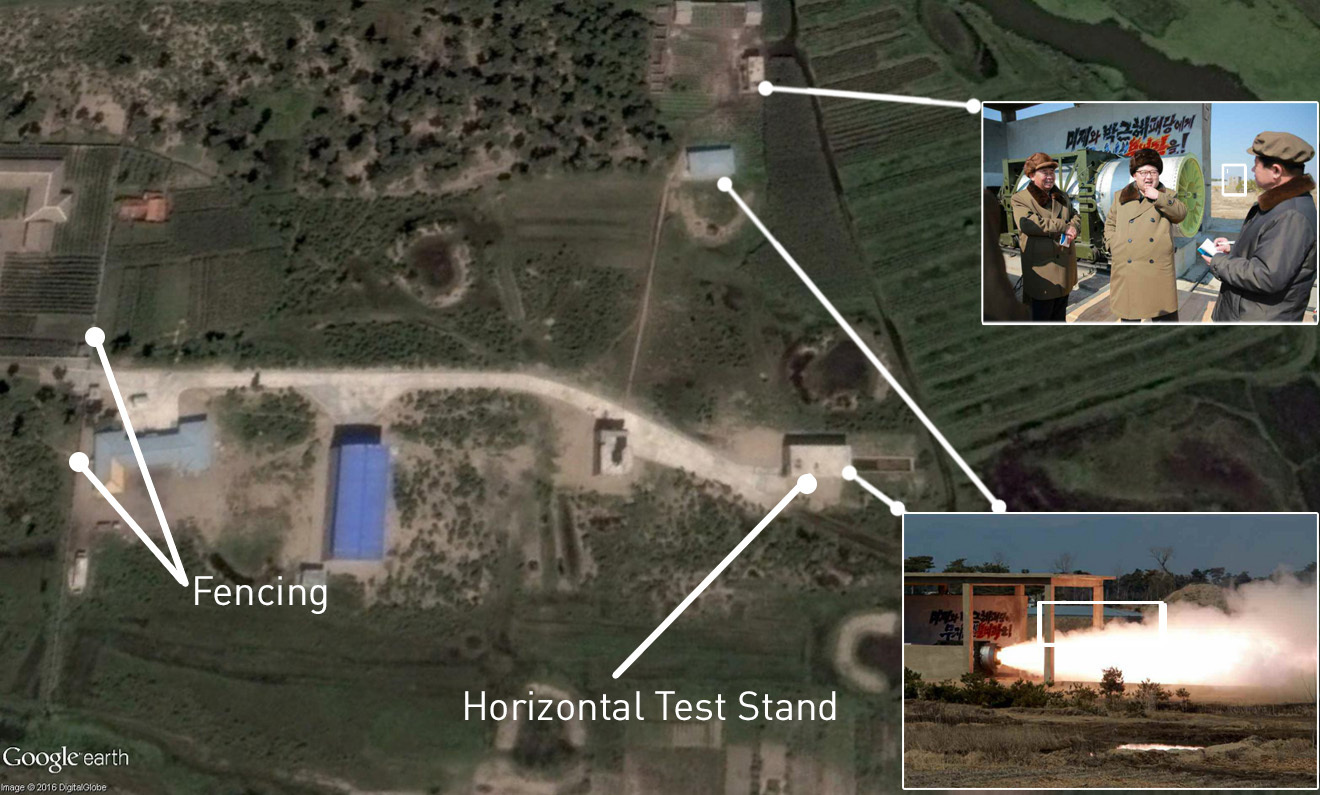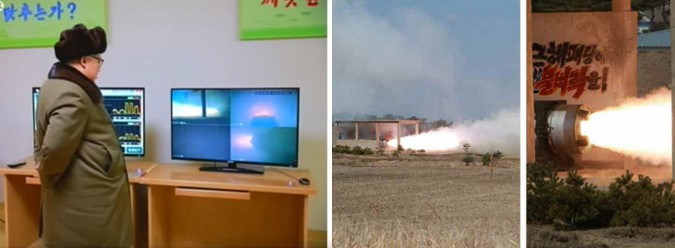
  Analysis North Korea’s solid punch?N.Korea has yet to use solid fuel on anything bigger than KN-02 – fortunately 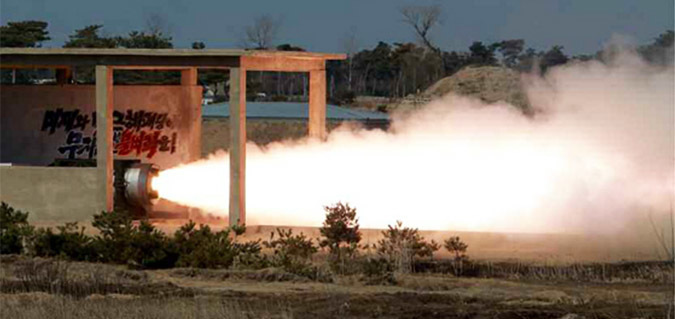 On March 24, North Korean state media reported that Pyongyang had successfully tested a “high-powered solid-fuel rocket engine and stage separation” with onsite guidance from Kim Jong Un. After news of the test broke a YouTube account associated with North Korea’s state media uploaded a video containing a series of photos from the test. These photos provided us with evidence confirming the test of a solid-fuel motor on a horizontal test stand and also gave enough clues as to identify the location of said horizontal test stand. While North Korea has yet to utilize solid fuel on a ballistic missile system larger than the short range KN-02, barring rocket artillery, it has demonstrated it is not interested only in expanding the use of such fuel, but is actively pursuing its use in larger ballistic missile systems. WHAT WE SAW Before Kim had visited the horizontal test stand he was reported to have provided field guidance at February 11 Plant under the Ryongsong Machine Complex in Hamhung, South Hamgyong province. NK Leadership Watch identified the complex’s location at around 39°49’16.28″N, 127°35’52.05″E. With the field guidance and solid-fuel test occurring on the same day, the location of the test stand was possibly nearby, and after a short search near the coastline close to the machine complex, a site sharing many of the features seen in the photos was found. 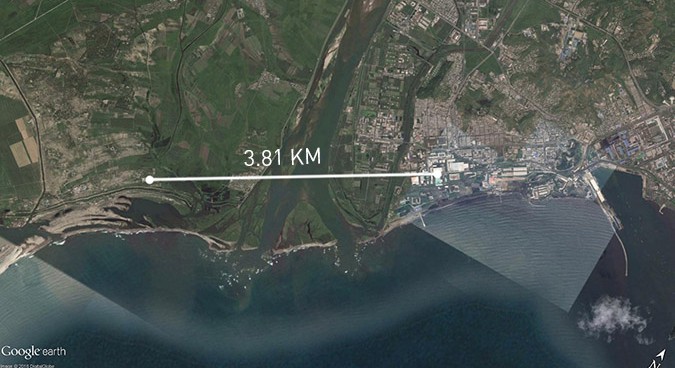 This location is roughly 4km from the machine complex, has road access to the larger parts of Hamhung, a security post with fencing, and a visible flame trench.
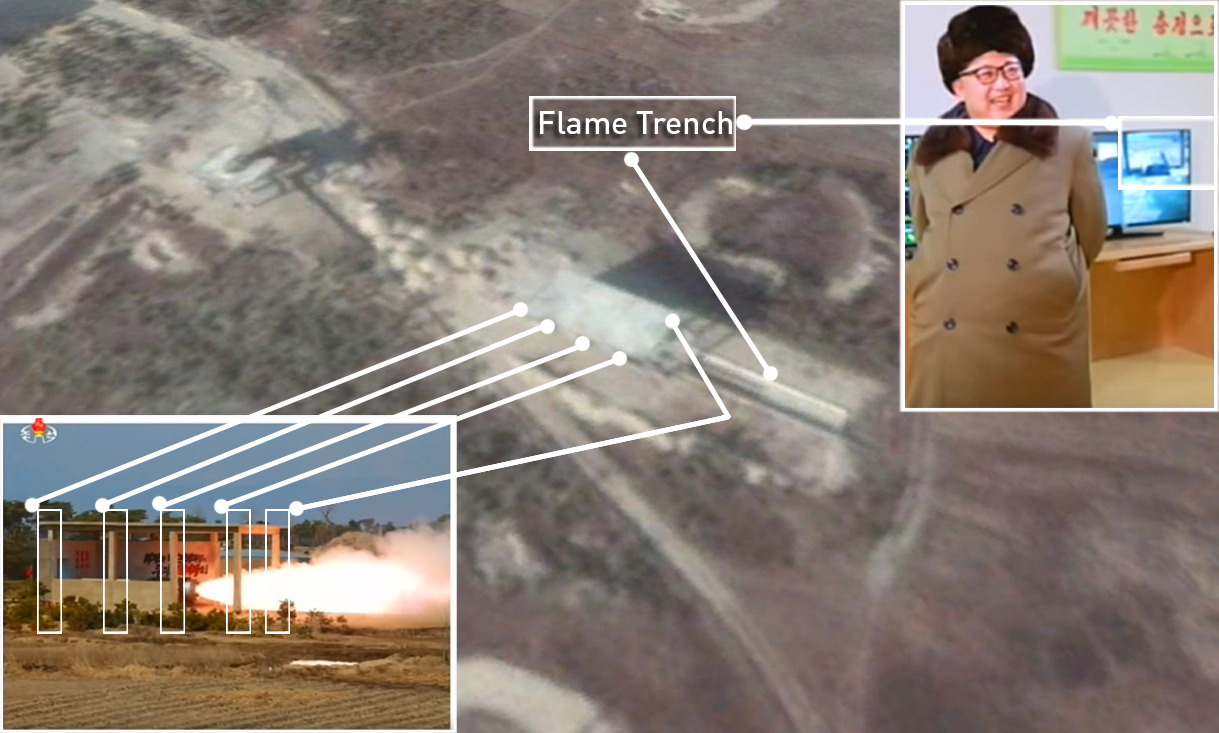
Satellite imagery taken from December 2014 helped further verify the location of the horizontal test stand and provided a better view of the flame trench leading out of the covered structure.
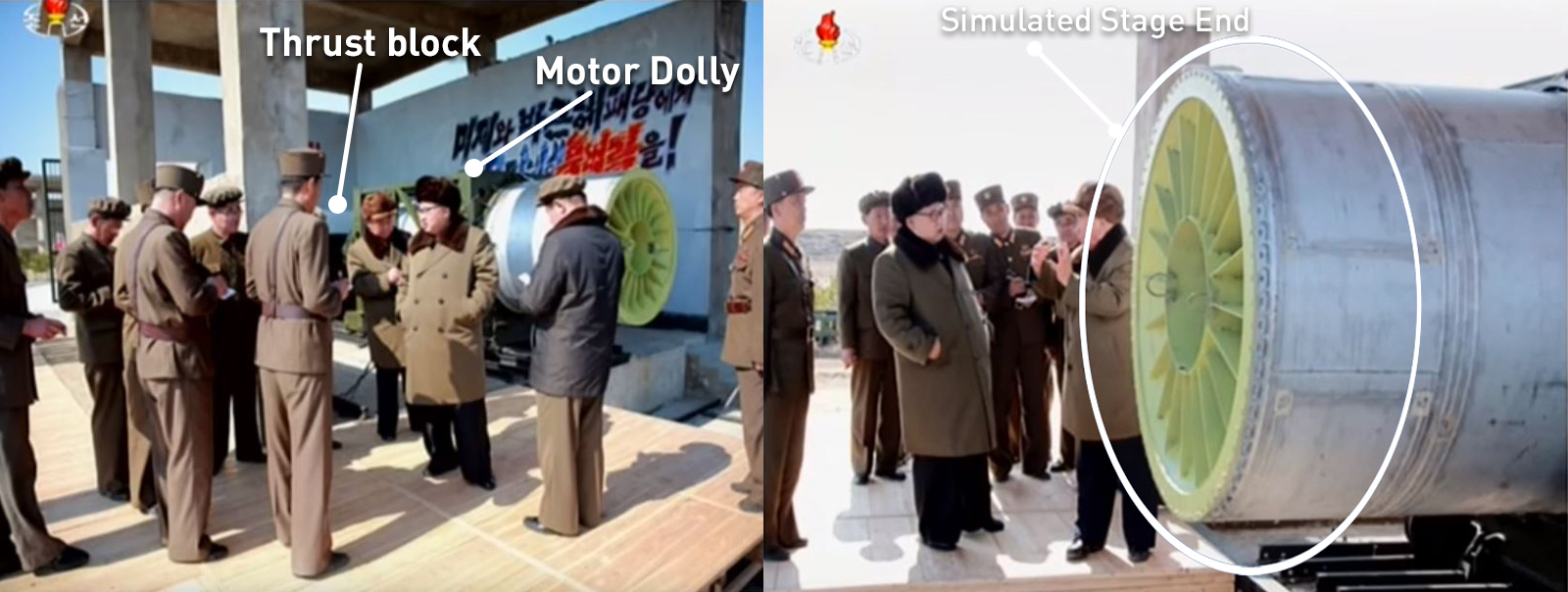
Photos taken from the ground also provided a more detailed account of what transpired in the solid-fuel motor test. In this photo we can see what appears to be the solid motor before it was tested, a simulated stage end that covers the nozzle of the solid motor, and the support structures needed for a horizontal solid-fuel test, including a dolly and thrust block.
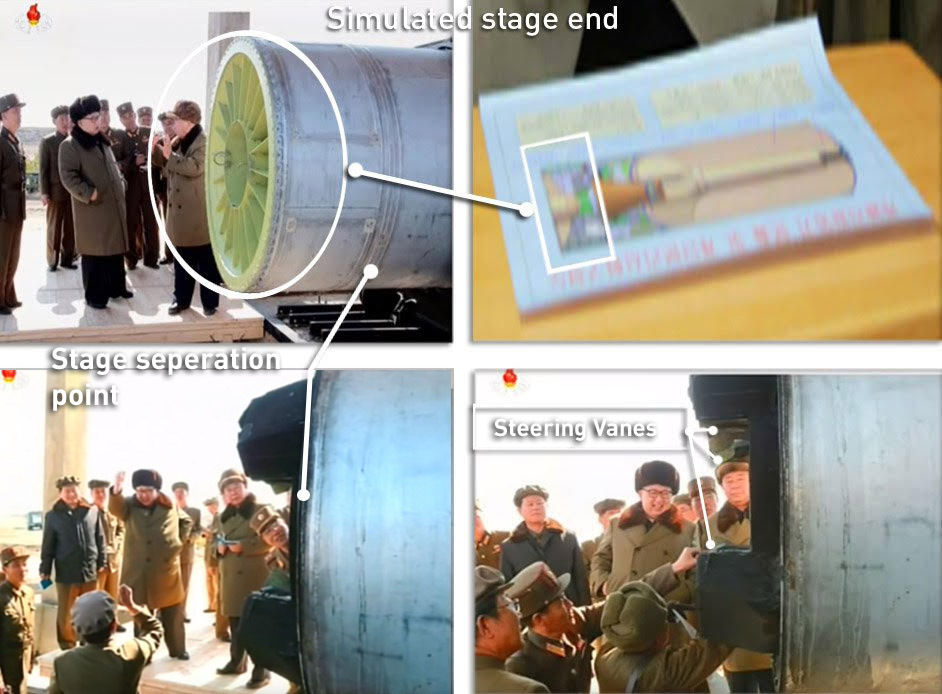
My reason for identifying the cover at the end of the motor as a simulated stage ending is based on the mention of a stage separation test that coincided with the motor test, the graph presented to Kim showing a solid-fuel motor configuration, and the fact that it was not observed in the photos post-motor firing.
After inspecting the solid-fuel motor and facility supporting the test, Kim moved on to another building to observe the test via cameras placed around the test stand.
WHAT A SOLID-FUEL TEST MEANS: As mentioned, there are no known North Korean missile systems larger than the KN-02 using solid-fuel (which for the rest of the world is a good thing). Solid-fuel has many benefits over its liquid alternative when it comes to military applications. The U.S. Army even dedicated a report in their series The Big Picture (1962) called The Solid Punch, explaining why solid-fuel missiles were optimal for military use and why the U.S. military was moving toward these solid-fuel systems. For starters, a solid-fuel missile can be launched in a relatively short period of time. From the decision to launch to the moment a missile is actually used only requires the system being loaded onto a transporter erector launcher (or TEL) and moved to its firing position. For a liquid fuel system, the missile needs to be fueled, a process which can take some time. Solid-fuel can also be left in a missile for a much longer period of time compared to liquid fuel. As liquid fuel is highly corrosive, liquid-fuel systems are stored without fuel until they immediately needed. If North Korea were to successfully develop a solid-fuel missile system with a range similar to or greater than their Nodong medium-range ballistic missile (MRBM), they would be able to utilize that system in a much shorter period of time, thus decreasing the amount of time for U.S. or other forces to detect and prepare for an impending attack. In short, if North Korea deploys longer range solid-fuel missiles it would greatly enhance their ability to launch a missile attack with little to no warning. So, what does this mean about their current liquid-fuel systems? Iran, a country which has cooperated with North Korea in the field of missile development, has also invested in solid-fuel for use in ballistic missiles. The Iranian Sejil-2 missile system is a two stage solid-fuel MRBM with an estimated range of around 2000km. While solid-fuel does give this system an advantage compared to its liquid fuel counterpart the Shahab-3, Iran is still developing and deploying liquid systems, as seen in the recent test of the liquid fuel Emad. If North Korea does develop an entirely solid-fuel missile, it would most likely not replace an existing liquid system but be an independent addition to diversify their ballistic missile fleet. On the question of how this new solid-fuel system will be utilized, it remains hard to say. The diagram presented to Kim showed not only a solid-fuel motor but what may also be the end portion of a previous or first stage. This previous stage also appears to use solid-fuel. If this is the case then North Korea could be planning on following in the footsteps of Iran by developing a two or more stage solid-fuel system. However we will most likely have to wait until we get better photos from this test, from a subsequent test, or if we see a new missile system in future military parades. Main picture: Rodong Sinmun newspaper © Korea Risk Group. All rights reserved. |

October 28, 2026Oct 28, 2026

The ultimate resources for professionals working on North Korea
 SHARE
SHARE COPY LINK
 X
X MASTODON