  Analysis North Korean trains in alleged Russia arms deal pass through key weapons hubSatellite images reveal route of trains carrying distinctive cargo to Rason, highlighting factories that may be involved 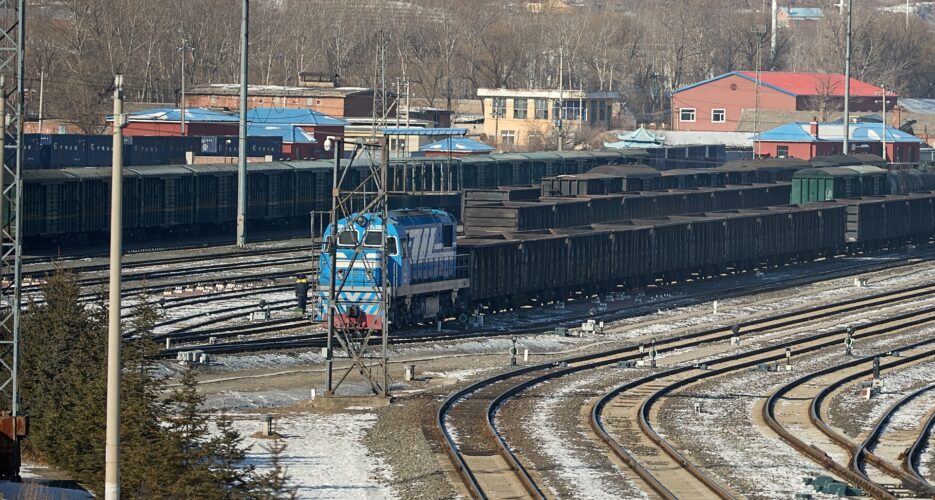 North Korean trains involved in an alleged arms deal with Russia appear to have traveled down the east coast of the DPRK to a key weapons factory hub and as far as the central capital area, according to NK Pro analysis of satellite imagery. The distinctive cargo trains carrying shipping containers of varying colors have appeared in at least five places other than Rason Port at the center of the alleged trade since September, including in Hamhung near missile factories that leader Kim Jong Un visited soon after meeting Russia’s defense chief Sergei Shoigu in July. The findings shed light on the routes that North Korea is using to transport the goods to and from Rason, while pointing to factories where weapons for the suspected arms deals may be coming from. Trains bearing such containers only started appearing after cargo ships began ferrying containers between Rason Port in the northeast of the DPRK and a secretive Russian military port in August. The U.S. says the shipping containers at Rason (Rajin) have been filled with weapons and military equipment bound for the frontlines of Russia’s invasion of Ukraine. Shipping containers have not yet appeared at known North Korean weapons factories in satellite imagery, making it difficult to verify the specific weapons involved in the alleged arms trade. But Russia’s use of cargo ships that turned off location tracking and a military port to process the cargo lends credence to Washington’s claims that the trade involves illicit weapons rather than ordinary goods. 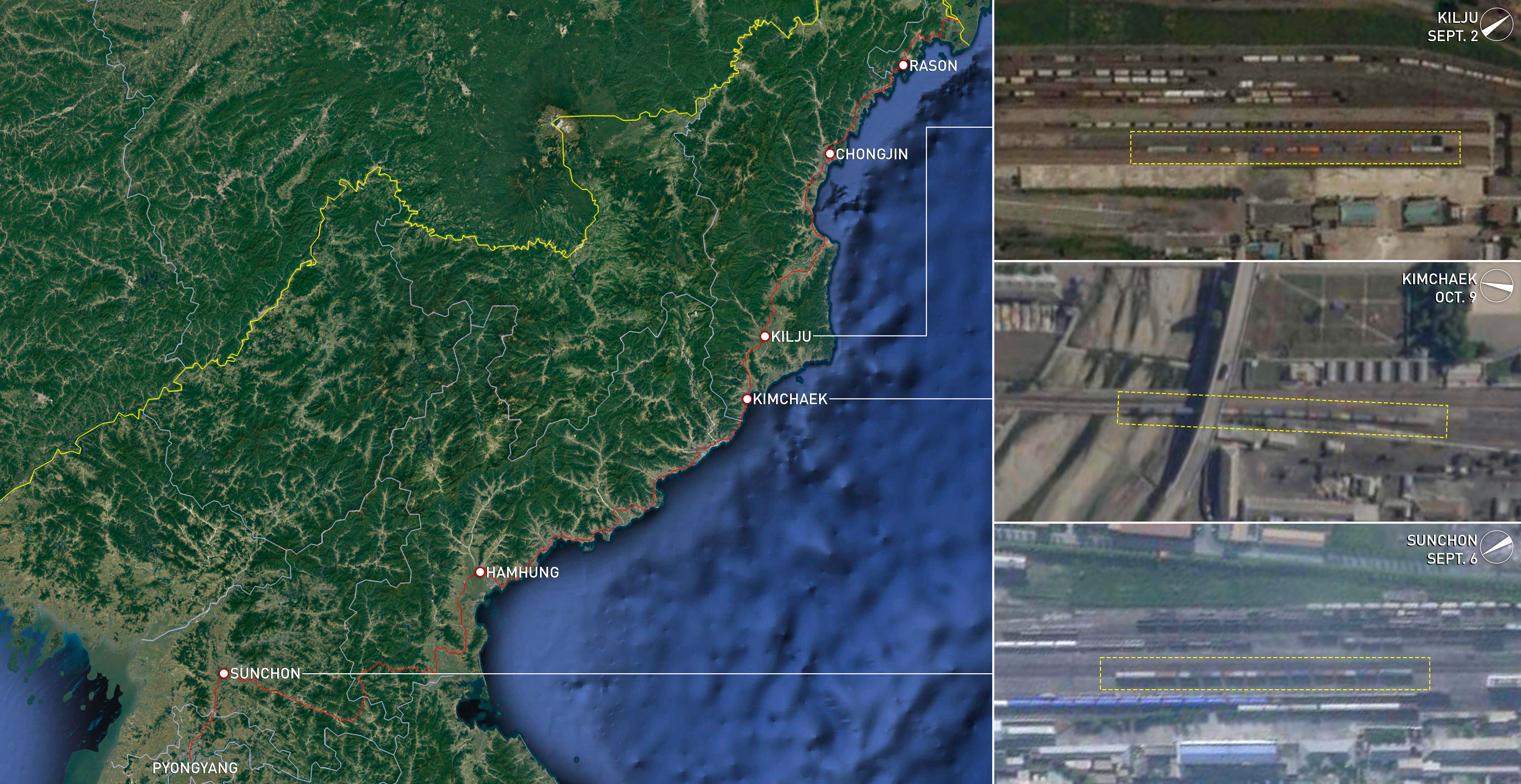 TRAIN ROUTES NK Pro analysis of Planet Labs satellite imagery has identified cargo trains carrying distinctive shipping containers — consistent in appearance with those being loaded and unloaded at Rason Port — along the typical Rason-Pyongyang route as early as Sept. 2. On their way to and from Rason, they have shown up in (from north to south) Chongjin, Kilju, Kimchaek and Hamhung on the east coast and Sunchon to the north of Pyongyang. Though NK Pro has not found the containers in front of any particular factory or depot besides train stations, unmasking the routes of the trains helps narrow down the possible factories involved. In one instance, a locomotive and possible passenger car matching the size and appearance of those used in the container trains appeared at a short-range ballistic missile factory in Hamhung that Kim Jong Un visited in August — an abnormal sight at the factory in historical satellite imagery. A high-resolution Planet Labs image of the February 11 Plant of the Ryongsong Machine Complex, taken on Oct. 22, does not offer a clear view of the whole train, but shadows suggest empty trailers may have been present next to the locomotive. However, NK Pro did not find evidence of the container trains in high-resolution images taken of other factories that Kim visited in recent months. These include a multiple launch rocket system factory in Hamhung, an armored personnel carrier factory in nearby Sinhung and missile production lines in North Phyongan Province and Jagang Province. 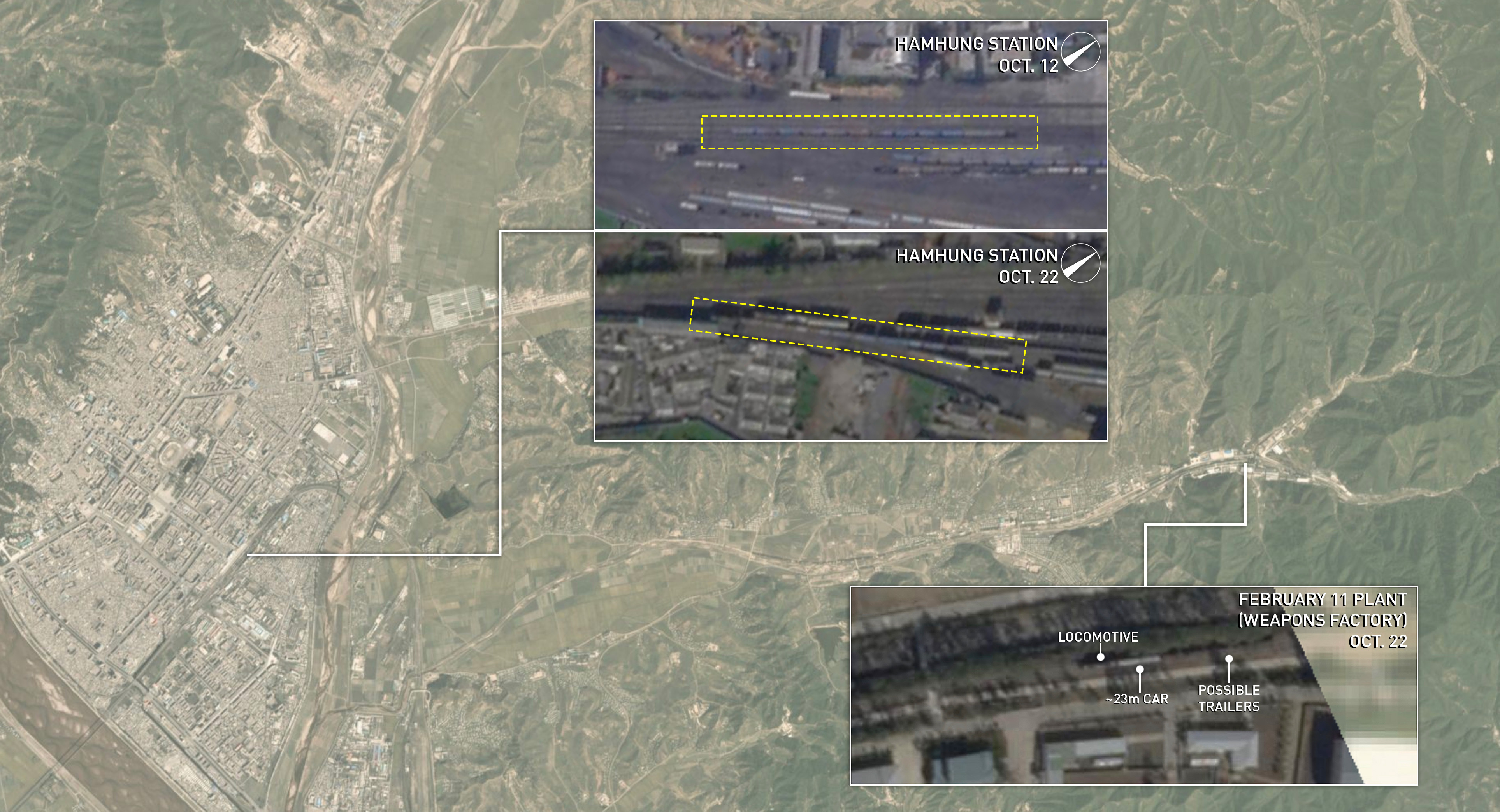 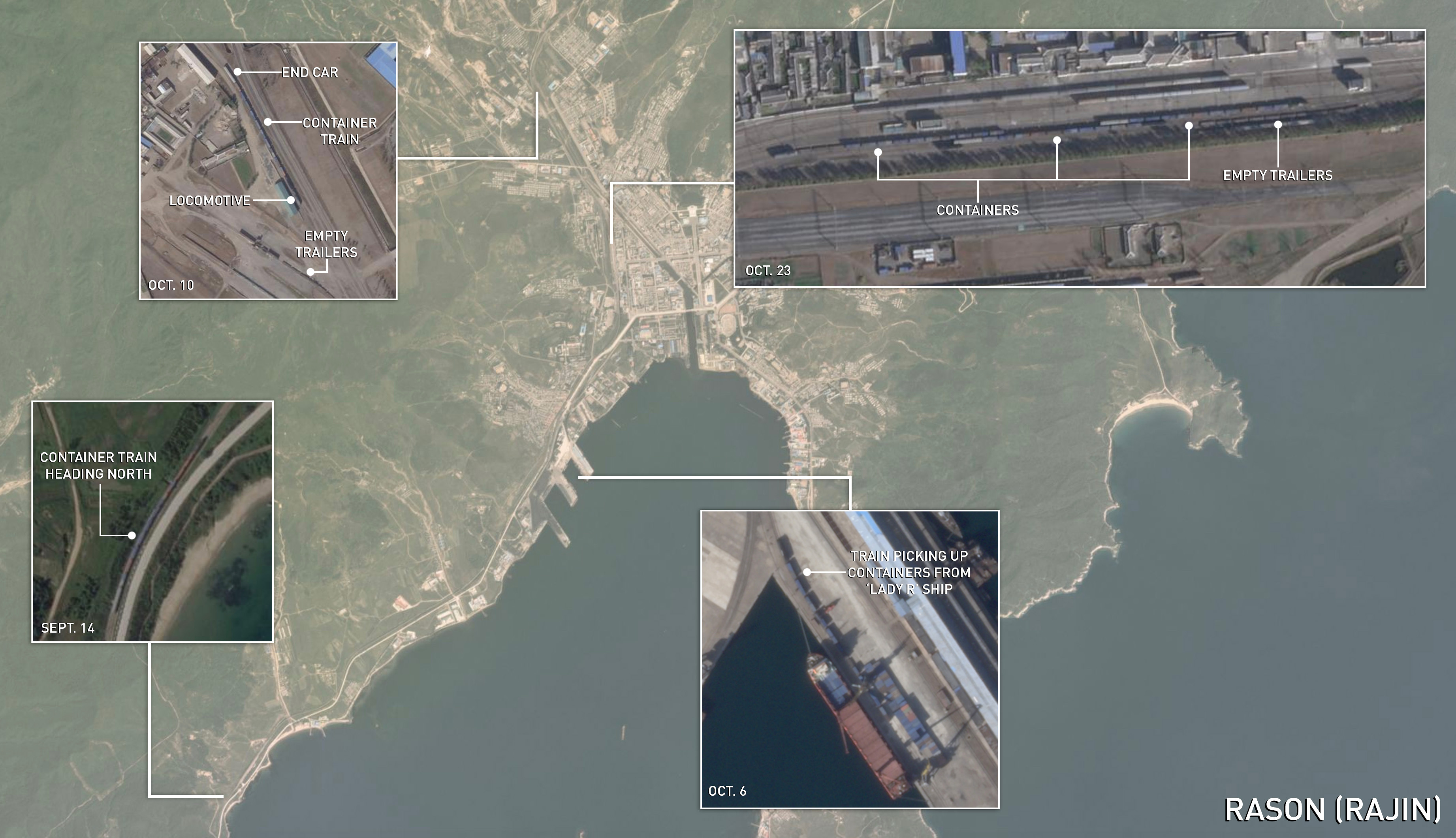 Kim’s visits to these facilities in some cases came just weeks after he met with Russian defense minister Shoigu to discuss weapons development, and just before or coinciding with the start of the Russia container shipping operation. Kim then traveled to Russia to meet leader Vladimir Putin soon after the shipping began. The freight trains that have appeared on the Rason-Pyongang route have largely had the same setup: a locomotive pulling 10 trailer cars each carrying two standard 20-foot (6-meter) shipping containers, for a total of 20 containers, with a passenger car around 75 feet long (23 meters) attached at the end. This is a normal length for a train in North Korea, which for decades has been open about its struggles with railroad capacity issues. These trains have mostly appeared in imagery at train stations likely waiting for their turn on the typically single-line tracks, facing both toward and away from Rason. In Rason, multiple trains full of containers or with empty trailers have appeared almost daily since early September parked at railyards to the north of the seaport. Other trains have appeared to bring containers to and from the port. Imagery suggests Russian cargo ships are dropping containers off at Pier 1 (north pier) and picking them up, allegedly with North Korean weapons, from Pier 2 (middle pier). NK Pro analysis of hundreds of historical satellite images did not find similar trains at stations along the Rason-Pyongyang route pulling trailers with the distinctive varying-colored containers prior to their recent appearance, strongly suggesting the trains are related to the Russia shipping operation. 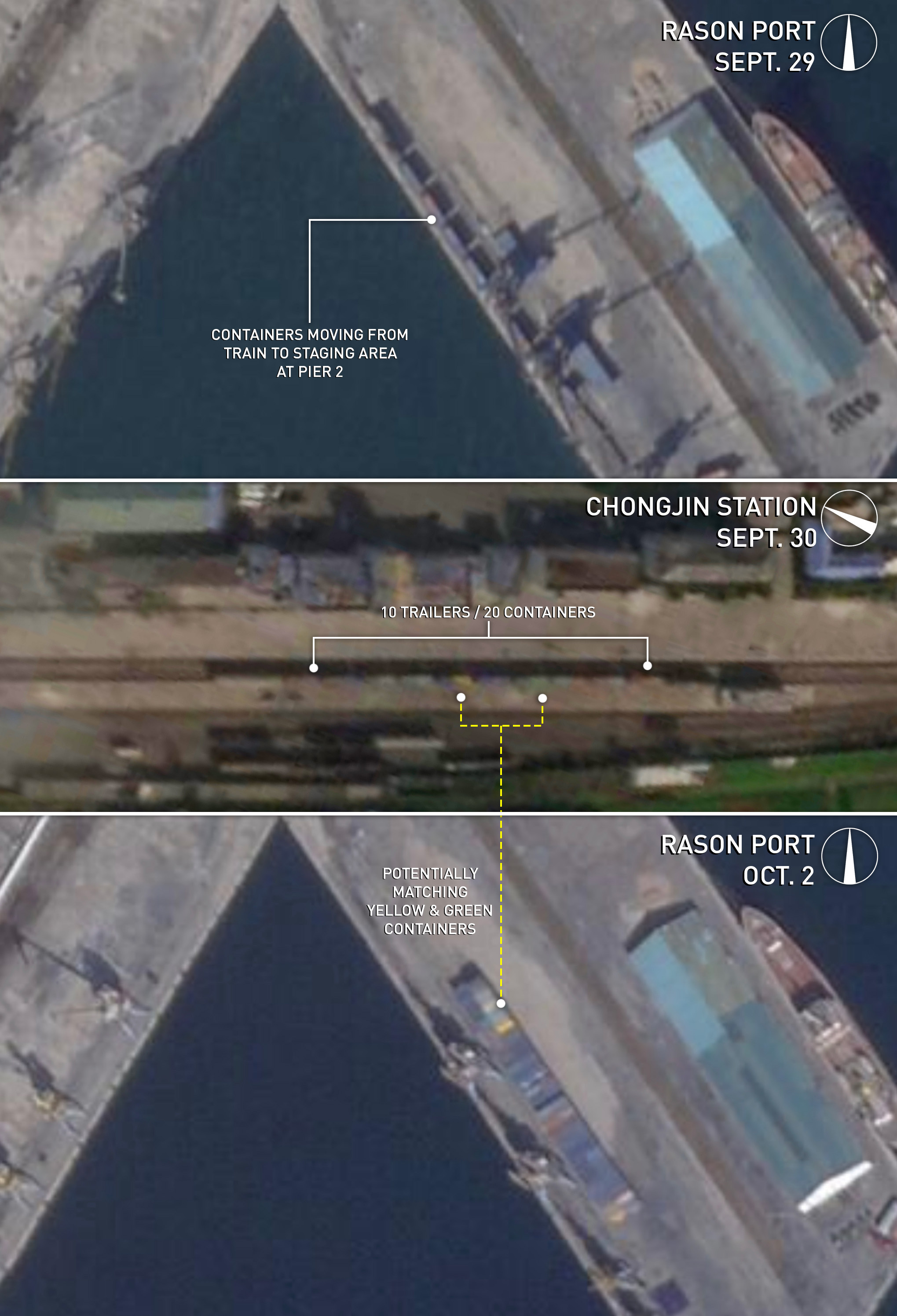 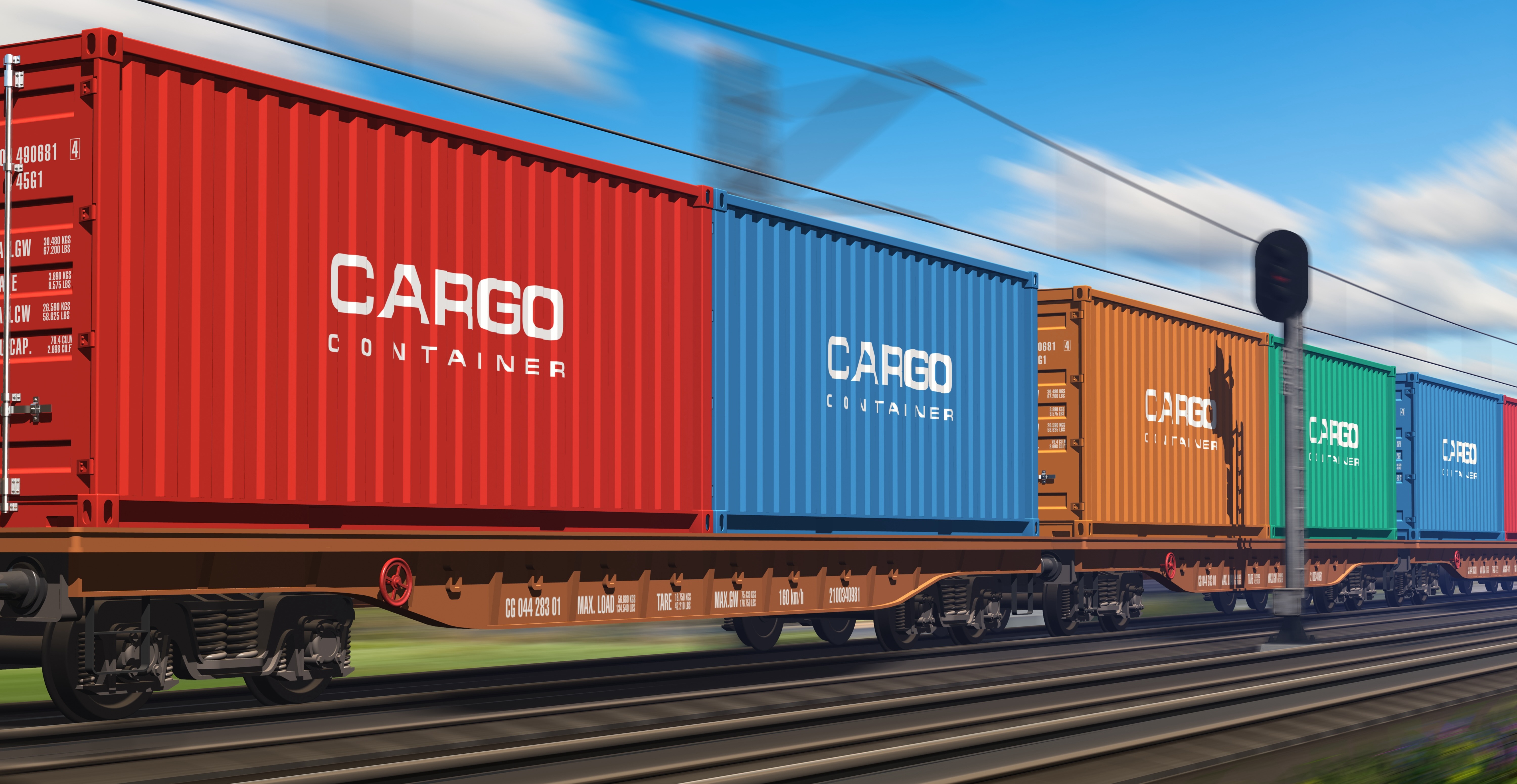 ONGOING SHIPPING Three ships have been identified as being involved in the Rason Port container shipping operation, which the U.S. says is a scheme to trade North Korean arms for Russian weapons-related technology. NK Pro reported earlier this week that the Russian cargo ship named the Angara, first identified by Washington, was last seen picking up containers at Rason on Oct. 23 after visiting the large Russian container port at Vostochny near Nakhodka. The Lady R, a Russian cargo ship first identified by NK Pro, last appeared at Rason on Oct. 20 picking up containers. A ship matching the profile of a smaller cargo vessel named Maria, first identified by British think tank RUSI, last appeared at the secluded Russian military port of Dunay (Dunai) picking up containers on Oct. 20. None of the three ships have resurfaced since these appearances, and all have stopped broadcasting their locations via the standard automatic identification service (AIS). The fact that they have appeared in satellite imagery at multiple ports loading and unloading containers with their AIS off is a core reason to suspect they are involved in illicit activity. The U.N. Security Council, including Russia, have passed sanctions prohibiting weapons trade with North Korea along with a range of other items including all kinds of machinery and electronics. Edited by Bryan Betts © Korea Risk Group. All rights reserved. |

October 17, 2026Oct 17, 2026

The ultimate resources for professionals working on North Korea
 SHARE
SHARE COPY LINK
 X
X MASTODON