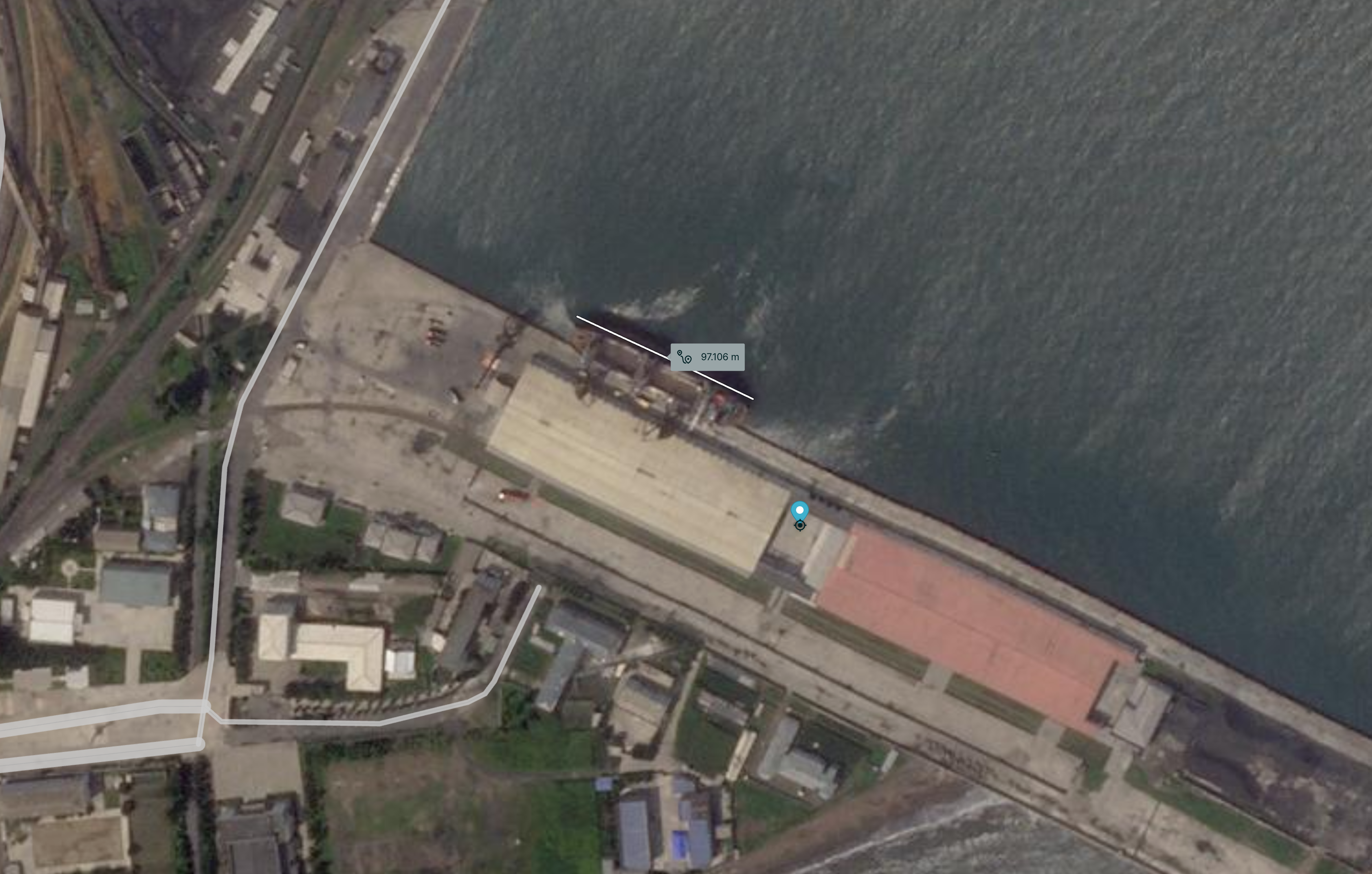
  News North Korean ship resurfaces near DPRK weapons hub after rare trip to RussiaKum Ya’s voyage raises questions about its role in military cooperation, after Kremlin’s defense chief visited Pyongyang 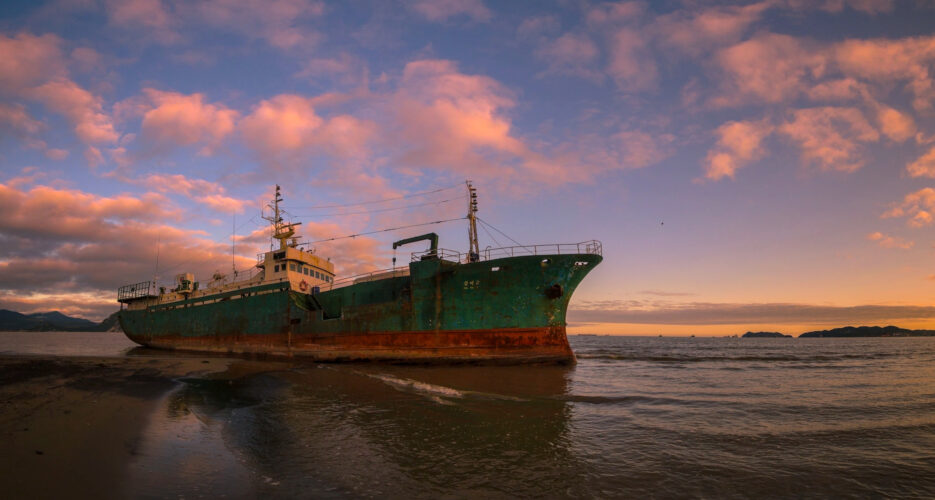 A North Korean freighter that made a rare cargo delivery to Russia last month has reappeared near a DPRK missile production hub, NK Pro analysis of vessel tracking data shows, raising questions about the ship’s role in military cooperation between Moscow and Pyongyang. A joint investigation by NK Pro and the Royal United Services Institute previously showed that the 6,843-ton Kum Ya (IMO 9004073) offloaded and picked up unidentified cargo at the Russian port of Nakhodka in early July, after sailing to key coal-smuggling hotspots in China and the North Korean city of Chongjin earlier in the year. The Kum Ya, which U.N. investigators have linked to coal smuggling, subsequently switched off its automatic identification system (AIS) transponder and went dark for nearly a month. Then on Aug. 8, the ship suddenly broadcast a signal just 2 km away from the North Korean city of Hungnam. The Kum Ya’s speed when it left Russian waters suggests it would have arrived in Hungnam around July 16, and PlanetLabs satellite imagery from July 24 shows a vessel with dimensions and features similar to those of the Kum Ya berthed at the port of Hungnam, strong evidence that it delivered cargo. 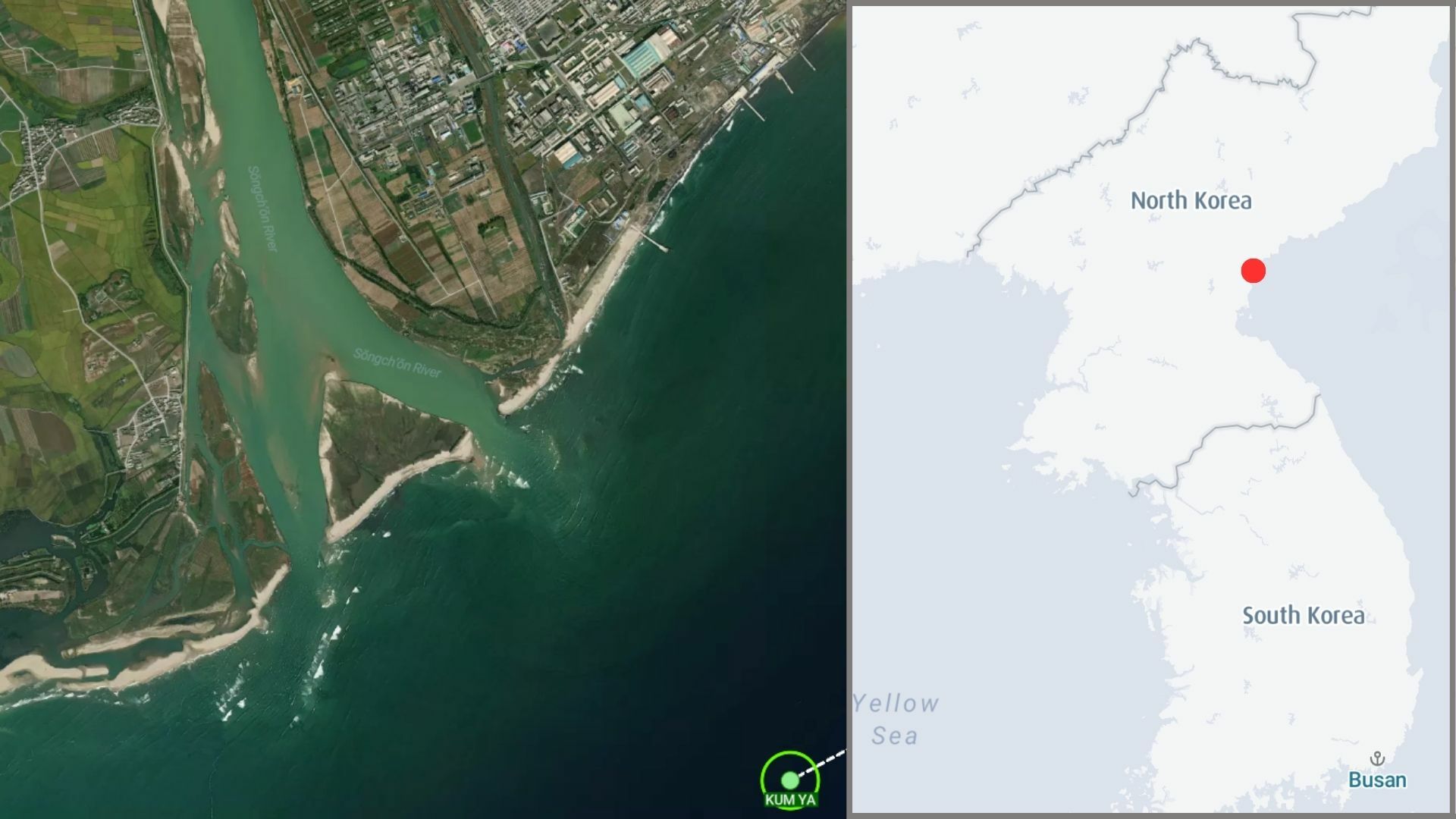
Experts told NK Pro that it remains unclear whether the North Korean vessel facilitated arms shipments between the two countries. The U.S. has repeatedly accused the DPRK of supplying rockets and other weaponry to Russia for its military campaign in Ukraine. But they noted that the Kum Ya’s recent voyages come as Pyongyang and Moscow have conspicuously bolstered ties in recent months, while raising the possibility that the freighter could be connected to a food for weapons scheme. HEART OF WEAPONS PRODUCTION Situated roughly halfway up North Korea’s east coast, Hungnam has a long history of military production dating back to the Japanese imperial period, with experts noting its integral role in North Korea’s missile program. The relatively small port city hosts a range of strategic locations, including missile engine testing facilities, the No. 17 Explosives Factory producing large solid-propellant rocket engines, the Hungnam Fertilizer Complex, the Pongung Chemical Plant and the Hungnam Chemical College. 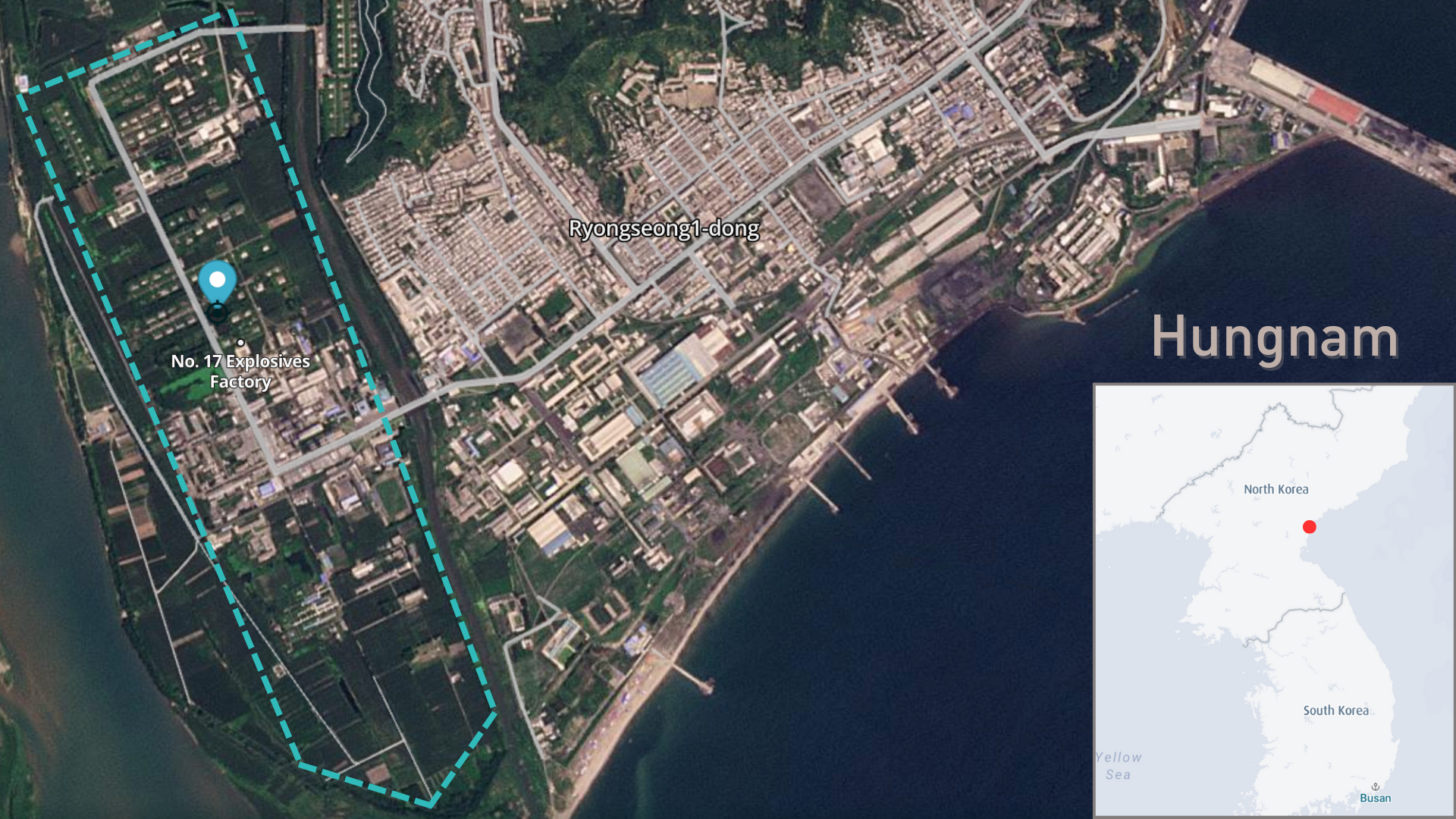 A 2020 report by the U.N. Panel of Experts flagged increased activity at the explosives factory in Hungnam the previous year, and Ankit Panda, Stanton Senior Fellow at the Carnegie Endowment for International Peace, assessed at the time that this could be related to mass production of North Korean missiles, including KN-23, KN-24 and KN-25. Hungnam is also where North Korea carried out two successive launches of the KN-25 and the first test of the KN-24 in Aug. 2019. Similarly, the Hungnam Fertilizer Complex has served as a likely key supplier of chemicals for nuclear and chemical weapons, as well as ballistic missile programs, according to the website Beyond Parallel. Panda of the Carnegie Endowment told NK Pro that it is not unusual for North Korea to “move arms by ship,” a practice he said Pyongyang employed under Kim Jong Il and “into the Kim Jong Un era” on a slightly smaller scale. He added that North Korea could exploit the two countries’ “sovereign waters” to conceal weapons shipments to Russia, “which could weigh in favor of a potential arms transfer here.” Still, Panda cautioned that it is hard to definitively conclude that the Kum Ya was directly involved in arms deals. Daniel Pinkston, a Seoul-based lecturer in international relations at Troy University, noted that the timing of the Kum Ya’s arrival in Hungnam roughly coincided with Russian defense minister Sergei Shoigu’s visit to North Korea, where he joined leader Kim Jong Un at a military parade and an arms exhibition. Arms transfers, he said, “would be consistent with Shoigu’s tour of weapons displays as reported in North Korean media.” However, Neil Watts, a former member of the U.N. Panel of Experts and senior associate at Compliance and Capacity Skills International, raised doubts about linking the Kum Ya’s visit with Hungnam’s military facilities. Solid-fuel propellants reportedly produced in the No. 17 Explosives Factory are “not on the list of war materials that analysts believe Russia needs for the war in Ukraine,” according to Watts. Instead, he said “the abundant war stocks of Soviet-era munitions held by North Korea, that Russia burns through every day such as artillery shells and rockets, are much more likely to be illegally exported to Russia in violation of the total U.N. arms ban.” Moscow is likely more interested in “long-range missiles and guidance electronics” and could rely on North Korea’s “illicit networks” to obtain such technology while skirting Western sanctions. FOOD FOR ARMS? The Kum Ya’s reappearance in North Korean waters also came amid an uptick in Russian food shipments, suggesting the ship could be part of a broader arrangement involving food provisions in exchange for military support. The Russian customs agency reported last week that the Siberian region of Kuzbass shipped 877.5 tons of wheat flour to North Korea in July, raising the total amount of Russian food shipments this year to around 7,300 tons. This has come amid concerns about the DPRK’s deteriorating food security situation. Watts said “grain exports” could serve as a form of payment for arms transfers under a military arrangement between the two countries. He also suggested that Russia could provide technical know-how to the DPRK, which would become apparent through “incremental leaps in North Korean ballistic missile performance in subsequent launches.” Pinkston assessed that “Russian grain for North Korean weapons seems to make sense,” stating that “both sides could benefit from such an arrangement.” North Korea and Russia have moved to bolster ties since last year, with Pyongyang voicing support for the Kremlin’s invasion of Ukraine and Moscow blocking the imposition of new sanctions against the Kim regime. Edited by Bryan Betts © Korea Risk Group. All rights reserved. |

October 17, 2026Oct 17, 2026

The ultimate resources for professionals working on North Korea
 SHARE
SHARE COPY LINK
 X
X MASTODON