  Investigations North Korean power plant suffered catastrophic failure before openingSatellite imagery reveals pressure blowout at hydroelectric Tanchon Power Station that has required months of repairs  A new North Korean hydroelectric power plant that was set to go online suffered a catastrophic failure earlier this year, NK Pro analysis of satellite imagery shows, requiring months of repairs and dealing a blow to state efforts to address persistent electricity shortages. DPRK state television reported in Nov. 2024 that the Tanchon Power Station in Hochon County, South Hamgyong Province, was nearing completion after years of delays. But satellite imagery shows that a catastrophic pressure blowout occurred at one of the facility’s surge tanks between June 26 and 29, destroying two switchyards and the smaller of the two generating stations. The anonymous North Korea watcher account @NobodyGerman on X was the first to describe the disaster at the power plant. Tanchon is the largest gravity-fed hydroelectric station in the DPRK, relying on water brought to the facility from the Samsu Reservoir at a higher elevation. The water runs through a 60-kilometer-long tunnel and powers two generating stations. Near the end of that tunnel network, just 410 meters from the turbine hall, is a surge tank that water can flow into. This enables operators to mitigate moderate changes in water pressure and volume, preventing damage to the penstocks and turbines from water hammer effects and other potentially serious issues.
This system failed on June 26-29, and water exploded out from the top of the surge tank, heavily eroding the hillside and washing away Tanchon’s two switchyards. It also destroyed Power Station No. 6, which satellite imagery shows was the first generating station to be completed. What caused the pressure eruption isn’t known, but it could have been from a failure of mechanical gates at the water’s intake point in the Samsu Reservoir or internal systems failures within the tunnel that allowed the water level to rise. Regardless, the damage was so severe that cleanup and repair efforts are still ongoing. 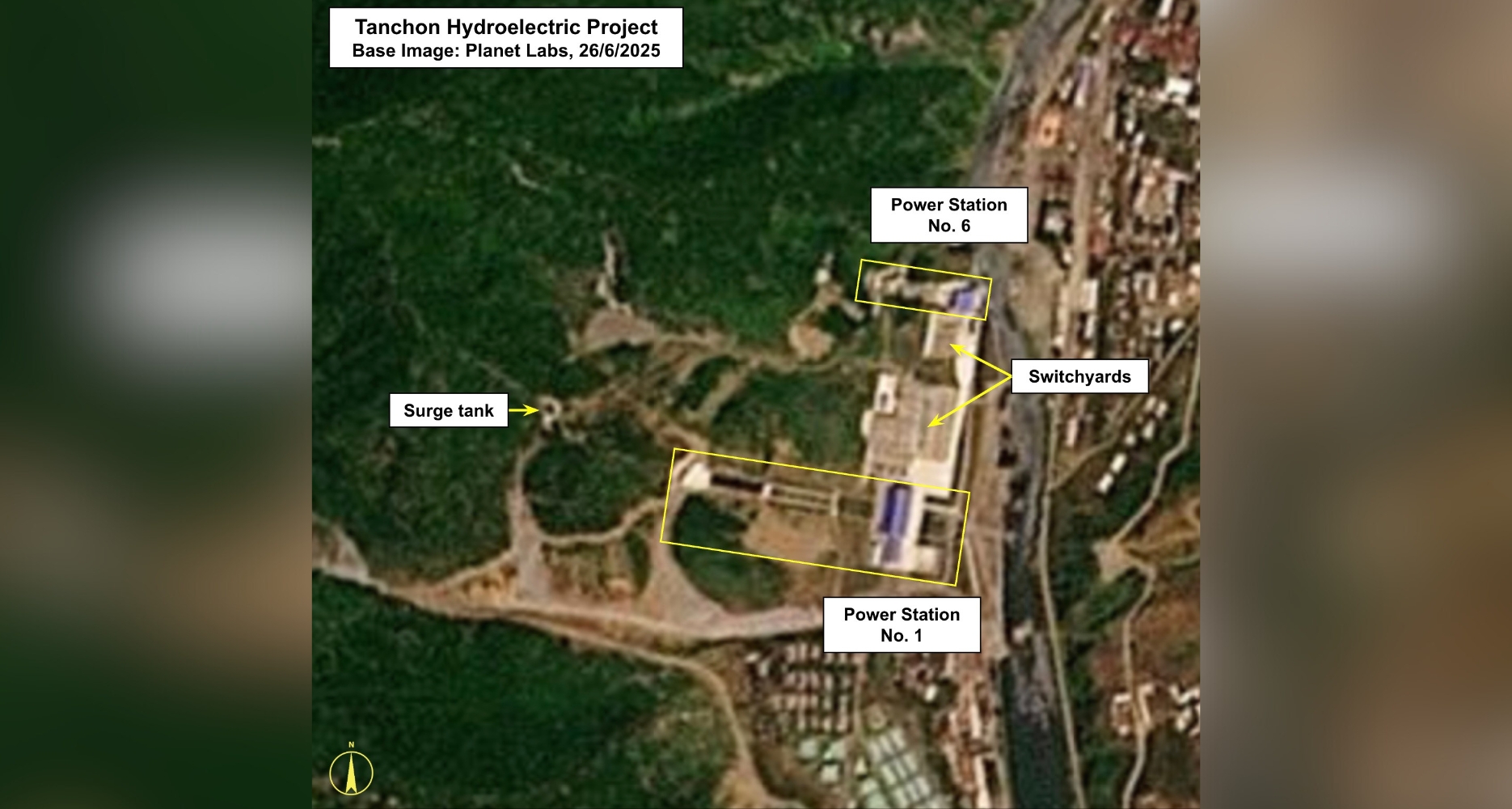
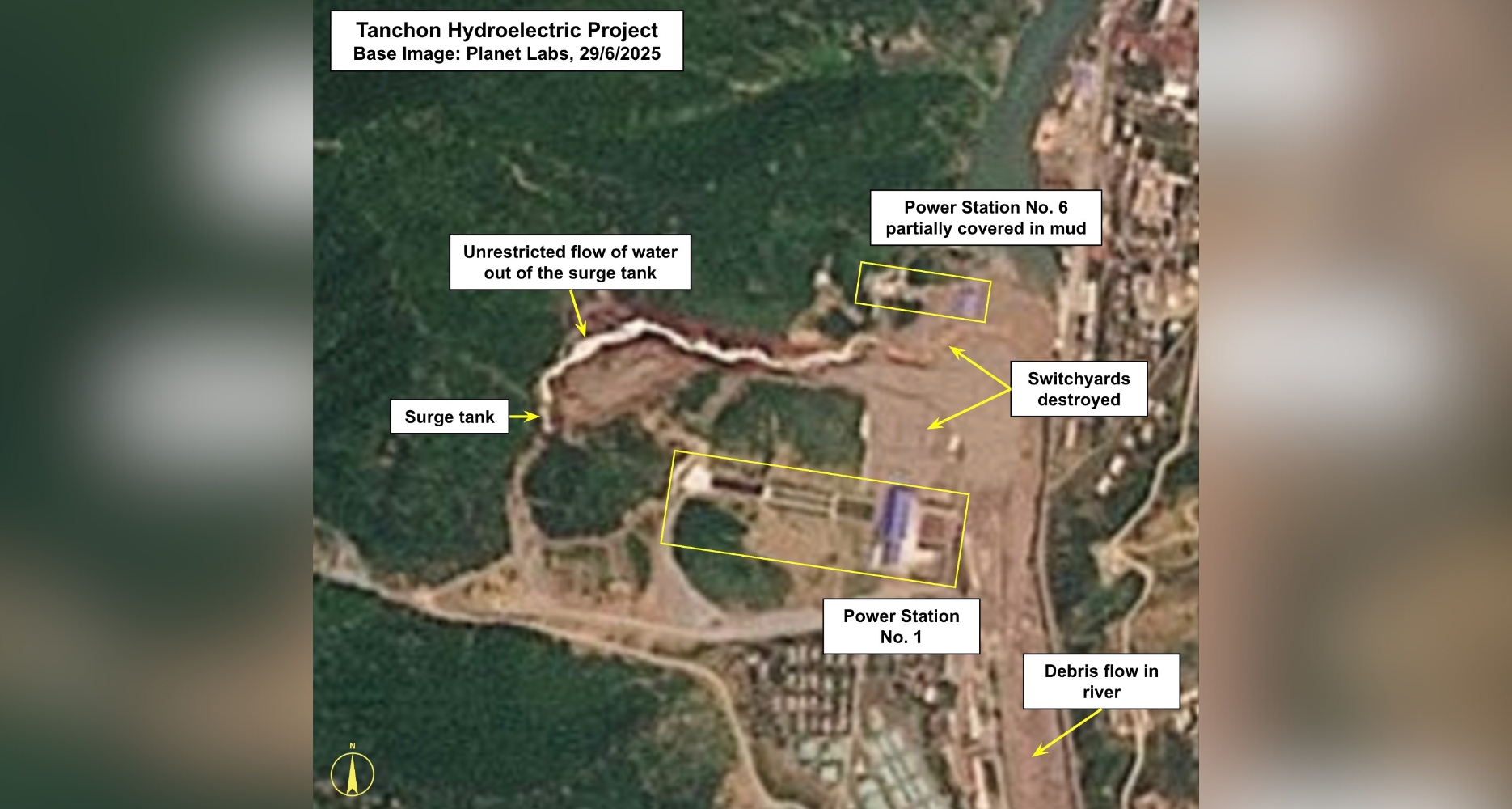
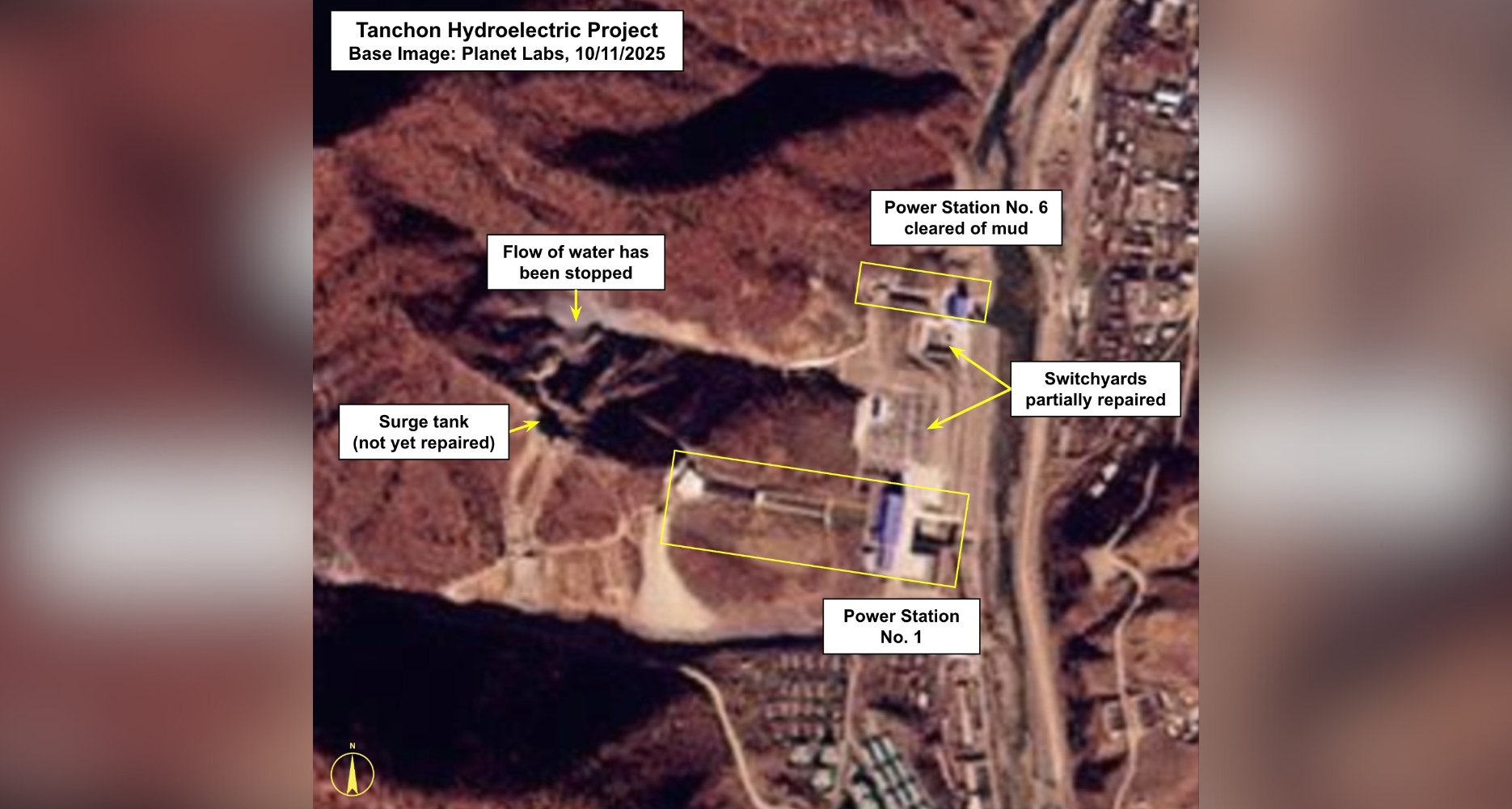
The latest high-definition imagery from Planet Labs shows that the larger of the two switchyards has been fully repaired, while the smaller one has been at least partially rebuilt. The area around Power Station No. 6 has also been cleared of debris, and repairs on the penstocks — large-diameter steel pipes that bring water from the main tunnel into the turbine hall — generally appear complete. The surge tank has also not been rebuilt, though the repairs will be straightforward. All told, the external repairs appear around 85% complete, suggesting that core infrastructure like the expensive turbines, which would likely need to be imported from China, avoided serious damage. 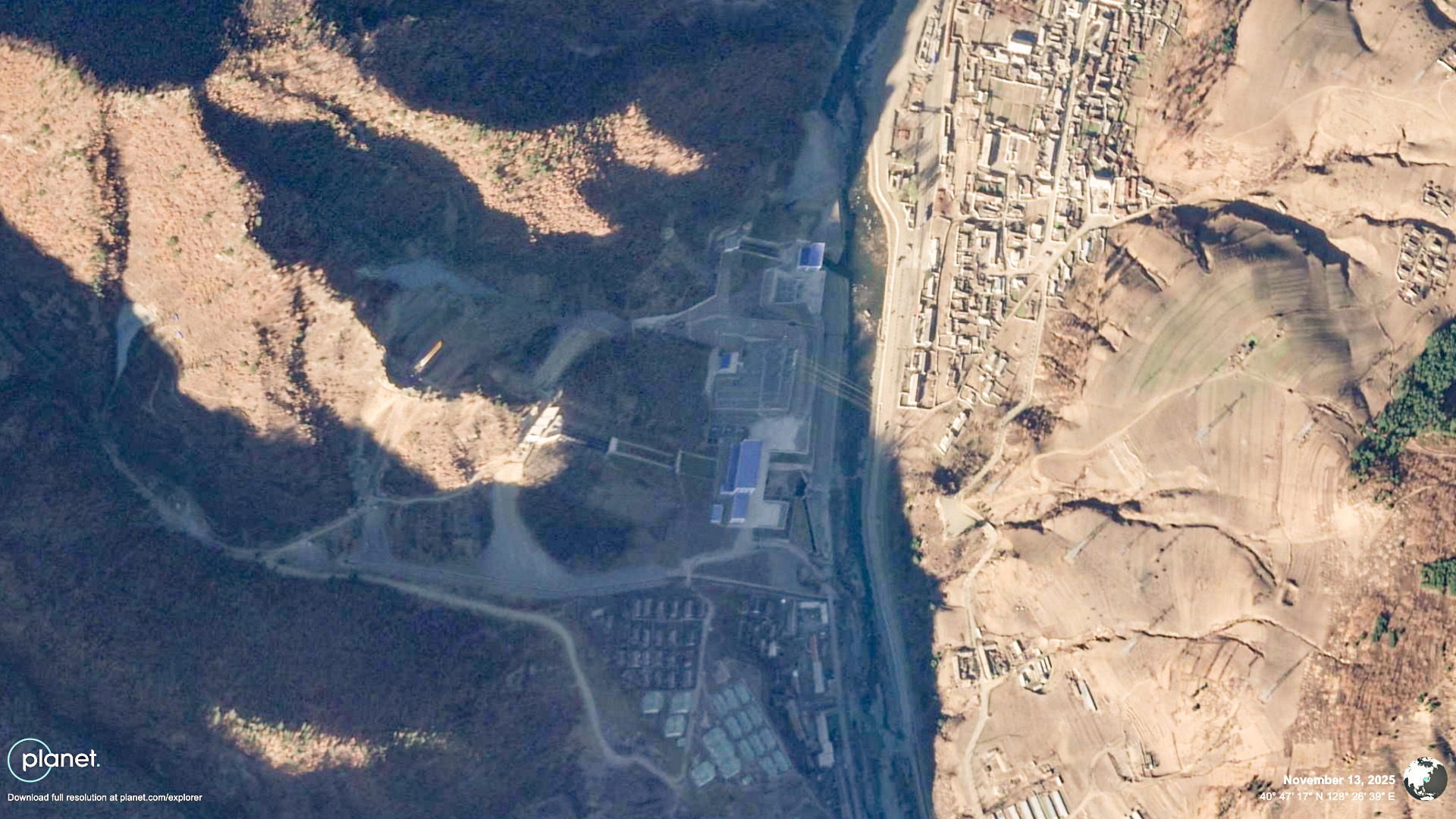 Still, the disaster has extended the yearslong delay in completing the country’s largest hydroelectric power plant: The project first broke ground in May 2017, and the first stage was originally scheduled for completion in Oct. 2020. State media has not reported on the setback at the power plant, claiming earlier this month that authorities are preparing to begin work on the second stage. Leader Kim Jong Un also mentioned the project in his speech to the Supreme People’s Assembly in September, stating that “major projects including the first stage of the Tanchon Power Station and the renovation of the Ryongsong Machine Complex expect the day of completion.” More recently, Kim opened the new Hoeyang Army-People Power Station in Kangwon Province last week, a rare visit to a power station that was aimed at demonstrating his continued commitment to fixing the “electricity problem” that holds back development in rural areas. As shown by the new Pyongyang General Hospital, technologically complex projects routinely face delays due to a lack of technical expertise and problems importing equipment. These issues are likely behind the abandonment and eventual dismantlement of a planned power plant in Kangdong, and could impact the ongoing expansion of a power plant in Pyongyang. North Korea has long suffered from chronic electricity shortages that lead to frequent blackouts, especially in provincial areas. While state media has promoted the opening of new power stations in recent years, the country remains shrouded in darkness compared to its neighbors. 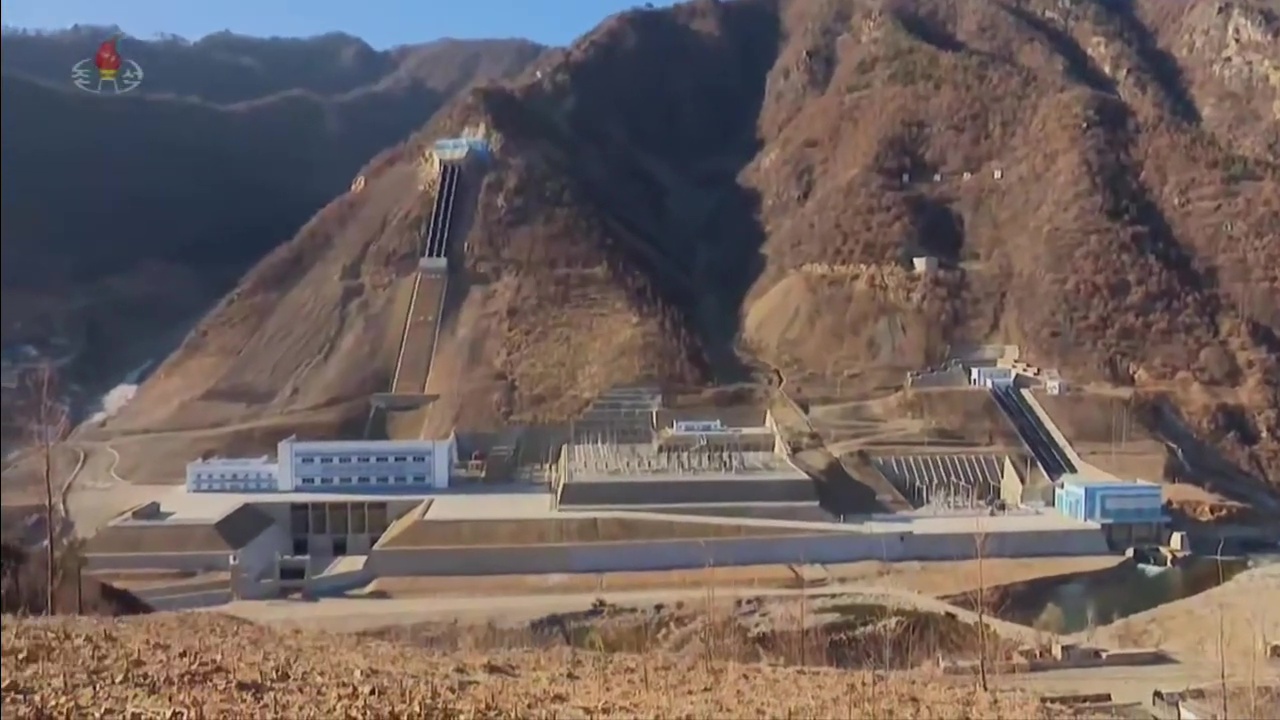

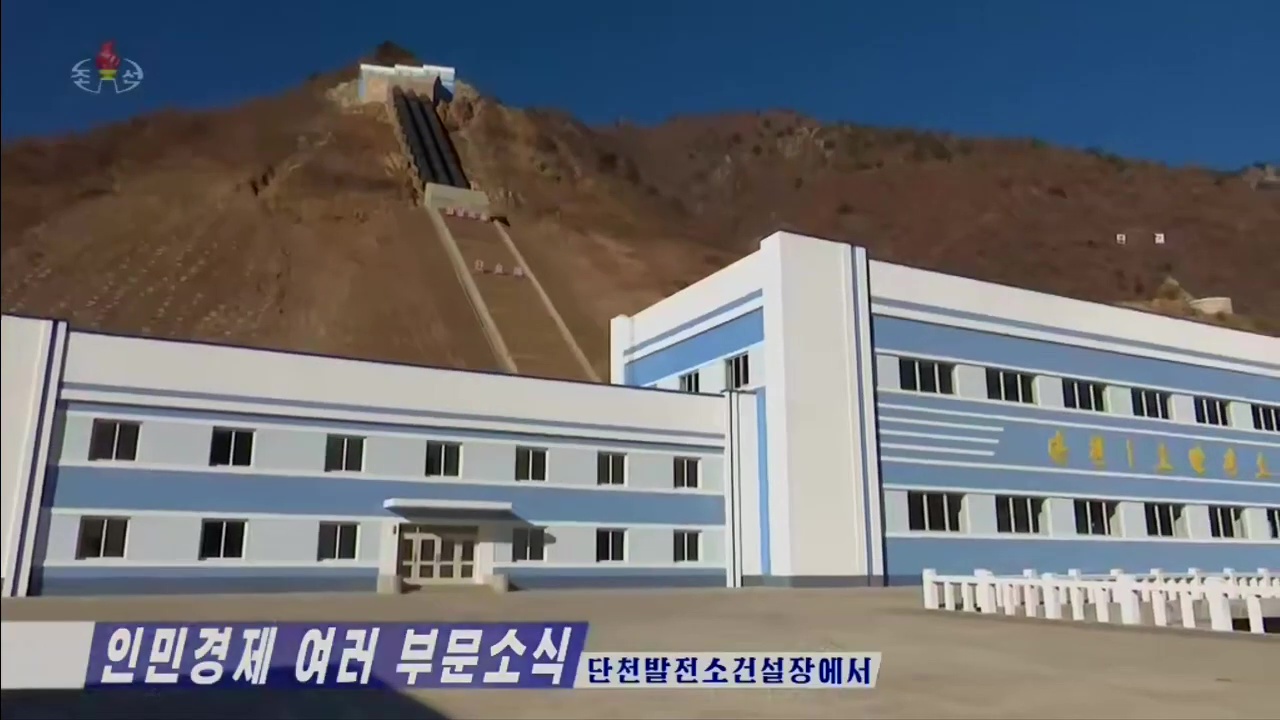
EAST PYONGYANG THERMAL POWER PLANT Pyongyang is one of the only bright spots on the North Korean nighttime map, and NK Pro analysis shows that work continues to increase power supplies to the capital. North Korea began expanding the East Pyongyang Thermal Power Plant in Oct. 2020 to help alleviate chronic shortages in the city, home to the country’s elite and the site of major apartment construction in recent years. However, there has still been minimal progress more than five years after work began. 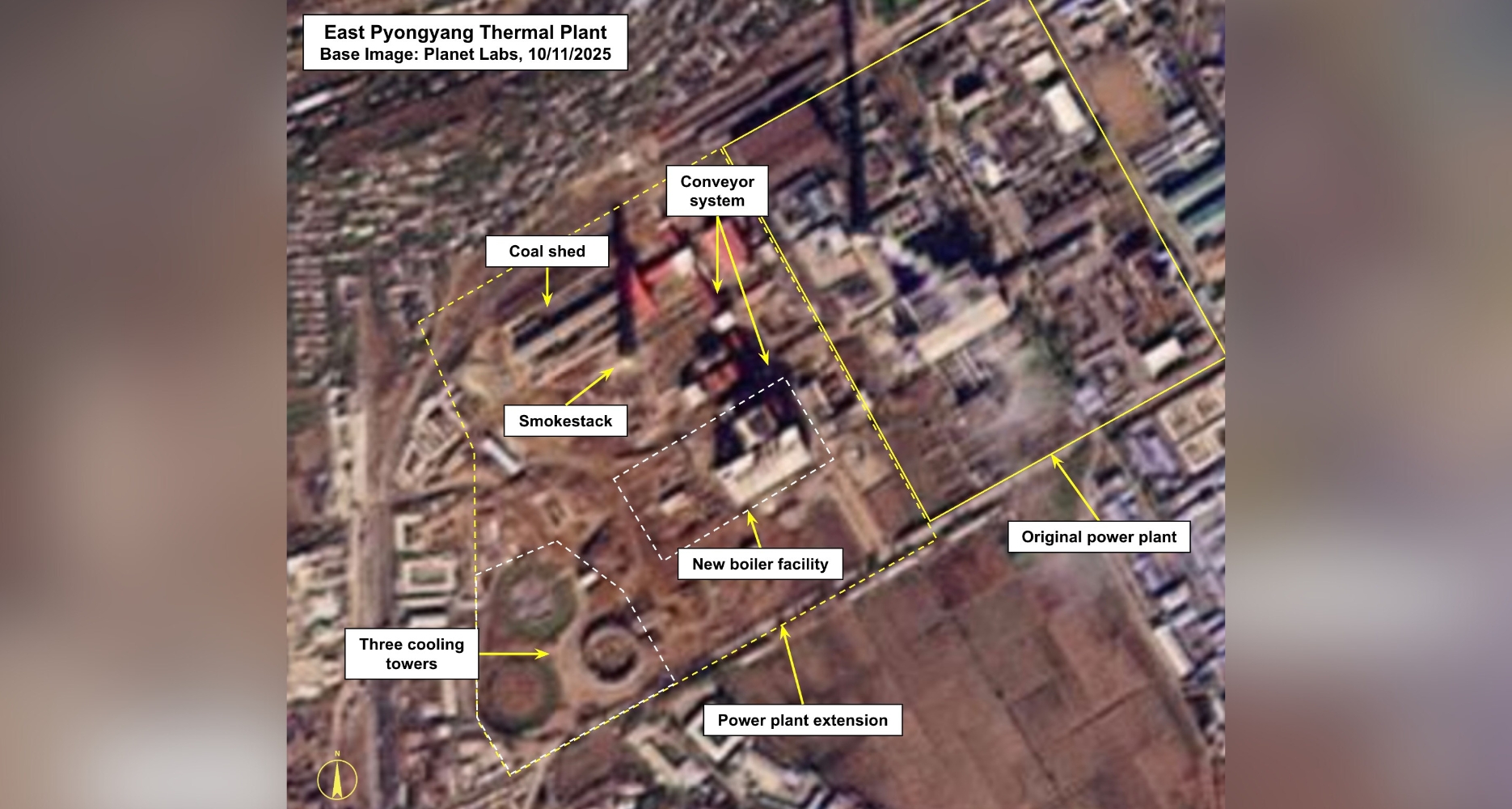
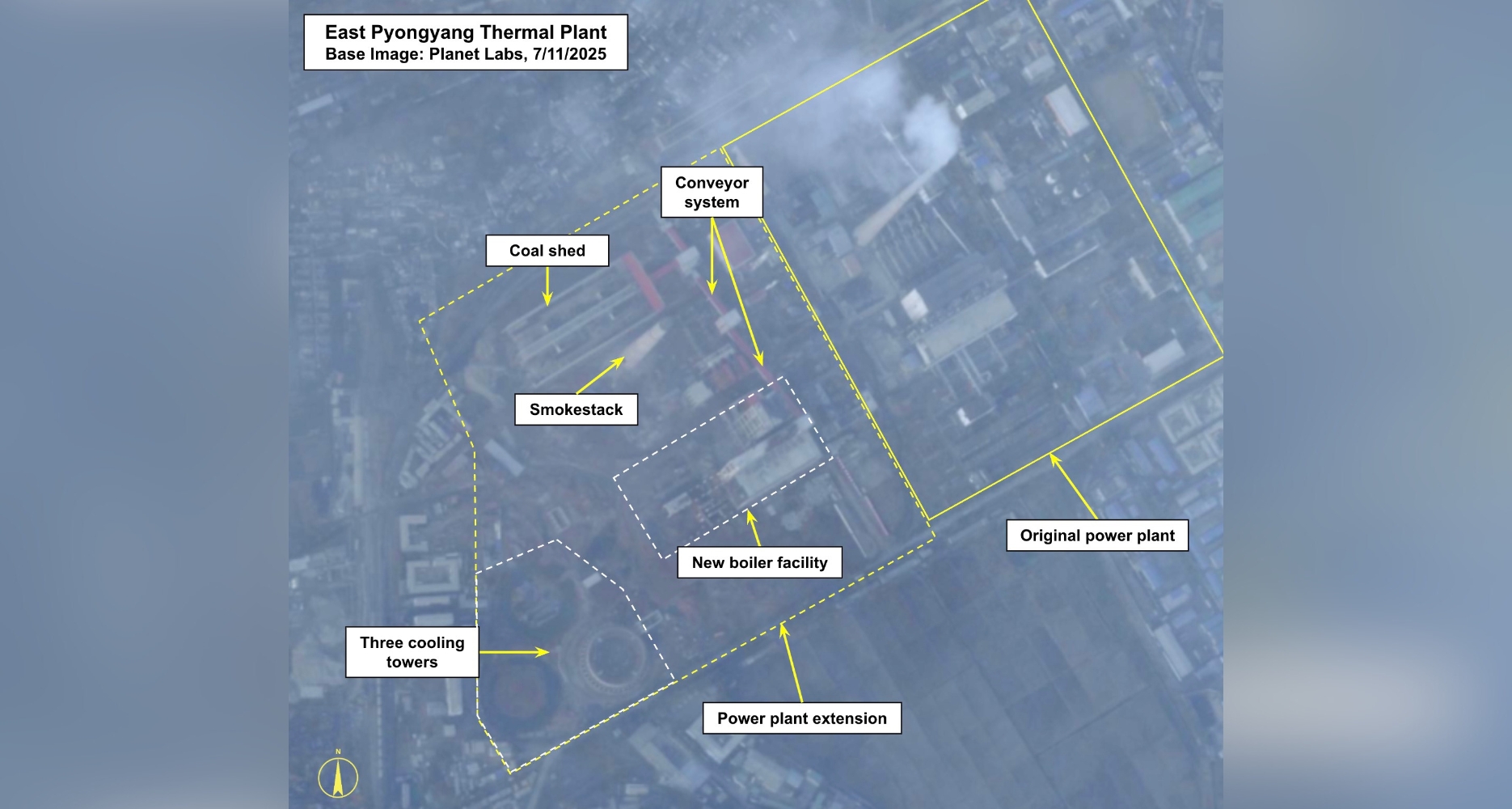
Satellite imagery shows that workers dug the foundations for three new cooling towers by 2022, while laying the foundations for various new buildings by early 2024. High-resolution satellite imagery from Nov. 7, 2025 also shows that construction on multiple parts of the expansion is ongoing. This includes a 170-meter-long coal shed, a 300-meter-long conveyor system that will bring coal to the future generating station, space for up to four more boilers (only one of which has seen significant construction) and the three cooling towers. Of these, only the conveyor system appears externally completed, and only one of the cooling towers has been partially built. Nautilus Institute Senior Associate David Von Hipple previously told NK Pro that the expansion of the East Pyongyang Power Plant could increase North Korea’s total electricity output by 3-6 percent from 2020 levels, assuming the expansion can produce an additional 400-800 gigawatt-hours (GWh) of energy per year. However, he cautioned that the plant already struggled to maintain an adequate water supply to operate at capacity before the expansion, while predicting that the upgraded station might not be fully operational for another 5-10 years. Edited by Bryan Betts © Korea Risk Group. All rights reserved. |

October 18, 2026Oct 18, 2026

The ultimate resources for professionals working on North Korea
 SHARE
SHARE COPY LINK
 X
X MASTODON