
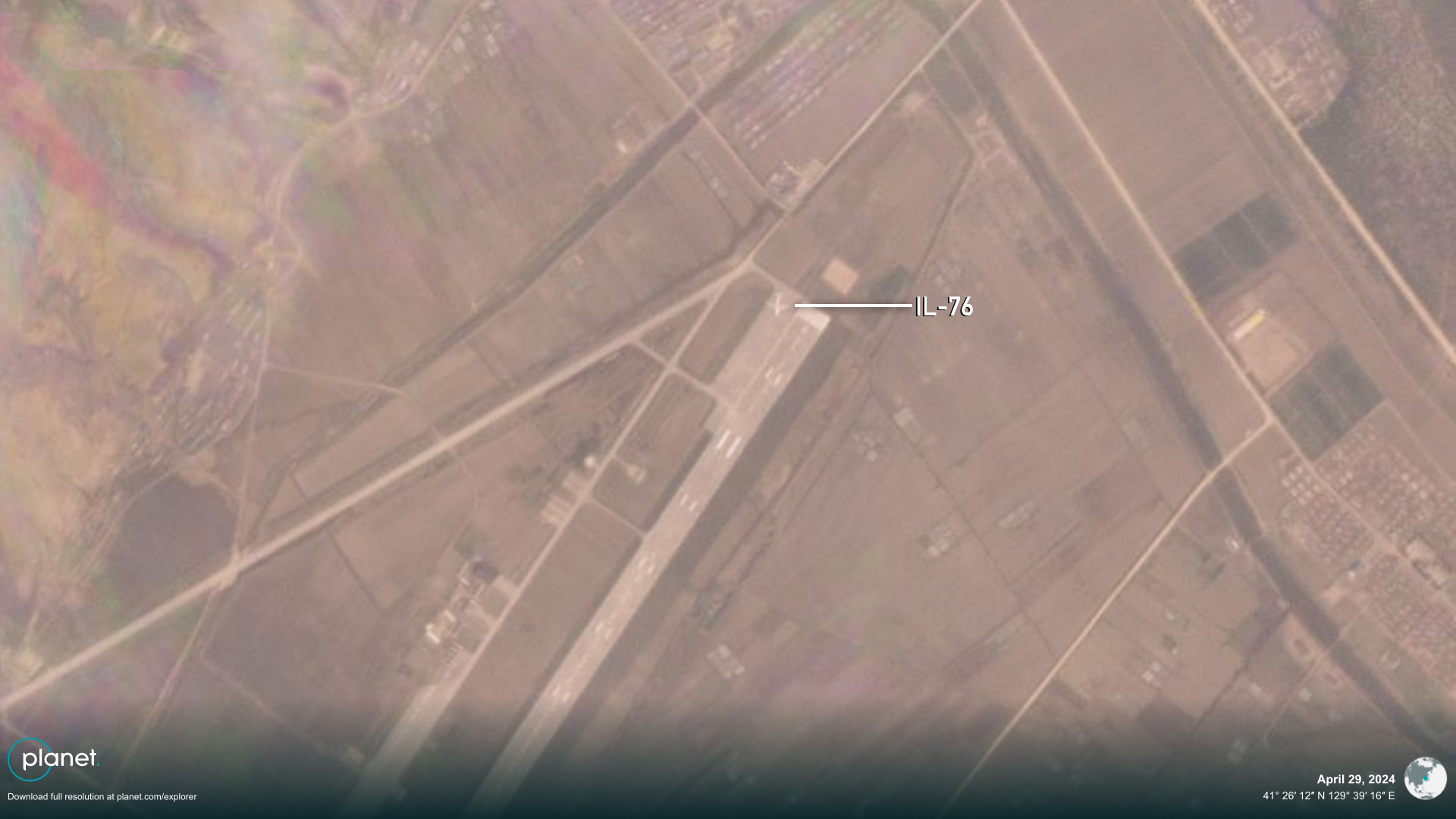
  Analysis North Korean Il-76 cargo planes make rare flights to northeast coastFlights point to possible urgent military shipments, as Il-76 conversion to early warning aircraft enters new stage 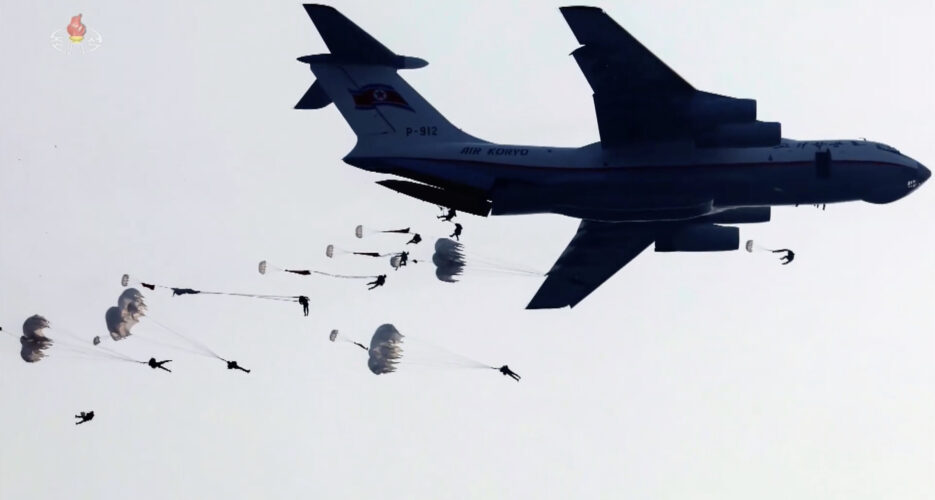 North Korea’s Ilyushin Il-76 cargo planes have made multiple trips to the northeast coast in the last month, according to NK Pro analysis of satellite imagery, a rare occurrence pointing to urgent shipments, possibly of military-related items. Work to convert one of the DPRK’s three Il-76s into a military detection and warning aircraft also resumed one month ago, Planet Labs imagery shows. The activity comes as national carrier Air Koryo has resumed normal operations this year with flights from Pyongyang to China’s Beijing and Shenyang and Russia’s Vladivostok, after grounding its planes throughout the pandemic. Unannounced military flights from Russia have also continued sporadically in recent months. CARGO TO THE COAST An Air Koryo Il-76 showed up in Planet Labs imagery at Orang Airbase (also called Chongjin Airport) in the northeast of the country on Nov. 6 and again on Dec. 9, while one was missing from images taken around the same time on each date at Pyongyang International Airport. Though domestic Air Koryo flights typically are not picked up by flight-tracking services, an NK Pro review of almost daily imagery of Pyongyang airport suggests such flights are rare. North Korea has just three Il-76 cargo planes, which have appeared stationary around the Pyongyang airport or inside a repair hangar there on almost all days with imagery this year. One also appeared at Orang on April 29 this year, and images of Orang on all three dates were taken just after 11:20 a.m. 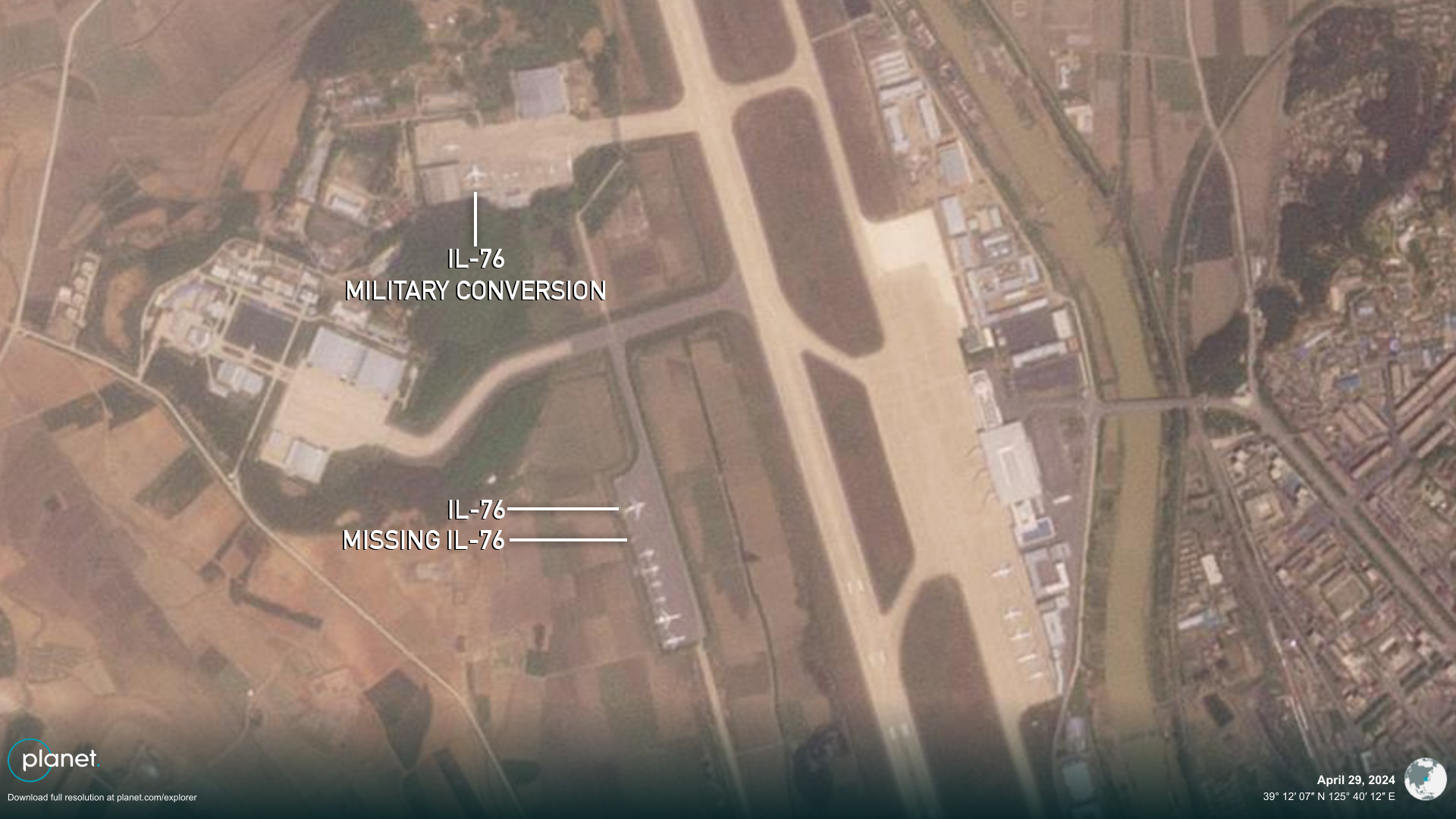
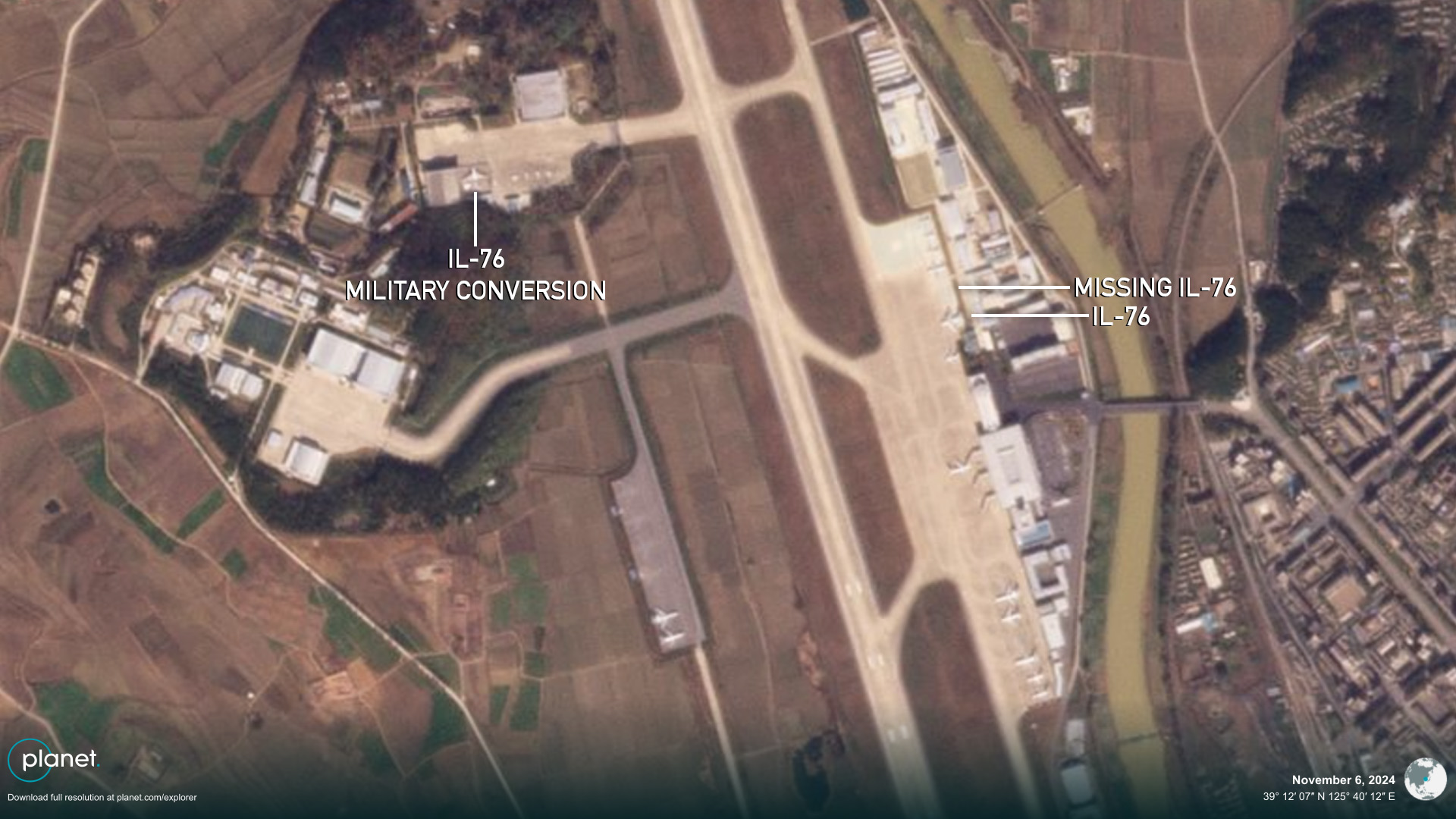
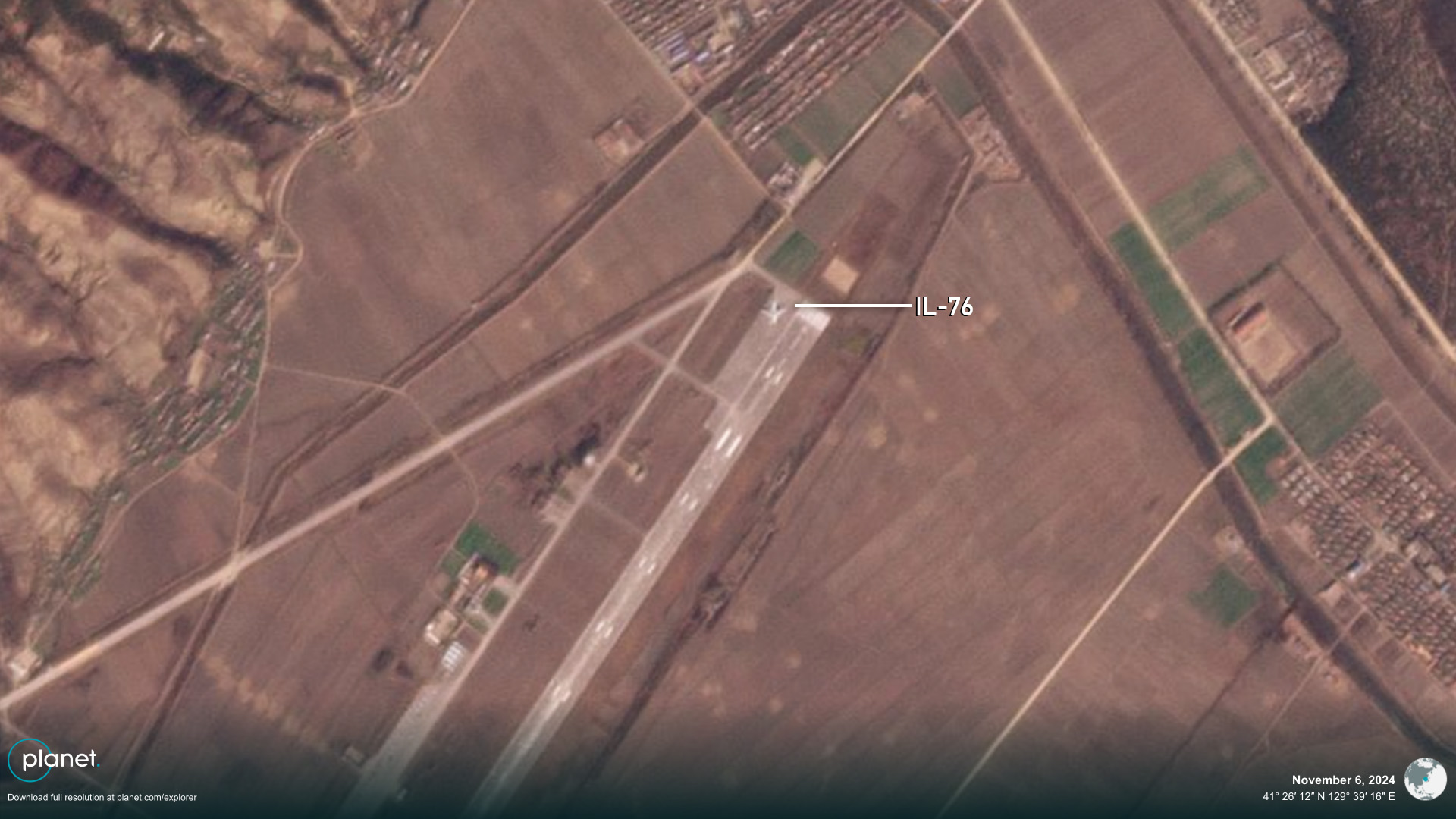
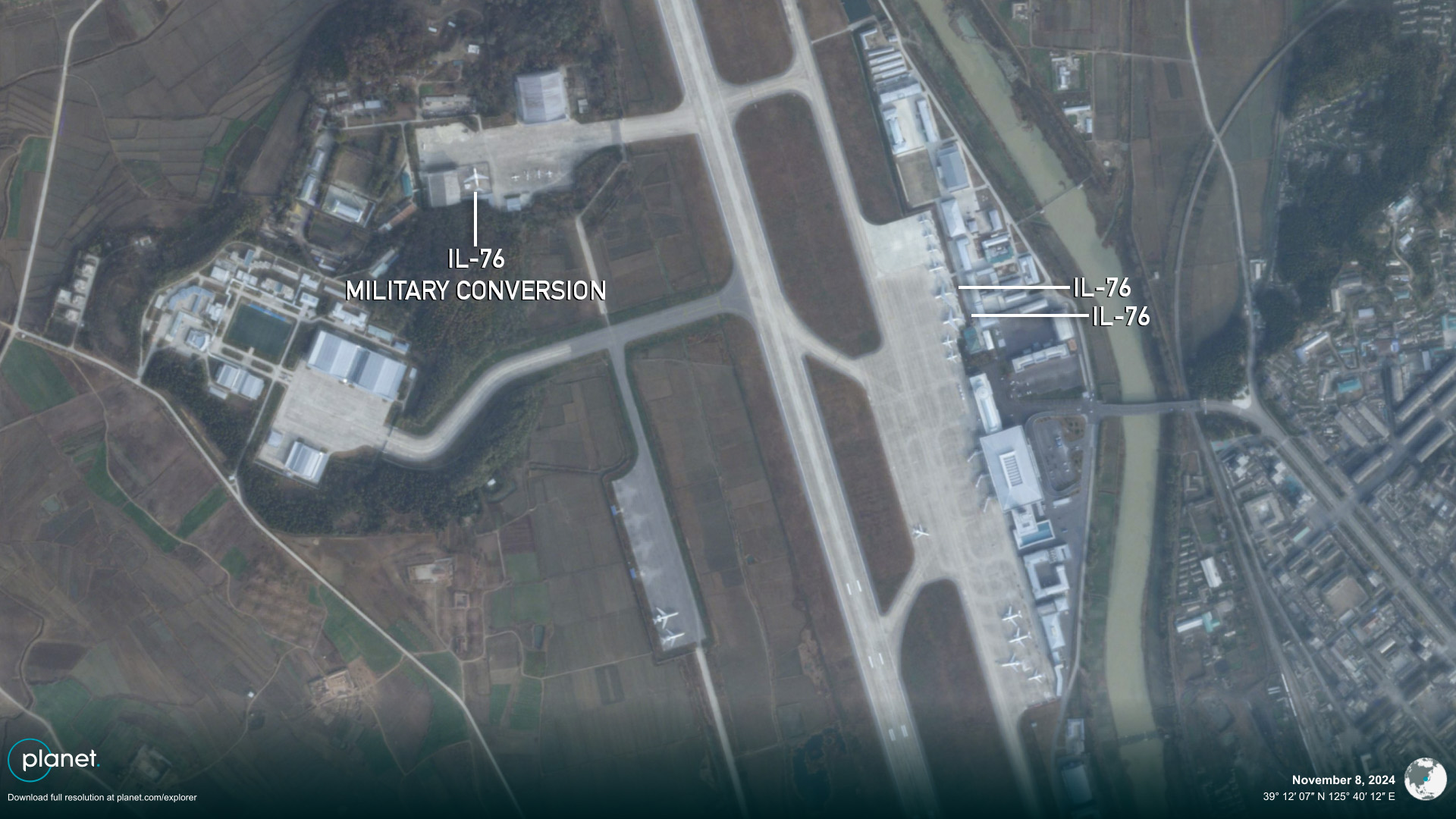
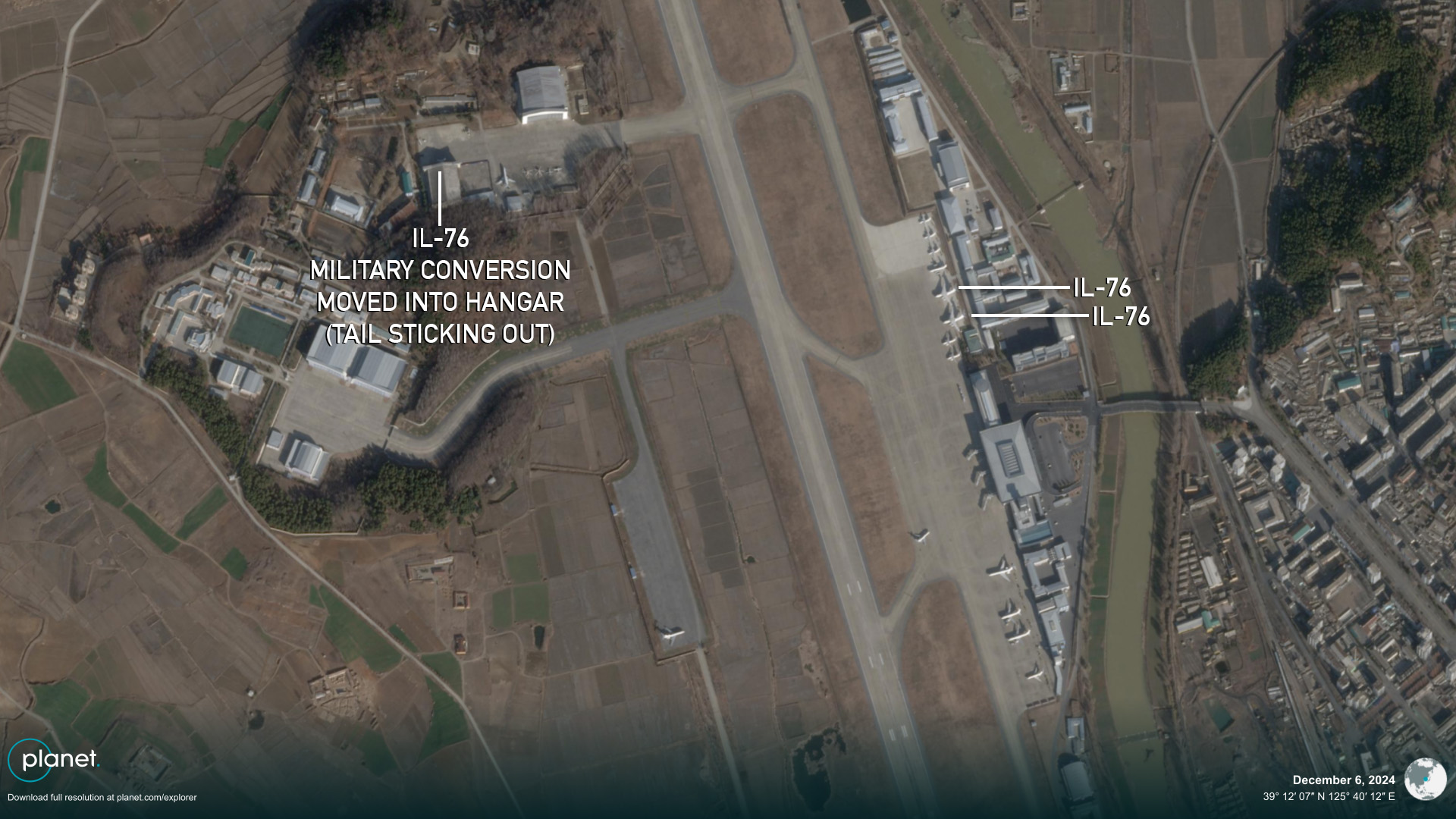
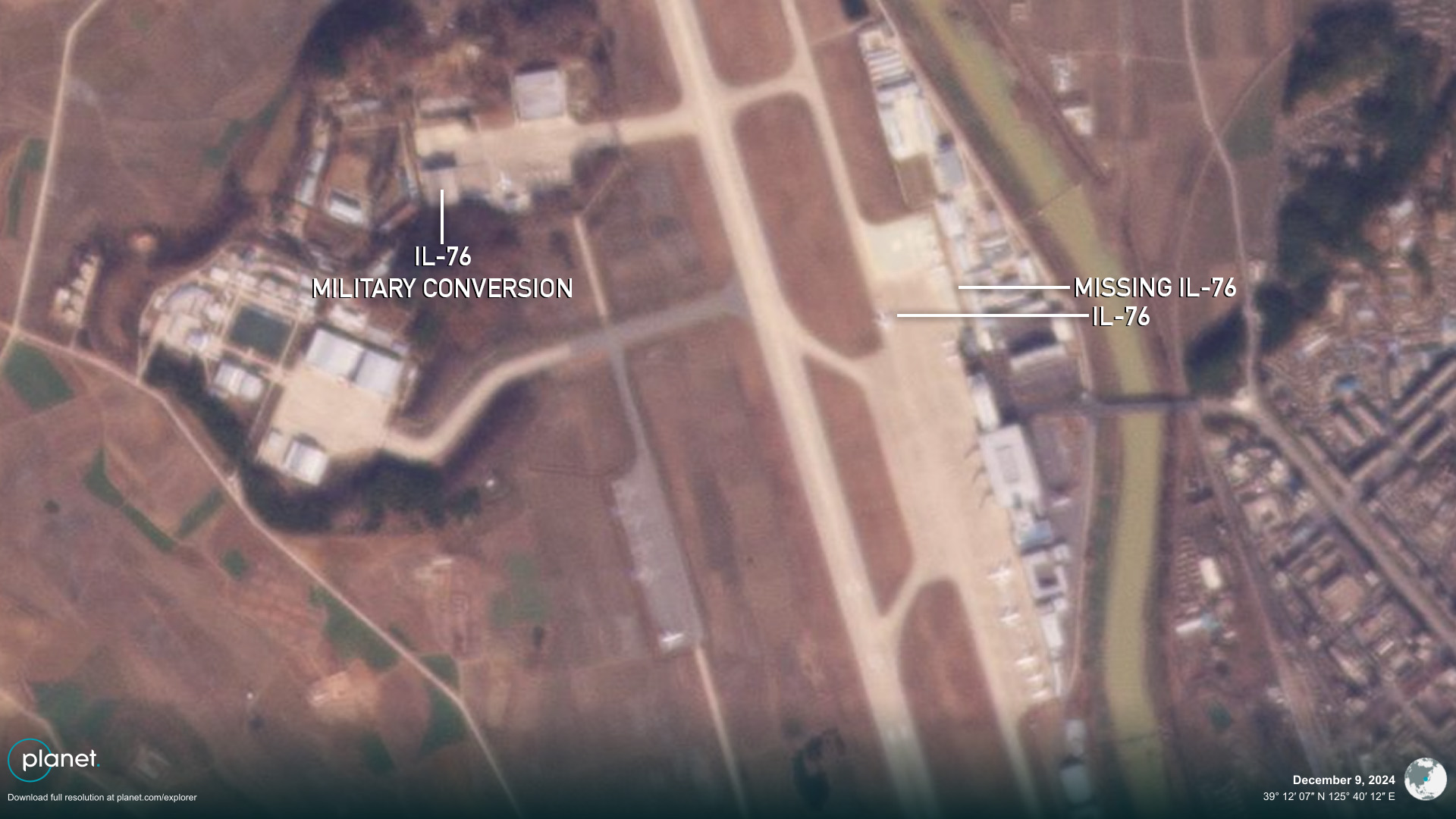
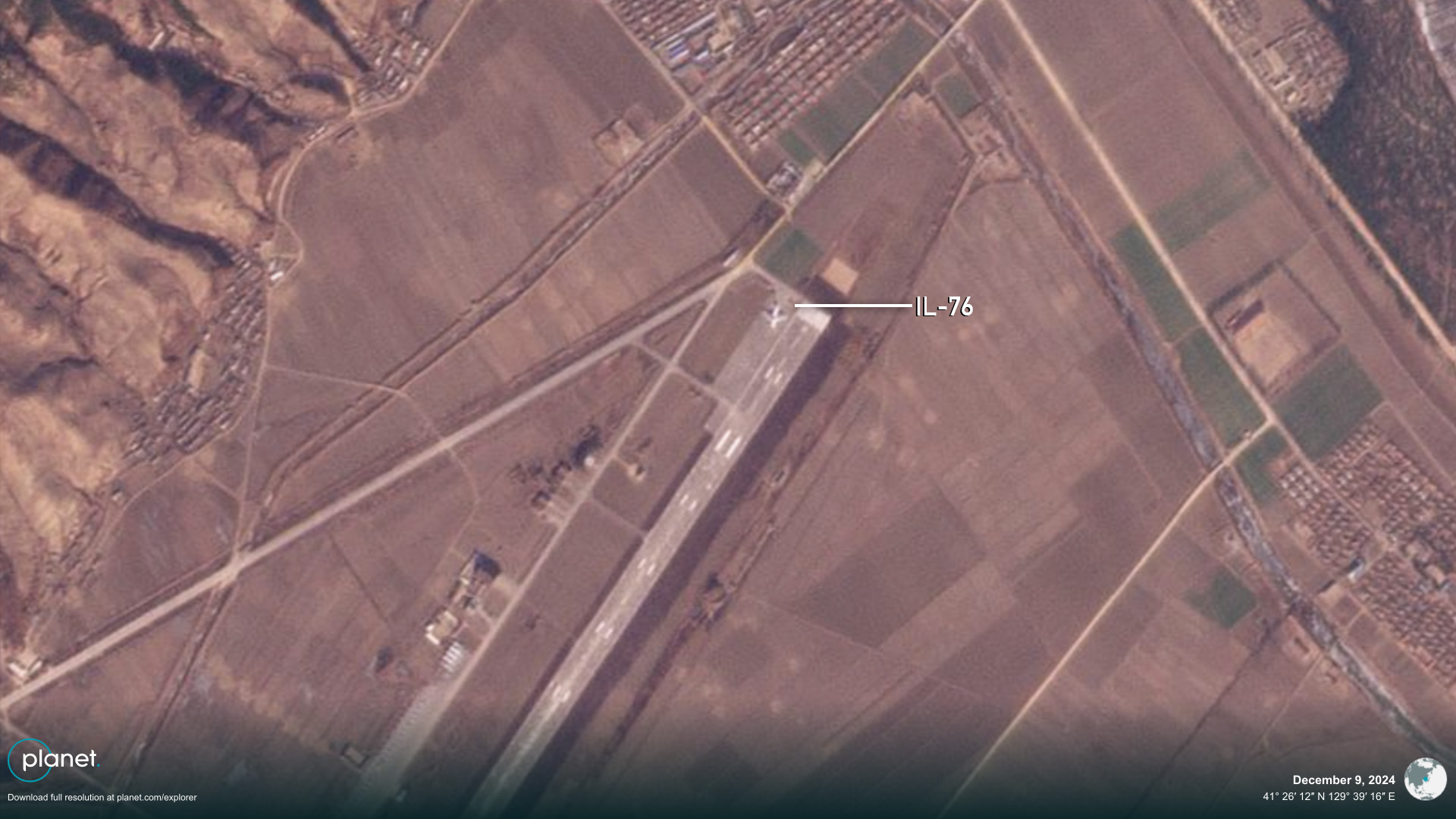
Since there is well-established and regular rail freight service between Pyongyang and Chongjin, it is likely that the cargo planes were used to transfer highly urgent or sensitive items, or even troops. One possibility is weapons or arms production-related items from or destined for Russia, as Russian ships involved in weapons trade with the DPRK have continued to frequent Rason port just to the north of Chongjin. These could be missiles from factories in the northwestern region of North Korea being sent to Russia for use in the country’s war on Ukraine, or, conversely, equipment or other kinds of aid dropped off by Russian cargo ships. Trains would ostensibly operate between Rason port and the station near Orang Airbase, but higher-resolution imagery is required to detect cargo operations there connected to flights. The Il-76 flights could have also carried North Korean soldiers on their way to Russia to participate in attacks on Ukraine, especially since state media revealed the planes were being used by the military during paratrooper drills on March 15 this year. South Korean intelligence claimed Russian naval vessels picked up DPRK soldiers from Chongjin Port in early October, suggesting they would be moved by train from Orang to the port in such a scenario. The ROK National Intelligence Service (NIS) also said Russian Antonov An-124 cargo planes — much larger than Il-76s — made multiple trips between Vladivostok and Pyongyang, implying they were related to the transportation of troops but without offering dates or other details. NK Pro detected one such flight in March. Overall, from the start of the pandemic in Jan. 2020 until Air Koryo resumed more operations in 2023, Orang Airbase has appeared mostly quiet, with only rare flights related to major political events like war veterans conferences in late July. But activity has picked up this year to a similar level as before the pandemic, with planes appearing at the northern apron near the small terminal building on 25 days of available Planet Labs imagery, compared to 32 in 2019. Il-76 cargo planes appeared at Orang on Jan. 31, 2020 and Feb. 21, 2019, but overall did not make regular daytime flights in recent years. 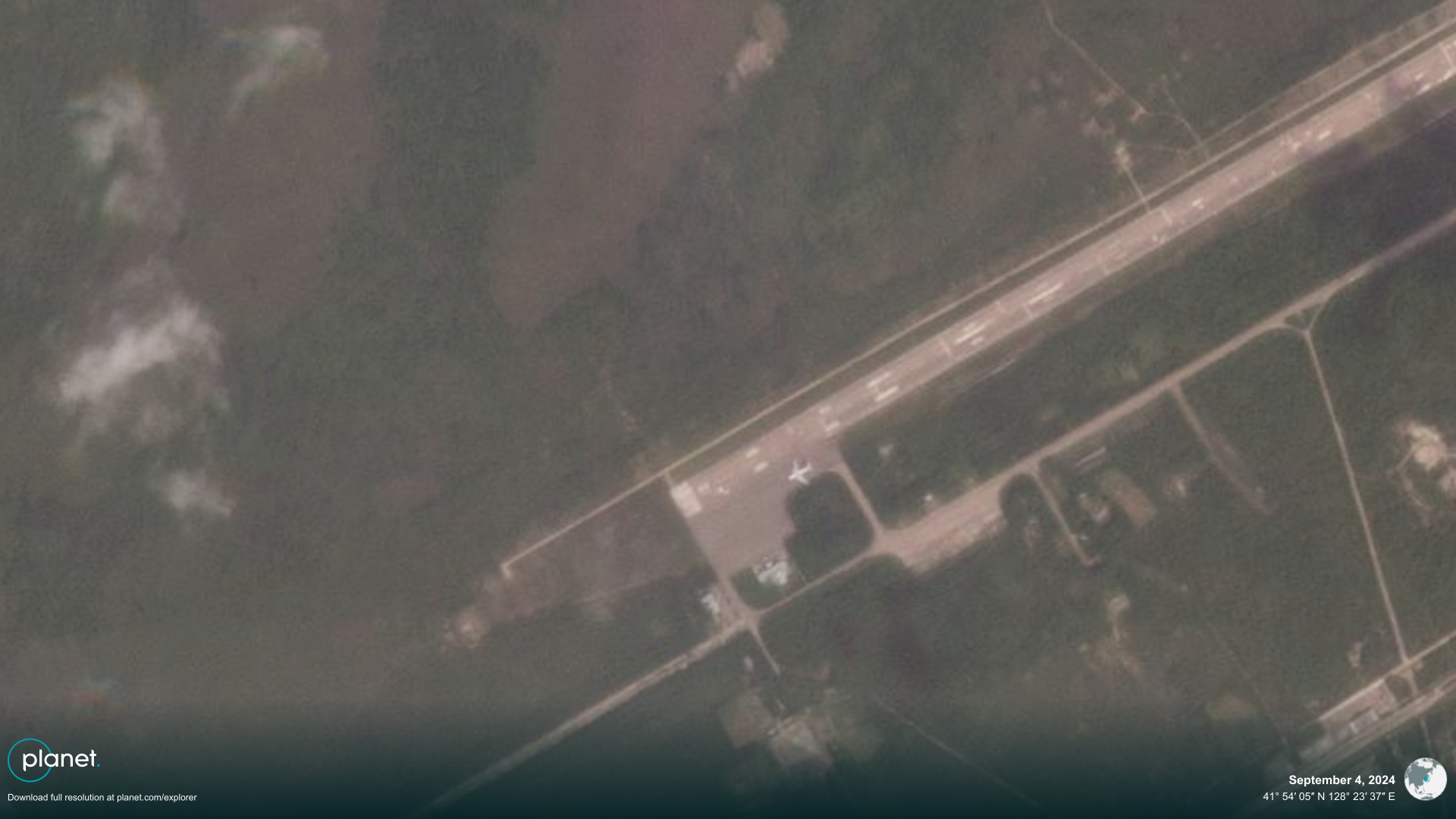 As for other airports, Air Koryo has only typically flown to Samjiyon and Wonsan Kalma airports in recent years, though Uiju Airbase also recently reopened and could start to service flights again. Planet Labs imagery shows a likely Il-76 at Samjiyon Airport on Sept. 4 this year. Given its remote location unrelated to foreign trade, it’s likely it was used for a local urgent shipment or personnel movement, as was probably the case when one showed up there in March 2023 after severe snow storms. EARLY WARNING AIRCRAFT North Korea started to convert one of the three Air Koryo Il-76 cargo planes into an Airborne Warning and Control System (AWACS) or airborne early warning (AEW) aircraft toward the end of last year. Now, NK Pro analysis of Planet Labs imagery shows that it finally reentered the hangar between Nov. 9 and 11 and remained there as of Dec. 13, indicating the project has received a fresh injection of resources — possibly thanks to Pyongyang’s ongoing military cooperation with Russia.
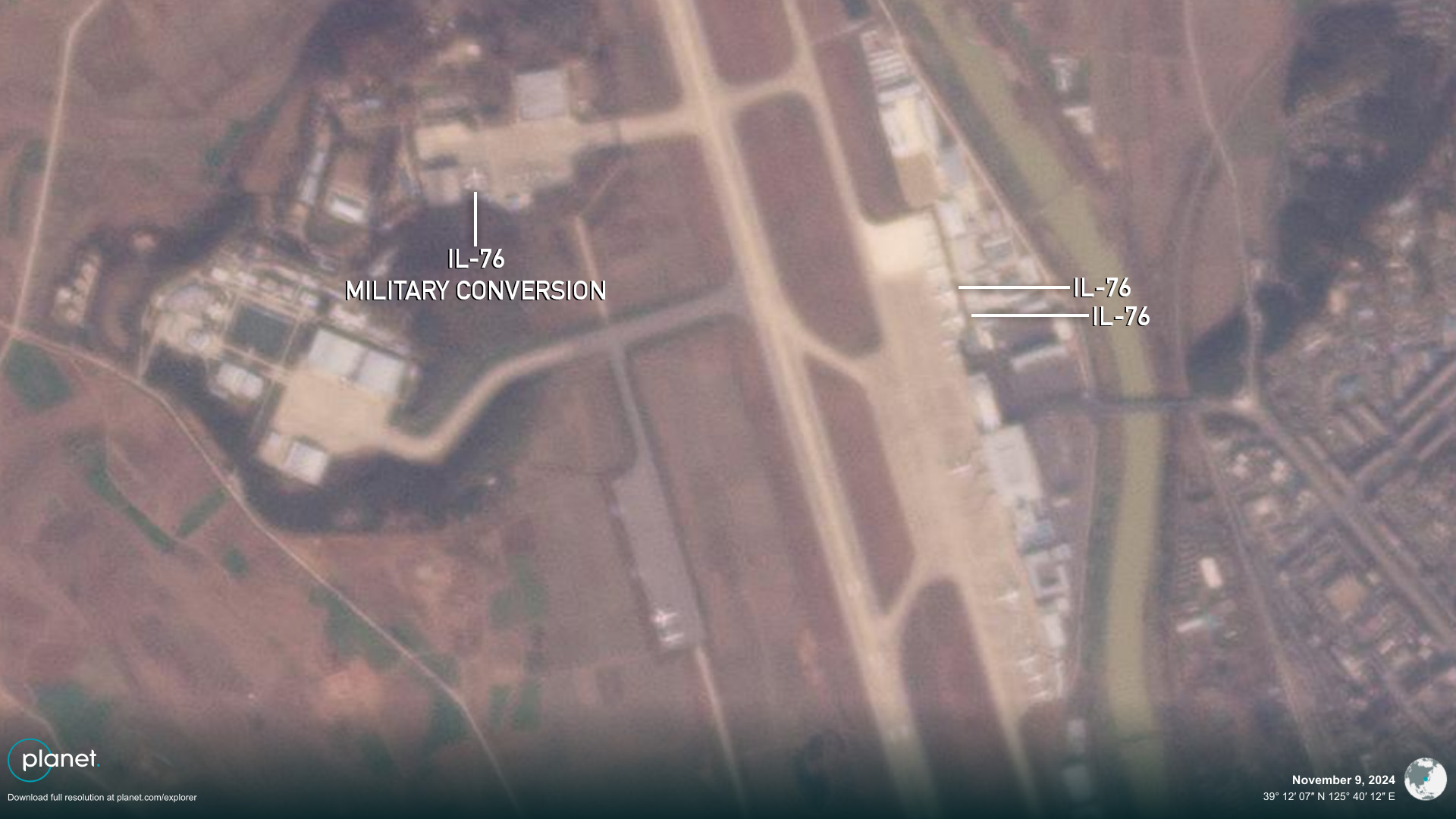
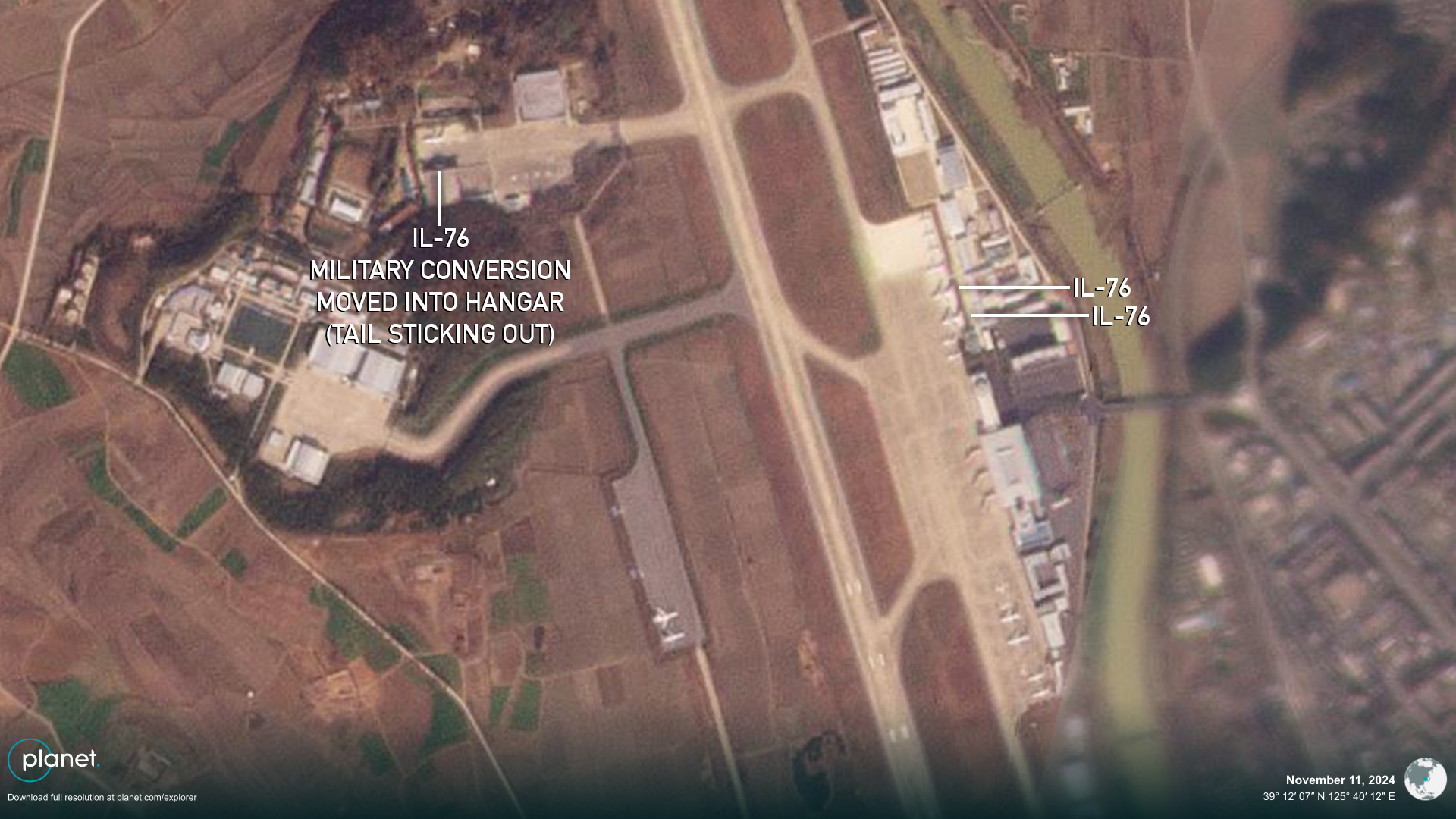
The work has appeared slow, with the plane not moving from a fenced-off spot next to a repair hangar at the Pyongyang airport for most of the year. Support arms likely for a fuselage-mounted radar dome were installed by late last year, but not yet the radar itself. It’s unclear what interior work has been done. The plane is the Air Koryo Il-76 with either tail number P-913 or P-914, since one of the two used during the paratrooper drills in March appeared with tail number P-912. The other did not appear clear enough to determine its tail number in state media photos of the drills. These two planes have also appeared inside the repair hangar multiple times this year, but with no signs of similar conversions. Edited by Alannah Hill © Korea Risk Group. All rights reserved. |

October 28, 2026Oct 28, 2026

The ultimate resources for professionals working on North Korea
 SHARE
SHARE COPY LINK
 X
X MASTODON