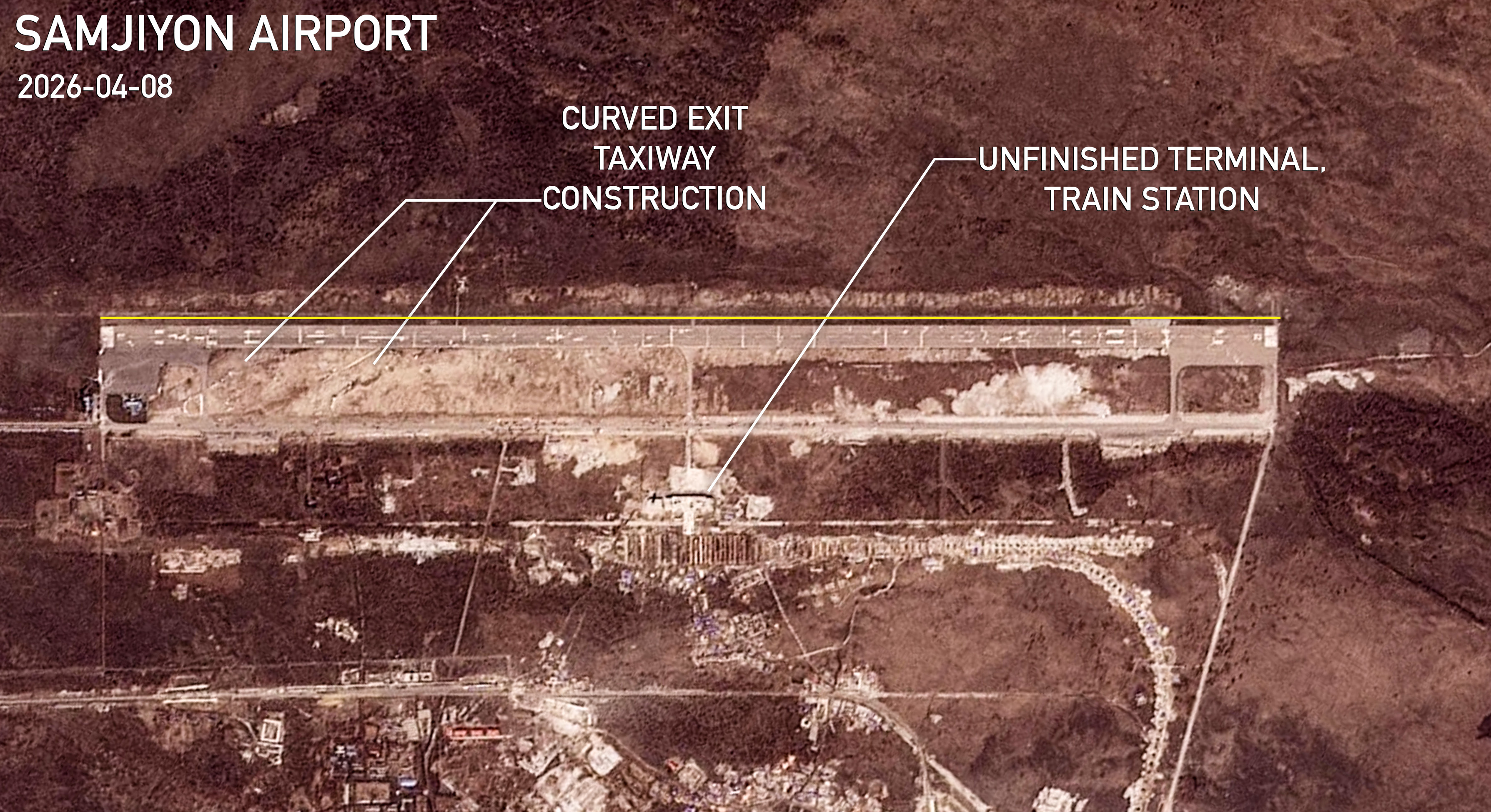
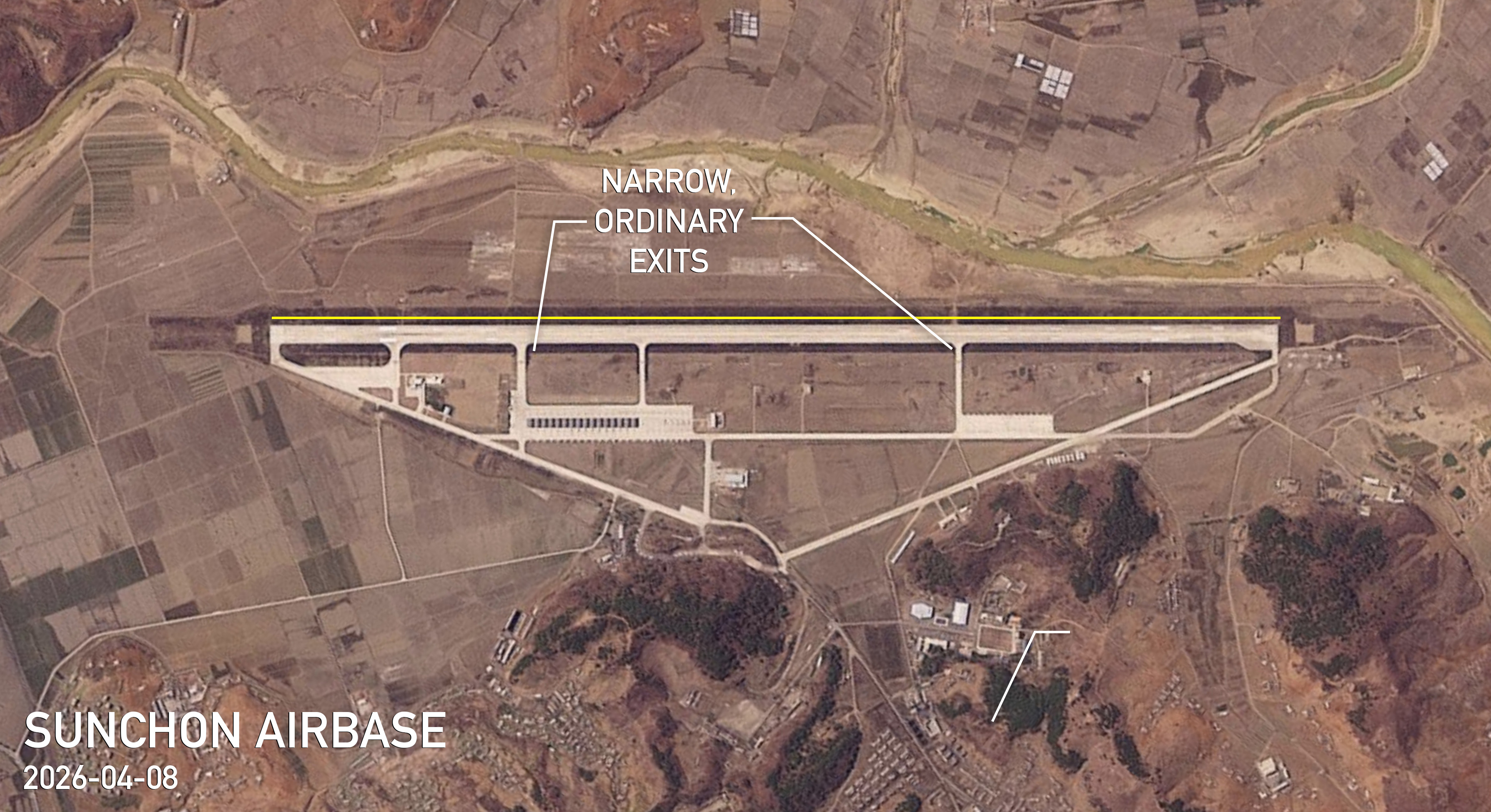
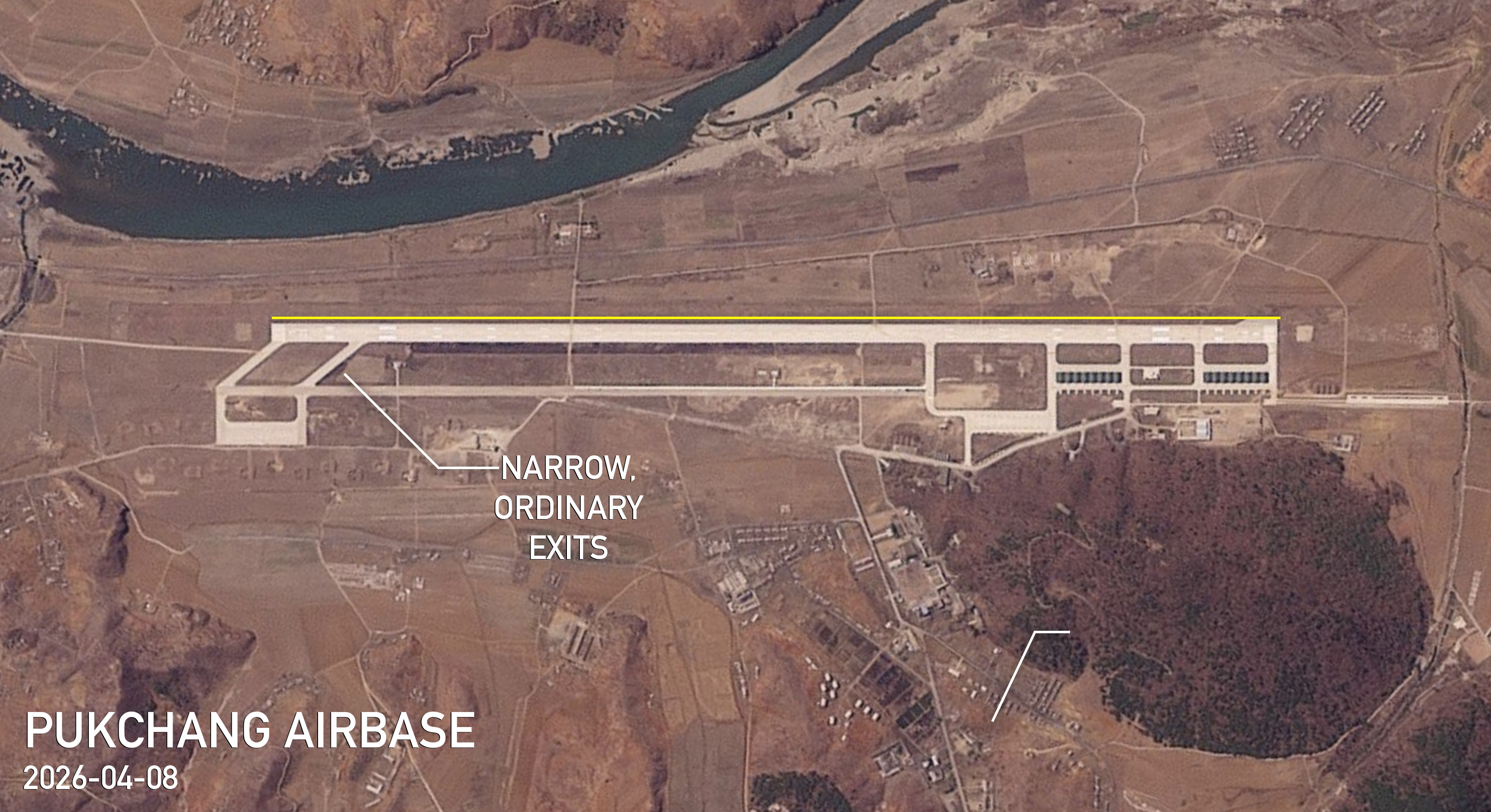
  Investigations North Korea upgrading airports at Wonsan resort and China borderRunway expansion and new exit taxiways suggest improvements for civilian planes but may have military implications  North Korea is upgrading runways at the Wonsan beach resort on the east coast and at two airports on the border with China, according to NK Pro analysis of satellite imagery. The new construction in Wonsan, Sinuiju and Samjiyon involves building angled taxiways from main runways that allow large planes to exit without slowing to a crawl, enabling a more rapid succession of takeoffs and landings. By contrast, many North Korean airbases only have right-angle exits that require planes to make a sharper turn. Given that all three locations are unlikely to see a significant number of civilian flights, the new construction could be a preparatory measure to improve wartime readiness at the dual civilian-military airports. It could also indicate plans to improve service for large cargo planes — especially at the Uiju airbase in Sinuiju, where the runway is being extended — or it may simply be a design choice meant to bring the airports up to modern standards. Two other recent military airbase projects in Sunchon and Pukchang did not involve constructing such exit taxiway designs, opting for right-angle and narrow exits designed for smaller fighter jets. Pyongyang International Airport is the only airport in the country to operate international flights, but only a few per day. National carrier Air Koryo also flies regularly from Pyongyang to Samjiyon, Wonsan and Orang. 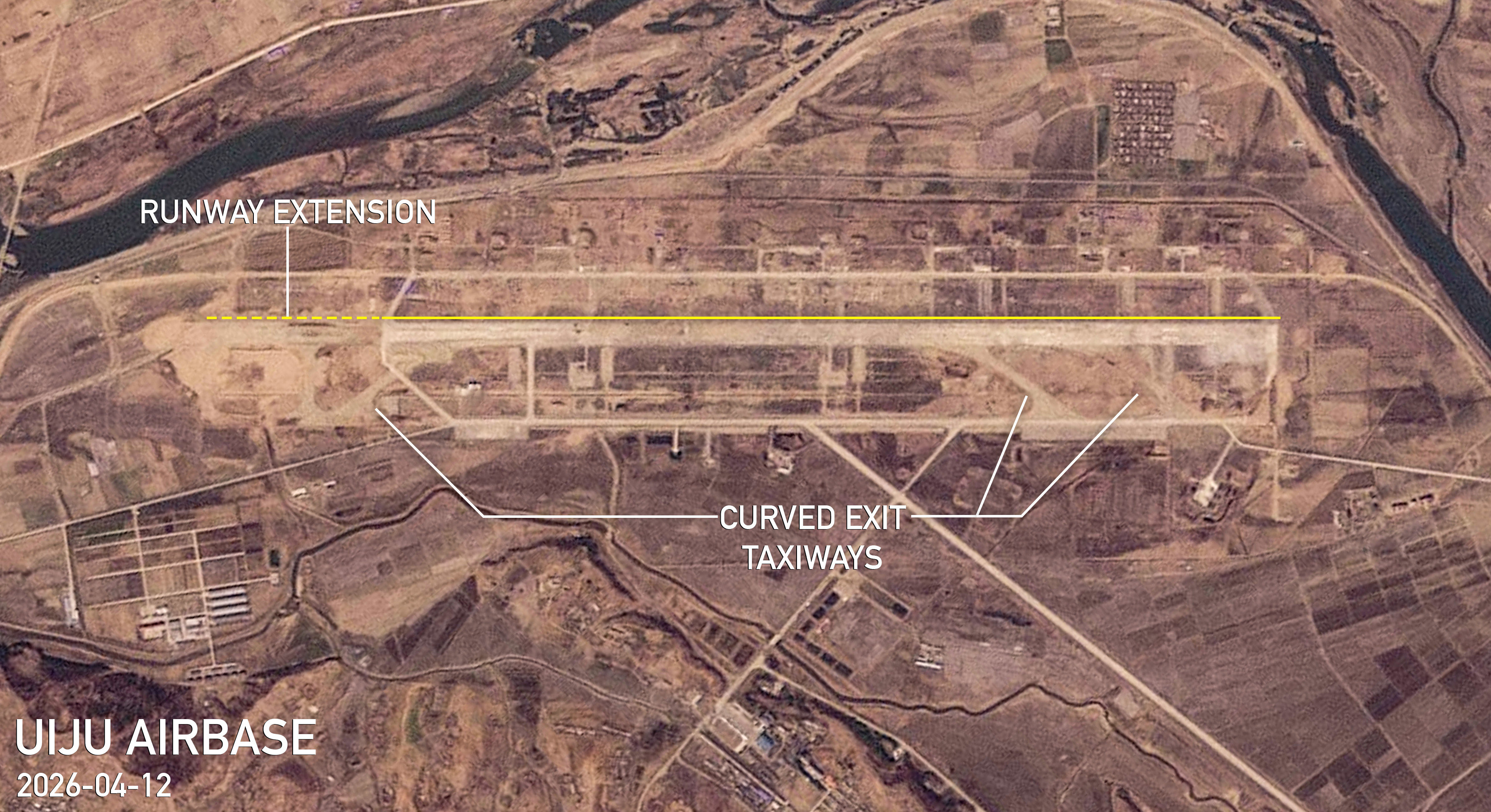
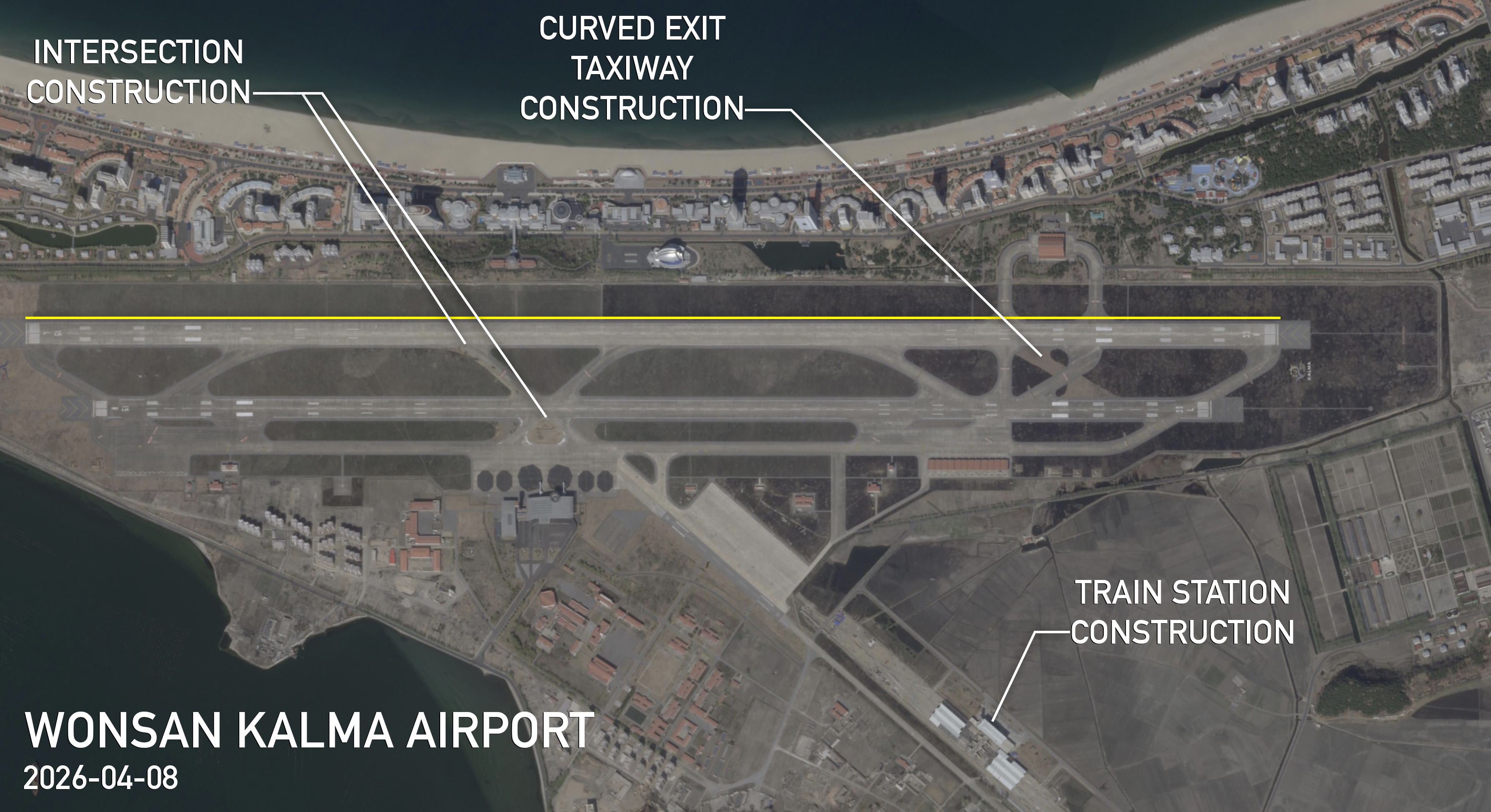
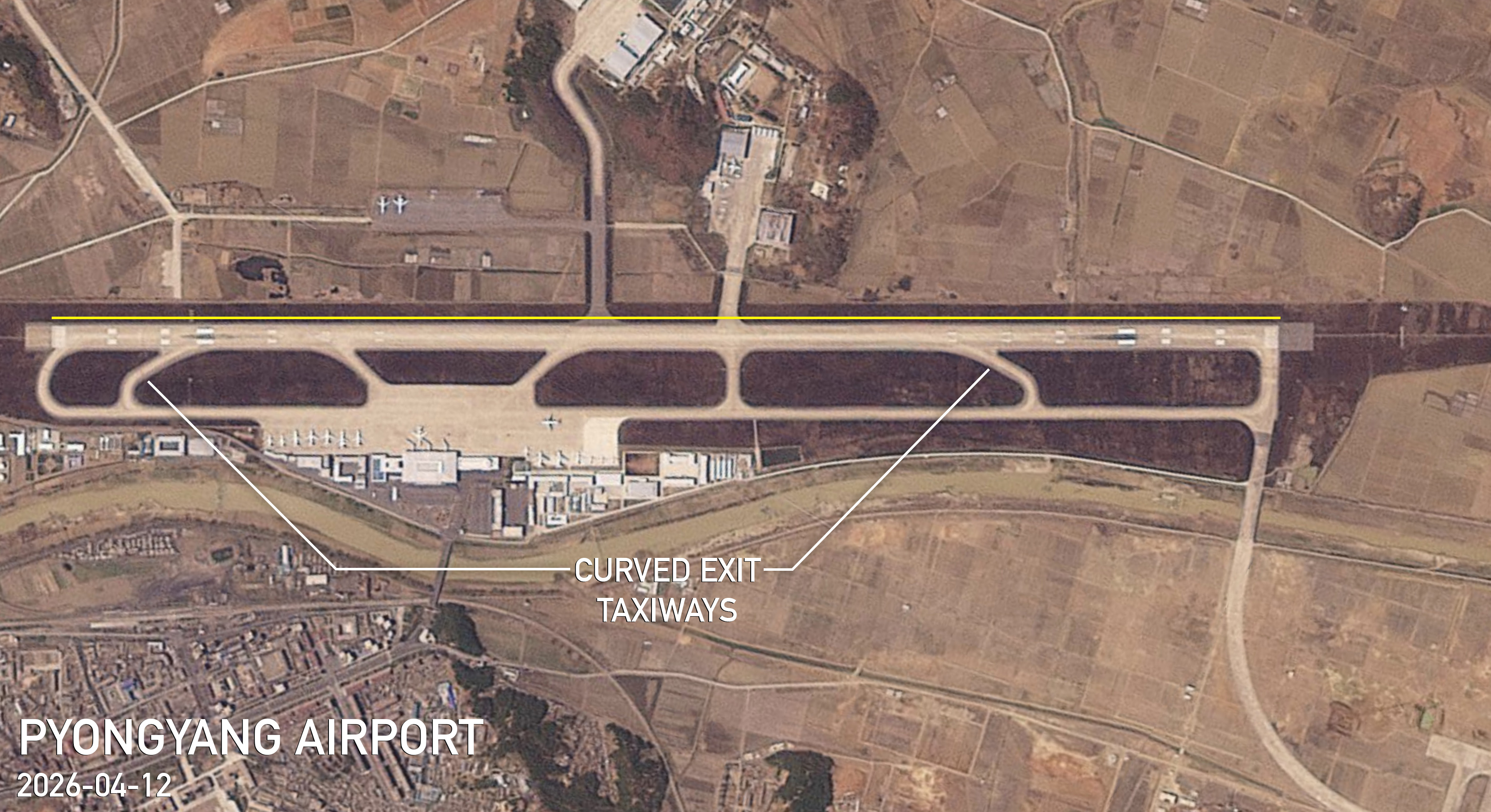
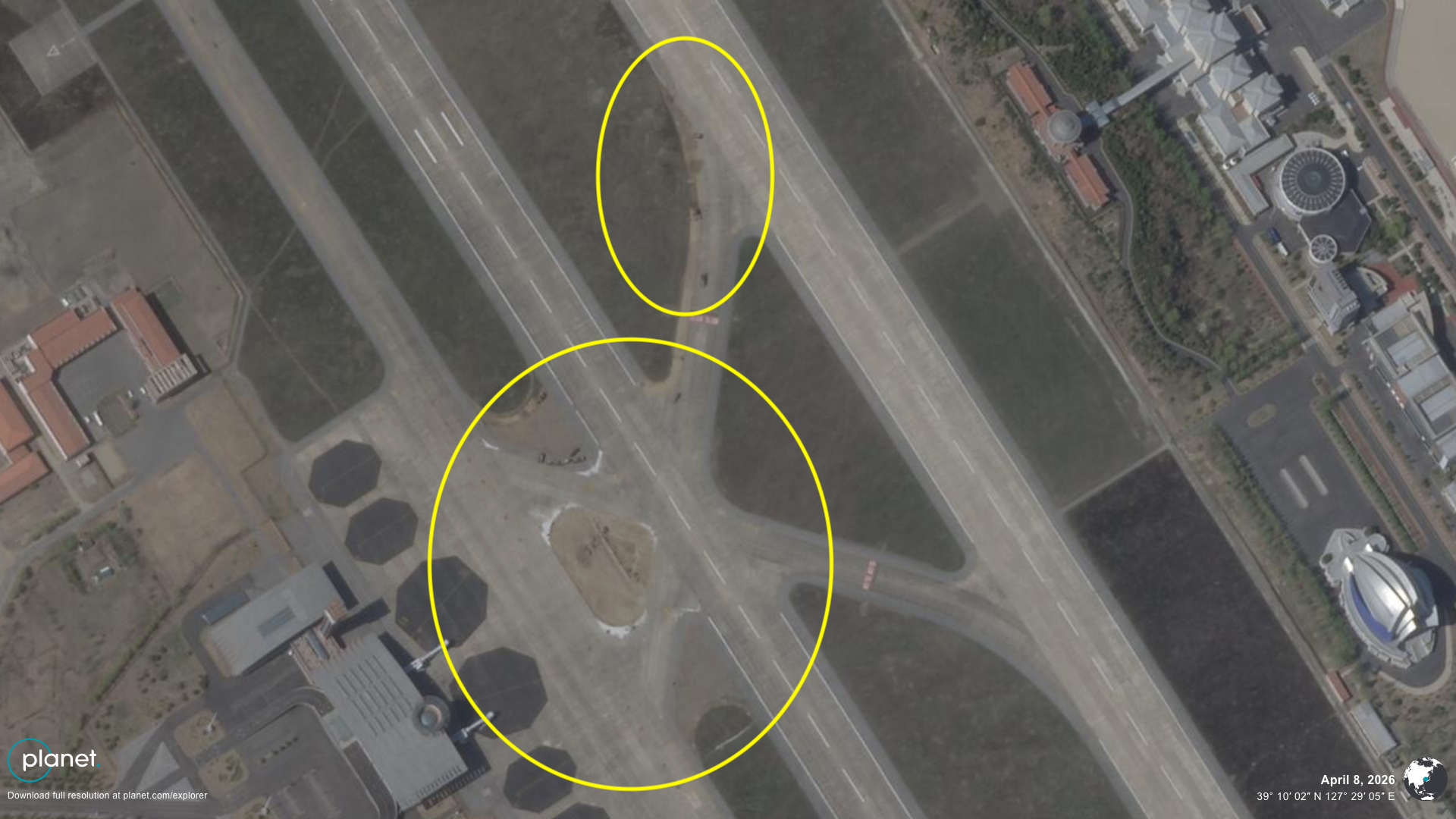
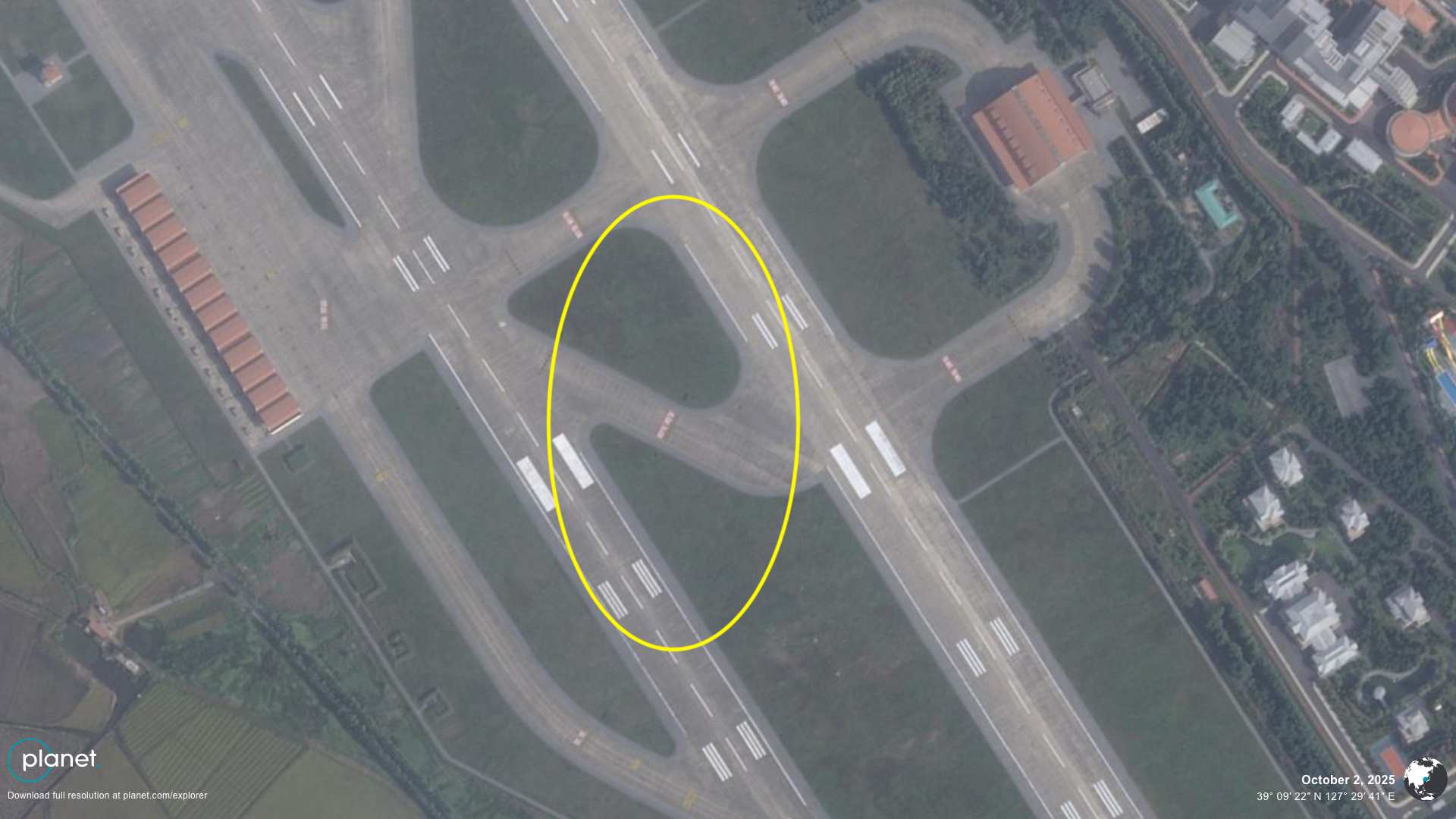
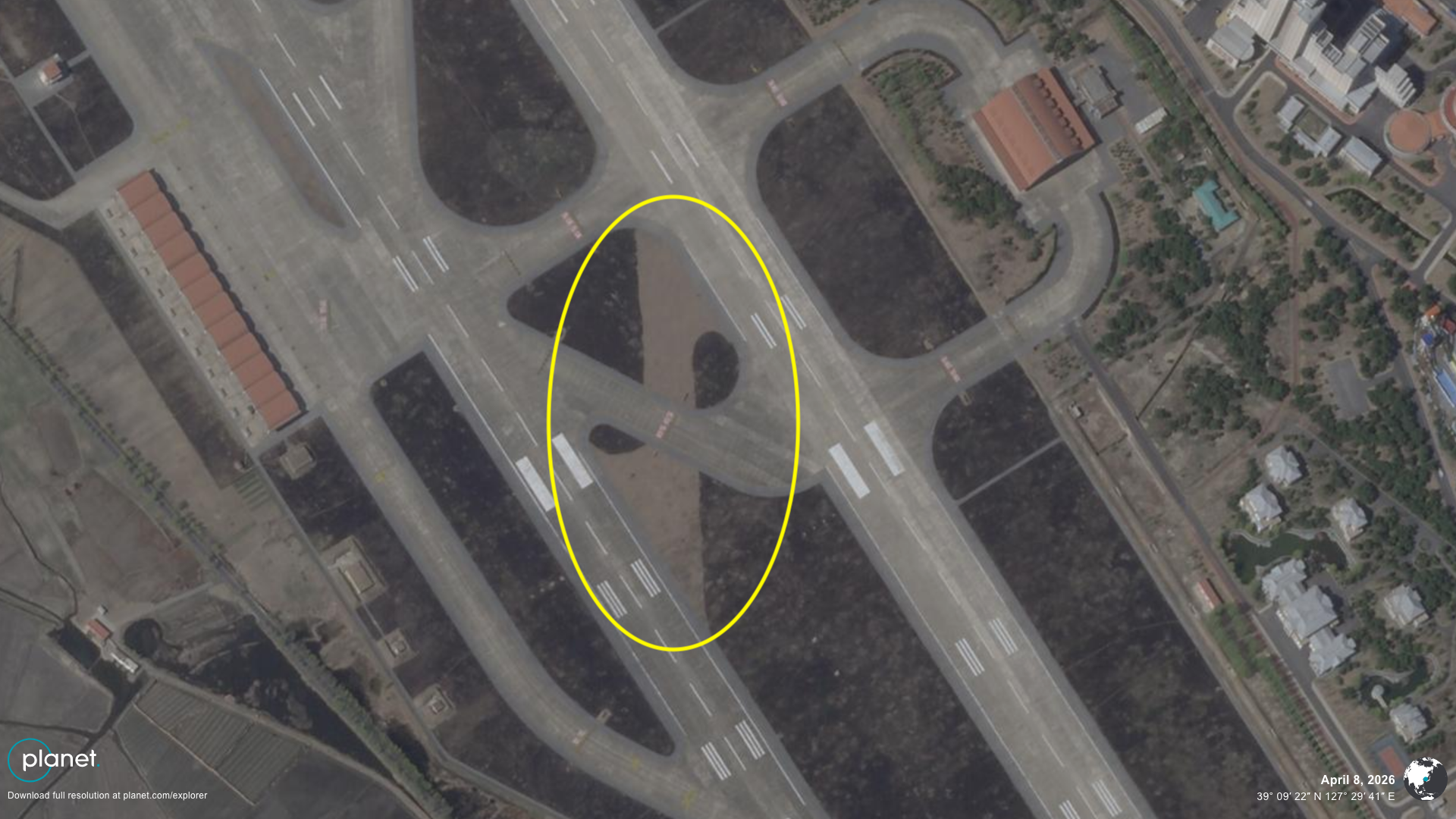
UIJU AIRBASE Uiju airbase, located near Sinuiju on the west end of the China-DPRK border, has primarily served as a military airfield for Soviet-era Il-28 bombers, though it received an occasional Air Koryo passenger plane in the past. The airbase was converted into a COVID-19 cargo processing and disinfection center in 2021 before resuming its role as an airbase for the bombers in late 2024. Planet Labs satellite imagery shows construction to extend the runway began last November, while its new runway started taking shape in recent weeks. The new layout, with angled exit taxiways, will make the airbase resemble Pyongyang International Airport and Wonsan Kalma International Airport, as opposed to most military airbases in the country. Imagery suggests the runway is being extended from 2,500 to 3,000 meters, which is longer than most DPRK airbases but still shorter than the Pyongyang, Wonsan and Samjiyon airport runways. 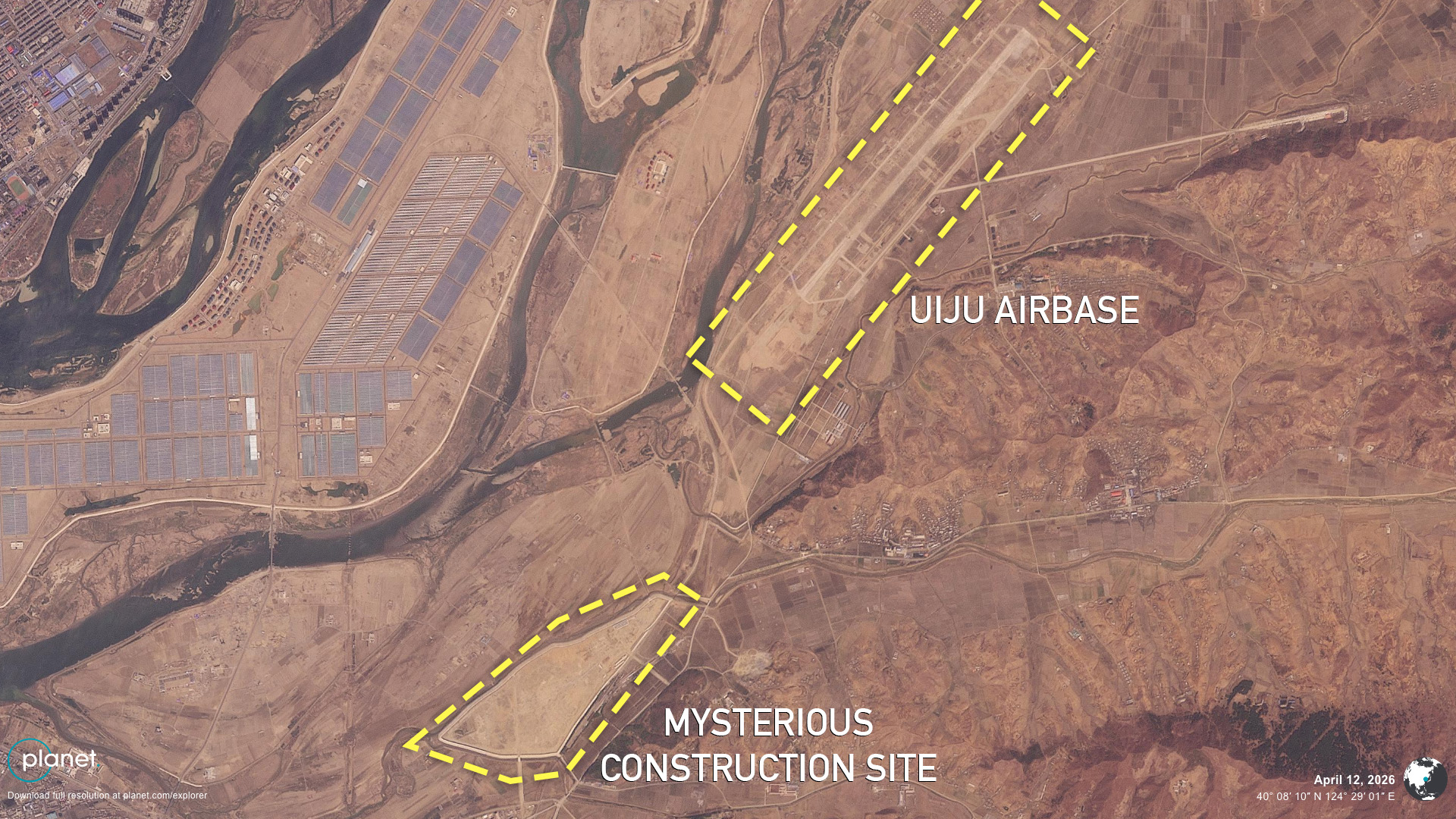 The new construction also involves building a new road connecting the northern taxiway to the main road outside the compound. This road also connects to a sprawling and mysterious new construction site to the south that Kim Jong Un inspected when the area experienced devastating flooding in 2024. It’s possible this project may have a commercial purpose requiring a modern international air transport link. A rail spur was built into the area last year, passing through large embankments around the perimeter meant to protect it from future flooding. The 66-hectare (163 acre) area remained prepped and ready for construction but was otherwise quiet as of mid-April. Work on new terminal or administrative facilities by the runway have yet to appear. WONSAN KALMA INTERNATIONAL AIRPORT Planet Labs imagery shows new runway improvement work starting at the Wonsan Kalma Airport in the first half of March. The work involves widening a central intersection of taxiways between the terminal and parallel 3,500 and 3,120-meter runways, and adding an angled exit taxiway at the southeast end of the longer runway, likely to improve service for landings coming from both directions. The construction comes ahead of the Wonsan Kalma Coastal Tourist Area’s second summer season, and it’s possible the new improvements are part of preparations for the airport’s first sustained international flights over 10 years after opening. 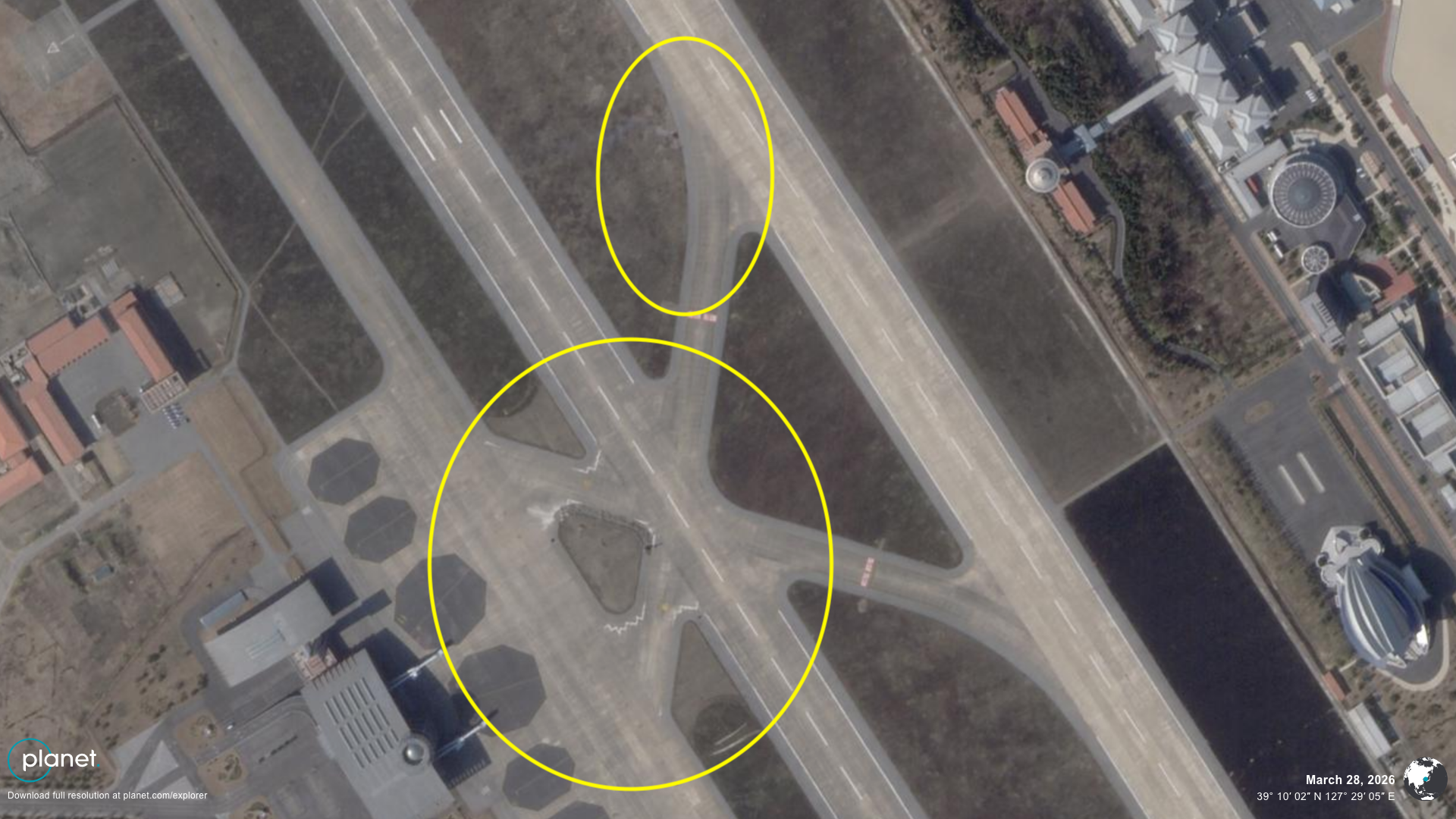
The resort has mainly serviced domestic tourists and a limited number of Russians for overnight stays. But following an increase in high-level exchanges between Pyongyang and Beijing since then, it may be preparing for an influx of Chinese tourists. Planet Labs imagery suggests that in addition to the runway, construction of a large new train station at the airport could finish in the coming months. The airport was previously upgraded to prepare for higher flight volumes during the pandemic, but increased activity has yet to materialize. SAMJIYON AIRPORT Recent satellite imagery of the Samjiyon Airport upgrade project that started last year reveals that its 3,300-meter runway will also feature the angled exit taxiways common at passenger-focused airports in the country. DPRK state media presented the construction as part of plans to improve tourist access to what authorities consider the “holy” city of Samjiyon and Mount Paektu, glorifying the official narrative that falsely claims the mountain is former leader Kim Jong Il’s birthplace. 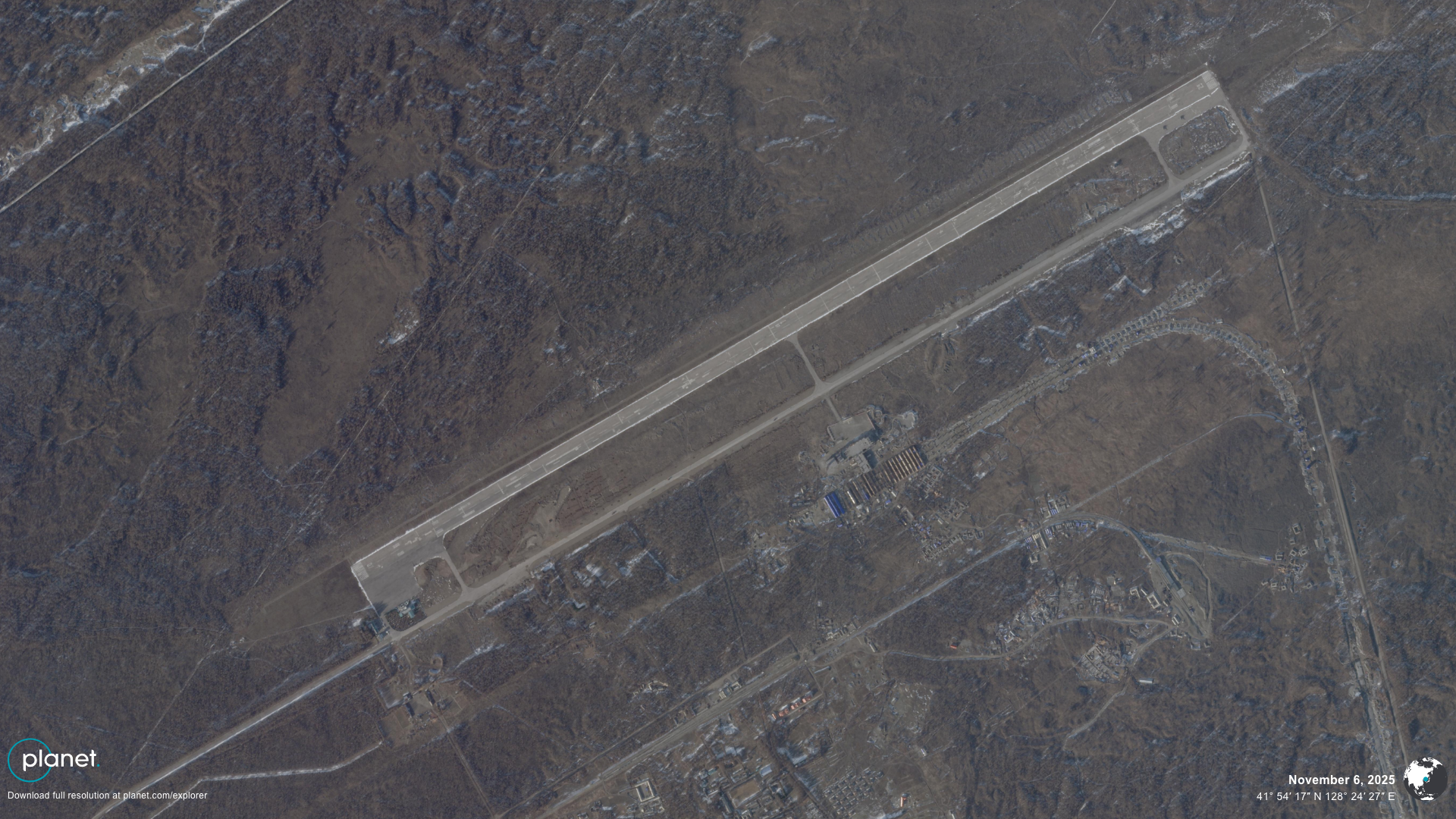
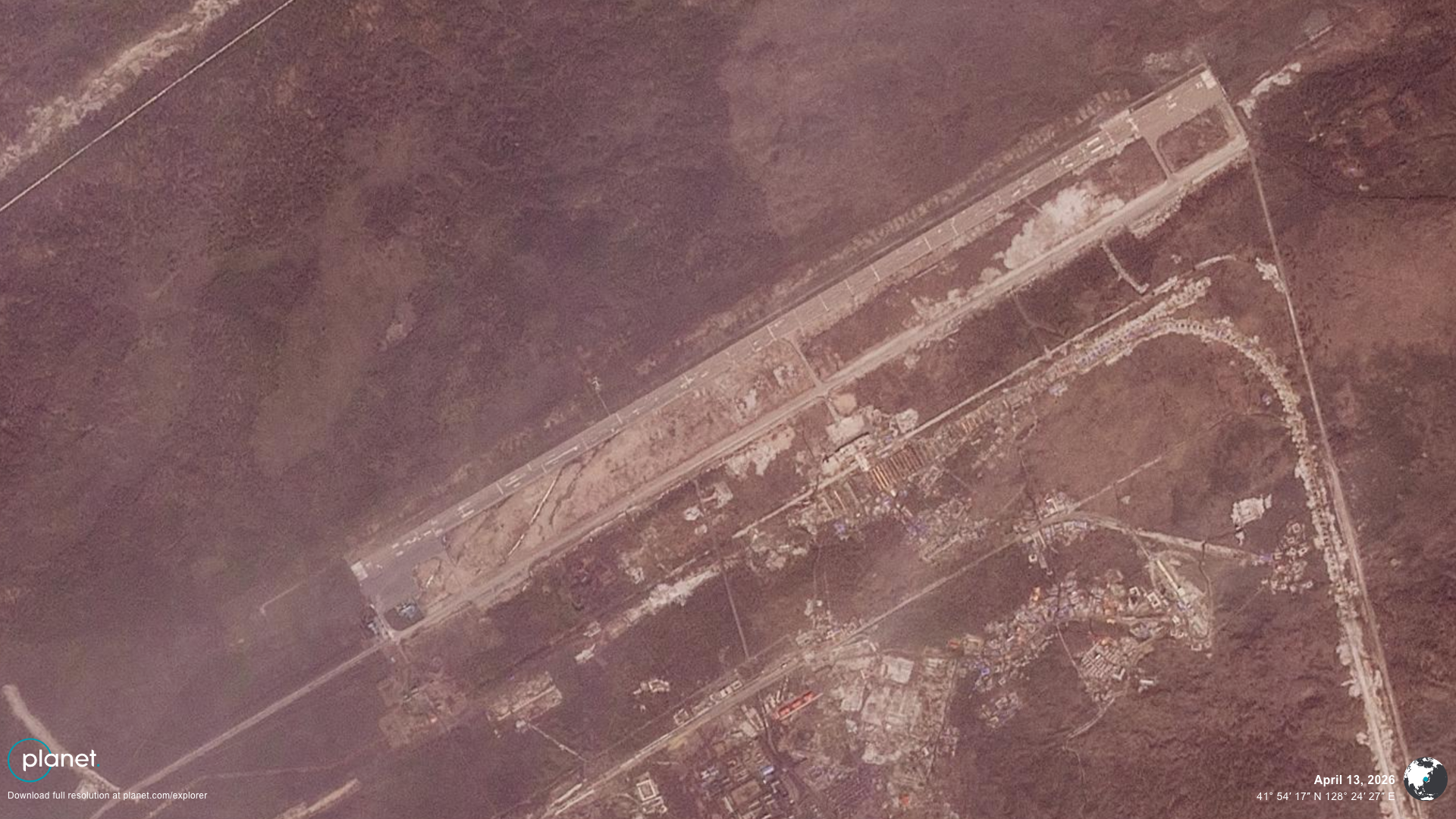
It is likely that new tourist attractions in the area will cater to Chinese tourists in addition to North Koreans, since a new elevated rail line built to connect Samjiyon with the airport and another new ski resort nearby will extend up to the border with China, NK Pro analysis of Planet Labs imagery suggests. The airport once served as an air force base in addition to a civilian airport, but military aircraft disappeared over a decade ago. Imagery taken this month shows little progress on the airport’s new terminal and connected elevated train station over the winter. Meanwhile, Cabinet Premier Pak Thae Song visited the new Samjiyon Mountainous Tourist Resort (ski resort) construction site over the weekend, the Korean Central News Agency (KCNA) reported on Sunday, saying workers must “finish the project in time without fail” without specifying a deadline. Edited by David Choi © Korea Risk Group. All rights reserved. |

October 20, 2026Oct 20, 2026

The ultimate resources for professionals working on North Korea
 SHARE
SHARE COPY LINK
 X
X MASTODON