  News North Korea upgrades airport near empty resort, despite no flow of touristsSatellite images show an expanded runway area at Wonsan’s Kalma Airport, which is located near a long-stalled resort 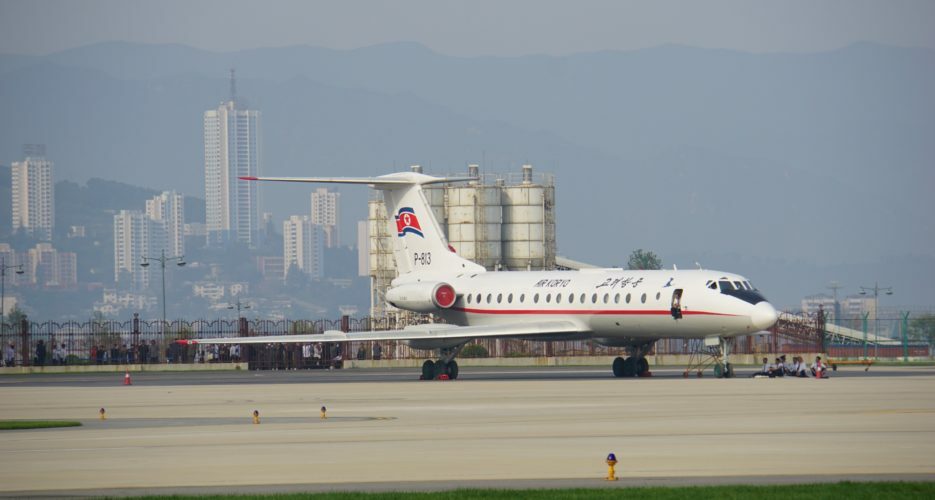 Five years after North Korea built a modern airport with the ambition of serving new waves of international tourists, the government has once again expanded it with 530,000 square feet of pavement and other add-ons, according to NK Pro analysis of recent satellite imagery. Kalma Airport, located in the east coast city of Wonsan, has yet to achieve its goal of becoming a hub for foreign tourists. So far, it has not established any links with airports abroad — in fact, its runways have instead been primarily used by the North Korean military in recent years. Meanwhile, the opening of the giant Wonsan-Kalma beach resort built right next door to the airport has also been delayed numerous times since construction began in 2018. Right now, it’s indefinitely stalled. Tourists have not been allowed to enter North Korea since Jan. 2020 due to the global pandemic, and there are no signs borders will reopen anytime soon. So why expand the airport now? WHAT’S BEING BUILT, AND WHY? According to Planet Labs medium-resolution satellite imagery, a section of runway near the Kalma Airport terminal was widened and a new intersection was built and paved starting in Apr. 2020. 
A timelapse of the construction between Dec. 2019 and mid-Nov. 2020 shows that the project has yet to be completed. | Video: Planet Labs Excavation work on a 50,000-square-meter (530,000-square-foot) rectangular area nearby started in Jan. 2020, while paving of the area began in July and appeared to be still ongoing as of Nov. 16. A pilot from a major U.S. airline, who requested anonymity due to his company regulations, told NK Pro that this large, new paved area could be used as a parking apron for military jets and helicopters that are often seen in satellite imagery parked on top of a short adjacent runway. “This could permit greater efficiency and tactically more expeditious operations,” he said. Running just south of the terminal and east of a complex of military buildings, this runway is only 500 meters long (1,640 feet), meaning its use is limited to helicopters and small planes.  But a new parking apron could also be used by “larger special transport or military aircraft that would not use terminal parking,” the pilot said. “The new intersection … makes for an easier exit turn taxiing a medium or large jet [to the main runways],” he added. If the construction is meant to allow for more civilian or cargo plane parking, it could be a sign North Korea is expecting heavy traffic at an airport that still has yet to see its two-terminal gates and four extra terminal parking spaces fill up since officially opening in Sept. 2015 (one exception: a special air show for tourists in 2016). These plans would complement the ambitious, 5-kilometer-long (3-mile-long) Wonsan-Kalma tourist beach resort next door. The resort contains thousands of rooms across over a dozen hotels, as well as an aquatic-themed stadium and other entertainment facilities. The project missed its most recent deadline of Apr. 2020 and remains unopened, but otherwise appears nearly finished.  In recent years, Kalma Airport has mostly been known for hosting regular air force drills and even military air shows attended by North Korean leader Kim Jong Un. The last such air show was held in Nov. 2019. The latest construction follows other gradual updates to Kalma Airport over its five-year lifespan. Though North Korea finished the modern, new airport terminal and a 3,100-meter (10,200-foot) runway in 2015, construction workers did not complete a second, 3,500-meter (11,500-foot) adjacent runway until early 2019, according to Planet Labs satellite imagery. Edited by Kelly Kasulis © Korea Risk Group. All rights reserved. |

October 26, 2026Oct 26, 2026

The ultimate resources for professionals working on North Korea
 SHARE
SHARE COPY LINK
 X
X MASTODON