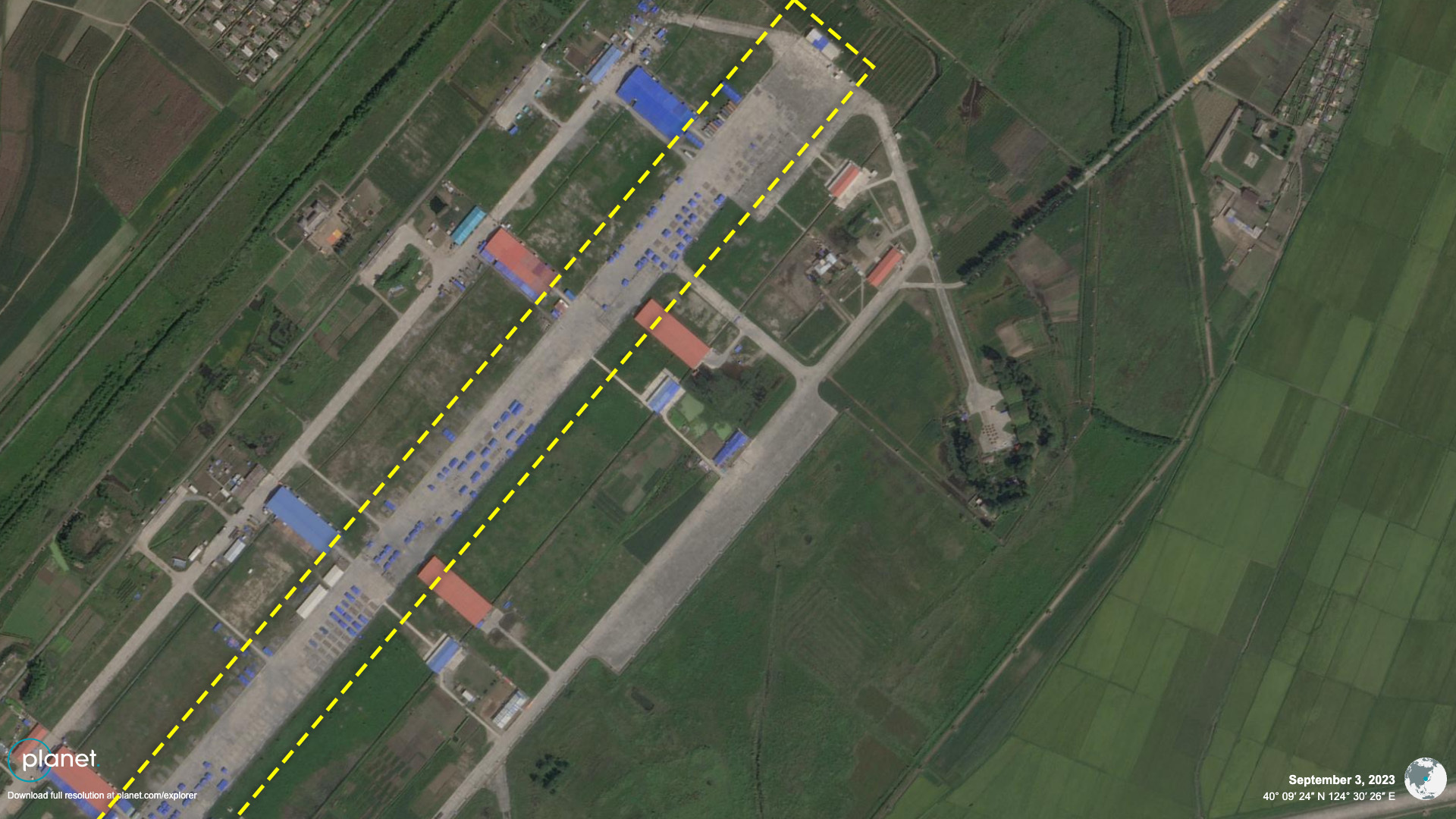
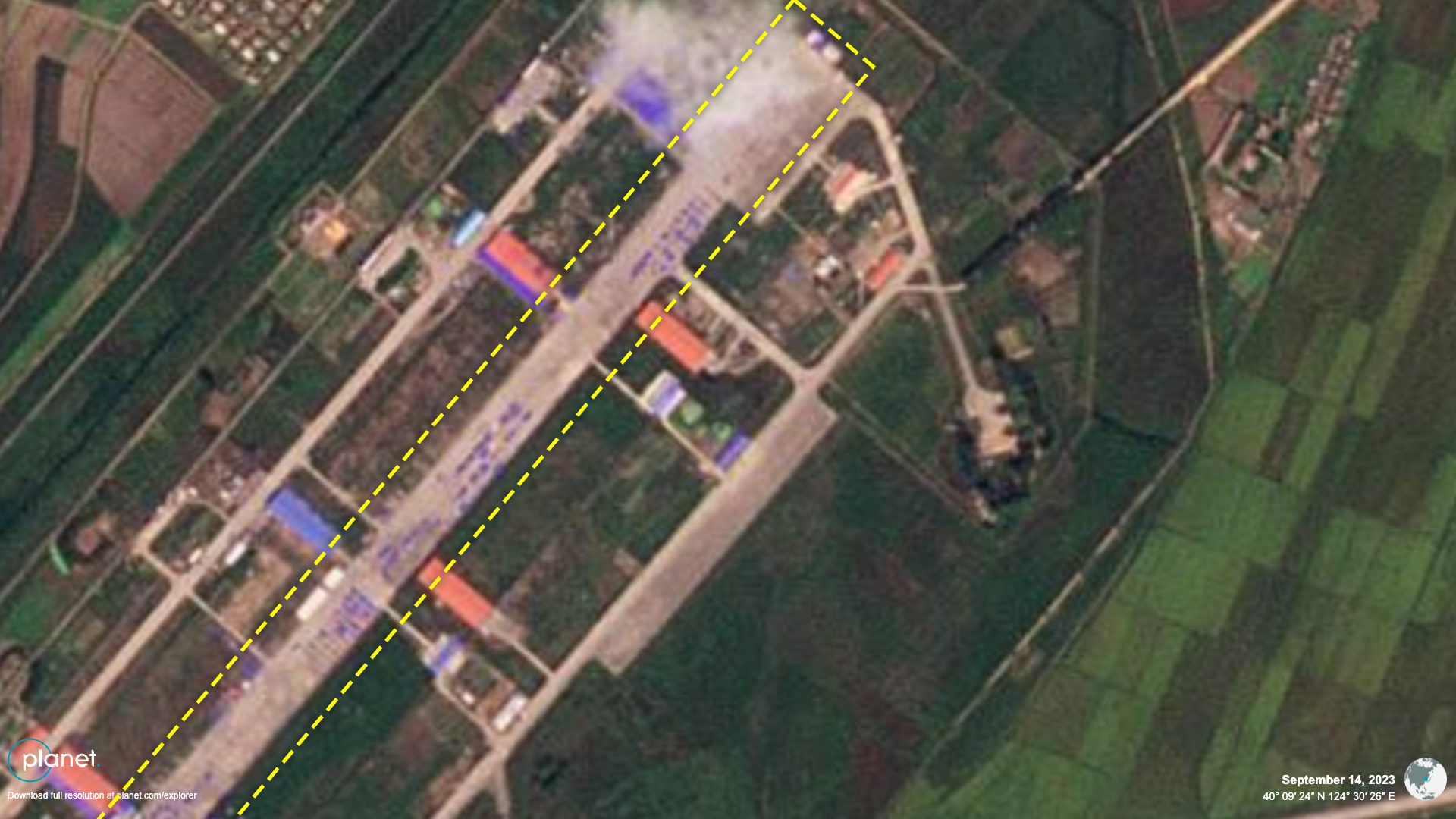
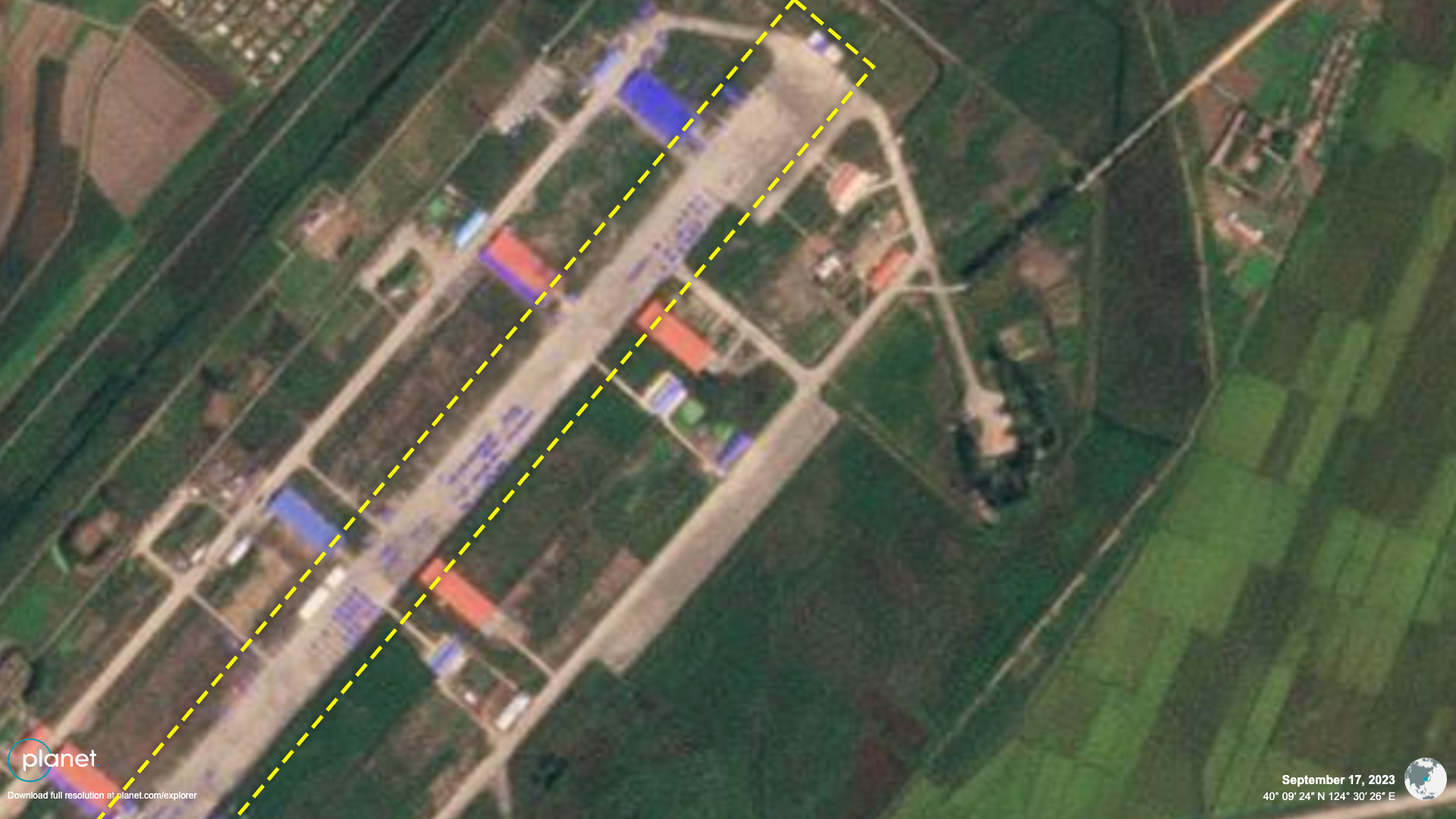
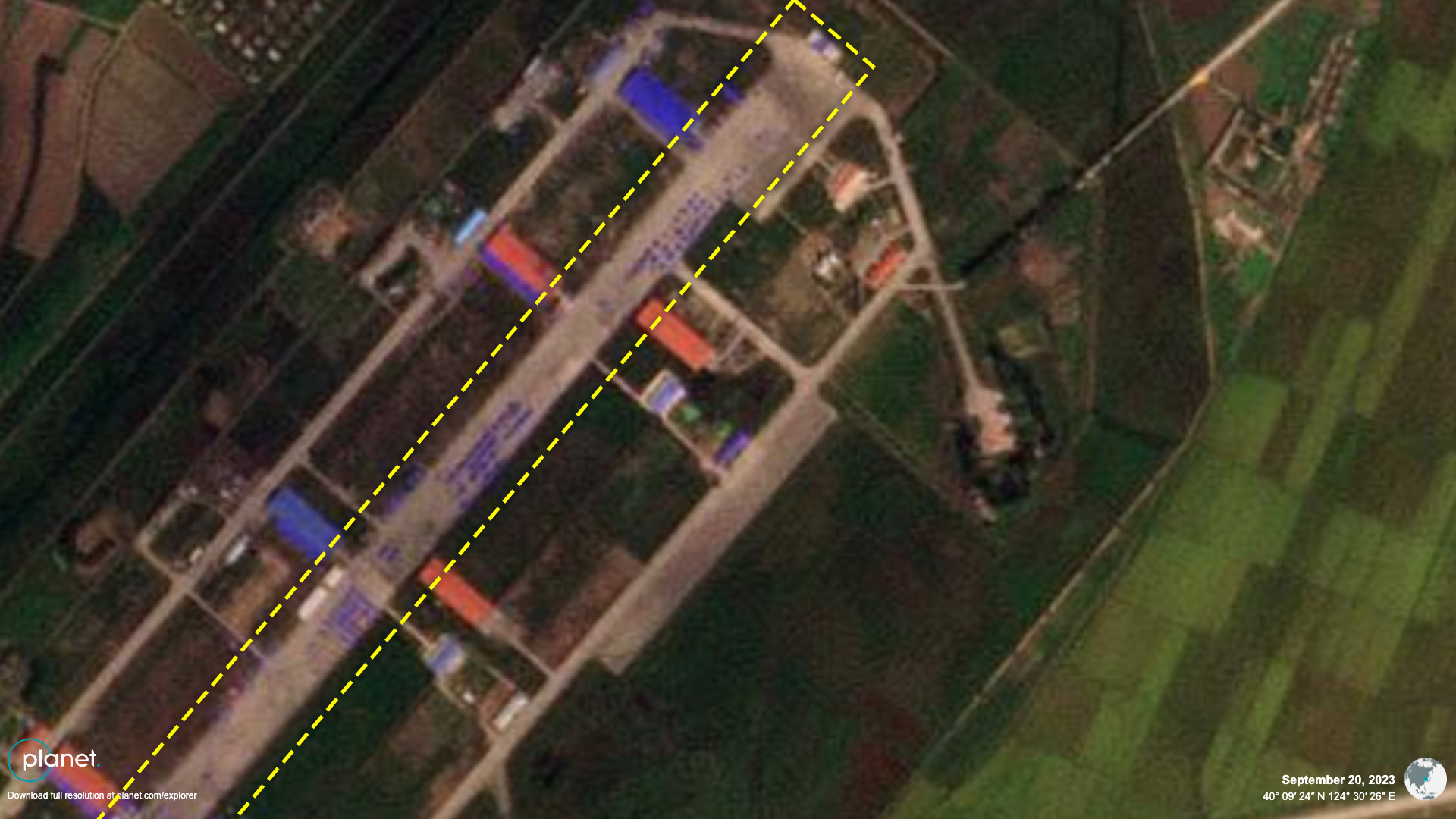
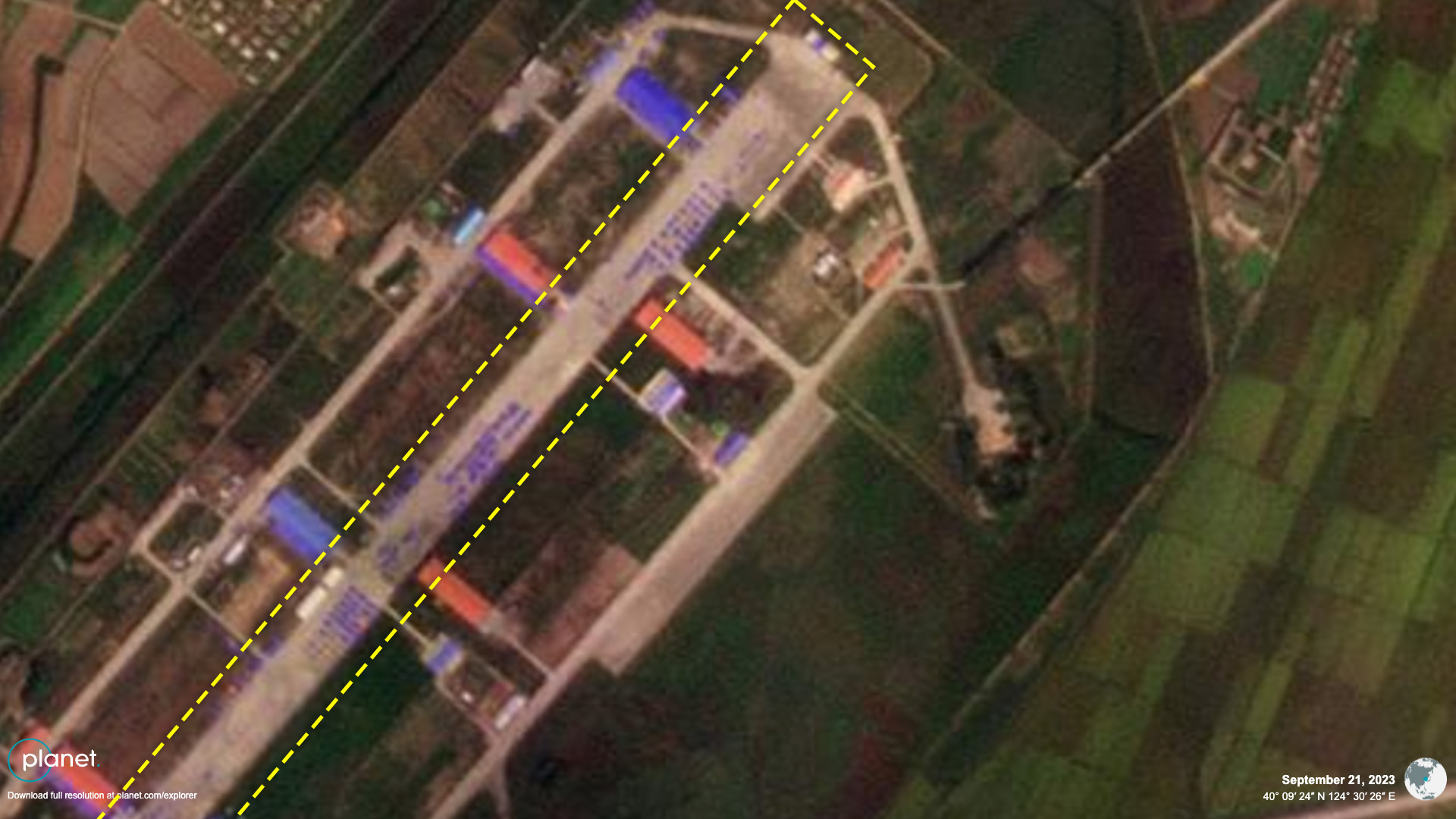
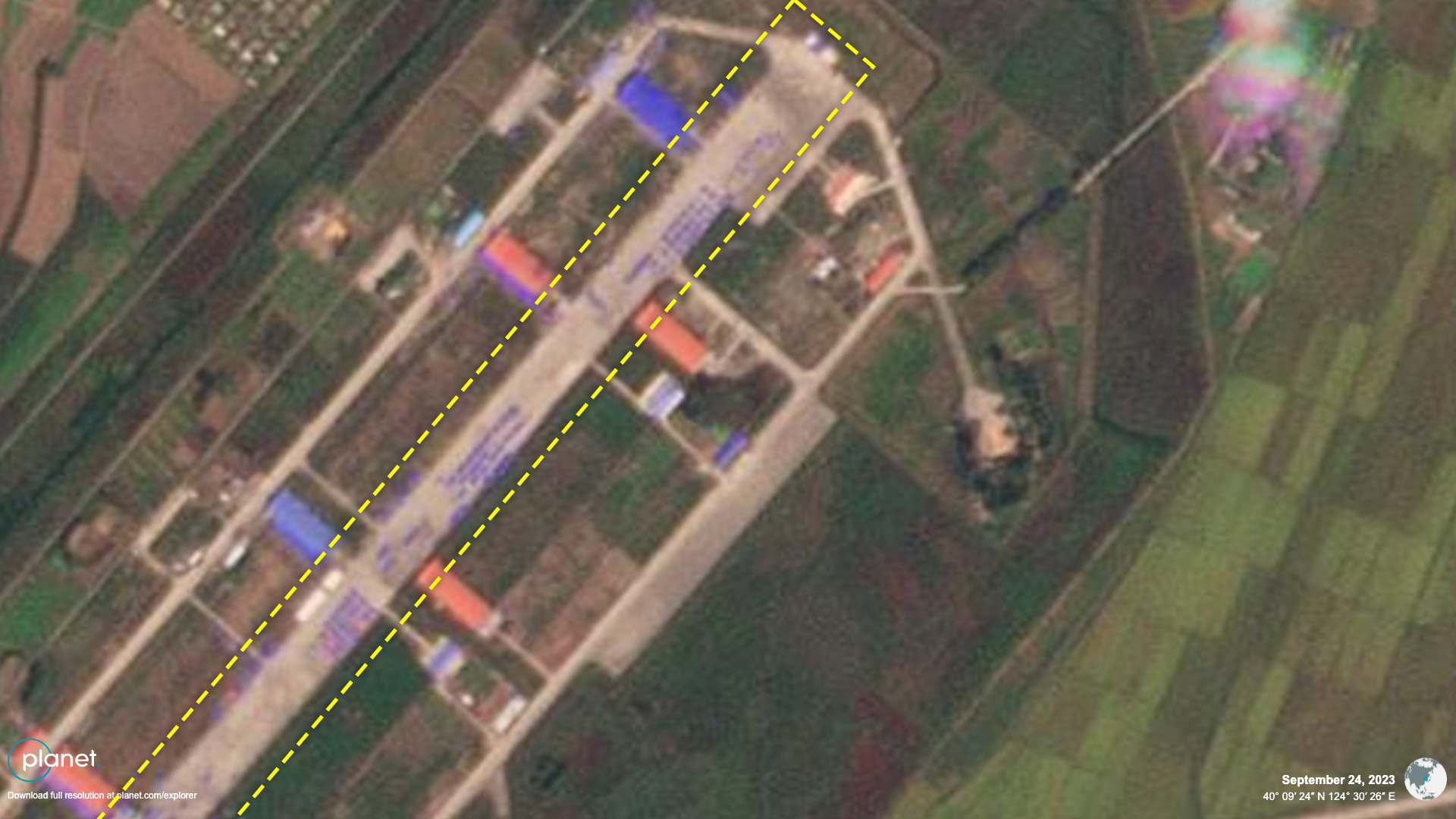
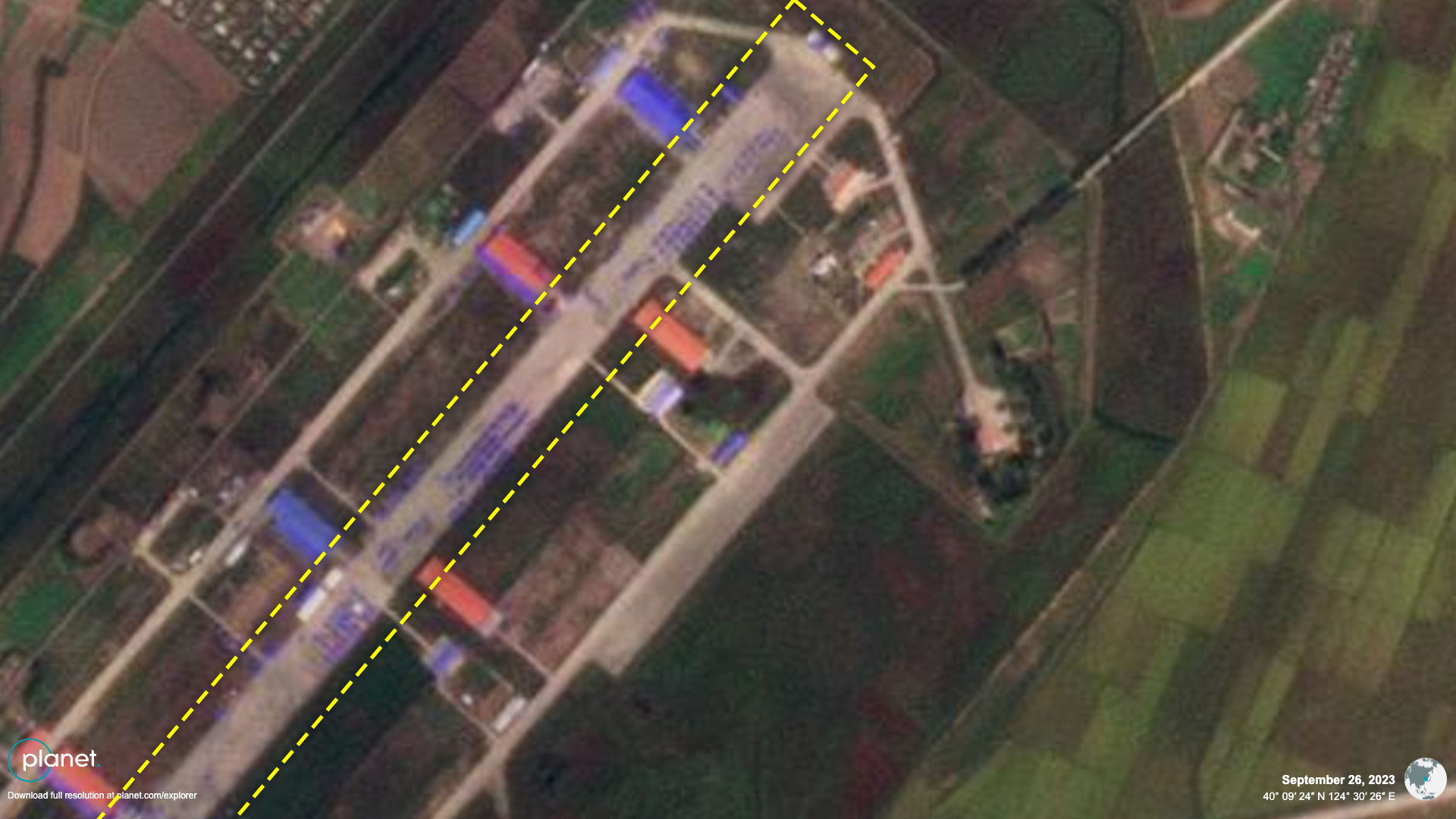
  News North Korea still isolating imports after easing visitor restrictions: ImageryAuthorities appear to be quarantining items for one week near Chinese border in sign DPRK still fears COVID spread  The busiest North Korea-China overland trade route is still subject to bottlenecks at a large DPRK import disinfection and quarantine facility, according to NK Pro analysis of satellite imagery, even though Pyongyang eased other pandemic restrictions this week. Planet Labs imagery shows goods continued to appear in the last week on the runway of the converted Uiju Airbase near Sinuiju, across from China’s Dandong, in a sign that authorities still require imports to be isolated over fears of spreading COVID-19 to the population. NK Pro analysis indicates that new blue-covered objects — likely stacks of goods covered by protective material or in containers measuring 16 feet (5 meters) to 40 feet (12 meters) wide — appeared on Sept. 17, 20, 21, 24 and 26. Some of the blue objects that appeared between Sept. 14 and 17 disappeared between Sept. 21 and 24, while some that first showed up between Sept. 17 and 20 were gone by Sept. 28, suggesting these goods were subject to a quarantine period of about a week. Other objects have appeared to stay on the runway for longer, however, potentially indicating that required isolation times depend on the type of item. Another possibility is that stacks of goods replace others in the same spot between images, making it difficult to determine if any have been removed. 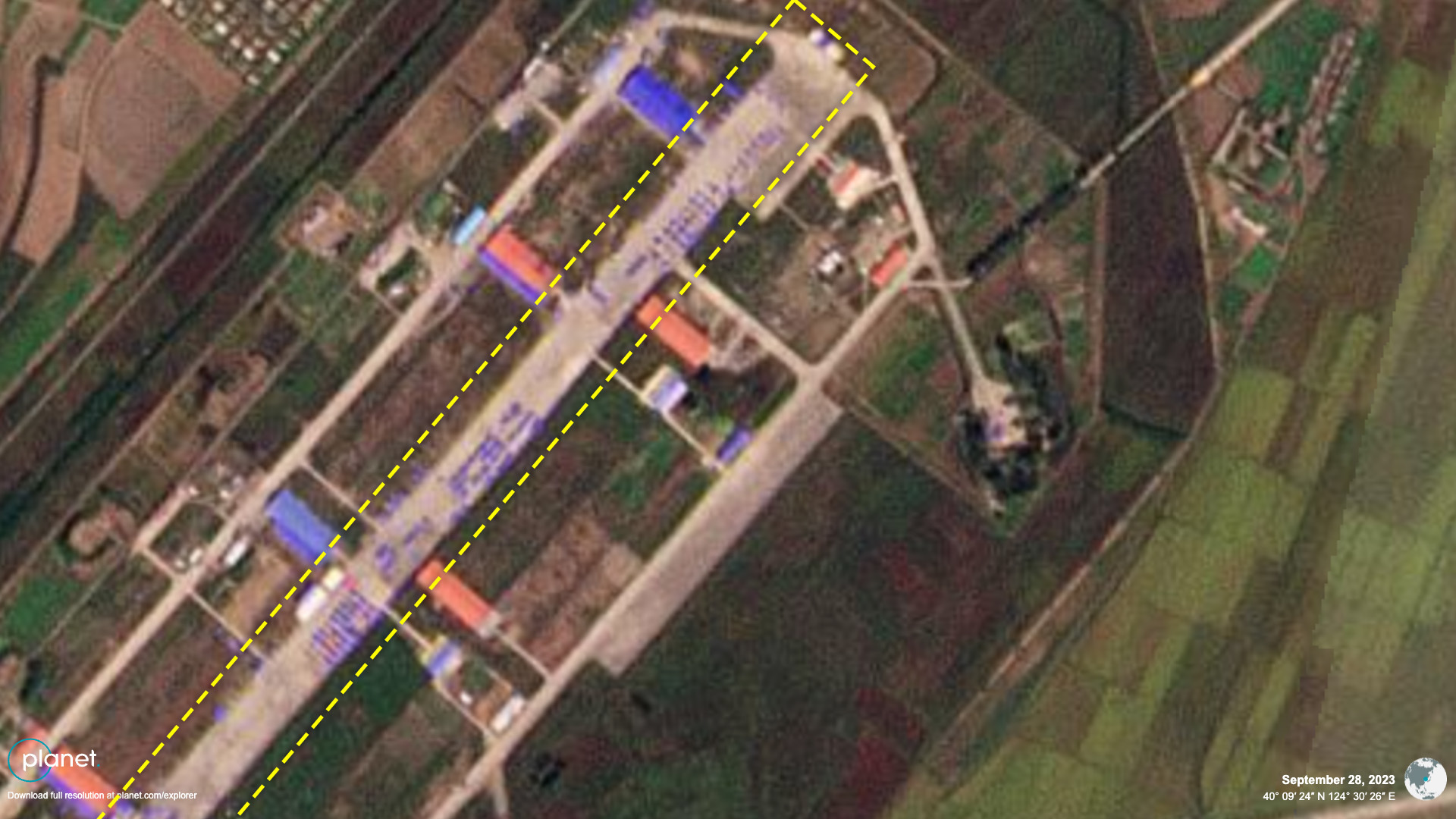
A smaller disinfection center servicing freight trucks on the eastern end of the DPRK-China border has exhibited similar apparent quarantine times, as new freight containers continued to appear outdoors at the Wonjong-Quanhe crossing in the last week, according to Planet Labs imagery. It is more difficult to determine a quarantine duration at North Korea’s main seaport at Nampho on the west coast, since it is magnitudes busier than overland trade facilities. And though North Korea and China look to be preparing to finally open a long-unused road bridge between Sinuiju and Dandong, it still does not appear to be in use. Freight trucks also do not appear to be using the existing bridge where freight trains are crossing. Bilateral trade in general hit a four-month high in August. While imports may still be subject to a seven-day quarantine, North Korea announced to international partners on Tuesday that it reduced the quarantine requirement for visiting foreigners from seven to two days. DPRK authorities have not publicized further policy changes that could lead to reopening tourism for the first time since Jan. 2020, but the reduced quarantine duration could facilitate more official delegation visits or the return of foreign diplomats to now-empty embassies. Holding visitors for two days would allow health authorities to test for COVID-19 multiple times before deciding whether to allow their entry or hold them for longer, but it is more complicated to test masses of inanimate objects for the virus — one reason Pyongyang may be opting for a simple isolation policy. North Korea has not publicly reported on its quarantine requirements for imports, but state media has acknowledged the Uiju airbase operation. It was a mixed-use civilian and military airport until late 2021, when it was fenced off and a rail line and five offloading stations were built parallel to the runway to service freight trains coming directly from China. North Korea is the only country in the world known to require quarantine for all imported goods, as state agencies have claimed COVID-19 can survive for long periods attached to inanimate objects. Authorities consider this a threat to the health system and the ruling regime in case of an unexpected outbreak of a new variant. These claims have largely been debunked, though it is still common to see local policies around the world requiring occasional disinfection of surfaces in public spaces. DPRK state media has also continued to warn the public to stay vigilant against COVID-19, reporting on Tuesday that Pyongyang has “intensifie[d] the epidemic prevention work to cope with the seasonal change in autumn” and that “rapid mobile anti-epidemic teams and the rapid diagnostic and treatment teams keep themselves alert at all times.” North Korean authorities lifted a mandatory indoor and outdoor mask mandate in early July. State media has since appeared to take pains to avoid showing anyone wearing a mask — possibly to evince public unity and confidence in state policies — though citizens have still shown up in the background on state TV wearing them as recently as Thursday. Edited by Alannah Hill © Korea Risk Group. All rights reserved. |

October 24, 2026Oct 24, 2026

The ultimate resources for professionals working on North Korea
 SHARE
SHARE COPY LINK
 X
X MASTODON