  News North Korea resumes upgrades at Russian border ahead of possible trade restartSatellite imagery also shows imports nearing end of reported 3-month quarantine at facility near Chinese border 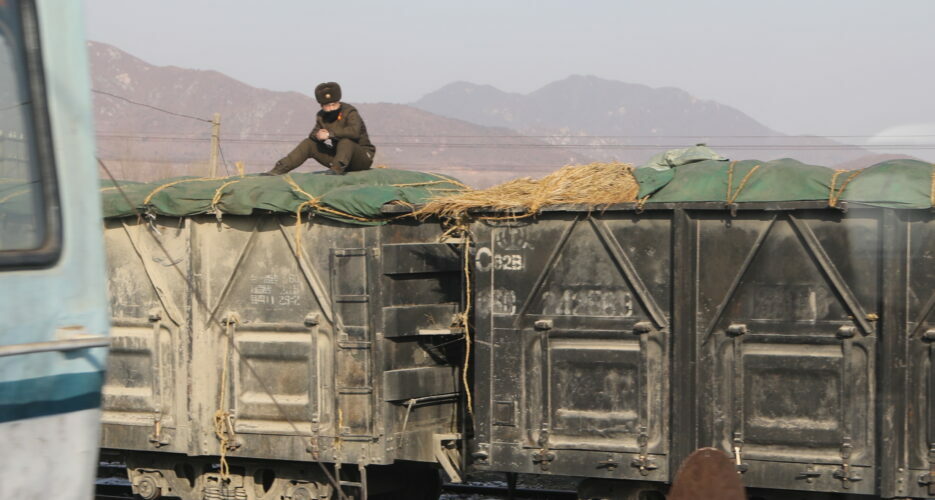 North Korea resumed work to upgrade a freight station at its border with Russia in recent weeks, satellite imagery shows, a possible sign that efforts are underway to restart land trade between the two countries for the first time in over two years. If the new facilities are used to disinfect and/or quarantine imports from Russia, it is likely goods will be kept there for at least three months. This is a timeline observed at North Korea’s other cargo quarantine facility at its border with China, according to satellite imagery. NK Pro was first to report late last year on major construction at the freight station in the North Korean town of Tumangang across from Russia’s Khasan, as North Korea expanded train platforms and built what may be warehouses. Work appeared to stall in mid-December and the buildings were left unfinished. The site appeared active again as early as March 17, with workers installing roofing on five new buildings between March 22 and 31, according to Planet Labs satellite imagery. Signs have yet to emerge of the facilities receiving trains from Russia. North Korea closed the rail crossing in Jan. 2021 as China began to report the spread of COVID-19. It is unclear if the upgraded facilities are indeed intended to process imported goods, but Russia’s ambassador to Pyongyang said in early 2021 that a large-scale disinfection center would be built along the 11-mile DPRK-Russia border. North Korea began operating a giant 215 hectare (530 acre) import disinfection complex on its border with China in Jan. 2022, but the Tumangang facilities are minuscule by comparison. This may be because North Korean trade with Russia has historically been tiny compared to trade with China. Russia officially claimed zero exports to the DPRK in 2021, while China still exported some goods despite Pyongyang’s heavy COVID-19-related trade restrictions. Meanwhile, Russian officials and business people in the border region have recently called for dropping U.N. sanctions that prohibit North Korean laborers from working abroad, as experts have suggested Moscow may begin to more openly ignore and violate U.N. sanctions to increase trade and labor ties with Pyongyang amid global pressure over its invasion of Ukraine. THREE-MONTH QUARANTINE? North Korea began operating the airport-sized disinfection facility in the town of Uiju on Jan. 17, and large stacks of goods covered in blue and white material began accumulating outdoors days later. The latest Planet Labs imagery taken on April 3 shows what appear to be many groups of items visible in early February still in their same positions, suggesting their quarantine period had not yet ended 76 days later. Some items seem to have disappeared from their original spots, but it is unclear if they were merely covered in different colored material, moved around or left the complex. 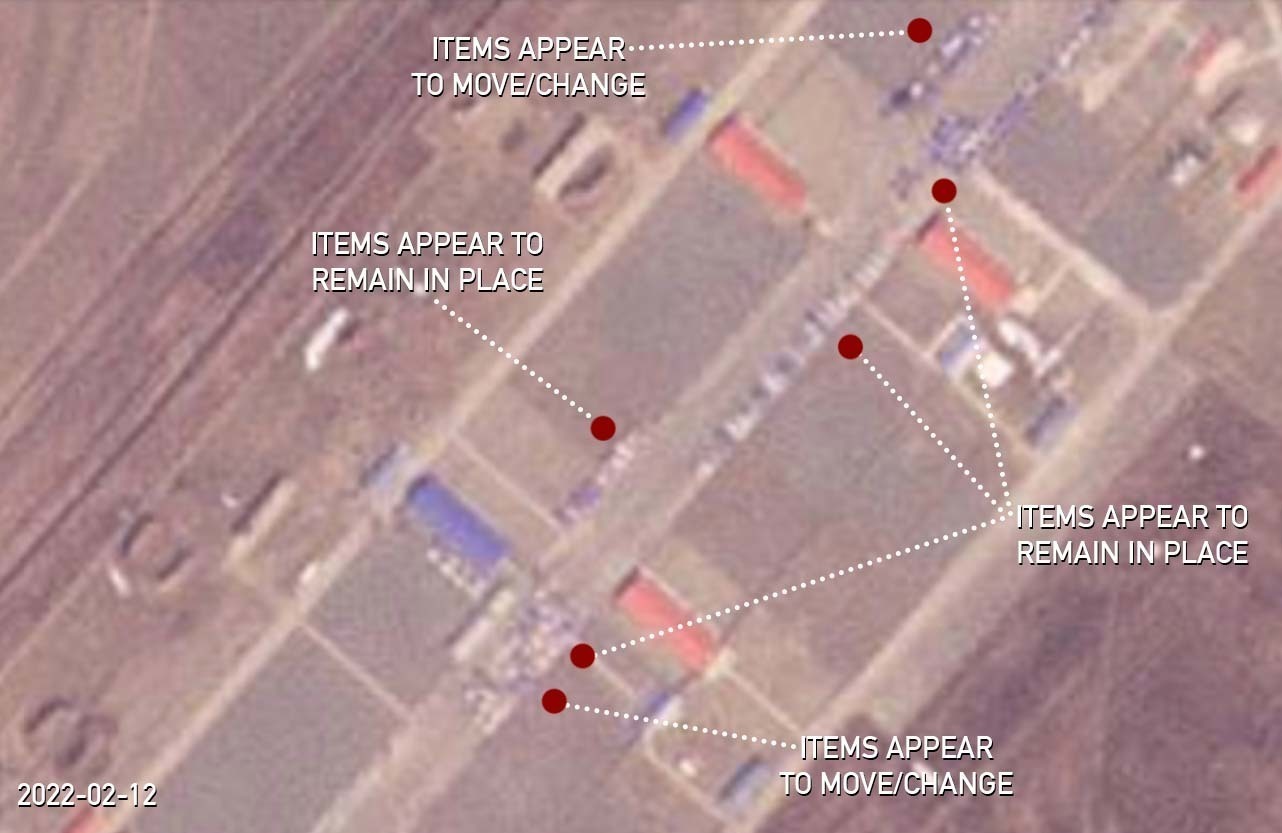 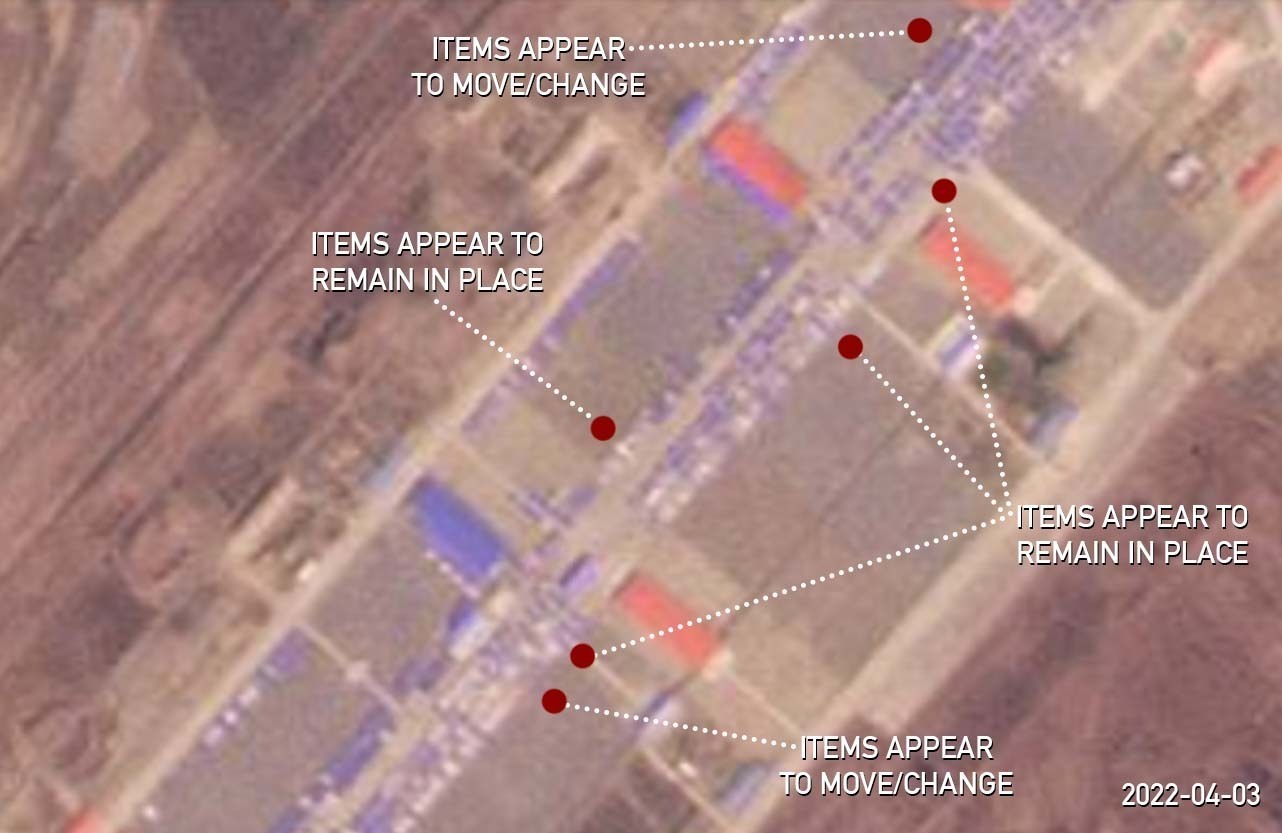 This closeup of the Uiju disinfection complex shows a few spots where some items have appeared to stay put and others possibly moved since arriving by train from China in late January | Images: Planet Labs PBH, edited by NK Pro A large portion of the edges of the airport runways are now covered in stacks of goods, but the complex likely will not exceed capacity if empty grass fields between the runways are used in the future as well, especially if the prescribed quarantine is precisely three months and the first incoming shipments from January begin to be shipped out in the coming weeks. A source told NK Pro in late January that one Pyongyang shopkeeper warned customers that they would have to wait three months before receiving newly imported goods via the restarted rail route, echoing what a well-connected Chinese businessman said last summer was a planned three-month quarantine for incoming goods. The source told NK Pro last week that Pyongyang shops still had not begun stocking fresh imports from China. Edited by Arius Derr © Korea Risk Group. All rights reserved. |

October 21, 2026Oct 21, 2026

The ultimate resources for professionals working on North Korea
 SHARE
SHARE COPY LINK
 X
X MASTODON