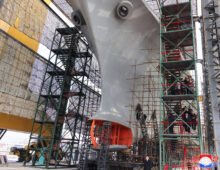
  Analysis North Korea preparing to move large new warship in sign of advanced developmentSatellite imagery reveals progress on west coast frigate as Pyongyang eyes assets to challenge US spy flights 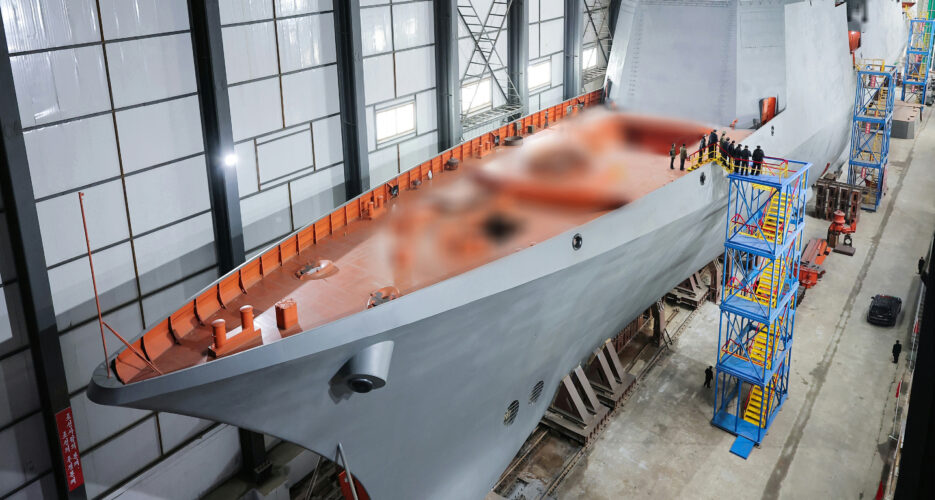 Update on March 31 at 8:30 a.m. KST: New high-resolution imagery suggests the ship was moved outside at the Nampho Dockyard between March 27 and 28. North Korea is preparing to move one of its large new warships for the first time since construction began last summer, satellite imagery reveals, a sign of the project’s advanced development as Pyongyang seeks to challenge the status quo on the seas around the Korean Peninsula. According to experts at the James Martin Center for Nonproliferation Studies of the Middlebury Institute, a floating drydock appeared this week in front of the covered shelter protecting the DPRK’s new frigate at the Nampho Dockyard, indicating plans to take the ship out. It is one of two similar frigates North Korea started to build around May 2024, one at Nampho on the west coast and the other at the Chongjin Shipyard on the east coast. “The drydock looks purpose-built to interface with the slipway (in front of the shelter), and so we think it is to move the vessel,” analyst Michael Duitsman of the Open Source Team told NK Pro, referring to a high-resolution Airbus image taken on March 24. 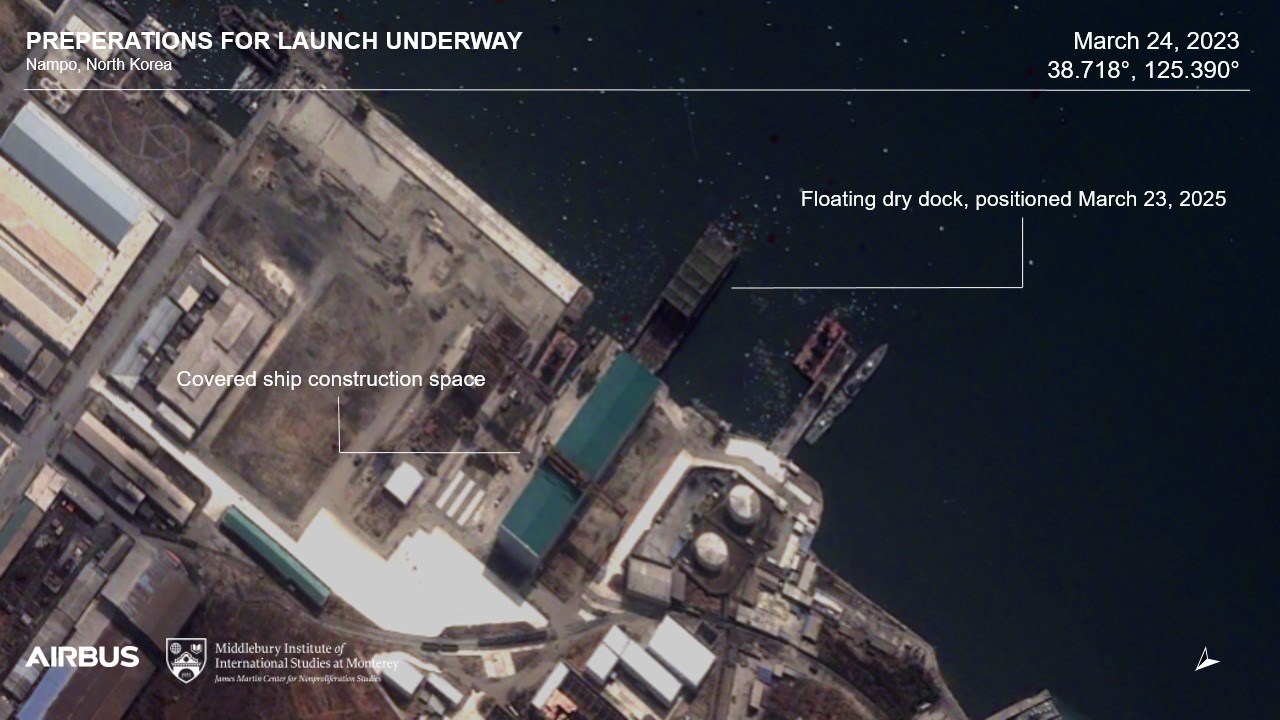 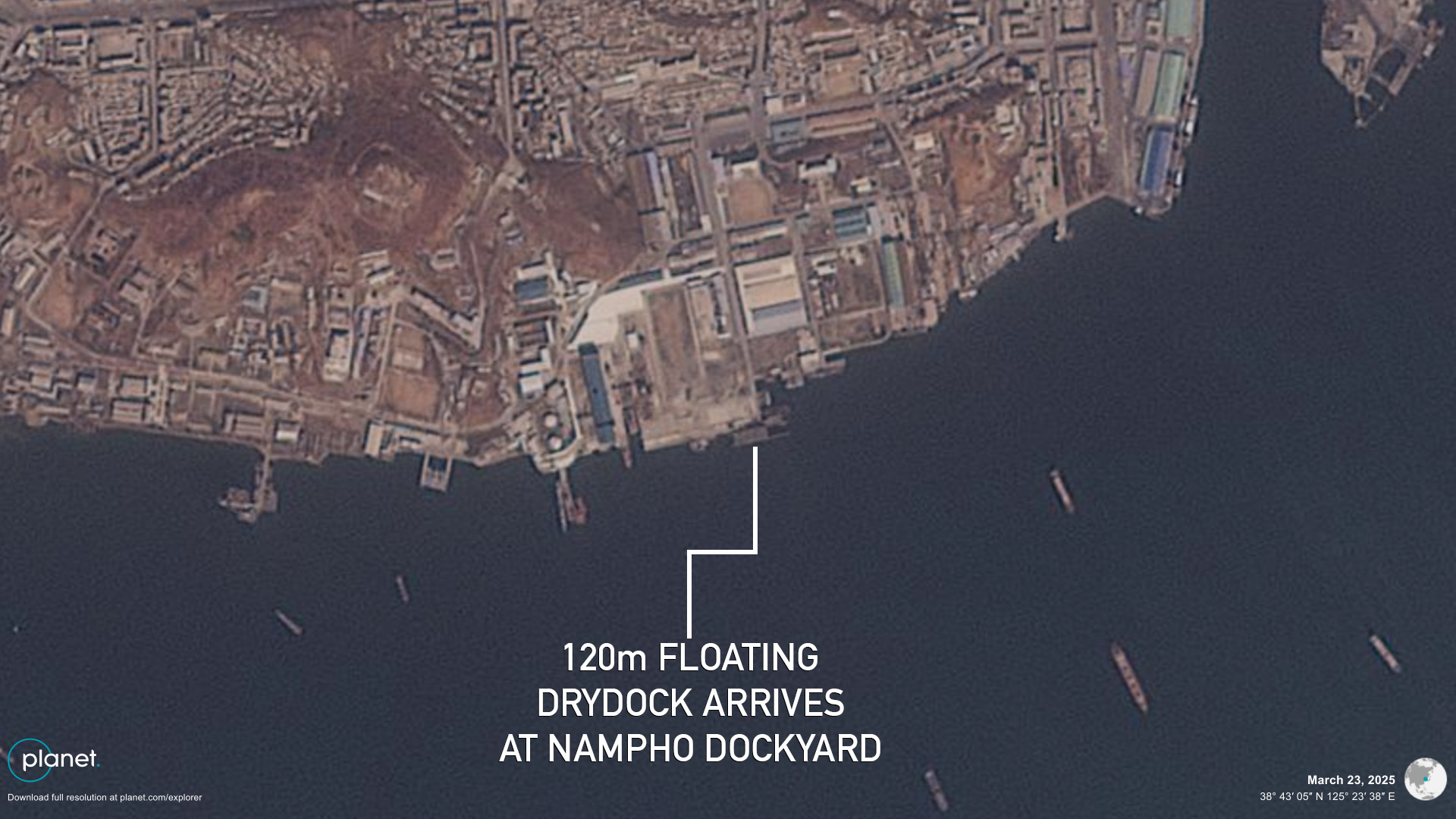
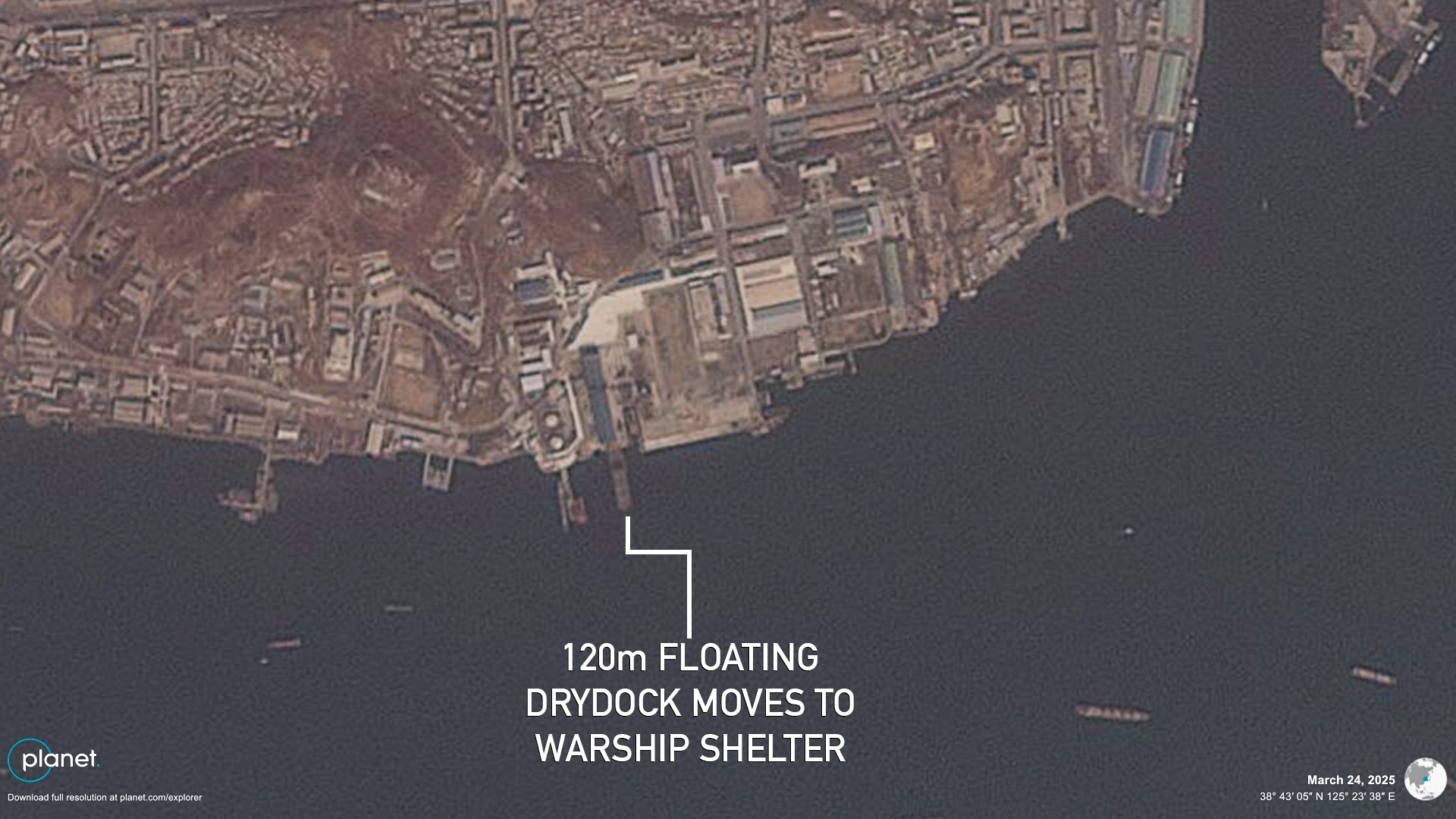
It could soon move “somewhere else in Nampho” for further construction or additions, or the move may be to “launch it into deeper water for trials,” according to analyst John Ford. “Its appearance and Kim Jong Un’s close attention suggests a major development is near,” he added. High-resolution Planet Labs satellite imagery later revealed that the warship was moved from its shelter into the drydock and docked beside a newly built wharf with cranes at the shipyard between March 27 and 28, likely for further installations. The warship appears to be 150 to 160 meters long, making it by far North Korea’s largest naval surface vessel. 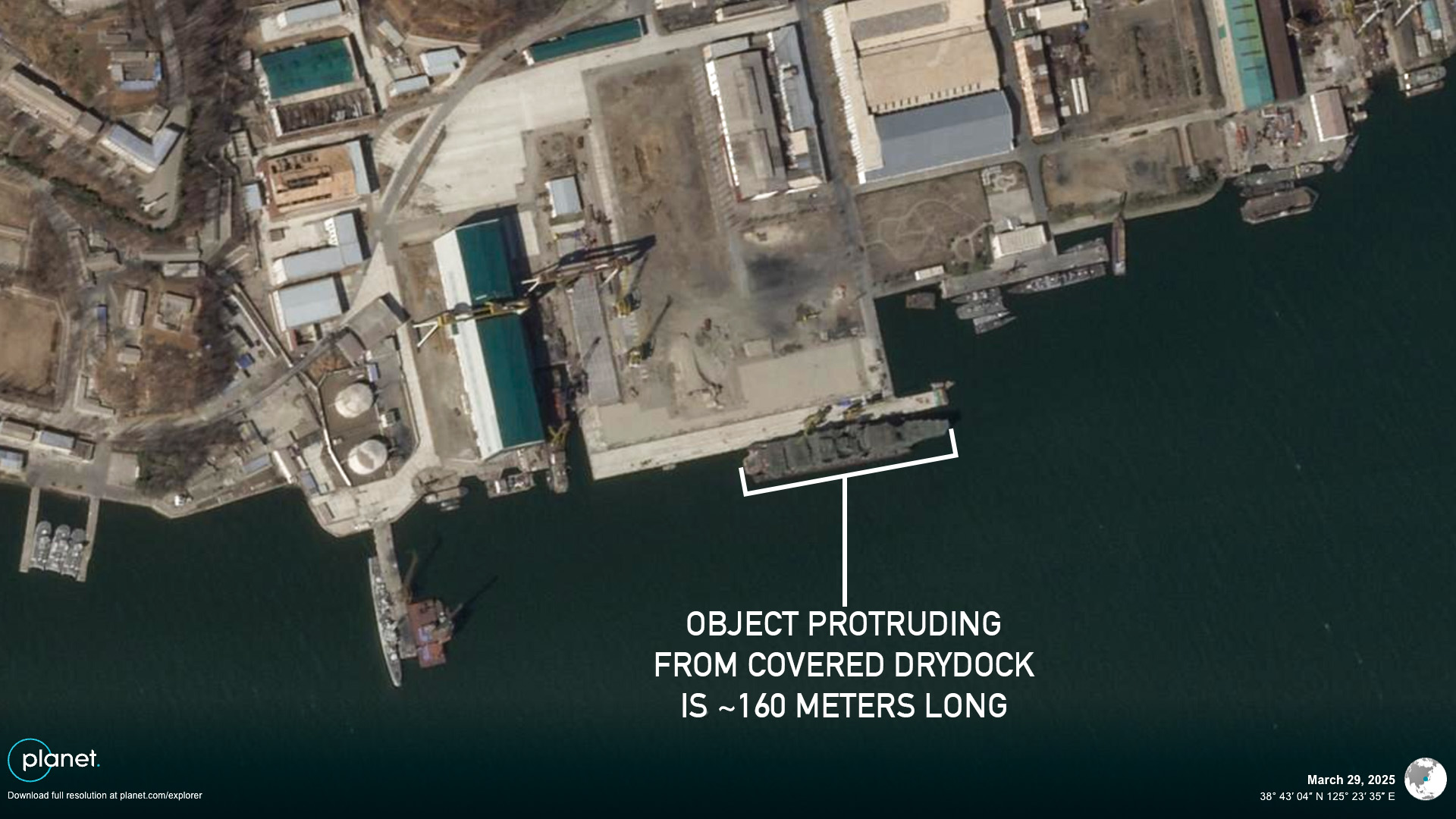 DPRK leader Kim visited the Nampho Dockyard twice in the span of about two weeks in March. The drydock appeared just a few days after his latest visit on March 20. The earlier March 8 report quoted him as saying the two new frigates won’t be “restricted to specific waters,” suggesting plans to sail them in international waters and possibly off South Korea’s coasts. Pyongyang previously threatened to shoot down U.S. reconnaissance planes off the DPRK coast in July 2023, and elaborated the following month on plans to “constantly deploy a ship loaded with new-type anti-aircraft missiles” to enforce the threats. Writing for NK Pro last week, North Korea military expert Joost Oliemans said photos of Kim’s early March visit to Nampho showed that the frigate was “already being outfitted with weapons systems” and that it had “up to three” vertical launch system (VLS) cut-outs for missiles. 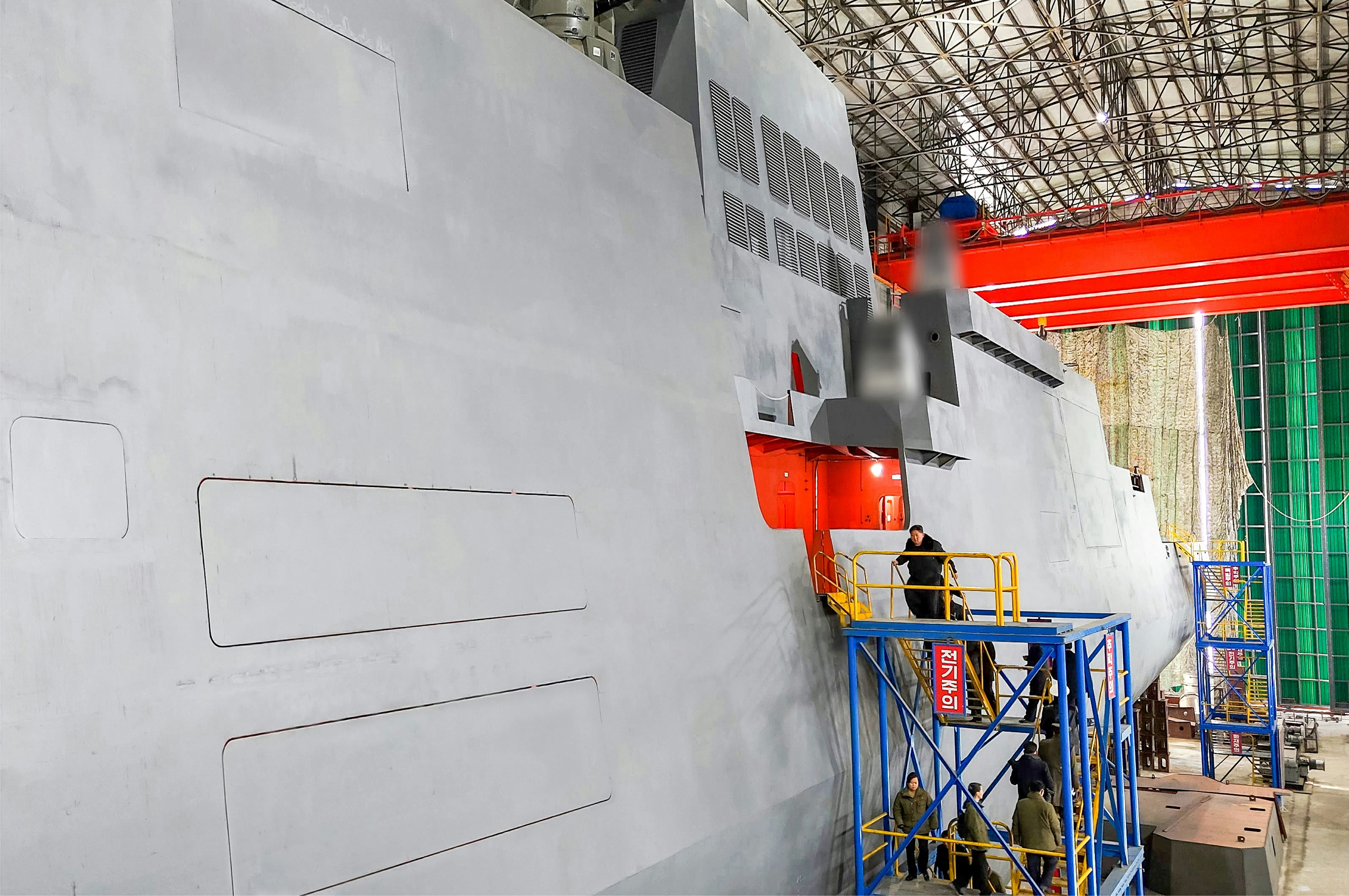
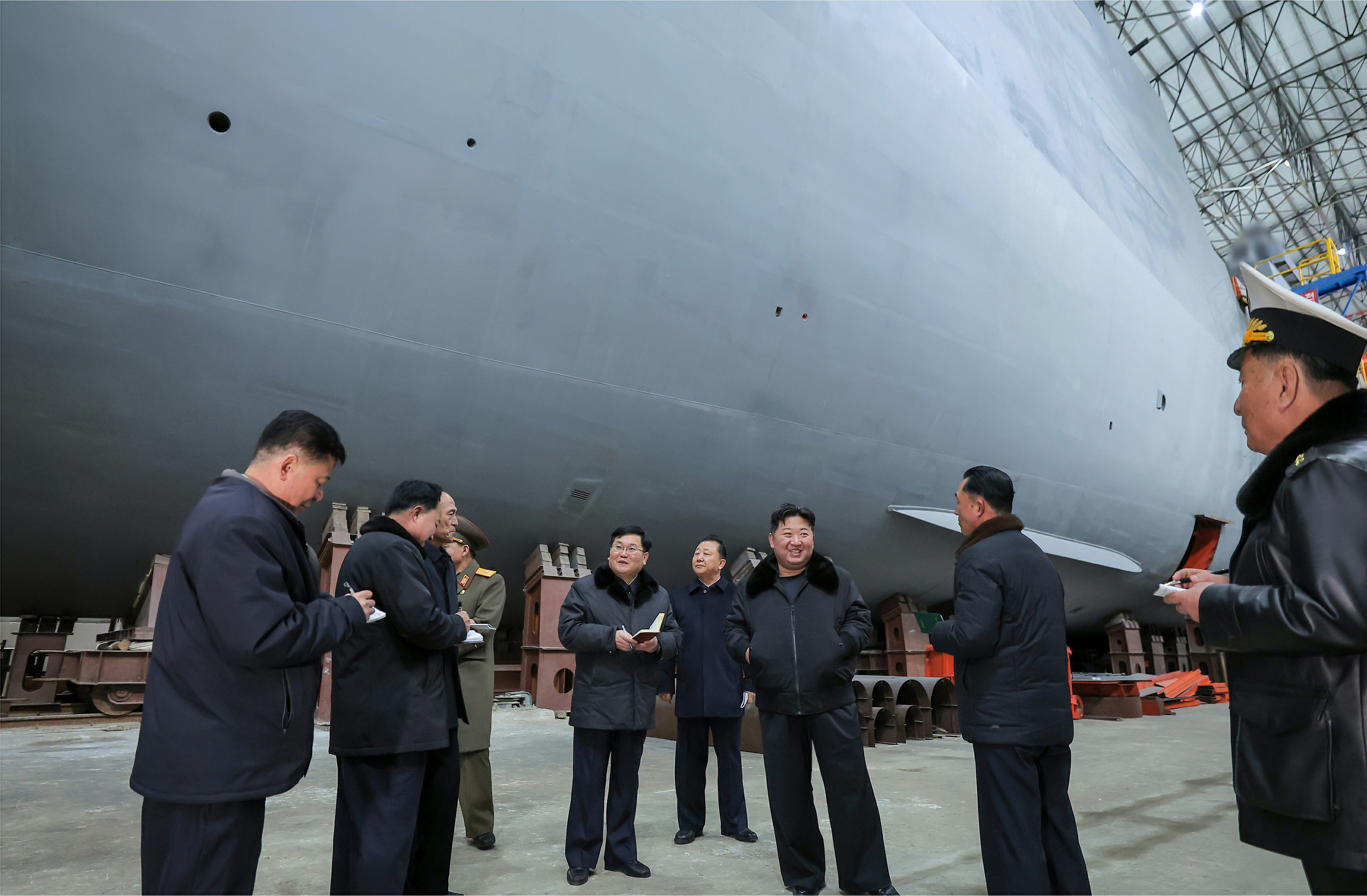
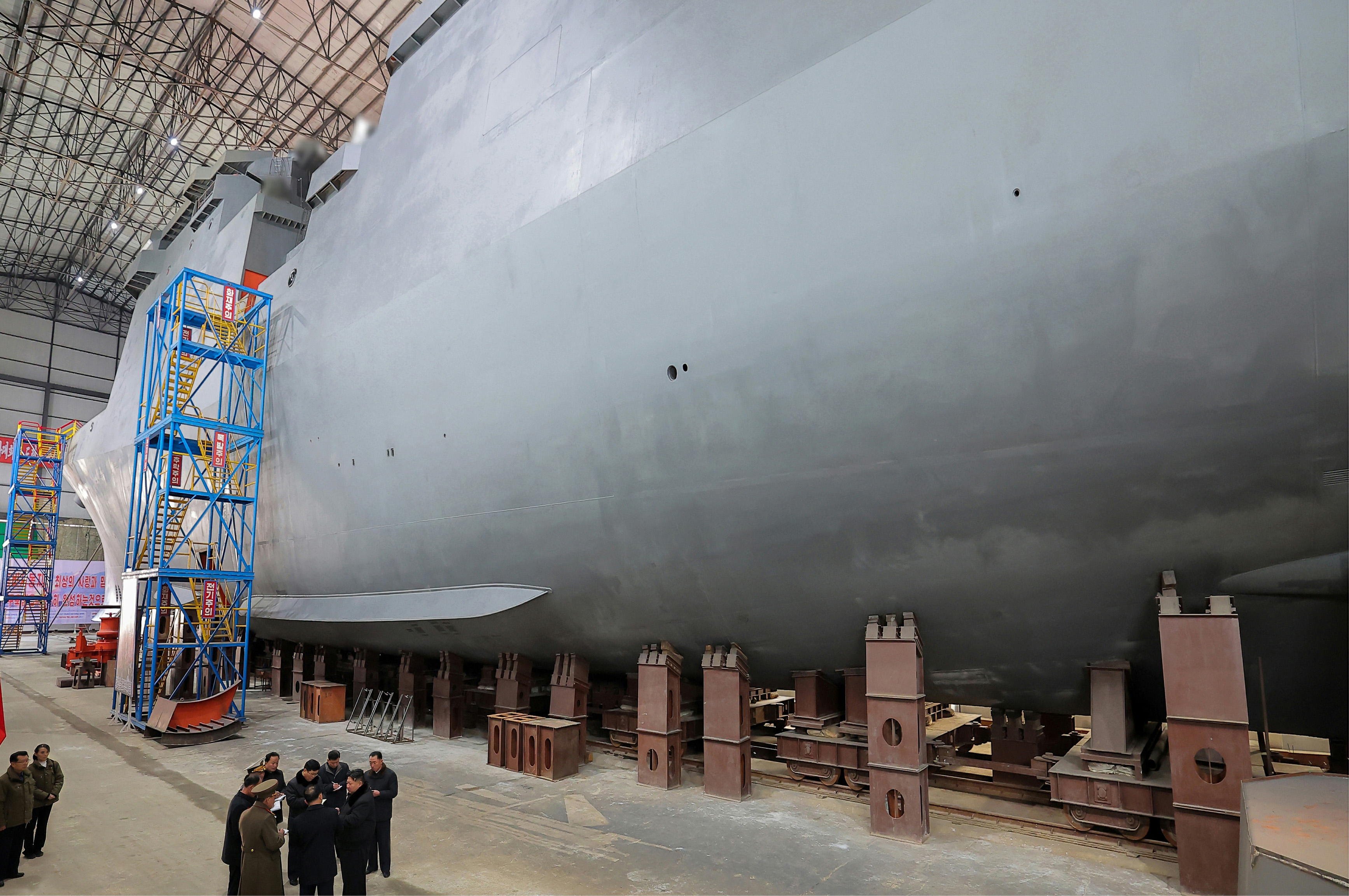
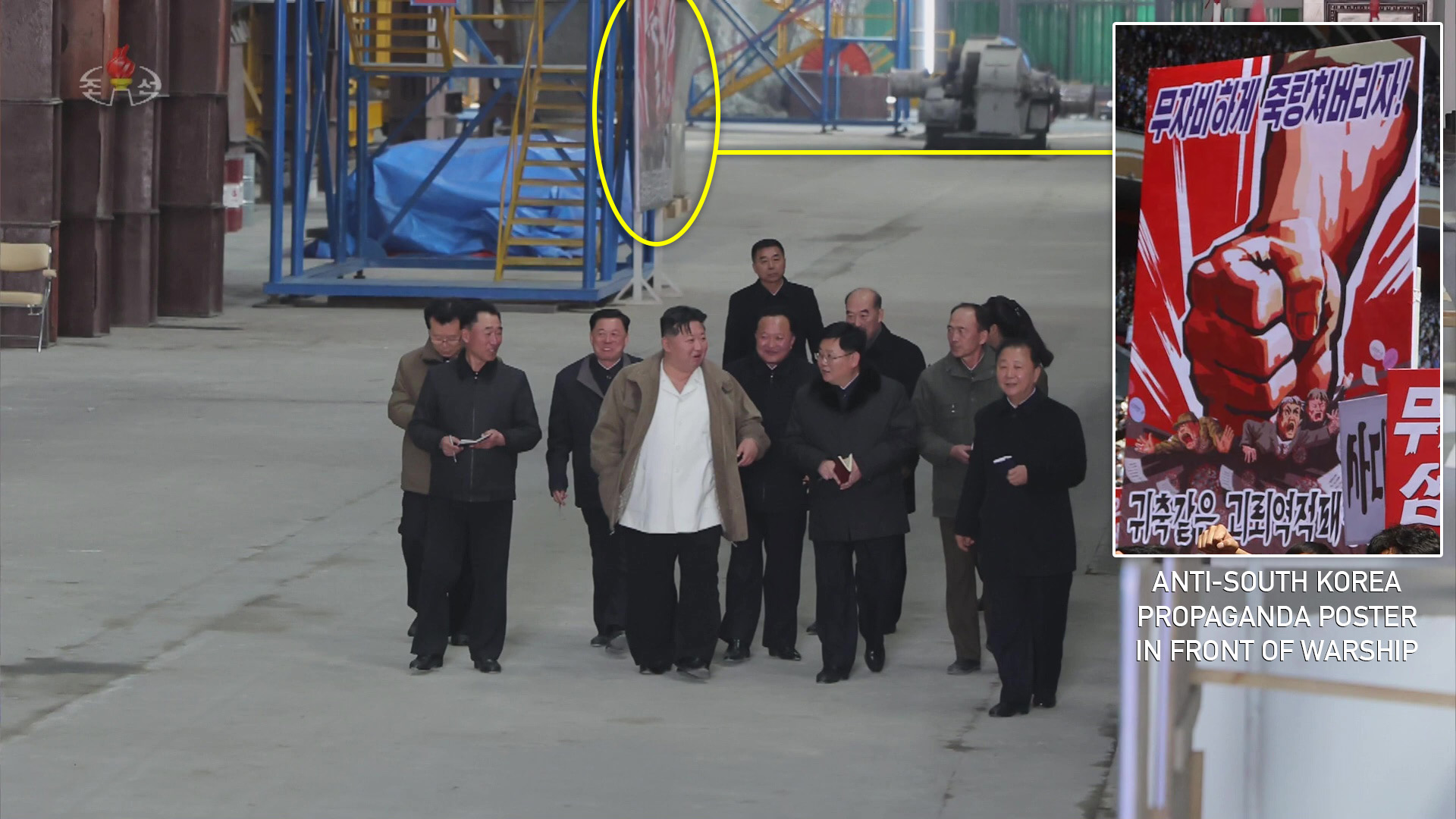

Ford of the Open Source Team said the Nampho ship could carry Pongae or newer Pyoljji surface-to-air missiles (SAMs), Hwasal or Pulhwasal nuclear-armed long-range cruise missiles, and anti-ship missiles. While the drydock’s arrival at Nampho brings North Korea’s plans to deter U.S. spy flights closer to fruition, Ford cautioned that the ship’s final deployment likely isn’t imminent, pointing to its short construction period of under one year so far — far less than the 18 to 24 months it takes the more experienced Chinese navy to build such large frigates. Oliemans also said the ship’s “propulsion systems are almost certainly going to pose a significant hurdle” to quick deployment. North Korea is known to possess suitable gas turbine engines salvaged from an ex-Soviet Krivak III-class frigate, which could be used on the Nampho ship. But Oliemans said these are likely not enough for both new warships. NK Pro analysis suggests the two new frigates are likely to emerge from their shelters and move to and from their shipyards for some time before state media claims they are deployed, based on activity during North Korea’s recent development of four smaller corvettes. Edited by Bryan Betts Updated on April 3 at 8:42 a.m. KST to change “one” salvaged Soviet engine to multiple. © Korea Risk Group. All rights reserved. |

October 25, 2026Oct 25, 2026

The ultimate resources for professionals working on North Korea
 SHARE
SHARE COPY LINK
 X
X MASTODON