  News North Korea monetizes highway to main seaport with new toll gate: ImageryExpert says tolls create incentive to increase vehicle traffic as pandemic restrictions funnel trade through port  New construction on a highway leading to North Korea’s busiest seaport suggests the country has begun modernizing its highway toll system, NK Pro analysis of satellite imagery shows. The move may be a sign of increased traffic on the Pyongyang-Nampho “Youth Hero Highway,” North Korea economy expert and NK Pro contributor Peter Ward said, as pandemic-related border closures have funneled trade through the Nampho seaport. Planet Labs satellite imagery shows that workers built a large structure over the highway and painted new lanes at the western edge of Pyongyang between Oct. 2021 and May 2022 in a manner resembling a typical highway toll gate seen in nearby countries like South Korea and China. The eight-lane highway appears to merge into six toll lanes, with two of those as dedicated express lanes, according to a partial higher-resolution Maxar image available on Google Earth. The covering structure also appears to extend over a service road on the Pyongyang-bound side.   State media has not reported on the development, and NK Pro has yet to obtain ground-level images of the spot, making it difficult to determine exactly how the apparent toll gate will function. North Korea began officially monetizing highways in 2018 when it opened small, old-fashioned walk-up tollbooths on the sides of roads connecting Pyongyang with Wonsan on the east coast and Hyangsan to the north. Images of more such booths installed in other parts of the country have appeared in state media in the years since. The booths are called “Electronic Payment Stations (전자결제소)” and run a two-tiered pricing system in North Korean won and euros. Vehicles that use the local currency pay much less: For example, according to a 2019 price chart posted at a Pyongyang-Hyangsan highway tollbooth, a large bus traveling the full length of the highway would pay 700 won or about 8 euro cents via the black market exchange rate of the time, but 8.4 euro paying in foreign currency.   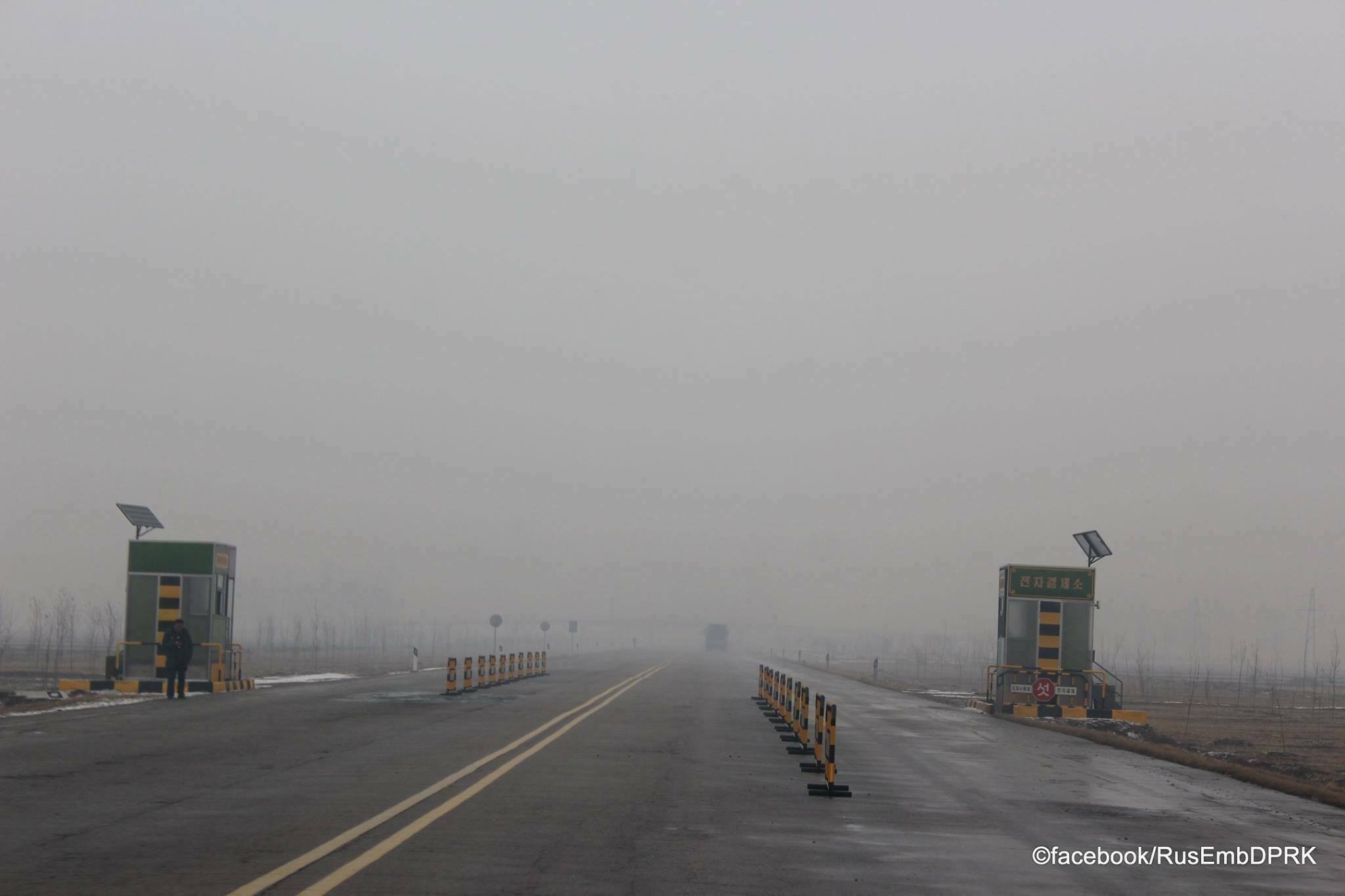 Ward, the DPRK economy expert, told NK Pro the new apparent toll gate on the Pyongyang-Nampho highway “might make it a bit more likely that they improve accessibility to the road for vehicles previously not allowed to use it,” explaining the tolls create an incentive to increase traffic and therefore profits. According to Rowan Beard, a tour manager with Young Pioneer Tours, the new toll gate covering the highway is the largest the country has ever built. Beard told NK Pro the Pyongyang-Nampho highway did not have the smaller tollbooths when others were being built around the country, saying traffic was far more sparse there compared to the roads to the east and north of the capital.   The size of the structure — 165 feet (50 meters) by 50 feet — roughly matches that of toll gates commonly seen on major highways surrounding Seoul, suggesting North Korea has sought to apply modern, international standards to its road toll system. The apparent inclusion of express lanes suggests authorities may have implemented an RFID toll “tag” system allowing registered vehicles to pass through without stopping. This would require the use of equipment and technology possibly imported from abroad in violation of U.N. sanctions. Meanwhile, Planet Labs satellite imagery shows efforts to patch large areas of the notoriously “bumpy” Pyongyang-Nampho highway in the last year, though the work appears on par with piecemeal patching seen in previous years. Update (June 7, 2023, 8 a.m. KST): Another similarly large toll booth was built in early 2023 in south Pyongyang near the Arch of Unification monument (pictured below). 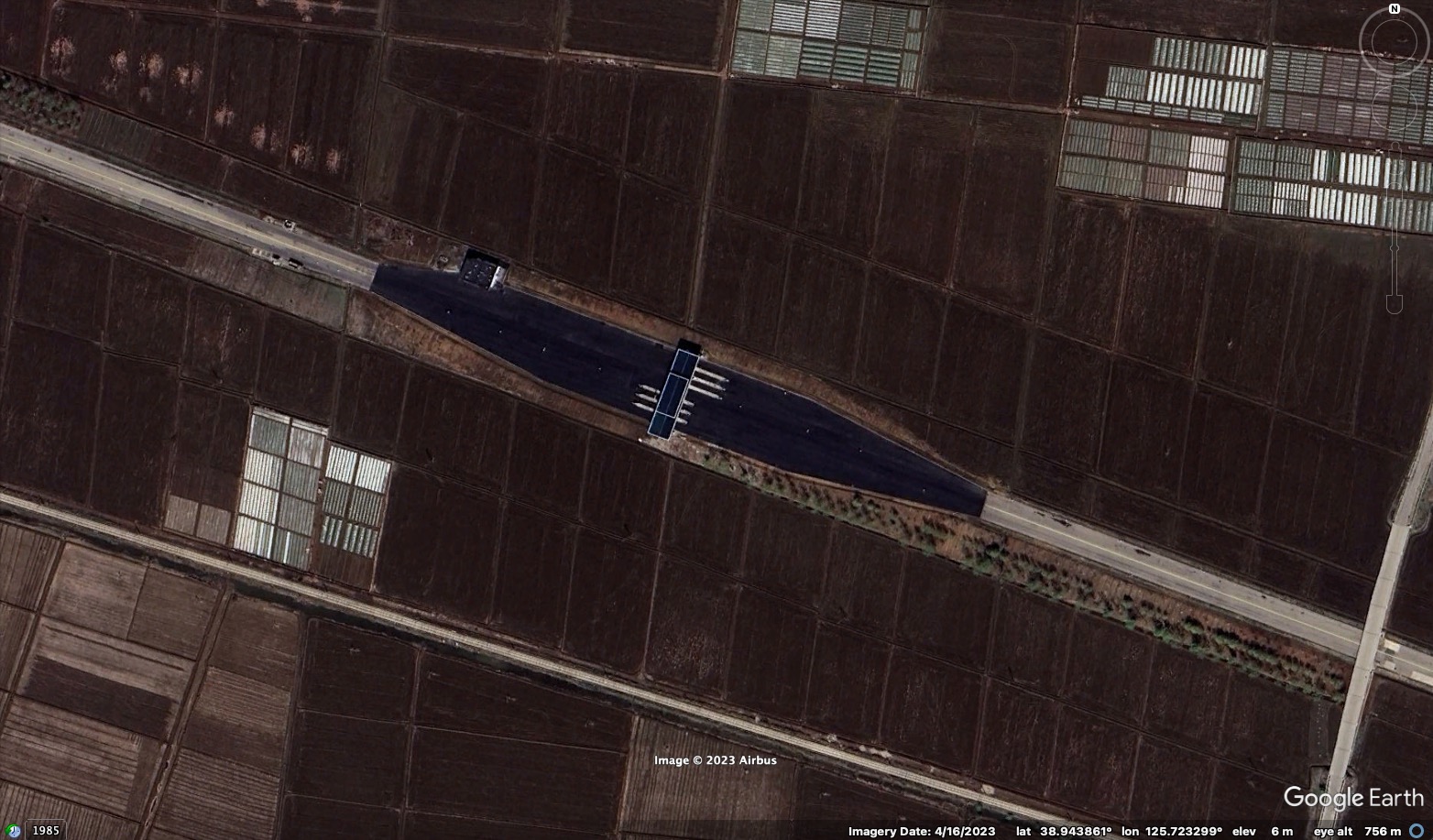 Edited by Arius Derr © Korea Risk Group. All rights reserved. |

October 09, 2026Oct 09, 2026

The ultimate resources for professionals working on North Korea
 SHARE
SHARE COPY LINK
 X
X MASTODON